Juneau

Perseverance pulls out of the Willoughby Arts Complex

The CBJ Comprehensive Plan designates the Willoughby District as a cultural center in Juneau. (Image courtesy of James Bibb/North Wind Architects)
Without Perseverance Theatre involved, the Willoughby Arts Complex will lose one 280-person theater. (Image courtesy of James Bibb/North Wind Architects)

If you’re not sure what the proposed Willoughby Arts Complex is, imagine the old armory, now known as the Juneau Arts and Culture Center, completely remodeled and expanded to accommodate numerous community arts-related activities and performances.

The project has officially been in the works since 2012 and had been a partnership between the Juneau Arts and Humanities Council and Perseverance Theatre until last week when Perseverance decided to remove itself from the project.

The theater’s executive artistic director, Art Rotch, says they’re not in a financial position to be a part of the project right now.

“Love the idea, I think is a good idea for Juneau. Love working with the arts council, but want to be thoughtful and responsible about the theater’s resources and priorities,” said Rotch.

And those priorities go back to a conversation Rotch heard many years ago between then-board member Bishop Michael Kenny and Artistic Director Molly Smith.

“The Bishop asked Molly a really simple question. He said, ‘Molly, if you kind of soft-focused your eyes and you imagine Perseverance Theatre–Is it a physical place? Is it a piece of architecture? Or is it people?’ And she immediately answered, ‘It’s the people and it’s the performances. That’s really what makes the theater thrive.’ So if we’re not putting our efforts behind the people that make the work, make the art, we’re misplacing our priorities,” Rotch said.

Juneau Arts and Humanities Council Executive Director Nancy DeCherney has mixed feelings about Perseverance’s removal.

“It was going to be very exciting to have that collaboration, and I think that having all of the arts groups in one building really could contribute to a lot of synergy. So, in that regard, it is sad that we weren’t able to make this work at this time. I don’t think that this means necessarily down the road that some collaboration like that won’t happen. On the other hand, it’s cumbersome as you know whenever you have more people involved. The process gets more complicated. It makes it a little smaller and more affordable project, so I think that it works out for the best for all concerned at this time,” DeCherney said.

Without Perseverance’s partnership, DeCherney said some adjustments will be made to the structure, including the removal of one of the planned theaters which would have held 280 people.

There will still be room, she said, for Perseverance to perform in either the remaining theater, which is the same size, or the smaller 120-person theater.

Correction: We’ve updated this article to reflect the correct spelling of Art Rotch’s name.

With child care shortage, local organizations offer assistance to future providers

(Creative Commons photo by Kids Work Chicago Daycare)

The Auke Bay Cooperative Preschool recently closed, deepening the child care shortage in Juneau. As options for child care facilities dwindle, local organizations are encouraging potential and new child care providers with resources.

The Association for the Education of Young Children in Juneau holds a monthly meeting called the Business of Caring for anyone thinking about starting a state licensed child care home or center.

“The Business of Caring is just an opportunity for people who are thinking about becoming a licensed provider to find out more about the business, and hopefully, that just helps them think about if this is a good fit for them or not,” said AEYC early learning services coordinator Christa Womack.

Central Council of the Tlingit and Haida Indian Tribes of Alaska also offers assistance to license applicants.

Tlingit and Haida Central Council will help pay for First Aid and CPR certifications, background checks, a fire inspection, a business license, safety equipment and other costs of getting licensed. It’ll also help pay for startup costs such as learning materials, books and art supplies. The applicant doesn’t have to be Alaska Native but must commit to watching kids within Tlingit and Haida’s Central Council’s child care program.

Once licensed, AEYC provides up to 10 hours of free on-site assistance on how to set up a learning environment. Womack says up to $1,000 in funding is available for startup costs.

“Sometimes they use the funds to purchase classroom materials or supplies for their program. Sometimes it’s like playground equipment – different things like that. It’s basically to support what they need to get their program off to a good start,” Womack said.

AEYC also offers incentives for people already in the childcare business who are interested in getting further education

For more information on resources for interested or new childcare providers, call AEYC at 789-1235 or Tlingit and Haida Central Council at 463-7140.

Will the ferry system face deeper service cuts?

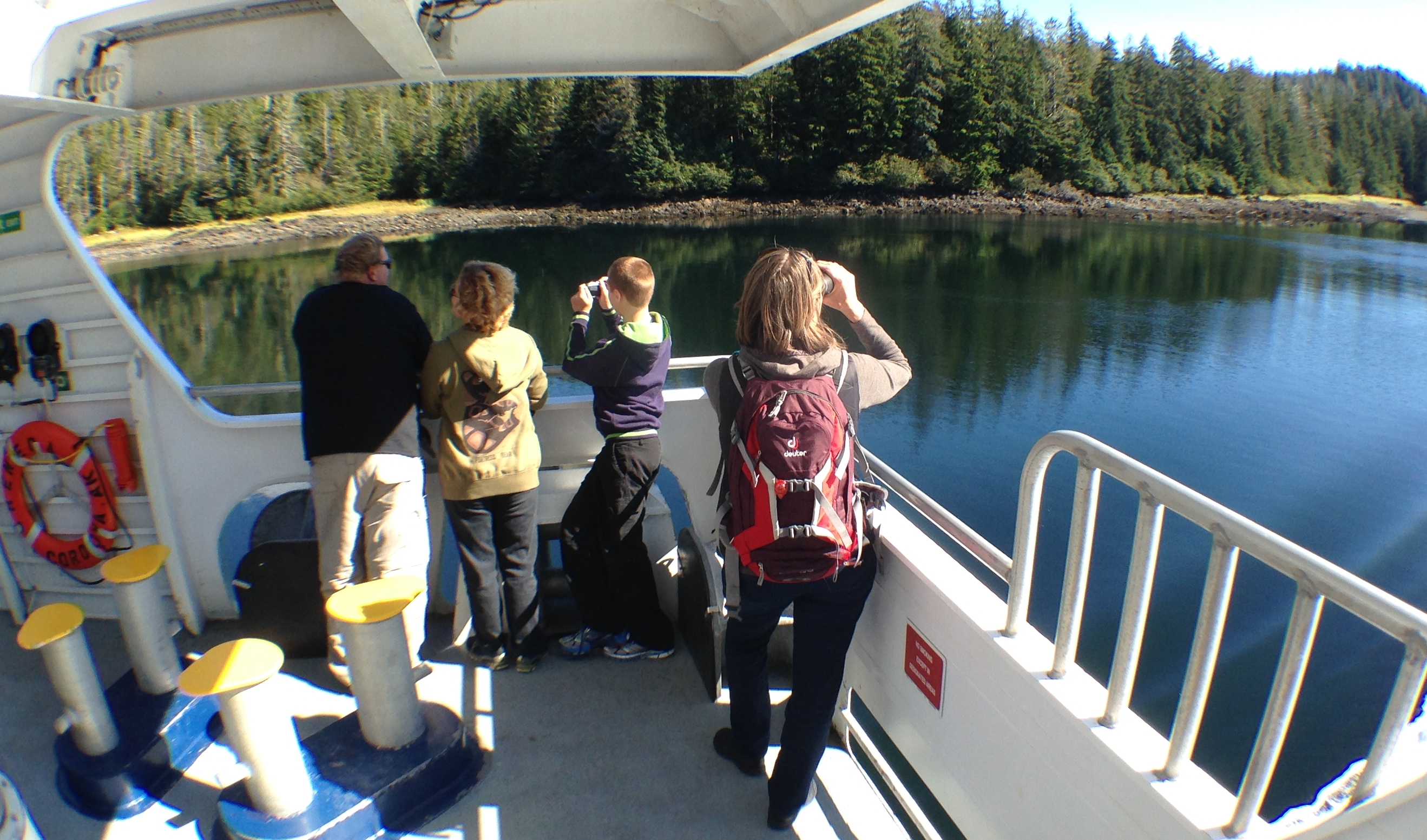
Passengers enjoy the scenery during a Sept. 3 fast ferry Chenega sailing between Sitka and Juneau. Sitka would lose most of its ferry service under a schedule based on a reduced budget proposed by Gov. Bill Walker. (Photo by Ed Schoenfeld/CoastAlaska News)
Passengers enjoy the scenery during a Sept. 3, 2015, fast ferry Chenega sailing between Sitka and Juneau. Sitka would lose most of its ferry service under a schedule based on a reduced budget proposed by Gov. Bill Walker. (Photo by Ed Schoenfeld/CoastAlaska News)

Budget cuts have already dramatically reduced Alaska Marine Highway sailings, and the recently-released spending plan for the next fiscal year calls for more. So, how does the ferry system fare in the governor’s proposed budget? And will the legislature make further cuts?

State officials will soon release the final version of next summer’s ferry schedule.

A draft, released in October, lays up four of the system’s 11 ships and further reduces sailings. And while there may be a few adjustments, officials say it will be largely unchanged.

Gov. Bill Walker unveils his 2016 budget plan Wednesday, Dec. 9. (Photo by Rachel Waldholz/APRN)
Gov. Bill Walker unveils his 2016 budget plan, Dec. 9, 2015. (Photo by Rachel Waldholz/APRN)

But Gov. Bill Walker’s budget doesn’t make it any worse.

“The schedule we’re working on is in anticipation of what the governor’s proposed budget for FY 17 would be,” said marine highway spokesman Jeremy Woodrow.

He said the budget proposes spending just over $142 million on the ferries in the fiscal year starting in July. That’s about 8 percent lower than this year and about 11 percent less than the previous year.

But Woodrow said the cuts are not as deep as they sound. He said only about a third of the full, $13 million cut impacts operations.

“The rest of those reductions come from a difference of last year’s budget being supplemented with excess fuel trigger money plus a one-time appropriation to allow the marine highway system to continue to run its schedule that was published the prior year,” he said.

Overall, the budget funds about 300 weeks of sailings by the remaining ferries. That’s just shy of a 15 percent reduction.

That’s what the governor wants. But it’s probably not what the Legislature will accept. Majority leaders say Walker should have proposed many more cuts across the operating budget.

“I’m afraid it’s going to get a lot worse,” says Juneau Sen. Dennis Egan.

He serves on his chamber’s Transportation Committee, as well as the panel that deals with the ferry system’s operating budget.

“I know a lot of the legislators don’t understand what the Alaska Marine Highway System does. They understand that it gets their cars down here for the session. And that’s about all they understand,” he said.

Egan, a Democrat, worries about far deeper cuts to the system’s budget and schedule.

Dennis Egan, Bert Stedman, Donny Olson
Sens. Dennis Egan, Bert Stedman and Donny Olson (left to right) talk on the floor of the Alaska Senate on March 18, 2014. (Photo by Skip Gray/Gavel Alaska)

Sitka Sen. Bert Stedman, who sits on the same two committees, said this year’s cuts are already hurting the region’s economy.

“The cuts are pretty substantial to start with and if the Legislature goes further, it’s going to be more detrimental,” he said.

Stedman, a Republican, worries about Southcentral and Interior Alaska’s greater legislative power.

“My concern is fairness within the marine highway and fairness across the state, that we don’t single out a couple of regions that end up with disproportional reductions. Clearly we haven’t shut down any highways in the Railbelt. And as far as I know, we have no plans on doing so,” he said.

Last year, majority lawmakers proposed deep cuts in marine highway service. They included eliminating service to communities on the road system, which could have cut Haines, Skagway, Valdez, Whitter and Homer.

Reductions in funding and sailings results in fewer jobs.

But marine highway spokesman Woodrow said no one’s been laid off yet because of turnover.

“What’s happened to date is there hasn’t been anybody who’s wanted a job whose lost work, because there’s been enough positions available. What may happen in the future with (fewer) boats running, only time will tell,” he said.

He said the ferry system employed close to 1,000 people in the 2014 fiscal year, the latest with totals available.

Juneau assembly reenvisions local government at annual retreat

assembly retreat
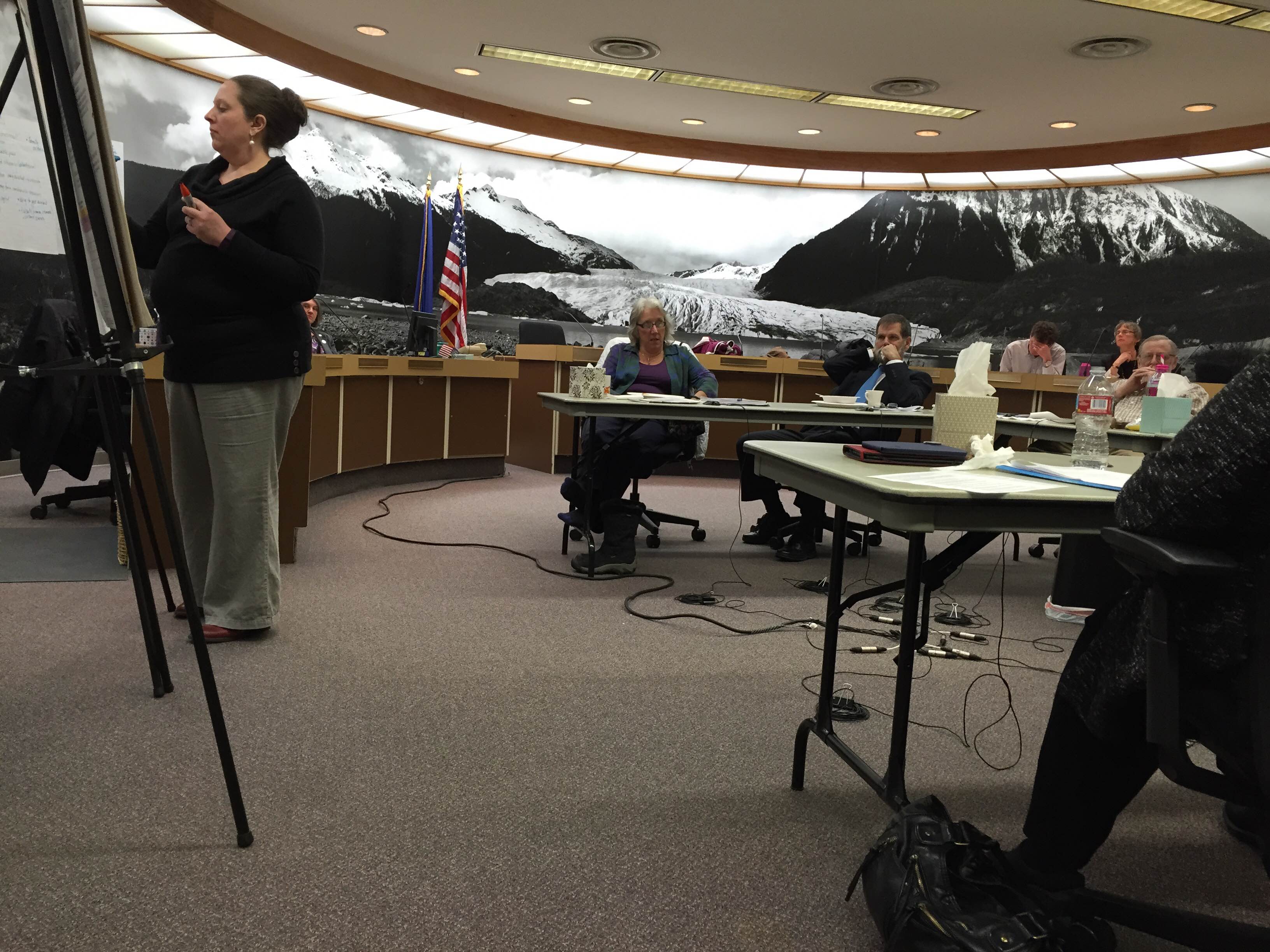
Samantha Dye helps the assembly see the opportunities in the obstacles. (Photo by Elizabeth Jenkins/KTOO)

The Juneau Assembly gathered Monday to discuss a strategic action plan for the upcoming year. The late mayor hoped this retreat would spark conversation and help refine the city’s goals.

Samantha Dye of Dynamic Consulting helped the assembly brainstorm a list of Juneau’s opportunities. Things like the natural environment, recreation, and short commutes. She asked the assembly to list obstacles. And then the opportunities for Juneau within those obstacles.

“The shift there is that often we start with the problems and work our way in the other direction where he wanted to start with why are why doing this?” Dye said. “What’s our reason and then work backward.”

assembly retreat
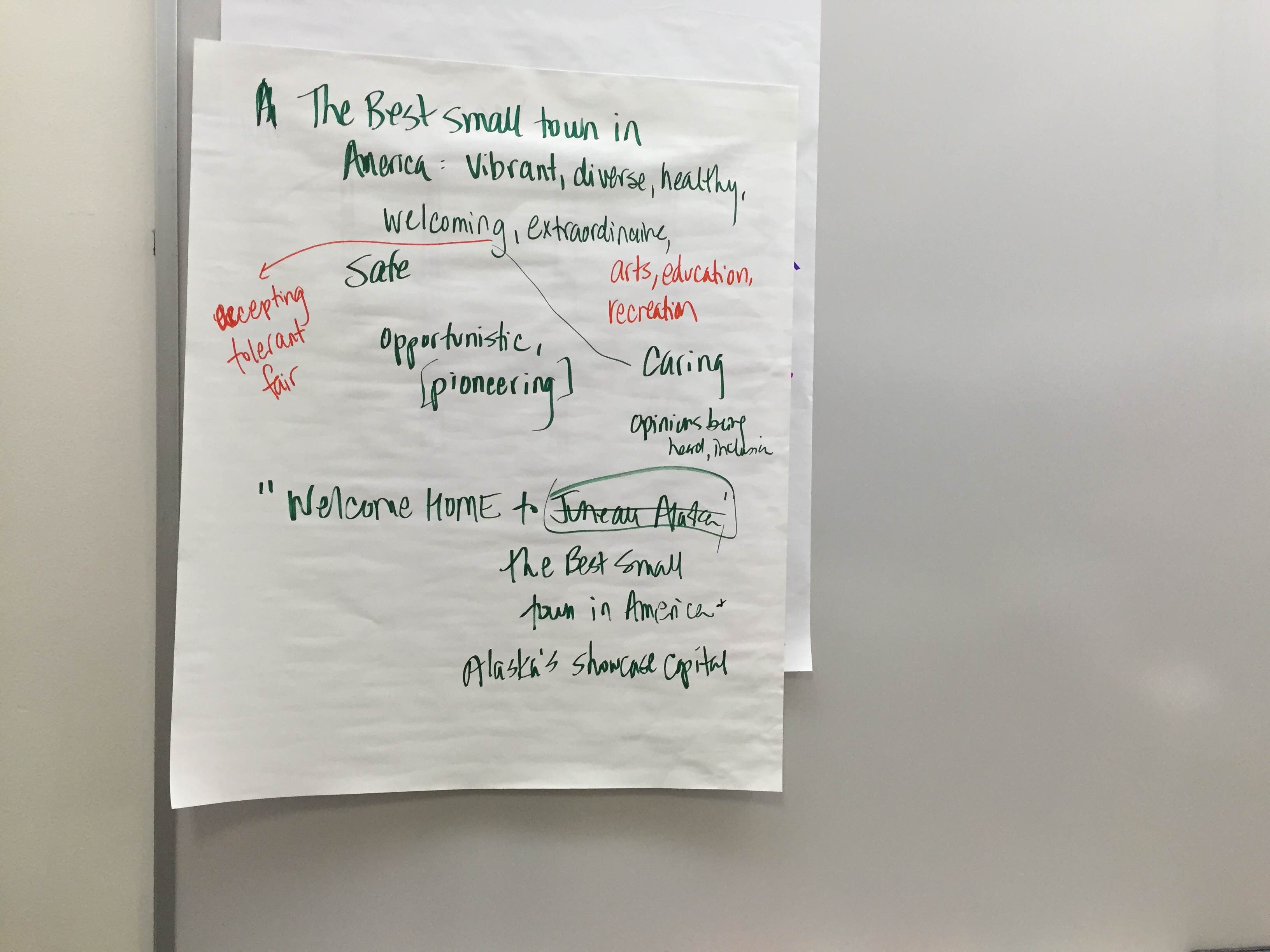
The assembly revises Juneau’s vision statement. (Photo by Elizabeth Jenkins/KTOO)

The assembly noted that a seasonal workforce is problematic for the local economy, but that could mean more young people are coming to Juneau. Child care is scarce.

“But that brings in an opportunity to better support young families, so that both parents can work. How to have new businesses that could be creative,” Dye said.

Dye said the exercise is “potential-based.”

Mary Becker, Juneau’s interim mayor, said the retreat was more “open-ended” than the previous year, which led to some frustration at the beginning.

“We have to push past the wall of what are we doing, why are we redoing this? Haven’t we done this before? And look at it in a different way,” Becker said.

Becker said this method helps the assembly reevaluate issues that might be familiar. The six-hour retreat cost the city $2,600. Dynamic Consulting plans to issue a report within a week. 

Leaving a legacy: Family, friends remember Greg Fisk

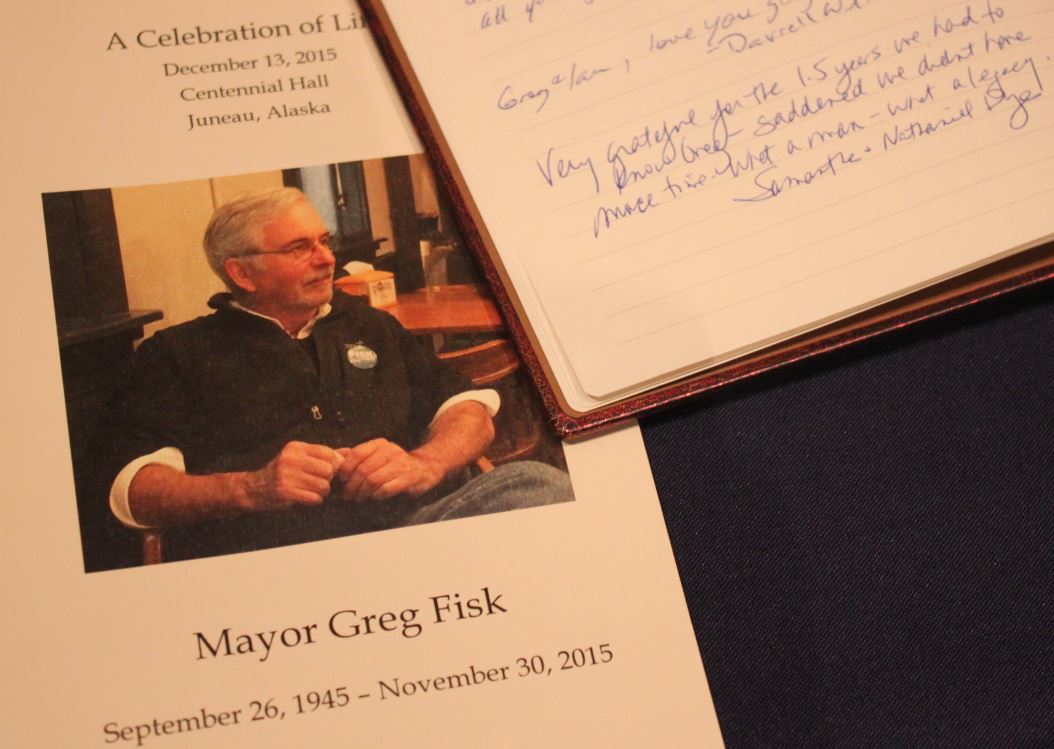
Many signed the guest book at the celebration of life for Greg Fisk. (Photo by Lisa Phu/KTOO)
Many signed the guest book at the celebration of life for Greg Fisk on Sunday. (Photo by Lisa Phu/KTOO)

Hundreds in Juneau attended the celebration of life for Juneau Mayor Greg Fisk on Sunday. Fisk died of natural causes on Nov. 30, less than two months after being elected mayor. He was 70 years old.

Family, friends and community members spoke about Fisk and his many passions and accomplishments. He was a father, Native rights champion, fisheries consultant, mayor and a proud Juneau resident.

When Greg Fisk was campaigning for mayor, he said he wanted to make Juneau “one of the great small cities in the country.”

“And I believe that if he had lived, by the end of his term as mayor we would be noticeably, demonstrably closer to that place,” said Ken Alper, one of Fisk’s good friends in Juneau. “He really believed that Juneau could diversify our economy and rebuild our downtown and control our destiny. He didn’t fear change or growth. He welcomed them. He wanted to turn Juneau into a place people were clamoring to come.”

Alper met Fisk about 13 years ago when they both worked for the state – Alper at Fish and Game, Fisk at Commerce as a fisheries development specialist.

“Talking with Greg, you learned it’s not just about how the fishery is structured and the history, but also what it could be, how we as Alaskans were blessed with this unbelievable resource that he knew could be so much more. He understood that, even more than oil, fish is what motivated the generation before his to fight for statehood,” Alper said.

Alper and others who spoke at the celebration of life were flanked by three flags – an Alaska flag, a U.S. flag and a Canadian flag.

Fisk was born Sept. 26, 1945 in Montréal, Quebec. He spent most of his early childhood in Washington, D.C. His father was in the Air Force and the family moved to Alaska the year of statehood. Fisk graduated from West Anchorage High School a state champion in swimming.

After studying geography at Indiana University, Fisk worked with the Arctic Slope Regional Corp. and surrounding village corporations to select lands during the early days of the Alaska Native Claims Settlement Act.

That experience set the stage for his work in Montreal with the Northern Québec Inuit in the 1970s. He was the senior negotiator on Canada’s first aboriginal land claims settlement since the 1920s.

Sealaska Corp. President and CEO Anthony Mallott said Fisk shared common priorities with Native people.

“I’ve heard from individuals in the Native community that when they worked with Greg, he had this certain presence. When he was in meetings, that presence was felt. It was a presence built on knowledge, experience and on dignity. And that presence gave the people that he was working with, the organizations he worked with comfort that this was an individual that could move them forward,” Mallott said.

Around 400 people attended the celebration of life for Mayor Greg Fisk, including Gov. Bill Walker, First Lady Donna Walker, Juneau state lawmakers and Juneau Assembly members. (Photo by Lisa Phu/KTOO)

Fisk’s son Ian Fisk said his father loved hiking the Juneau Ridge and the views of Mendenhall Towers from Auke Lake. He loved rock and roll, classical music and the comedy of George Carlin. Over games of cribbage, Ian Fisk and his dad often spoke about the fishing industry.

“He loved everything about it. He loved the sweep of a boat’s sheer line and he appreciated the aesthetics of the industry. He appreciated the machinery and all of the people that make it possible,” he said.

Ian Fisk said his dad was once referred to as his own think tank. His father always had ideas and his sights set on a better future, a better Juneau.

“But he was very aware of the things that no matter how hard he tried he couldn’t improve on, like the Northern Lights and the fog coming up the channel on a nice, clear Sunday morning,” Ian Fisk said.

His father instilled in him the importance of leaving behind a legacy.

“What we leave behind is all we leave behind, at least in our world view. That’s the way my grandfather raised my father and the way he raised me, and so it’s critical that we leave something good behind and I know for sure my dad did. He always said, ‘You got one life to live son, you better make it a damn good one.’ And he sure did,” Ian Fisk said.

Greg Fisk’s legacy continues to live on across the state and in Canada. Ian Fisk said his father left the world on top of a big wave – a happy and loved man.

28 teams compete in 9th annual Juneau Robot Jamboree

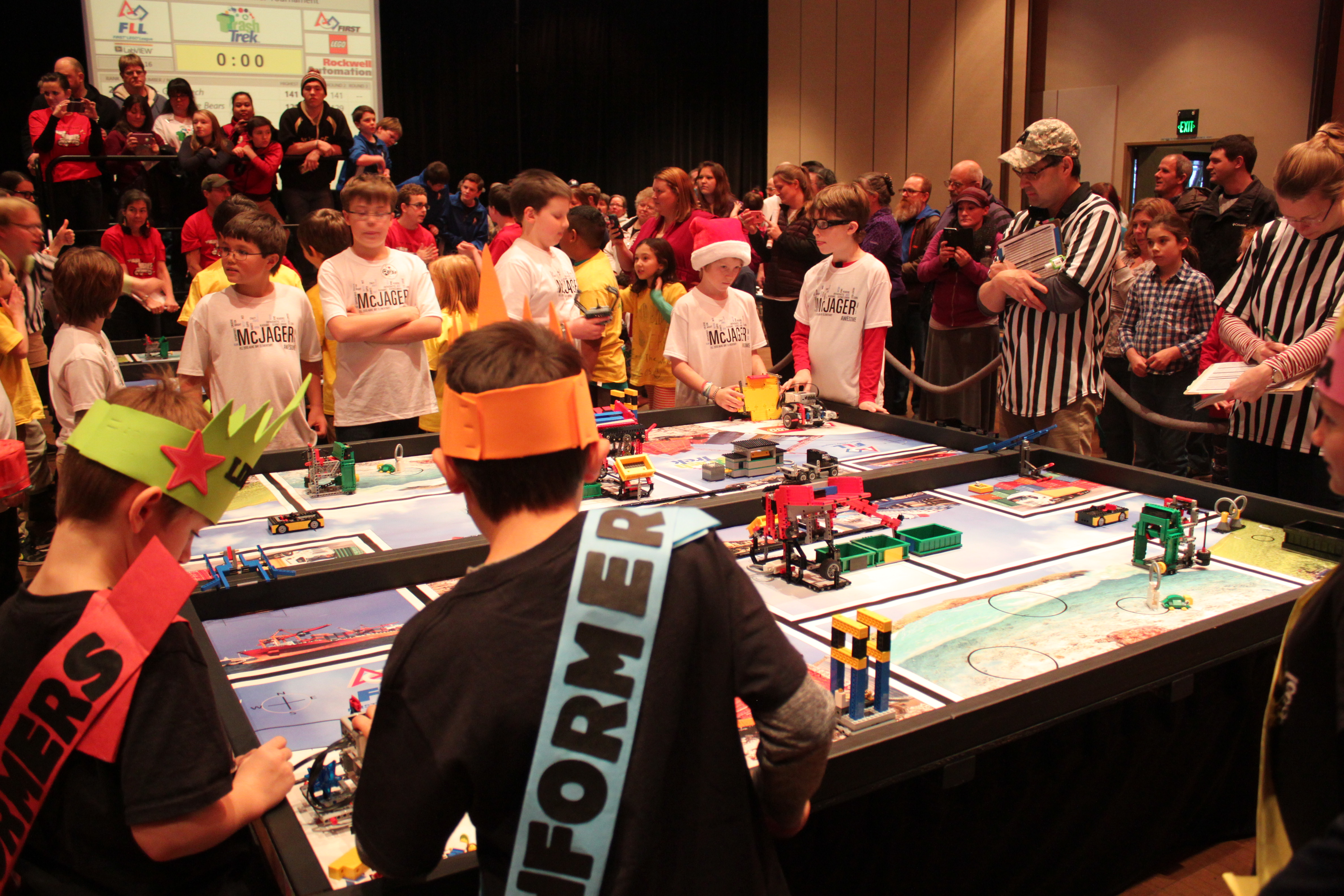
Teams from Southeast Alaska competed during the Juneau Robot Jamboree at Centennial Hall on Saturday. (Photo by Lisa Phu/KTOO)
Teams from all over Southeast Alaska competed during the Juneau Robot Jamboree at Centennial Hall on Saturday. (Photo by Lisa Phu/KTOO)

Hundreds of kids took over Centennial Hall Saturday for the 9th annual Juneau Robot Jamboree.

Twenty-eight teams from Juneau, Ketchikan, Skagway, Hoonah, Coffman Cove and Metlakatla put their robots to the test to qualify for the FIRST LEGO League state tournament in Anchorage.

Rebecca Soza is the STEM program manager at the Juneau Economic Development Council, which organized the all-day jamboree.

“It’s supposed to be like an NCAA tournament and a Hollywood film opening all at once. So we’ve got an emcee doing play-by-play for the robot matches. We’ve got a DJ playing music all day. Our referees are dancing and wearing silly costumes,” Soza said. “We want the kids to want to come back. It’s supposed to be exciting and fun and make them want to dedicate hours to computer programming to come have a day like this.”

This season’s challenge was how to make less trash or improve the way people handle trash. Teams competing were in grades 4-8.

Addy Mallott, Devin Moorehead and Grace Sikes are on team Candied Squirrelverines from Dzantik'i Heeni Middle School (not pictured is team member Bradley Dybdahl). Hannah Lager is the team's volunteer coach. (Photo by Lisa Phu/KTOO)
Addy Mallott, Devin Moorehead and Grace Sikes are on team Candied Squirrelverines from Dzantik’i Heeni Middle School (not pictured is team member Bradley Dybdahl). Hannah Lager is the team’s volunteer coach. (Photo by Lisa Phu/KTOO)

Three members of Candied Squirrelverines, the robotics team from Dzantik’i Heeni Middle School, wore matching LEGO earrings. Their robots didn’t place well, but 11-year-old Addy Mallott said it doesn’t matter because they had a lot of fun.

“It’s a lot of teamwork and collaborating while learning about world problems that we can use to make Juneau a better place while learning how to program. That was one of my favorite parts,” Mallott said.

Volunteer coach Hannah Lager said LEGO league builds an awareness of STEM in kids at a younger age.

“They don’t know that they’re learning about the math and the engineering when they’re programming these robots, which is super fun and playing with LEGOs, but that’s what they’re doing,” Lager said.

Eight teams from the tournament received top awards and an invitation to the state championships. The winner in Anchorage is eligible to compete in the North American championship in LEGOLAND, California.

Awards
Champion:
A2Z, Juneau Community Charter School
Project: Mindstorm Masters, Raven Correspondence, Juneau
Core Values: Unibears, Juneau Community Charter School
Robot Design: Trash Talkers, Skagway
Robot Performance: Coffman Cove
Elimination Round Winner: That One Team, Ketchikan
Judge’s Award (Best Idea): Scare Bears, Floyd Dryden Middle School, Juneau
Judge’s Award (Rookies): RoboRovers, Riverbend Elementary, Juneau

Centennial Hall was filled for the 9th Annual Juneau Robot Jamboree on Saturday. (Photo by Lisa Phu/KTOO)
Tania Horvath (pictured top right) received a mentor award at the Juneau Robot Jamboree for helping the two Girl Scout LEGO League teams. A junior at Thunder Mountain High School, Horvath says her favorite subject is math. She takes AP calculus. (Photo by Lisa Phu/KTOO)
Tiana Horvath (pictured top right) received a mentor award at the Juneau Robot Jamboree for helping the two Girl Scout LEGO League teams. A junior at Thunder Mountain High School, Horvath says her favorite subject is math. She takes AP calculus. (Photo by Lisa Phu/KTOO)
Site notifications
Update notification options
Subscribe to notifications