Southeast

State seeks input for plan to boost logging in Haines

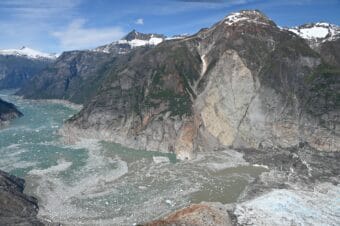
The Baby Brown and Glacier Side timber areas, left, are south of Glacier Creek, a main tributary to the Klehini River.
The Baby Brown and Glacier Side timber areas, left, are south of Glacier Creek, a main tributary to the Klehini River. (Courtesy of Derek Poinsette)

The state Department of Natural Resources is moving forward with its effort to overhaul the longstanding plan that dictates how it manages one of Alaska’s three state forests.

Agency staff are in Haines this week to meet with a range of local groups to solicit input for the new roadmap, which would open the entire Haines State Forest to logging — a major departure from the plan that’s been in place since 2002.

The effort began in 2024 after Gov. Mike Dunleavy directed the state Division of Forestry to boost the timber industry in Southeast Alaska – particularly in the Haines State Forest. The new version of the plan would also need to accommodate another Dunleavy policy: the sale of carbon credits.

But the major change is that the new management plan would allow for timber harvest in the entire forest, as opposed to about half of it.

“Prior to that it was 42,000 acres” available for harvest,” State Forester Greg Palmieri said in an interview earlier this week. “Well, now there’s 74,360 acres available for access for that type of resource management.”

A draft plan is in the works, but it hasn’t been released to the public yet. First, the agency will meet with local groups – including tribes, the Haines Borough and various advisory committees.

State Forester Greg Palmieri said those meetings will inform the draft, which should be released for public comment this spring.

“If we’re going to do this here, what do you think is the most appropriate way to do it, to protect the interest that you represent?” Palmieri said. “That’s the meaningful contribution that we’re trying to acquire at this time.”

Take the state forest land around Chilkoot Lake, which previously was not available for timber harvest. Palmieri said that the new plan could specify, for instance, that even though some timber harvest in that area may be on the table, clear cutting is not.

But at two local meetings this week that addressed the plan, participants focused more on the state’s process and its goal to boost logging than they did on any specific forestry recommendations.

One of those meetings happened Wednesday morning. Forestry officials met with a group that advises the state on how to manage the Alaska Chilkat Bald Eagle Preserve. Some, including Bill Thomas, seemed supportive of the effort.

“People forget, if it wasn’t for the logging industry, you wouldn’t have access out here anywhere,” he said.

Others, including Haines Mayor Tom Morphet, questioned the intent of the plan revision and potential outcome for local people.

“The state I think is going to have to make a lot better job explaining why it wants to start logging on recreation lands,” he said. “What’s the benefit to the community?”

People also voiced confusion over the process – and how they were supposed to weigh in on the issue without seeing the current draft or specific questions from the state.

That sentiment also arose on Monday, during a meeting of the area Fish and Game Advisory Committee. The group had yet to meet with DNR about the plan, but members spent the bulk of its regular meeting discussing it.

“They want us to comment when we have absolutely no idea of what their specific intentions are in any of these areas,” said committee member Kip Kermoian. “We have more meetings, but I think we need to insist on, if they want us to make informed decisions, we need more information.”

The group had yet to schedule a meeting with the state agency, but it voted to send a letter noting that the state is required by law to consult with them on such matters – and that the group’s members don’t think that what’s happened so far amounts to good-faith consultation.

Both committees indicated they planned to provide more specific, forestry-related feedback in the coming weeks.

Eaglecrest Ski Area’s general manager resigns, board chair steps down

Craig Cimmons interviews for the Eaglecrest Ski Area general manager position during a meeting at City Hall on Friday, Aug. 2, 2024. (Clarise Larson/KTOO)

The general manager of Juneau’s Eaglecrest Ski Area has resigned and the chair of its board of directors has stepped down. Both departures were announced Thursday night during the ski area’s board of directors meeting.

Hannah Shively served as the board chair for less than six months. At the meeting, she said she was leaving the role due to health reasons. The board elected Brandon Cullum as its new chair. 

Craig Cimmons, Eaglecrest’s general manager, was absent from the meeting Thursday night and did not immediately respond to a request for comment on his resignation. He has not publicly offered a reason as of Friday morning. 

“We’re not sure why the manager is not here tonight, totally honestly, we’re still trying to figure that out,” Cullum said during the meeting. “I’m sure it’s not out of disrespect to anyone, but we’re going to do the best we can to present the information that he’s provided and answer questions.”

Cimmons’ resignation comes after serving in the role for less than two years. He was hired as general manager in the fall of 2024 after the former manager, Dave Scanlan, was abruptly asked to resign by the board.

Both departures also come as the city-owned ski area faces a tough start to its 50th season, including a broken water line and a delayed opening of the Ptarmigan lift. And, that’s all while Juneau has been facing back-to-back snowstorms, prompting city officials and tribal leaders to issue a joint disaster declaration. The capital city is currently bracing for heavy rain and potential flooding from an atmospheric river on Friday.

“This month has been terrible,” Shively said at the meeting. “Pretty much anything that could have gone wrong went wrong.”

Eaglecrest staff originally announced in mid-December that there was a large break in its main water line that supplies its lodges. And, while that has since been repaired, staff say there are still other repairs that need to be done before the water is restored. In the meantime, skiers and staff have been using portable toilets outside of the lodge. 

Another issue is the delayed opening of its Ptarmigan lift due to unexpected repairs. The chairlift serves the middle of the mountain. According to Shively, the ski area hopes to open it soon. 

“All our required state certifications have been received, and we’re currently waiting for that final inspection from our insurance provider,” she said at the meeting.

Cimmons agreed to stay in his role for another month to help facilitate finding his replacement. Meanwhile, the ski area’s Director of Snowsports School, Rental, Retail & Repair Erin Lupro will take over the role of acting general manager.

The ski area is slated to celebrate its 50th year as a ski area next weekend.

Public comment period for proposed Cascade Point Ferry Terminal closes Friday

An aerial view of Berners Bay, where the state is proposing to build the Cascade Point Ferry Terminal. (Photo by Alix Soliman/KTOO)

The public comment period for phase 1 of the controversial Cascade Point Ferry Terminal in Juneau closes tomorrow, Jan. 9. 

The state’s proposed ferry terminal would be located about 30 miles north of the Auke Bay ferry terminal, on land owned by Goldbelt Incorporated, an Alaska Native Corporation. The project is slated to cost tens of millions of dollars.

Phase 1 of the project involves site preparation. The Alaska Department of Transportation already approved a $28.5 million contract for phase 1 construction to begin this summer. In December, the state signed a $1.3 million contract with Juneau Hydropower for equipment to electrify the proposed dock. 

The state has been pushing for the new terminal for several years, saying it would benefit travelers by reducing operating costs and travel time between Juneau, Haines and Skagway. 

The project stands to benefit the proposed New Amalga gold mine in Juneau, which would be established near the face of Herbert Glacier. In a press release last month, the Canadian company that proposed the mine, Grande Portage Resources, announced that it is working with Goldbelt to design an ore barge dock alongside Cascade Point.

Leaders in Skagway and Haines oppose the project. Members of the Alaska Marine Highway Operations Board have questioned the motives behind it. Some organizations, like the Southeast Alaska Conservation Council, have called it a bad idea when the money could be spent on improving the ferry system for riders. The Juneau Assembly hasn’t taken a stance on it.

The state’s comment period was initially set to end on Nov. 28 but was extended through Jan. 9. Comments can be submitted via email to gjc@mlfaalaska.com or through DOT’s Cascade Point webpage form.   

The state plans to open another comment period for phase 2 of the project, which will involve construction of the ferry terminal itself. 

Hoonah declares local disaster following back-to-back storms in Southeast Alaska

Downtown Hoonah on Wednesday, Jan. 8, 2025. (Photo courtesy of Dennis Gray Jr.)

The City of Hoonah declared a local emergency this week following heavy snowstorms in the region. 

On Tuesday night, the Hoonah City Council unanimously approved a disaster declaration, which opens the door for the Southeast community to request aid from the state. Gov. Mike Dunleavy approved the declaration Thursday morning. 

Hoonah’s City Administrator, Dennis Gray Jr., says the small community on Chichagof Island has been overwhelmed with the snow and needs assistance. As of yesterday morning, the National Weather Service in Juneau recorded that Hoonah had received at least three feet of snow since late December. 

“We’re facing the same issues that Juneau is,” he said. “We had three boats sink in our harbor. We have two that are still sunk and causing damage to the floats.”

Hoonah’s declaration comes around the same time that city and tribal leaders in Juneau announced a joint disaster declaration after back-to-back snowstorms dumped more than four feet of snow on Juneau.

Gray said Hoonah city staff and residents are struggling to keep up with snow removal on buildings, boats and roads. He said multiple porches and trailers have collapsed or been damaged due to the increasingly heavy snowpack. 

“We had eight men on top of our wastewater plant shoveling off snow to make sure it didn’t collapse,” he said. “It’s just a big mess.”

Gray said the city is requesting assistance from the state primarily to help recover the two large sunken vessels that local equipment is unable to remove from the harbor. 

Both Hoonah and the capital city are bracing for an atmospheric river expected to hit Southeast on Thursday evening that will bring heavy rain and potential flooding. 

‘Ticking time bomb’: Extreme snowfall fuels avalanche danger around Haines

Jeff Moskowitz, the director of the Haines Avalanche Center, digs a snow pit in Haines, Alaska to assess snow conditions and avalanche danger.
Jeff Moskowitz digs a snow pit in Haines after a major storm buried the community in late December. (Avery Ellfeldt/KHNS)

Avalanche professionals are warning backcountry adventurers to stay out of risky terrain after snow slammed the Upper Lynn Canal in late December.

National Weather Service data shows the storm dumped at least 44 inches of snow in Haines, making it the sixth snowiest five-day period in more than two decades. Other reports documented closer to six or seven feet.

“It was definitely one of the higher snowfalls you’ve gotten in five days, pretty much out of all your time that the station’s been there,” said Juneau-based meteorologist Edward Liske.

The dumping has created a risky situation in the backcountry that warrants extreme caution, said Jeff Moskowitz, the director of the Haines Avalanche Center.

His main message: “Avoid being in or around avalanche terrain.”

Earlier this week, Moskowitz dug a snow pit in front of Haines’ historic Fort Seward that confirmed his assessment. Standing chest-deep in the pit, he pointed out layers of snow stacked on top of each other, each representing a different storm.

There was a somewhat fluffy layer on top, from the snowfall in early January. Below that, there was a roughly three-foot-deep layer that was more compact, from the late December storm.

And then there was a thin, feeble layer of snow just inches from the ground that crumbled like sugar when Moskowitz ran his hand through it. That snow was on the ground before the big storm – it’s the layer that could collapse and trigger an avalanche under the weight of more precipitation, snowmachines or humans.

“We have about a meter of really strong snow just sitting over this sugar,” Moskowitz said, calling it a “dangerous combination for avalanches.”

Jeff Moskowitz directs the Haines Avalanche Center, the Chilkat Valley’s primary source of avalanche information. (Avery Ellfeldt/KHNS)

Starting Dec. 27, the situation prompted the center to issue warnings about high avalanche risk in the Haines area. Moskowitz said people should stay off slopes that are greater than 30 degrees – and avoid traveling beneath them.

“It’s just a tricky situation, because there’s lots of snow, and we want to go play,” he said. “But we still have this strong-over-weak layering in most places.”

In some places, he said, the weak layer may be buried so deep that a human or snowmachine wouldn’t trigger it. But in shallower areas, like near trees or rocks. the layer would be closer to the surface and more likely to trigger an avalanche.

“People could ride that slope numerous times until one person finds that weak spot,” he said.

The deluge has stopped for now. But the situation could get worse before it gets better, as temperatures rise and the top layer of snow consolidates into a heavier, thicker slab. New precipitation or other conditions could trigger a natural avalanche cycle, wiping that weak layer out.

“Otherwise, it’s a little bit like a ticking time bomb,” Moskowitz said.

Haines Avalanche Center

The Haines Avalanche Center is a nonprofit and the main source of avalanche information in the Chilkat Valley, which draws backcountry adventurers from around the world. Moskowitz emphasized the importance of donations, grants and borough funding to make that work possible.

In the past, the Haines Borough has asked nonprofits to apply for funding from a $100,000 bucket. But Haines Mayor Tom Morphet said that, amid a steep budget deficit, the assembly discontinued that grant process for fiscal year 2026, which runs through June.

That has meant less funding than usual for the Avalanche Center, which has just three part-time employees, including Moskowitz.

“Less funding means less staff time,” Moskowitz said. “And staff time means that locals who are avalanche professionals and have certifications are out there, digging in the snow, making assessments, posting that information publicly.”

The center posts a general avalanche information product every week, plus a weather forecast and season summary. They also issue advisories when avalanche danger is high, including three days in a row in late December.

But the center does not currently have the funding or staff capacity to consistently publish advisories when avalanche risk is low, moderate or considerable.

“What we don’t want, is that there’s an accident that sparks the public interest in supporting the Avalanche Center,” Moskowitz said. “We just need to maintain the services we provide and just keep it going year after year after year.”

Morphet, the mayor, said the borough and assembly are “acutely aware” of the center’s importance.

Moskowitz said people who recreate in the backcountry can help by paying close attention to their surroundings – and he urged them to send in their observations online.

That could mean details about a human-triggered or natural avalanche, about where the sun has hit the mountains on a particular day, or an observation that feathery crystals – known as surface hoar – have started forming on the snow’s surface.

“There’s very little information that we’re not going to find useful,” Moskowitz said. “All of that is very valuable, and it helps to inform this bigger picture.”

Report shows negative job growth in Southeast due to federal layoffs, population decline

Workers construct a retaining wall at the outdoor food court location on Franklin Street on Monday, April 15, 2024. (Photo by Clarise Larson/KTOO)

A drop in new and existing jobs is forecast in Southeast Alaska this year due to federal layoffs, funding cuts and steady population decline in the region, according to a recent report released by the Alaska Department of Labor and Workforce Development.

Economist Dan Robinson heads the state’s labor research department. He said the region is expected to lose about 100 jobs this year, but it’s not clear exactly how many of those are in the federal sector.

“We don’t yet have a really good handle on what our federal job numbers will be, but they’re not growing for the first time in a long time,” he said. “They’re almost certain to fall.”

Robinson said the Trump administration’s continuous push to shrink the federal workforce and reduce government spending will counter job growth in the Southeast region.

According to preliminary data, the department estimates Alaska lost about 300 federal jobs statewide in 2025, and more cuts are expected this year.

Robinson said those cuts, paired with Southeast’s steadily declining birth rates and outmigration, will likely put major constraints on the region’s economy. A previous report by the department found Southeast’s overall population is projected to drop by about 17% by 2050, or roughly 12,000 people.

“Fundamentally, what’s a challenge for Southeast region is our negative net migration, so more people wanting to leave the region than move here,” he said. 

Cruise ship tourism and mining continue to be bright spots for Southeast jobs and its economy. Last year, Juneau welcomed just under 1.7 million cruise ship passengers, and new and proposed docks are anticipated to open up more job opportunities.

The state overall is expected to experience a 1% growth of an additional 3,000 jobs this year. Most of that is made up of jobs in oil and gas, health care, construction and transportation, according to the report.

Site notifications
Update notification options
Subscribe to notifications