Southwest

Bethel cops accused of misconduct may still have police certifications

In a little over a year, the Bethel Police Department has had two high-profile cases of police misconduct–one involving police brutality and the other an attempted rape.

The department says it’s still working to improve hiring practices, but it’s unclear if either of the men previously referenced still have their police certification.

In early November, former Bethel police officer Aaron Fedolfi was caught in Anchorage after evading arrest for charges of attempted sexual assault and police misconduct while serving with the Bethel Police Department.

A few months prior, Fedolfi picked up an intoxicated woman and took her to the town’s dog pound and attempted to rape her, according to charging documents.

After an investigation, Fedolfi was placed on administrative leave and soon after quit. He was recently released on bail.

Fedolfi was hired in 2013, before the Bethel Police Department required psychiatric and polygraph evaluations as a mandatory part of its hiring practices.

Polygraph exams aren’t required under state police regulations, but state statute requires psychiatric exams. They can’t be substituted.

But until a little over a year ago, prospective hires could have their exams waived if they’d taken them before or in another state.

“In other words, we’ve had employees that we’ve hired that may have had a psych exam at another agency, could be five or 10 years ago, or a polygraph five or 10 years ago,” Bethel police chief Andre Achee said.

Fedolfi’s wasn’t the only recent high-profile case of police misconduct in Bethel.

Last July, a grainy surveillance video from the local grocery store in Bethel showed a police officer repeatedly picking up a Yup’ik man and slamming his body to the ground. In the footage, the officer throws him across the dirt parking lot 11 times. He continues this for more than two minutes.

The officer in the video is Andrew Reid, and in early March, BPD fired him.

But 200 days after Reid was fired, it’s unclear whether he still has his police certification — despite an ongoing FBI investigation. There’s no record of the Alaska Police Standards Council, or APSC, revoking it.

When an officer is fired or facing criminal charges, their certification isn’t automatically revoked. Criminal charges are processed separately.

But after a police officer leaves a department — whether it’s on their own or not — the department has 30 days to send a report to the APSC detailing why the officer left. The council can revoke an officer’s certification, but the actions aren’t public and only become available if a certification is stripped or if an officer contests the revocation.

As of late November, the office that holds these public records did not have either Fedolfi or Reid’s name in their files.

It’s an area that APSC Administrative Investigator Sarah Hieb says isn’t black or white.

“It would be a gray area,” Hieb said. “My understanding is records are confidential. We’re not allowed to talk about what our records are. The only people allowed to look are the actual officers, and they’re only allowed to look at things related to their training and forms they’ve personally filled out and have been sent to us.”

She says there are three things the council looks for when considering revocation: dishonesty, misconduct and lack of good moral character.

“We do take our jobs very seriously to make sure we don’t have police officers who aren’t doing things or should not be working as a police officer,” she said.

APSC also sets general hiring requirements and policies that state police departments must follow. However, there is a lot the council recommends but doesn’t require. For example: a department isn’t required to check whether an officer is under investigation before hiring. Police department also aren’t required to list their current officers on their website. Bethel police currently implements both of these recommendations.

In Alaska, there isn’t a public or private database of police officers currently working in the state.

When it comes to a lot of police information — who’s working in a department and why an officer leaves — APSC only knows what the department reports.

“A police department is required to send us information whenever a police offer no longer works for them — either through retirement or resigning,” Hieb said.

Since last December, the council has met twice and revoked the certifications of eight police officers. None of the records belonged to Reid.

After an officer’s license is revoked, the officer can reapply after one year.

Bethel Police Chief Andre Achee has been with the department for nearly three decades and considers it a second family. He says he’s focused on building trust with the community.

Achee says the department has hired a more diverse and representative police force compared to previous years.

“Maintaining community relationships is not something you can just plan,” Achee said. “It’s a continuing endeavor every day. It’s not going to be one or two years and we forget about it. The officers here, as well as myself, need to continue this effort every day.”

Speeding up violent crime investigations is goal of new Bethel Troopers unit

The Yukon Kuskokwim Delta has a new Alaska State Troopers unit this week. The unit’s main goal is to investigate violent crimes faster, so reports can make it onto the district attorney’s desk sooner.

The Violent Offenders Unit began Tuesday, Dec. 1, after the team was kick started in mid-September.

Their caseload is already nearing 70.

Teague Widmier is the sergeant leading the new three-person unit. He, along with the two patrol troopers on the team, have a combined experience of more than 40 years on the force.

Widmier has worked as a trooper in Bethel for more than a decade. In his experience, crime in the delta has changed.

“Over time I’ve seen the crimes become more violent,” Widmier said.

He says the severity of the crimes have increased but he’s not sure why.

Although he’s excited to be a part of the unit but acknowledges their caseload is already overwhelming.

“This unit has handled 69 cases, so out of those cases,” he said. “We have worked diligently with the individuals with the families and district attorney’s office.”

This number includes cases the troopers are assisting other agencies with. The unit focuses on investigating crimes of sexual assault and child sex abuse. Their duties include interviewing perpetrators, victims and witnesses, as well as transporting survivors to Bethel for sexual assault evidence exams, or rape kits and other medical needs.

The faster the investigations are completed, the sooner troopers can write their reports and hand them over to the district attorney’s office.

Cpt. Barry Wilson overseas the C detachment, one of the five areas troopers divide the state into. This detachment includes the Bethel troopers. He says some variation of the unit has been in discussion for years.

“So it’s kind of been in this transitional thought process,” Wilson said. “We knew we wanted to do something different. We just weren’t sure what that would look like, and what that will ultimately look like.”

Wilson says the main goal was to cut down on the time it took for cases to be investigated. He says there wasn’t pressure from the district attorney’s office, but that the faster these cases are investigated, the quicker perpetrators can be put behind bars.

Before the unit was created, cases involving violent crimes would be dispersed between the 12-person trooper team.

“This three-man unit cannot take on all of these cases, it’s not designed, but it can take some of the pressure off of the patrol folks so they can do their cases.” Wilson said.

Barry says centralizing the investigations to one unit will relieve other patrol troopers of some of the pressure of handling these cases, and create more efficiency. And in lieu of budget cuts, instead of hiring for a new unit they comprised the team from troopers already in Bethel.

“We average about 250 sexual assault/ sexual abuse of a minor in C detachment, of those 40 percent of those are in Bethel. So that’s a bunch of cases, almost one a day, somewhere in C detachment,” he said.

Wilson says troopers can’t make crime disappear, but they can do their best to make sure offenders are brought to justice.

“Unfortunately, history hasn’t shown that we’ll ever be out of business. What we will try to do is provide a good work product, so if it’s appropriate someone is held accountable for their actions, then they are.”

Sexual assault in Alaska is three times the national average, according to 2012 FBI statistics.
Wilson says nearly a quarter of all sex crime cases that are processed through the Dept. of Public Safety in the state are handled in the hub.

Bethel troopers respond to cases all over the region—with 57 communities, including Bethel, that’s more than 26,000 residents.

Despite the population numbers, Western Alaska only makes up about 5 percent of the entire state.

Former Bethel cop accused of attempted sexual assault out on bail

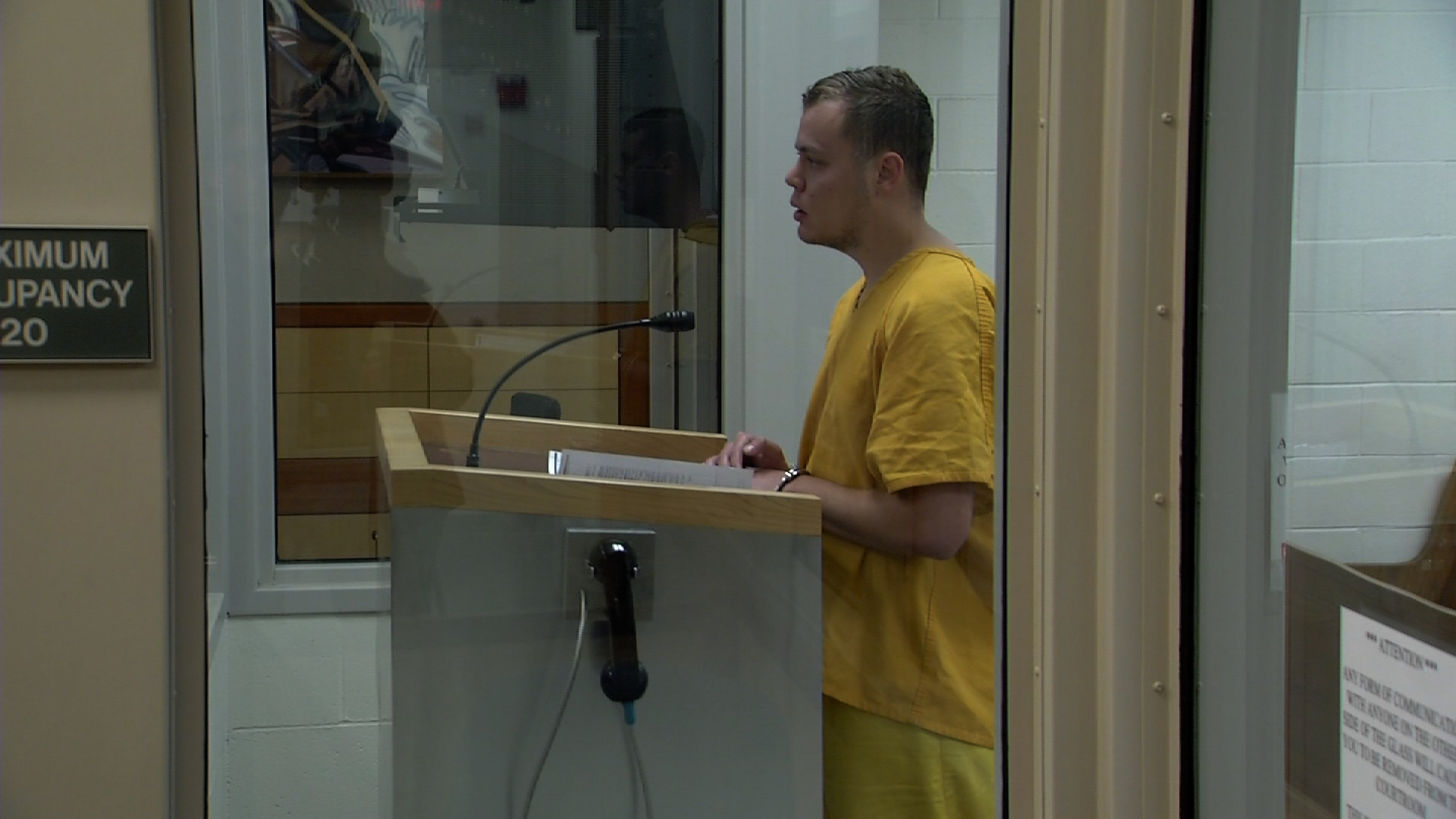
Aaron Fedolfi in Anchorage Jail Court. (Photo courtesy of KTVA 11 News)

Former Bethel police officer Aaron Fedolfi is out on bail in Anchorage, as of Monday, Nov. 30, according to court documents.

The bail amount was reduced from $20,000 to $2,500.

Fedolfi is the former Bethel police officer charged with two misdemeanor counts of attempted sexual assault and official misconduct while serving with the Bethel Police Department.

After the complaints arose in September, Fedolfi was placed on administrative leave and then quit. After charges were brought forth, Fedolfi went on a five-day run from authorities before being caught in Anchorage.

The bail hearing took place the day before Thanksgiving in the Anchorage courthouse. Fedolfi was released on the conditions that he wears an ankle bracelet, for GPS monitoring and is placed under house arrest.

According to court documents, he’s not allowed Internet access and can only use a monitored cellphone.

Fedolfi’s defense attorney paid the cash bond for Fedolfi’s release. This was the second bail hearing for the defendant.

His lawyer tried unsuccessfully to have him released the previous week.

According to the documents, Fedolfi will stay at a hotel in Anchorage as he has no family members in the city.

He’s due back in Bethel court Jan. 5.

Pebble withdraws subpoenas in lawsuit against EPA

Crowd members hold salmon signs at a 2014 EPA hearing in Dillingham. (KDLG file photo)

The company interested in building what would be the world’s largest gold and copper mine in Bristol Bay has downsized its information requests in its lawsuit over federal efforts to block the project, dropping subpoenas in two other states and Alaska.

The Pebble Limited Partnership filed suit against the Environmental Protection Agency last year, asserting that the agency acted improperly in its communications with individuals and organizations regarding what it calls a “pre-emptive” veto of the proposed mine project. To help prove its case, the company requested to subpoena more than 60 individuals and groups, including Trout Unlimited, the Bristol Bay Regional Seafood Development Association and several Bristol Bay area Alaska Native organizations. Some, including the United Fishermen of Alaska, have already provided emails or other documents related to the proposed mine. Others asked a judge to quash their subpoenas.

But after U.S. District Court Judge H. Russel Holland ruled against some of the subpoenas, the company withdrew additional subpoenas, said Pebble spokesman Mike Heatwole.

“We’re seeking to comply with the judge’s order and focus our discovery efforts now with the Environmental Protection Agency to see if that can fill in the gaps for the information we’re seeking about our FACA complaint,” Heatwole said.

Trustees for Alaska represents a handful of those who were subpoenaed: Nunamta Aulukestai, Cook Inletkeeper, Groundtruth Trekking, Kim Williams, Tim Troll and Tom Tilden. Attorney Michelle Sinnott said it was good news that the subpoenas have been withdrawn.

“These are people who love Bristol Bay, who have been working really hard to protect a world-class watershed,” she said. “This is their backyard. These are things they care about. And to be drawn into this federal litigation, is very expensive for these nonparties, it’s very expensive for individuals and nonprofits and native organizations to have to defend themselves against these sorts of discovery tactics.”

Holland ruled Nov. 18 that the requests to subpoena Bristol Bay Regional Seafood Development Association, the Alaska Conservation Foundation and individuals involved with those groups were “pushing the envelope.”

Sinnott said Holland’s decision indicated that the information Pebble was looking for was irrelevant.

“Our clients have the right to talk to each other about opposing the Pebble Mine, as part of their First Amendment constitutional right. They should be able to protect their backyard and talk to their government about protecting it.”

Not all of the subpoenas appeared to have been withdrawn as of Nov. 24, but Heatwole said he believed Pebble’s intent was to withdraw those remaining subpoenas, although the company might resume its efforts to access private communication if it can’t get what it needs from the Environmental Protection Agency.

Some had said the information requests seemed as much an effort to scare and quiet mine opponents as an effort to build Pebble’s case, but in its filing the company reiterated that it thought the emails helped prove that the Environmental Protection Agency had acted improperly.

“We’ve already received some documentation from other third party groups that are clearly of interest to our case and we note that in the court filing,” Heatwole said.

The filing included emails between Trout Unlimited staff and other consultants working against the mine, largely in regards to their efforts to provide justification for their position.

Pebble was also trying to subpoena Phil North, a former Environmental Protection Agency employee believed to be central to the case, but so far hasn’t been able to find him. He’s believed to have left the country after he retired.

In the company’s filing, attorney Thomas Amodio wrote that if the partnership cannot find North, it might be necessary to “seek communications from other nonparties who communicated with him ‘off the books’,” to get a complete sense of his role in the Environmental Protection Agency’s work.

Organization aims to establish tribal court in every YK village

An Alaska nonprofit wants to do something new — set up courts for about one-fourth of Alaska’s tribes. The Association of Village Council Presidents, or AVCP, is a nonprofit representing 56 villages across the Yukon-Kuskokwim Delta, and they want each village to develop its own tribal court. Before they can do that, AVCP has to develop a model for something that has never existed.

Tribal courts exist in the Lower 48 but are rare in Alaska. There are 10 courts in the YK region.

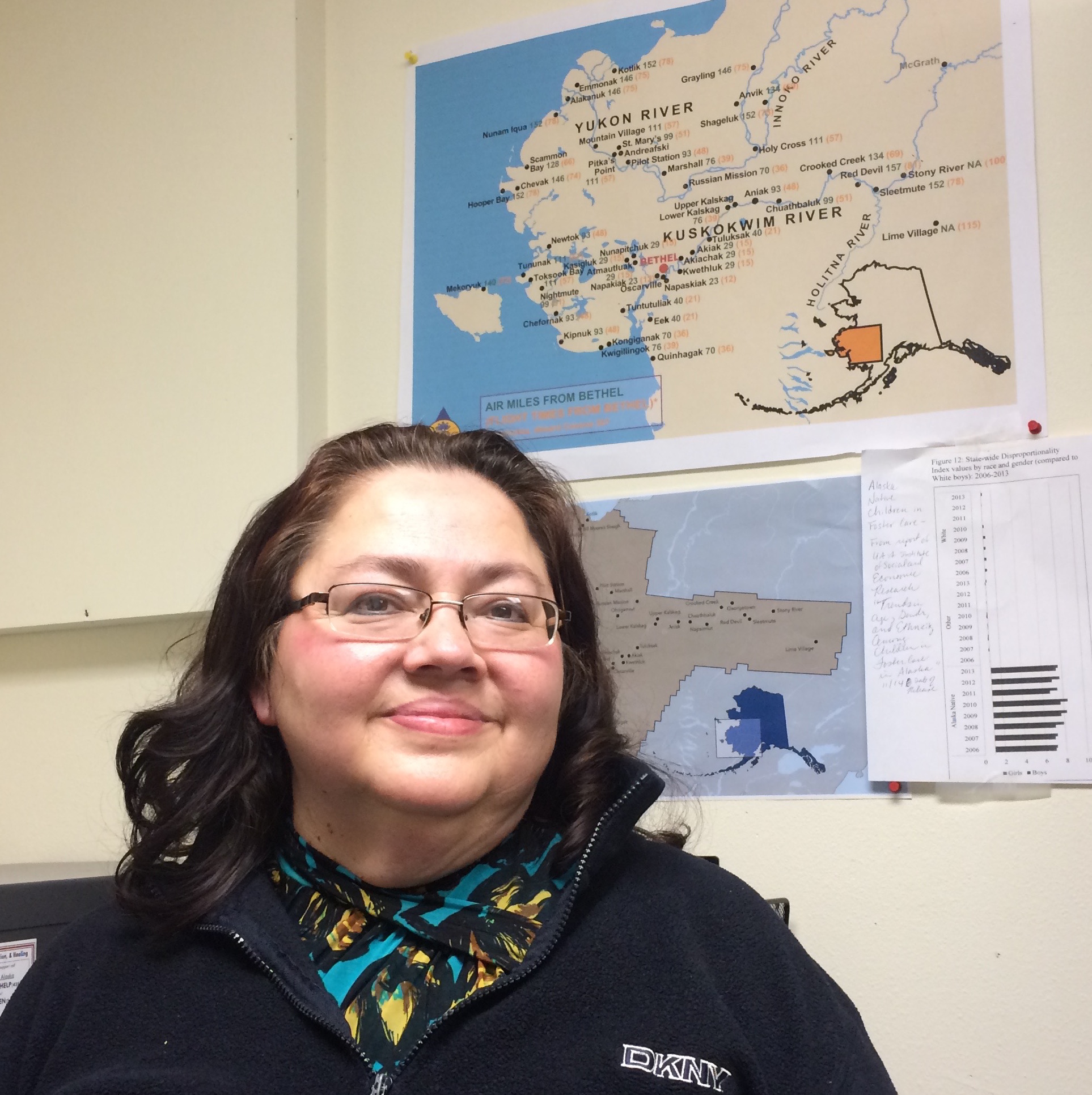
Monique Vondall-Rieke, AVCP Tribal Justice Center Director, with a map of the YK Delta. (Photo by Anna Rose MacArthur/KYUK)

Monique Vondall-Rieke is working to change that.

“It’s a really big order to fill, but it’s part of history,” Vondall-Rieke said.

AVCP has tasked its Tribal Justice Center with developing a court in each of its 56 villages. Right now, Vondall-Rieke is the director and sole member of the department. She comes from North Dakota where she served as a tribal court justice for the Turtle Mountain Band of Chippewa Indians.

“Through the development of tribal courts, you’re saying, we are empowering ourselves to be able to deal with our own issues,” Vondall-Rieke said. “And it increases your exercise of sovereign immunity.

Tribal courts often deal with civil issues like disputes between tribal members, between businesses and members, and between tribes and agencies. They handle child custody cases, adoptions, and juvenile cases. They also try and prosecute misdemeanors committed within the tribe’s jurisdiction.

Because this process operates without law enforcement, it protects tribal members from racking up criminal records and it saves the state money.

The current hitch is that in Alaska lands cannot be taken into trust, which makes it difficult to define a tribe’s jurisdiction and impossible to secure federal funding to run the courts.

But AVCP is moving forward anyway with the hope that Gov. Walker’s administration will drop the lawsuit fighting trust status.

AVCP received a multimillion-dollar federal grant that allows the Bureau of Indian Affairs to fund the court assessments without taking land into trust. Last month, Vondall-Rieke and a group of consultants from the lower-48 traveled to two YK villages — Emmonak and Kongiganak — to begin creating the model, which they will roll out at the annual BIA Providers Conference in Anchorage this December.

“The plan is that once we have this assessment model tool designed, then the BIA can take that to the other nonprofit organizations that represent tribes in Alaska, and do the same thing there. So their turn will be coming,” Vondall-Rieke said.

What makes the assessment model unique is that it is being solicited by a tribal organization rather than a tribe, as what usually happens in the lower-48.

After the conference, people can begin applying to conduct the assessments.

The Lower 48 consultants are looking for specific credentials — Yup’ik speaking, local, Alaska Natives with law degrees.

“That’s kind of a tall order for our area. We’re very limited in the law degrees that are held by tribal members in our area, especially Yup’ik speaking tribal members,” Vondall-Rieke said.

Even if the assessors don’t carry law degrees, they’ll need specialized education.

“Certainly you have to have some knowledge of tribal courts or law. You have to probably have to have at least a Ph.D., be a good researcher,” she said. “It’s a lot of data gathering and it’s a lot of footwork, but it’ll leave a legacy behind.”

Vondall-Rieke hopes the assessments will begin in January.

“I’m looking for updated tribal constitutions, updated tribal codes, the case load of each court that’s in existence already,” she said.

She also wants to begin training court judges, clerks, and staff as well as law enforcement and tribal council members at that time.

Vondall-Rieke hopes the 56 assessments will be completed by late 2018.

Dillingham youth center to close due to lost grant funding

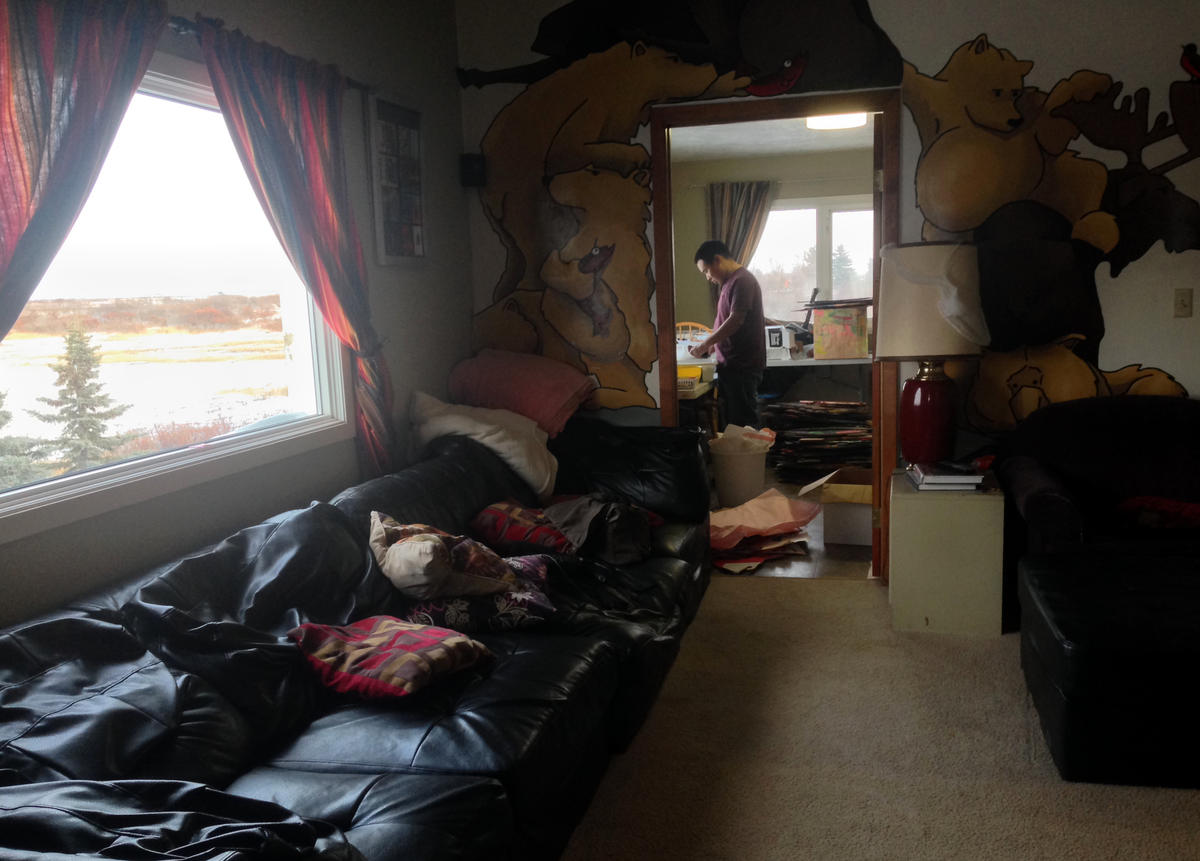
Myspace employee Darren Petla organizes supplies in the art room in preparation for the center's close in a few weeks. (Photo by Hannah Colton/KDLG)
Myspace employee Darren Petla organizes supplies in the art room in preparation for the center’s close in a few weeks. (Photo by Hannah Colton/KDLG)

The Myspace Youth Wellness Center in Dillingham will likely close its doors at the end of the month, as its grant funding has run out.

Myspace is a series of rooms geared toward teens – an art room, a kitchen stocked with snacks, a living room with a TV and video games.

On a recent afternoon, the rooms were neat and quiet, but Myspace employee Darren Petla says it’s not always like that.

“We have days when we are like brothers and sisters, like ‘OK you need to put that down, quit being’ mischief! No running’ around! Turn down that music!’ … You know, something like that every so often. So it’s good,” he said.

Petla enjoys working at Myspace. He talks to teenagers about their school day, cooks with them, helps them with homework. But come Nov. 30, Petla may be out of a job.

“The grant ended June 30, so SAFE has funded this, and now we’re at a hard deadline because we don’t have the money,” he said.

Karen Carpenter is the outreach and education coordinator at SAFE. She says Myspace was funded as part of the $373,000 “CANDU” grant that a group of Dillingham organizations received in 2011. It was awarded under former Governor Sean Parnell’s campaign against domestic violence and then extended through June 2015.

It’s the same grant that put fish art on buildings downtown and bus shacks in neighborhoods.

Anna Rae Petla, employee Gregg Marxmiller, and other teens organize the art room at Myspace. (Photo by Molly Dischner/KDLG)

Carpenter says the goal of all the CANDU projects was to make the community feel safer and more positive, especially for young people.

“Children are going go where the door’s open,” she said. “That’s the bottom line. So which door (are you going) to leave open for them? It’s going to be the home of the drug dealer. Or the drinking, the parents fighting and screaming, and no food in the house, with no electricity, no heat… So if we provide this safe environment and surround them with good, healthy options, it affects them. It changes them. So our goal has been to keep the right doors open.”

And children have made good use of that doorway. SAFE records show that Myspace activities drew about 150 children in the last year.

One of them was 17-year-old Brandon Dyasuk.

“There’s not a lot of stuff to do. I used to get in trouble a lot … I’m gonna be getting out of treatment soon, you know? This place can help keep me out of trouble and keep me in school. It helps me stay around sober people,” he said.

Keeping children off drugs is a high priority at Myspace. Even smelling like cigarettes is against the rules. But 15-year-old Anna Rae Petla says the center can also help with just the day-to-day challenges of being a teenager.

“I like Myspace because they help you with schoolwork and how to understand things when you’re alone — when you feel alone but you’re not alone. I don’t what I would do if Myspace has closed,” Petla said.

Petla, Dyasuk, and others may have to hang out elsewhere this winter, unless SAFE can raise the $6,500 a month it takes to keep Myspace staffed.

SAFE is currently planning fundraising efforts, including a table at the Christmas bazaar, soliciting private donations and applying for more grants.

Site notifications
Update notification options
Subscribe to notifications