Southwest

With understanding comes forgiveness: Turning ‘Yuuyaraq’ into film

(Video still courtesy Lisle Hebert)

Juneau filmmaker Lisle Hebert is making a film based on Harold Napoleon’s essay “Yuuyaraq: The Way of the Human Being.” Napoleon gave Hebert his blessing to do the adaptation, but he says it’ll be a challenge to translate the message to film.

The beginning of Lisle Hebert’s film “Yuuyaraq” is a re-enactment depicting life on the Yukon-Kuskokwim Delta before Western contact. The narration stays true to Harold Napoleon’s original words.
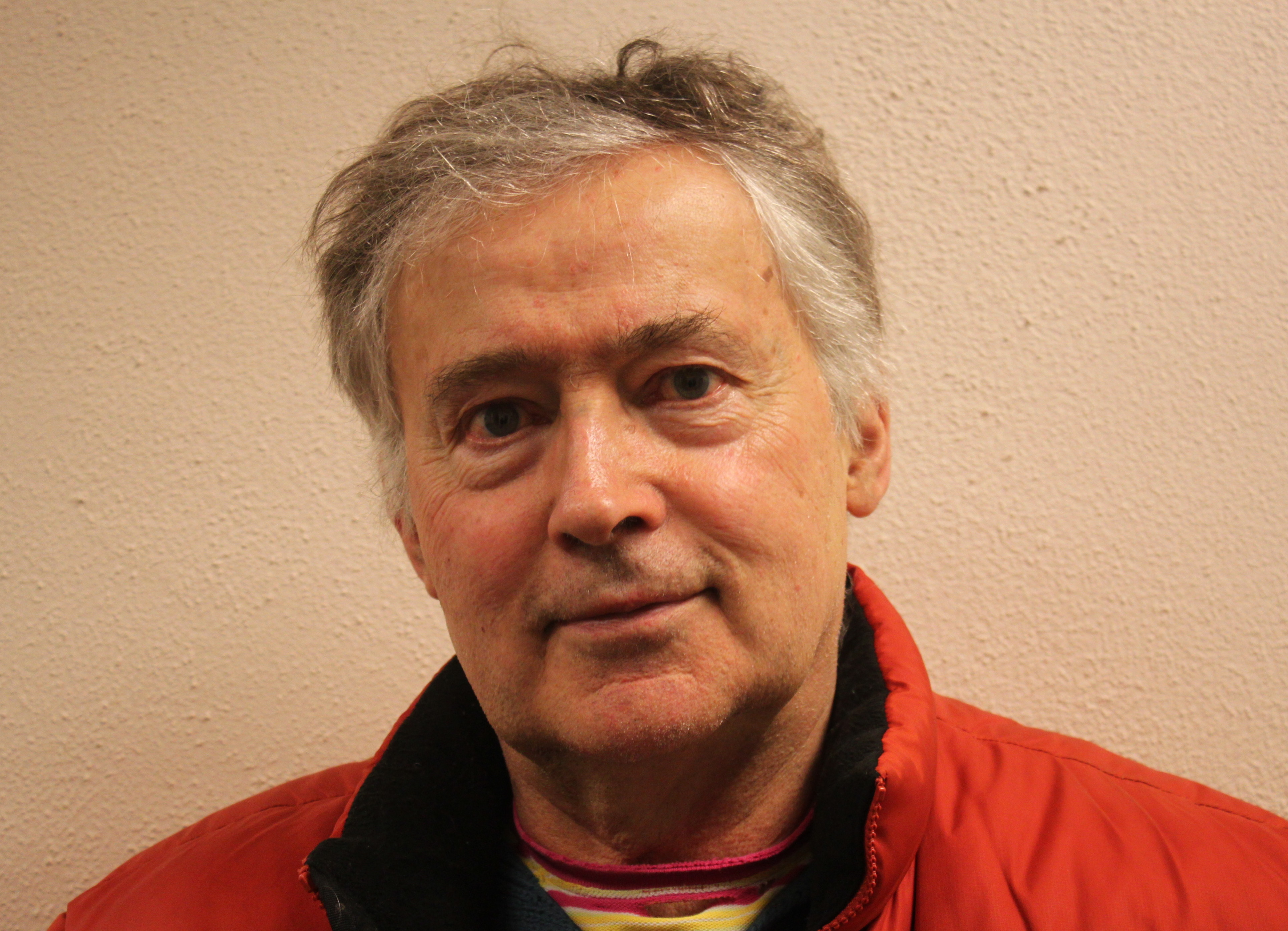
Juneau filmmaker Lisle Hebert (Photo by Lisa Phu/KTOO)

“It’s verbatim because his writing is so poetic, and so I couldn’t do better than that,” Hebert said.

The re-enactment conveys what the Yup’ik word Yuuyaraq means.

“Their spiritual beliefs, the way they viewed the world, everything had a spirit. Everything was in harmony and it was kind of like a code of living,” Hebert said.

Napoleon wrote Yuuyaraq in 1988 when he was in prison for the death of his son. He says he was so drunk, he blacked out and doesn’t remember it. Without any memory of what happened, he couldn’t defend himself and so he pled no contest to second degree murder. He never went to trial and no matter how it happened, he blames himself.

He started writing to figure out why he and so many people he knew struggled with alcohol abuse.

Napoleon is Yup’ik Eskimo from Hooper Bay.

“I had been baffled for many years about why we knew so very little about our own history and why there was so much shame about our own culture,” Napoleon said.

Napoleon is 66. He said he grew up in a very confusing world, being neither fully Yup’ik nor white and Christian. There was suffering in the missing pieces of his village’s history.

“There was also a lot of disconnect between parents and children and that disconnect was not just personal, it was also cultural,” Napoleon said.

“As children, we were not abandoned literally, but we somehow ended up in nowhere land.”

Napoleon experienced abuse as a child and drank as an adult. While in prison, he read a lot about trauma and post-traumatic stress disorder in Vietnam War veterans.

“Having never been to war and never experienced war or witnessed war, I found it odd that I would have the same symptoms as Vietnam veterans. And not only me but all the other people in my village had the same symptoms,” Napoleon said.

After more research, Napoleon learned about the flu epidemic of 1918. In Yuuyaraq, he calls it the “Great Death” and wrote that it spread like wildfire, killing 6 of every 10 people and wiping out Alaskan villages. “It gave birth to a generation of orphans,” he wrote.
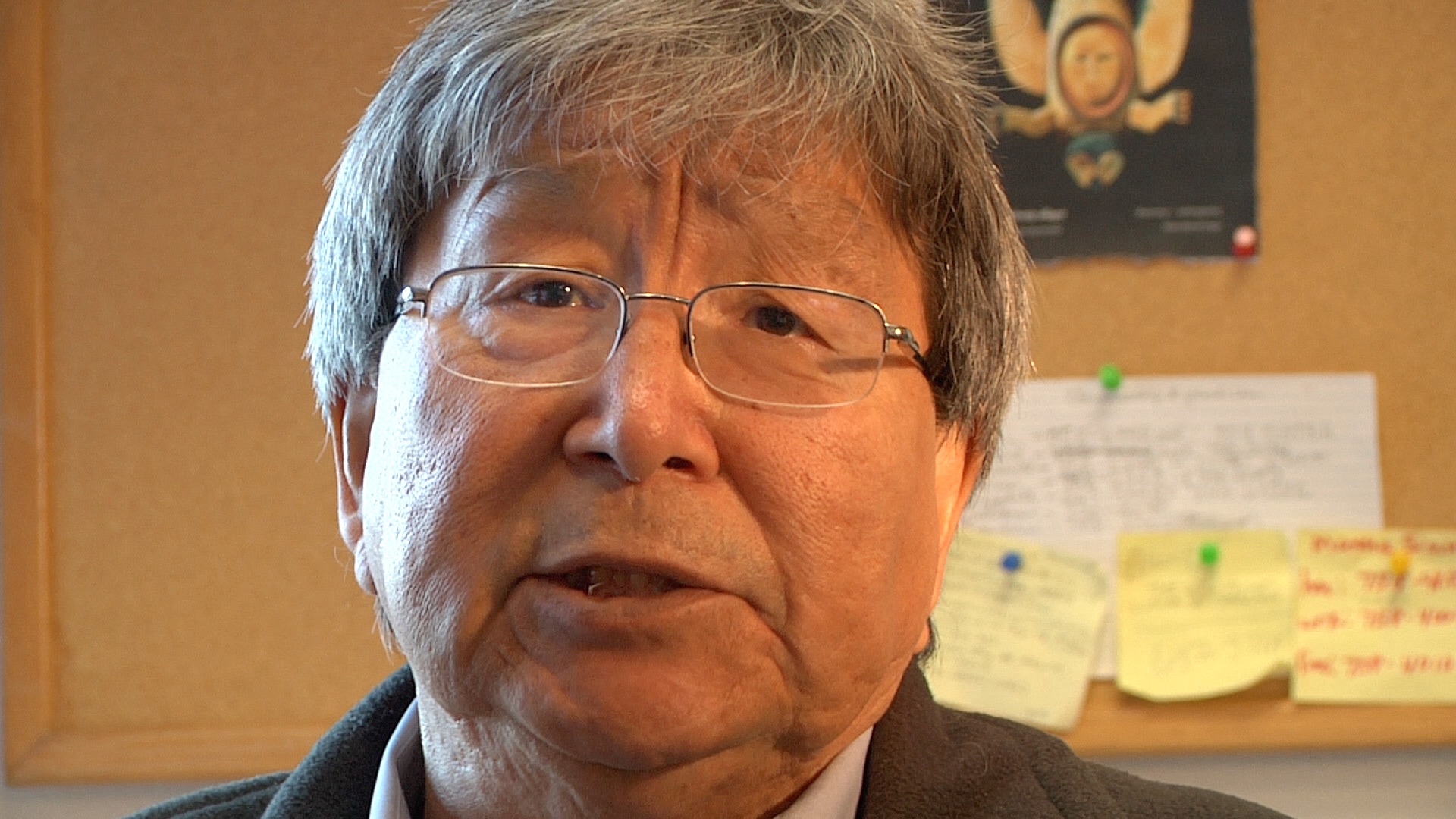
Harold Napoleon wrote "Yuuyaraq: The Way of the Human Being" in 1988. (Video still courtesy Lisle Hebert)
Harold Napoleon wrote “Yuuyaraq: The Way of the Human Being” in 1988. (Video still courtesy Lisle Hebert)

Up until then, Napoleon said Yup’ik people had resisted Christianity and white influence.

“But after ‘The Great Death,’ there was mass conversion and people began to abandon, in a sense, their own culture and in abandoning their culture, they abandoned themselves. There was also born in them a sense of shame and guilt because what they were being taught is that the way they had lived their lives had caused them to die in such great numbers,” Napoleon said.

He said the trauma, shame and violence he and others in his village experienced traces back to that time. And it still reverberates today.

Writing Yuuyaraq, Napoleon said, helped him to understand his village and his family, the past and the present.

“With understanding there came forgiveness. I had found a trail of truth through our experiences as Native people,” he said.

Napoleon said Alaska Native cultures are going through a reawakening and he hopes Lisle Hebert’s film adaptation of Yuuyaraq will contribute to it.

“If the young people become interested in their own stories, in their own history, then I think it will have done a good job,” Napoleon said.

As a young man, Hebert said he spent time in Hollywood and used to be egotistical about filmmaking, but Yuuyaraq is about something else.

“I’m hoping that people will be moved by it and have more compassion and also realize what (Alaska Natives) have been through, and try to look at people like people,” Hebert said.

For Hebert, Yuuyaraq is a meaningful film, and that has given meaning to his own life.

Lisle Hebert plans to finish the film in June. An Indiegogo campaign is currently underway to help him do that. You can also attend a community potluck and “fun-raiser” on Wednesday, Dec. 16 at St. Ann’s Parish Hall from 5 to 8 p.m.

Bethel considers becoming a borough as proposed gold mine advances

Donlin runway and camp site in summer 2014. (Photo by Dean Swope/KYUK)

With the proposed Donlin Gold Mine appearing like a truer and nearer reality, the City of Bethel is looking at transforming into an organized borough. At Tuesday’s meeting, Bethel City Council voted to give City Manager Ann Capela the go-ahead into mapping out the process. Council member Nikki Hoffman introduced the measure.

Capela said, as a borough, Bethel would have greater control over land use and could tax Donlin Gold.

“The City of Bethel will have many, many of the impacts from this industry with no financial benefits. And there is no mechanism for the city, currently, at this time, to go and make them come to the table,” Capela said.

Donlin Gold released its environmental impact statement last month. According to the document, if anything goes awry the city cannot hold the mining company accountable or extract impact fees — something the city could change as a borough.

One of those impacts, Capela predicts, will be on Bethel’s port and the Kuskokwim River. Capela said Donlin Gold plans to park a sea barge near Bethel and run at least two river barges a day along the waterway.

“And, by the way, they propose that nothing will ever happen. No spills will take place, and if it does they’ll call the National Guard. There is no contingency for emergency management,” Capela added.

As a borough, Bethel would have more leverage holding Donlin Gold responsible if damages occurred and creating demands for emergency mitigation.

Morphing into an organized borough would be hugely complicated, and Capela estimates the process would take three years, about the same time Donlin needs to gather its necessary permits.

The council voted 4-2 to allow Capela to begin exploring the borough organization process.

‘I Am Yup’ik’ film makes it to Sundance

I Am Yupik still Byron Nicholai
Byron Nicholai in a still from Nathan Golon’s film “I Am Yup’ik.” (Courtesy Sundance Institute)

The film “I Am Yup’ik” has made the 2016 Sundance Film Festival lineup, the nonprofit organization announced Tuesday.

According to the lineup summary, the short film, directed by Daniele Anastasion and Nathan Golon, is about a 16-year-old Yup’ik Eskimo boy who leaves his village to travel across the snowy isolated tundra. The film chronicles his journey to compete in an all Yup’ik basketball tournament in order to bring pride to his village.

The film stars Toksook Bay resident Byron Nicholai, now 17 years old. The high school student received national attention after uploading a song titled “I am Yup’ik” to his Facebook page. The film features other Toksook Bay residents, as well.

Anastasion and Golon came to the Kuskokwim area to shoot the movie in Bethel and in surrounding villages, earlier this year in April and May. Washington D.C.-based film company GoodFight Media produced the film.

The documentary short is among 72 other short international films that will be showcased at the festival in January.

The acclaimed festival began in the late 70s, and highlights independent filmmakers around the world.

Bethel opens housing to retain city workers

Willow Place Apartments entry
The Willow Place Apartments entryway. (Photo by Dean Swope /KYUK)

Jobs in rural Alaska are often seen as a career stepping stone. Professionals take a job for a year, maybe two, and leave. They take career skills and experience with them rather than reinvesting in the community. The high turnover rate prevents institutional knowledge from accumulating and community trust in its professionals from strengthening.

How to break the cycle and retain workers is one of rural Alaska’s most vexing puzzles. The community of Bethel thinks it’s got one piece figured out.

Willow Place Apartments view
The view outside a Willow Place apartment window. (Photo by Dean Swope/KYUK)

Walking into the room, the first thing I notice is the view — a fringe of willows and then miles of snowy tundra. The window belongs to one of six new apartments, specifically constructed for public safety, education and health professionals in Bethel.

The idea is by providing high quality, affordable housing, Bethel can better recruit and retain personnel.

20151130 Michelle DeWitt at Willow Place Apartments
Bethel Community Services Foundation Executive Director Michelle DeWitt inside the Willow Place Apartments. (Photo by Dean Swope/KYUK)

Bethel Community Services Foundation led the project. The group wants to address community issues, and Executive Director Michelle DeWitt says housing sits high on that list.

“When people leave positions here,” DeWitt said, “housing is often at the root of one of their challenges or one of their areas of dissatisfaction. We have a lack of new, appropriate, nice housing.”

These apartments are nice — wood pattern floors and cabinets, modern appliances, high energy conservation ratings and, of course, the scenic views.

Mayor Rick Robb was also impressed.

“Well this is beautiful,” Robb said. “There’s no doubt. Course it’s brand new, all redone, so it’s beautiful. This was kind of a white elephant, kind of an albatross. It’s been totally renovated.”

Rick Robb at Willow Place Apartments
Bethel Mayor Rick Robb. (Photo by Dean Swope/KYUK)

The building was once a daycare center, left vacant several years ago. The push to revitalize an older building helped attract one of the project’s funders — the Alaska Housing Finance Corporation.

For over a decade, the corporation has funded housing projects for teachers, health professionals and public safety workers across rural Alaska to decrease turnover. So far, the program has shown success with teacher retention.

Derrick Chan is a planner with AHFC and said the key to keeping workers long term is getting them to stay past their first year.

“If a person works in an area beyond that one-year period,” Chan said, “they’re less likely to transition out. We’re really trying to provide an environment where they can call home, and at the end of the day, they have a place to kick their feet up. They feel welcome.”

Bethel City Manager Ann Capela said that initial welcome can make or break a new employee’s first impression.

“This is a true story. We had an employee come, take a job at Bethel. We had no place to put him up for the night. We put him up at the annex. He looked at his surroundings, and he left on the first flight in the morning,” Capela said.

The city’s newest hire, a firefighter EMT, will have a different experience. He arrived this week with his family and moved directly into one of the units. It’s a step up from the fire department’s usual protocol of housing new recruits in the fire station for their first month.

Fire Chief Bill Howell hopes the apartments will attract more workers.

“I would think this is definitely helpful from a recruiting standpoint,” Howell said. “You know, a lot of the times, people have the financial resources to get housing in Bethel, and they just can’t find it.”

DeWitt said she’ll consider the housing successful if people stay past one year.

“I’d be really excited if we had people who were in the units for 18 months to two years,” DeWitt said, “and I’d be even more excited if they left the units to purchase a home in our community. Retention is a really positive thing. When you have quality people in important positions, the outcomes are better for everyone.”

The units opened on Nov. 30 and already four of the six spaces are occupied. Tenants include the firefighter, two police officers, and a community safety patrol officer and their families.

Bethel grand jury indicts Kipnuk man in 2014 Tununak murder case

Following a grand jury indictment, authorities arrested a Kipnuk man on an outstanding warrant last Saturday.

Ryan Samson, 33, is facing three felony charges of first-degree murder and two counts of tampering with evidence.

According to the online trooper dispatch, Samson tried to clean up the crime scene after committing a murder last October near Tununak.

The man who died was 36-year-old Tununak resident Walter “Jason” Walter.

Samson was in the Bethel courthouse Sunday morning. He is being held at the Yukon Kuskokwim Correctional Center.

AC Quickstop begins plans for Bethel liquor store

AC Quickstop in Bethel
The Bethel AC Quickstop. (Photo by Dean Swope/KYUK)

Bethel received two liquor licenses last month. But the town’s almost half-century ban on legal sales hasn’t entirely broken yet. The two entities who obtained the licenses — Alaska Commercial Co. and Bethel Native Corp. — still need to set up their stores. AC Quickstop began that process last week.

Walter Pickett is the Alaska Commercial Co. general manager. He says the final vision for AC Quickstop’s liquor store in Bethel is ready.

“When you walk into the convenience store currently, the thought is to take that space where the entryway is and that elongated hallway before you walk into the store, and actually take that space and convert that into the liquor store,” Pickett said.

The store should open in August 2016, and Pickett said the company has several hurdles to jump between now and then, beginning this week with sending a project manager to assess the store’s new construction.

AC has budgeted over a million dollars to completely renovate the Quickstop. Plans include shrinking the convenience section, expanding the laundry facilities, adding alcohol storage and creating a new entryway.

Pickett said the liquor store will occupy the area where the cash register and front hallway currently sits and will use what is now the shop’s front door as its entrance.

“It will be a separate entry,” Picket said.It will have its own point of sale. It will have its own staff, that are obviously all over 21, fully trained. So it’s really going to be a separate business within the building.”

Pickett said the company is considering opening a temporary liquor store in March as a placeholder until the renovation finishes. The store would set up in the Quickstop’s storage area until transitioning to its permanent location.

AC holds seven liquor licenses across the state, and Pickett said the company understands the role of alcohol in rural Alaska.

“We have stores in Nome. We have a liquor store in McGrath, Alaska. We have a store in King Salmon. So we understand the sensitivity in the community,” Pickett said, “And we’re doing everything within our power to make sure we’re socially responsible — working with the people of Bethel, working with the city, working with the police force — and making sure our staff are fully educated in proper alcohol sales.”

Bethel Native Corp. didn’t respond to interview requests about plans for their liquor license.

Site notifications
Update notification options
Subscribe to notifications