Southwest

Bristol Bay elder, Alaska Native leader dies at 75

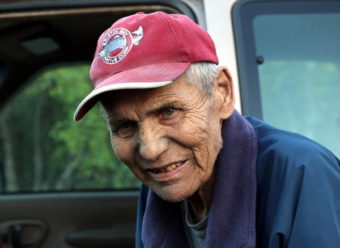
This picture was taken early June, after Ofi and some friends gathered for dinner around a first king salmon of the season. (Photo by Hannah Colton/KDLG)
This picture was taken early June, after Ofi and some friends gathered for dinner around a first king salmon of the season.
(Photo by Hannah Colton/KDLG)

Bristol Bay elder Hjalmar E. “Ofi” Olson passed away at an Anchorage hospital at the age of 75. Olson was a Bristol Bay fisherman, and was the longtime president, CEO and chairman of the board of the Bristol Bay Native Corporation. He also sat on a number of other boards, commissions, and panels throughout an active career as one of the region’s most prominent leaders.

Olson was battling kidney failure, and his health was deteriorating in recent months. He was medevaced to Anchorage Sunday, and according to a family friend, was taken off dialysis mid-week. He succumbed late Wednesday or early Thursday, surrounded by family.

“I think we all knew that he wasn’t in the best of health, and I just learned very early this morning that he had passed,” said Rep. Bryce Edgmon Thursday morning. “A big shock to everyone, even though we all knew his health was in decline. Very sorry to see him go.”

Edgmon spent Saturday evening with Ofi, driving around town, the harbor, boat yard and visiting subsistence sites all the way down Kananakak Beach.

“We watched a number of the set net boats being launched, and listened to the Fish and Game announcements, and really just had a very nice, quiet, reflective evening,” he said.

Olson remained in good spirits and his mind was sharp, even as his health grew worse and he spent more time at a hospital in Anchorage.

“We were down in the boat yard, and he was naming off all the boats that were still there, and why they weren’t going out, engine problems, whatever was the case. He was absolutely very sharp up until the very end,” said Edgmon.

Ofi and Anuska Olson (Photo by Clark James Mishler)
Ofi and Anuska Olson
(Photo by Clark James Mishler)

I think his legacy is so rich, and so profound, that it’s only going to grow over time. Ofi was the chairman of the BBNC board, I think, for the longest tenure of any chairman in the history of the state. As iconic figures are known, all you had to say was “Ofi” and people knew who you were talking about.”

As of Thursday morning, there was no information about funeral arrangements. A family friend did say there was consideration of delaying a funeral until after the commercial fishing season.

“I think as time goes on, and his service is held, we’re going to find that a lot of people throughout the state, a lot of Alaska Native leaders, a lot of people in the Native corporation world and elsewhere, are going to be coming to town and paying their respects to Ofi,” said Edgmon.

KDLG reporters Molly Dischner and Hannah Colton contributed to this story.

Fish and Game makes cuts to budget for Bristol Bay management

Chum salmon, which develop distinctive striping as they reach spawning maturity, have increased steadily in value over the last decade. (Flickr photo/Watershed Watch)

The Alaska Department of Fish and Game is still finalizing a plan to for the most recent cut to its budget, but Bristol Bay shouldn’t see too many more cuts, says Commercial Fisheries Director Jeff Regnart during a recent visit to Dillingham

During the special session in June, the legislature cut about $1.3 million in general fund dollars from Fish and Game’s budget for the new fiscal year, which started July 1, Regnart says.  The Division of Commercial Fisheries will take the largest cut, about $850,000.

“We’ll have a package put together by mid-week next week,” Regnart says. “I can’t tell you whether or not it’s going to impact the bay. The bay has been hit pretty substantially already, with what we’ve done during the legislative cycle. There still might be a few tweaks here. But I don’t see anything significant.”

Regnart says the department was already planning on cuts to Bristol Bay management this summer based on earlier versions of the budget. That includes ending the count at the Nushagak sonar in July, so it won’t count pinks and chums in August.

“We’ll still manage, and we’ll manage based on the fisheries performance, but likely we’re gonna be more conservative, which means less opportunity probably, because if we’re not sure, we will err on the side of the fish,” Regnart says.

That will save the department about $90,000, but likely comes at a cost to the fishery, Regnart says.

Guide academy helps Dillingham locals land jobs at sport lodges

David Parks Jr. gives some casting tips to his client Sarah Pearl in the Kulik River. (Photo by Matt Martin/KDLG)

For the past seven years, a mosaic of organizations including Bristol Bay Land Trust, Trout Unlimited, and BBEDC have run the Bristol Bay River and Guide Academy to train local kids in the art of fly fishing. The students spend a week at a lodge learning to be guides.

Jet boats hydroplane up the Kulik River and floatplanes skip across Lake Nonvianuk as Kulik Lodge comes alive for a day of fishing. David Parks Jr. of Iliamna is one of the 15 students at the academy. He stands in the crystal clear water of the Kulik with Sarah Pearl.

Sarah: “Could we possibility catch something right now?” David: “Well, I am trying to teach you how to cast first.”

Pearl works as a housekeeper at the Kulik Lodge but today she’ll pretend to be a client so Parks can test out the fly fishing and customer services skills he’s learned this week.

Before this week, Parks had never fly-fished. He always liked fishing but grew up only with a typical rod and reel.

“It was either that or ice fishing,” added Parks.

The first time he had ever picked up a fly rod was the first day of class.

“The next day we had to come out here and fish so I spent like half the time just swaying my rod back and forth just trying to get that perfect swing,” said Parks.

The students had a weeklong crash course in fly-fishing and what it takes to be a guide.

“Like tying flies, and making leaders, and making sure we had all out customer service skills down,” said Parks. “Making sure we got it down in our heads.”

Sonny Peterson is the owner of Kulik Lodge. He currently doesn’t have any Bristol Bay locals working for him but says they add a great value to services that a lodge like his can provide.

“People come up there and ask where you’re from and your guide says he’s from New York or Florida, you know, it doesn’t sound as good if he says he’s from Igiugig or Nondalton,” said Peterson.

The Bristol Bay River and Guide Academy was founded in part by Tim Troll. He also is the head of the Bristol Bay Land Trust. Troll says the time is about right for locals to play a bigger role in the lodge industry.

“It took 70 years in the commercial fishery before locals really broke into the commercial fishery and now the lodge industry has been here about 70 years,” said Troll.

Troll also used to be the President of Chogguing Limited in Dillingham. The native corporation owns a sport fishing lodge and he says shareholders would often ask him why no locals worked in the lodge.

“And I asked the operator that and he said, ‘Well, I need guys who fly fish.’ And Bristol Bay wasn’t producing any local fly fisherman,” said Troll. “There were maybe a handful. So that sort of planted the idea in the back of my head that if we are going to serve the industry, we have to produce somebody who can fly fish.”

In 2008, Troll was finally able to see that idea come to live with the first guide academy. This is the 7th academy and roughly 80 students have gone through the program and 4 have been placed as permanent employees and a few other internships at sport lodges in the region.

Troll says that even if most of the students don’t get jobs at a lodge, they can learn about an industry that is all around them. He says many of these students may someday be leaders in their native corporations, which often own or lease land to lodges.

“Just understanding the industry, how it works, how it operates, and also lodges from the other side understanding what village corporations are all about,” said Troll. “And trying to deal fairly with everybody and make it work.”

He also says it’s a way for the kids to get exposure to people from all over the world.

“The business leaders of the world come here. You get to mingle with these people. And who knows where that could take somebody,” said Troll.

Troll doesn’t think the lodge industry will ever be a major employer in the region but it could be a significant one.

Sonny Peterson, owner of Kulik Lodge, says a major hurtle to hiring locals as guides is that the work is only seasonal.

“You know, a local kid here, it’s tough for them because once this is over, that’s it. And unless they can figure out something to do the rest of the year,” said Peterson.

“It’s hard to have just a seasonal jump with a box of Tide costing 30 or 40 dollars,” echoed David Parks.

Parks will be starting a new job at the post office when he gets back to Iliamna but he would love the chance to work at a lodge if he could.

“If I had a job that would allow me to take a month off in the summer. Maybe I’ll work in the schools. Work at the schools in the winters, be a guide in the summer,” said Parks.

Whatever career path lays ahead for Parks, it’s evident that this academy has left an impression on him. He smiles wide as he talks about his experience at the camp.

“The best part about it was catching that fish with that fly rod with a fly that I tied myself,” said Parks.

Each student at the academy gets a fly rod to take home. Even if it doesn’t work out that Parks can be a guide someday. He says fly-fishing is a new skill he’ll enjoy showing off to his friends at home.


How many clams do bears eat?

Brown bears dig for clams at low tide.(Photo courtesy of NPS)

Southwest Alaska brown bears love fish, we know that. We’ve all seen the iconic image of bears at a waterfall just waiting for a salmon to just jump right in their mouths; a bit less common is the image of a bear beach combing for clams and mollusks.

But eat them they do. Katmai National Park’s Chief of Resource Management Troy Hamon says bears enjoy invertebrates and all kinds of other marine creatures.

“They actually scrap barnacles and eat barnacles. Everything you think a person might want to eat bears like, they’ll eat it,” said Hamon. “And that includes wherever there is a good sources of these marine invertebrates.”

But Hamon and a team of researchers at Katmai say they don’t know to what extent they need to eat shellfish as part of their diet.

“I am excited to know if this is just a snack bar they graze by because it’s interesting and they like it like a bag of peanuts or is it an absolutely critical part of their feeding plan,” explained Hamon, adding that recently they collared 9 bears and will collar 10 to 12 more next year to monitor how much time they spent eating clams.

Bears aren’t the only things attacking clams. Along with determining how much bears rely on clams for food, Katmai researchers are concerned about the effect of ocean acidification on these bear snacks. Hamon says clams and other shellfish are most at risk.

“Because it makes it harder for them, more difficult for them to create and maintain a hard shell, which they absolutely have to have to survive,” said Hamon.

Hamon says they’re not really sure how much brown bears rely on clams, mollusks, and other invertebrates for their diet. They hope to learn more about that during this study, which has an overall aim to provide a better understanding of the link between marine and terrestrial ecosystems.


Low oil prices haven’t reached Dillingham

The drop in oil prices has been bad news for Alaska’s state budget, but good news for some Alaskans at the pump. But the gas price has been slow to drop in some Bristol Bay communities, especially Dillingham. KDLG has been hearing from a lot of people unhappy about the gas prices.

gas_pump_photo
Photo of a pump in Dillingham from March 2015 when gas was 6.39 per gallon. (Photo by Matt Martin/KDLG)

“Here we are June, the first week, and we’re still paying top dollar. Hope we don’t get the screws put to us all summer here with the high gas price. Ok, that’s all I got,” says one caller to the station.

The current price of fuel in Dillingham is $6.15 down from about $6.33 a few weeks ago. Facility Manager of Delta Western in Dillingham Ken Reiswig says prices haven’t gone down yet because there is still a lot of left over fuel from the winter.

“Because there was no snow and warm winter we didn’t sell as much fuel as we had planned for, so we have fuel left over,” said Reiswig.

And until that fuel is used up, Reiswig says prices will probably hold steady were they’re at for now. But the cheaper fuel coming in may eventually lower prices.

“Whatever price fuel comes in we adjust our prices based on what’s in the tank,” added Reiswig.

Lawrence Sifsof spoke to KDLG at a pump in Dillingham Wednesday morning. He isn’t holding out much hope that prices will drop anytime soon.

“Because why would they go down now when they are keeping them this high this far,” questioned Sifsof.

Fuel prices in Ekwok are close to Dillingham’s at about 6.25. Koliganek and Togiak are a little cheaper at 5.75 and 5.33 respectively.

One person at the pumps in Dillingham told KDLG that there are some mysteries in life he chooses not to explore, he says the price of fuel in rural Alaska is one of them.

Site notifications
Update notification options
Subscribe to notifications