Alaska Elections

Stedman fund-raising twice Kookesh total

Bert Stedman and Albert Kookesh are running for Senate District Q. On the map, it's shown as House Districts 33-Q and 34-Q. Courtesy Alaska Redistricting Board.
Bert Stedman and Albert Kookesh are running for Senate District Q. On the map, it’s shown as House Districts 33-Q and 34-Q. Courtesy Alaska Redistricting Board.

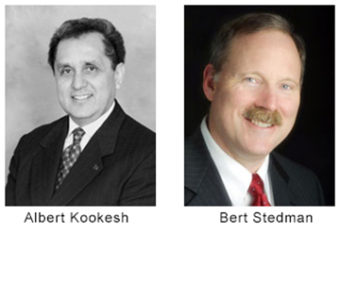
Redistricting shoved Sitka’s Bert Stedman and Angoon’s Albert Kookesh into an incumbent-vs.-incumbent Senate race.

The most recent campaign finance reports from the Alaska Public Offices Commission show Republican Stedman with the most money. He brought in about $31,000 since the August Senate District Q primary. That’s about six times more than Democrat Kookesh’s $5,000.

Overall, Stedman leads with around $64,000 raised this and last year. That’s almost twice Kookesh’s $33,000.

Still, Stedman says he’s hoping for more.

Sen. Bert Stedman, a Sitka Republican.

“It would be nice to get that dollar amount up to about $80,000 to run a good Senate campaign. It’s just expensive to travel around. [With] advertising and stuff like that, it has a funny way of adding up,” he says.

The district includes Ketchikan, Haines, Wrangell, Sitka, Craig, Metlakatla, Hoonah and Klukwan, plus numerous smaller communities. It’s about three-quarters of Stedman’s old district and one-quarter of his competitor’s.

Kookesh continues raising funds. But unlike Stedman, he says he has what he needs. Still, it’s been hard.

“It’s really been hard to raise money because so many people are running this year. Every House seat and every Senate seat, except for one. I’ve even seen Anchorage legislators coming down here for fund-raisers in Juneau. So they must have dried Anchorage up pretty good,” he says.

Both are members of the state Senate’s bi-partisan majority, which blocked Governor Sean Parnell’s plan to lower oil taxes. Neither got money from Alaska’s major petroleum companies, or the political action committees they fund.

Here’s some of the campaign finance details (Scroll down for links to detailed APOC reports):

Stedman’s campaign did attract $1,000 from top officials at Armstrong, a Colorado-based, independent oil and gas company with Alaska investments. He also brought in $250 from the ConocoPhilllips Employee PAC.

But he’s not getting much help from his party.

“Each Senator can get up to $15,000 from the party. I’ve gotten $250 from the Sitka Republican Women, and that’s it. I expect no party support out of Anchorage at all,” Stedman says.

Kookesh got a little more party money, $500 from Juneau’s Democratic organization.

Sen. Albert Kookesh, an Angoon Democrat.

Both candidates have raised significant amounts from unions and their PACs.

Kookesh brought in $7,250 from six state employees’ and teacher’s groups, plus two constriction unions. All of Kookesh’s PAC money came from labor groups.
Stedman raised half as much as his opponent. He got $3,600, from three construction labor groups. (Hear a forum with both candidates.)

Five other PACS, including seiners, dentists and hospitality businesses, for a total of $6,600.

Kookesh did bring in about $3,000 from board members and employees of regional Native corporation Sealaska, where he’s board president.

“I got some money from individuals who work for Sealaska. But, no, they don’t have a PAC and they haven’t spent any money on a PAC. And if they had a PAC they certainly didn’t spend it on me,” Kookesh says.

Meanwhile, Stedman got $500 from the president of Sitka’s Native corporation.

The candidates have met with business, community and tribal leaders as they’ve traveled from Metlakatla to Pelican and points in between.

Kookesh says voters have asked about education funding and energy prices, among other issues.

“There’s a lot of talk about the ferry system and the need for replacing ferries. The road to resources has a lot of discussion because of the Prince of Wales mines that are going in down there,” Kookesh says.

Stedman says he’s hearing much of the same, from just about all communities.

“The issues haven’t changed or don’t change when you move from one island to the others. The major hurdles are energy and transportation,” Stedman says.

The candidates’ numbers have changed since their most recent finance reports, filed earlier this month.

At that time, Stedman had spent about $31,000 and still had around $26,000 left. Kookesh had spent around $11,000, with $22,000 remaining.

Want more details?


Climate Politics: It’s Laugh Lines Vs. ‘Not A Joke’

This Sept. 16 image released by NASA shows the amount of summer sea ice in the Arctic, at center in white, and the 1979 to 2000 average extent for the day shown, with the yellow line. Scientists say sea ice in the Arctic shrank to an all-time low of 1.32 million square miles on Sept. 16, smashing old records for the critical climate indicator.

Scientists view climate change as one of the world’s most pressing long-term problems. But the issue has barely surfaced in the U.S. presidential race. President Obama has taken steps to address climate change during his time in office. Republican challenger Mitt Romney would not make it a priority in his administration.

In fact, as Romney stood on the stage to accept his nomination at the Republican National Convention, he used global warming as a laugh line.

“President Obama promised to begin to slow the rise of the oceans,” he said, pausing for the applause and laughter to rise, “and to heal the planet.”

Romney promised an administration that would instead focus on taking care of American families. Obama rebutted that comment at the Democratic National Convention a week later.

“Change is not a hoax,” he said. “More droughts and floods and wildfires are not a joke. They are a threat to our children’s future. And in this election, you can do something about it.”

In fact, Obama came into office with climate change as one of his major issues. At international talks in Copenhagen, he pledged to reduce U.S. emissions by 17 percent over 2005 levels by the year 2020. At that meeting and since, he pressed to get more aggressive action out of China, India and the world’s other biggest carbon dioxide emitters.

But the president’s plans didn’t make it past strong Republican opposition in Congress. So instead, he has settled for actions the president can take without congressional action.

“First there was the stimulus, which is the largest ever investment in clean energy technology, really hoping to jump-start that sector,” says Carol Browner, who is an adviser to the Obama campaign on energy and climate issues, and former administrator of the Environmental Protection Agency. She runs down a quick list of accomplishments: “The first ever greenhouse gas standards for cars, the power plant requirements — proposed new power plant requirements — as well as more efficient appliances.”

These don’t add up to the 17 percent reduction the president aspired to at the Copenhagen climate talks. Browner says he will keep trying to make incremental changes.

So this is an issue where the candidates sharply disagree.

The president sees action on climate change as creating new jobs in the clean-energy sector.

Romney sees cheap energy as the best energy. He doesn’t even mention climate change in his energy plan, which is overwhelmingly about increasing production of fossil fuels.

The Romney campaign would not provide a spokesman for this report. But the campaign’s domestic policy adviser, Oren Cass, did address these issues at a debate at MIT, which was webcast by E&ETV.

“Gov. Romney’s position on climate change is very straightforward, which is that the United States taking action unilaterally is not able to address what is a global problem,” Cass said.

And since China is still building more coal-fired power plants every week, Cass argues that having the U.S. cut emissions is a waste of effort.

He also opposes what was once a Republican-backed idea: Put a price on carbon pollution to encourage the free market to develop technologies that are better for human health and the global environment. He says pricing carbon won’t work.

“What it is going to do is hurt our economy very seriously,” Cass says, “and is going to drive a lot of industrial activity from the United States to countries that are, frankly, less efficient in their use of energy.”

And less efficient countries produce more carbon dioxide, potentially making the problem worse.

So, in essence, the Romney position is that climate change won’t be a priority because it’s too hard to solve. The one action the campaign has advocated is spending more federal dollars for research on climate science and renewable energy.

That’s a contrast with President Obama, who argues that developing clean energy is good for the U.S. economy — and important on the world stage, where climate change is regarded as a very serious issue.

New Mayor, Assembly, School Board members take office next week

Botelho-Stone
Mayor Bruce Botelho and Deputy Mayor David Stone are expected to give outgoing remarks at a special meeting Monday where new Mayor Merrill Sanford and Assembly members Loren Jones and Jerry Nankervis are sworn-in. (Photo by Casey Kelly/KTOO)

Juneau’s new mayor and Assembly members will be sworn into office on Monday.

Merrill Sanford will take the oath of office for mayor, being vacated by Bruce Botelho.  Loren Jones will take over David Stone’s Assembly District One seat, while Jerry Nankervis will move into the Assembly District Two seat held by Ruth Danner.

Botelho and Stone have each served three terms and could not run for re-election due to term limits.  They are expected to give outgoing remarks.  Danner, who decided not to seek re-election, bid farewell at last week’s Assembly meeting.

Newly elected Juneau School Board members will be sworn in on Tuesday.  Andi Story and Phyllis Carlson were re-elected to their fourth term, and Destiny Sargeant will re-join the board after two years off.  She replaces Mark Choate who did not seek re-election.

The board will have another vacancy in November, when Kim Poole will resign, according to board president Sally Saddler.

After 19 years in Juneau, Poole will be moving to Oklahoma.

Board policy requires the board fill the vacancy in a “fair and expedient” manner within 30 days of the opening.

Saddler says board leaders will meet soon to start the process then notify the public that it is soliciting applications.

“Our policy also says we can ask each applicant to complete a questionnaire that’s developed by the board, or we could have each applicant appear before the board in an open session to provide a statement for answering questions and then we would make the final selection of an individual to fill that vacancy by a vote of those of us who are remaining members of the board,” Saddler says.

She says Poole – who represents the “community point of view” — will leave “big shoes that are hard to replace.”

“I really enjoy her perspective and I think that’s been one of the real values that Kim has brought.  She is a community member but she’s worked with you in this town and she knows them and loves them,” Saddler says.

Poole is currently clerk of the school board and is two years into her three-year term.

The person appointed by the board will fill out the remainder of Poole’s term, which ends October 2013.

Stedman – Kookesh debate tonight

Senators  Bert Stedman and Albert Kookesh debate at 6 o’clock tonight for the Southeast Senate District Q seat.  Kookesh, an Angoon Democrat, and  Stedman, a Sitka Republican, will talk with reporters and answer listeners’ questions from the studios of our sister station, KRBD in Ketchikan.  Senate District Q includes most of Southeast outside Juneau, Petersburg and Skagway.

Ask questions during the show at 1-800-557-5723 or email: news@krbd.org.

Click here for the live stream.


Juneau municipal election results certified

Election Final
City Clerk Laurie Sica (left) watches as election worker Andy Peterson feeds absentee/questioned ballots through a voting machine on October 5th at City Hall. Photo by Casey Kelly/KTOO.

The City and Borough of Juneau Canvass Board on Tuesday certified results of last week’s municipal election.

Turnout was 32 percent – 7,864 of the city’s 24,565 registered voters cast ballots. The Lynn Canal precinct had the highest turnout at 33 percent, followed by North Douglas at 30 percent. Two downtown precincts – Juneau 2 and Juneau 3 – had 29 percent turnout.

The lowest turnout was Lemon Creek at 19.8 percent, with the Mendenhall Valley 1 polling place second lowest at 20.7 percent.

A handful of absentee ballots were added to Friday’s initial tally of absentee and questioned cards. But not enough to change any results.

In the closest race, Proposition 1 still comes out on top. The $25-million bond initiative to fund a variety of capital improvement projects passed by just 73 votes – 3,898 to 3,825.

Newly-elected Mayor Merrill Sanford and Assembly members Loren Jones and Jerry Nankervis will be sworn in next Monday. School board winners Andi Story, Phyllis Carlson and Destiny Sargeant will take the oath of office next Tuesday.

Prop 1 passes; Sanford mayor-elect

Poll workers process ballots during the last day of counting. (Photo by Casey Kelly/KTOO)

Merrill Sanford can officially be called Juneau Mayor-elect.

Friday’s count of absentee and questioned ballots from the municipal election gives the former Assemblyman 4,099 votes to Cheryl Jebe’s 3,440, or 54 percent to 45 percent of the vote.

Sanford returns to the Assembly after a year away due to term limits. He says he wants local government to focus on reducing the cost of living and bringing jobs to Juneau.

“We probably need to have that up front in our mind every time we vote on something that’s going to increase the cost of government in our town, to either our taxpayers, or our tourists coming in, or to our business people,” Sanford said. “We need to take that into consideration.”

Heading into the absentee/questioned ballot count, Proposition 1 trailed by nearly 60 votes. It made those up and more, and has passed with 3,888 votes to 3,815. The measure allows the city to sell $25-million in general obligation bonds to pay for various capital improvement projects.

Another capital improvement funding package – Proposition 2 – also passed on a vote of 4,545 to 3,211. Prop 2 is a five-year extension of the city’s temporary 1- percent sales tax.

Sanford opposed both measures during the campaign, but now says they’ll help put people to work.

“Those projects can start immediately in the next year,” said Sanford. “So that’s a good thing for our community, because it’ll mean some more of our contractors and business people are busy and our worker bees are working.”

Merrill Sanford
Juneau Mayor-elect Merrill Sanford. Photo by Casey Kelly/KTOO.

Newly elected Assemblyman Loren Jones supported both measures. He says a provision to use $10-million from the sales tax revenue to pay down debt on the bonds for the first five years should keep property taxes from going up.

“I think it funds some good projects in town,” said Jones. “I might have done it differently, but there’s a lot of nuance to deciding which went into which package. So I think it alleviates a lot of questions over the next year or two. We can move on with the budget, we can get these projects going.”

Other winners in Tuesday’s election remain the same. Jerry Nankervis wins the District 2 Assembly seat, and Phyllis Carlson, Andi Story and Destiny Sargeant were elected to the school board.

The CBJ Canvass Board will meet next week to certify the results. The newly elected mayor and Assembly members will be sworn in Oct. 15. School board members will take the oath of office a day later.

Site notifications
Update notification options
Subscribe to notifications