
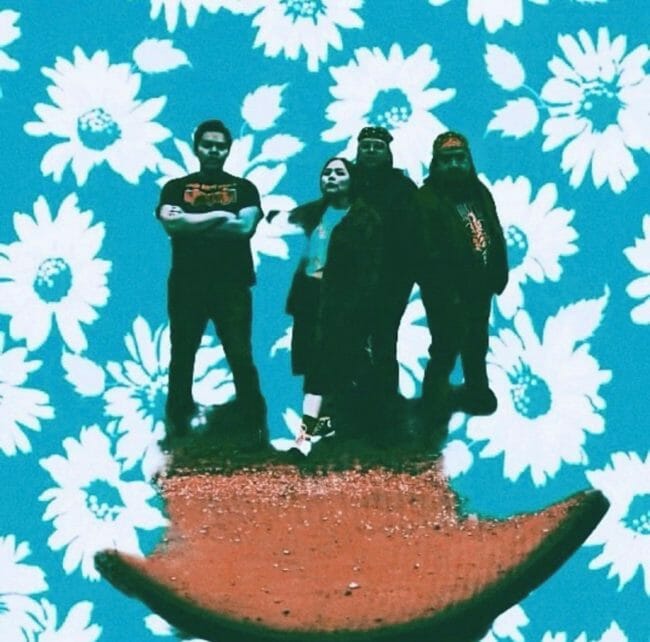
Juneau grunge-metal band Garden of Agony have a ton of exciting news to share.. (Hint: catch their performance at Áak’w Rock Side Stage tonight before you can’t catch ‘em no mo’.)
blooms + Southeast x Southeast + the new new
Juneau grunge-metal band Garden of Agony have a ton of exciting news to share.. (Hint: catch their performance at Áak’w Rock Side Stage tonight before you can’t catch ‘em no mo’.)
blooms + Southeast x Southeast + the new new

Albino Mbie / courtesy of Albino Mbie
It’s amazing that guitar strings manage to stay attached to the instrument in the hands of Albino Mbie. His style is rooted in the music styles of his Mozambican heritage, merged with contemporary jazz and pop. (And, if you caught his performance at the 2021 Áak’w Rock Indigenous Music Festival, you know Mbie’s fire ‘fits deserve a mention of their own. Áak’w Rock fashion, anyone?)
origins + Moz-Jazz in the north + side stage tea from Qacung
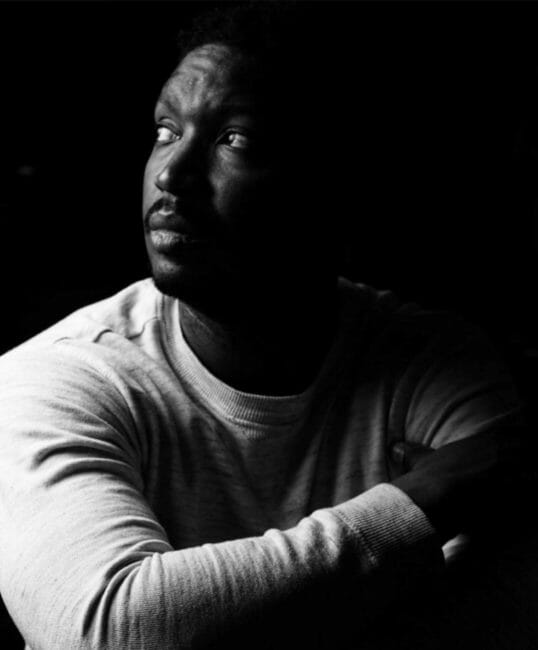
For the past four years, Juneau has been lucky to be home to independent producer Steve Knight, founder and host of the Knight Show Podcast, among his many roles lifting people up to their most divine selves. Nothing lasts forever, and Knight’s time in lovely Lingít nuna is up. Dry those eyes and get your glamour on—Knight’s saying farewell in style with a dance party featuring LA-based hip hop artists Tru Heru and Sista Eyerie.
LA’s underground scene + brewing up Afro-Indigenous baddie energy + [Doja] cats and dogs + did anything align in Alaska?
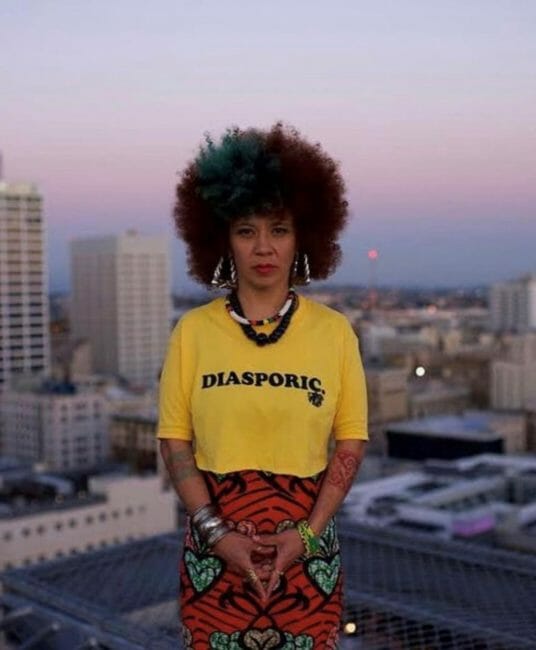
Sista Eyerie (courtesy of Sista Eyerie)
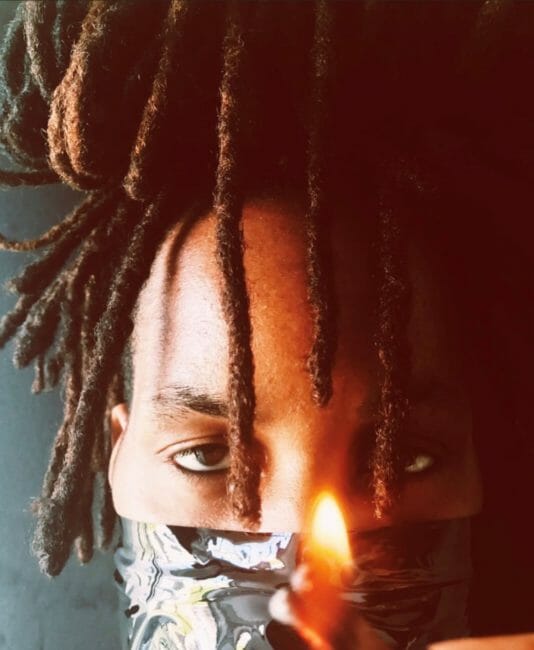
Tru Heru (courtesy of Tru Heru)
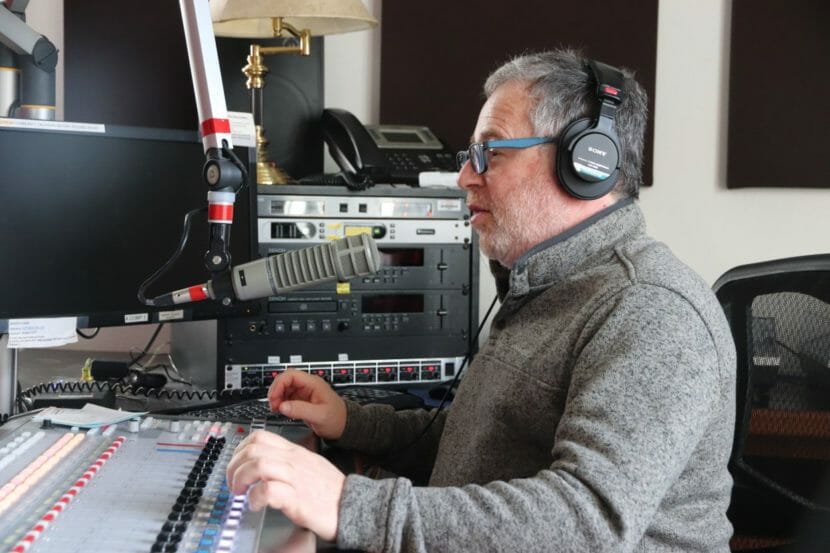
Although the show Spongebob Squarepants was carefully directed at a cartoon-loving demographic in the late 1990s, parts of the delightfully offbeat production were happy accidents. Like Spongebob’s jazzophile neighbor Squidward and his somewhat random clarinet performances.
The musical genius of Squidward can be traced back to one person who now lives in Sitka and shares his gifts every week on his own radio program.
Brad Carow grew up in Los Angeles — a “valley kid,” born and raised in the San Fernando Valley.
“My father worked in the film industry, he was a sound effects man,” Carow said. “He had a friend who got me a job as the driver for an animation company. And after a month, they liked me and they got me into the editors union, and I was an apprentice sound effects editor.”
He was working on cartoons like Heathcliff. And soon he made the move to Universal Studios, then Warner Brothers.
“It was a magical time being on the lot in the eighties, because the real icons of film were still around,” he said. “And you could see them, you know, meet them.”
He’d see actors like Ernest Borgnine walking around the lot, and Anthony Perkins, who was directing Psycho 3 at the time. One day he helped Jimmy Stewart find his way to Stage 4. And he met a few animation legends in the eighties too, like Mel Blanc, the voice of Bugs Bunny.
“He was a really, really nice man,” Carow said. “Of course, he was a dirty old man. He had a watch that had a naked lady on it, but he was a cool cat.”
It took about ten years for Carow to go from assistant to associate film editor, then to full fledged film editor.
Eventually he ended up at Nickelodeon Studios. And one day he found himself editing the pilot for a new show about a yellow kitchen sponge that would end up rocking the world of childrens’ television from a pineapple under the sea.
That’s right — Spongebob Squarepants. Carow was asked by the creator, the late Stephen Hillenburg, to write a song for the show that sounded like the theme to the sixties show The Mod Squad. Carow wrote a piece and recorded it in the studio with trombone and trumpet players recording multiple parts, along with bass, piano and drums — he played all five saxophone parts himself.
“Steve came into the studio, he heard it once. He said, ‘That’s the right one.’ Carow said. “And he wanted it to be the main title for the series,” Carow continued. “But Nickelodeon said, ‘No, no, no, we want something that has lyrics and tells the backstory of the characters.’”
“If they had used that music as the main title theme, I wouldn’t have to work for a living, you know? But that’s okay,” Carow said.
Even though they didn’t pick his theme, Carow went on to write songs for the show, including the Jellyfish Jam. He even wrote the music for the F.U.N. song — you know, the one that drove parents up the wall in the early aughts?
But perhaps his biggest contribution to the Spongebob universe is a mediocre jazz performance that has now become iconic.
“Steve remembered that I played clarinet, and he said, ‘You play clarinet, don’t you?’ I said, ‘Yeah.’ Well, he said, ‘You know, we have a character on Spongebob who plays a clarinet. Would you be interested in covering that part? I said, ‘Sure.’ Well, that was about 23 years ago.”
Squidward is a grumpy, jazz loving octopus who lives next door to the child-like Spongebob and his friend Patrick. Squidward laments their interruptions of his clarinet practice.
“All the clarinet I play, I’m improvising, right? So it’s considered an original composition,” Carow said. “So I am the owner of all that crappy clarinet playing that Squidward does.”
Carow spent 30 years in the film industry. But one day he’d had enough. He decided he wanted to switch careers and become a therapist, something he had a little experience with as a taxi driver in LA.
“People would get in my cab and just spill their guts to me and tell me everything about them because they never see me again,” he said. “And that was when I realized that ‘Hey, I’m a pretty good listener.’ So it was going back to that, that really made me feel like ‘Yeah, I think I could do this.’”
Now he’s worked in the mental health field as a therapist for 10 years. He says that while he’s proud of his decades in the film industry, he wouldn’t go back.
He’s still able to have time for his creative pursuits, like music. He still plays Squidward’s clarinet when the Spongebob showrunners need it for an episode. He’s in an-up-and-coming local saxophone quartet.
And he has a show on Raven Radio called Groovin’ Hard with Brad Carow. It’s all about something he shares with his clarinet counterpart, Squidward: his love of jazz.
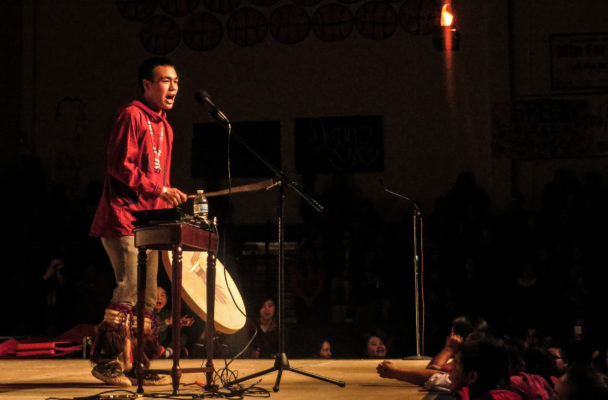
Alaska Native singer-songwriter Byron Nicholai has a new album out. “Ayagnera” was released on March 25. Two days later, it ranked among the top 10 new albums in the worldwide genre on iTunes.
Back in 2016, Nicholai was dubbed “the Justin Bieber of Alaska” a year after he released his first album, “I am Yup’ik.”
Nicholai has since moved to Anchorage from his home in Toksook Bay, a Bering Sea coastal village on Nelson Island. He works with a producer remotely.
“One of the main reasons I moved from Toksook [Bay] to Anchorage is so I could get faster internet,” he said. “I feel like it would mess with my momentum a little bit, ’cause sometimes I’d be excited to work on a track, but then having internet problems would just kind of wash that away.”
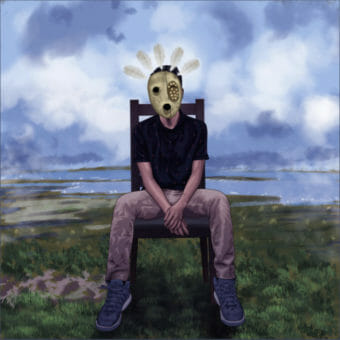
It took Nicholai more than two years to lay down the 13 new tracks for “Ayagnera.” He recorded it entirely in his Anchorage bedroom. The album has garnered international attention from Rolling Stone India’s website, which recently featured the album alongside four others by young global artists.
The songs are almost entirely in Yugtun, the Indigenous language Nicholai grew up speaking. He also uses traditional Yup’ik music for inspiration.
“I’ve always grown up drumming and dancing,” Nicholai said. “And just the song behind the drum, where it’s just that one singular beat, you can transfer that into a whole different song just as long as you keep that rhythm. And having that one single rhythm while we are yuraqing and dancing helps in creating these songs.”
Music is Nicholai’s way of keeping his Alaska Native language alive, and he said it’s also an experiment in modernizing traditional Yup’ik music and dance. He said that much of the album involves a mix of emotions. He sings about his own struggles, the struggles of others, and about his family. The genres he uses to express his feelings in the songs are just as mixed as his emotions.
“Throughout the time that I was making it, I would record a song depending on how I was feeling at that moment,” Nicholai said. “I’ve got a few rap songs in there, I’ve got a couple R&B songs. I’ve got songs in there that sound like pop, and I’ve got a song in there that sounds like electronic dance music.”
Nicholai will perform for fans in Bethel this weekend.
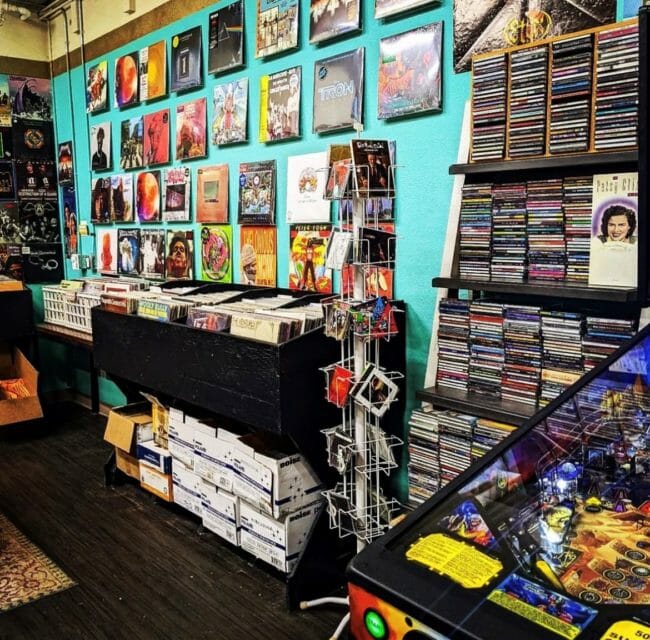
The national Record Store Day holiday celebrates independent record stores. Check the first RSD in the Áak’w K̲wáan, with the owners of Downtown Disc Juneau.