Community

Ketchikan saxophonist was well-known in jazz community

A musician well-known in the Ketchikan jazz community and who performed at First City Players Jazz and Cabaret Festival for more than a dozen years has died.

Saxophonist Bob Kindred, 76, died August 15 in Nashville, Tennessee.

Several Ketchikan residents who knew Kindred shared their memories of him.

Bob Kindred
Bob Kindred

Bob Kindred was best known as a tenor saxophone player, but his first instrument was the clarinet.

His father did not want him to pursue a career in music, so Kindred studied business and had a successful business career.

At the age of 30, he heard Phil Woods in concert and decided to take up playing again. He studied with Woods for several years.

At a time when the popularity of big band music was fading, Kindred was able to succeed, playing with the Glenn Miller and Woody Herman tribute bands, among others.

Since the early 1990s, local theater group, First City Players, has held jazz and cabaret workshops.

First City Players artistic director Elizabeth Nelson said Anne Phillips was brought in about 1999 or 2000 to conduct vocal workshops.

Phillips was married to Kindred at the time, and suggested he come the next year to conduct instrumental workshops.

The instrumental workshops lasted only a few years, Nelson said, but Kindred continued to return, backing vocalists.

“It was an astounding thing to listen to,” she said. “When he was at his best, to sing with him, it was really having a conversation. It was just a musical conversation and he would listen to every single way you would inflect a lyric and he could answer that back sensitively. Really just beautiful in that way.”

During jazz and cabaret week, guest artists visit the local elementary schools, Nelson said.

“He could be so much fun,” she said. “He could make the kids laugh. The last day, when we do the concert for the school, we always bring our guest artists in, so Bob would be part of that, and would just make the kids giggle with the sounds he could make through his saxophone and then they would just be rapt when he would play.”

In 2010, guest artists Bob Kindred, Anne Phillips, Paul Meyers and Matt Perri were recognized as honorary citizens of Ketchikan for their work in the schools and contributions to the jazz community. The proclamation was signed by City Mayor Lew Williams III.

Baritone saxophonist Lynn Caldwell recalls first meeting Kindred.

Caldwell was in his garage playing when there was a knock on the door at about 9 pm.

“He said, ‘I heard some baritone sax in here. Are you kidding me?’” he said. “Those were his exact words. ‘Are you kidding me?’ He was truly blown away by the fact that he comes to Ketchikan, he’s living right there, no clue at all there was even a baritone sax player in town.”

Kindred was staying at a bed and breakfast across the street and had heard Caldwell playing.

They became fast friends and played together often: Kindred on the tenor saxophone, and Caldwell on the baritone.

Caldwell had never played with a professional musician before, and learned a lot from Kindred.

“He taught me so much about the instrument – about mouth pieces, about reeds, about breath control,” Caldwell said. “He couldn’t practice for me, and I was still being lazy about learning scales and chords, but it really improved my playing. Particularly the sound. That’s all I really cared about anyway. I loved the sound of the baritone.”

Kindred had cancer about 20 years ago and wasn’t expected to live more than 10 years, Caldwell said. Kindred had many other health issues, made worse by a drinking problem and bad habits.

“He didn’t complain much. A lot of people didn’t even know those things about him,” he said. “But it seems like it was such a waste for this great man to not be able to make more of a contribution than he was by getting his life under control.”

Trumpet player Dale Curtis met Bob Kindred and Anne Phillips at the Fairbanks Summer Arts Festival. When they came to Ketchikan, Curtis played with Kindred in the Jazz and Cabaret Festival band.

They also would just get together to play.

“I’ve been playing my whole life, and I’ve got a lot of professional experience, and I know a lot of tunes, and so does he,” Curtis said. “We’d just get together and play these tunes that we both know, and we both had such a similar style. For me it was really easy, phrasing, and I kind of knew what he was going to do. It made it easy.”

In 2011, Curtis recorded an album “Bridge to Nowhere,” at Bennett Studios in New Jersey.

The members of the Dale Curtis Quintet were Curtis, guitarist Paul Meyers, bass player Christian Fabian, drummer Ed Littlefield, and Kindred on saxophone and clarinet.

“He asked me if he could do this song called ‘Tenderly’ by himself,” Curtis said. “So I let him do that and I’m glad I did because it’s just amazing, his approach to that. Such a beautiful player and beautiful guy. He will be missed.”

“He was always so gracious and so kind to other musicians. A good man.”

Kindred lived in New York for many years but moved to Nashville about two years ago.

Curtis spoke with Kindred about a month ago and, despite his health problems, Kindred continued playing and was still booking gigs.
Assembly to hear Southeast nonprofit’s appeal on denied tax exemptions

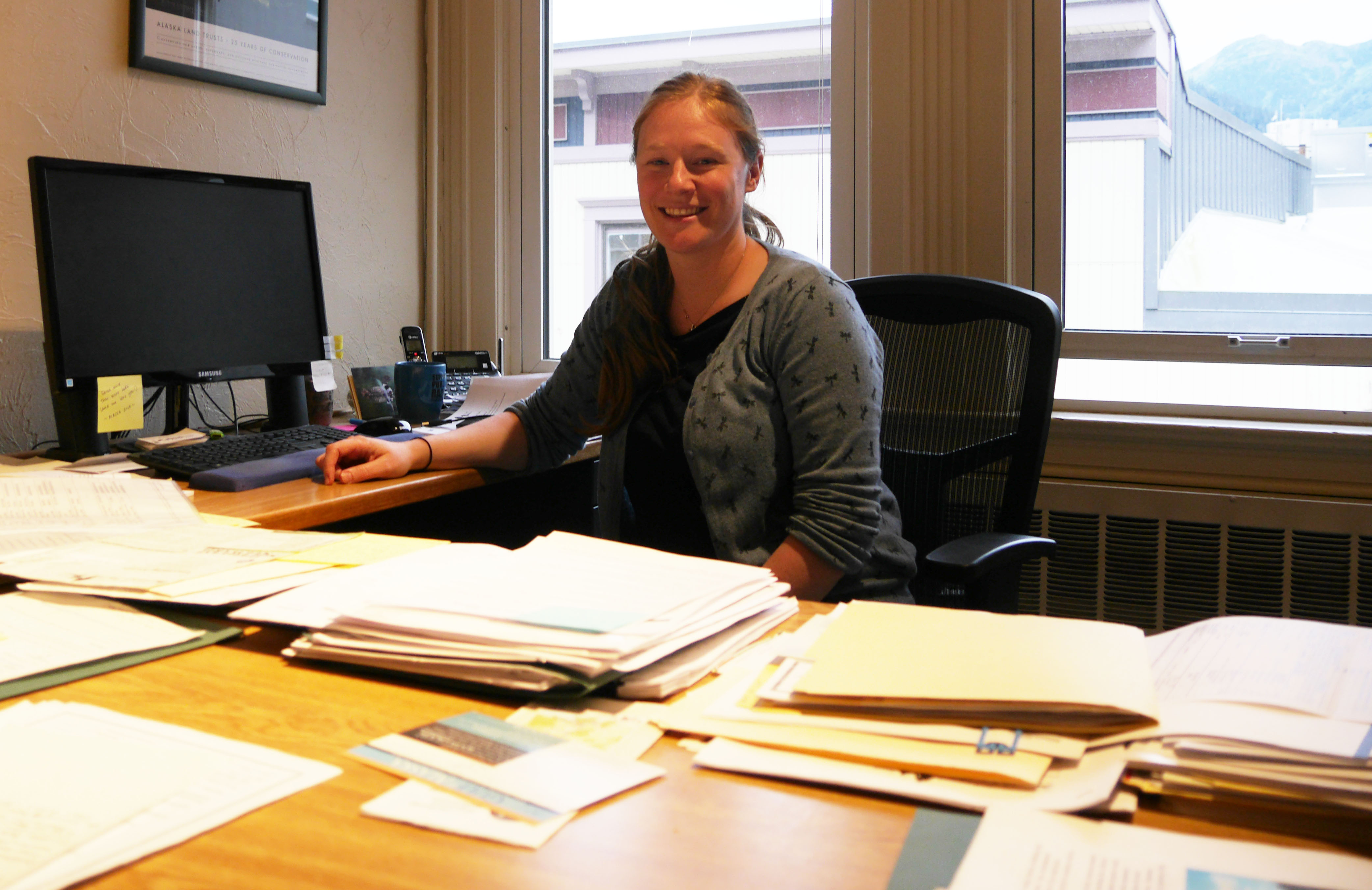
Allison Gillum is the executive director for the nonprofit Southeast Alaska Land Trust, which focuses on environmental conservation. (Photo by Lakeidra Chavis/ KTOO)

Juneau-based nonprofit Southeast Alaska Land Trust, or SEAL Trust, was denied its city property tax exemption earlier this year.

Now, the Assembly will reconsider it.

It’s a first for the organization, which preserves more than 3,000 acres of land throughout the region.

The nonprofit has been around for about two decades with the goal to preserve and protect some properties, such as wetlands, from development.

Most of the land it owns is in Juneau.

SEAL Trust director Allison Gillum is trying to find the stack of property value estimates she received in late March.

“The notice of assessed value cards, which any landowner in town knows pretty well, you get them around March each year,” she said.

All land in a community is taxable, though the city offers a lot of different exemptions.

So when the stack of cards came in the mail, instead of a letter saying the organization qualified for the exemption, Gillum knew something wasn’t right.

“In previous years we received those cards and our total taxable amount has been zero because we’ve been exempt and this year we received cards with our full property value, which was a surprise to us,” Gillum said.

In this case, the exemption in question was for charitable purposes. Nonprofits qualify when their properties improve the “moral, mental and physical welfare of the public.”

The city’s Assessor’s Office determines a property’s value and whether it qualifies for the exemption.

SEAL Trust’s 14 parcels, or properties, in Juneau are mostly wetlands.

Juneau’s assessor Robin Potter denied the exemption earlier this summer. “Land preservation alone does not provide a charitable service” to the community, she said.

The organization also needed to prove that the land was being used for a charitable purposes, such as recreational facilities or improvements.

Gillum disagrees.

“People who live here in Juneau and Southeast Alaska, and Alaska in general — I think most people don’t need facilities to be able to recreate,” she said. “I think the natural landscape that we’re trying to protect is a wonderful backdrop to recreational activities.”

Attorney Rob Palmer represents the Assessor’s Office in the appeal.

“The reason for the denial was that SEAL Trust, according to the assessor, did not present enough information for the assessor to know that the property was actually being used for a charitable purpose,” he said.

SEAL Trust appealed the assessor’s decision, but the appeal also was denied.

“Her opinion is that SEAL Trust did not qualify for the charitable purpose exemption,” Palmer said, “but that SEAL Trust might qualify for the community purpose exemption.”

The nonprofit has previously qualified for that exemption since 2011, but after a meeting last summer, the nonprofit decided to pursue a different one this year.

During a Board of Equalization meeting in July 2015, the assessor told the organization that the nonprofit never qualified for community purposes exemption either, because land wasn’t being transferred to the city.

“CBJ did not adopt an exemption policy, and up until to date, all those parcels had been getting an exemption once the SEAL Trust took them over, and that was an error because we don’t have a law for that,” Potter said. “So they are taxable, and they’ve been getting a full exemption ride for several years now.”

Palmer said he knows of the recording but he couldn’t comment on what was said.

The Trust’s annual operating budget is about $300,000.

A lot of the funding is restricted by grants and a contract with the U.S. Army Corps of Engineers, Gillum said.

Losing the exemption means the land valued at $400,000 will result in about $4,000 in property taxes.

At Monday’s assembly meeting, members voted to hear the appeal.

Their final decision is expected to take about half a year.

The trust hasn’t paid any taxes yet, Gillum said, the appeals have cost the organization time and money.

“As a small nonprofit this kind of issue can take a toll,” she said, “so we’re trying to address this issue without it taking over too much.”

The nonprofit did apply for the same tax exemption for land it owns in Sitka, which was approved.

Collaborative Chilkat and Ravenstail robe nears completion

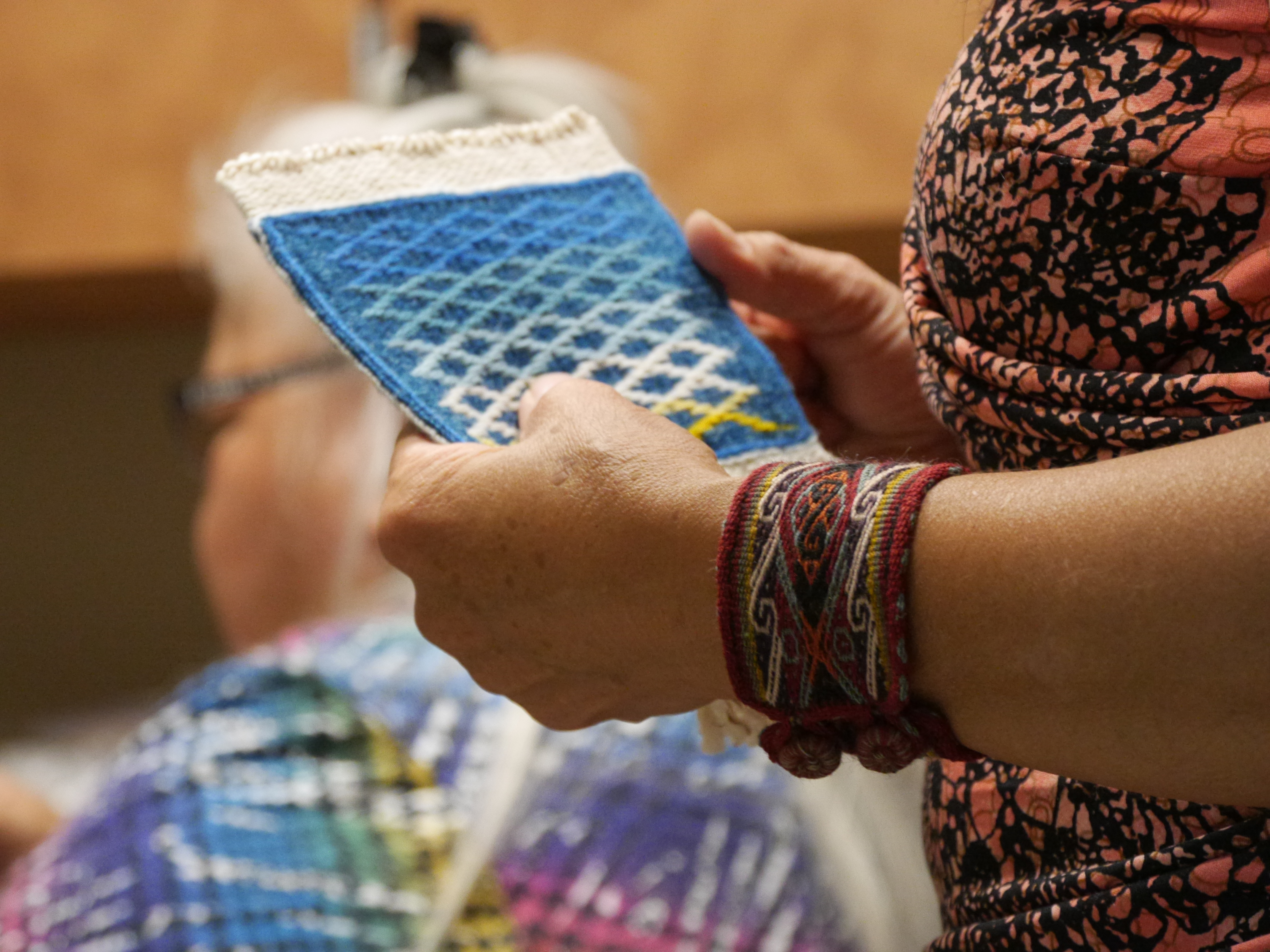
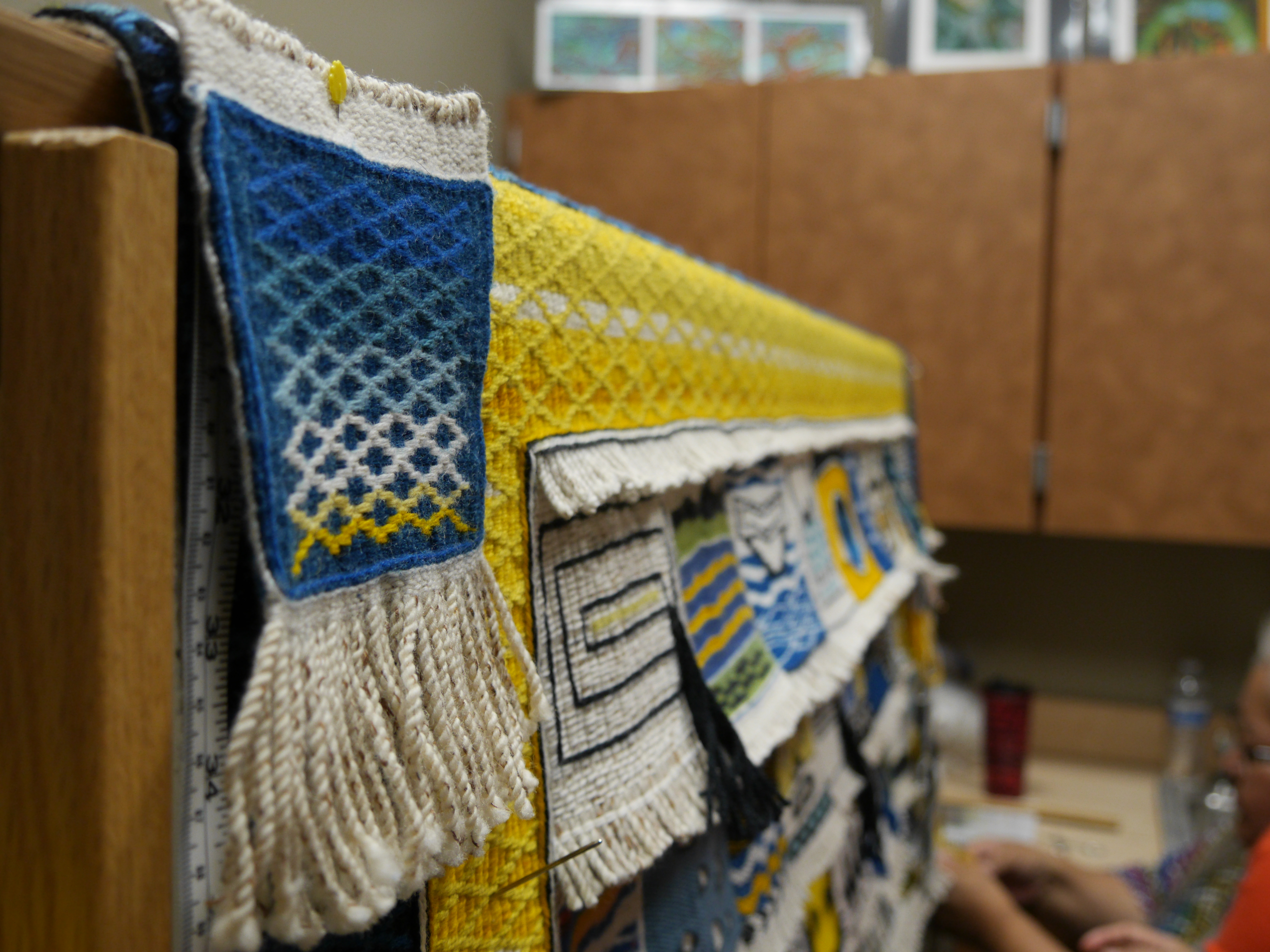
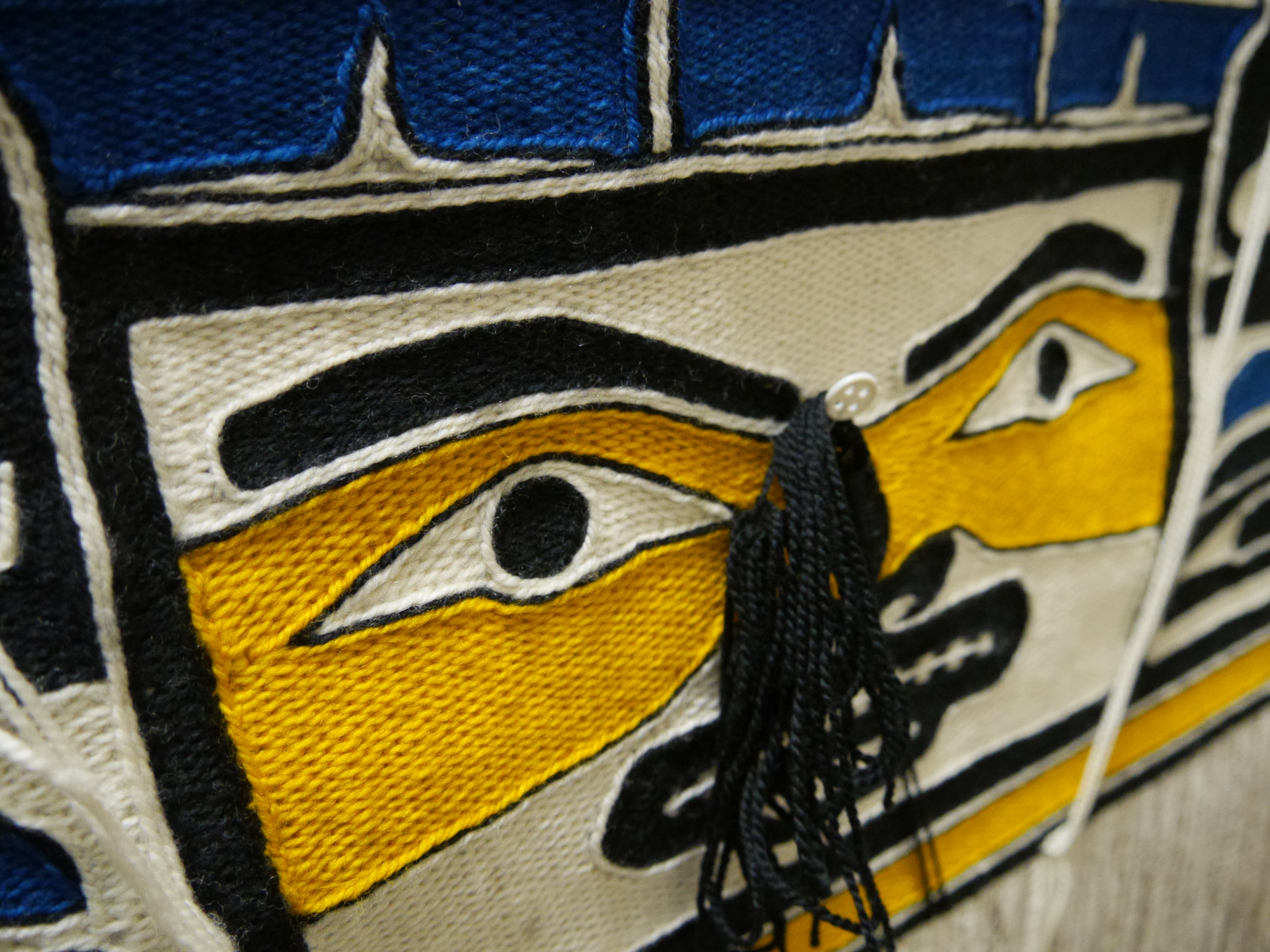
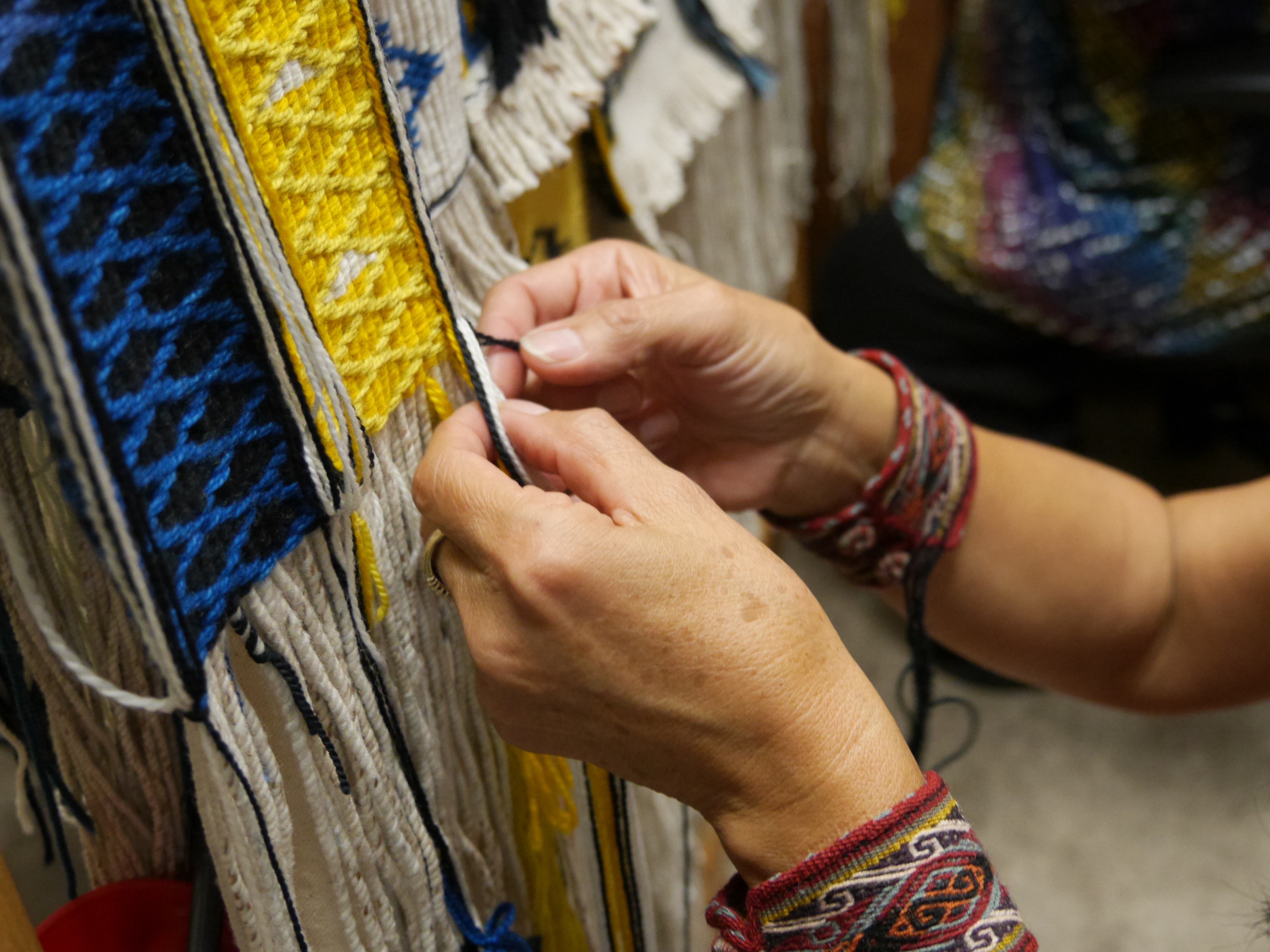
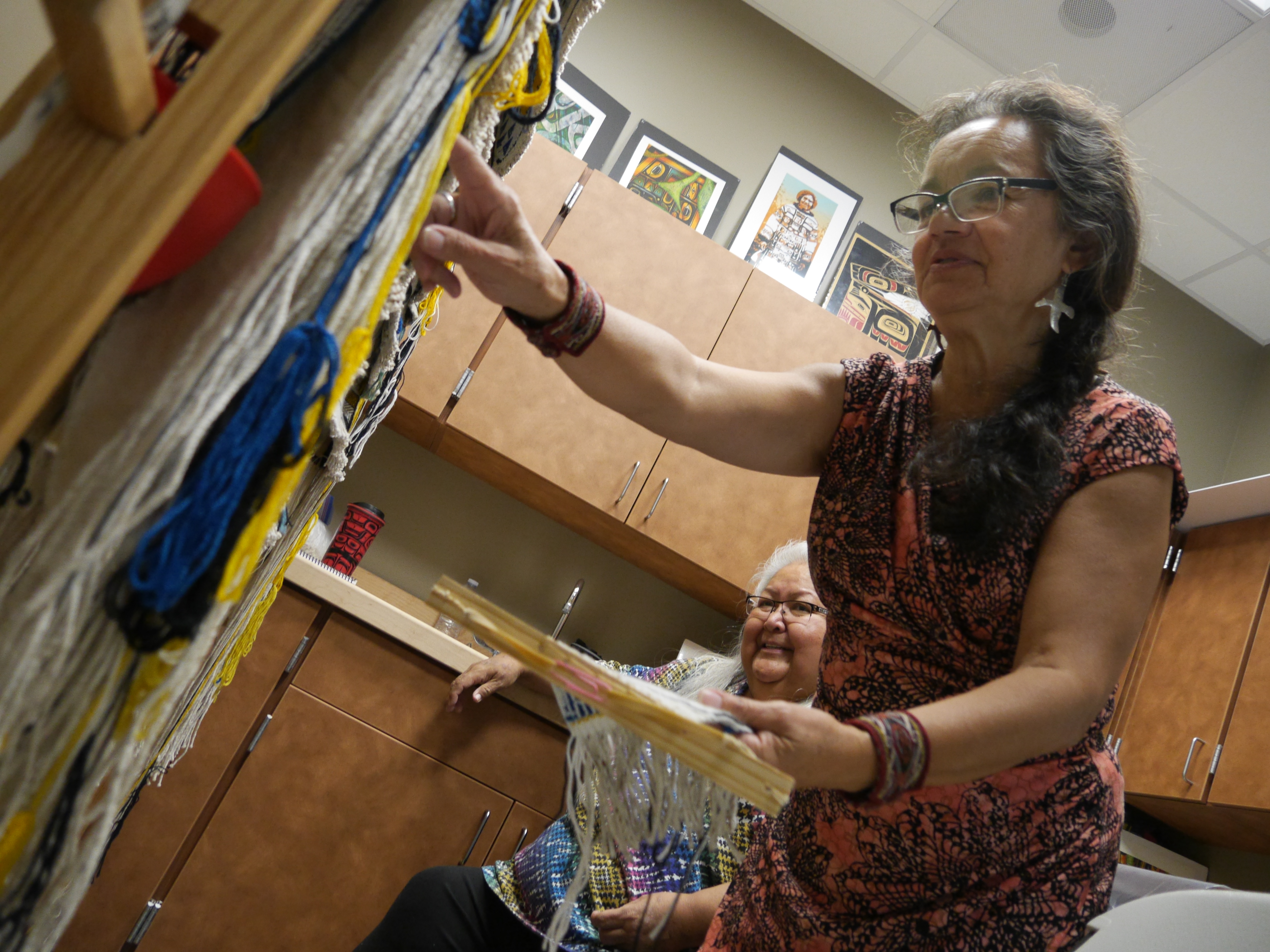
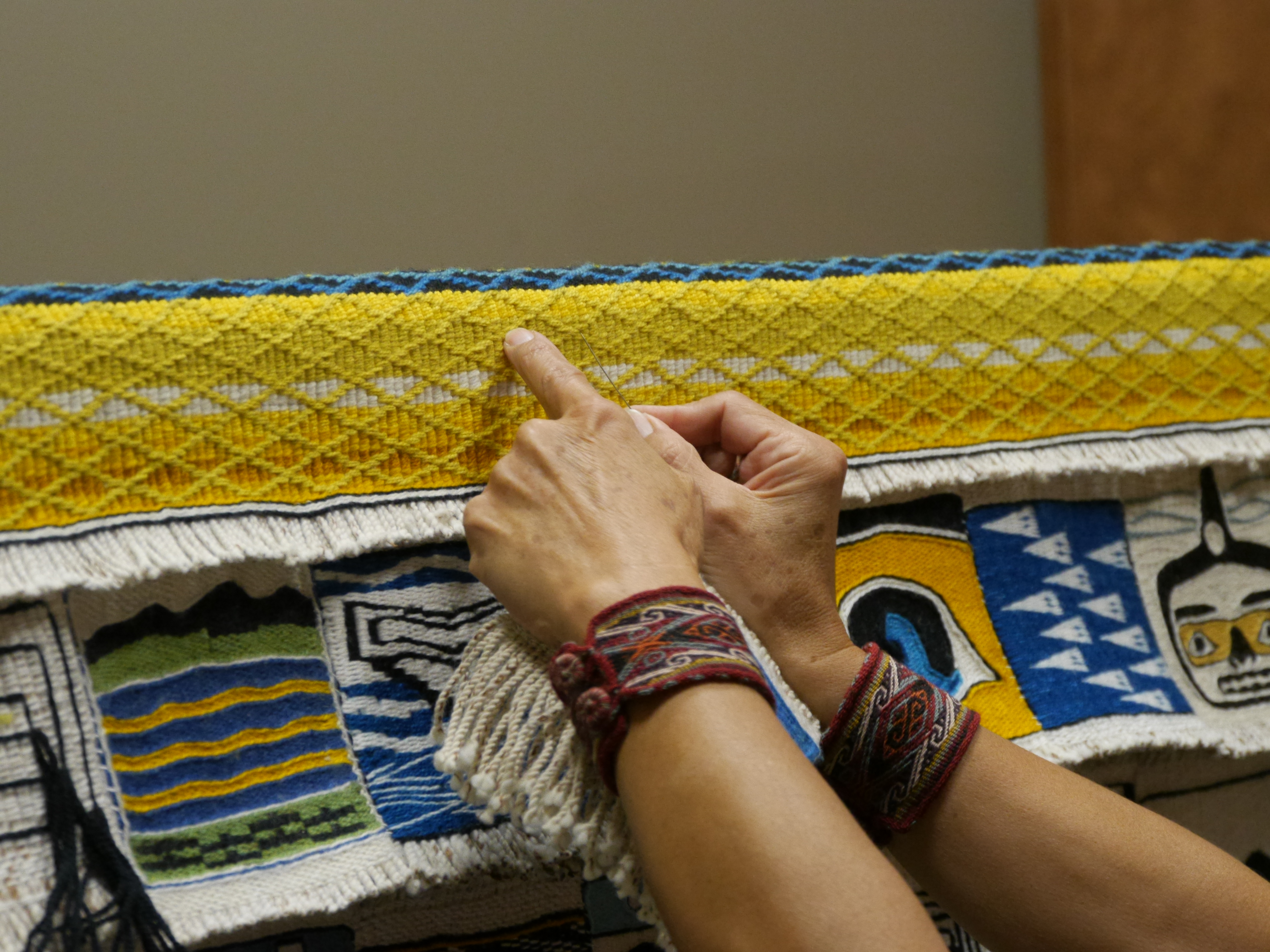
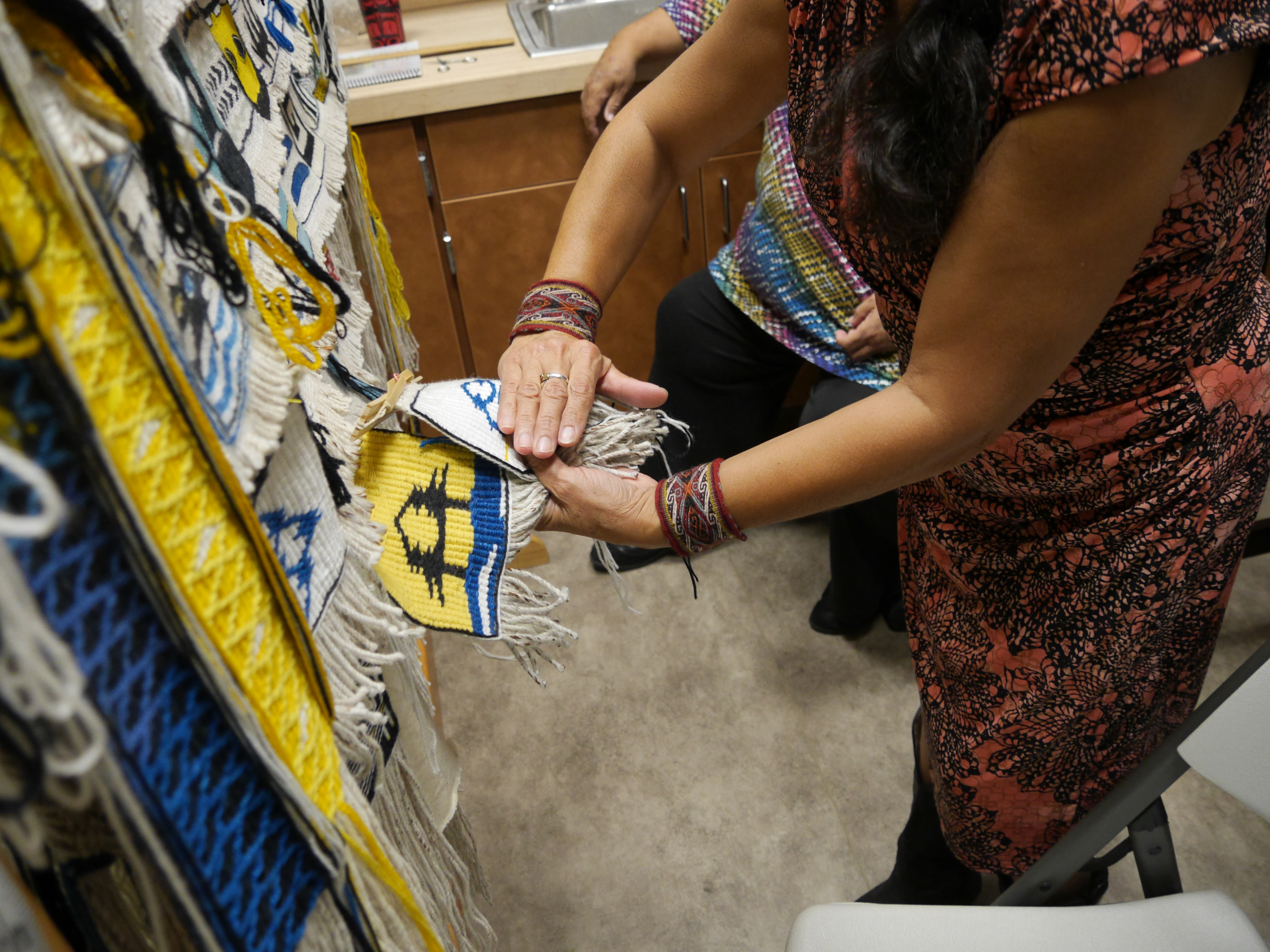
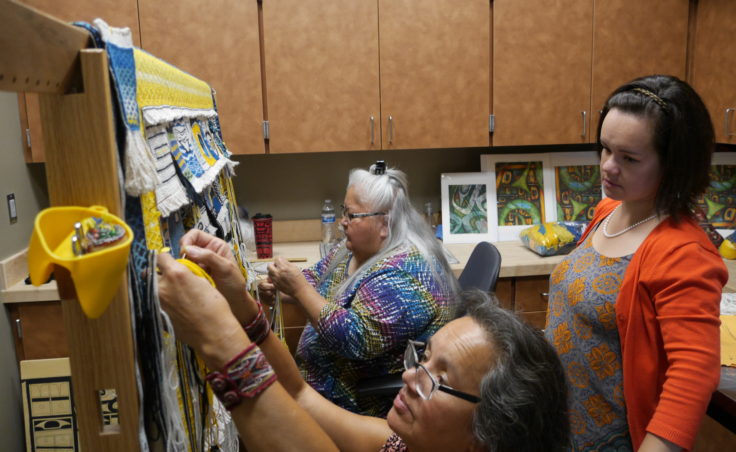
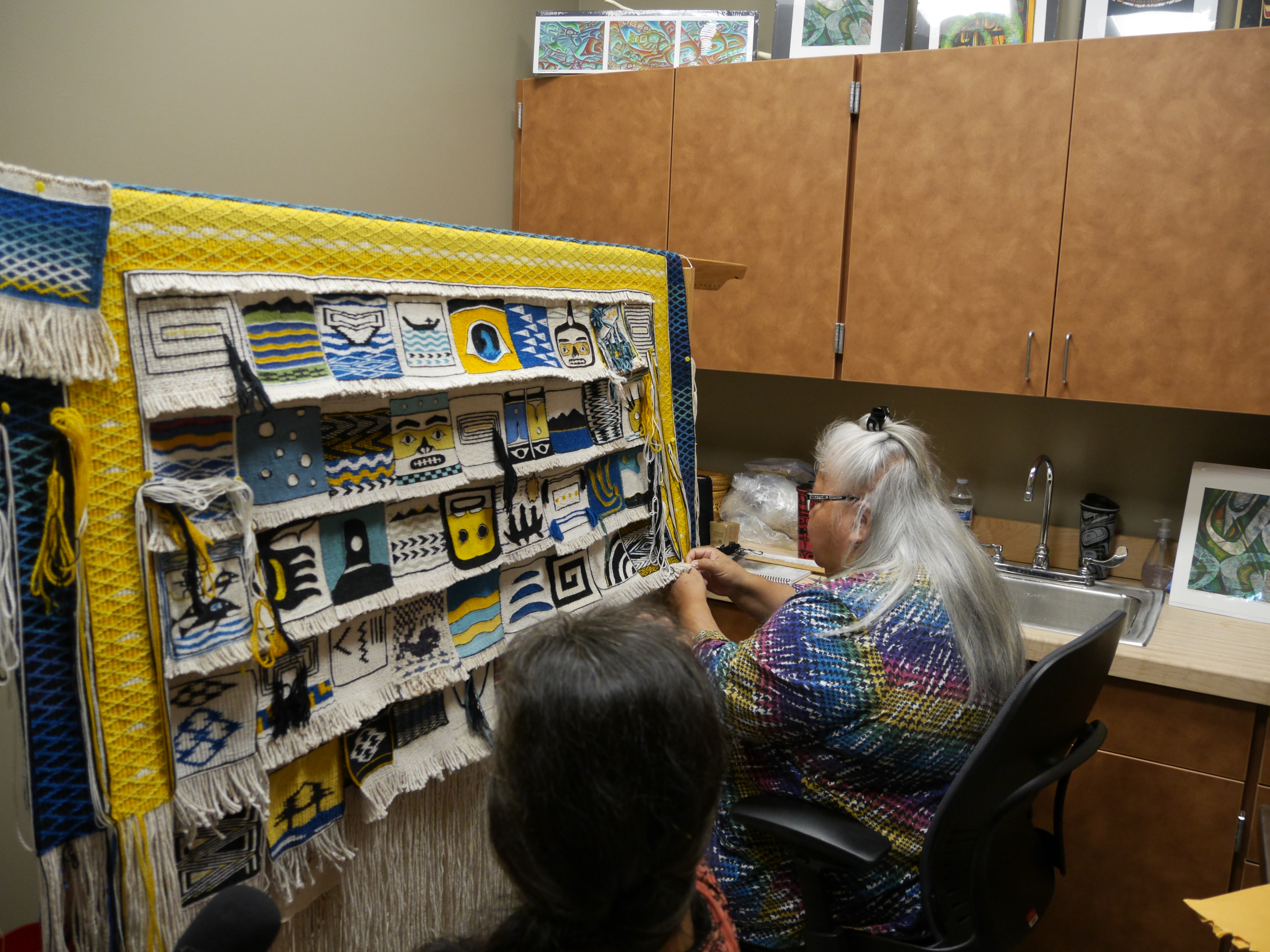
A Ravenstail and Chilkat robe with more than 40 collaborators is under final assembly in Juneau. The robe will be part of the Huna Tribal House opening ceremony this Thursday in Glacier Bay National Park.

Listen to the story here:

Project leader, artist and weaver Clarissa Rizal organized the project and said the inspiration came from a conversation with Klawock weaver Suzi Williams.

“We were having this conversation about Chilkat weaving. I told her ‘That’s all I’ve been seeing is Chilkat weaving this, Chilkat weaving that. Anything Chilkat,’ and she laughs,” Rizal said.

“She goes, ‘I’ve been thinking about knitting and crocheting.’ She says, ‘You know those granny square, crocheted granny squares back in the 60s and 70s?’ She says, ‘You ever do that?’ And I says, ‘Yeah I made one of those for my mother,'” said Rizal.

Rizal said the image of the robe came to her like a vision.

“It’s a Ravenstail-Chilkat robe made by different weavers across the Northwest coast, up and down the coast right!” Rizal said. “And she (Williams) says, ‘Oh my god. And,’ she says, ‘It’s going to be used for canoe gatherings.’”

In the spring of this year, Rizal made the vision a reality.

She used her blog, Facebook and other means to officially invite Northwest Coast weavers to create and submit their own granny squares.

She crowd sourced it. The blog detailed an overview of the robe and the individual 5- by 5-inch square pieces — up to 54 of them.

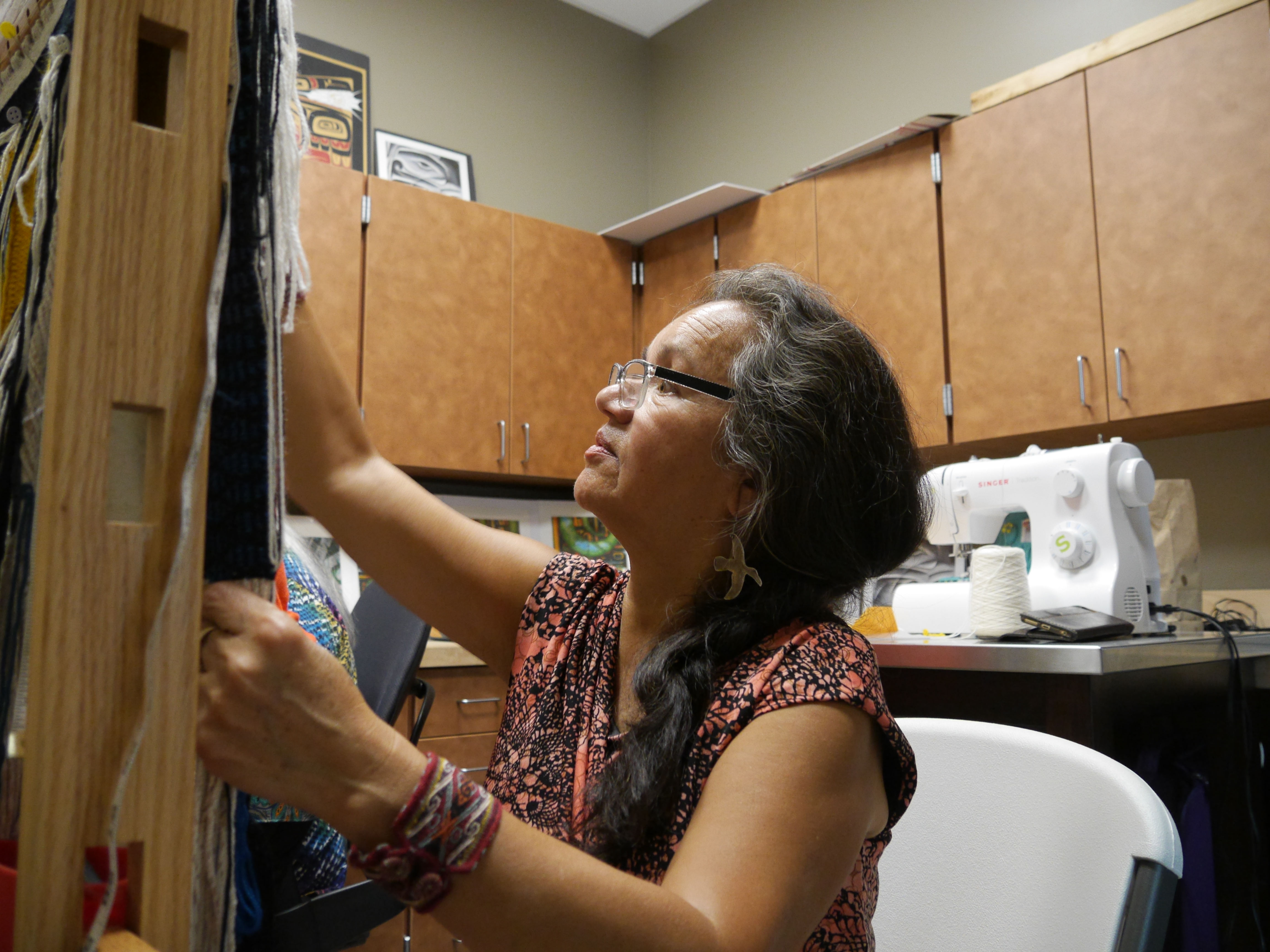
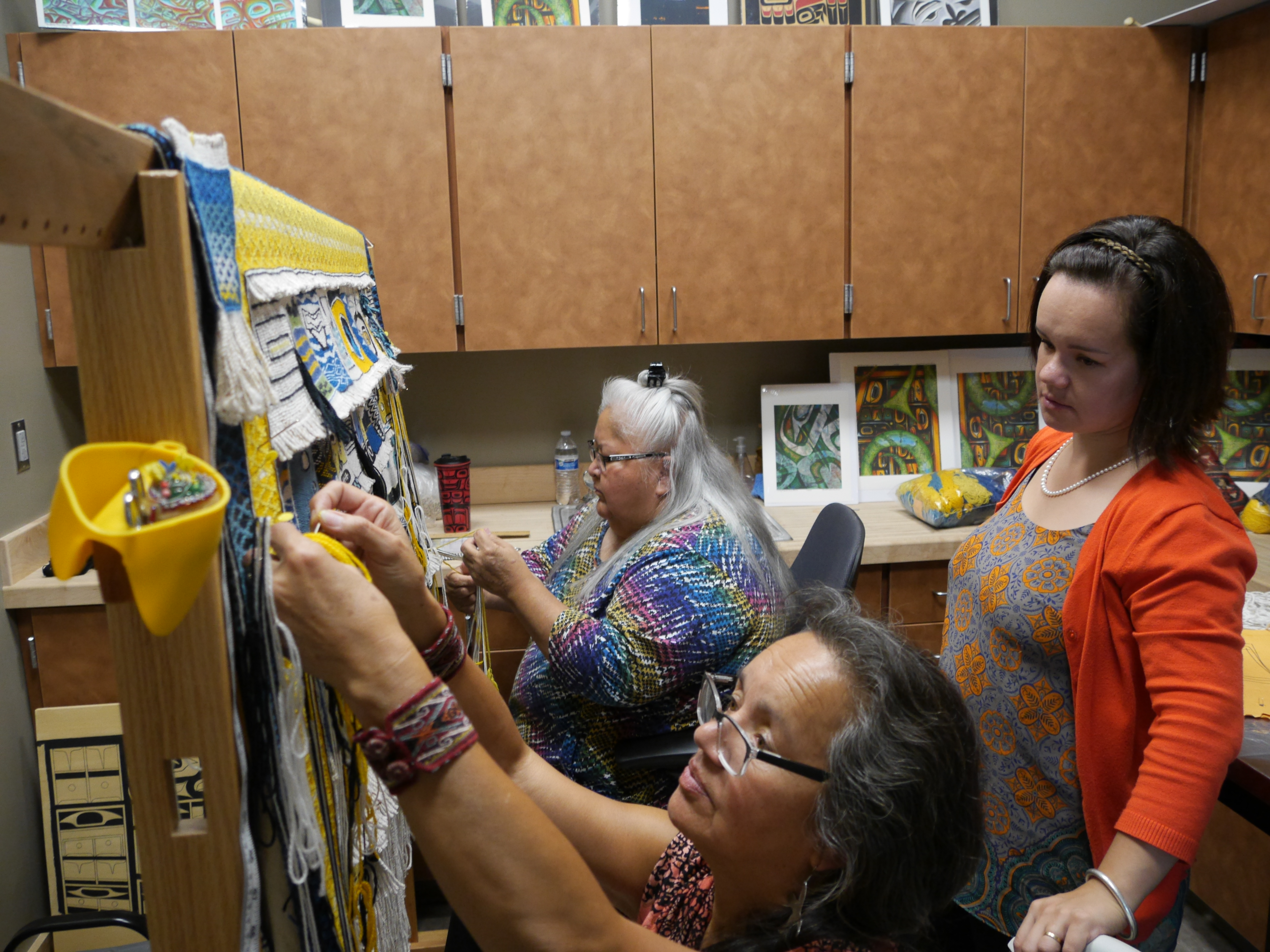
Clarissa Rizal and Della Cheney work on the robe in the Delores Churchill Artist in Residence space at the Walter Soboleff Center. (Photo by Tripp J Crouse/KTOO)

“When those pieces first started coming in, it just hit me like a ton of bricks, like, oh my god, these people trust me? And, oh my god, I get to touch and feel each one of these and hold them in my hand, right? I get to hold them in my hand. And just feel the energy of each piece. And the love for weaving, the energy of each piece. I am so privileged to be the one who gets to hold these,” Rizal said.

Rizal is at work at the Walter Soboleff Center finishing the robe with help from fellow weavers and artists like Della Cheney and Rizal’s daughter, Lily Hope. 41 artists ended up contributing squares, and, with less than 72 hours to go, Rizal estimated she had some 50 hours of work left before the Huna Tribal House opening in Glacier Bay.

“I call myself ‘cutting it close Clarissa,’” Rizal said.

At the Huna Tribal House opening, the robe will be worn in ceremony to commemorate the clan house and Wayne Price’s dugout canoes.

That’s just the beginning of the robe’s tour, which will include a stop at the White House. Rizal is a National Endowment for the Arts fellow and will dine with President Barack Obama.

“So I imagine, is that I would like to put this robe on him. Wouldn’t that be cool?” Rizal said.

After touring with Rizal, and when the robe is not in use, it will be housed at The Evergreen State College in Olympia, Washington. Rizal hopes is will inspire weavers for decades to come.

The National Park Service is streaming coverage of the Huna Tribal House opening on Thursday and 360 North tentatively plans to carry this coverage on television.

Juneau Assembly passes long-awaited equal rights ordinance

(Photo by Mel Green)
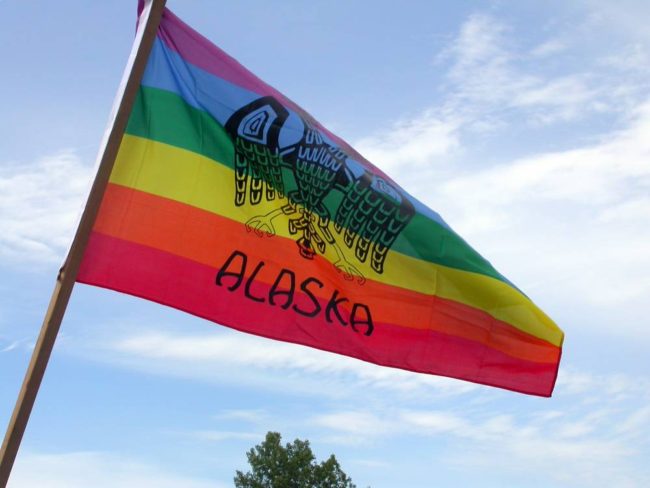
An Alaska Pride flag. The image is based on a double-faced eagle design from Alaska before Russian contact. (Creative Commons photo by Mel Green)

More than 70 people crowded into the assembly chambers Monday evening in support of an equal rights ordinance. The Juneau Assembly adopted the ordinance in an 8-1 vote.

The ordinance, which takes effect in 30 days, protects against discrimination based on gender identity, gender expression and sexual orientation.

Freda Westman spoke in support of the ordinance on behalf of the Alaska Native Sisterhood.

“It takes all of us working together (to) do what is right, to have equal protection,” she said. “If not all of us are protected, then none of us are protected, and it’s important that it’s passed.”

The Rev. Phil Campbell from the Northern Light United Church also expressed his support.

“It was Theodore Parker and later Martin Luther King Jr. who said that the arc of the universe is long but that it bends toward justice,” Campbell said. “I humbly submit that by the passage of the equal rights ordinance that you will facilitate more bending toward justice and equality for all people.”

Community members wearing large buttons with the word “Yes” over the pride flag filled the room, but the ordinance wasn’t without critics.

Assemblyman Jerry Nankervis voted against the 15-page ordinance. He said he didn’t disagree with the intent, but said there are problems with its execution. He said some aspects dealing with accessibility could increase a landlord’s costs. Some facilities may be forced to rent to, he suggested, Satanic groups. He also said offhand remarks could make people liable for aiding or abetting discrimination.

“My concern with supporting this and the way it’s written, and as lengthy as it is–would be that I would fall into the sand trap that I always talk about, which is the ends justifying the means, and I just can’t do it (with) the way it’s structured right now,” he said.

Tom Williams was one of two community members who spoke in opposition to the ordinance.

“The premise of this ordinance is that only those in the protected classes need to be insulated from unlawful behavior when in fact,” Williams said, “abuses can occur on both sides of the transaction.”

The ordinance doesn’t create a city agency or group that will monitor discrimination. Instead, it allows community members to take legal action if they feel they’ve experienced discrimination.

Anchorage is the only other Alaska city that has these protections for its private citizens.

Juneau Assembly to vote on equal rights ordinance

At Monday’s Juneau Assembly meeting, members are slated to make their final vote on an equal rights ordinance.

The ordinance would create protections against discrimination for people in Juneau based on sexual orientation, gender identity and gender expression in housing, employment and public accommodations.

Gender identity is how a person identifies with their biological sex, and gender expression is how they express their identity externally—through clothing or hairstyles.

The Southeast Alaska Gay and Lesbian Alliance, or SEAGLA, plans to rally in support of the ordinance across the street before heading into the meeting.

Other items on the agenda address a proposed ordinance regarding the Renninger subdivision, allowing the city manager to negotiate the sale of two of the subdivisions lots to the Alaska Housing Development Corp. Another ordinance on the agenda would provide funds for construction on the Aurora Small Boat Harbor.

The meeting starts at 7 p.m. in Assembly Chambers at City Hall and is broadcast live on KTOO-FM.

Juneau police give retailers tips on stopping shoplifters

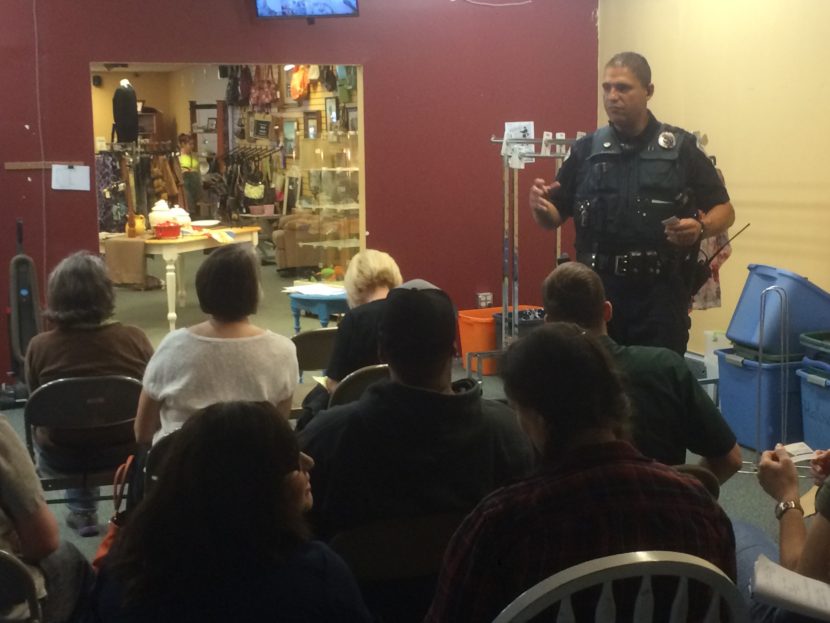
Officer Ken Colon taught a group of retail workers how to prevent theft from their stores on Friday, August 19, 2016.
Officer Ken Colon taught a group of retail workers how to prevent theft from their stores on Friday. (Photo by Quinton Chandler/KTOO)

“Greet your customer.”

That’s the most important piece of advice Juneau police Officer Ken Colon wanted his audience to remember at the end of his presentation on Friday. He was meeting with nearly 20 people in the backroom of Alaskan Dames, a consignment shop in the Mendenhall Valley.

“Shoplifters, they do not like being greeted. It hinders their ability, it takes away the opportunity and it reduces the desire to commit the crime,” Colon said.

Juneau police have reported burglary and theft rates significantly higher last year than in previous years, and they’re stepping up efforts to help residents discourage thieves before a crime is committed.

Colon has been on the Juneau police force for almost 11 years. He’s experienced the increase in property crime firsthand. He said when he responds to a theft, he looks for holes in the victim’s security so he can explain ways they can prevent the same thing from happening again. Now he’s taking the next step.

“That’s why I’m called to do these things. If I point out some of the things they are not doing, a lot of these petty thefts, when it comes to shoplifting, could’ve been prevented.”

He wasn’t sure who his audience would be at first. If a majority of the people had been business owners, he would’ve spoken about physical changes they could make to their business to deter thieves.

“We had a lot of employees here so we started talking about loss prevention more than anything else,” Colon explained.

In other words, ways employees can make a difference. Some of those employees said they wanted to learn how to protect their stores and themselves from shoplifters.

Nathan Buendia and his coworkers often work alone at Lilette, an Alaskan Dames boutique. He said Colon’s talk was educational. He even took notes.

“Yeah, I learned a lot tonight. I think that the crime prevention triangle is really effective and I’m glad that I learned it today,” said Buendia.

He explained the concepts behind the crime prevention triangle.

“So it’s desire, ability and opportunity. These criminals, they have all these three things, and if you block one of those things they will most likely not steal, which is really, really cool to learn,” he said.

That’s where greeting the customer can go a long way.

Officer Ken Colon said he is willing to give security appraisals to local businesses and homeowners. If interested call the Juneau Police Department at 907-586-0600 and ask for Officer Colon.

“If you’re just an employee, make sure you say hello to your customer and the store will most likely be protected,” Buendia said.

Buendia has only worked at Lilette for a couple of months and said he hasn’t had to deal with shoplifters, but his coworkers have.

Madison Massey is a manager at Alaskan Dames who sometimes fills in at Lilette. She said shoplifting is a frequent occurrence.

“Weekly, I mean daily, we’re aware of when people are coming in specifically looking to hit us without paying whatsoever,” Massey said. “We’re looking at security footage weekly, so we’re aware of the regulars who are coming in and taking things without paying.”

Massey said theft is such a big problem that it might be a good idea for retailers to have talks on crime prevention on a regular basis.

Colon said there’s no doubt that if businesses adopted the tactics he recommends, Juneau would see fewer thefts.

Site notifications
Update notification options
Subscribe to notifications