Community

The Blind Spot: quitting meth alone, together

This week we’re exploring the Blind Spot, a look at teens who are abusing substances, but aren’t being caught by the system set up to help them. In this story, KSKA’s Anne Hillman spoke with a couple relying on each other to end their methamphetamine addiction.

Two young women sit in an empty classroom, their hands entwined. A knit cap is pulled low over Madison’s shaggy hair, and a Batman belt holds up her baggy pants. Kylie wears a pastel hoodie over her thin body and tight jeans. One of them is still a minor, so their names have been changed here.

More than a year ago, before ever meeting, they had both dropped out of school. But recently they re-enrolled.

They met when Madison joined her friend for dinner at Kylie’s dad’s house. Madison remembers the meal going well. “They had meatloaf,” she recalled, before adding, “and I met her.”

By then, Madison had already started using meth.

“I was downtown Anchorage, in the JC Penny stairwell,” Madison said, recalling her first hit. “Believe it or not, a lot of people do drugs in all those places. So if you ever see people standing in the stairwell: they’re probably doing drugs.”

But then, after meeting Kylie, Madison stopped. She knew Kylie had grown up in a house where her father and older siblings often used drugs. Madison didn’t want her to have to deal with a girlfriend who was using, too.

Then Madison relapsed. With Kylie’s dad. And that was when Kylie decided it was time for her to try it, too. Part of the reason was she’d felt cut out of the family for not using. “I was closer to my family if I did it,” Kylie said.

Younger siblings were allowed to stay around when drugs came out because they didn’t know what was going on. Kylie, however, was older, and kept away when meth was around. But when she started using, she could stay.

That started Madison Kylie on a six-month bender with friends and family members. They estimate they used thousands of dollars worth of drugs, but paid almost nothing for them. The meth made them escape.

“It makes you feel cut off from your emotions,” Madison explained. You just kind of get lost in this different world.”

The two of them would go days forgetting to eat or sleep. For Kylie the whole thing started with wanting to try it one time.

“And six months later you’re like 100 pounds and nobody—your own family—doesn’t want to be around you,” Kylie recalled. “It’s awful.”

They didn’t even like each other. Madison is whiny when she’s high, according to Kylie. Although Kylie is annoying in her own ways. “She’s just everywhere and then she’s not everywhere. And she’s always writing letters. Always writing, writing,” Madison contends. “And then she never sends the letters anyway.”

But when Kylie is off drugs, she’s a completely different person, a person Madison loves.

“She laughs a lot and she’s really goal-orientated, too, when she’s sober. She wants to get things done,” Madison said. “She looks out for herself.”

On the days they didn’t use meth, that’s the person Madison would see. And she detected a similar change in herself. She’d always known using meth was a bad idea, but it was seeing those differences in the people around her made her realize she needed a change if she was ever going to reach the goals she made for herself.

So Madison set an ultimatum for Kylie: If they were ever adults with a family they never wanted their kids to have a mother who was as messed up as she herself had been.

“It sounds really harsh,” Madison chimed in.

“But it’s the truth,” Kylie added. “She said that we didn’t need to set goals for when we had kids, we needed to do it before, so we were ready to have kids.”

Madison wanted to show Kylie a better life than she’d had. But Madison is also the one who first prompted Kylie to try meth. So why does Kylie still trust her?

“Nobody’s ever told me that they supported me or they believed in me,” Kylie explained, “but she has.”

In order to get clean the young couple had to get away from everyone who was still using, so they went to live with friends in Wasilla.

“If you try to quit and you’re still around all those people that do drugs”—Kylie starts.

“–It makes it a thousand times harder,” Madison swoops in, finishing the sentence for her. It’s part of an increasingly normal relationship between the two of them, squabbling over housework, and supporting each other through intensely personal choices.

“You have to make the decision to leave and get better for yourself,” Madison says. Although knowing that does not make it easier. Madison has relapsed since trying to get off meth. But she knows that is part of the process.

Both women say it’s hard, but that together they’re trying.
The Blind Spot: harm reduction at the transit center

(Photo by Josh Edge, APRN – Anchorage)

If you’re a teenager in Anchorage struggling with homelessness, hunger, or addiction there are few places to turn. One of the few organizations in Anchorage helping at-risk teens on their own terms is hidden in plain sight in one of the city’s busiest buildings.

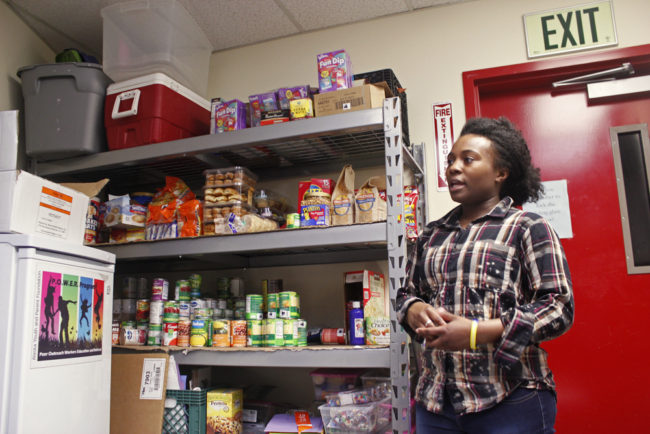
The POWER Teen Center is up a flight of stairs in the hectic Downtown Transit Center. Just past the glass doors is a walkway, and from there Calesia Monroe can see everyone downstairs waiting for their bus.

Calesia is 17, and has been employed as an outreach worker at Power–which is what everyone there calls it–for almost three years. On a tour one Friday, close to 5pm, the staff was closing up for the weekend, ushering dozens of young people out the door.

(Photo by Josh Edge, APRN – Anchorage)

In the front room people hang out, watch TV, and can sign up on a clipboard to see a nurse for STD/STI testing.

“People just sit out here and child out,” Calesia tells me. “And then we also have the condom giraffe,” she adds, opening a giraffe-shaped cabinet stocked with prophylactics for clients to take.

Condom giraffe, I should mention, is a giraffe shaped-cabinet stocked with condoms for clients to take.

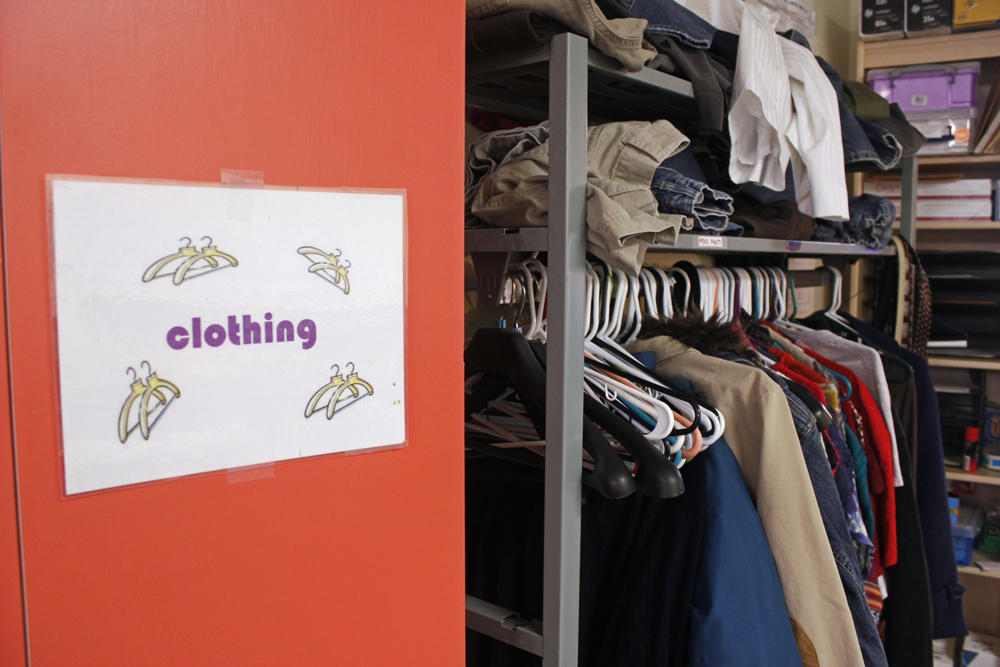
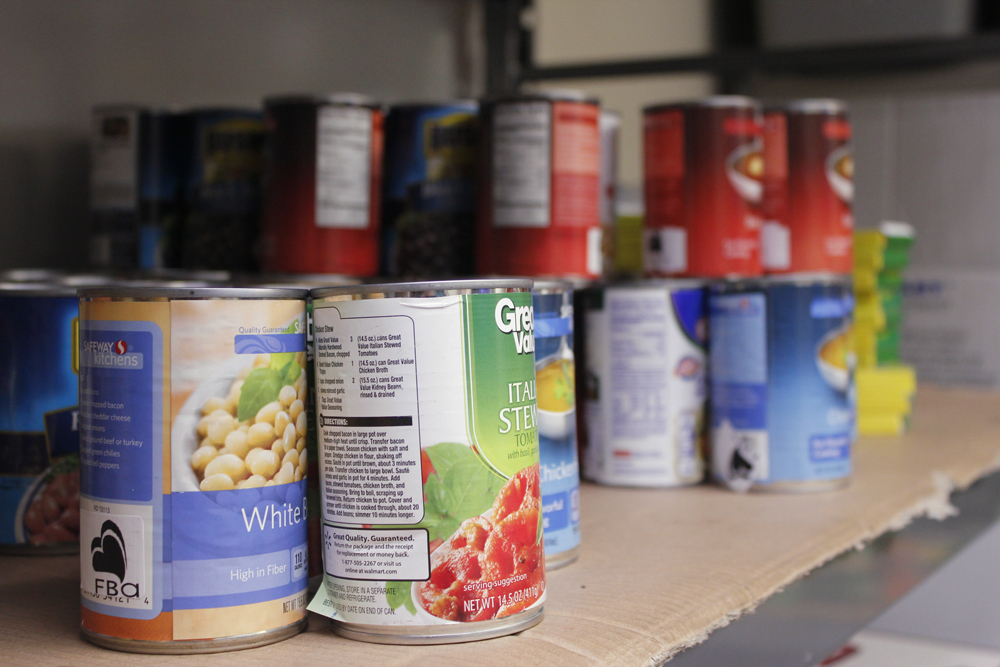
The Power Teen Center is one component within Alaska Youth Advocates, a non-profit targeting an at-risk population between the ages of 14 and 24. It offers basic services like food and clothing, and connects at risk kids to resources like housing, counseling, and even treatment. Last year, the on-sight medical clinic tested more than 400 young people for sexually transmitted diseases.

Paid youth staffers like Calesia work at the center, but they also carry backpacks full of food and supplies doing street outreach in downtown Anchorage, and as far away as the Dimond Center.

“I think that we’re much more on the side of safety and linkage, as far as being the first line of contact,” says Chris Mortinson, who supervises the center and its staff.

“We use a harm reduction model, meaning we’re not going to kick out youth either because of them using or because of other different difficulties they may have,” Mortinson explains. The goal for him is looking past barriers young people may face in order to get them to reach other services.

(Photo by Josh Edge, APRN - Anchorage)
(Photo by Josh Edge, APRN – Anchorage)

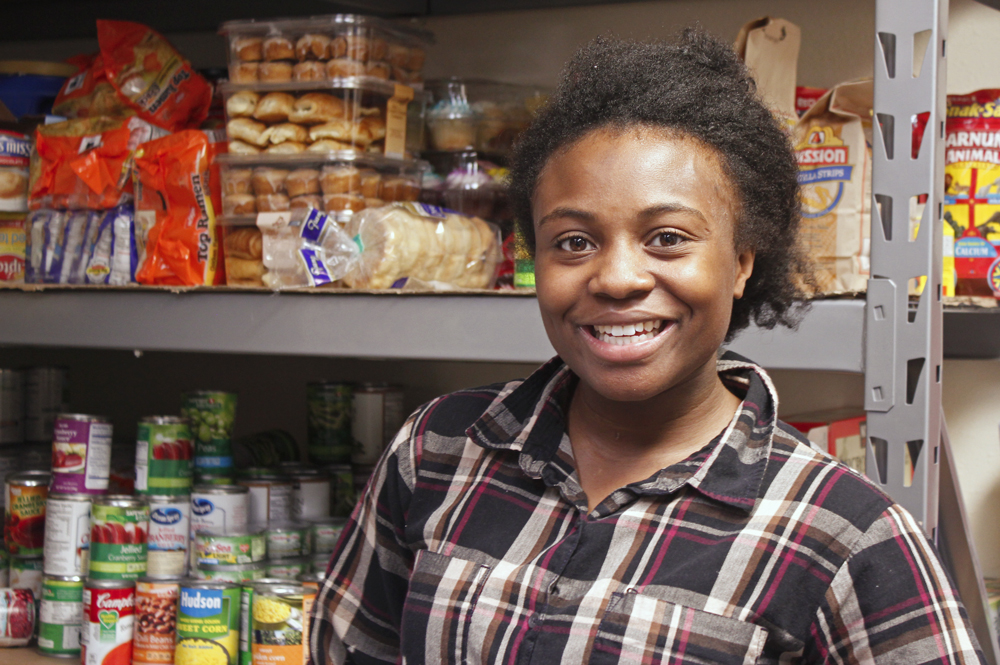
As Mortinson and I are talking inside the pantry, a young man pokes his head in and asks if he can fill up a bag of food. Mortinson immediately obliges, and helps him pick out dry-goods and a package of lunch-meat from a freezer.

Power’s approach is similar to the Housing First model, which is based on the idea you can’t help people in crisis with big life issues if immediate concerns like hunger and safety aren’t being met. That is part of the reason the center is located in the bus station.

“Our youth are here,” Mortinson said, “whether we’re here or not, our youth are downstairs and hanging out here.” One of the peer outreach works had recently told Mortinson that even on the days Power is closed, Saturday through Monday, there are often regulars leaning against the center’s glass doors.

Calesia is more candid about how the location fits with the mission. Many of the clients she works with are surviving poverty, addiction, and trauma. The geography of downtown and the bus system play a prominent role in that, so the center makes sense.

“A lot of drug-related activity is going on downtown, a lot of illegal activity is going on, a lot of people in need, and a lot of people coming in and out,” Calesia explained.

(Photo by Josh Edge, APRN – Anchorage)

Power does not have data on how many young people they pull out of trouble. And that is intentional. They do not ask for IDs from clients or do any kind of tracking, because they know that for one reason or another some of them do not want to be found. But Mortinson and Calesia both say that at the anecdotal level they see the center making a huge difference in the lives of the young people it serves.

Some of Calesia’s perspective on what clients at the center face came from running away when she was 14 and her family was homeless

“I didn’t run away from home because it wasn’t a home,” she said. “But when I ran off to the Covenant House they immediately contacted my mother and she put me in a girl’s home.”

She liked the stability at the girls home, but then her mother pulled her out.

“So I was back on the streets,” Calesia said. Many of the housing and shelter resources for adults felt off-limits because she was still a minor. She doesn’t know what she would have done, or what she’d now being doing if she hadn’t been for the center. “I probably would have been doing some of the stuff that the clients here at Power are doing, and getting really deep into.”

(Photo by Josh Edge, APRN - Anchorage)
(Photo by Josh Edge, APRN – Anchorage)

Still, hers is a happy story: in the fall Calesia is starting college at the University of Hawaii. She plans on majoring in Peace Studies, focusing on women, gender, and race, because she thinks it will help her work on behalf of underrepresented groups, including young people.

“Power has opened that door for me to be an advocate, a leader in my community,” Calesia said, her eyes brightening.

You can hear in her voice that this work is a double-edged sword for Calesia. It makes her laugh, gives her a sense of purpose, but it is exhausting, and she’s had to leave the job three times to give herself breathing room. She can tell she’s approaching burn out, and she’s not even legally an adult.

Anne Hillman and Zachariah Hughes received Alaska Press Club data journalism fellowships, which helped them produce this story. The training program was funded by the Alaska Community Foundation and Recover Alaska.

The Blind Spot: a system of order over chaos

This week Alaska Public Media is exploring the Blind Spot – how youth who are part of and outside of the juvenile justice system are getting help for substance abuse. One option is inpatient programs like the Adolescent Residential Center for Help in Eagle River, part of the Volunteers of America in Alaska, which Anne Hillman toured with one young resident.

Summer walked me through the crisp white, high-ceilinged halls of the ARCH substance abuse treatment facility. Summer is a minor, so we aren’t using her real name. We pass artwork painted by some of the center’s residents, and stops at a massive whiteboard covered with rules and notes.

“This is our reflections board,” Summer told me.

“What’s that mean?” I ask.

“Basically,” she replied, “if you’re on reflections with someone you can’t actually talk to them. You kind of pretend that they don’t exist.”

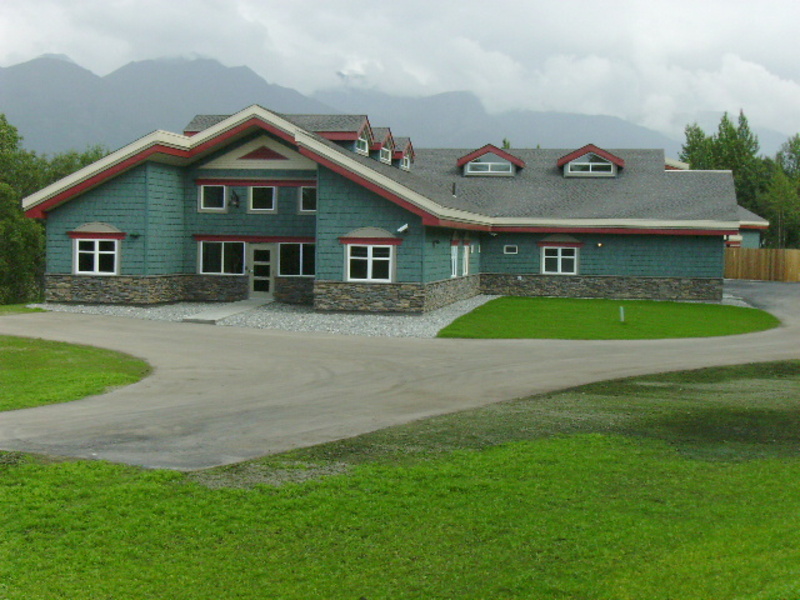
The exterior of the ARCH building.
The exterior of the ARCH building. (Photo via Volunteers of America – Alaska/Adolescent Residential Center for Help website)

The idea is to stop having unhealthy conversations or codependent relationships. Sometimes all 24 young people living in the house are on reflections, and are only allowed talk to each other during allotted times, like group therapy. Summer hasn’t been allowed to talk to one of her friends for months.

“Do you miss talking to him?” I ask.

“Yes. He’s a good friend.”

“What’s it like to be in the same room with him and not–”

“Talk to him?” Summer finishes. She explains that because they’re both in the facility they still get to see each other and gauge one another’s progress. “And you still support them by moving forward.”

Summer is completing six months of treatment for substance abuse. She started using drugs when she was 14. Her older boyfriend gave them to her. She says no one in her family noticed because she was still involved in activities at school and had a job. Then she started abusing prescription pills, and eventually alcohol and pot. Her relationships with guys were unhealthy. By 17, she was acting out and her parents kicked her out of the house. She chose to come to ARCH last summer, because she knew a friend of hers would be here.

“It was nothing like I expected,” she admitted. “I expected it to be lots more loose-fitting. A bunch of kids just slumming it out, not really doing anything.”

Instead, she found an extremely structured and restricted environment.

“We create a system of order rather than chaos here,” explained Program director Julia Jackson. It’s partly to help the residents feel safe, “But we also indirectly reinforce that there’s a sense of ownership, self responsibility, an obligation to interact in socially appropriate ways, and there’s a sense of law and order here, just like there is in societies.”

The rules are meant to keep the teenagers focused on their treatment. To that end, even reading books and listening to music require special permission.

“Adolescents want to escape,” Jackson said. “We have lost many a child to The Hobbit.”

She maintains the program works because it teaches the clients to respect and understand themselves, and how drugs affect them. It gives them skills to resist using substances, and provides a group of counselors they can call as a safety net. Most of the people who leave the program relapse at least once.

“But,” Jackson clarifies, “the number is very high–and getting higher–of individuals who leave, have minor difficulties and struggles, and get back on track.”

However, the organization doesn’t have data showing this. It is up to former residents to self-report how they are doing, and the center lacks a complete picture. The evidence is anecdotal.

Unlike Summer, most of the clients at the ARCH program are referred by the Department of Juvenile Justice, creating a strong motivation to participate.

“It’s sometimes a lot easier to rely on legal consequences,” Jackson concedes, “especially when you’re dealing with the adolescent brain, where it’s about instant gratification. It’s about short-term sight, what’s right in front of you–not seeing the long-term goal.”

Summer and I walk into the girls’ wing. Her room has a small bulletin board covered with pictures but otherwise it’s pretty bland. Residents can only have more decorations or other personal items if they have special permission called an “intervention.” From an outsider’s perspective, the room seems austere.

But Summer doesn’t see it that way. She’s currently transitioning into living with her grandparents, which brings passes off the ARCH facility.

“When I came back from my home pass I was like ‘Oh, I’m home! My bed,’” she said, lighting up. “It’s like a house full of family here.”

Summer is getting ready to leave the program. She’s nervous, but likes the idea of being back in the real world. She has plans for the future: Stay away from most of her old friends, finish high school, learn a trade, then travel. And she wants to focus on healthy relationships.

“It took me three months to realize that I was important,” she said. She has realized that guys treated her poorly, and allowed her to hurt herself.

“I didn’t deserve it,” Summer said. And that is the lesson she will take with her for life.

Anne Hillman and Zachariah Hughes received Alaska Press Club data journalism fellowships, which helped them produce this story. The training program was funded by the Alaska Community Foundation and Recover Alaska.

Teens press for climate change task force

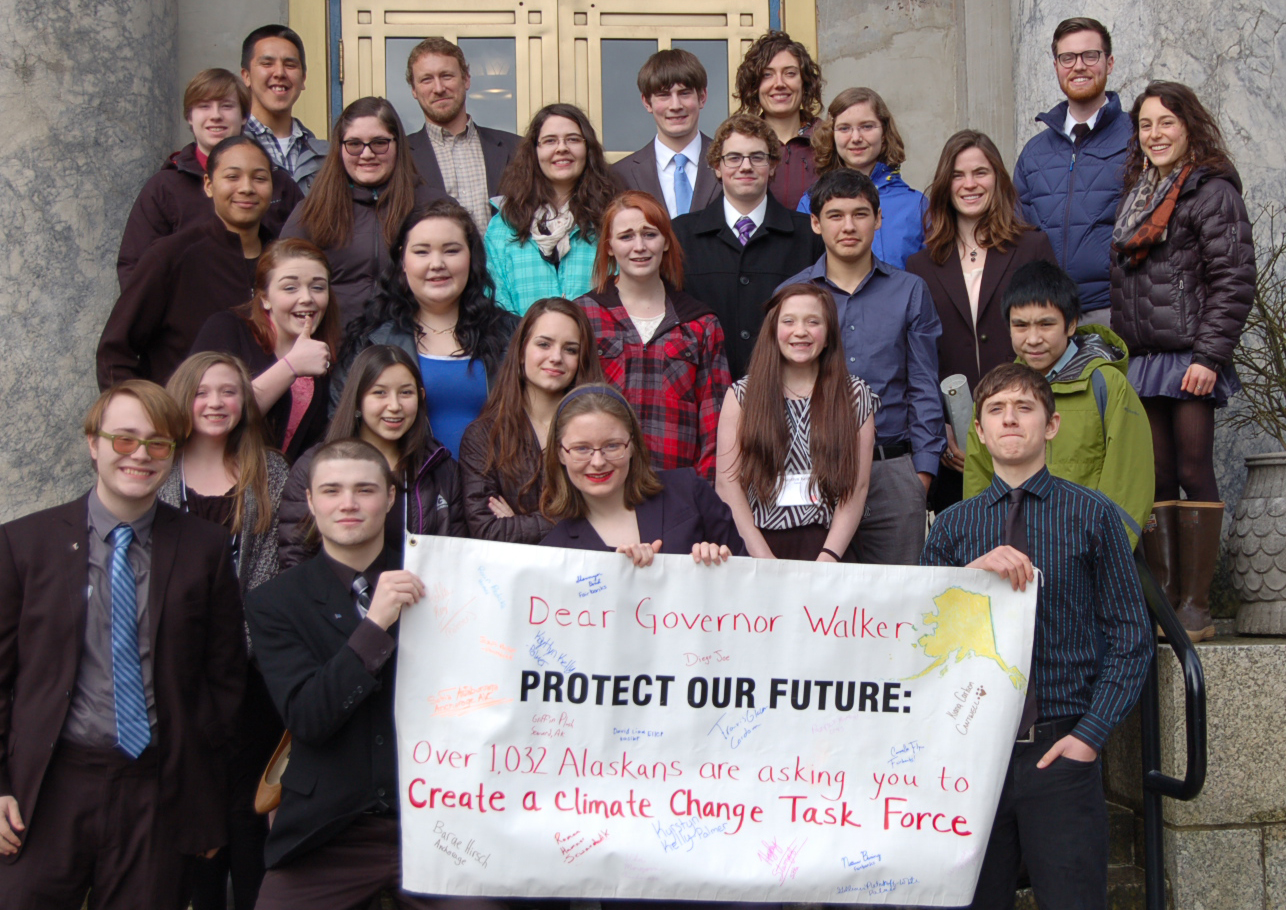
AYEA teens asked Governor Walker for a climate change task force. (Photo courtesy of AYEA)

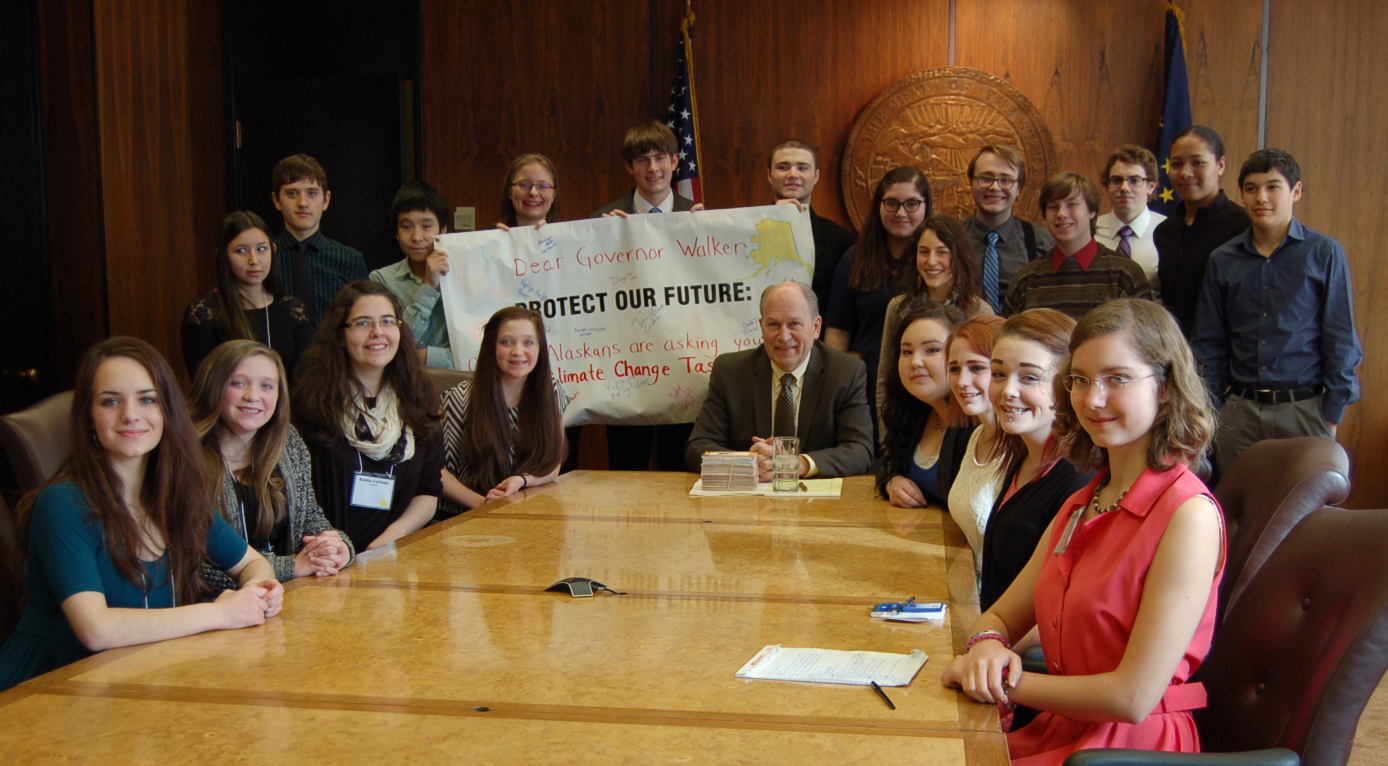
A Yukon Kuskokwim Delta teen travelled to Juneau over his spring break to be part of the annual Alaska Youth for Environmental Action Civics and Conservation Summit. He and 21 others took their activism straight to the capitol building to ask Governor Bill Walker to create a climate change task force.

Joseph Phillips entered the program with one goal: help his community battle climate change. It wasn’t until just last year that he realized that this was an issue, but he says winters are getting warmer and in the summer there aren’t enough berries to go around. He says it’s hurting his people’s way of life.

“It has too big of an impact in the state of Alaska because we hunt off subsistence and it’s part of our tradition and culture,” said Phillips.

The 15-year-old is a member of Alaska Youth for Environmental Action, or AYEA, a program sponsored by the Alaska Center for the Environment. He lives in Chuathbaluk, about 10 miles upriver from Aniak. Before the summit he had never been to the state’s capital. He and teammates from around 11 communities have been working on several climate change projects together over the past school year. They’ve gathered over a thousand signatures on a petition asking the Governor to create a climate change task force made up of a diverse group of Western and traditional experts.

The teens met with the governor to discuss their ideas. (Photo courtesy of AYEA)

AYEA’s annual Civics and Conservation Summit brings together Alaska’s youth to learn about and take action on environmental issues. The students are chosen based on their passion and desire to speak up for their communities. They learn about the legislative process, research controversial bills, and study the art of communication and lobbying.

Megan McBride is the youth engagement director for AYEA. She says that the summit has three goals.

“The first is to develop a strong network of youth leaders for Alaska. Our second is to build teens’ knowledge and skills. Our final objective for the summit is for the teens to have an opportunity to take action,” said McBride.

McBride says youth are critical in the fight to stop climate change.

“Young people are so powerful and creative and I really believe that they are able to see the future clearly… We’re working to empower them with the tools they need to advocate for the future they want,” McBride explained.

The work doesn’t stop at the summit, though. Phillips and the other teens will be continuing to talk with Governor Walker’s office. They are hopeful that he will give their proposal serious consideration.

Governor Walker said via email that he was impressed with the teens’ passion and knowledge of environmental issues.

“Certainly, their concerns are shared by my administration. Given our meeting, I am taking into consideration their request to reconvene the climate change task force,” said Governor Walker.

Phillips and four other students also spoke to Representative Charisse Millett, the sponsor of House Joint Resolution 6, which deals with the government’s financial responsibility for contamination of Native land. Together the group suggested the government reimburse the medical expenses of those whose health had been damaged by toxic material. The bill now includes a similar request to the federal government. The resolution has passed in the state legislature and next goes to the governor.

The Blind Spot: spaces between statistics

chart-1

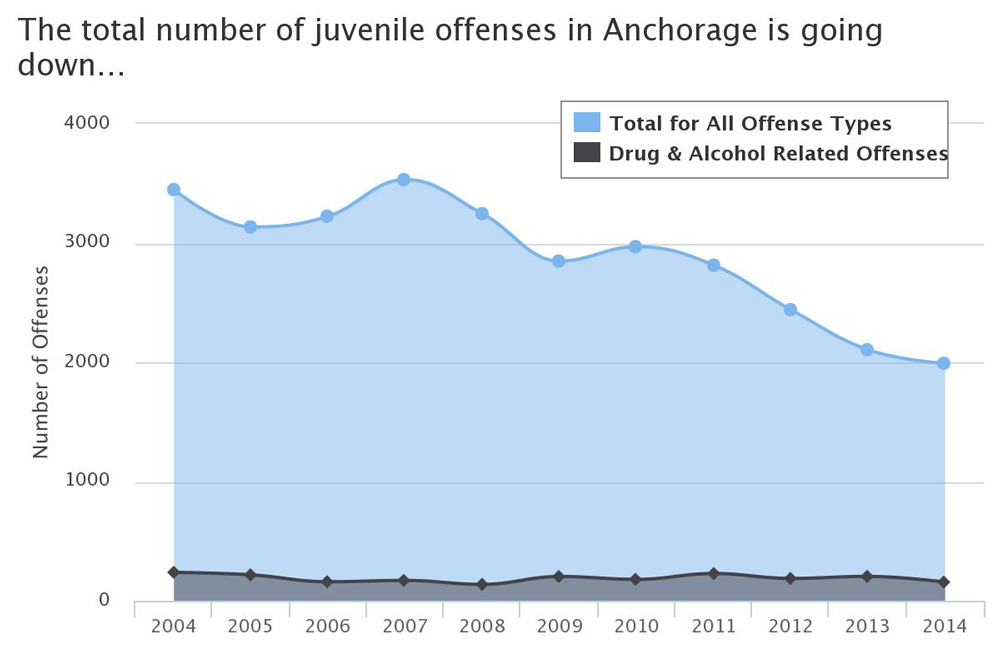
chart-2In Anchorage, the number of criminal offenses by minors referred to the Department of Juvenile Justice has dropped by nearly half in the past decade for almost every offense type — except severe drug and alcohol offenses. That number has stayed fairly steady.

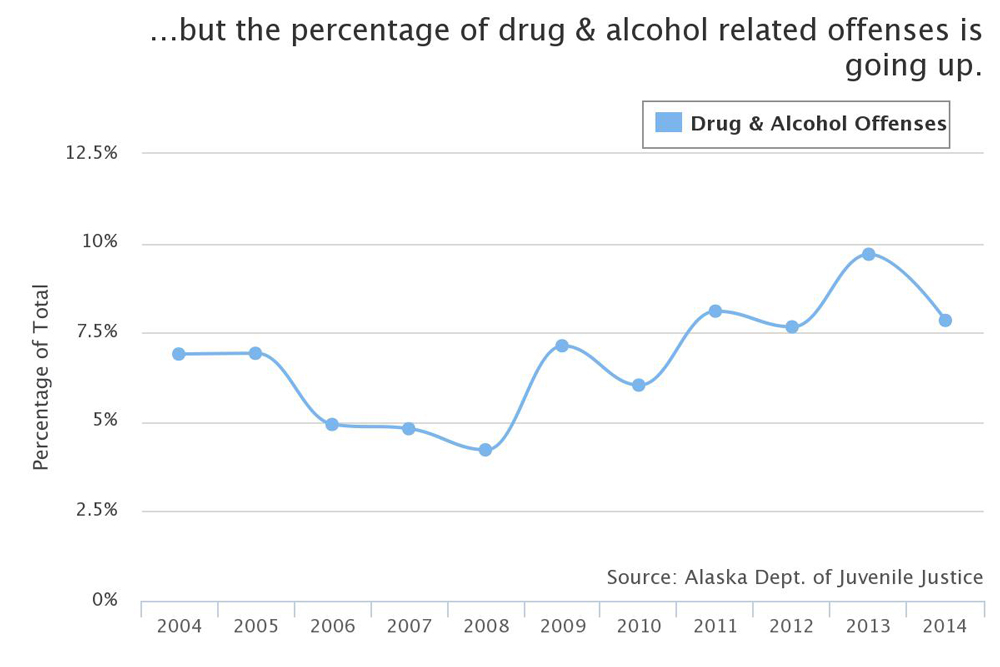
As a share of the whole, substance abuse cases in Anchorage are up, although as a share of the total they are proportionately small. But the numbers only tell part of the story. “The Blind Spot” is Alaska Public Media’s attempt to bring you voices from behind the statistics in Anchorage—beginning with what the numbers actually mean when it comes to juvenile drug and alcohol offenses.

(Creative Commons photo by Scott*/jsmoorman)

Our interest started with a straightforward question: Are there more young people in Anchorage brought into the criminal justice system for problems with substance abuse than there used to be?

It seemed like a simple thing to find out, particularly because the state’s Division of Juvenile Justice tracks data about what offenses are committed in different regions of the state.

At first, the results appeared clear: every type of juvenile crime in Anchorage is dropping, except for crimes related to substance abuse.

Total offenses in Anchorage went from 3,448 in 2004 to 1,991 in 2014—down 42.3% in just a decade. Substance abuse related crimes vary from year to year: they peaked at 238 in 2004, dropped to 137 in 2008 then went back up again the next year to 203. The average in the last 11 years is 190 (DJJ’s public data starts in 2003).

So, what does this actually mean?

To find out, we took a tour of the McLaughlin Youth Facility in Anchorage, which houses about half the juvenile offenders in the state.

“In my mind, if I’m thinking of a correctional setting, this is it,” said Dennis Weston, head of McLaughlin, standing in a large tiled room lined with detention cells. Each one has a plastic bed topped with a mat, a steel toilet, and a small frosted window.

Weston has seen a lot of changes since starting as a detention officer in 1992, including a huge reduction in the number of juveniles the Division handles at any one time. The number peaked in the 1990s, when McLaughlin would house up to 215 residents on its campus on any given day.

Now, the facility has about half that number, according to Weston. That’s partly because more moderate offenders are no longer getting sent into facilities.

Many of the kids who arrive at McLaughlin are in crisis. Counselors immediately evaluate whether they are a danger to themselves or others. Most have immediate trauma, behavioral disorders, or side effects from one or more substances.

chart

Some have trickier problems.

Next to the bed in a sparsely furnished room is a breathing machine. It belongs to a young man who came to McLaughlin with serious medical issues.

“Sleep apnea with aggravating factors,” Weston said. There were also concerns over self-harm and assaults.

“So you had the medical concerns, but you also had the behavioral concerns,” Weston said, before gesturing towards the bed and machine. “But this was a big part of the problem: not getting any rest, not breathing correctly.”

As part of their work in the Detention Unit, Weston’s staff monitors situations like these. In this particular case, to make sure the equipment is used correctly, a staffer sits by the door at watch for much of the night.

Stays in the Detention Unit are short, 24 days on average. But McLaughlin also has a treatment wing, where residents generally stay 12 to 14 months. About 70 kids at any one time are going through a treatment program, which is a big share of the 100 to 120 juveniles in treatment across the state during a given year.

Nichole Cuaresma oversees the girls treatment ward inside a cottage where all the young women on campus live.

“Right now 75% have intense substance abuse issues where they need to complete the intensive substance abuse group,” Cuaresma said of the current residents.

Girls made up just 26% of referrals to DJJ in 2014. The unit in McLaughlin is the only all-female treatment facility in the state system. Cuaresma generally has each girl for a year-and-a-half before they move into a six-month transition program, preparing to go from an institutional setting back into the community. To do that, Cuaresma and her staff try to create as homelike an environment as they can, while incorporating a Truama Informed Care model.

“A lot of these girls–and most of the youths in the facility–have endured a lot of trauma,” Cuaresma explained. “So restricting pictures of family, or restricting something like a stuffed animal that would make them feel comfortable, or a blanket that their grandma made–we don’t feel that it’s very conducive to treatment.”

One of the things we found out at McLaughlin is that by the time kids enter the DJJ system most have gotten into trouble multiple times.

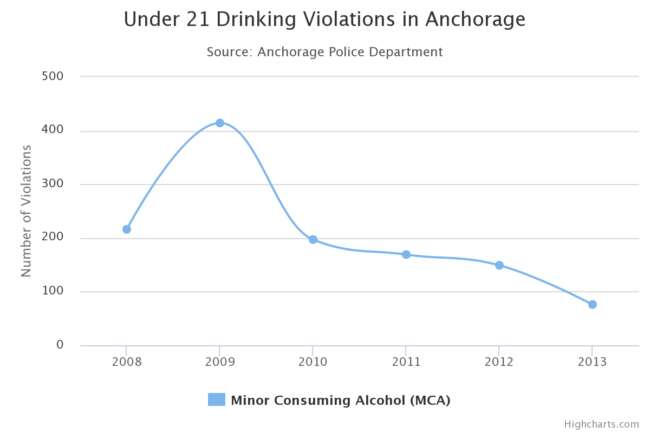
This is evident in alcohol-related offenses. The most common alcohol-related citation for young people in Anchorage is an MCA, Minor Consuming Alcohol. You don’t get referred to DJJ after your first MCA–you go for your third.

What’s more, there aren’t that many MCAs issued any more. 2009 saw 414 issuances, but by 2013, the last year numbers are available from the Anchorage Police Department, there were only 76, a drop of 82.7%.

An APD spokesperson said that does not mean fewer minors are drinking. Most MCAs are cited when police break up parties, and there has been less of that since investigations into noise complaints were downgraded to a lower response-priority.

The point is that by the time kids are logged in DJJ’s data in Anchorage for alcohol they are coping with serious substance abuse issues, sometimes coupled with a lot of other problems ranging from family issues to homelessness to self-harm.

That made us interested in the space between the statistics, when young people may be drinking or using drugs, but before a major legal intervention happens. And we found a gap.

There is no coordinated effort to track youth who have started getting into trouble and are having a hard time finding help to get clean.

“The Blind Spot” is a series examining stories of individuals who have found their own routes for dealing with substance abuse, and some solutions different agencies are developing to prevent the problem from happening in the first place.

Zachariah Hughes and Anne Hillman received Alaska Press Club data journalism fellowships, which helped them produce this story. The training program was funded by the Alaska Community Foundation and Recover Alaska.

Law and Rover: HB 147 would give pets special legal considerations

Most people don’t want to think of their pets as property. But in court, they are. A bill by Rep. Liz Vazquez likely be back in next year’s legislative session aims to give pets special considerations in the law when it comes to divorce, protective orders and animal seizures.

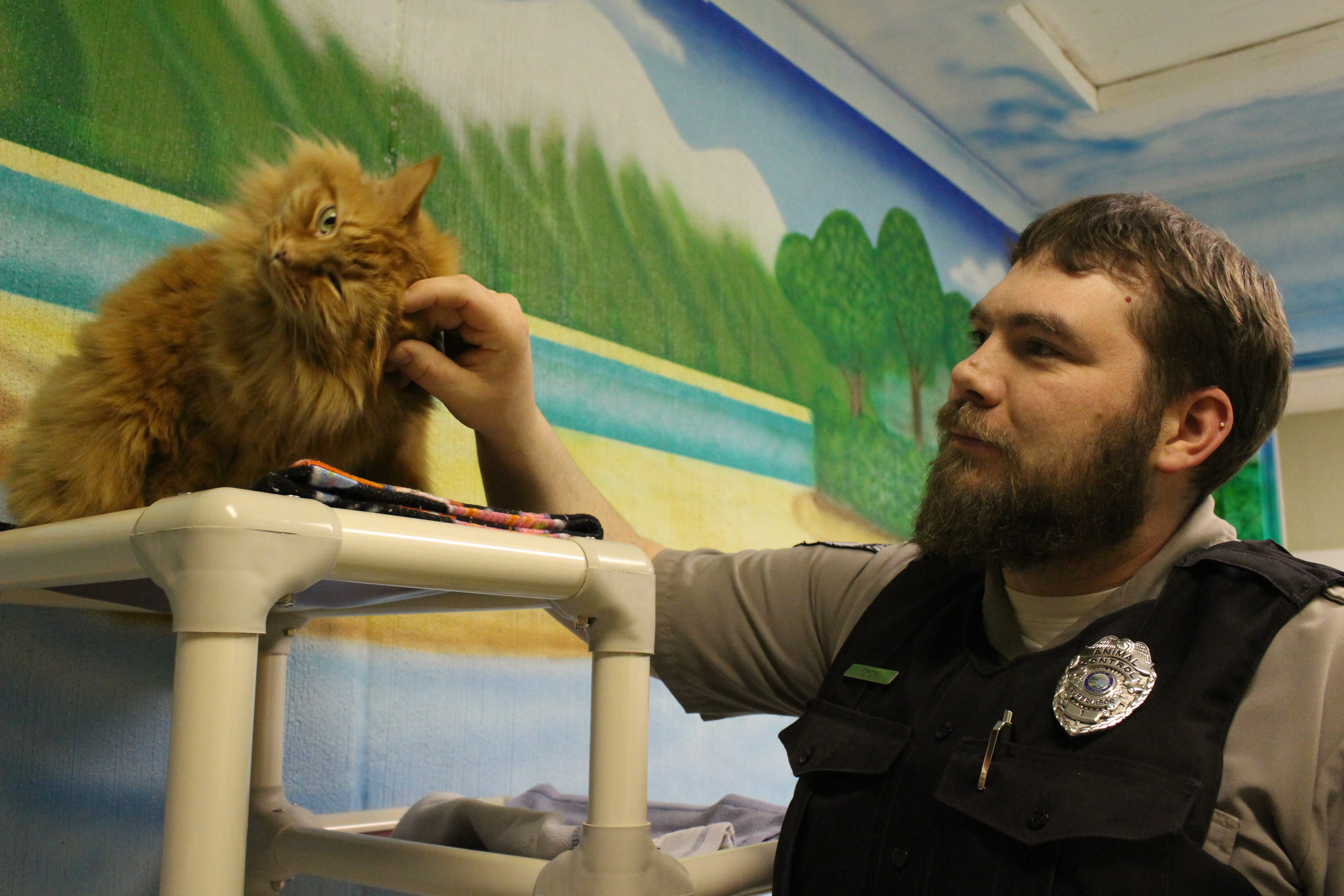
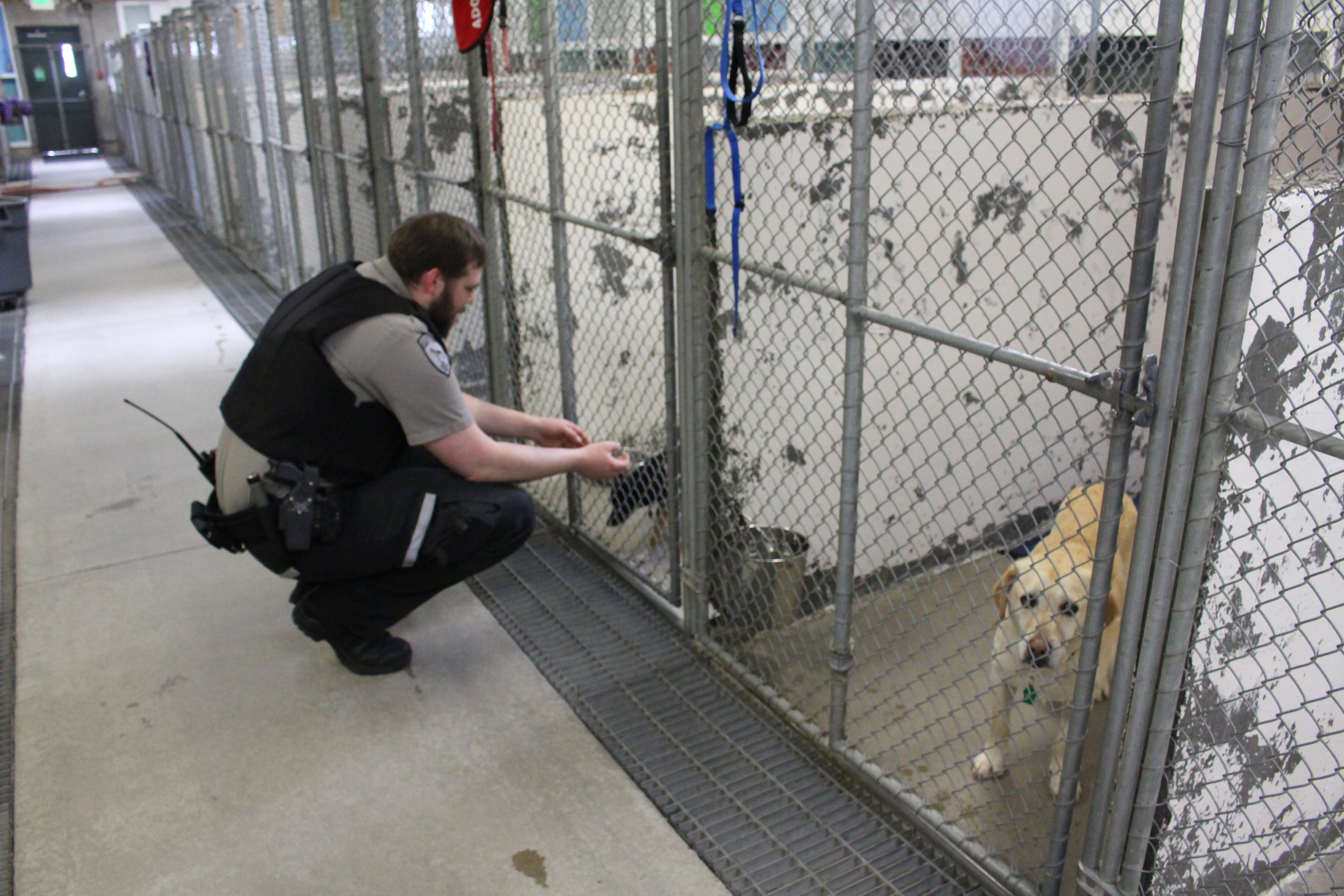
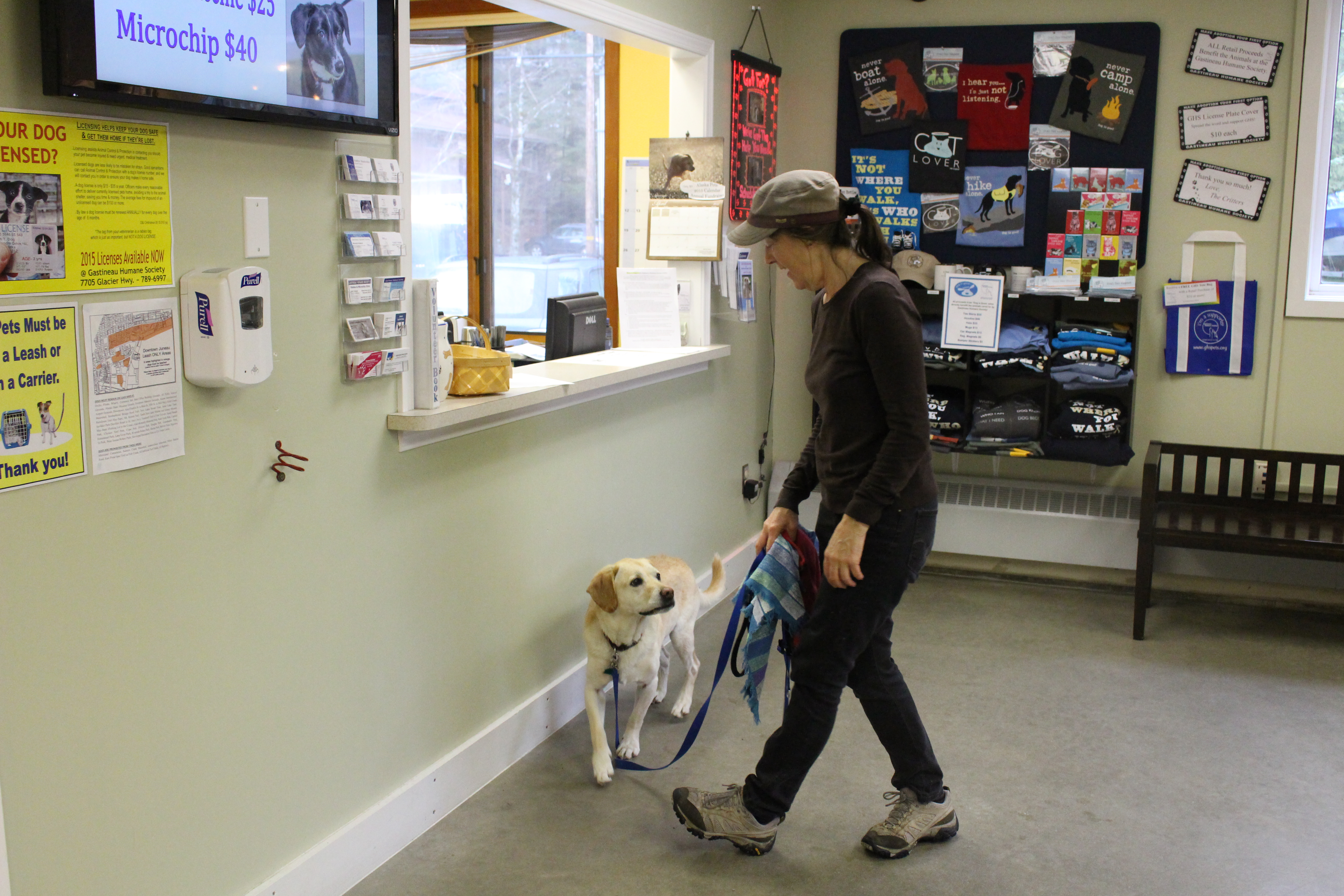
The Gastineau Humane Society in Juneau has two dogs, 17 cats and a number of smaller animals, like rabbits, guinea pigs, and a chinchilla—all up for adoption. The laminated profiles of the animals are tacked on a cork board in the lobby.

Sometimes a lot of pets come through their door, like in cases of animal hoarding. And that can cost the shelter tens of thousands of dollars while a court ruling is being decided.

“It’s frankly not fair to house animals in the shelter for the long term,” says Matt Musslewhite, the executive director of the Gastineau Humane Society.

If HB 147 passes, owners in hoarding cases can post a bond to have their pets boarded—pending the outcome of the case. Or they can relinquish them to the shelter. This simplifies the whole process so animals can be adopted faster.

“Yeah. Not only is it better for the animals. It’s fiscally better for the shelter,” Musslewhite says.

The other part of the bill would make the definition of pets, in cases of legal ownership, more clear. Right now, the courts consider pets property, and it’s ambiguous how to handle that.

Kathy Hessler, a professor of animal law at Lewis and Clark College in Oregon, says animals are clearly in the law as property.

“But people don’t treat them in their lives and in there homes as property, and so what that means is their interactions are at odds with the legal framework,” she says.

She testified at a recent hearing in support of the pet bill. She says in cases of divorce and dissolution, property with monetary value, like a house, can be divided. But your precious dog or cat can’t be cut in half.

“So courts are doing all kinds of things because they don’t have statutory guidance and sometimes courts are simply unwilling to make a ruling,” she says.

If HB 147 passes, judges will have the green light to rule in cases of pet ownership, with the understanding that the pet’s overall well-being has to be considered. The legislation doesn’t extend to dog mushing teams which, to the courts, have monetary worth. Pets could also be included as part of a domestic violence restraining order.

“A husband might say to his wife, ‘If you leave me, I’ll kill the dog,'” says Hessler.

Same principle: the judge will have the authority to protect pets as part of a restraining order. Initially, the Alaska Network on Domestic Violence and Sexual Assault opposed the bill.

“Sometimes I get a little frustrated with these big national movements. …We kind of took care of that 15 years ago,” says Peggy Brown, the network’s executive director.

She says several years ago, the advocacy group worked really hard to make sure pets were included as personal essential items on protective order forms.

“There’s a box that can be checked, it actually says ‘pets’ and then ‘names,’ in case there are more than one pet,” says Brown.

Those existing protective orders are already legally binding. The bill wouldn’t change that. Brown worried that “custody” language in HB 147 could turn pet disputes into ugly court battles, like in family law cases, increasing interactions between the victim and abuser. Brown withdrew her opposition after Rep. Vazquez changed that part of the bill. Brown says if the overall bill reinforces the victim’s ownership of the pet, it’s a good thing.

“It puts it in ink when it was kind of in pencil, I guess is one way you can look at it. Now it’s two different places. It’s in statute and on the protective order forms,” says Brown.

If the pet bill does pass, Alaska will join 28 other states with similar legislation.

Site notifications
Update notification options
Subscribe to notifications