Community

Tlingit language to be officially recognized in federal maps database

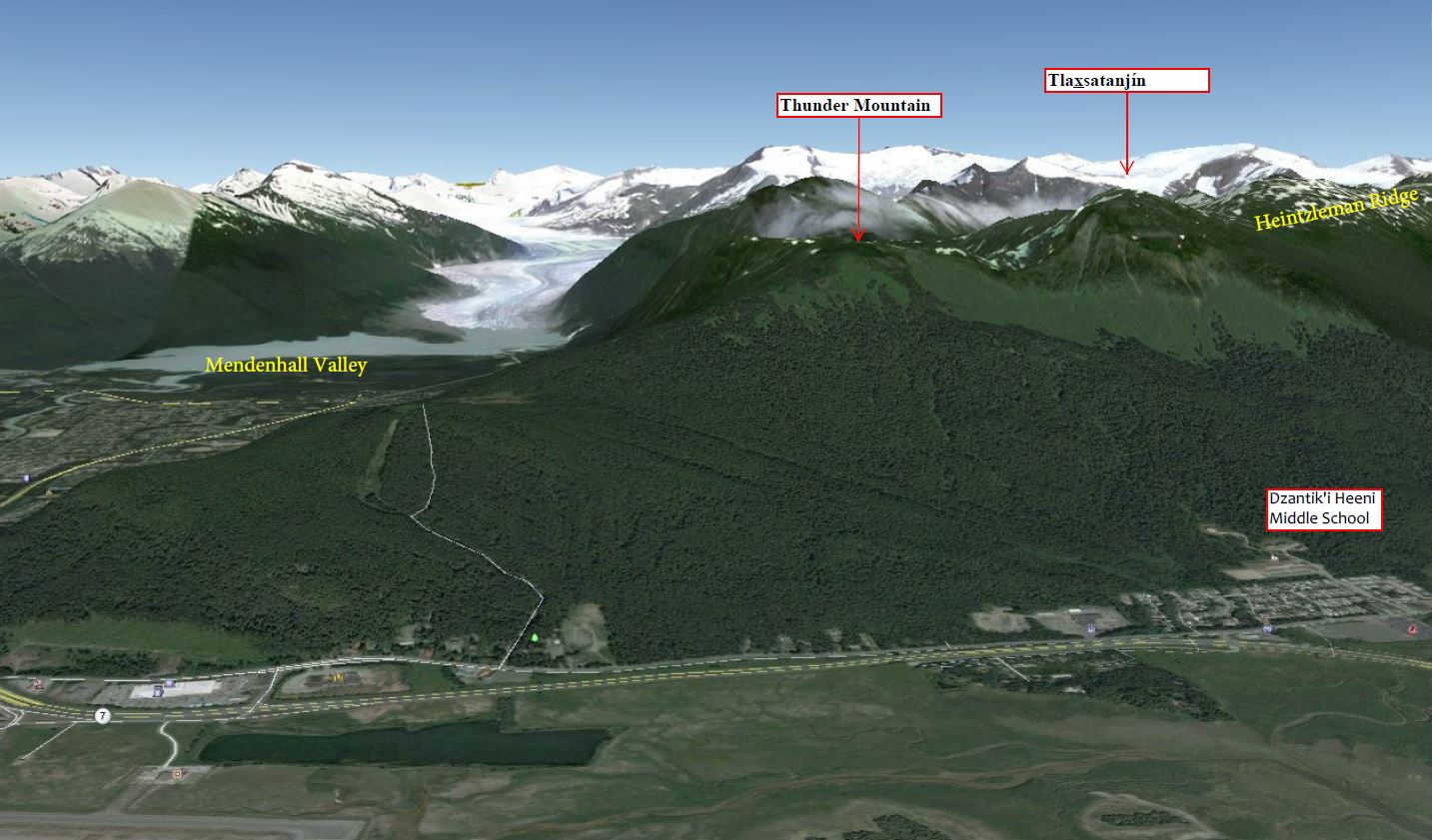
For the first time, a Tlingit name for a peak in Juneau will be included in the Geographic Names Information System or GNIS. This makes it possible for that name to be printed on federal maps and publications. Getting the indigenous name for a Juneau peak officially recognized actually began as an attempt to give the point a Western moniker.

To Lance Twitchell, the point east of Thunder Mountain has always been called Tlaxsatanjín.

“From the Tlingit prospective, nothing has really changed,” he says.

He’s the assistant professor of Native languages at the University of Alaska Southeast. In Tlingit, Tlaxsatanjín means “idle hands” or “hands at rest.” If you looked at a topographic map, the peak had been nameless.

“I think you’d see Heintzleman Ridge is what would be there. And that’s it,” he says.
Idle Hands

Twitchell wasn’t the only one who proposed a name for the peak to the Alaska Historical Commission. It almost became Mount Scribner, after the late Jon Scribner. He was a longtime Department of Transportation official in Southeast who died in 2005 in a hiking accident.

“He had sort of uncommon passion for the land here. For the people here,” says Mandy Mallott, Jon Scribner’s daughter. She’s non-Native.

“But I was adopted into the Kwaashk’i Kwaan clan out of Yakutat. And I was given a Native name, Ach Kwei,” she says.

Friends of the late Scribner submitted a proposal in 2013 to have the peak named in his honor. The commission approved it, unaware of its Tlingit name. That proposal was then sent to the U.S. Board of Geographic names, which also conducts a review.  

The U.S. Board of Geographic Names added it to their list of things they would consider. But it didn’t take action. Then a proposal was submitted by Lance Twitchell. He says it wasn’t necessarily a counterproposal.

“It had nothing to do with the individual. It just has do with sort of reaching a capacity of saying, we can’t just keep naming stuff for people when these things already have names,” Twitchell says.

After Mallott found out about the peak’s indigenous name, she and her father’s colleagues withdrew their proposal.

“When we heard about the other proposal, absolutely very quickly did we decide that that was the name of that mountain,” Mallott says.

Mallott says she’s interested in seeing Native names being restored to the entire region. She believes her father would want that, too.

“His spirit would have been right there with us and that is to restore indigenous place names of this whole region. It’s not just this one peak,” she says.

Lance Twitchell says he hopes people will learn the Native names for these landmarks.

“So when they see that and they drive by that mountain, they can drive by and say ‘Tlaxsatanjín.’ And just look at it and think that’s what it’s been called for well over 500 years,” he says.

Tlaxsatanjín will be on federal maps starting next month.
Haines pot grower proposes cannabis exchange

In Haines, the borough assembly has decided to wait until the state finalizes legislation before taking any action on local rules on marijuana use and sales. But some residents aren’t waiting on the legislature.

Dean Lari’s phone has been ringing constantly since he posted an ad on the Haines community website titled “Cannabis Exchange.” In it, he says, “with Measure 2 we now have a great and legal way to exchange marijuana strains.”

Lari sees the Cannabis Exchange as a way to get pot growers and smokers together to share experiences.

“I just saw this as a way to break the ice and say ‘hey people we don’t have to hide indoors, we don’t have to look when the cops drive by, we don’t have to spray air freshener when they open the door.’”

Lari, who goes by the nickname ‘Bear,’ grows six plants in his own home. You can tell when you walk in the door — the smell of marijuana permeates the place. Lari’s son is in the kitchen, trimming one of the plants. Lari shows me the small, brightly lit room where he grows a strain of pot called “Querkle.”

“I average about maybe three quarters of an ounce or maybe an ounce of usable pot (per plant),” he says.

Lari says he smokes about an ounce of pot a week for medicinal reasons. He also uses it in smoothies. With six plants, Lari says he’s only able to provide pot for himself and one other medical marijuana user.

Lari thinks a cannabis exchange could help inform people who have negative views of marijuana.

“I want people that don’t smoke, people that don’t get high that are scared — come and see with your own two eyes,” he said. “You could take a drink, take a bite or take a hit. You’re not gonna die from it. But then you could speak from experience.”

Lari says there wouldn’t be any money involved with exchange.

“If you bring a couple of nugs, I’m gonna give you a couple of nugs. We’re just trading pot, we’re just exchanging pot.”

What about people who don’t have pot? “I’ll give you a nug,” Lari says. “I don’t mind sharing a joint with you.”

Lari says he’s consulted a lawyer to make sure this kind of exchange is legal. Juneau District Attorney James Scott said in an email that he couldn’t answer whether the exchange would be legal until the close of the legislative session. Haines Police Chief Bill Musser didn’t comment on the legality of it, but referred KHNS to the state statute.

“I’m not waiting for the legislature, I can assure you of that,” Lari said. “Because what I want to do has nothing to do with retail sales, it has nothing to do with wholesale growing. I’m community-oriented, non-profit.”

Lari sees a cannabis exchange as a precursor to something bigger. He wants to start a community garden where people pay for plots to grow their own marijuana plants.

Lari calls Haines the “pot-smokingest town” he knows. He says the approximately 63 percent of Haines voters that supported Measure 2 shows that.

“That means that every single person in this community has somebody in their circle of people they love that are smoking pot.”

Lari says in the week since he posted the cannabis exchange ad, the response has been “huge” and “unbelievable.” He says he’s heard from a number of people who are interested in learning more about growing their own marijuana plants.


The annual draining of Twin Lakes

It’s time to drain Twin Lakes.

The Alaska Department of Fish and Game and Juneau’s Parks and Recreation department drain the lakes once a year to control the invasive aquatic weed, milfoil. The lakes are refilled with salt water, which helps kill the weed without the use of herbicides.

Milfoil can damage the lakes’ ecosystem and interfere with recreational swimming and fishing.

Parks and Rec says the lakes should be refilled by Saturday.

Community partners help build traveling greenhouse

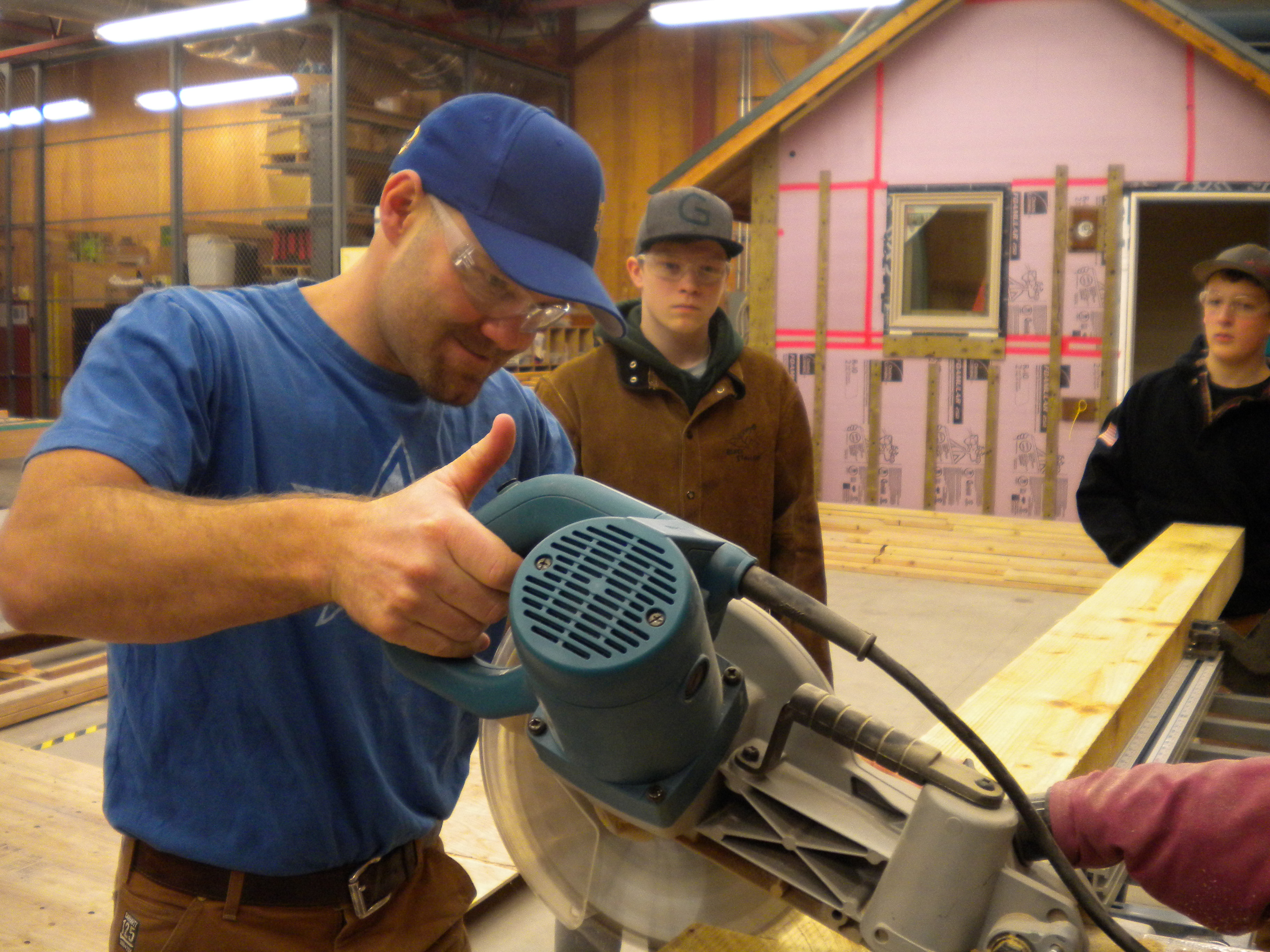
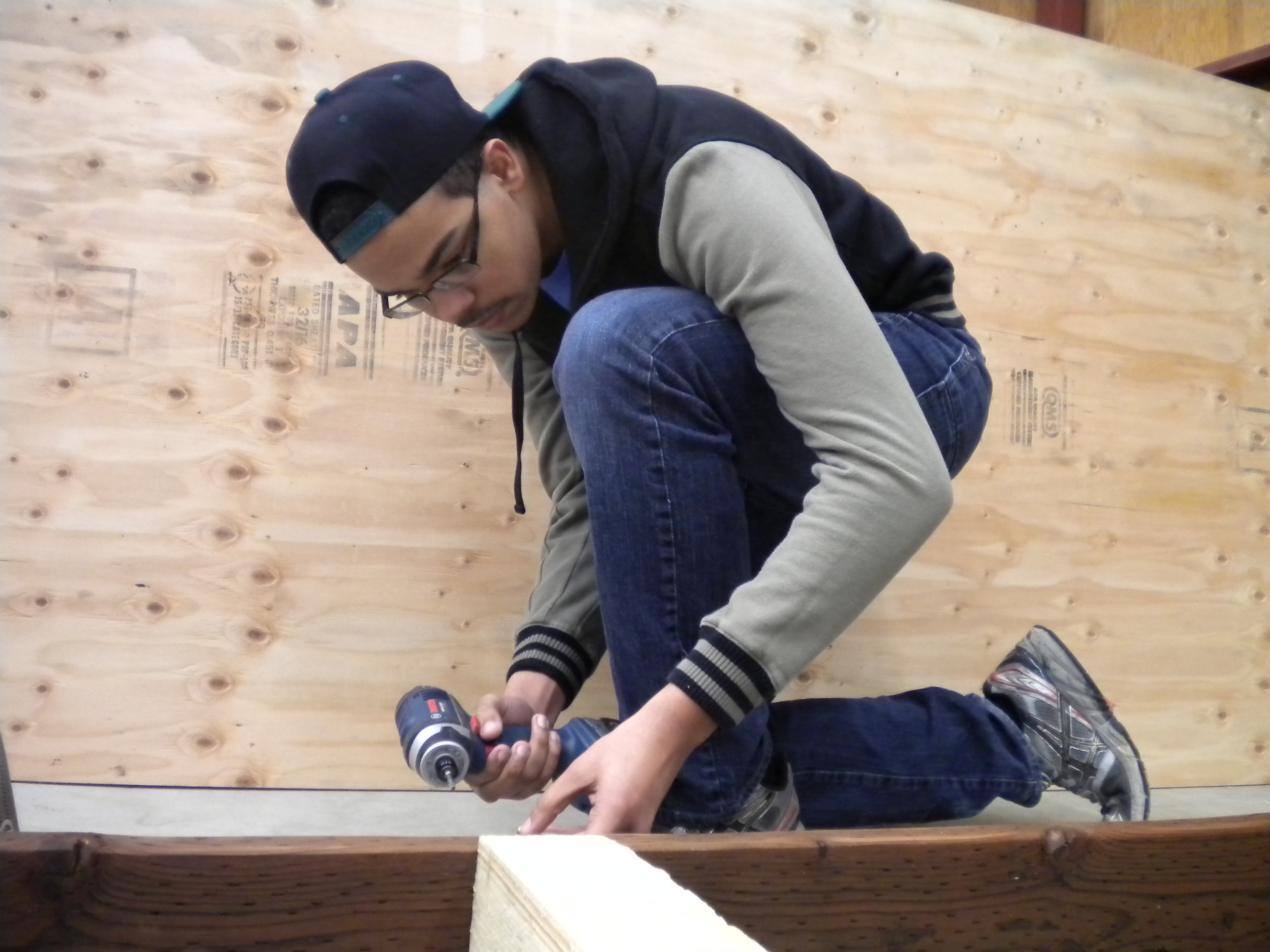
Juneau Douglas High School junior Malik Jones works on a wooden frame that will be part of a mobile greenhouse project. (Photo by Kevin Reagan / KTOO)

A greenhouse on wheels is in the works to teach Southeast Alaska students how to be less dependent on imported food.

Multiple community partners are pitching in to get the project up and rolling by the summer.

Lia Heifetz grew up in Southeast Alaska and has always been interested in food. When she returned home after graduating from the University of Oregon, she says she noticed a lack of food security in the region.

A blueprint of the mobile greenhouse project developed by Lia Heifetz. University of Alaska Southeast student Kaden Phillips designed the structure. (Photo by Kevin Reagan / KTOO)
A blueprint of the mobile greenhouse project being developed by the Southeast Conference. University of Alaska Southeast student Kaden Phillips designed the structure. (Photo courtesy of Lia Heifetz)

“There is little access that people have to local, fresh foods,” says Heifetz, the Southeast Conference’s food security coordinator.

In a 2014 assessment of the Southeast food supply, Heifetz found that about 95 percent of it is imported. She says there is a high demand for locally grown food, but lack of education in rural communities on how to grow and cultivate it.

Heifetz developed a project to construct a greenhouse on wheels to tour throughout the region. The mobile gardening center will be housed by rural schools for one year at a time.

“This mobile greenhouse is a tool to get people thinking about growing food but also a way to engage,” Heifetz says.

Heifetz says the greenhouse will be a multi-faceted classroom for educators to teach science, math and business. She says the intention is to demonstrate how to be less dependent on imported food.

“By producing our own food we have the opportunity to connect with our place more,” Heifetz says. “We’re depending on a system that’s super vulnerable.”

Heifetz says some of the factors that lead to food insecurity in Southeast include high transportation costs and weather hazards.

The mobile greenhouse is expected to be complete by May, and Heifetz says it could not be done without help from community partners.

Juneau Douglas High School teacher Andy Bullick brings students to the UAS Technical Education Center a few times a week to work on the mobile greenhouse. (Photo by Kevin Reagan / KTOO)

Juneau Douglas High School students are volunteering their labor for the project. Wood shop teacher Andy Bullick says it offers his students a chance to practice hands-on skills outside the classroom.

“People will see a greenhouse; I see it as a learning experience for my metals construction class,” Bullick says.

Bullick brings a handful of students to the University of Alaska Southeast Technical Education Center to build pieces of the project a few times a week. The greenhouse will sit upon a flatbed trailer and include adjustable shelves to hold potted plants.

“It’s good to do community projects in school like this so we’re always looking for ways to do that,” Bullick says.

Alana Peterson is the program director of the Sustainable Southeast Partnership, an organization sponsoring the greenhouse. The partnership typically works on projects that promote economic growth. Peterson says this project is different from others she oversees because of its strong educational component.

“What is unique about it is that it’s not specific to one community but it could benefit many communities,” Peterson says.

The culinary students of Thunder Mountain High School are scheduled to take in the greenhouse first. After that, it will likely journey to Kake or Hoonah.

Juneau Capitals win three games in Bantam tournament

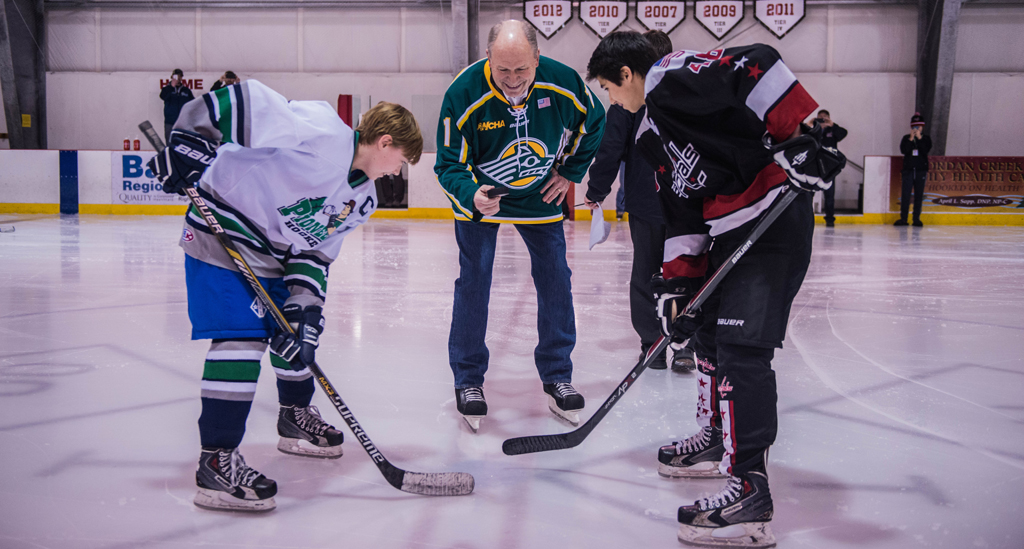
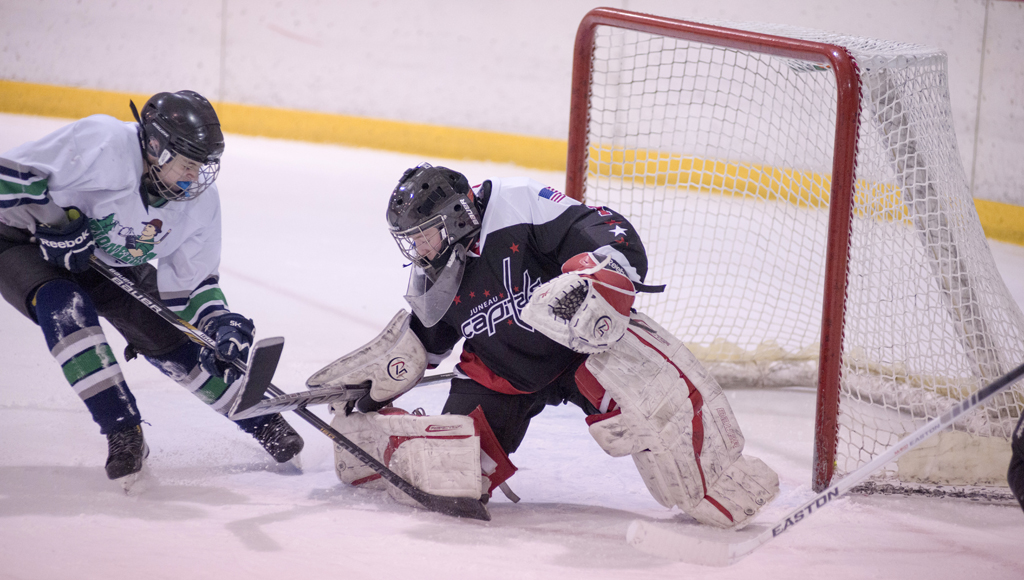
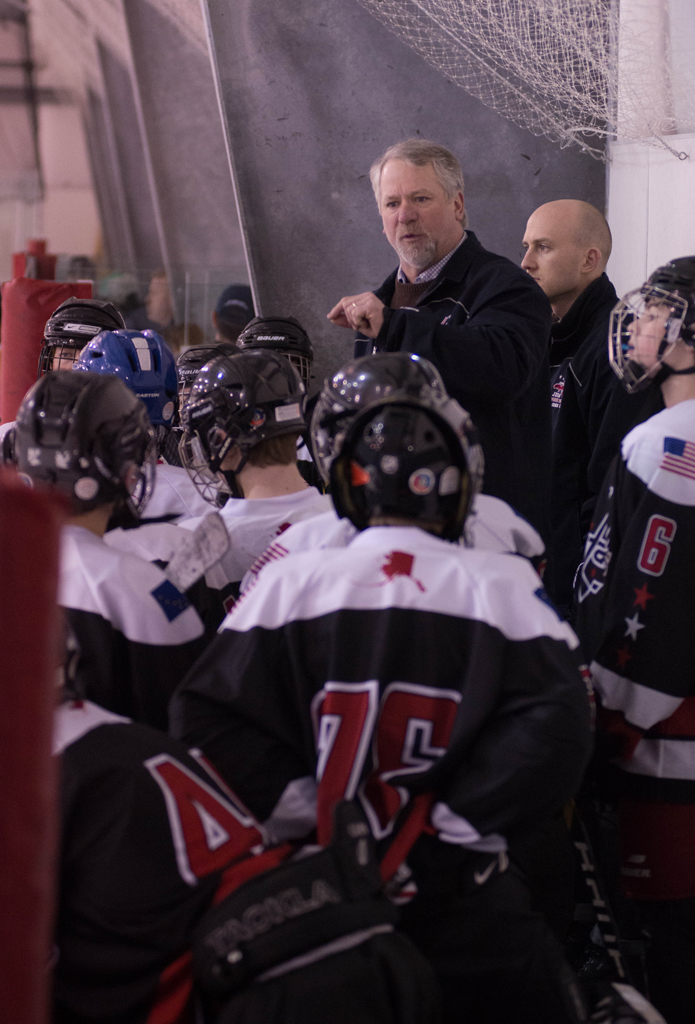
The Juneau Douglas Ice Association hosted a state championship Bantam level (14 and under) tournament over the weekend at Treadwell Ice Arena. The Juneau Capitals won three games, and advanced to the semifinal round, losing, 1-0, to Fairbanks in double overtime in what many believe to be the tournament’s most exciting game.

Juneau Library to launch Alaska Native stories project

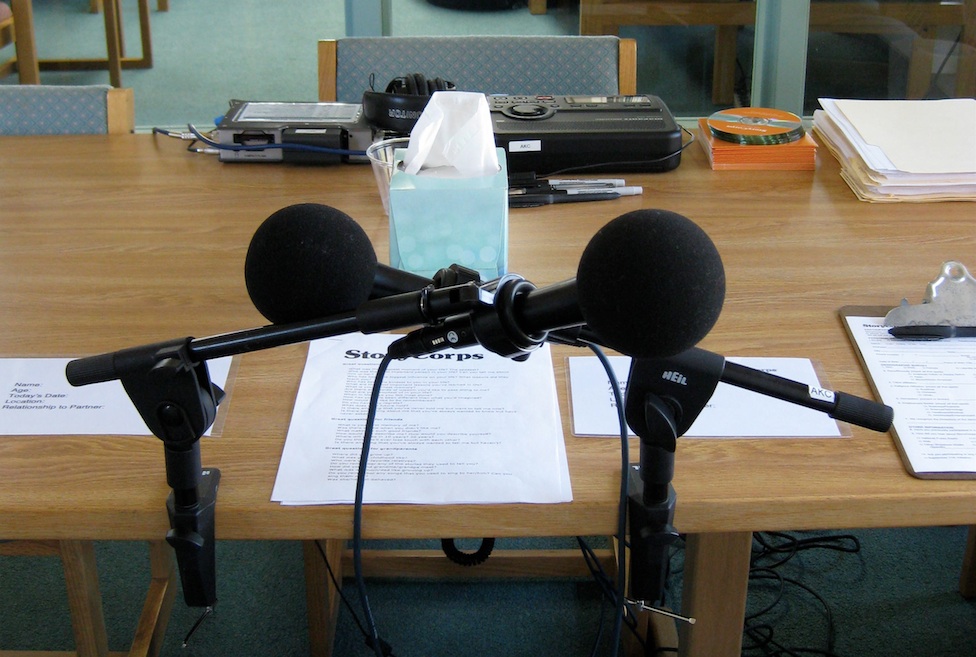
StoryCorps interviews will take place at the Juneau Public Library system starting in May. (Photo by Lisa Phu/KTOO)

The Juneau Public Library system embarks on an oral history project this spring collecting Alaska Native stories on educational experiences. The capital city’s library is one of ten picked from more than 300 national applicants to bring StoryCorps to the community.

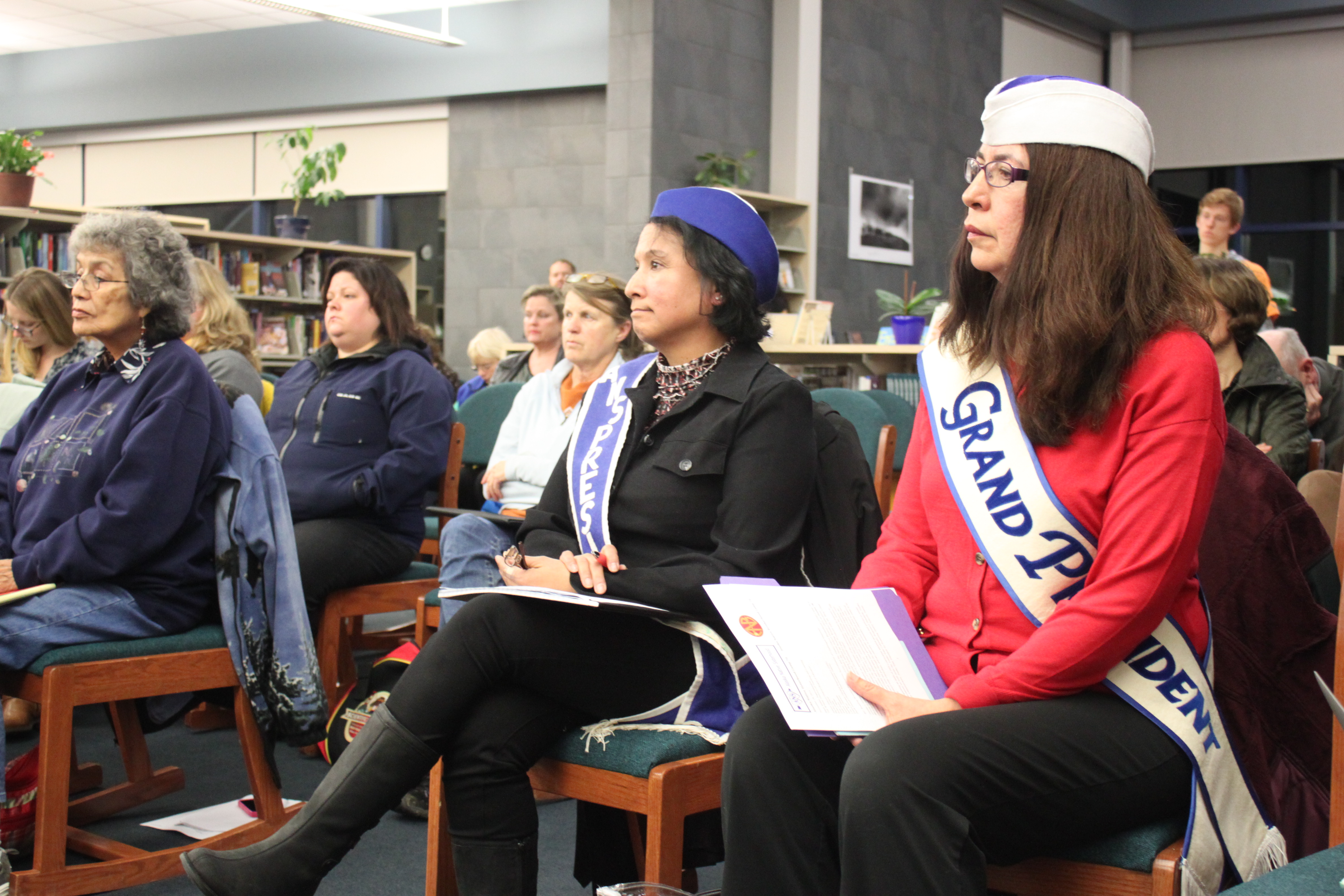
Freda Westman is a product of Juneau’s public school system, a 1974 graduate of Juneau-Douglas High School. Westman is Grand President of the Alaska Native Sisterhood.

One of her strongest childhood memories is from when she was in middle school.

“I asked a teacher at the end of the year why my grade was a C and could we go and look at the grade book, and we did and averaged it out and my grade was really a B, and so it was changed. That took a lot of courage for me to do that,” Westman says.

Freda Westman, right, at a school board meeting in November 2014. (Photo by Lisa Phu/KTOO)

At the time, she learned that teachers, who she greatly respected, could make mistakes and those mistakes could be fixed. She learned the value of standing up for herself.

Now, Westman looks back on that situation and realizes those types of errors were likely made on a regular basis.

“Expectations for Alaska Native students were low, so maybe that was the motivation,” she says.

Westman’s mother stopped going to school in the 8th grade to care for sick family members.

“She was not allowed to speak Tlingit in school and was not only not allowed to do that but was punished for doing that. She told us that that is why she didn’t want to teach us Tlingit. She didn’t want us to experience that,” Westman says.

These are just a couple of memories that exist in Juneau’s Alaska Native community, stories that the public library hopes to capture through StoryCorps interviews.

The Juneau Public Library will hold a community orientation on the StoryCorps project on March 31, 5:30 p.m. at the downtown library. Anyone interested in volunteering or helping with the project should attend.

StoryCorps is a national oral history project based in Brooklyn, New York. You’ve likely heard snippets of StoryCorps interviews on National Public Radio.

Juneau librarian Andrea Hirsh says the interviews aren’t formal. It’s a conversation between two people.

“A lot of people pick a family member, a grandparent, a child, a sibling, a neighbor and they tell their story,” Hirsh says.

The theme of Alaska Native educational experiences sprang from an issue that took place last year concerning the Juneau School District’s elementary language arts curriculum.

Community members raised concerns about school texts depicting Alaska Native and Native American tragedies, including the boarding school experience in Alaska. From the late 1800s to the mid-1900s, the federal government split families and forced Native children into boarding schools to assimilate. The texts were called distorted, inaccurate and insensitive.

The district eventually decided to remove the controversial texts and replace them with locally developed materials. The superintendent invited Alaska Native community members into the classroom to tell their stories.

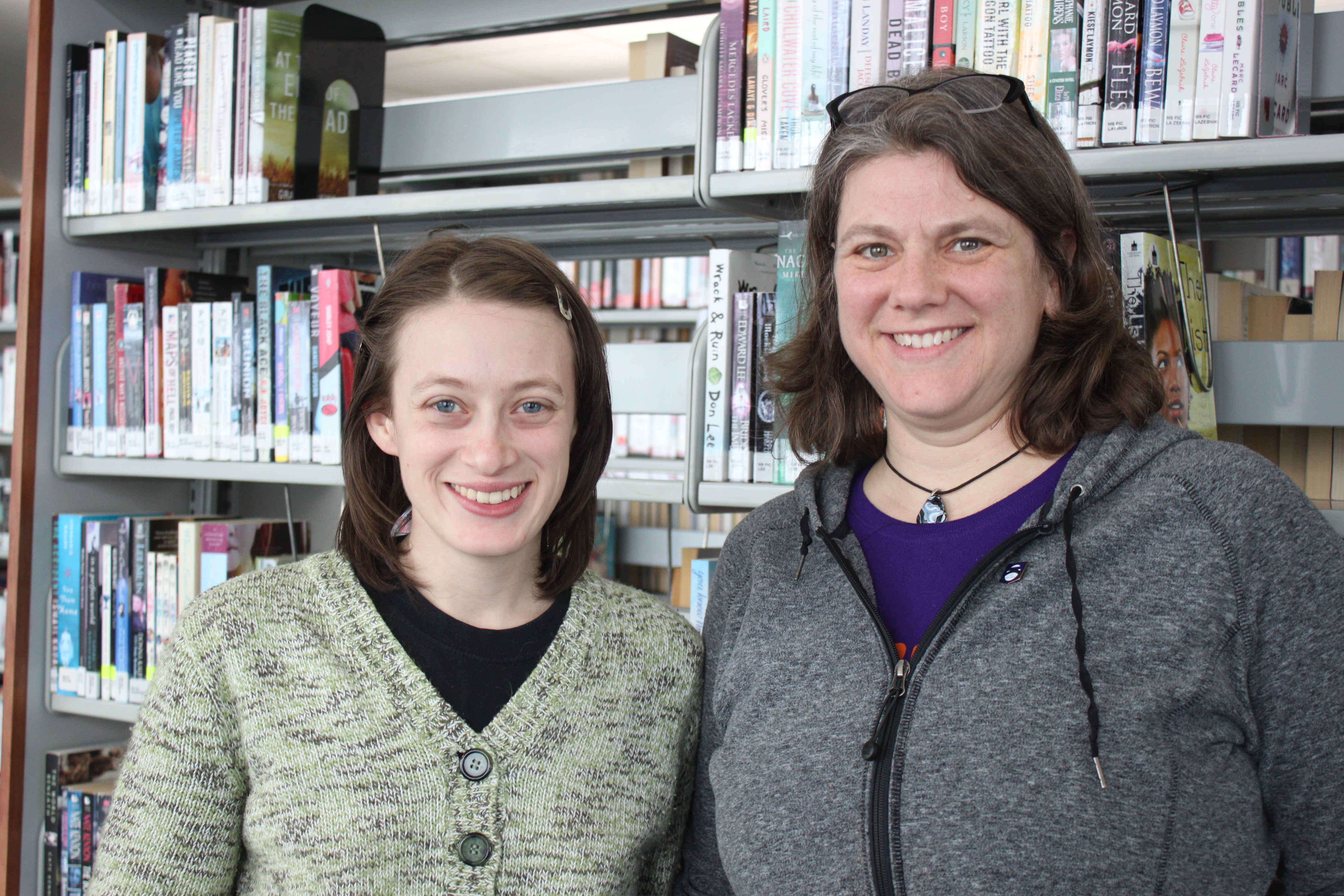
Juneau Public Libraries librarian Andrea Hirsh and program coordinator Beth Weigel. (Photo by Lisa Phu/KTOO)

Library program coordinator Beth Weigel hopes the StoryCorps project can help fulfill this need and others.

“Oral history is a big part of the Alaska Native tradition so if we have it available then those are available to teachers if they want to use those as part of the resource materials in their classroom,” Weigel says. “And they’ll stories by Alaska Natives, their stories that they tell in their own words.”

Before applying for the project grant, Weigel and Hirsh sought advice and support from members of the Alaska Native community in Juneau, like Sorrel Goodwin.

Goodwin is a librarian at the Alaska State Library. He says the project is an opportunity to get Alaska Native perspectives on the American educational system. In the mid-1990s, Goodwin interviewed Alaska Natives on that topic for a teaching course at the University of Alaska Southeast.

“Most of their perspectives were largely negative, dealing with such issues as racism and assimilation, and the degradation of Alaska Native cultures, languages, histories, going right on into flat out physical, mental and sexual abuse in many of the boarding school contexts,” Goodwin says.

He hopes the library’s project will include interviews of the younger generation, Alaska Natives who are currently going through the educational system.

“A lot of our parents’ and grandparents’ negative experiences in the American education system have been carried forward. It created a sort of intergenerational post-traumatic stress in the ways that many of our people are either able to engage or not engage with the dominant society’s system of educating people,” Goodwin says.

Sorrel says the more stories that are told, the more understanding will take place. He thinks the StoryCorps project can help the community work through issues that still remain.

One of the library’s goals is to capture a range of voices.

“We would love to talk to people who are still in school and this could be grade school, middle school, high school, college, technical school. It could be young adults, it could be older adults. We want to hear everyone’s story,” Hirsh says.

With permission of the participants, all of the StoryCorps interviews will be archived at the American Folklife Center at the Library of Congress and locally at the Juneau Public Library and Sealaska Heritage Institute.

Site notifications
Update notification options
Subscribe to notifications