Community

‘Harry Potter’ illustrator teaches workshops in Juneau

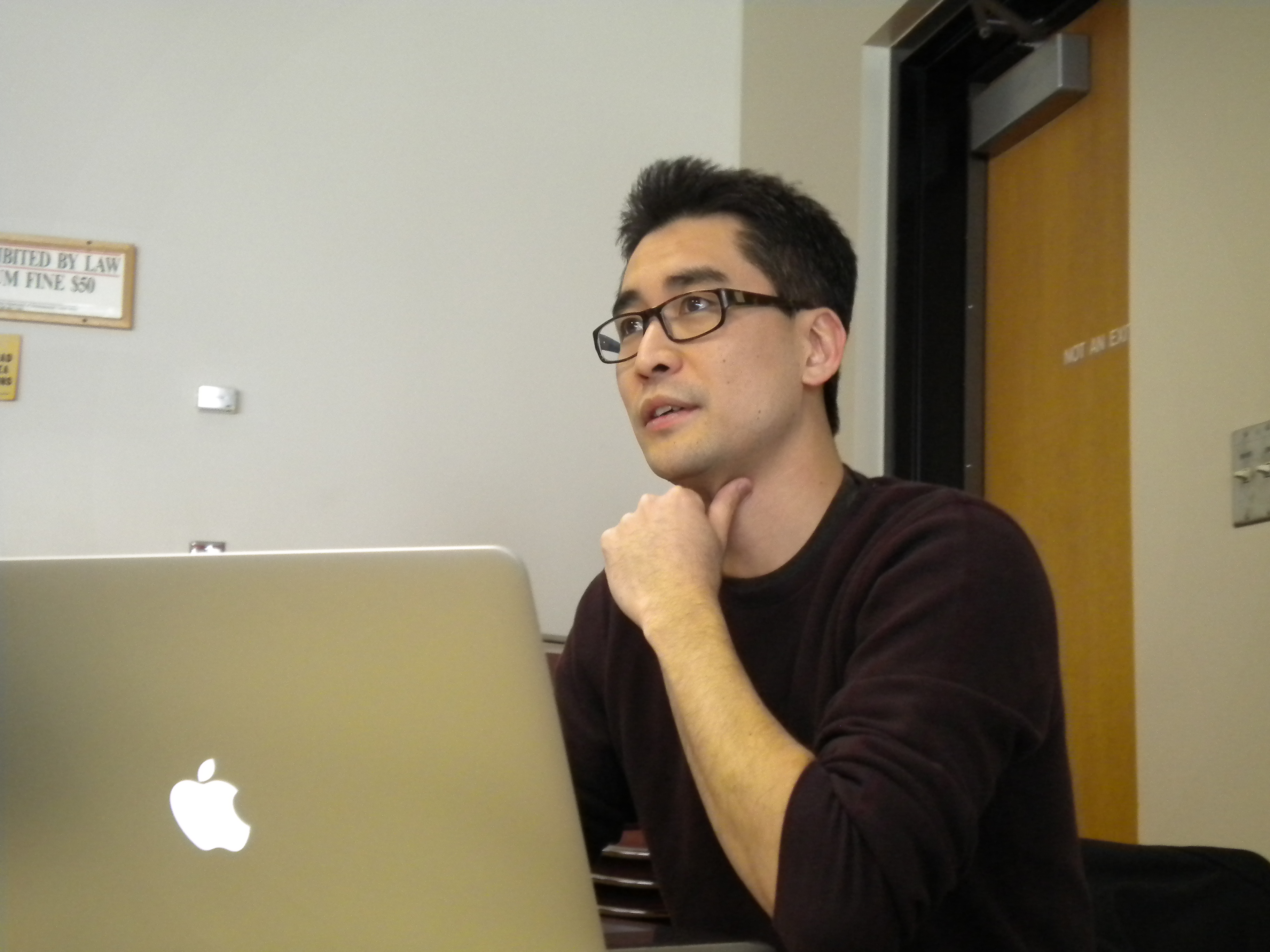
Graphic novelist Kazu Kibuishi taught a drawing workshop at Douglas Public Library on Saturday. The Washington-based artist designed the covers of the 2013 re-released editions of J.K. Rowling's Harry Potter novels. (Photo by Kevin Reagan/ KTOO)
Graphic novelist Kazu Kibuishi taught a drawing workshop at Douglas Public Library on Saturday. The Washington-based artist designed the covers of the 2013 re-released editions of J.K. Rowling’s Harry Potter novels. (Photo by Kevin Reagan/ KTOO)

From Hogwarts to lost cities above the clouds, Kazu Kibuishi’s illustrations have introduced fantastical places to legions of young readers. The graphic novelist visited Juneau over the weekend to teach workshops for aspiring artists.

Kazu Kibuishi is an artist who doesn’t like to overthink his work.

“Every time I draw, I really try not to be present. Me as an artist, I don’t want to get in the way of the reader and the experience. My job is to clarify it for them,” Kibuishi says.

Scholastic Books approached him in 2013 to submit sketches for the new cover art of the Harry Potter series; Kibuishi says he didn’t want to do it. He was intimidated by thinking of the popularity surrounding J.K. Rowling’s books.

(Photo courtesy of Scholastic Books)
Kibuishi’s 2013 illustration of “Harry Potter and the Chamber of Secrets.” (Photo courtesy of Scholastic Books.)

“I didn’t want to be the guy responsible for this because I liked the covers as they were,” Kibuishi says.

After collaborating with fellow artist Jason Caffoe, the two submitted some sketches to Scholastic Books. The publishing company picked Kibuishi to design the seven new covers within three months.

The Washington-based artist approached the project using skills he learned as a film student at the University of California, Santa Barbara.

“I just thought of myself as a cameraman that visited Hogwarts…” Kibuishi says. “I was just there to photograph it with my artistic technique and style.”

Kibuishi’s final seven covers showcased a new, modern perspective distinct from Mary Grand Pré’s originals. He used sharp, vibrant colors to depict different icons of Rowling’s world such as dementors and Diagon Alley.

Finding the right moment to capture in the covers was not always easy. Kibuishi says the second book in the series, “The Chamber of Secrets,” was the most challenging to design. After sketching over 70 drafts, he still could not find the right picture to communicate the book’s tone.

Kibuishi says he went back to the source material to solve this predicament. He asked himself what his emotional reaction was when he first read Rowling’s book.

“What do I feel about this book? What is it about this book? I feel like it’s a cup of tea. It feels like a tea party to me. It’s the one book that feels like a kid’s book almost. It’s the calm before the storm,” Kibuishi says.

Kibuishi decided on the elaborate home of Ron Weasley, best friend to Harry Potter, to put on the cover. Kibuishi says the setting is a place of comfort for Potter before battling his main antagonist, ‘He-Who-Must-Not-Be-Named.’

Kibuishi says drawing always came natural to him, but writing was a craft that took him years to develop. He was born in Japan and was brought over to the U.S. by his mother at age three. He says the abandonment of his father would later serve as inspiration for the plot in his graphic novel series, “Amulet.” Kibusihi says he’s learned to use life experiences to create emotionally powerful narratives.

Yet, there are times when Kibuishi still gets writer’s block. When running empty on ideas, he says he simply turns to doodling as a quick remedy — a tip he shared with about 30 school children at a drawing workshop on Saturday in the Douglas Public Library.

Young, aspiring cartoonists came prepared to pitch their grand story ideas. Xander Love, an 11 year-old student from Juneau Montessori School, showed Kibuishi personal sketches of pirate ships and robots.

(Xander Love, left, sketches a robot at a drawing workshop in the Douglas Public Library on Saturday. About 30 school kids attended to learn about the process of creating a graphic novel from Kazu Kibuishi. Photo by Kevin Reagan/ KTOO)
Xander Love, left, sketches a robot at a drawing workshop in the Douglas Public Library on Saturday. About 30 school kids attended to learn about the process of creating a graphic novel from Kazu Kibuishi. (Photo by Kevin Reagan/ KTOO)

“I think he (Kibuishi) found the perfect match between steampunk and fantasy,” Love says.

Kibuishi says because the graphic novel industry is still relatively new, he often gets asked to teach workshops on how to break into the business. He says educating the next generation of writers and illustrators is important for the industry’s survival.

“I’m hoping that all the work that I do has some element of teaching in it,” Kibuishi says.

While in the capital city, Kibuishi also made stops at Alaska Robotics and the 2015 Alaska Library Association Conference in Centennial Hall. He’s in the process of working on the last three books in his “Amulet” graphic novel series and recently signed a new book deal with Scholastic Graphix.

Kibuishi says he thinks the characteristics of a successful artist are a fruitful curiosity, steady determination and a little bit of that magic known as talent.
Budget deficit forces tribal administrator out in Petersburg

The newly hired tribal administrator at the Petersburg Indian Association is leaving that job on Friday after finding the tribal government cannot afford her position.

Bobbi Scherrer was hired by the PIA’s board to start the job in early February. The administrator runs the day to day operations of the federally recognized tribal government, which provides services to its roughly 400 members as well as the greater community.

In a press release Wednesday, Scherrer said her first act as administrator was to formalize a budget and the spending plan she drafted required what she called “serious cuts.” She made the recommendation to the board to cut her job along with two part-time positions.

Barry Morrison is the newly elected board chair and took over that elected seat the same time Scherrer started work. Morrison said board members have been working to make sure PIA is financially viable. “In that process we found that this year we just have a shortfall,” Morrison said. “We didn’t have the projected numbers we expected. And so, we know that there are certain corrective actions we’re already taking to make sure that everything is good to go for the future. And Bobbi, bless her heart, saw what needed to be done, proposed it to us and through debate and everything else, the board decided that we would have to take her recommendations which was to eliminate that position for the fiscal year.”

None of the PIA’s services funded by federal grants are impacted by the job cuts. The non-profit tribal government made similar cuts in 2013. Morrison thinks the job cuts will require greater cooperation between the board and the remaining employees. “The nice thing about the tribal administrator is that it gives all the employees a single point of reference and she handles the direction from the board and brings us the information that we need in day to day operations,” he said. “What it means for PIA itself is that the wonderful group that we have down there, plus you know this board right now, we have to work together just a little bit more than normal for board employee relations.”

Morrison said the hope is to re-instate the administrator position in 2016. “Speaking for myself and the board, we are truly gonna miss Bobbi. She was a great fit here. She has the best interest of the tribe and Petersburg. This was her home and we are very sad to see her go and hope to be able to bring her back again in the future, if she’s available again, I mean we’d love to have her. It takes a person with a great amount of character to be able to do what she did and say that no, you know, this has to be taken care of and this is what we need to do. So I thank her for all her hard work and her continuing hard work and for her love of the tribe and the town.”

Scherrer is from Petersburg but lived in Juneau before taking the PIA job. She said it was a pleasure to work with the PIA board during her short time here. Her last day on the job is Friday.

Capping caseloads ‘not realistic’ for state’s probation officers without funds

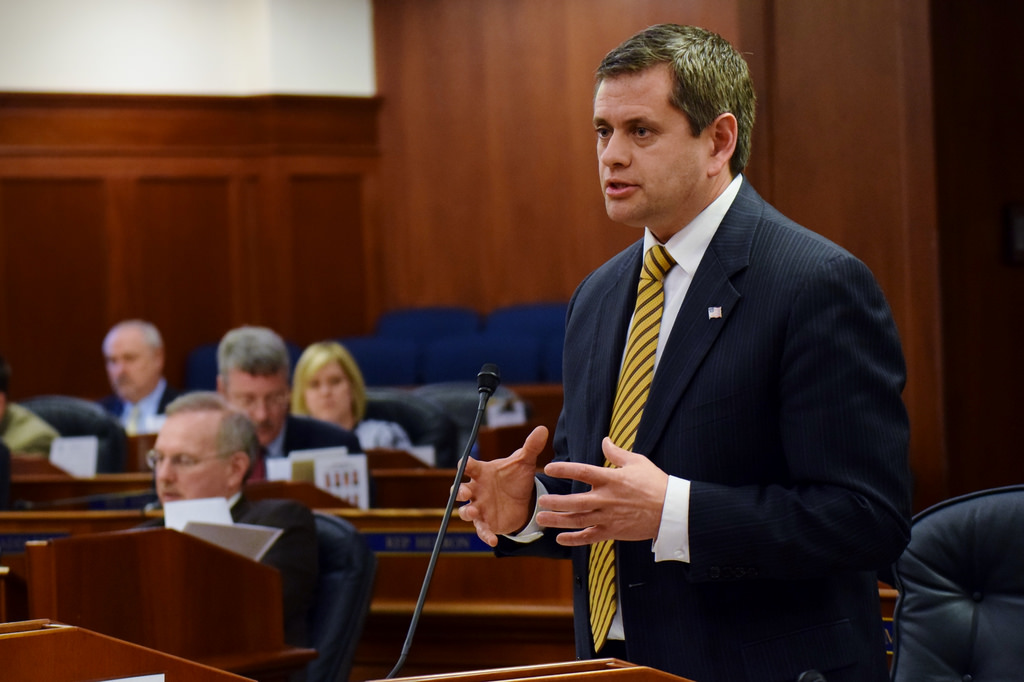
Rep. Chris Tuck addresses the Alaska House of Representatives, March 12, 2014. (Photo by Skip Gray/Gavel Alaska)
Rep. Chris Tuck addresses the Alaska House of Representatives, March 12, 2014. Tuck introduced a bill this session that attempts to cap the number of cases assigned to Alaska’s probation officers at 60. (Photo by Skip Gray/Gavel Alaska)

A bill in the Alaska Legislature would set a cap on caseloads for Alaska probation officers.

Anchorage Rep. Chris Tuck says the goal of the legislation is to reduce prison reentry rates, but the Department of Corrections commissioner says the proposal would not be realistic without additional funding.

When Brent Wilson started as a probation officer 10 years ago, he was managing over 100 cases. The state’s average caseload has dropped since then, but he says officers are expected to spend more time helping probationers find jobs and housing.

Quality time that Wilson says can keep ex-offenders from returning to prison.

“The more time you have to spend on any individual,” Wilson says, “I think it’s gonna pay dividends for us in the future.”

Wilson describes the job as a balancing act. One side requires a watchdog mentality to track high-risk probationers. The other demands an open-minded compassion to help offenders rehabilitate back into society. In between are the necessary duties of court visits, home inspections and piles of paperwork.

“You have to be able to multi-task, but this job really brings new meaning to that phrase,” Wilson says. “It’s not easy to plan a day and then see that plan actually happen.”

Easing the burden on probation officers is one of Anchorage Rep. Chris Tuck’s goals this session. He thinks targeting their caseloads is key to curbing prison reentry rates.

“When parolees do fall through the cracks that’s where they do end up — in prison, and prison is way more expensive than parole officers,” Tuck says.

Tuck introduced House Bill 22 to set a maximum limit of 60 cases per officer. But he says due to the state’s current budget deficit, the bill would not provide funds to hire more staff.

Department of Corrections Commissioner Ronald Taylor says capping the caseload at 60 is not realistic without increasing the budget.

“There’s some issues that we will have to work through in the caseload bill overall to ensure that that fairness is there and that balance is there for the department to be able to manage the resources appropriately,” Taylor says.

Taylor says the department has reduced the average caseload in Anchorage from 120 to 85 in the last few years by helping people get services that reduce their likelihood to reoffend, such as drug treatment and education. The number of offenders in Alaska to complete a drug treatment program has increased by more than 90 percent since 2011.

“What we’ve learned in the past is when we’ve not connected people to programming — when we’ve focused solely on the surveillance and enforcement aspect of it — that we get more failure in our system,” Taylor says.

Taylor says HB 22 does not take into account the state’s vast range of caseloads. For example, he says an officer in Sitka may have an average caseload of about 30, while an officer in Nome is handling up to 90 cases.

Eleven other states have set regulations on officer caseloads. Arizona’s cap is 65, but the probation officers in Maricopa County have a caseload cap of about 60.

“The job is not what it was 15 years ago when we were just checking off things and making sure people were doing what they were supposed to do,” says Kirsten Lewis, a probation officer in Maricopa County for the last 18 years.

She says her ideal caseload would be in the low 40s due to the more personal relationship expected between officers and offenders.

“The more we can treat them in a fair, firm and caring way, it’s a protective factor for recidivism,” Lewis says.

HB 22 had a hearing in the House State Affairs Committee Tuesday.

Committee Chairman Bob Lynn says he’s in favor of reducing caseload sizes. He compared the predicament to teacher classroom sizes — where finding the magic number that promotes efficiency is no simple task.

Federal Subsistence Board seeks change to rural determination process

What makes a community rural? That’s a question the Federal Subsistence Board has grappled with for years.

In past policy, the board weighed population size against factors like industrial development and infrastructure. But, ultimately, the definition of rural has been slippery in Alaska, where many communities exist outside the developed road system.

Now, the Federal Subsistence Board is trying something new. Rather than drawing a complete picture of what it means to be rural, the board wants to draw the empty space, by defining what it means to be non-rural.

The Subsistence Board’s Regional Advisory Council (RAC) for the Seward Peninsula met in Nome yesterday to discuss changes to the rural determination process — and to gather public comments. Jeff Brooks is a social scientist with the Office of Subsistence management. He described the proposed non-rural emphasis as a way to simplify the process at a local level.

“The burden of proof would not be on the community to prove that it’s rural,” said Brooks. “It would be on somebody else to prove that it’s non-rural.”

Under the proposed rule, communities that identify as rural wouldn’t have to explain why they’re rural — in fact, they wouldn’t have to explain anything at all. Only urban, or non-rural, communities would be defined for regulation purposes. And even then, the burden would be on policy makers not on community residents.

“I guess the general sense was, it’s easier to say which communities are non-rural than it is to say which communities are rural,” said Carl Johnson with the Office of Subsistence Management. He said while the board hasn’t yet developed its definition for non-rural, there will likely be less ambiguity when it comes to hub communities with larger populations — but remote.

That increased clarity may allow subsistence users in the region to breathe a little easier. After all, the distinction between rural and non-rural is no light matter — under Title VIII of the Alaska National Interest Lands Act (ANILCA) — it protects a community’s right to participate in subsistence hunts.

For Marie Katcheak, the term “rural” isn’t a matter of policy at all. It’s part of her identity.

“I hold my status as a rural person. That’s something that I never want to give up. And I shouldn’t have to give up,” she told the council.

Like many, Katcheak worries about the impact of increased development in communities that rely on a rural status — and a subsistence-based way of life. While the federal managers can do little to predict an outcome, or address those fears, Brooks says he understands that “rural” is more than just a policy buzzword.

“I understand, and many people in the room do, that rural status is more than just a label. It’s tied to your identity. And it is scary for towns that see potential growth in the future,” said Brooks.

The Federal Subsistence Board will continue to collect comments on the proposed change through April 1. The next Regional Advisory Council meetings will take place in Naknek on February 24, and in Bethel on February 25.


Alaska tops Gallup’s Index of Well-Being

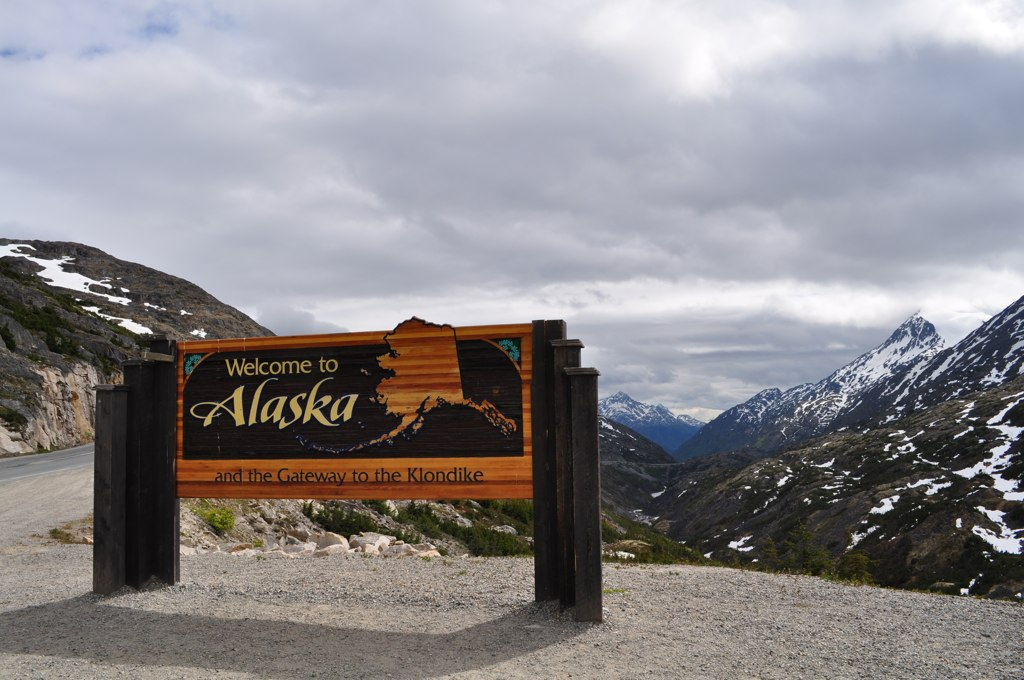
Welcome to Alaska Sign on the Klondike Highway
Welcome to Alaska…the state with the highest well-being? (Photo by Michael Grosch/ Flickr Creative Commons)

Gallup yesterday released its annual Index of Well-Being, and for the first time, Alaska tops the list.

The researchers who produce the Gallup-Healthways report say Alaska residents had the highest well-being in the nation in 2014. The Gallup report doesn’t mention that the state has among the highest rates of suicide, sexual assault and other violence.

Nonetheless, Alaskans working in the social services trenches were inclined to greet news of the report with open arms.

Laura Brown, a spokeswoman for United Way in Anchorage, says a friend had posted the story on her Facebook wall before she woke up.

“It’s awesome! I wasn’t even aware that we were even close to being number 1, so seeing that was really nice to know,” Brown said.

She got to work and found the well-being report all over her inbox, and it was the talk of her office. Brown says it was a real shot in the arm, a counterpoint to Alaska’s high ratings on all those other national indices: Suicide, domestic violence, child abuse, substance abuse.

“It’s kind of ironic, I think, that we’ve got both of those things happening at the same time,” Brown said.

The well-being index is based on phone surveys – nearly 177,000 nationwide.

We couldn’t reach Gallup to ask how many were contacted in Alaska, but their website says the results weighted to match each state’s demographics. They asked about five areas: Sense of purpose, financial, social and physical health, and liking your community.

The research director said in media interviews Alaskans reported the lowest levels of stress, high blood pressure, and drug use. Remember: this is based on telephone surveys. It’s also No. 1 for having residents who help to improve their community. The community part rings true to Anne Weaver, a manager at the Fairbanks Community Food bank.

“I’m so excited to hear that because we get to see all the good in this community and we see it every single day,” Weaver said.

Weaver says people hear she works at a “Food bank” and they connect with the suffering. But she’s definitely a glass half-full type. As Weaver sees it, the food bank gives her an opportunity to witness amazing generosity, and to do her own bit for well-being.

“You know we typically serve approximately 150 people each day, and 40 percent of them are kids, so I can go home tonight knowing that I made 150 people’s day better,” Weaver said.

Peter Pinney, Executive Dean for the College of Rural and Community Development at UAF and president of a Fairbanks social services network, can’t vouch for Gallup’s methods or findings. But Pinney does see how the dark and light of Alaska’s well-being can both be true.

“Well, certainly we are leaders in lots of bad indicators in certain areas, but overall, depending on who you talk to, it is a state where people do pay attention and look out for each other,” Pinney said.

Pinney says Alaska has higher than average rates of philanthropy and volunteering, particularly in the social services sector.

“So even though we have issues, we have a lot of people working on those issues,” Pinney said.

You might think people immersed in that work would be inclined to dismiss a well-being survey that doesn’t mention Alaska’s serious problems, but Suicide Prevention trainer Eric Boyer at UAA says he’s happy for it.

“If you think about resilience in a community, they need to know that some things that we’re doing are good, and have some positive,” Boyer said.

Boyer says he thinks Gallup did tap into something real about Alaska, but maybe just one side of a dichotomy.

NAACP leads conversation on helping young men of color succeed

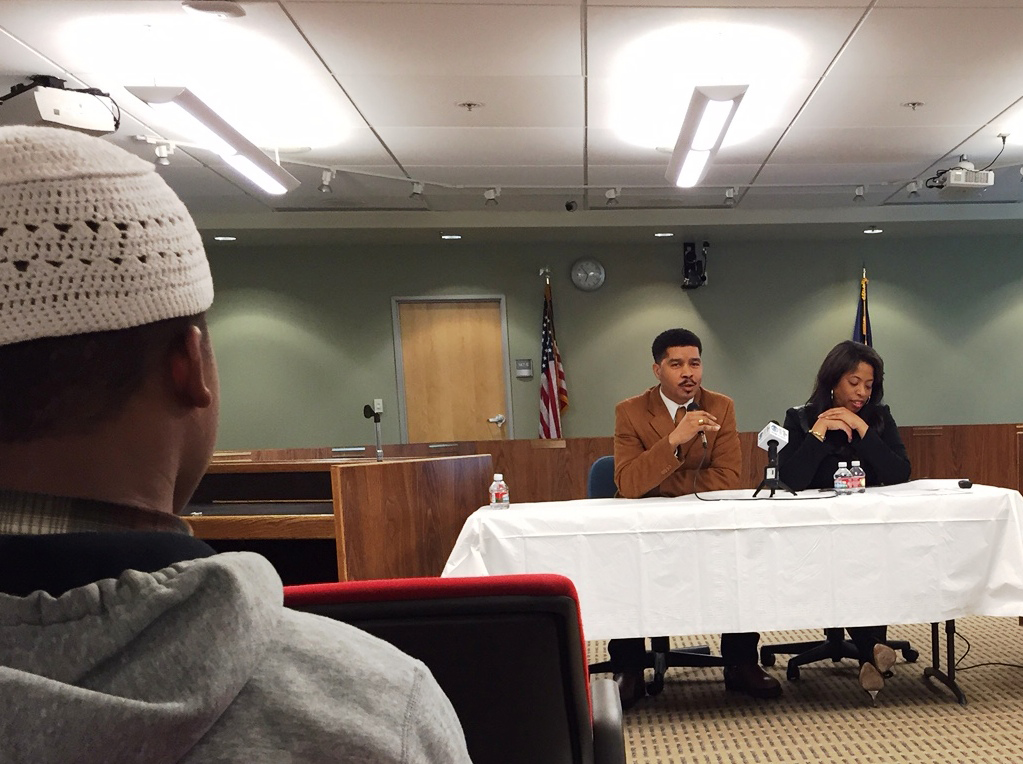
Dr. Allia Carter and author Omar Tyree speak about helping young men of color succeed. (Photo by Anne Hillman/KSKA)

Data from the state’s Department of Education and Early Development show that students of color drop out of high school at higher rates than white students. Anchorage’s chapter of the NAACP is trying to change that.  They hosted a community meeting on Wednesday night where a crowd  the Anchorage School District Boardroom to start a dialogue about helping young men of color succeed. Community members asked questions of two experts who have led programs to help young black men in the United States.

When the moderator asked what the community should do if they find the district is resistant to change or says there isn’t a problem, a murmur of recognition ran through the crowd. Parent Chrystel Bankhead-Scott nodded, wanting solutions. She says she feels like her son is being tracked and given fewer educational choices, though she says she doesn’t know if it’s linked to race.

“That’s why I’m here today,” she said after the meeting.  ”I’m so disappointed. In fact it’s mind blowing. I was shocked about what we were going through.”

Bankhead-Scott says she’s worried that other students are also being impacted.

Dr. Allia Carter is the interim vice president of student affairs at Darton State College in Georgia and was one of the speakers. She says schools are so institutionalized that it’s hard for teachers and administrators to form authentic relationships with the students. She says the solution starts with meeting the kids where they’re at as individuals.

“It’s all really about building that relationship. So the moment you connect with that child and you can truly see that they’re learning and inspired and want to learn, keep that going and stay motivated with that.”

But the solution needs to go beyond traditional teacher-parent-student relationships. Carter says it needs to involve the whole community.

The schools “need to reach out to the advocates for those children. Some times they’re not parents. They might be people who are affiliated with faith-based organizations, their youth organizations, their parks and rec departments. Those kind of people. And I think it’s time for all of us to step up and respond to our community’s needs.”

Community member and parent Adrienne Reed says it’s time to stop talking and start reaching out.

The conversation “needs to go to the junior highs and the high schools. The counselors, the community leaders, go into the classrooms, pull these young men out and ask them, ‘What is the disconnect? Why are you out here doing things that we shouldn’t be doing when you have so many other opportunities? What are we, as adults, as your community doing to fail you?’ Don’t just shove money down their throats, don’t just shove education down their throats. See what it is that they need.”

Reed says she’s ready to start knocking on doors and helping the young men of Anchorage.

Site notifications
Update notification options
Subscribe to notifications