Community

Juneau Empire puts an end to anonymous online comments

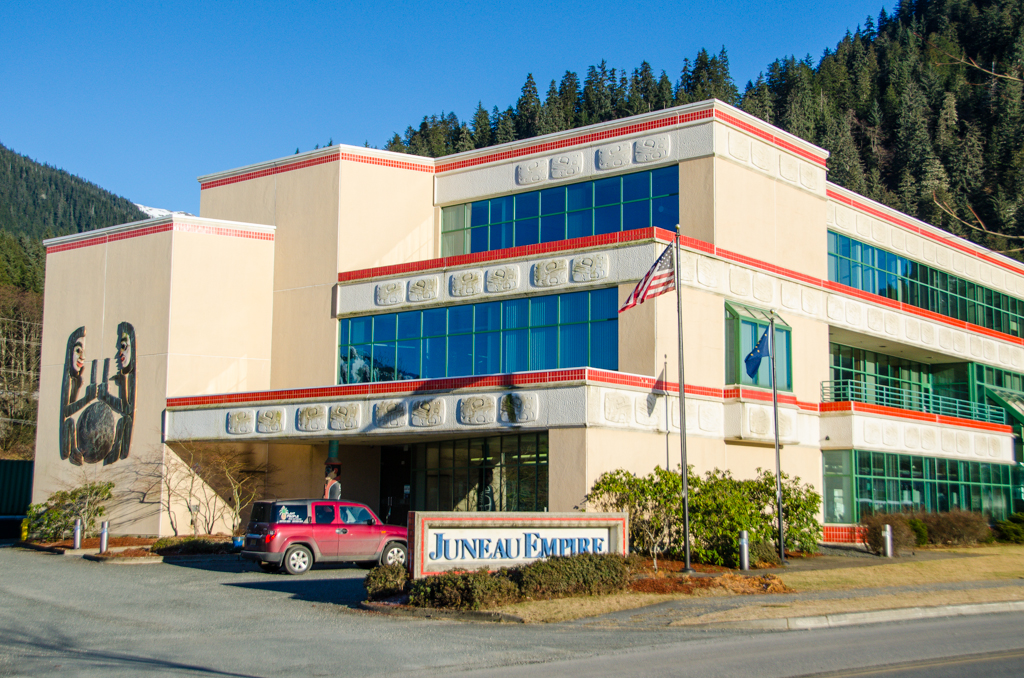
The Juneau Empire on Channel Drive. (Photo by Heather Bryant/KTOO)

The Juneau Empire no longer allows anonymous online comments on its website.

The newspaper on Sunday removed all previous comments published at juneauempire.com. Now, real names are required to post remarks about articles and interact with other readers.

The Empire joins a growing number of media outlets in Alaska and nationwide that have ended anonymous comments or done away with commenting on their websites altogether.

Publisher Rustan Burton says the move is designed to promote civility and respect in the comments section.

“People felt like people were taking it too far online, that there wasn’t enough oversight, there wasn’t enough accountability, because these people could say whatever they wanted. It didn’t have to be backed up,” Burton said. “And it’s not hard to take a look at those comments, and you can see that there are people out there who don’t care about the conversation. They don’t care about the argument, or having a good discussion. They really want to just stir the pot.”

Burton says feedback has been mostly positive since the change was announced last week.

“The 17 people that really liked the online commenting without putting their names next to it were pretty upset about that,” he said. “Other people commented online that they were very happy about this. And everyone that I’ve spoken to in person has been very positive about it. They’ve just said, ‘Hey, it’s about time.'”

The Anchorage Daily News, the Fairbanks Daily News-Miner, and Alaska Dispatch, as well as KTOO, allow people to post remarks through Facebook.

The Empire will only allow comments from subscribers. Last year the paper introduced an online paywall. The same website log-in that allows people to read articles will allow them to comment.

“We wanted to maintain control of the whole thing, and as we talked about it we realized that the Facebook option still didn’t give us the complete control we want,” Burton said. “Plus we were taking them away from our website, and we didn’t want that to happen. We wanted the conversation to stay on our website.”

Former print and broadcast reporter Brian O’Donoghue chairs the journalism department at the University of Alaska Fairbanks. He says systems that require people to attach their real names to online comments, whether it’s Facebook or something else, are desirable.

“It’s the same reason why we quote people by name in the paper – talk is cheap,” O’Donoghue said. “When it’s your identity by name backing that comment, then I think there’s a lot more reason to take it seriously and there’s also a civic value in discouraging just sort of bullying comments from folks that are masquerading behind concealed identities.”

The only issue O’Donoghue sees with news organizations using Facebook comments is that they tie themselves to the changing rules and privacy policies of Facebook itself.

He says the Empire’s decision to limit comments to subscribers may have the unintended consequence of limiting discourse.

“Traditionally, anybody could write a letter to the newspaper that did or did not subscribe to the newspaper,” said O’Donoghue. “Or perhaps read the newspaper at the public library, or borrowed a friends’ copy of the newspaper, or just wanted to express themselves on a topic of public interest to the community.”

The Juneau Empire is one of several media outlets in Alaska owned by Georgia-based Morris Communications. That includes the Peninsula Clarion in Kenai and the Homer News. Burton says the company is leaving it up to local papers to decide what to do about online comments.

Food Policy Council seeks food security for Alaska

Juneau Community Garden. File photo.

How secure is Alaska’s food system? How much local food is being produced in various regions of the state? What would it take to make food production easier here?

These are some of the questions the Alaska Food Policy Council hopes to answer in a series of town hall meetings around the state.

The organization is dedicated to increasing local food production.

Darren Snyder is a council member and University of Alaska Cooperative Extension Agent.

He says the council’s vision is to promote a healthy and secure food system that feeds all Alaskans.

And each one of us are part of that vision.  So the Food Policy Council is attempting to have each person who sees themselves  as part of the overall Alaska food systems be able to weigh in and contribute what they think would help to improve that system,” Snyder says.

AFPC-townhall-JuneausmallThe first town hall meeting was in Nome on Friday.  The second is Monday evening  in Juneau.

Just how much food is grown in Juneau and other parts of Southeast Alaska?

Researcher Lia Heifetz has done a baseline study of domesticated food production in the Juneau region.  It’s no surprise the small operations are unable to make a living at growing local food.

There’s a high demand for local foods, but right now there’s not enough produced to meet those demands.

Heifetz says Haines would be the most promising place to grow more food in Southeast.

She says the goal of her study was to come up with things that would help increase the capacity of those attempting to produce crops in the region.

Recommendations are based on a survey of growers, who said a network could reduce the costs of producing food.

“Things like equipment shares, cooperative buying to buy amendments and things needed to produce food,” she says.  “Some examples of added infrastructure are things that could be included in the umbrella term food hub, which could be anything from a commercial kitchen to a shared storage facility and  a center for education and creation of value-added products.”

Heifetz’s study was done for the Cooperative Extension, Southeast Conference, and Sheinberg Associates.

The Juneau Town Meeting of the Alaska Food Policy Council is Monday from 6:30 to 8:30  p.m. in Juneau Douglas High School Commons.


USDA helps bring water and sewer to rural Alaska

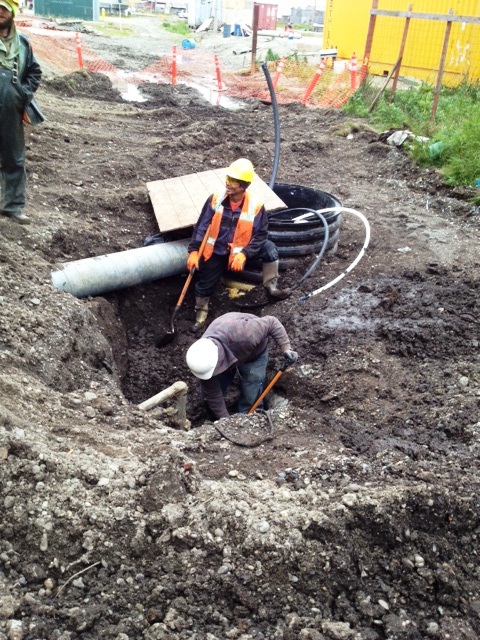
A crew works on a sewer system in a rural Alaska village. Photo courtesy USDA Rural Development.

The Undersecretary of USDA Rural Development says the time is now to get rural Alaska communities on water and sewer systems.

Patrice Kunesh has been in Alaska this week, visiting Bethel, Quinihagak and Kwethluk  as well as Anchorage and Juneau.

Western and Interior Alaska are part of the USDA’s StrikeForce initiative where the agency helps fund housing, energy, water and sewer, and agriculture projects in poor, rural communities.

Kunesh saw some of the projects in action and said she also realized the tremendous needs in many rural Alaska villages, like Kwethluk.

“Half of the village has now been hooked up to the water and waste system and they’re doing really quite well.  The other half of the village is still using has honey pots. I think it’s about a two-year process to install and get these homes capable of supporting the wastewater sanitation system,” she said.

The money for the new systems come from USDA’s Rural Alaska Village Grant Program.  It also funds Laundromats, called washaterias.

Kunesh says as water and sewer go into villages, some operation and maintenance jobs are created.

Jim Nordlund is Alaska State Director for USDA Rural Development. He said 75 percent of the funds are federal, with a 25 percent state match.

We’ve been lucky to continue to have approximately 30 million dollars appropriated each year, especially in an era where EPA funding has dropped off significantly.

The Kasaan Water Treatment Plant, built in 2012, was a partnership of Kasaan, USDA, Alaska Native Tribal Health Consortium, and state of Alaska. Photo courtesy USDA.

Over the last five years, Nordlund said, the agency has funded water and sewer projects in Hoonah, Kake, Kasaan, Thorne Bay, Ketchikan, Saxman and Metlakatla.

“The situation is always a little different, frankly better, not as dire as in Western and Interior Alaska, but still needs a lot of attention. These are small communities, they don’t have a lot of resources to pay for systems and we’re there to help,” Nordlund said.

The USDA designated Southeast Alaska a StrikeForce Zone last year.

The USDA officials were in Juneau on Thursday for the Innovation Summit, sponsored by the Juneau Economic Development Council.

While in Bethel, Kunesh announced a $718,656 grant to public radio and television, Bethel Broadcasting, Inc. to help expand television channels into villages in the region as well as continue radio and television broadcasts in Yupik.

What is Juneau listening to?

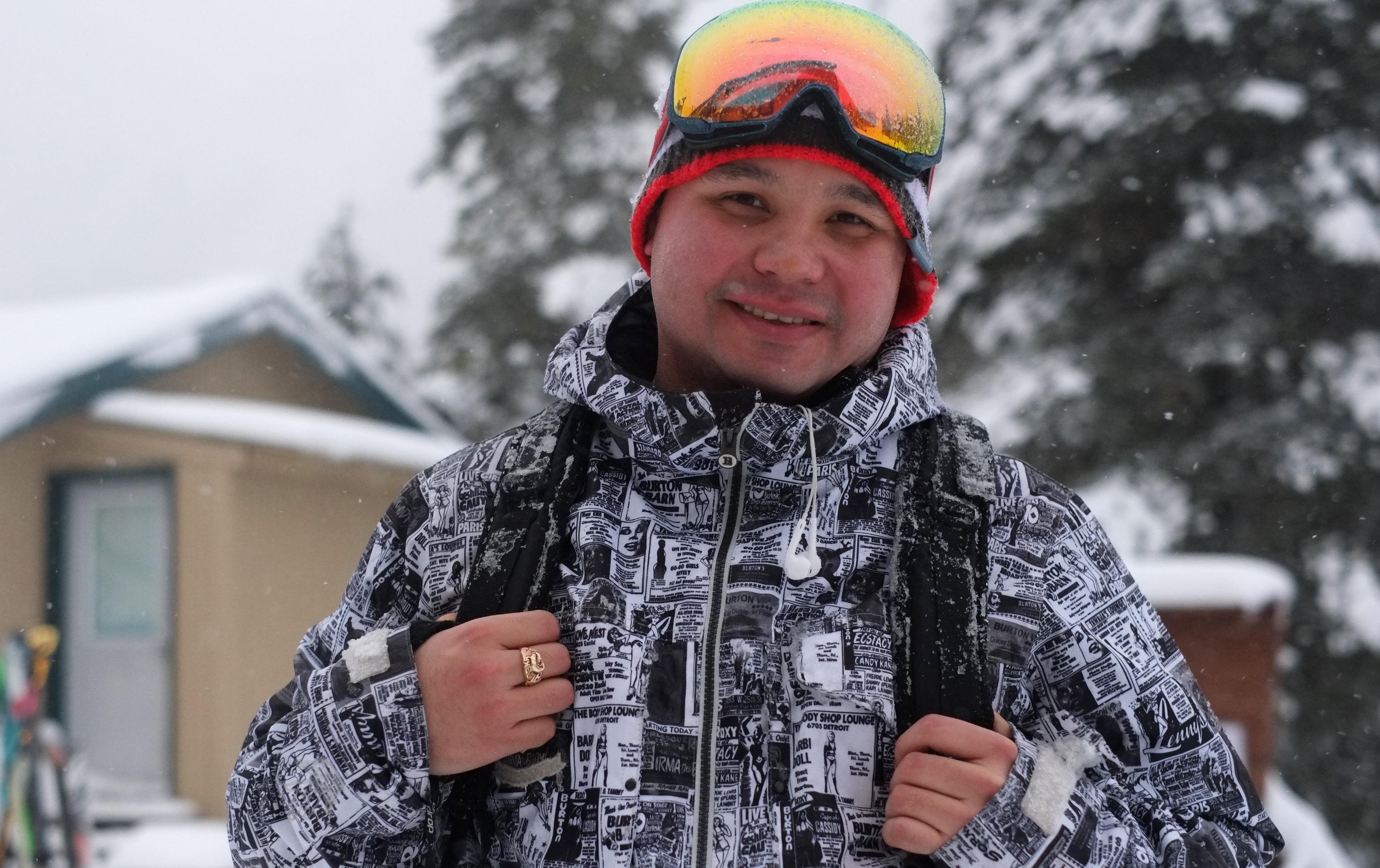
Sonny Pitmans enjoys the song "Tin Man" by Future Islands when he snowboards. Photo by Annie Bartholomew/KTOO
Sonny Pitmans enjoys the song “Tin Man” by Future Islands when he snowboards. Photo by Annie Bartholomew/KTOO

It seems like no matter where you go these days, you can’t escape it: people plugged into their devices. At the gym, at the store, white cords dangling from their earlobes. Even at the community ski area, folks can’t resist having their own experience set to their own personal soundtrack. So I went to Eaglecrest to find out what exactly they’re listening to.

Snowboarder Sunny Pittman was just coming off the mountain.What’s playing in his earbuds while he rides?

Tin Man, Future Islands. It just sounds really good when I’m snowboarding. – Sonny Pittman, Snowbaorder

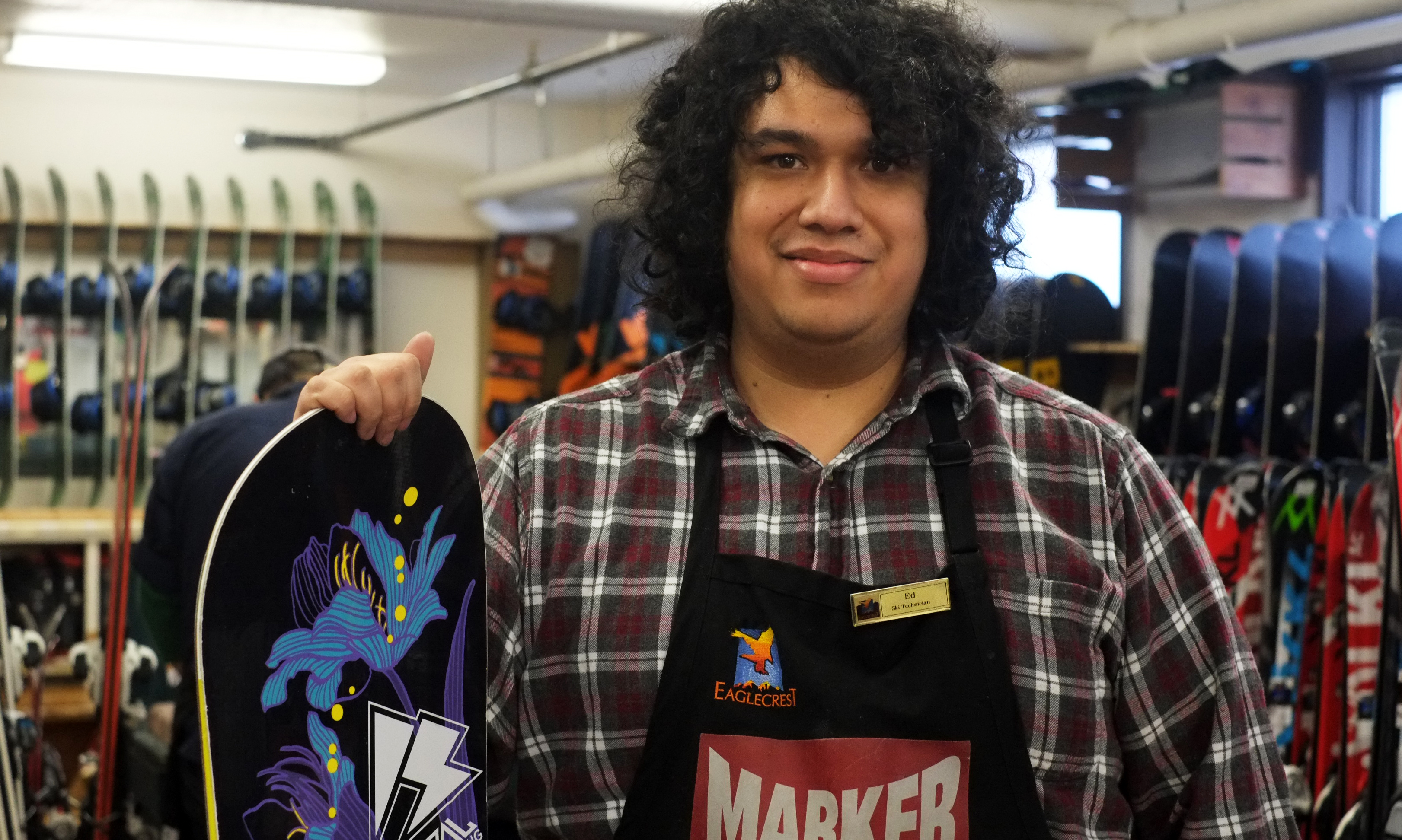
Eaglecrest rental tech Edward Rivera listens to Nikka Costa when he skis. Photo by Annie Bartholomew/KTOO

I walk past parents enrolling in mid-day ski lessons, and people buying afternoon passes and stop at the rental shop for a tune up.

Eaglecrest rental tech Edward Rivera waxes a snowboard.

 I don’t really listen to music as I’m skiing but I’ve got music playing in my mind. And it’s on one song. -Edward Rivera, Skier

That song is “Call Me”  by Nikka Costa, a Blondie cover song from the Zoolander soundtrack.

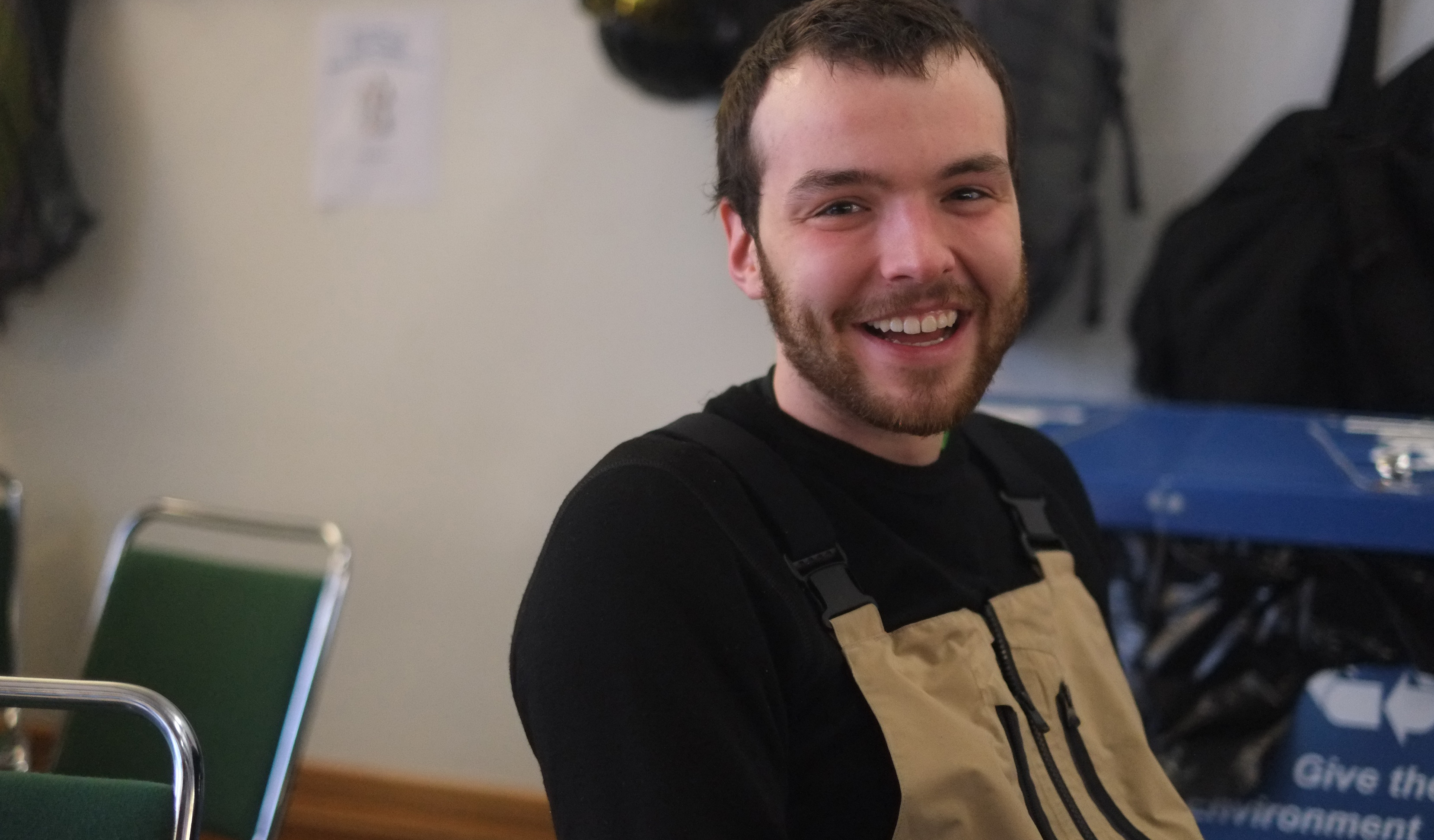
Up in the lodge, Dylan Stuart takes a break to a different vibe. What’s next on his ipod?

Eaglecrest rental tech Edward Rivera listens to Nikka Costa when he skis. Photo by Annie Bartholomew/KTOO
Snowboarder Dylan Stuart listens a to eclectic mix when he rides. Photo by Annie Bartholomew/KTO

Looks like Toots, Bob Marley, Jimmi Hendrix, DJ Shadow more Bob Marley, there’s a lot of Bob Marley. I kinda just have a lot of music and I just put it on shuffle. -Dylan Stuart, Snowboarder

Back outside 15-year-old Nancy Barnes is getting ready to snowboard in her neon pink snowpants.

 I listen to Skrillex and dubstep.  I don’t know I just like it when they drop the bass . -Nancy Barnes, Snowboarder

Nancy Barnes listens to dub step and drum and bass music when she's on the hill. Photo by Annie Bartholomew/KTOO
Nancy Barnes listens to dub step and drum and bass music when she’s on the hill. Photo by Annie Bartholomew/KTOO

I’ve never been a huge Skrillex fan – but I’m not much different from Nancy. I turn up the volume on my own iPod  and blast Seven Days of Funk.

To find out what else people are listening to at Eaglecrest, check out Excellent Radio’s newest weekly feature called Shred Tunes at kxll.org.


Differences between U.S. & Gaza Strip? Weather and freedom

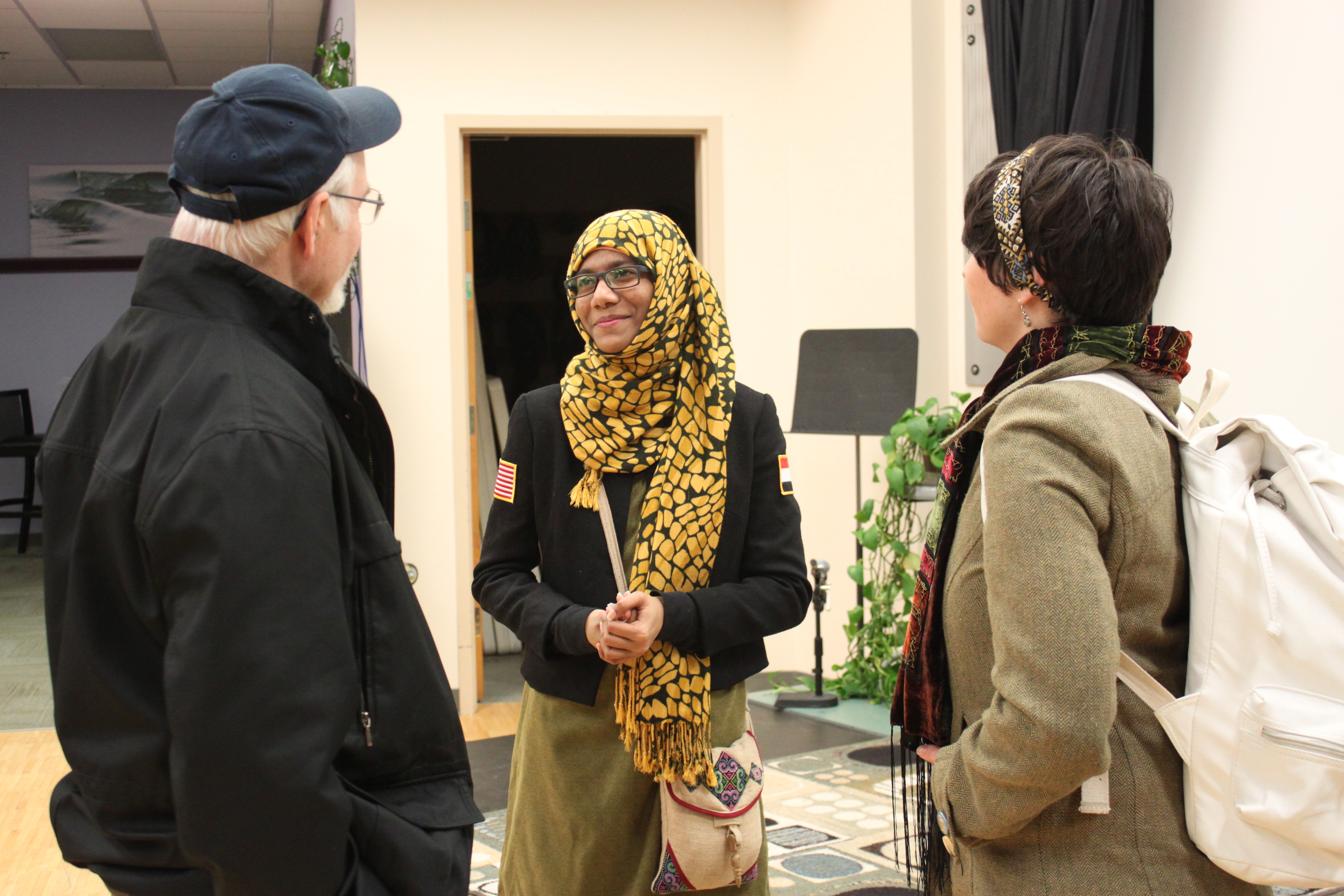
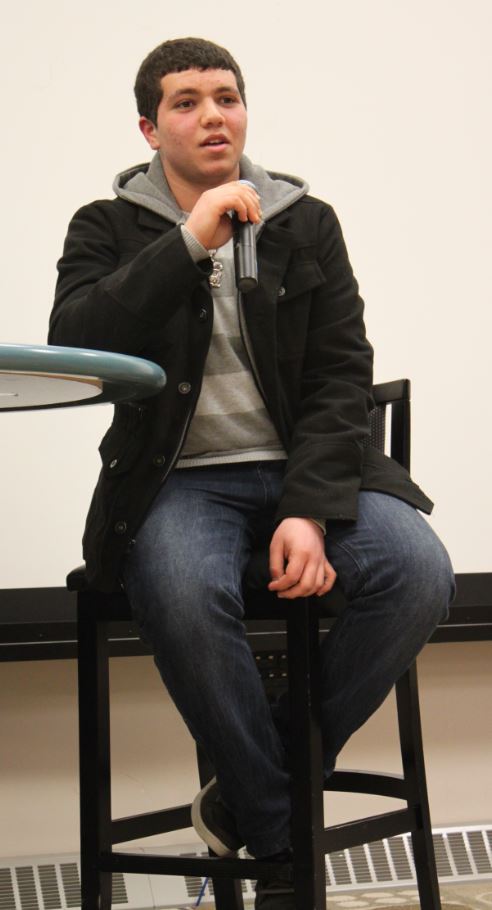
Three Middle Eastern high school students are experiencing life in Southeast Alaska. They are here through a U.S. State Department program established in response to the September 11th attacks. The program’s goal is to bring students from Muslim countries to the U.S. to learn about American values and culture. In turn, the students teach Americans about life and culture in the Middle East.

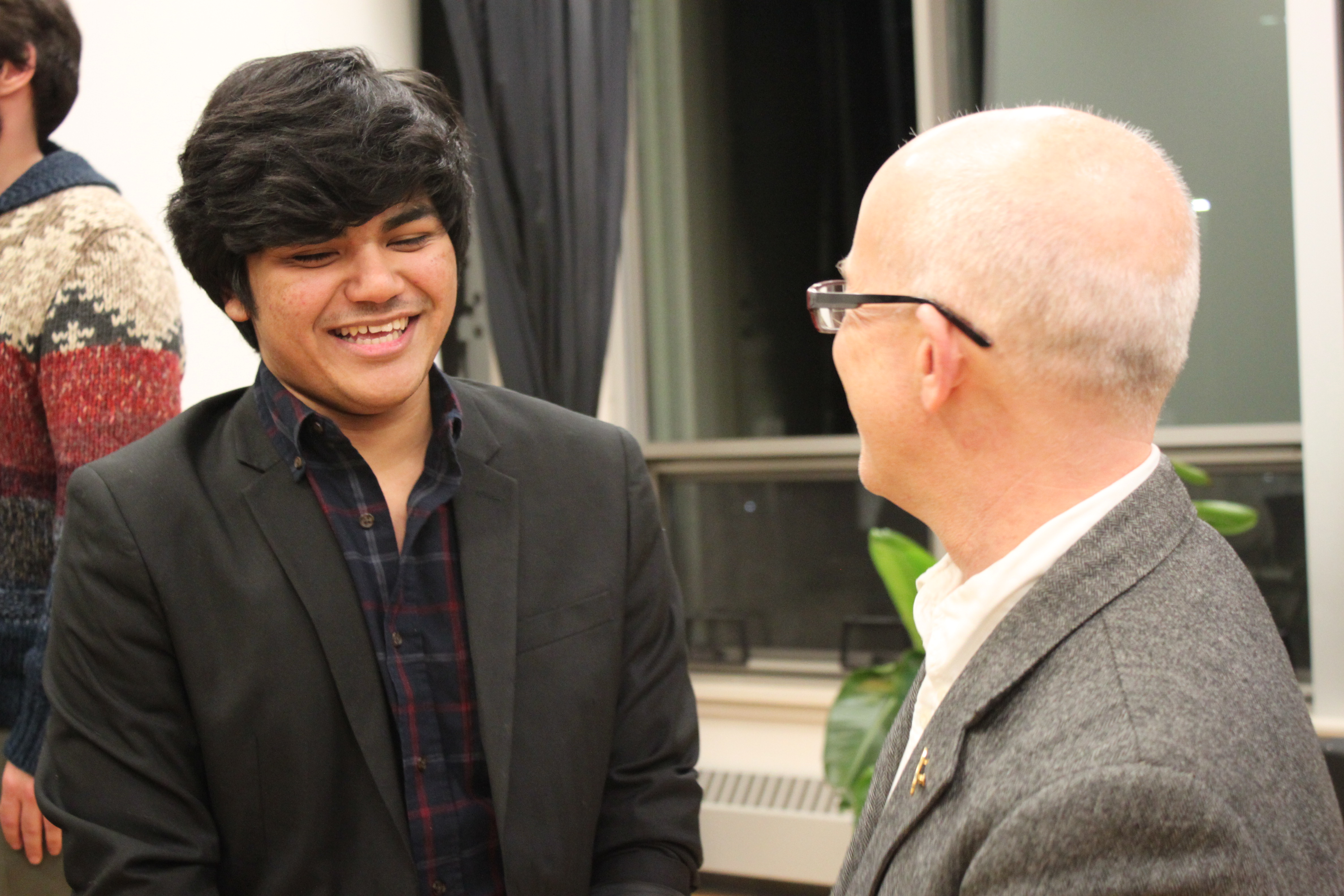
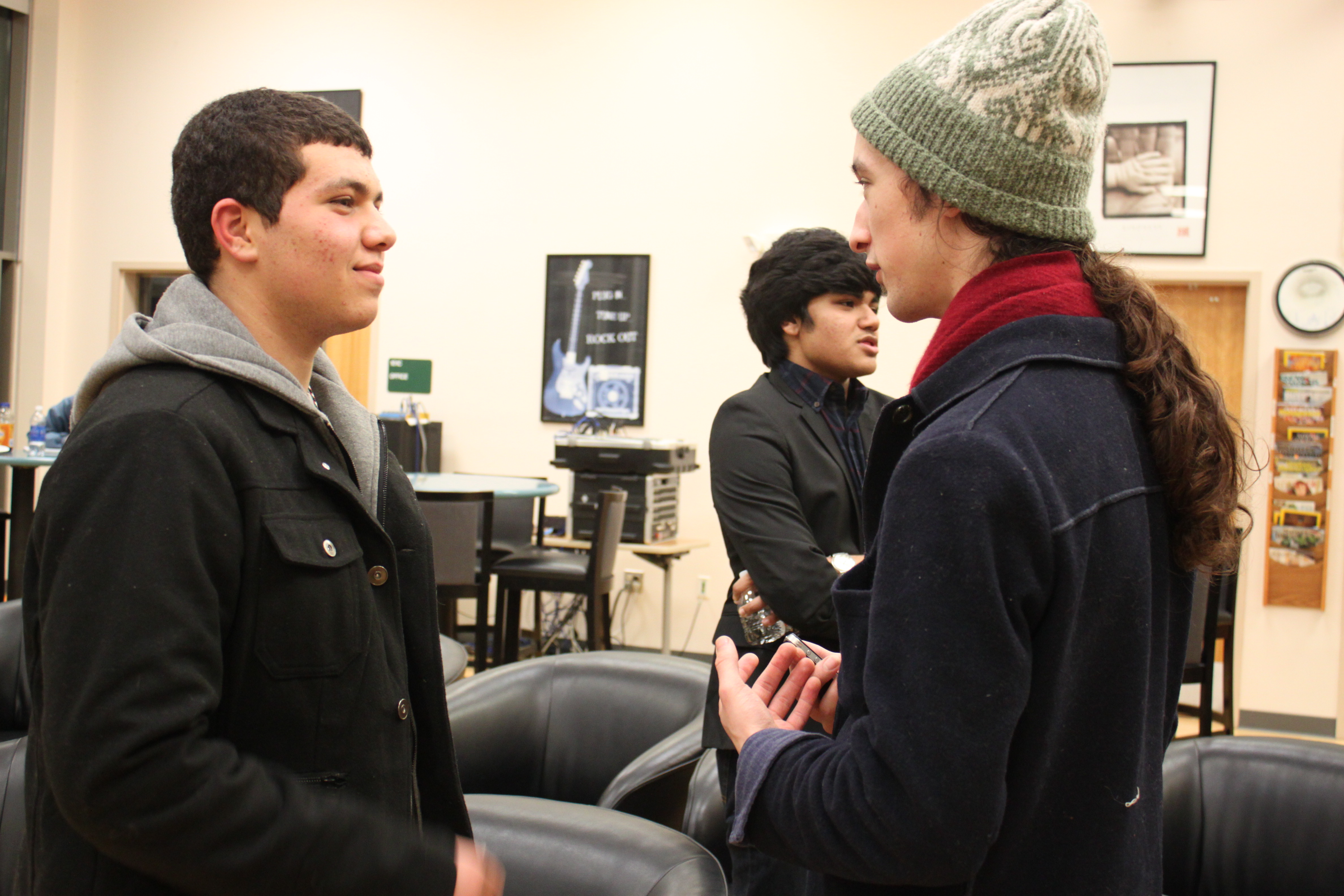
The students recently gave a talk at University of Alaska Southeast called, “Translocal Muslim Identities around the World.”

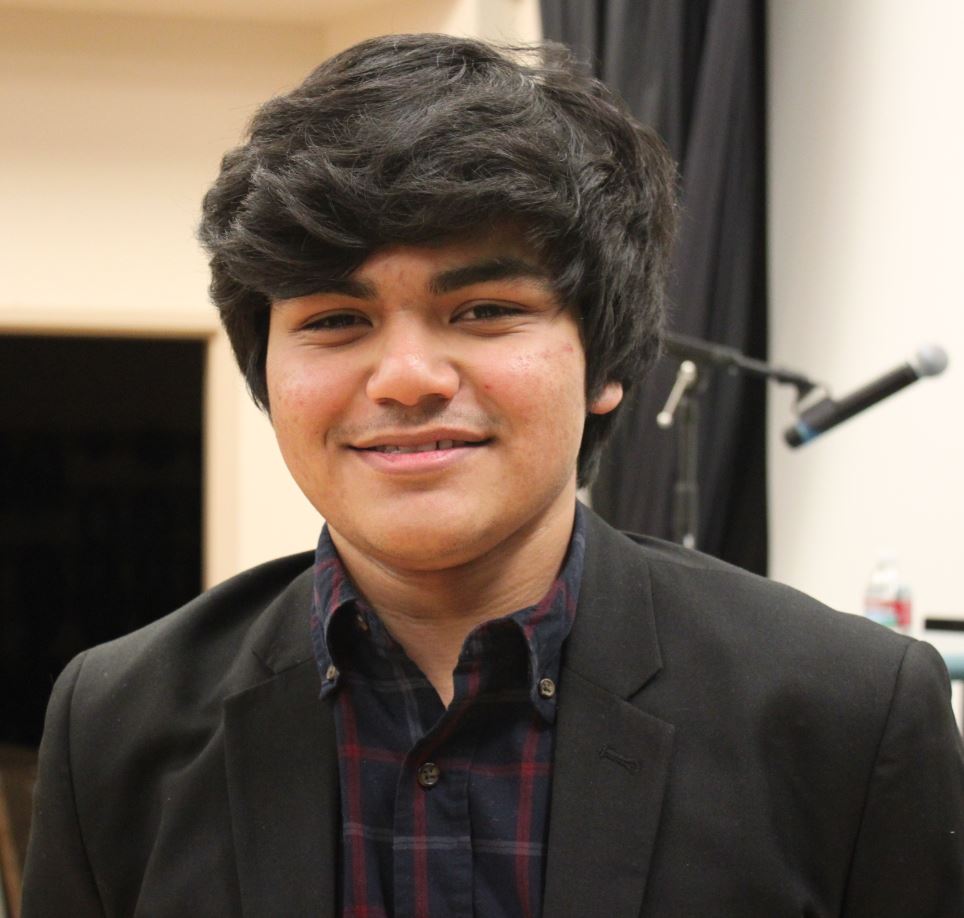
When 16-year-old Abdulla Husain from Bahrain learned he was coming to Alaska, he had visions of endless snow. So did his fellow exchange students.

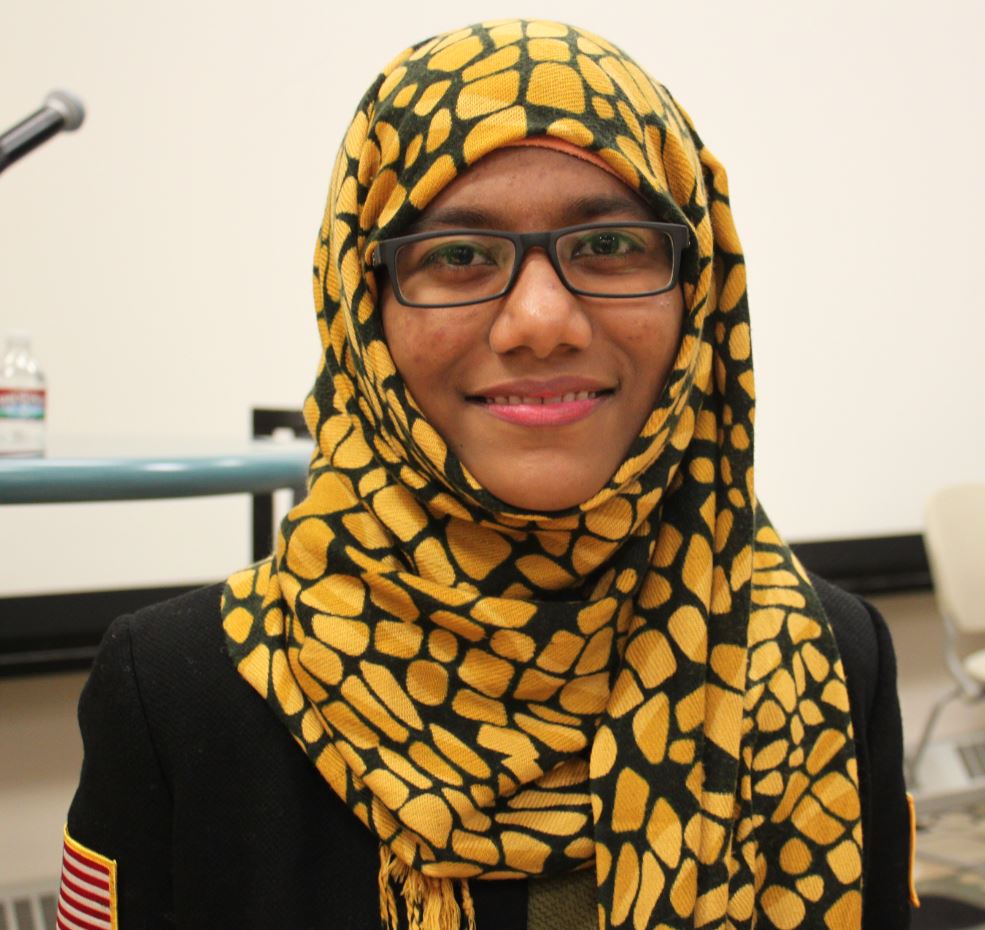
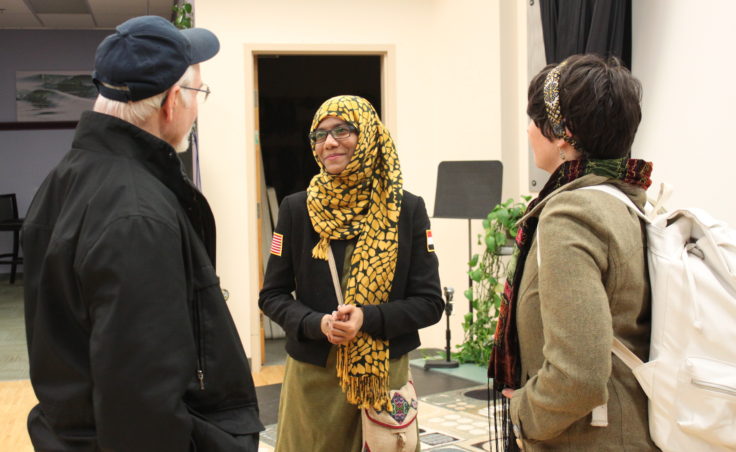
Màhâ Abdulrâzzàq, 18, says she was excited to be accepted into the competitive U.S. exchange program, which meant leaving her home country of Yemen and going to school in America for one year. “I went to my family, I was like, ‘I got a host family.’ I was so excited and they were, ‘Where?’ I was like, ‘In Alaska.’ And my dad was, ‘What!? You don’t have to go.'”

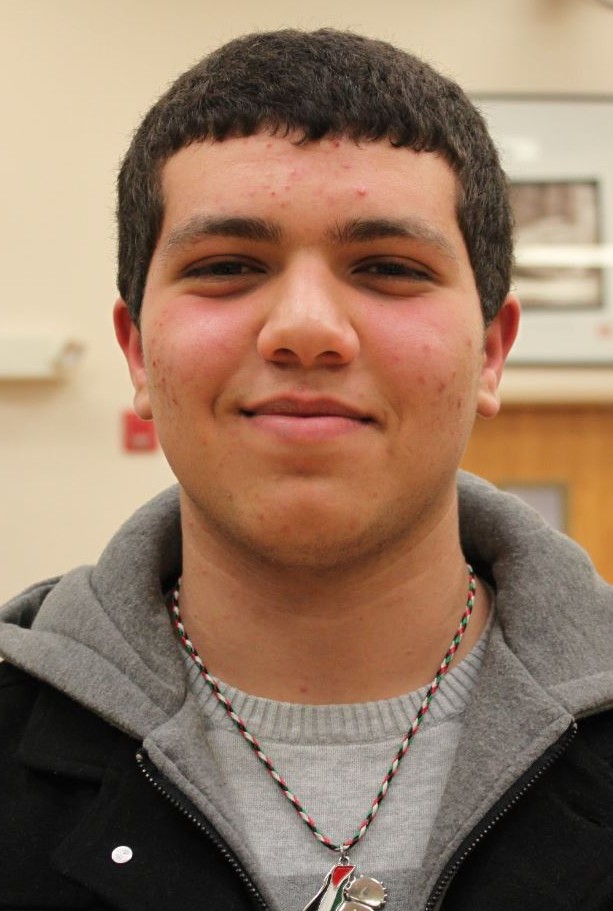
16-year-old Haytham Mohanna from Gaza Strip says he didn’t even know people existed in Alaska.

In the same way the exchange students and their families had preconceived notions about Alaska, the students found that Alaskans had preconceived notions about them. Abdulla says more than once a friend has introduced him like this, “This is Abdulla, the terrorist.”

Another student recently asked him these questions:

“‘Would you ever bomb America?’ And I told him, ‘No.’ And he was like, ‘Do you know anyone in your family who would bomb America?’ And I was like, ‘No.’ And he goes, ‘Do you know anyone from your country who would bomb America?’ And then I just got pissed and then I was like, ‘What’s up with the third degree?’”

Despite these incidences, experiencing America and Alaska has been positive for all of them. Aside from attending high school, making friends, and living with a host family, the students get to travel to other parts of the country, try new activities, and have classic Alaska experiences.

“I have tried cross-country skiing for the first time and I fell 15 times! That was crazy. I was counting,” says Màhâ, who’s attending  Thunder Mountain High School. She also can’t wait to tell her friends in Yemen about homecoming:

“And I will tell them, I danced. I danced like crazy. I have never danced in my life.”

Abdulla recounts a run in with a bear. “I was texting and looking down and listening to music and so all of a sudden I looked up and maybe twenty feet away, there was this big bear looking through this garbage. And he looked at me and I looked at him and I know they say don’t run, but I couldn’t help it. I didn’t run; I walked backwards faster than running maybe,” he says laughing.

While in America, Màhâ doesn’t wear a traditional long black abaya that covers her whole body. Instead, she wears dresses with leggings. But she still wears a hijab, a religious head scarf. “I can’t show my hair for guys, except for my father, brother, future husband, future kids, and uncles and grandfather,” she explains.

Màhâ says it has been a culture shock to see so much interaction between boys and girls. In her home country, schools aren’t mixed. “So, like, in Yemen, we’re not allowed to have girlfriends or boyfriends and we are not allowed walking and holding hands with guys and hugging them and stuff. That’s crazy.”

Haytham says the biggest difference between living in America and living in conflict-ridden Gaza Strip is, by far, the weather. And freedom:

“Like being here in America, it’s very different, having your freedom, having your choices, do whatever you want to. I can’t explain it. Like from a siege, or under siege, to having many choices and many stuff to do, it’s so different.”

He says the program is affecting his life in more ways than he ever imagined, “This program opened many doors and many choices for me. Also it will do many things for me even in the future, for my future job, for my college, for my life, how to react, how to deal with many people, how to communicate.”

Haytham, Màhâ, and Abdulla have a tip for Americans – if you want to know about another country’s culture, travel there, meet people, and talk to them.

Site notifications
Update notification options
Subscribe to notifications