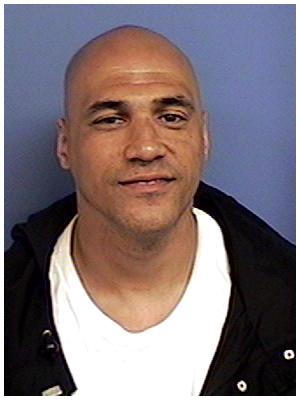
Juneau police are searching for Derek McMillan, who has a criminal history.
Juneau police are still looking for a 39-year-old man who walked away from a Juneau halfway house earlier this month.
Police say Derek McMillan left Gastineau Human Services Halfway House on Aisek Street on Jan. 3.
He reportedly ran to Glacier Highway in the direction of Grants Plaza.
Police say McMillian left the facility against staff instructions. He had possibly taken drugs in a bathroom.
McMillian’s criminal history in Alaska and Florida includes drug offenses, robbery, vehicle theft, and assault, according to police. His nickname is “Kilo.”
Police describe him as 6 feet tall, about 225 pounds, and Hispanic. He was last seen wearing blue jeans, a green sweatshirt and a gray hooded sweatshirt.
Police say if you see McMillan, do not approach him. Instead, contact the Juneau Police Department immediately at 586-0600, or the Juneau Crime Line website.
Dr. Mike Cooper, an epidemiologist with the state Department of Health and Social Services, says the risk of Alaskans contracting measles is pretty low, but “what’s going on right now in the Philippines is a great reminder that we live in a very global world. Ease of travel has increased, and so things like measles, unfortunately, are still around.”
Measles is a highly contagious virus that spreads through coughing, sneezing, and close personal contact with an infected person.
“People get a fever, sometimes very high, they can get red eyes, and a runny nose, and a cough,” Cooper says. “And after usually four days or so they’ll present with a rash – kind of a generalized splotchy rash that can start on their head and then move downward.”
Cooper says the disease can be serious, even deadly, especially for the very young, the elderly, and those with weakened immune systems.
Dante Reyes is president of Juneau’s nonprofit Filipino Community, Inc. About 3,000 Filipinos call the Capital City home, and Reyes says many of them travel to and from the country at least once per year.
“I know that some of our members were traveling in the Philippines,” Reyes says. “And actually they were there and they left maybe in the last part of December, early January.”
Reyes says he always goes to a doctor before traveling to the Philippines to make sure he’s up-to-date on his vaccinations. He says most of his friends and relatives who live in Juneau do the same.
He says phone service is still spotty in Tacloban, where Super Typhoon Haiyan did most of its damage. Members of Juneau’s Filipino community who travel in the country often keep in touch with friends and relatives in the Unites States using social media sites, like Facebook.
“I have no idea if some of our members were affected by that epidemic in the Philippines right now,” says Reyes. “I think it’s in Manila, and some of them were in the metro Manila area and some of them were in the provinces.”
After that the state started requiring two doses of the measles, mumps and rubella vaccine for public school students. Dr. Cooper says there haven’t been any outbreaks in Alaska since then.
“It’s one of those diseases where we’ve done a good job in the U.S. of lowering rates and getting rid of homegrown disease,” Cooper says. “But then when you get pockets of people that are not immunized – whether they declined it, or didn’t get immunized when they were children, or as they got older their immunity waned – they’re vulnerable.”
Kate Slotnick, Southeast Alaska regional nurse manager for the Division of Public Health, says the agency will reach out to local Filipino groups in the area to share information about the measles outbreak in the Philippines.
Other than that, public health officials say they’re just reminding doctors and nurses to be vigilant and watch out for the disease.
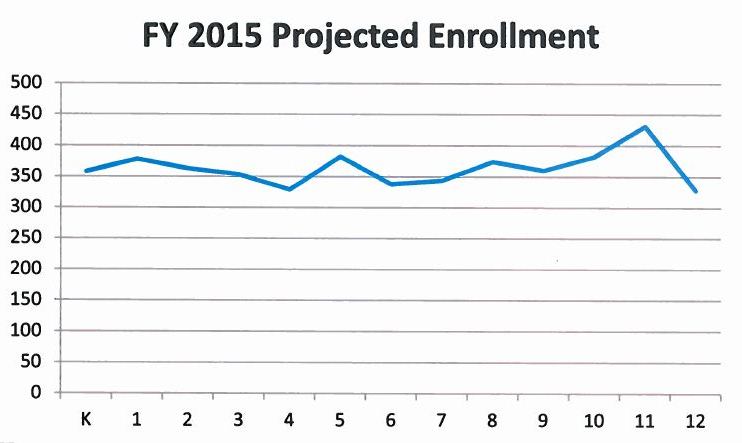
Juneau School District projected enrollment by grade. The estimate is 4,790 students. Actual students are counted in October. Graph courtesy Juneau School District.
A 17-member budget committee has begun crafting the Juneau School District spending plan for the next year.
The committee met Tuesday for the first time. It will meet six times over the next two months and produce a final report by March 4th. That report will contain committee priorities for the district.
The super-sized committee represents all school site councils, education unions, and the community. Juneau School Board member Phyllis Carlson chairs the group, and all members of the board will attend each meeting.
With a decline in the number of students, the school district is projecting about a $3 million deficit for the next fiscal year, especially if the Base Student Allocation remains the same.
Alaska school operating dollars are allocated to each district through the BSA, an amount for each student enrolled. It has not increased over the last three years, and Gov. Sean Parnell’s budget recommends flat funding.
It will be April — when the state legislature adopts the state budget — before the district will know how much state funding to expect.
To build a budget, districts must forecast enrollment for the following school year, though the actual number of students isn’t known until October. Juneau’s count was lower this fall than projected and the district lost state revenue. Some of the loss was offset by a carry-over from last-year’s budget.
Budgeting for next year is complicated by difficult negotiations with teachers, who are working without a contract. The district has proposed no increase, while the teachers union is asking for a cost of living raise over the next three years. An arbitrator’s advisory opinion has been delayed until February.
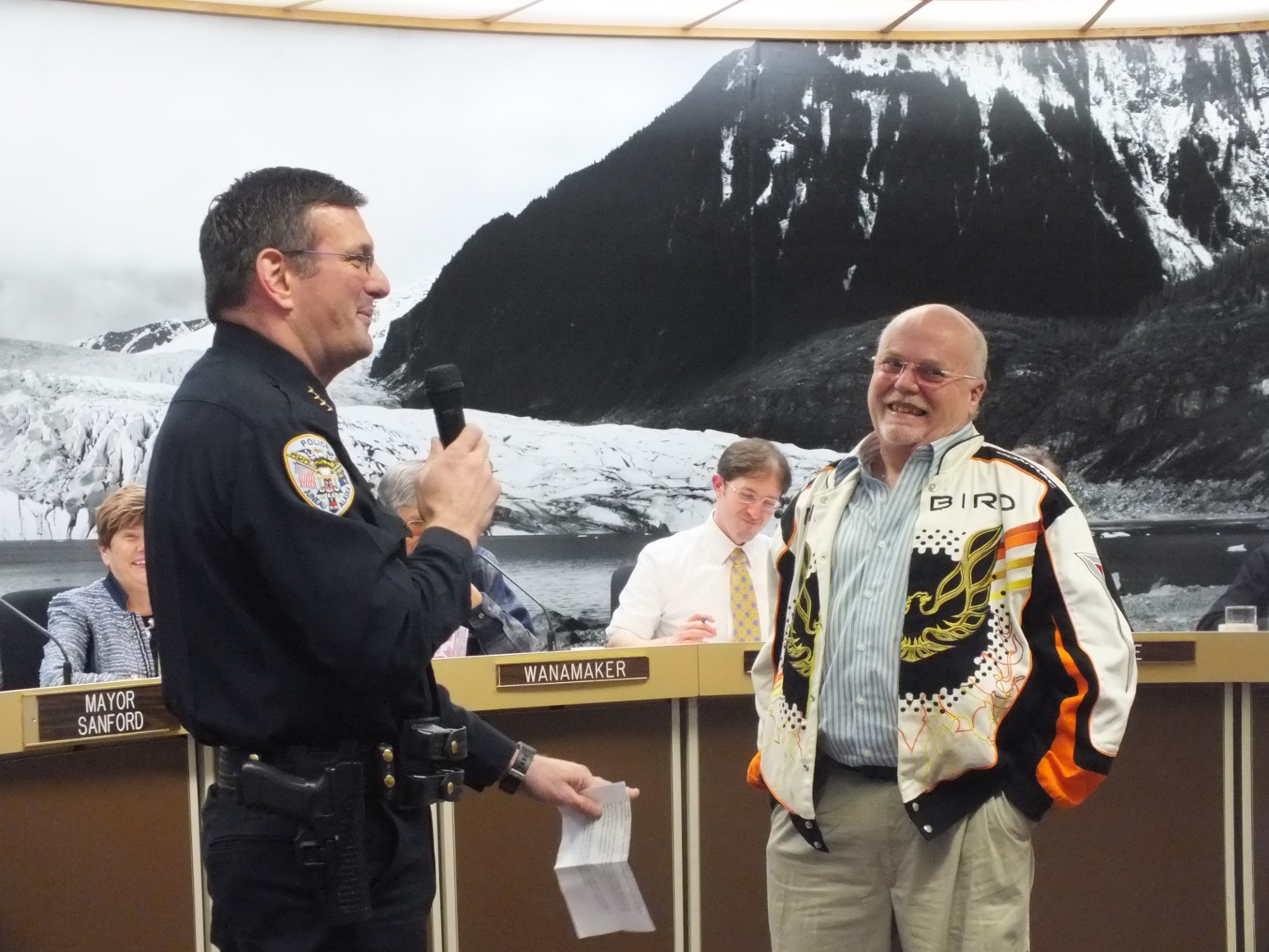
Juneau Police Chief Bryce Johnson jokes with longtime JPD mechanic Scott Phillips about his retirement after 30 years with the city. Photo by Casey Kelly/KTOO.
About a dozen Juneau police officers packed City Hall Assembly Chambers Monday night for the start of the first assembly meeting of 2014.
They weren’t there to arrest anyone or quell a riot, but rather to celebrate the career of longtime Juneau Police Department mechanic Scott Phillips, who just retired after 30 years with the city.
Police Chief Bryce Johnson said Phillips started with the Public Works Department in 1984, and joined JPD’s auto shop 10 years later.
“By my count that’s seven police chiefs since you started,” Johnson said.
Every time JPD bought new vehicles, Johnson said Phillips was responsible for maintaining them and keeping officers safe behind the wheel.
“We went from Dodges to Chevys to Fords, am I missing any of them?” Johnson laughed. “We got all those. And then all the unmarked cars, probably a Toyota or two. But he would have to re-learn how to maintain each car each time we would change cars, and he maintained all those cars for a tremendous amount of time.”
Mayor Merrill Sanford presented Phillips with a certificate of appreciation.
Phillips said he doesn’t have big plans for retirement, just spending more time with family.
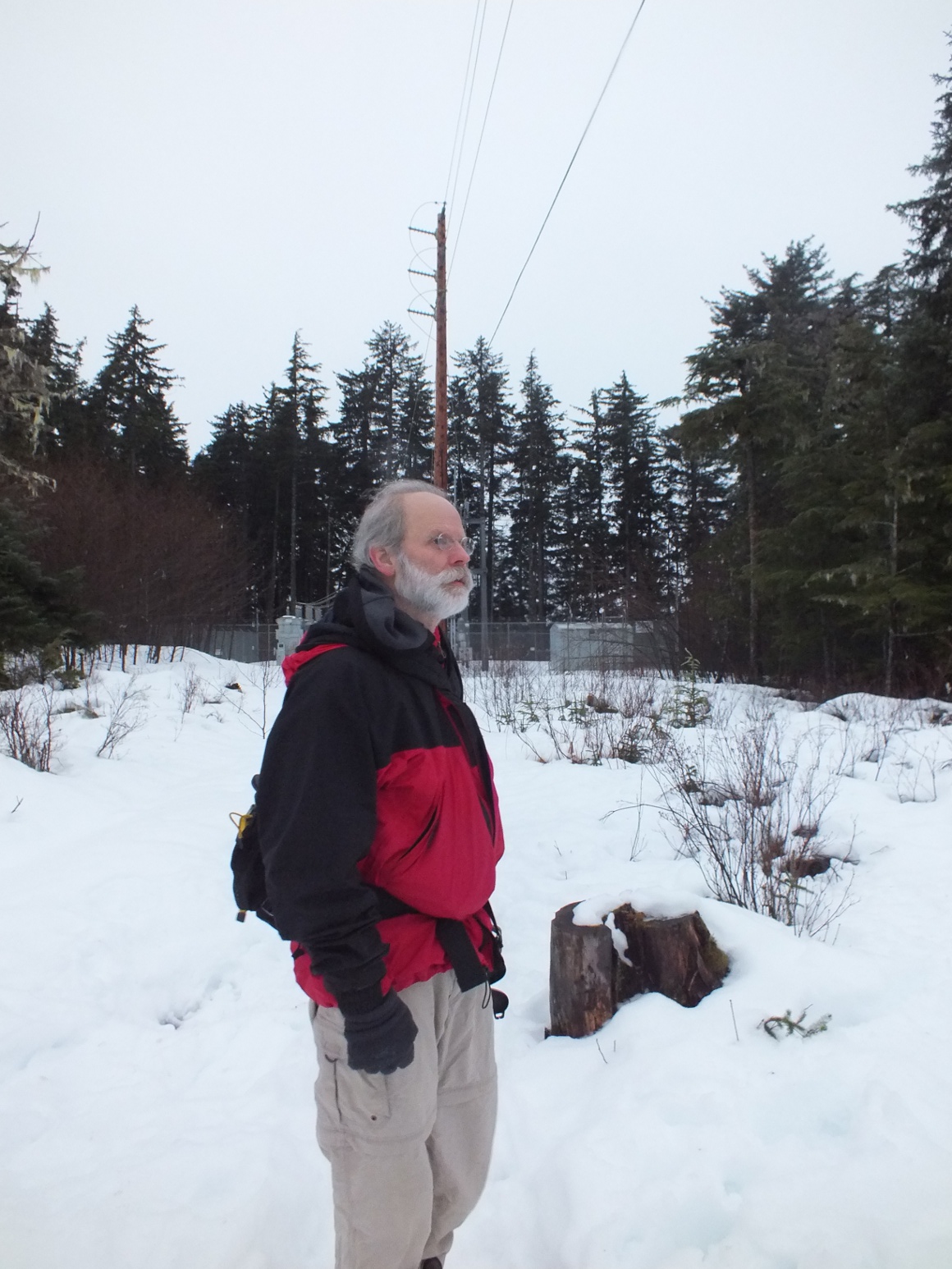
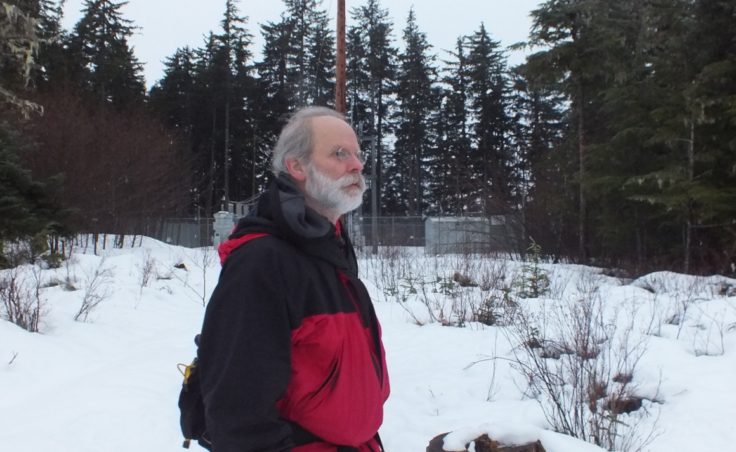
Grey Pendleton has been doing the Christmas Bird Count in Juneau on and off for about 15 years. Photo by Casey Kelly/KTOO.
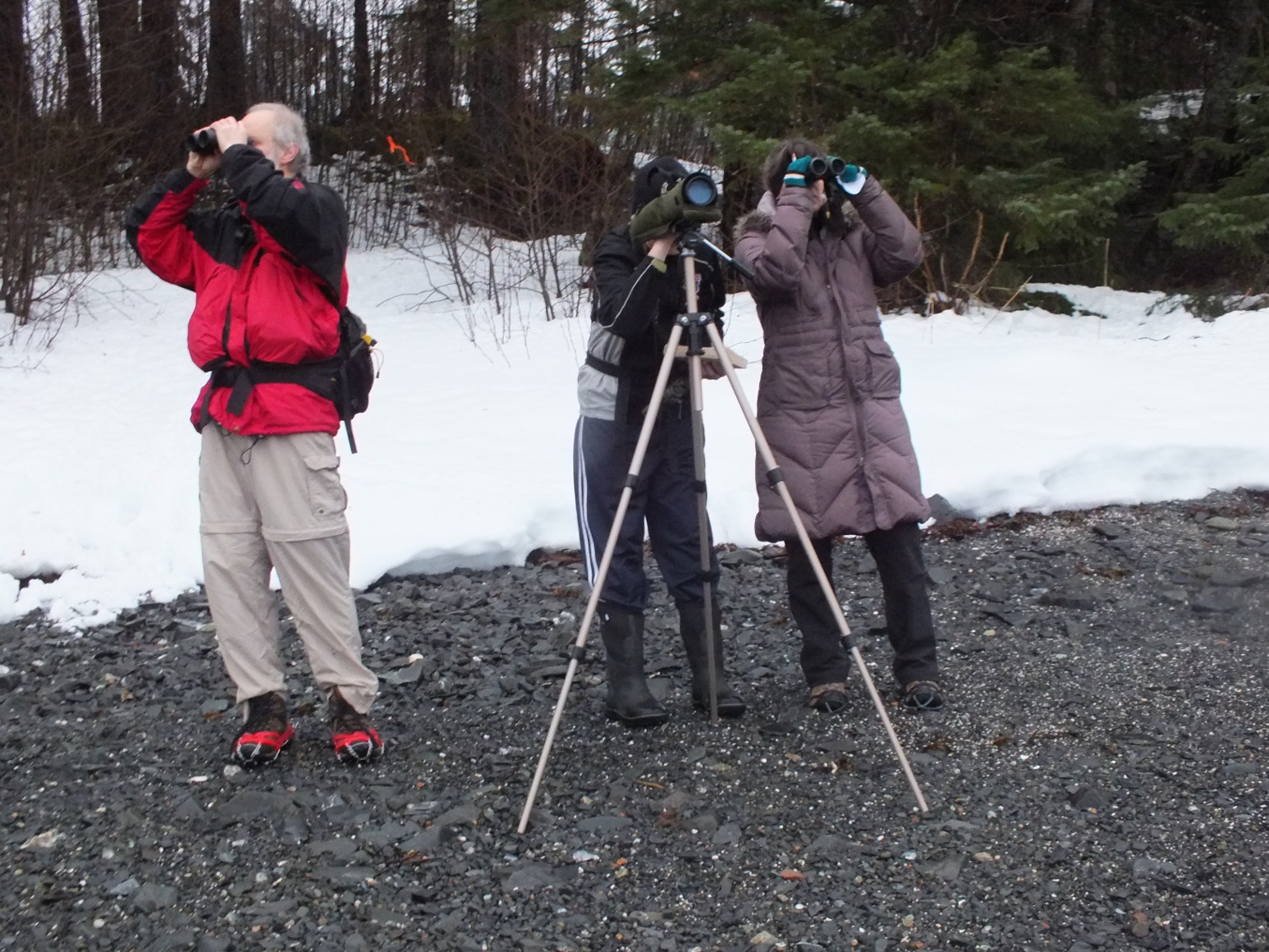
Grey Pendleton (left), Owen Squires and Marsha Squires (right) scan a North Douglas beach for birds during the Juneau Audubon Society's 2013 Christmas Bird Count. Photo by Casey Kelly/KTOO.
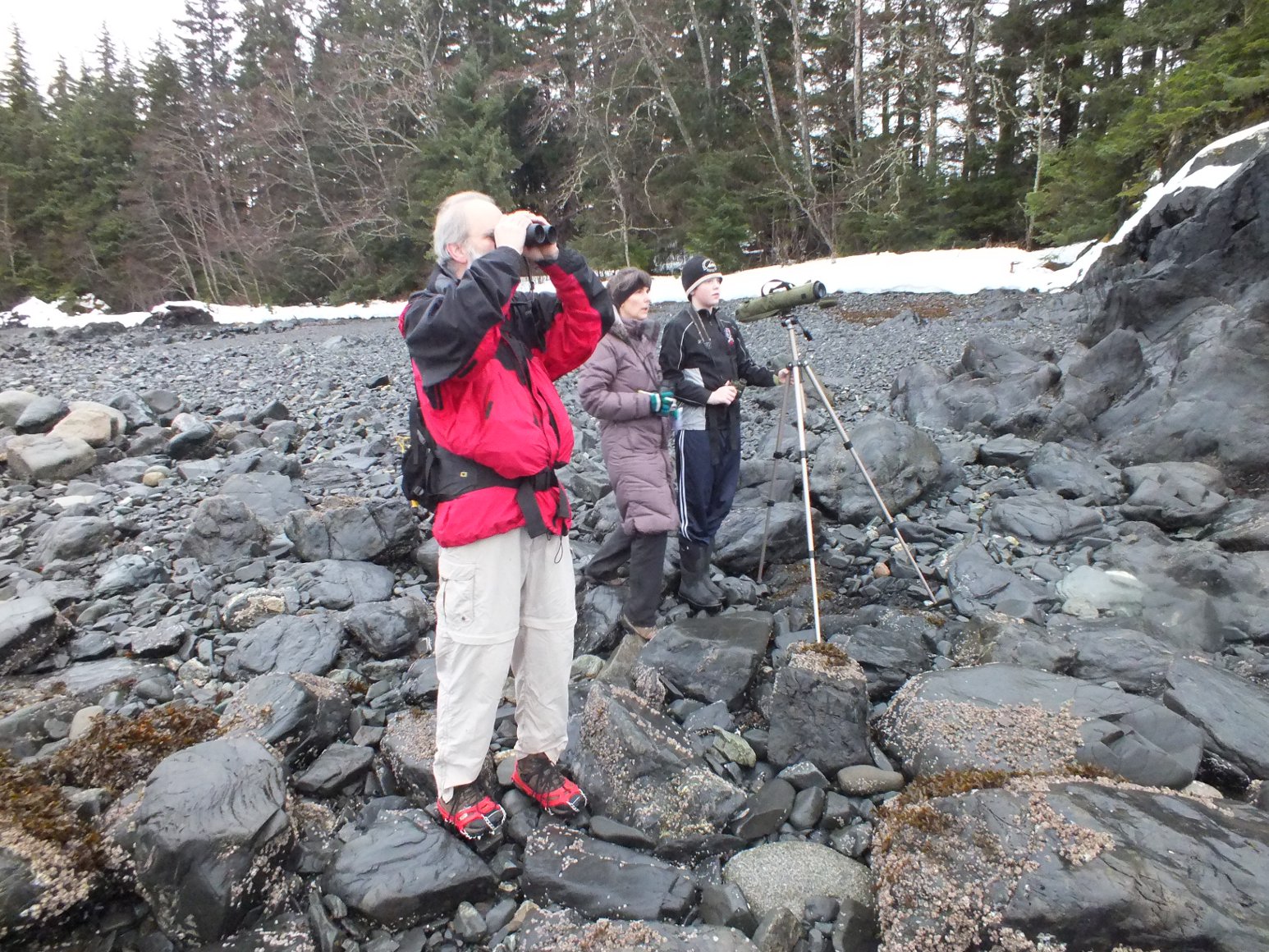
Grey Pendleton, Marsha Squires, and Owen Squires during the 2013 Juneau Audubon Society Christmas Bird Count. Photo by Casey Kelly/KTOO.
Grey Pendleton, Owen Squires, and Marsha Squires look for birds during the Juneau Audubon Society's 2013 Christmas Bird Count. Photo by Casey Kelly/KTOO.
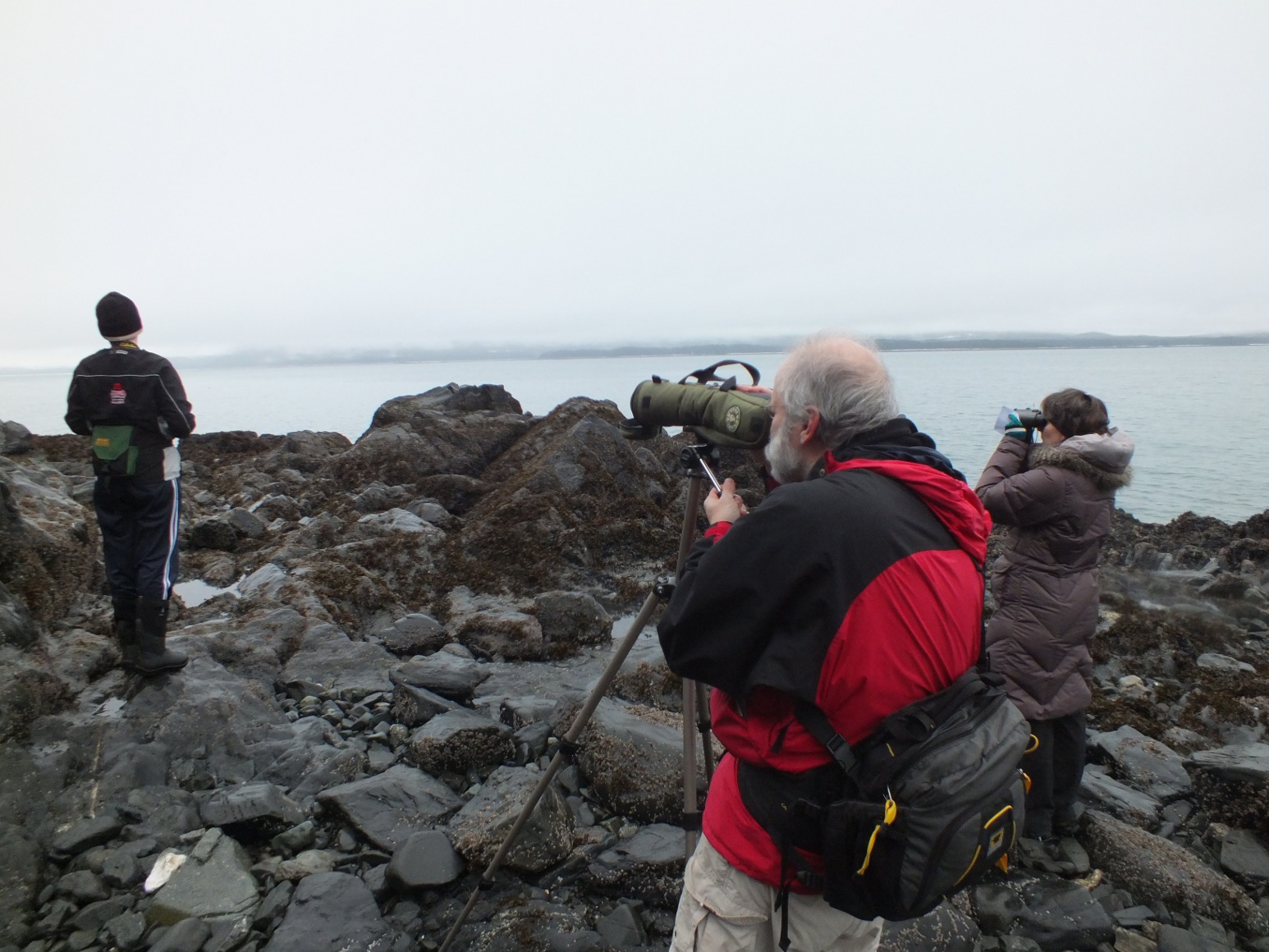
Grey Pendleton scans the shoreline along the Outer Point Trail during the Juneau Audubon Society's 2013 Christmas Bird Count. Photo by Casey Kelly/KTOO.
Juneau birders spotted about 70 species during the Audubon Society’s annual Christmas Bird Count on Saturday.
The number is slightly above average, according to organizers.
More than 40 people took part in the count.
It’s just after dawn, and I’m trudging along the snow covered trail at the end of North Douglas Highway with Grey Pendleton, Marsha Squires, and her 12-year-old son, Owen. We met about 30 minutes ago in the dining area at Foodland grocery store. That’s where local Audubon Society members from the downtown Juneau and Douglas areas usually organize into groups for the Christmas Bird Count.
We’re walking along, when suddenly a sound from a nearby bush causes us all to stop. Pendleton tries to lure the bird or birds into the open, but to no avail.
“These sounded like kinglets maybe in here,” he says.
Then pointing to another stand of trees: “That sounded more like crossbills, finchy.”
We keep walking until we reach the rocky beach near the North Douglas power substation, where the count really gets underway. Several birds are visible in the water. The birders use binoculars and a spotting scope to more easily identify them.
“There’s about 27 white-wing scoters, and four more surf scoters,” Pendleton says.
“Far out,” he adds, writing the numbers in a small notebook.
Pendleton has been doing the Christmas Bird Count in Juneau on and off for about 15 years.
The count has to take place on a single day during a one month period from early December to early January. The Juneau count was originally supposed to be December 14th, but it was delayed due to poor weather. There’s also a separate category for birds seen count week, but not on the count day.
“There’s a 15 mile diameter count circle, so all the counts have to be done in that circle,” Pendleton explains. “Different people go to different areas, or are assigned different areas, and then we combine all our counts. And you count everything you see or hear that you can identify.”
He says he likes birding, because it gets him outdoors. Although maybe not as good as some places, he says Juneau is a pretty good spot for a birder.
“There’s a good variety,” he says. “Lots of different habitats, so you get a good variety, but not as many species as some places in the Lower 48.”
Squires says birding is fun family activity.
“Owen’s been birding since he was about five, and he’s actually gotten to be a better birder than I am,” she says.
“I’m losing my eyesight and my hearing,” she adds with a laugh.
Owen says he likes spotting birds he’s never seen before.
“I have a bird list at home, and one of my favorites is finding all these new birds,” he says. “So I can mark them down in my bird book to say that I’ve seen them before.”
Owen says probably the coolest bird he’s ever seen in Juneau was a peregrine falcon.
“We saw that in my backyard a couple years back,” he says. “We had to look through the scope to find it.”
His mom says that’s another great thing about birding: You’re constantly surprised by the birds you see, and when and where you see them.
“Like, we just saw a ptarmigan down on the beach, and that’s kind of unusual to see, usually you see ptarmigan up high,” she says.
After about an hour on the beach we head back to the trail head and onto the next stop on the day long count.
Unofficially, Juneau birders spotted nearly 11,000 individual birds throughout the day. That’s down slightly from last year, but the 70 species seen is four more than the previous Christmas Bird Count.
Unique or rare birds seen include a western grebe in Auke Bay, two Anna’s hummingbirds, a Lincoln’s sparrow, two white-throated sparrows, and nine red-winged blackbirds.