




Community

Eagle knocks out power; airport evacuated

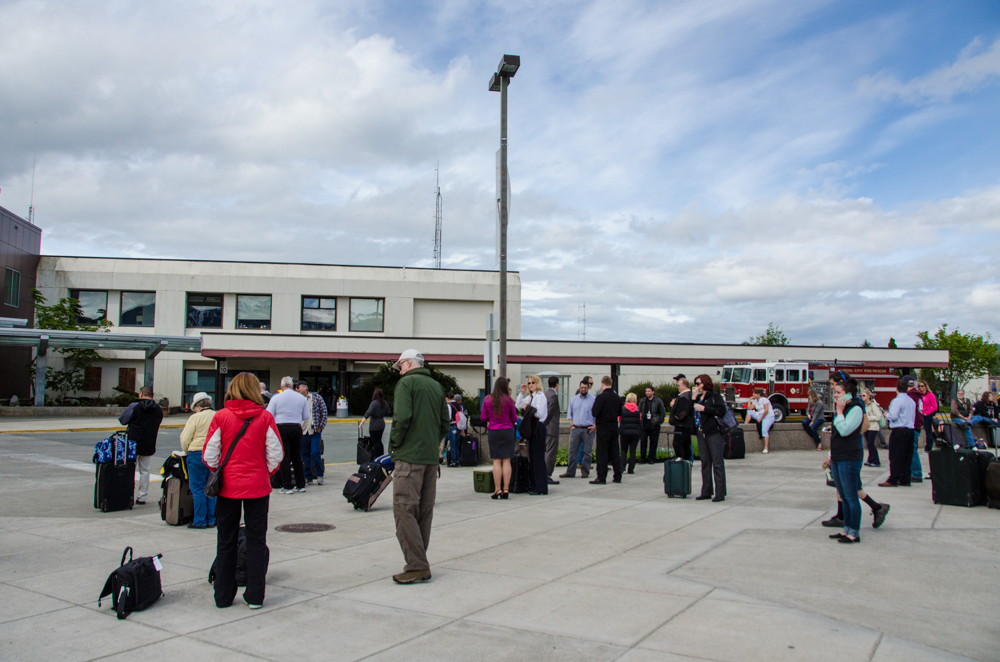
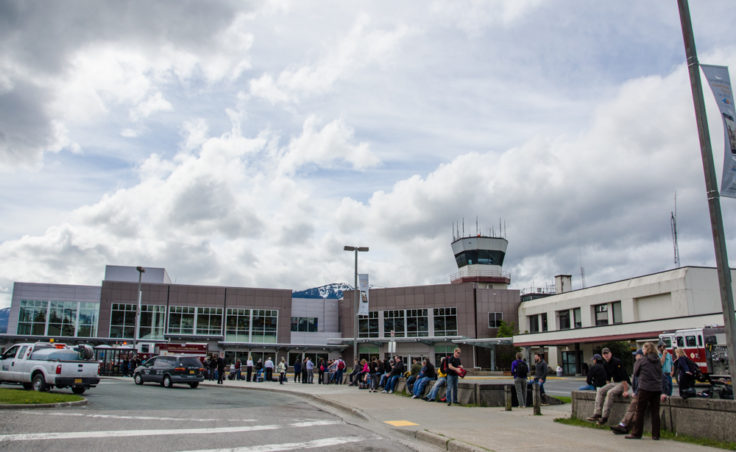
Approximately 100 passengers and employees were evacuated Monday morning when the smell of diesel fumes started to fill the Juneau International Airport terminal shortly after a power outage occurred in Mendenhall Valley.

Acting Airport Manager Patty deLaBruere said during the sweep, firefighters from Capital City Fire and Rescue  noticed an additional smokey smell toward the back of the building and continued to investigate.

“When the power went out at the airport and throughout the valley, one of the things we noted was that the generators were not coming on for the airport. And shortly thereafter there was a very strong burnt diesel smell throughout the terminal in very specific parts. Se we elected to evacuate the terminal based on that even when the power did come back up. While the fire department was doing a search, we had that diesel smell finally dissipate.”

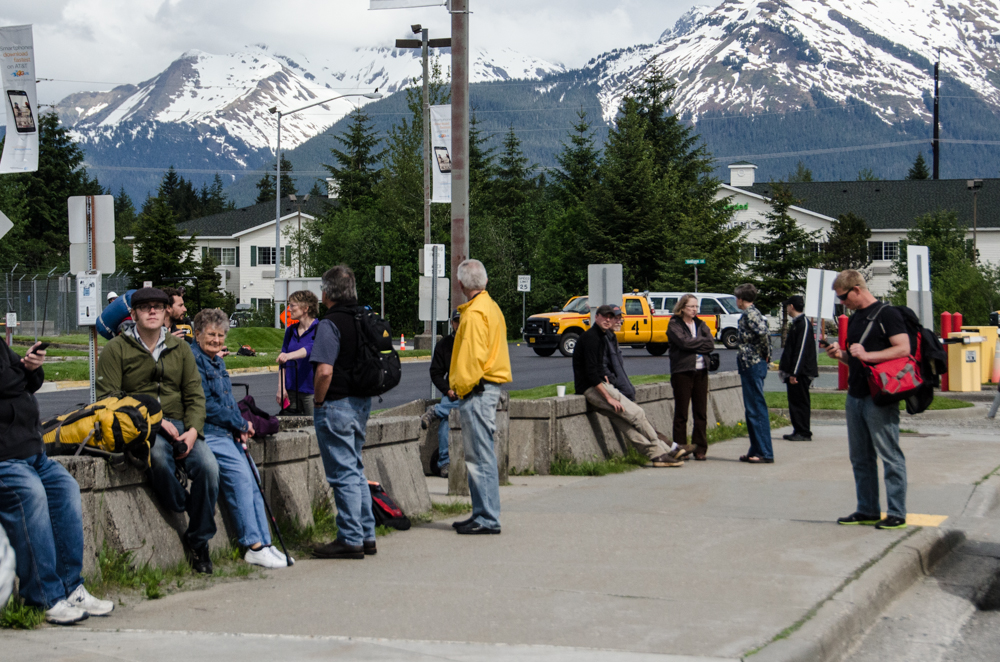
While passengers standing in the parking lot could see the ladder from the CCFR ladder truck moving around the airport tower, most passed the time on their cellphones.

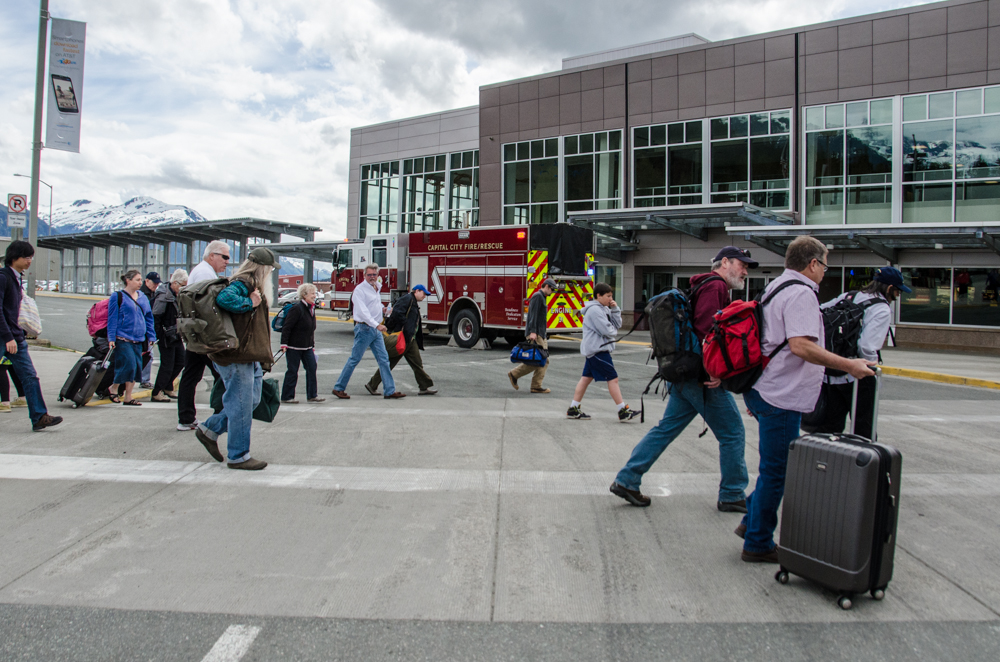
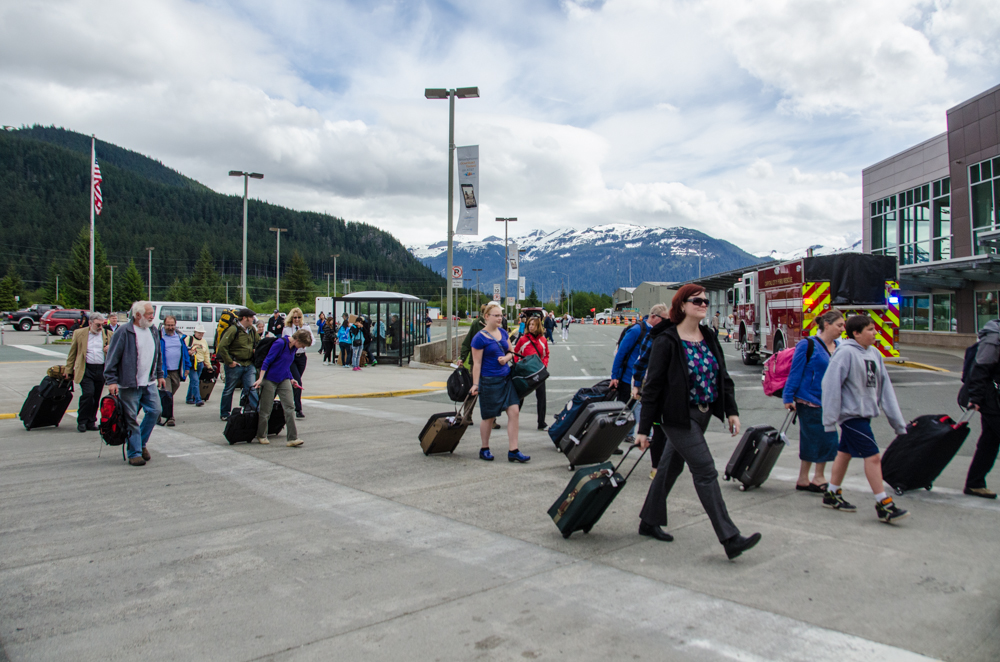
Employees were brought back in to the building to get computer equipment set up shortly after 11 a.m. Passengers  started wheeling in their luggage at 11:43 a.m.

deLaBruere said firefighters did not locate any fire in the building, but fumes in the back area of the boiler room may have been the cause of the burnt diesel smell.

“But they were fairly confident that it did dissipate out and that’s why they’ve given us the all clear. They have not found any other sources,” deLaBruere said as people were re-entering the terminal.

No flights were affected.

Original Story: June 3, 2013 – 11:59 a.m.
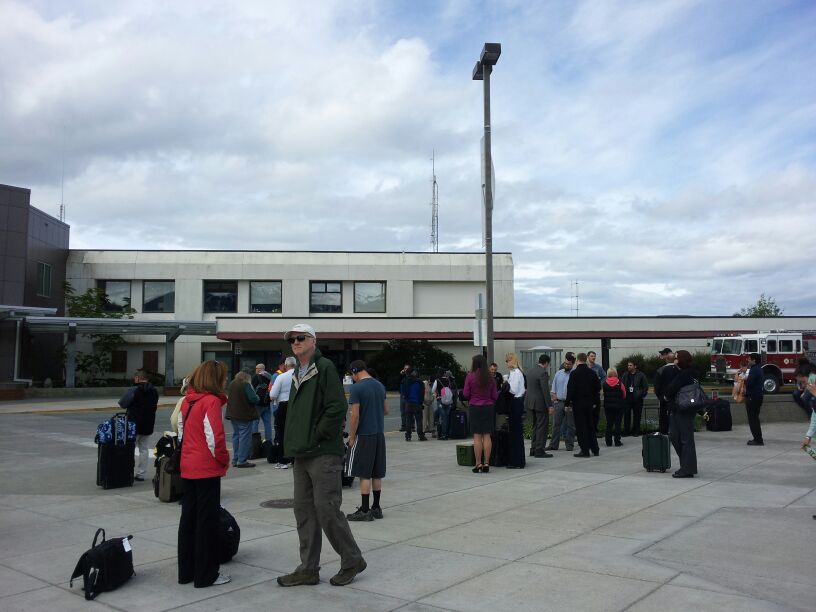
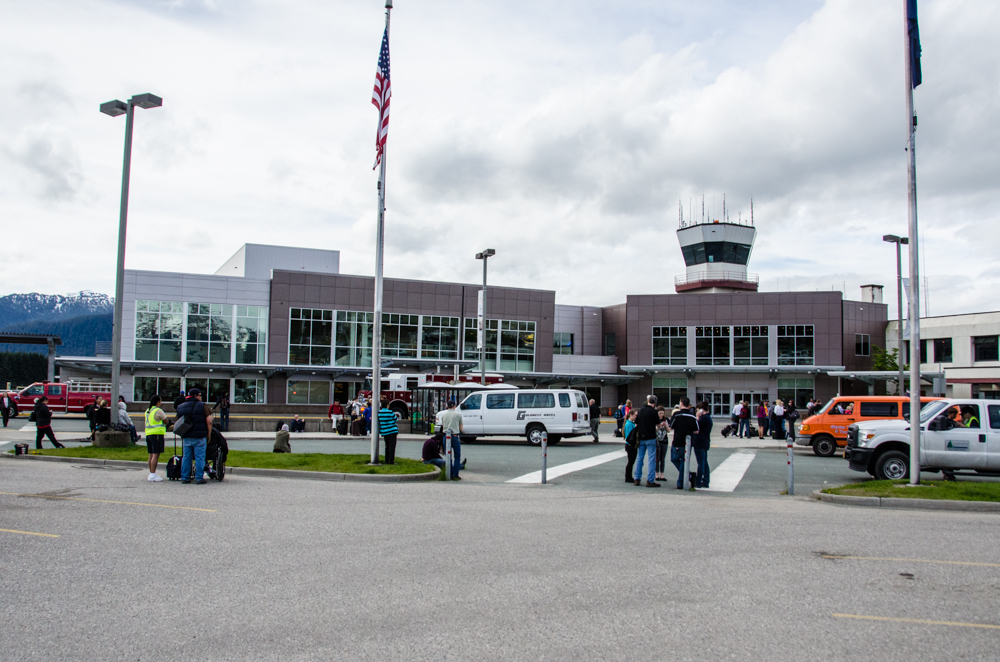
Passengers wait outside JIA for the all-clear. Photo by Heather Bryant/KTOO.

Juneau International Airport was evacuated this morning due to the smell of diesel and smoke in the building.

There was no smoke or fire; instead a power outage was the culprit. According to Acting Airport Manager Patty deLaBruere, once the power came back on, airport generators did not start, and burnt diesel could be smell throughout the building.

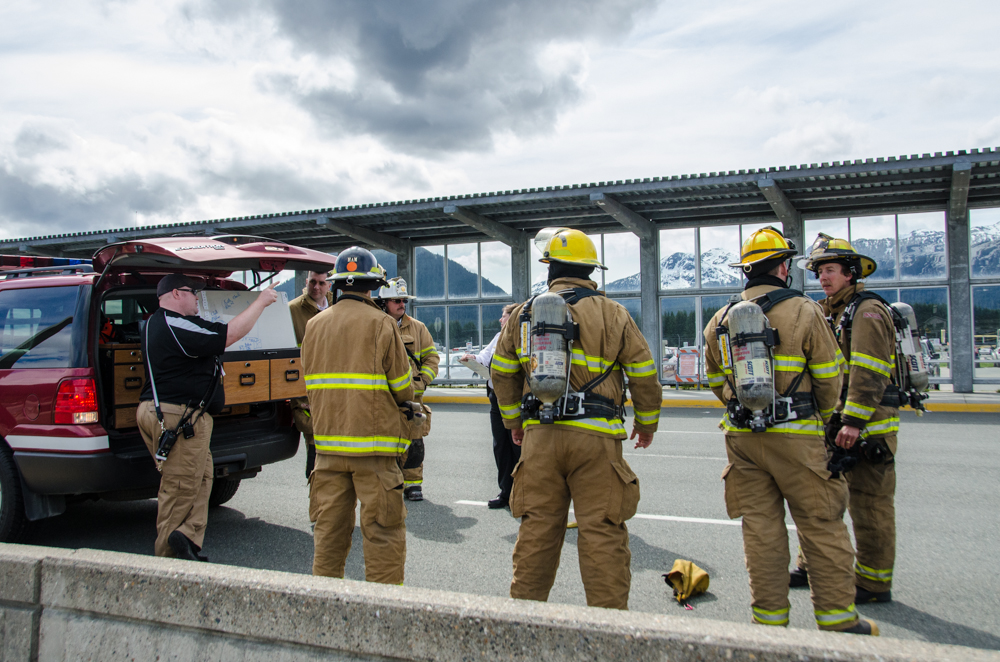
Firefighters arrived and so did KTOO reporter Heather Bryant.  She reports the airport was evacuated, with staff, passengers and luggage waiting outside while firefighters did a sweep, shortly before 11 a.m.

“When the firefighters began their sweep they started to notice another smoky type smell at the back of the building, so at this time they’re still sweeping the floors and the road  as well, trying to determine  the location of that smoke,” Bryant said from the airport.

 People were allowed back into the building about 11:45 a.m.  deLaBruere says the smell appears to have been caused by a buildup of fumes in the boiler room.

The power went out at 10:17 Monday morning, affecting a large area from Lemon Creek through the Mendenhall Valley and out Glacier Highway, according to Alaska Electric Light and Power spokeswoman Deb Ferriera.  She says an eagle lost his lunch.

“Essentially an eagle picked up some garbage from the landfill and flew over the transmission line and whatever it was holding in its talons came in contact with the transmission line, opening basically all the feeders from lemon Creek all the way out the road,” she says.

Ferriera says an AELP crew in a bucket truck cleared the line and power was restored by 11:02.

This story was updated with comments from Acting Airport Manager Patty deLaBruere.

Runners race to raise money for suicide prevention group

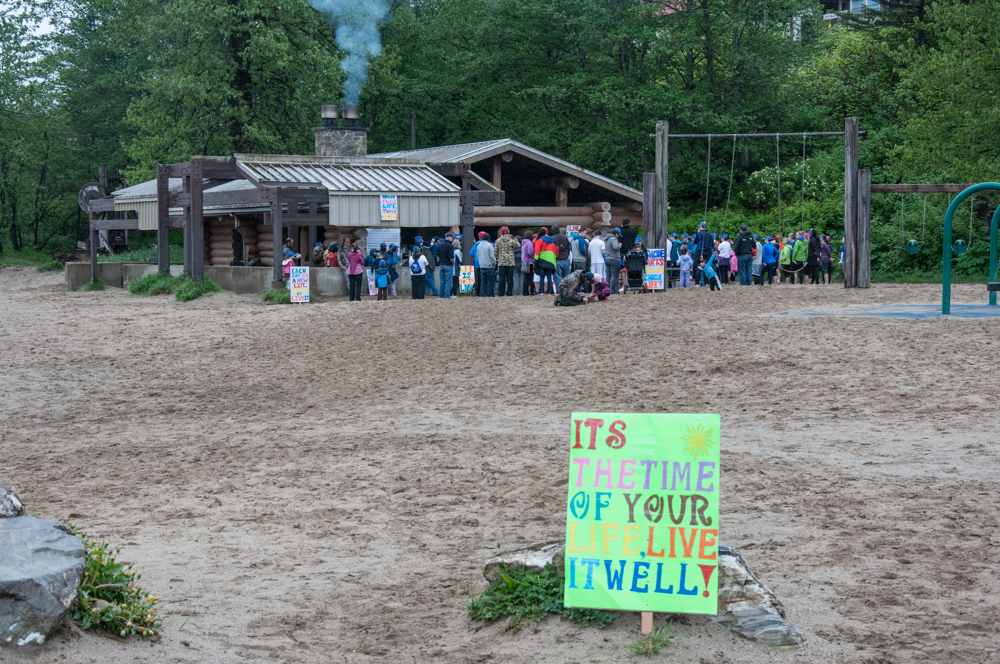
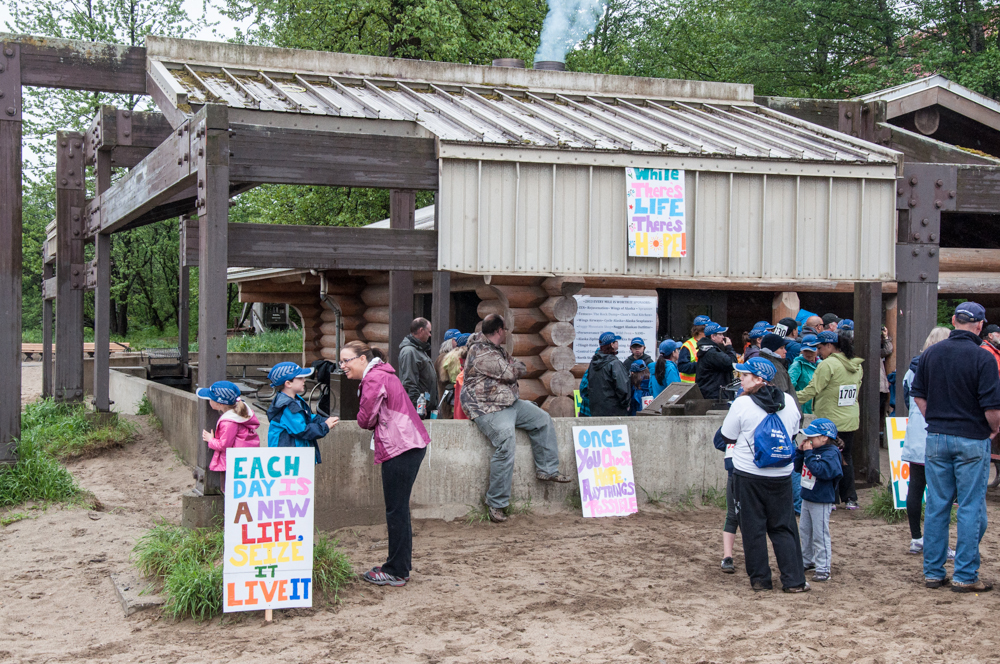
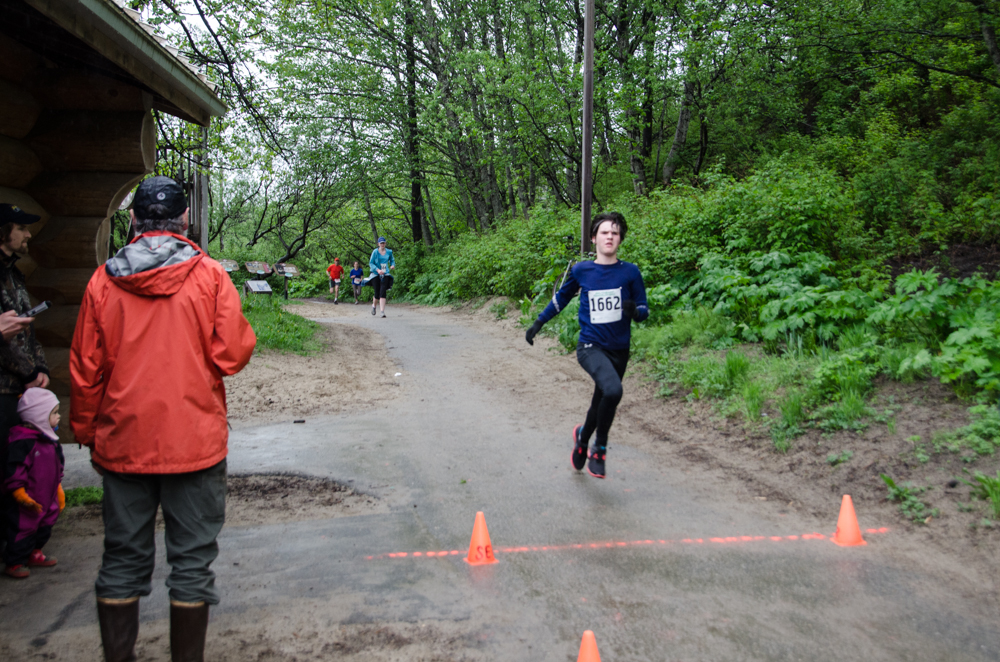
More than a 100 people gathered on Sandy Beach on Saturday for the Every Mile is Worth It Race. This was the third year for the 5k hosted by the South East Alaska Regional Health Consortium.

Megan Gregory is the community project coordinator with SEARHC. Gregory’s main job is working on suicide prevention projects. She says she likes planning events that focus on healthy living:

“I’m thinking it’s more important to focus on the good in life rather than pointing out the bad which is why I coordinate events like Every Mile is Worth It. Specifically at Sandy Beach on this course, because it reminds me of life. The course isn’t always easy, there’s going to be a lot of challenges along the way but there’s no better feeling than crossing the finish line.”

The 5k is a fundraiser for the Southeast Alaska Youth Ambassador Program which was founded by Gregory in 2010 who was volunteering with the One is Too Many task force.  Funds raised by the race entry fee pay for travel for youth from southeast communities to participate in meetings.

“It’s taken a while to get it off the ground and get kids engaged because when they hear suicide, you know with the stigma attached they automatically don’t want to be involved or they think ‘oh, that’s not a problem in my community,’ but we don’t want to wait for it to become an issue.”

The 5k race included both runners and walkers. Each racer had a red or black bib. Participants started the course in different directions depending on the color of their bib. The goal was that nobody knew for sure whether they were ahead or behind of someone else. Gregory says the race wasn’t about who won or lost, but just getting out there and doing it.


Juneau celebrates National Trails Day with a day at Outer Point Trail

Saturday was National Trails Day and Juneau celebrated the annual event with a volunteer day at the Outer Point Trail.

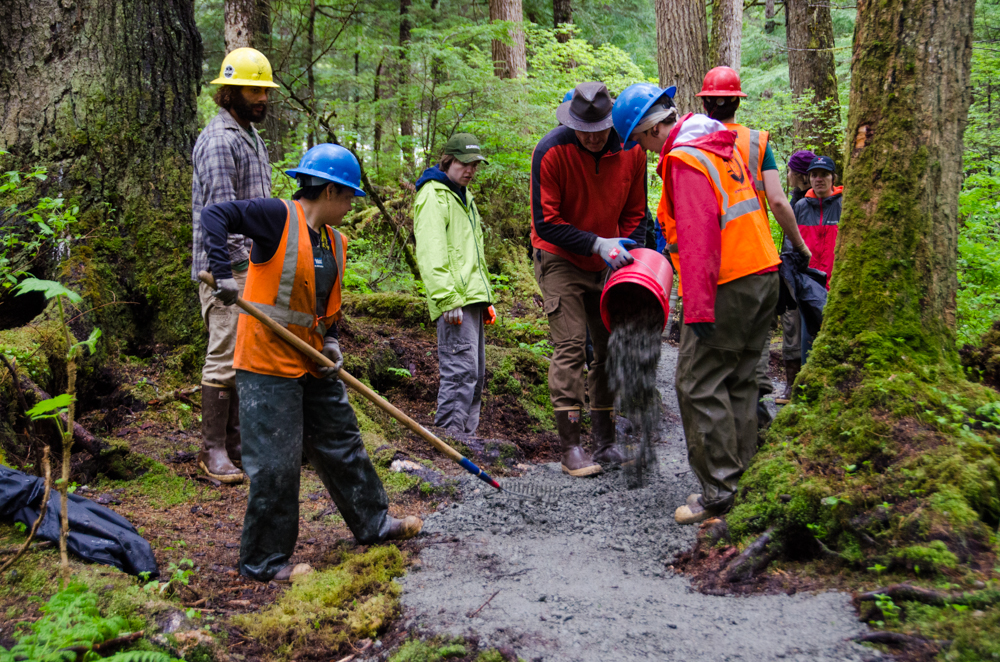
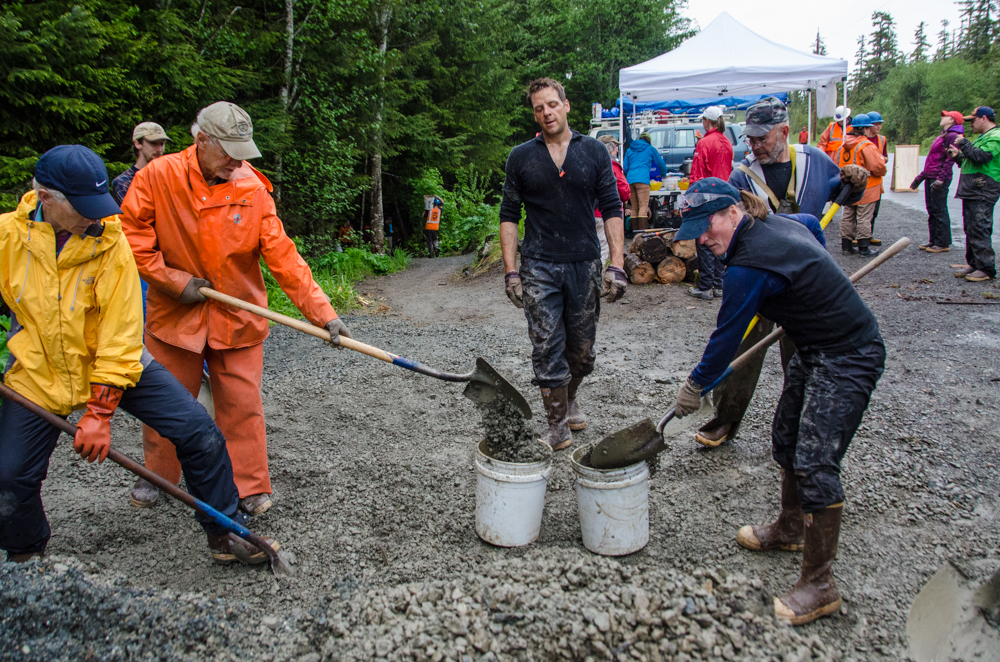
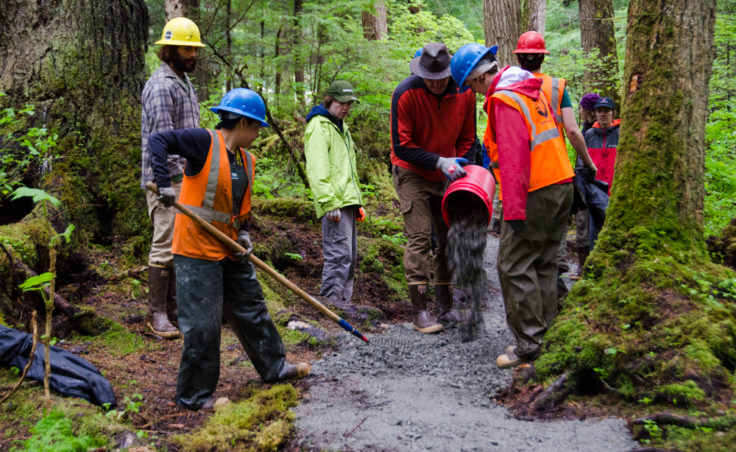
“We’ve had about 40 members of the public help out. They’ve been working on re-vegetating the sides of the trail, it gets pretty muddy, hauling out garbage, helping our crews move logs for a bridge we’re building. Everyone’s been out working hard,” says Erik Boraas, the executive director of Trail Mix.

“The Outer Point Trail–it’s a city project–and we’re working on it, making it wheelchair accessible down to the ocean because there’s no other place in Juneau that I can think of other than a boat ramp that you can get close to the ocean in a wheelchair.”

Trail Mix worked with Southeast Alaska Guidance Association, the Outdoor Recreation and Community Access program, State Parks and the Forest Service to coordinate work on the trail.

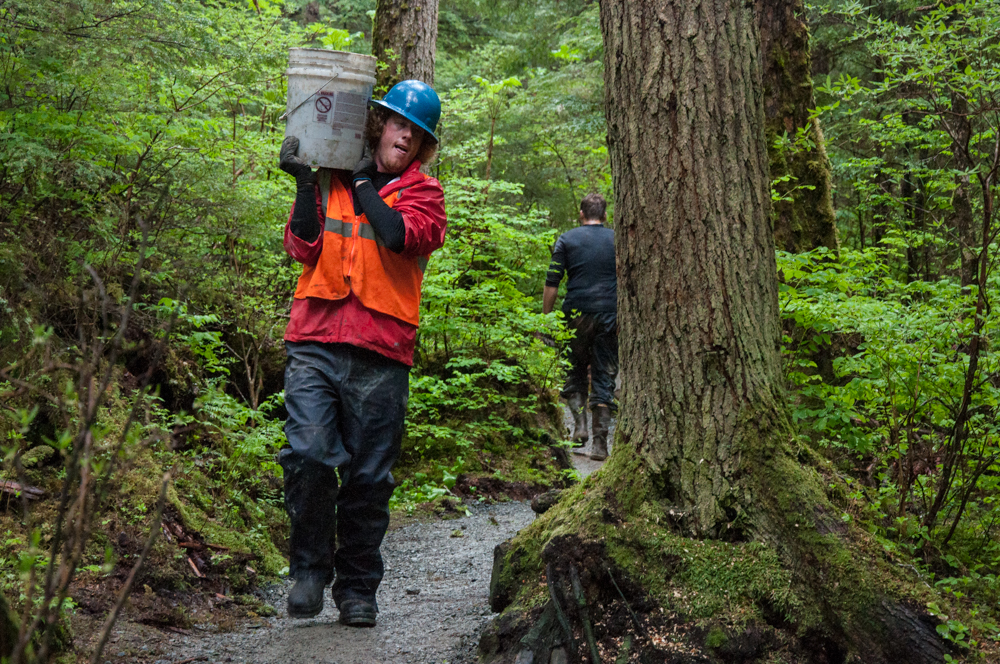
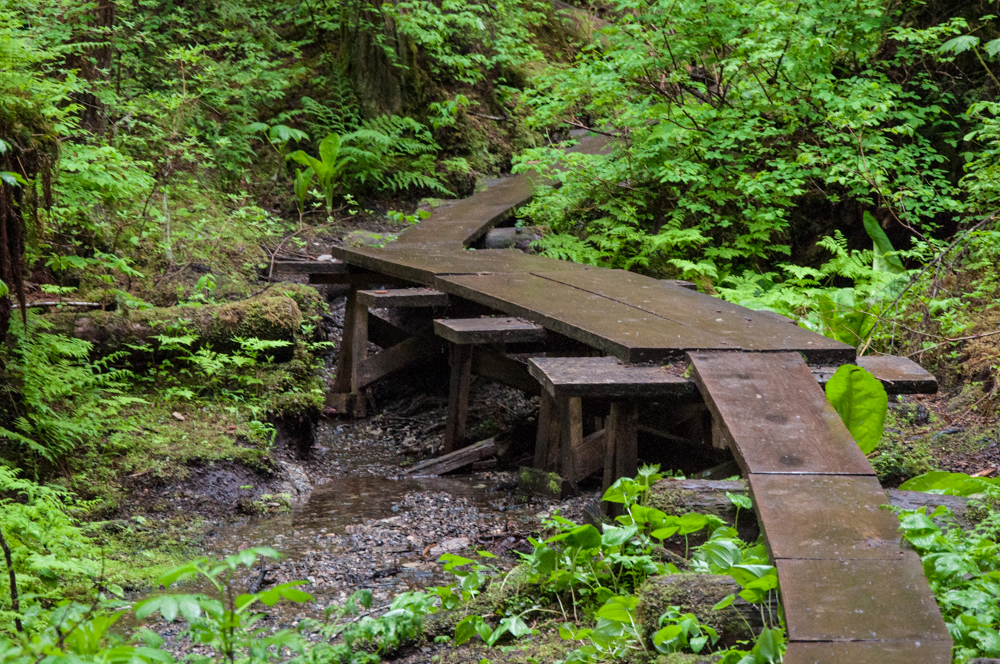
More than 40 volunteers spent hours replacing the trail’s slippery boardwalk with gravel—which had to be hand delivered one bucket at a time by volunteers. The new trail will be completely wheelchair accessible when it’s complete.

Trails wasn’t all about work though. In the afternoon, volunteers took a break for food and fun including guided tours and trail bingo for kids.


Parnell declares disaster for flooded interior communities

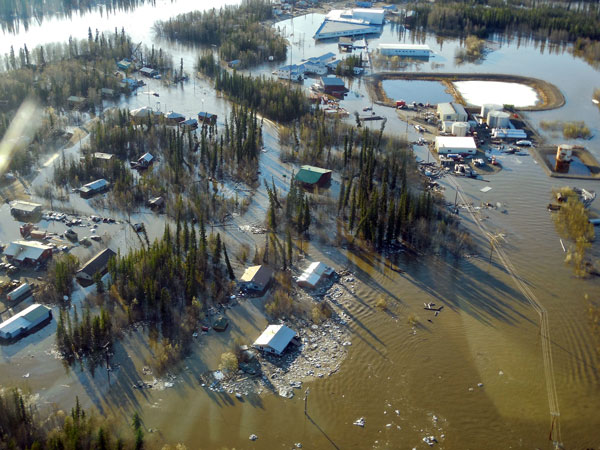
National Weather Service photo.

Gov.  Sean Parnell Friday issued a state disaster declaration for Galena and other communities affected by spring flooding.

It will activate at least $1 million in state disaster recovery funds.

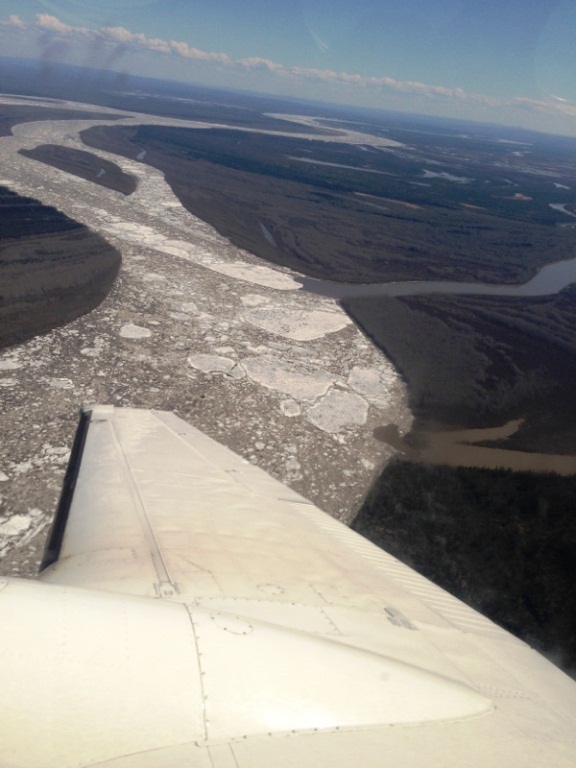
The hardest hit is Galena, where much of the community of nearly 500 was submerged by water earlier this week.  Many residents were evacuated after a 30-mile ice jam on the Yukon River caused the flooding.

Ice on the Kuskokwim River near Galena. May 28, 3013 photo by John Madden. Courtesy Alaska National Guard.

The jam broke Wednesday evening and the floodwaters have since receded, leaving behind chunks of ice, mud and a huge cleanup.

State emergency management spokesman Sam Hutchinson says responders are now switching to recovery mode.

About 130 people remain in the town at the Galena Interior Learning Academy, which is on the former Air Force station, and in the New Town/Crow Creek area.

According to the State Emergency Operations Center (SEOC), emergency response priorities are restoring essential services, including power, water, and sewer to the Air Force Station and Galena airport.  Food, water, sanitation items, and other essential supplies that have been flown into the airport are being relocated by helicopter to residents in the New Town/Crow Creek areas, which are currently inaccessible due to flood water, ice debris, road and bridge washouts.

Meanwhile, responders met today with Galena residents who evacuated earlier this week to Fairbanks, about 270 miles to the east. They represent the state emergency management division, Alaska Housing Finance Corporation and other state agencies as well as the American Red Cross, federal Bureau of Indian Affairs, and Tanana Chief Conference .

The Tanana Chiefs Conference is coordinating local resources for residents.


Athabascan Elder Katie John was ‘a role model for Alaska Natives’

Katie John
Katie John. (Photo by Chris Arend. Photo is owned by Ahtna, Incorporated.)

The Athabascan elder who was the lead plaintiff in a lawsuit that strengthened Native subsistence fishing rights in Alaska has died.

Katie John passed away early Friday morning at the Alaska Native Medical Center in Anchorage. She was 97-years-old.

The Athabascan elder who was the lead plaintiff in a lawsuit that strengthened Native subsistence fishing rights in Alaska has died.  Katie John passed away early Friday  morning at the Alaska Native Medical Center in Anchorage. She was 97 years old.

 John and the Mentasta Village Council sued the U.S. government in Federal Court in 1985 when the Alaska Board of Fisheries did not allow them to fish at an abandoned fish camp in an area which is now part of Wrangell-Saint Elias National Park.

 The suit claimed the federal government had unlawfully excluded subsistence fishing from the protections of the Alaska National Interest Lands Conservation Act. The judge ruled in John’s favor in 1994. The state of Alaska battled that ruling, but in early 2001, the 9th Circuit Court of Appeals upheld the ruling.

Later that year, then governor of Alaska Tony Knowles announced he would not fight the 9th Circuit decision before the US Supreme Court.  A delighted Katie John said the governor told her of his decision in person

“This morning he called me he said no more. You got everything. So I was so happy, I was pretty sick, too, this morning and the last couple of days I’ve been sick, I got a cold. So when he talked to me about the case, I was jumping around. [laughs] I forgot my sickness.”

 At the time, Knowles told the Alaska Public Radio Network that  he made his decision because the litigation was only widening the gap between urban and rural Alaskans

“I think anyone that would talk to Katie John and to look at what she does would believe that what she does is right. It’s not wrong, to provide for her family in the best way that she knows how is right for her, for her family and for thousands of other families from Metlakatla to Bethel to Noorvik. This is something the state must support. You know, we have to stop that losing legal strategy that we have pursued for ten years, and stop the permanent divide that it has threatened to cause among Alaskans.”

 Native American Rights Fund attorney Heather Kendall Miller, who represented John in court, says John continues to be a role model for Alaska Natives.

“She represents the Alaska Native determination to hold onto their way of life, that is intimately connected to the land and is a very rich and rewarding life that has become known as subsistence way of life. And she wanted to pass on the customs and traditions to her family and her children and her community. And that is what she spent her life doing.”

John received an honorary doctor of laws degree from the University of Alaska Fairbanks in 2011 for her advocacy of indigenous rights and her ongoing efforts as a teacher of culture and language. Dr. Jim Kari with the Alaska Native Language Center in Fairbanks, worked with Katie John on efforts to preserve Alaska Native languages by developing an alphabet of the Athna Athabascan dialect.

 “One memorable statement by Katie John is ‘everything I know, I keep in my head.’ Just this morning I spoke briefly with Chief Fred Ewan, who said this, ‘we lost the best woman we ever had.’ “

 John raised 14 children and six adopted children with her husband Mentasta Traditional Chief Fred John.

Family members have not released plans for a funeral yet.

Update:

A funeral service has been scheduled for late Athabascan elder Katie John.

John’s funeral will be held at 1 p.m. Saturday at her home village of Mentasta.

A visitation service is set for 2 p.m. Wednesday at the Anchorage Baptist Temple.

This story has been updated to include comments from people who knew Katie John.

Planning Commission OKs Soboleff Center permit

The Walter Soboleff Heritage Center will be built on this lot on the corner of Seward and Front streets, across from Sealaska Corp. Photo by Justin Heard/KTOO.

The Juneau Planning Commission has approved a Conditional Use Permit for the downtown Walter Soboleff Heritage Center.

It smooths the way for the 29-thousand square foot, three-story building, which will house Sealaska Heritage Institute offices and cultural, artistic and ceremonial spaces.  Sealaska still needs to get a city building permit.

The commission granted the Conditional Use Permit on Tuesday, placing conditions on lighting and fuel deliveries.  The proposed building will be heated by a pellet furnace, and commissioners said pellet deliveries must be limited to weekdays before 8 a.m., or Saturdays.

The Sealaska parking lot across Seward Street will be used as construction staging area.  The 46-space lot is reserved for Sealaska employees and other businesses during the day, but is open to the public at night.  CBJ Community Development Planner Beth McKibben says 18 parking spaces will be available during construction.

When the cultural center is complete, Sealaska plans to reconfigure the parking lot for 50 spaces to be used for the Soboleff Center.

Sealaska Heritage officials hope to break ground for the project this year.

Site notifications
Update notification options
Subscribe to notifications