Fisheries

Cotten nominated as Fish and Game commish

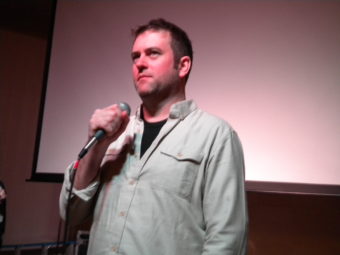
ADF&G acting Commissioner Sam Cotten answers questions during an interview before the Boards of Fisheries and Game in Juneau on Jan. 15, 2015. (Photo by Matt Miller/KTOO)
ADF&G acting Commissioner Sam Cotten answers questions during an interview before the Boards of Fisheries and Game in Juneau on Wednesday. (Photo by Matt Miller/KTOO)

Sam Cotten is the only name sent to Gov. Bill Walker as prospective commissioner of the Alaska Department of Fish & Game.

The former speaker of the House was interviewed for nearly 90 minutes during a joint meeting of the Boards of Fisheries and Game in Juneau on Wednesday morning.

Three others applied for the job — one even traveled to Juneau — but weren’t interviewed formally by board members.

Cotten, the department’s acting commissioner, was asked a series of questions that would’ve been asked of all four applicants had they been interviewed. He was quizzed on topics including recent staff changes to intensive management, the federal government’s intervention and pre-emption eroding state management jurisdiction, and his understanding of the sustained yield principle.

Cotten was also asked how much influence the administration should exert on fish and game policy and management, whether he would prioritize projects or personnel in advance of budget cuts, and how he would go about retaining department staff and boost their morale. He said he hoped to visit as many field offices as he could.

“I think that’s another show of respect to engage, understand what they do and understand their contributions,” Cotten said. “It’ll help me to do a better job as well.”

Cotten pledged more transparency, playing an active role as the public face of the department, and representing the administration during meetings of the Boards of Fish and Game and the North Pacific Fisheries Management Council.

Board members approved of Cotten’s sincerity and knowledge of Alaska resource management, and his background as a lawmaker, commercial fisherman, sport fisherman and sport hunter. They unanimously voted to send his name on to the governor for consideration.

Staff and members of the Board of Game listen to ADF&G acting Commissioner Sam Cotten in Juneau on Jan. 15, 2015. (Photo by Matt Miller/KTOO)
Staff and members of the Board of Game listen to ADF&G acting Commissioner Sam Cotten in Juneau on Wednesday. (Photo by Matt Miller/KTOO)

Board of Fisheries members participated in the meeting by teleconference. Board of Game members just wrapped up their regional meeting in Juneau on Tuesday, and most members stayed an extra day to meet and interview commissioner applicants.

In talking with reporters afterward, Cotten explained that federal funds may help soften the severity of budget cuts caused by low oil prices.

“All department are looking at a couple different levels,” Cotten said. “We’ve submitted a 5 percent and 8 percent reduction in general fund expenditures to the Office of Management and Budget. I think all departments have done that. We’re trying to figure to how best to deal with that. We have some opportunities with federal funds and with some other fish and game funds.”

And, of course, the legislature has their own shot at making potential cuts to the ADF&G budget. Cotten previously told members of the Boards of Fisheries and Game that they would likely leave some vacancies unfilled and limit travel by department staff.

Cotten, who was born in Juneau and lives in Eagle River, says he’ll remain in the capital city during the legislative session, but wasn’t sure about the rest of the year since he has two homes elsewhere.

Three other men applied for the job but weren’t interviewed. They included Zachary Hill, a post-doctoral fellow in chemistry at the University of California San Francisco, and Matt Moore, owner of a medical consulting firm in Anchorage.

Board members felt those two men lacked the required experience in fish and game management.

Roland Maw & Sam Cotten
Roland Maw (left) and Sam Cotten (right) wait to be called for their interview before a joint meeting of the Boards of Fisheries and Game on Wednesday. (Photo by Matt Miller/KTOO)

Roland Maw, director of the United Cook Inlet Drift Association in Soldotna, also applied for the commissioner’s position. Board of Game members were very interested in what Maw had to say. But Board of Fisheries members didn’t want to listen, and they unanimously voted against interviewing him. Maw said he wasn’t totally surprised.

“As an employee, we all have charges and jobs to do,” Maw said afterward. “And that has run a bit counter to some of the members of the board. I have my own value system that would tell me to pay attention to the resource. Not that they don’t. But the level of that attention is different between us.”

A fifth candidate, Greg Woods, a trucking and railroad terminal manager in South Carolina, recently withdrew his application.

If Cotten’s name is submitted as commissioner, his appointment is subject to a confirmation vote by a majority vote of lawmakers during a joint session, likely in April.

The Department of Fish and Game’s $215 million budget for the current fiscal year included a mix of state general funds, federal funds and receipts. According to department figures, there are 1,683 employees ranging from nonpermanent and seasonal workers to permanent full-time employees.

Swanton appointed deputy commissioner of Fish and Game

Charles Swanton is the new deputy commissioner for the Alaska Department of Fish and Game, a position most recently held by Stefanie Moreland.

Swanton joined the department in 1981 and has been the director of the Division of Sport Fish for seven years.

Acting Commissioner Sam Cotten says Swanton will lead the department on Pacific salmon issues. He was nominated by Gov. Bill Walker to the Pacific Salmon Commission, a joint US and Canadian panel that manages salmon fisheries on the west coast. Swanton started his new job on Friday and is now in Vancouver, British Columbia at a commission meeting.

Swanton has Bachelor of Science degrees in biology and fisheries science from the University of Alaska Fairbanks, and a Master of Science degree from the University of Washington. He lives in Juneau.

Deputy Sport Fish Director Thomas Brookover has been named acting director of the division.

Aleutian Islands nominated as National Marine Sanctuary

The proposed sanctuary would cover more than 730,000 square miles of federal waters. (Courtesy of Rick Steiner)

The waters around the Aleutian Islands support a dizzying range of wildlife — and major industries right along with it. Right now, the government’s job is to help find a balance.

But there’s a new campaign to permanently tip the scales toward conservation in the Aleutian Chain.

Since Congress started the national marine sanctuary program in the 1970s, only a handful of sites have gotten protection.

A lot of those are in the Pacific — including the biggest reserve in the United States. But according to Rick Steiner, it was pretty quiet to begin with.

“There’s no one living there,” Steiner says. “There’s not a lot of shipping in the area. There’s virtually no commercial fishing. So the threats in that area are nowhere near what they are in the Aleutians and the southeastern Bering Sea.”

That’s the zone that Steiner and other marine conservationists want to turn into a federal sanctuary.

They’ve nominated a swath that stretches all the way to Nunivak Island near Bethel. It’s almost twice as big as the country’s largest reserve — even after President Barack Obama expanded it this year.

But Steiner says the exact size is negotiable. What matters is that the administration seems to be looking for a way to leave a mark.

“If the White House really wants to roll up its sleeves and get bold about ocean conservation — which it pretends it wants to — then we need to see it,” Steiner says. “And the place to start and the time to start is right now in the Aleutian Islands.”

If it’s accepted, the National Oceanic and Atmospheric Administration could make new rules to protect the Aleutian ecosystem. And that could lead to tougher limits on fishing and other big industries.

Steiner says cargo ships should be sent further offshore, to prevent the risk of accidents and spills. And he also wants the agency to put the brakes on oil and gas leasing along the entire Aleutian Chain — including the Bristol Bay area.

That’s where the president recently banned lease sales. But Steiner says it’s not airtight.

“Congress could easily undo that by putting a bitter pill in a must-sign bill or a future administration could undo it,” Steiner says. “So we want that put to bed permanently.”

The same goes for a long-running conservation battle in the Aleutian Islands over an endangered population of Steller sea lions.

Federal biologists, fishing companies, and environmental groups have spent more than 15 years fighting over the best way to protect sea lions. For a while, that meant shutting down commercial fishing. But new studies showed that it probably wouldn’t hurt to relax some of those restrictions. The change went into effect the day after Christmas.

Michael LeVine has been handling the case for Oceana.

“Rather than implementing protections and removing them and fighting about their sufficiency, we need a long-term plan for this region and a commitment to maintaining the health and biodiversity of this ocean ecosystem over the long term,” LeVine says.

While LeVine works on yet another lawsuit, the sanctuary advocates want the government to try a different approach.

They’re asking NOAA to bring back the old restrictions on commercial fishing for good. And they want a new ban on bottom trawling past a certain point in the Aleutian Chain.

That’s a sticking point for Stephanie Madsen, who represents vessels in the At-Sea Processors Association. She says they’re well-suited to rough Aleutian waters.

But Madsen has deeper concerns about the sanctuary proposal as a former member of the North Pacific Fishery Management Council.

“You know, who actually gets to design fishing restrictions in a marine sanctuary?” Madsen asks. “Where [do] the jurisdictional boundaries go? Who’s on first?”

The answer to that question could be a long way off.

NOAA still has to conduct a preliminary review to figure out whether the Aleutians are eligible to become a sanctuary. That wouldn’t happen without extensive studies — and plenty of time for public hearings and public comment.

Major investor backs out of Tulsequah Chief Mine project

Tulsequah Mine
The Tulsequah Mine sits above the Tulsequah River which flows into the Taku River, which flows out south of Juneau. (Photo courtesy Chieftain Metals)

The company trying to re-open the controversial Tulsequah Chief Mine in British Columbia announced a setback this week, as a big investor is pulling out of the project.

Chieftain Metals Corp. says in a press release that it will use a bridge loan to repay a $10 million advance from Denver-based Royal Gold. The Canadian mining company had been counting on another $45 million from Royal Gold to develop the mine, according to a July agreement that Royal Gold has now scrapped.

The Tulsequah is one of five proposed mining projects near Canada’s border with Southeast Alaska that have residents and fishermen on both sides of the border worried. Last operated by Cominco in the 1950s, the Tulsequah is located about 40 miles up the Taku River, south of Juneau. Chieftain Metals is proposing to move supplies into the Tulsequah — and transport minerals out — by barging them on the Taku.

The enormous KSM project won environmental approval from the Canadian federal government last week.

Dungy crab bring $15 million at the docks

Dungeness crab. (Creative Commons Photo by Andy Clordia)

Commercial crabbers this fall added another one million pounds of Dungeness crab to a better than average season.

While a few areas still remain open to commercial Dungeness fishing, the majority of region closed on November 30. Compared to historical numbers, this year has been a good one.

Joe Stratman is the State’s Lead Crab Biologist for Region 1 which includes Southeast Alaska.

“This total full season harvest thus far is above the ten year full season average,” Stratman says.

The numbers break down like this: Through November 30, the fall harvest is 975,000 pounds. That is a little less than last fall’s harvest which came in just over one million pounds but it is still better than the 10 year average.

When added to this year’s summer harvest for Dungeness, the total comes to just over 5.04 million pounds. That is well above the 10 year average for total season harvest which is 3.78 million pounds.

137 permit holders reported landings in the fall fishery.

Stratman says that there were areas that stuck out as having higher catches this fall.

“District 6 which includes places like Duncan Canal, Wrangell Narrows, portions of Sumner Straight had the largest harvest this fall at 168,000 pounds,” Stratman says. “This district alone comprised 17 percent of the total fall harvest.”

In terms of effort, fishermen in District 8, which includes the Stikine flats led with 29 permits recording landings there during the fall season.

This year, prices for Dungeness crab were consistent throughout the summer and fall. The summer prices averaged nearly three dollars per pound and the fall was just three cents less. Both were much greater than last fall’s price of $2.49 a pound.

Fishermen made nearly $15 million at the docks so far this year.

Commercial harvest information is how the state keeps track of how the Dungeness fishery is doing.

“All of the data sources that we have are fishery dependent,” Stratman says. “We have harvest tickets and port sampling data.”

So far, the fall season produced 19 percent of the total Dungeness harvest this year. The ten year average for the fall-winter season is about 25 percent. That could still be reached when the last of the winter numbers come in.

Portions of Region 1 remain open to winter commercial fishing. That includes Districts one and two near Ketchikan and Prince of Wales Island and part of Section 13-B near Sitka. Those areas will remain open until February 28.

Obama makes Bristol Bay off-limits for oil, gas development

President Obama delivers his State of the Union address to a joint session of Congress on Tuesday. Obama discussed a range of topics including education, income inequality, climate change and immigration reform. Larry Downing/Pool/Getty Images
President Obama delivers his State of the Union address to a joint session of Congress in January. Larry Downing/Pool/Getty Images

President Obama today extended an executive action that puts Bristol Bay off-limits to oil and gas development.

“This withdrawal prevents consideration of this area for any oil or gas leasing for purposes of exploration, development or production,” Obama explained in a video the White House posted on YouTube.

From his desk in the Oval Office, he went on to extol the purity of Bristol Bay.

“It supplies America with 40 percent of its wild-caught seafood. It is a beautiful, natural wonder. And it’s something too precious for us to be just putting out to the highest bidder,” Obama said.


(Video courtesy whitehouse.gov)

Bristol Bay was already protected under an executive withdrawal. Obama signed one in 2010 that was due to expire in 2017. The new measure extends that indefinitely.

Dillingham resident Robin Samuelsen, who has fished the bay for decades, could hardly believe the news.

“Well, I had to watch the president’s video on the Internet about five times. I’m elated. Bristol Bay needs protection. We have a phenomenal, world-class fishery for salmon here,” he said.

The White House press release says the action honors the legacy of Harvey Samuelsen. who fought to protect the Bay from drilling for years. Robin Samuelsen says that was his dad.

“My father passed away about 10 years ago,” Samuelsen said. “But you know it’s a clear day here in Dillingham and I’m looking up at the sky and I can see him smiling.”

Sen. Lisa Murkowski says she doesn’t object to the president’s decision. But in a written statement she shows no enthusiasm for it. She says the industry lacks interest in the area anyway, and she questions why the president is making the announcement now rather than with the release of his regular five-year plan for off-shore leasing. She says everyone agrees on the area’s value for fishing, but she takes issue with Obama’s perspective.

“It is incredibly frustrating that this administration looks at Alaska – with oil production at a fraction of the level it could be at, and with low oil prices about to force steep across-the-board budget cuts – and decides that conservation is our most pressing need,” she said in her press release. “We are not asking to produce everywhere – but right now, we are not being allowed to produce anywhere.”

Samuelsen and other fishermen say Bristol Bay certainly needs the protection. The federal government has repeatedly removed barriers to oil and gas leasing in the bay, and in the ‘80s actually held a lease sale. Later, after the Exxon Valdez oil spill, the government spent more than $100 million to buy back those leases. Dillingham fisherman Katherine Carscallen, who is also engaged in the fight to stop the region’s proposed Pebble Mine, says Obama’s action is significant, even though a future president can reverse it.

“It’s going to be a huge and hopefully an unacceptable lift for another president to turn those protections around and take them away and say ‘Bristol Bay isn’t worth protecting,'” she said. “So it definitely doesn’t take away from today, but it also means we’ll never be done working on this.”

Sen. Mark Begich issued a statement commending the president’s decision.

Editor’s Note: This story has been updated to include reaction from Bristol Bay residents and Alaska’s Congressional delegation.

Site notifications
Update notification options
Subscribe to notifications