Fisheries

Study: Climate change hurting salmon habitat

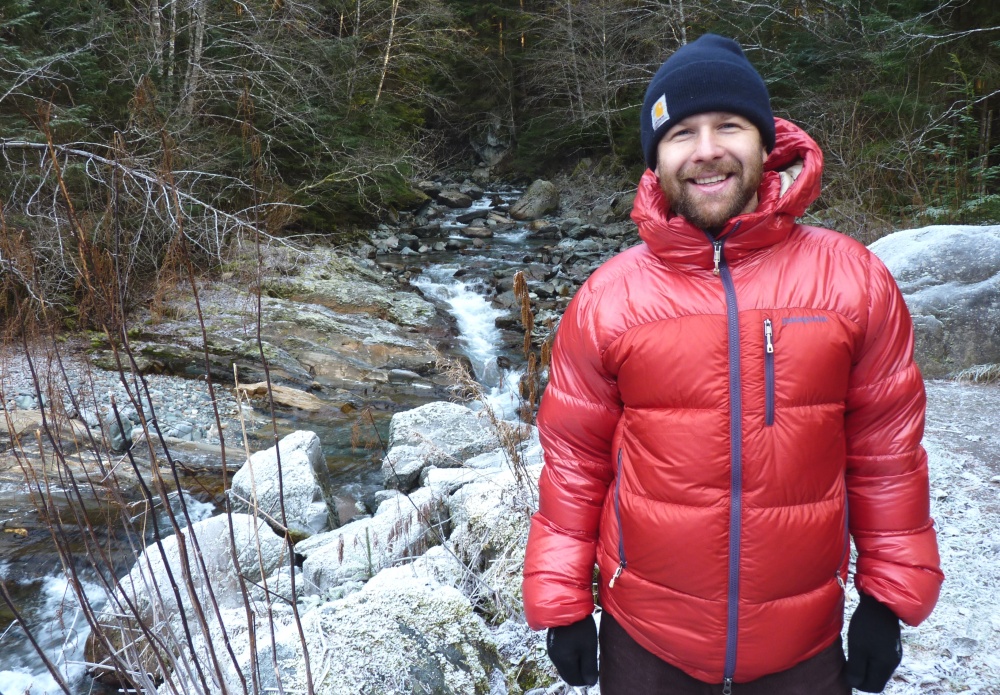
Nature Conservancy scientist Colin Shanley talks about research on climate change impacts to Southeast salmon habitat. (Ed Schoenfeld, CoastAlaska News)
Nature Conservancy scientist Colin Shanley talks about research on climate change impacts to Southeast salmon habitat. (Photo by Ed Schoenfeld/CoastAlaska News)

Scientists know climate change is altering rain and snowfall patterns in Southeast Alaska’s Tongass National Forest. A new study details how that could affect salmon and suggests what can be done.

“Global climate change may become one of the most pressing challenges to Pacific Salmon conservation and management for Southeast Alaska in the 21st Century.”

That’s the opening statement in a report released earlier this year by The Nature Conservancy scientists Colin Shanley and David Albert.

Standing next to a fast-running Juneau creek, Shanley says the research began by examining about a half-century of Southeast stream-gauge measurements.

“By doing that we can figure out how historical patterns of temperature and precipitation affected our current stream discharges and things important to salmon,” he says.

The researchers looked at how warming temperatures and changing rain and snow patterns have, and will, affect the sources of streams.
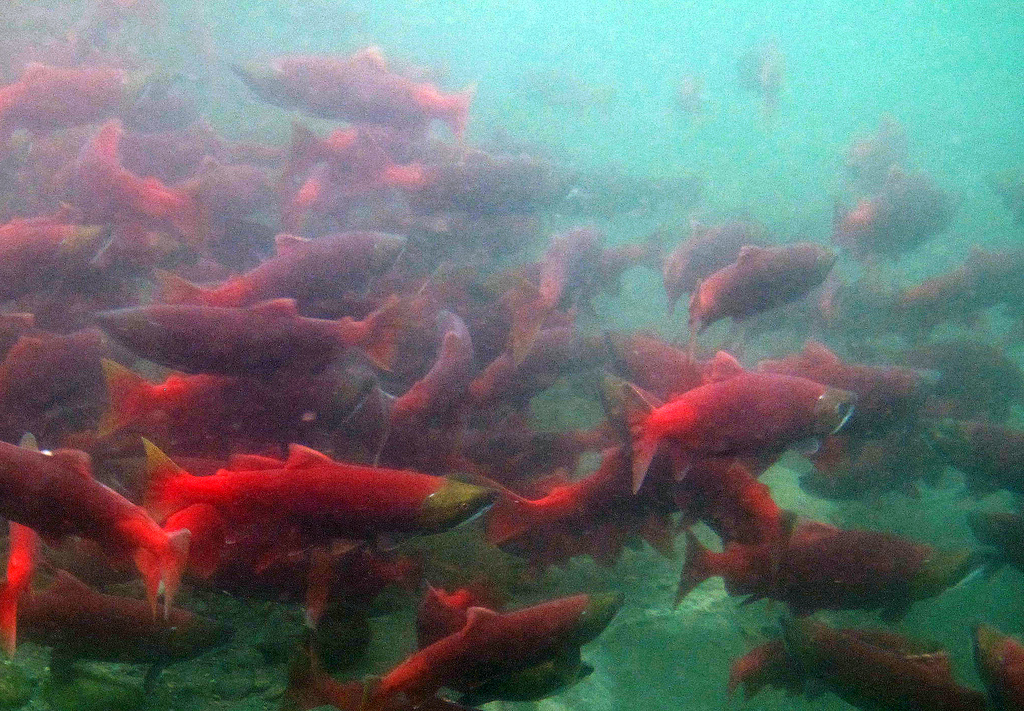
Sockeye salmon. (Photo courtesy U.S. Fish and Wildlife Service)
A new report says salmon, including sockeye, shown here, could have habitat disrupted by new rainfall and snow patterns caused by climate change. (Photo courtesy U.S. Fish and Wildlife Service)

“Those watersheds that are generally fed by deep snowpack in the mountains might see fluctuations in their snowpack. And that in turn affects how much water is in the river throughout the rest of the next summer,” Shanley says.

One threat is flooding during the spawning and incubation period. The study projects that will happen more often during key times.

“When the salmon run up the river in the fall, they’re laying their eggs in the gravel and leaving them there, hoping that they’ll hatch. And some of these high-water events, where you get rain on snow, are going to cause more flooding events, or that’s what we predict. So certain streams are more susceptible to scour and loss of salmon eggs,” Shanley says.

In other places, streams may have less water and flow slower.

That’s already happened in parts of central and southern Southeast, killing fish.

“For the salmon streams that are really reliant on a more consistent rain to maintain adequate flows, you’re seeing water temperatures exceed what salmon can really tolerate,” he says.

Shanley says some of those scenarios can be addressed.

The study recommends restoring or improving damaged streams and rivers. That includes more of the restoration work already being done, including adding trees and stumps.

“The wood in the water slows down the water, so that can help with higher water. … That’ll get cooler and then they (salmon) can hide from predators and direct sunlight,” he says.

Shanley says fixing culverts and reconnecting diverted streams to wetlands would also help. That’s also been done, but he says more is needed.

He adds other change will come without human assistance.

“What we imagine happening is kind of a shifting in productivity of streams in Southeast Alaska. Because there is a great variety of streams in terms of mountainous headwaters and glaciated headwaters and low-elevation floodplains that were really set up to be pretty resilient,” he says.

Changes in watersheds could affect other plants and animals, as well as community drinking water supplies. That’s been predicted for a while.

But Shanley says it’s not all bad.

“This is not a doom-and-gloom outlook. This is really just us just getting smarter about how climate change may play out and how it might affect resources that are valuable to us,” he says.

The two-year study was published in the Public Library of Science-One, an international, peer-reviewed, online publication. It cost about $90,000, with grants from the Alaska Sustainable Salmon Fund and the Gordon and Betty Moore Foundation.

The Nature Conservancy is an international conservation organization. Other regional projects include Tongass National Forest restoration projects and small business development.
Congress gives fishermen 3-year reprieve from EPA regs

Both houses of Congress on Wednesday passed a Coast Guard bill that includes a three-year moratorium on vessel discharge regulations for boats 79 feet and smaller. The bill now goes to the president’s desk for his signature. If the moratorium hadn’t passed, Alaska’s fishing fleet would have had to comply with new regulations the industry claims are unworkable.

Sen. Barbara Boxer’s bill would’ve lifted the small vessel discharge regulations entirely, but the California Democrat said she had to settle for a three-year reprieve.

“It’s the best we can do. And I want the American people and the fishermen to know we tried so hard to get this fixed permanently,” Boxer said, speaking from the Senate floor.

Republican Sen. David Vitter from Louisiana offered the three-year fix the Senate passed. He didn’t explain why that was preferable to permanently lifting the regulation for fishing boats and other commercial vessels. Sen. Boxer alleges lawmakers aim to use the measure as future leverage.

“I don’t really think they’re objections to the permanency,” Boxer said. “They’re political objections, to try to use this to get some other bad stuff attached to it!”

In Congress, the small vessel discharge regulations have been politically linked to rules for ship ballast water. Boxer has insisted on strict rules for ballast water, which can transfer non-native, invasive species from one port to another.

Sen. Lisa Murkowski says the discharge regulations would affect thousands of Alaska’s commercial fishermen. Murkowski says she’ll work for a permanent fix when the new Congress convenes in January.

“We don’t need to inject this uncertainty of our hard-working fishing families. We need to have a permanent solution,” she said.

Murkowski says it will require addressing the ballast water problem, too.


Koreans send aircraft, vessel for Bering Sea search

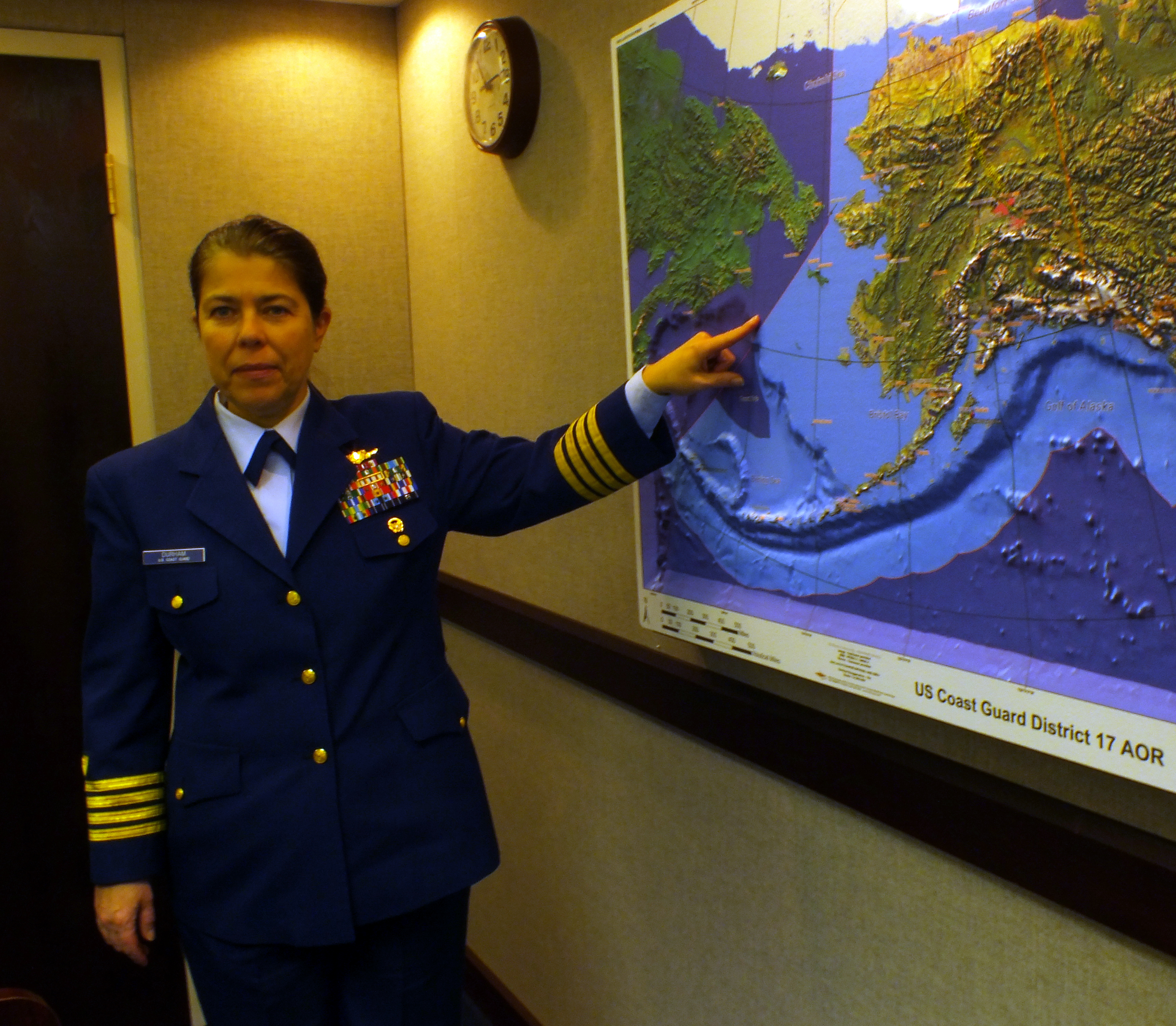
The U.S. Coast Guard will continue helping look for the crew of a Korean fishing boat that sank in the Bering Sea, although Korean rescuers are increasing their role in the search.

Sixty crewmembers were reported on board the Oryong 501 when it sank about 95 miles off Chukotka’s Cape Navarin on Nov. 30. Seven crew were rescued by nearby Russian fishing vessels and survived the sinking. A total of 27 bodies have been recovered and 26 crewmembers are still missing.

Once the vessel’s emergency beacon was activated, the Coast Guard said they immediately flew C-130 aircraft out of Kodiak and dispatched two cutters to the site in international waters.

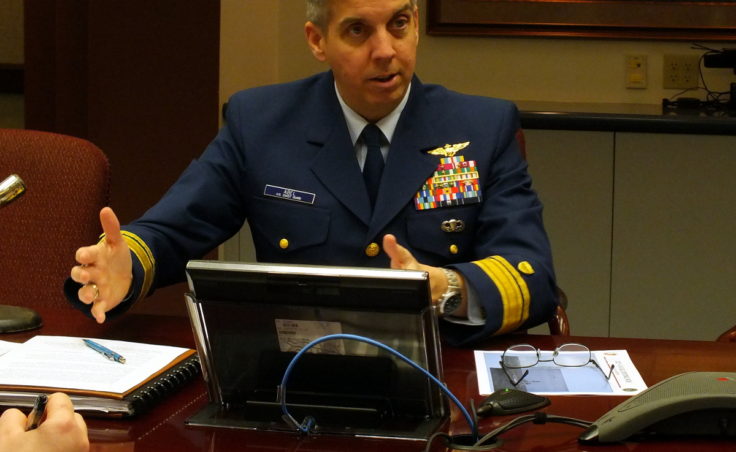
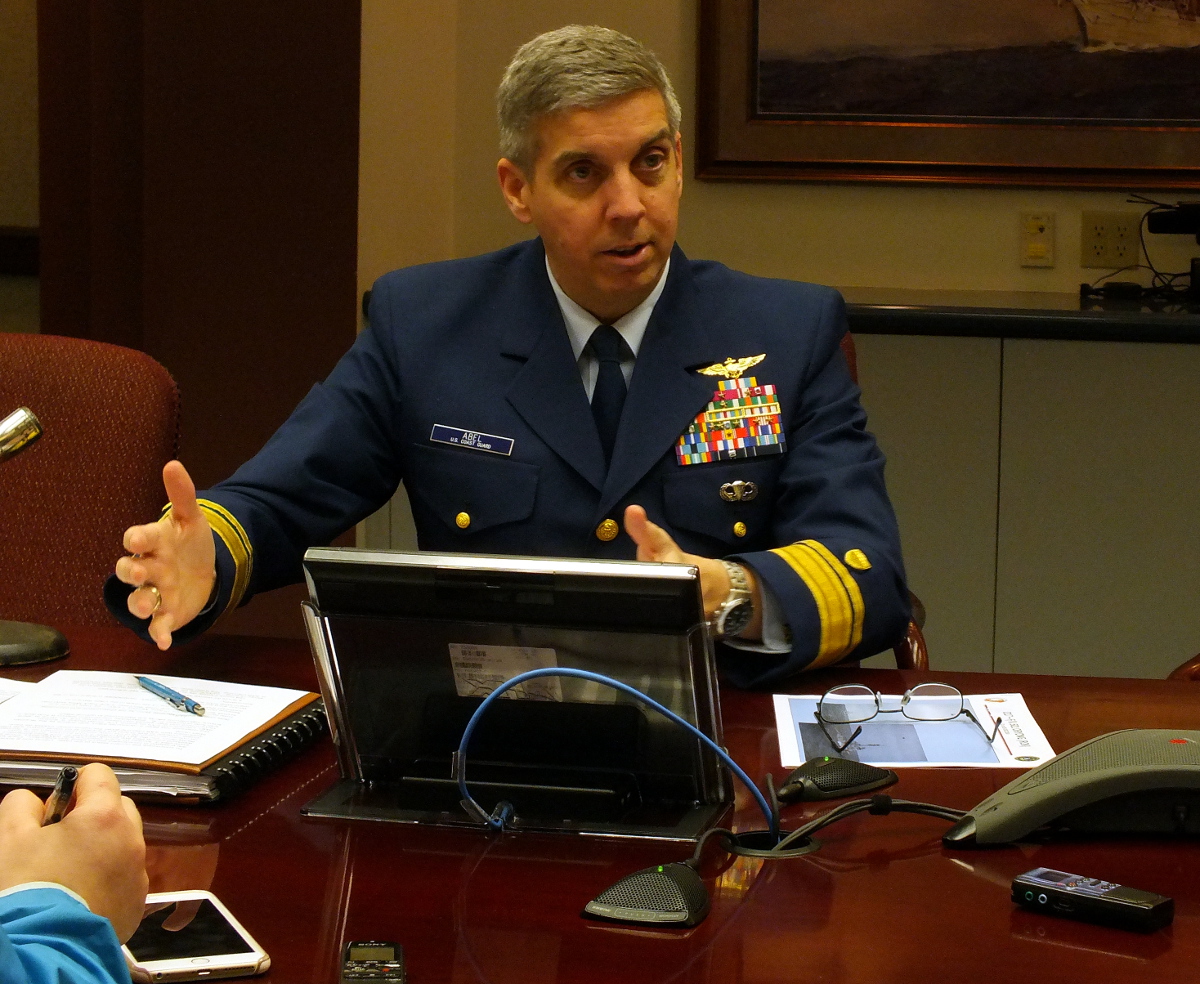
“The sympathies of the Coast Guard go out to those impacted by this tragedy,” said Rear Adm. Daniel Abel, head of the Coast Guard’s 17th District. “To the families of those known to have perished, we certainly grieve with them.”

Abel said the cutter Alex Haley will resume the search this week. Two Korean P-3 Orion maritime patrol aircraft are now flying out of Joint Base Elmendorf-Richardson in Anchorage, and the South Korean vessel Sambong will arrive on scene Saturday.

Abel says they will also help the Koreans plan the search.

“The minute you see something that an on-scene asset can respond to, then you can shift the search plan,” Abel said. “You may affect it if you confirm that it’s from the vessel that has been lost. So, it’s a very dynamic business. We will continue with the search and rescue planning with more reliance on the South Korean assets.”

Abel said any investigation into the cause of the sinking will be the responsibility of the vessel’s flag state, or South Korea.

The Korean consul general in Seattle was due to appear with Coast Guard officials in Juneau on Wednesday to talk about the sinking and the search, but his flight was diverted to Sitka because of fog.

Low King salmon count predicted for Taku, Stikine rivers

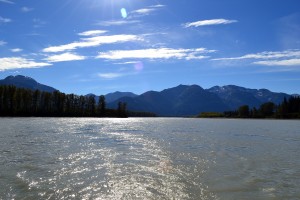
The Stikine River. (Photo Joe Viechnicki/KFSK)

When open, the two Southeast rivers provide some early season opportunity for gillnetters and trollers.

The Department of Fish & Game released its latest King salmon forecast and the numbers don’t look promising. The data predicts a terminal run size of just over 30,000 fish in the Stikine and just over 26,000 in the Taku.

Those numbers give the Stikine an allowable catch of just 210 fish on the Alaska side of the river, not enough to hold openings. For the Taku, there’s not enough fish for an allowable catch for both American and Canadian fishermen.

Although the Stikine numbers are not enough to commercially fish, the numbers aren’t the worst on record, state biologist Tom Kowalske says.

“It does seem to be getting better,” Kowalske says. “Our forecast is on an increase this year from last year and last year was better than the year before.”

While King salmon have seen dramatic drops in fisheries all over the state in recent years, Kowalske says that’s not the case here. He says there haven’t been any huge decreases in numbers over the last 20 years. Rather, the runs have seen several ups and downs.

“It is consistently up and down,” Kowalske says. “We’re sort of in like the 90’s regime where it’s flirted between 20 and 30,000 fish for seven, eight years and then we had another seven, eight years of much higher abundance in the 50s and 60s that we actually fished on. And now for the last seven, eight years we’ve been back at the 20’s and 30’s level.”

The last two fisheries on the Stikine were in 2008 and 2012. In 2012, the fishing time ended early because the run wasn’t as abundant as the state had predicted.

The forecasts are preliminary and could change after the first Kings show up, likely in late May. An in-season forecast will be compiled in May. At that time, subsistence fisheries could be called for the rivers.


Hoonah Sound herring-spawn fishery to close for a second year

Herring roe-on-kelp is called Kazunoko Kombu in sushi restaurants. (Flickr photo by Vincent Ma)

The herring spawn-on-kelp fishery in Hoonah Sound will remain closed in the 2015 season — for the second year in a row.

The Alaska Department of Fish & Game announced the closure last week after forecasts for the area predicted herring numbers far below the threshold required for commercial harvest.

The Hoonah Sound spawn-on-kelp fishery is a different animal than its cousin 50 miles to the south — the Sitka Sound Sac Roe Herring fishery.

The main difference is that the fish survive in Hoonah, and only their eggs are harvested. Nevertheless, assistant management biologist Eric Coonradt says there just aren’t enough herring to risk it.

“You know, we saw eggs on the beach in 2012, and the fish didn’t materialize for 2013. So it’s hard to say. There’s something that’s killing fish or not allowing them to come back.”

The forecast calls for 721 tons of herring to return to Hoonah Sound — about 280 tons below the threshold needed to allow the harvest of eggs. And it’s a fraction of the fish that have been known to come back to the area. Coonradt says ADF&G has recorded returns as high as 20,000 tons.

As a biologist, Coonradt is reluctant to guess what’s causing the low returns. But he’s pretty sure it’s natural — possibly a disease event associated with the huge returns of just a few years ago.

“Usually these disease events hit one end of the age group or another. In this case it seemed to hit all age groups equally. So that kind of puts a question mark into what happened: Whether they’re spawning elsewhere, or if it was a significant die-off.”

There are 109 permit holders in the Hoonah Sound Spawn-on-Kelp fishery. The economic impact of the closure is hard to pin down since it’s a niche product. The same permit covers Tenakee Inlet, which remained open last year, though volumes of herring there are typically smaller than in Hoonah.

Still, it’s going to sting. According to Commercial Fisheries Entry Commission data, spawn-on-kelp permits have nearly doubled in value over the last 8 years, and now go for around $35,000. There’s even been a slight uptick in permit value over last year — when the fishery was first shut down.

Coonradt says that under the right conditions herring can rebound quickly.

“If we have good ocean survival of larvae and juveniles, in one year you can see a huge increase in the biomass. That used to be the case for Sitka Sound. You’d have one big age class that would kind of carry it for a couple of years. And we very well could see that with Hoonah Sound. We’ve seen steady recruitment, but one good survival event of juveniles could bring this fishery back.”

The Hoonah Sound and Sitka Sound herring stocks are genetically related, but Coonradt says they’re treated as separate populations — swings in biomass in one area may not necessarily be reflected in the other. Still, ADF&G is forecasting one of the lowest herring returns in years in Sitka, too, and there’s been political pressure from the Sitka Tribe and others to dramatically curb sac roe fishing.

Hoonah is the less controversial fishery. And Coonradt is hoping the closure does its job.

“I think it’s concerning. Our limitations are to prevent any further harvest on the resource, and we’ve done that. We’ve closed the fishery. Fishing won’t reopen until the population reaches threshold. I think we are where we are, and there’s not much we can do about it.”

Southeast divers finish up sea cucumber season

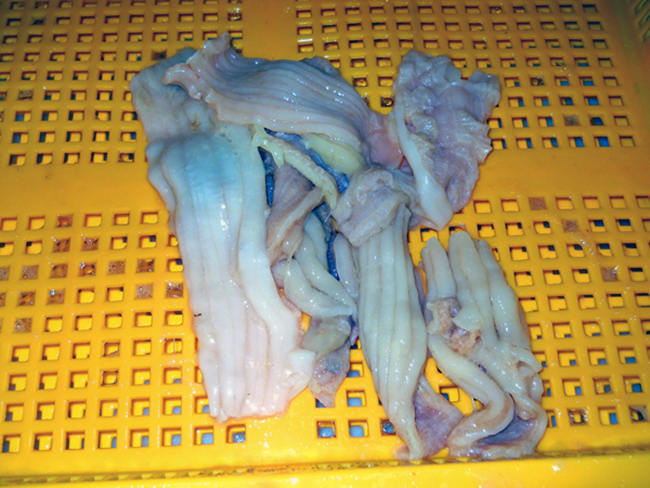
Processed sea cucumbers (Photo courtesy of ADF&G)

It was a relatively quick season for Southeast Alaska sea cucumber divers. The season closed in mid-November after the fleet landed a little more than a million pounds of the seafood delicacy. Meanwhile, it looks like diving for geoduck clams might not be over so quickly.

Divers had reached or nearly reached guideline harvest levels in seventeen different areas of Southeast by mid-November. The largest hauls this year came out of Moira Sound and Dall Island near Prince of Wales Island, Ernest Sound closer to Wrangell and in Peril Strait near Sitka.

Phil Doherty is executive director of the Southeast Alaska Regional Dive Fisheries Association, a Ketchikan based industry group.

“I didn’t hear any problems out on the grounds,” Doherty said. “Our quota was just a little over one million pounds which is down quite a bit from some of the levels we’ve seen in the past few years. The season lasted approximately six or seven weeks which is a fast season.”

With larger guideline harvest levels the season has typically remained open past Thanksgiving and into December.

Doherty expected the price to wind up somewhere around $4-4.50 a pound. That’s in line with the price from the last few years and would put the value of the fishery above four million dollars at the docks. To compare, last year’s harvest hit one and a half million pounds and at nearly four dollars a pound the fishery was worth over six million dollars at the docks. The number of divers participating has stayed just below 200 for the past decade and divers have earned an average of around $30,000 in the past two years.

Meanwhile, another dive fishery that also opened this fall won’t be over as quickly. Around half of the 750,000 pound guideline harvest level for geoduck clams has been harvested but Doherty said divers will be slowing down their harvest in the colder months. Divers have decided to cut the length of Thursday openings from six hours to three hours.

“So we’ve really slowed down the harvest of geoducks to try and meet the demands of the market,” he said. “It’s a live market animal and if we put too many geoducks on the market at one time along with what Washington state and what British Columbia are doing then the price goes down. So we’ve slowed down our harvest. The season’s going to last for a while.”

Divers did not fish on Thanksgiving Thursday but planned to go back to work in December.

“Normally after the Thanksgiving break, we start to lose a little bit of effort in the geoduck fishery as some of the divers who fished sea cucumbers don’t come back after the break. So we may ramp up the amount of hours that we’re fishing here as we get closer to the Christmas break.”

The price for geoduck clams has ranged between 4-6 dollars a pound in the early season.

Last year the fleet landed over half a million pounds of clams, averaging nearly $8 a pound. That made the fishery worth over four million dollars at the docks. For the past few years, just under 70 divers have made geoduck clam landings.

Site notifications
Update notification options
Subscribe to notifications