Fisheries

Experimental pollock seine fishery opens in Cook Inlet

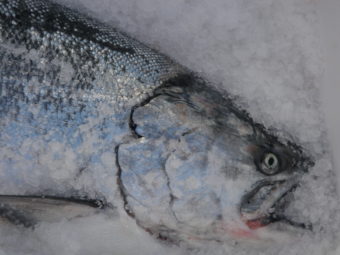
(Photo courtesy Wikimedia Commons)

Bycatch is always a concern.

“It is the highest priority for us to not catch king salmon,” says Fish and Game groundfish management biologist Jan Rumble.

Because seining for pollock hasn’t been done here before, extra precautions are in place to make sure it’s done right.

“We will have observers on every trip that goes out to go try to catch pollock with seine, there will be one of our observers on board to monitor what is coming up in the net besides pollock,” says Rumble. “Then, if there’s too many king salmon coming up in the nets, there’s a large possibility that we will stop this experiment immediately.”

But if things go right, the test fishery will run for about three months. Then, the results of the experiment will likely go before the Board of Fish for review in March 2015.

According to the ADF&G release, one main purpose is simple – to test the effectiveness of using purse seine gear to fish for pollock, instead of the typical trawling.

But Rumble says this is one step in a larger effort to evaluate the viability of adopting a state guideline harvest level pollock fishery in the Gulf of Alaska.

“People are interested in having state waters fisheries so that we can still maintain smaller fleets of people who have access to fisheries without having permits,” says Rumble.

As the federal pollock fishery goes to a catch shares program, there’s been interest among fishermen to see more state waters open up.

“There’s a big push with fishermen to have some fisheries that are not already spoken for, that you can enter as a young fisherman,” says Rumble. “You don’t have to buy a permit; you can just sign up and try out the fishery and see if you’re good at it, see if you can make part of a living doing it.”

That’s been some of the feedback garnered at meetings of the Gulf of Alaska Pollock Workgroup.

According to Rumble, in the last meeting cycle, there was a proposal before the Board of Fish to establish a state waters pollock fishery management plan.

Rather than take action on it, it formed the working group. It’s made up of federal fisheries managers, ADF&G, fishermen in existing pollock fisheries, and fishermen interested in developing fisheries.

It’s taking a closer look at how a state-GHL fishery would maximize the use of Gulf of Alaska pollock resources while maintaining environmental protections.

Rumble says after a meeting earlier this year, Kodiak’s ADF&G biologists sought out fishermen for test seine and jig fisheries. There was a lot of initial interest, but when it came time to assign commissioner’s permits, no one showed up. Rumble says she understands why.

“You know, it’s a risk, right? What if they don’t catch anything? I mean, they’re probably going to invest some gas and time and money in their nets to do this fishery and if they come out and they don’t make any money, it’s a little bit of a risk,” says Rumble.

Now, biologists are trying again in Cook Inlet. They’ve already got a number of fishermen signed up. Rumble says it’s a reflection of changing times in this area.

“You know, 20 years ago, we had a big shellfish fishery here for Tanner crab, for Dungeness, for shrimp,” says Rumble. “Basically, there’s been a switch from that kind of shellfish to Pacific cod and pollock. So, people will tell you, if you interviewed a fisherman right now, even the sport fishermen, they would tell you there’s tons of pollock in this bay.”

The harvest limit comprises some of the quota left over from the federal fishery. 220,000 pounds are available before December 31st. Then another 220,000 are available until February 28th.

EPA regs hit fishing industry, unless Congress meets deadline

Federal lawmakers return to Washington this week for the final days of the 113th Congress. They have to pass a budget or a “continuing resolution” by December 11 to avoid a government shutdown. Alaska’s fishing industry is watching another deadline approach: Dec. 18. That’s the date tough new EPA regulations apply to commercial fishing boats, unless Congress intervenes.

United Fishermen of Alaska and other industry groups have been trying for years to get a permanent exemption from part of the Clean Water Act that regulates what vessels discharge. UFA Executive Director Julianne Curry says the pending new regulations would apply to just about any liquid emitted from a boat shorter than 79 feet.

“Some of the components that are in this regulation are – they really don’t make any sense,” Curry says.

If the rule goes into effect, the EPA estimates it would apply to as many as 138,000 smaller vessels around the country, and about half them are commercial fishing boats. The rules would apply to, among other liquids, fish-hold effluent, bilge water, grey water, and, Curry points out, deckwash. Even runoff.

“It includes onerous regulations such as making fishermen catalog and make sure their permit is covering rainwater that falls onto the deck and therefore falls overboard,” she said.

A study by the EPA found some of these discharges may be harmful to the aquatic environment or to human health, particularly in enclosed waters. Curry says UFA embraces appropriate regulation and doesn’t object to reasonable pollution controls.

“The fishing industry is already covered under discharge regulations that just aren’t as overly onerous as the ones that are potentially going to be implemented in December,” she said.

EPA wasn’t eager to adopt these regulations in the first place. It used to have an exemption for discharges that occur in the normal operation of a vessel. But an environmental lawsuit, aimed at keeping invasive species from hitching a ride in a ship’s ballast water, forced the EPA to act. Congress has passed temporary measures to keep the regulation at bay since 2008.

The U.S. House has already passed a bill calling for a permanent exemption for vessels under 79 feet. Several bills are pending in the Senate that would halt the regulation, for a year or permanently. They’re sponsored by Alaska’s senators, and senators as divergent as California Democrat Barbara Boxer and Florida Republican Marco Rubio.

Industry blames pirate fishing as red king prices drop

Red King Crab
Photo courtesy of ADF&G

The Bering Sea red king crab fleet finished catching 10 million pounds of quota last week — and they’re facing some lackluster prices as the crab goes to market. It could be due to higher catch limits in Alaska and Russia.

There’s also the problem of pirates. Illegal crab harvesting is declining, but industry groups say it’s still their biggest concern.

Crab economics can be a tricky business. Take it from Jake Jacobsen, who heads up the state’s biggest crab harvesting collective, the Inter-Cooperative Exchange.

“Supply is really the thing that drives the market, and the Japanese exchange rate is pretty close up there too,” he says. “And then, of course, the quality of the crab and other issues all factor in.”

Dockside prices for Alaskan red king crab were down as much as a dollar this season, to around $6.10, according to the state Department of Fish & Game.

There are plenty of reasons why that could be: like the higher quotas in Alaska and Russia, and currency values giving big Japanese importers a better deal in Russian rubles than in dollars.

And Jacobsen says Alaska’s fleet had another problem this year: unexpected barnacles on some of their catch.

“Those crab don’t typically receive the same price as a clean-shell crab,” he says. “So there’s a little bit of a discount there.”

But it’s all secondary to what he says is still the biggest problem for Alaska: illegal fishing and overharvesting by pirate boats in Russia.

Years ago, Russian pirates caught and delivered more than four times as much king and snow crab as the country’s legal harvest limit. Since then, that number’s declined to its lowest point in a decade, says Heather Brandon of the World Wildlife Fund.

“But even in the last year that we have data for, which is 2013, there was still about a 69 percent harvest over the legal catch,” she says. “So we can see from trade data that there’s still a huge amount of illegal crab entering the market from Russia.”

Brandon co-authored a recent WWF report on illegal crab fishing. It calls for countries that import and export crab to work on stamping out pirate fishing — like by asking for more documentation as the crab makes its way from dock to market. One agreement between Russia and Japan will do just that starting in December.

Japan takes most of Russia’s exports, due to proximity — but plenty of Alaska’s catch winds up there too. That leaves American consumers buying crab that’s estimated to be 40 percent illegal. Jake Jacobsen, with the harvester co-op, says it’s tough to verify where the product comes from:

“The boats that supposedly made the landings are fictitious. They’re signed with names of captains that don’t exist,” he says. “All the documents look legal because they’ve been professionally forged.”

That’s why groups like his are pushing for stricter labeling and tracking requirements. And as always, they want customers to buy domestic. They say Alaska’s fishery is better regulated, better documented and more sustainable than any other.

Of course, that makes it more expensive than illegal crab, too. Mark Gleason is the president of the Alaska Bering Sea Crabbers, which estimates Alaska has lost $600 million to pirate crabbing since 2000.

“The people that I represent — they’re capitalists. We thrive on competition. We’re very proud of the product that we produce, and we will put that product up against anyone’s,” Gleason says. “But it’s gotta be a level playing field in terms of the competition. We all need to be playing by the same rules. We all need the same opportunity to bring our product to market. And we welcome the competition with the legal production — it’s just the pirates that have a leg up.”

Still, Gleason thinks it’s possible to stop illegal crab fishing. He points to signs of progress — more international cooperation and regulatory support from lawmakers, who groups like his have been lobbying. And there’s last year’s lower illegal harvest, too.

But what about this year? It’s kind of a wild card, since there’s also more legal crab on the market than in the past. Heather Brandon, with the WWF, says she isn’t sure if higher legal quotas will make for less pirate fishing. And she won’t get to find out for about a year.

“I’m really looking forward to looking at the 2014 data to understand that,” she says. “There are a lot of factors in play.”

That means it’s not clear if pirate fishing is to blame for this year’s lower red king crab prices in Alaska. Still, fishermen say they have to control what they can. The fleet can’t alter the laws of supply and demand. But they’ll still lobby to rid that supply of crab that shouldn’t be there.

Sitka herring forecast lowest in a decade

Herring spawn, on the west side of Middle Island Tuesday morning (3-25-14). (Photo courtesy ADF&G/Dave Gordon)
Herring spawn on the west side of Middle Island in March of 2014. (ADF&G/Dave Gordon)

Sitka’s commercial herring fleet should expect to catch significantly fewer fish this spring. The Alaska Department of Fish and Game, which released its preliminary harvest level for the 2015 Sitka Sound sac roe herring fishery Friday.

The preliminary guideline harvest level is 8,712 tons; that’s the lowest its been since 2003 and about half of last year’s target of 16,333 tons. The herring fleet brought in 16,957 tons last year, exceeding the target and making that harvest one of the largest ever.

Fish and Game expects 44,237 tons of herring to spawn in and around Sitka Sound. That’s the lowest forecast in a decade, and well below the past several years when forecasts have consistently been above 70,000 tons.

The department forecast a biomass of 81,663 tons for last year. Sampling and aerial surveys suggest the actual population was 68,399 tons.

Fish and Game will take samples again in late January or early February; the final harvest level will be announced by early March when the sac roe herring fishery usually opens.


NOAA designates Kachemak Bay ‘Habitat Focus Area’

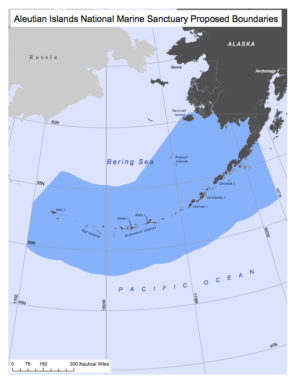
Topographical map of Kachemak Bay (Courtesy NOAA)

Ocean acidification and climate change have become more prominent topics of conversation over the past few years, especially in areas heavily dependent on the sea, like Alaska.

“The ocean conditions are changing and that’s something that we want to understand as well as we can so that we can be better prepared to address those changes and help our coastal communities be more resilient to those changes,” Julie Speegle, who works with the Alaska region of the National Marine Fisheries Service, said.

She says Kachemak Bay joins seven other habitat focus areas nationwide under NOAA’s Habitat Blueprint initiative. And it was a logical choice.

“One of the special things about Kachemak Bay is we have already gathered quite a bit of data on ocean conditions and habitat there,” says Speegle. “What we haven’t done is put all that data together and see what comes out of it, what we can learn from it.”

The bay is already a State of Alaska Critical Habitat Area and a National Estuarine Research Reserve. So, the building blocks are already in place. She says the blueprint initiative provides the framework for organizations to efficiently work together in a targeted area.

“So, we basically select habitat focus areas where we can prioritize resources and activities and foster and leverage partnerships to address changes in coastal and ocean habitats,” says Speegle.

NOAA already has relationships with outside groups in the Kachemak Bay area, including tribal governments, regional citizens advisory councils, municipal bodies, and environmental interest groups like the Center for Alaskan Coastal Studies.

But the designation also encourages NOAA to make a concerted effort within the branches of its own organization.

“So, you’ve got NOAA’s National Ocean Service, National Weather Service, National Marine Fisheries Service and we’ll be working together internally to focus our efforts on Kachemak Bay,” says Speegle.

But what does that mean practically?

Speegle says it provides groups with the incentive to conduct scientific studies and the facilities to streamline data sharing. But it also has the potential to ease the financial burden that’s often a barrier to ongoing research programs. She says there is some federal funding that opens up to projects once they are designated within a habitat focus area.

The research and information that comes out of these projects will reach beyond Kachemak Bay as well.

“So, as we go forward, we’ll be sort of using Kachemak Bay as a testing area to improve NOAA mapping and model information,” says Speegle. “And we have a goal of developing new tools for habitat assessment that can be used not just in the Kachemak Bay area, but other coastal areas throughout Alaska.”

Speegle says the next step is to evaluate ongoing studies and what’s already in place. Overall, she hopes Kachemak Bay will provide some more insight into changing ocean conditions and the best ways to manage those changes for the future.


It’s back to barging for Chieftain Metals’ Tulsequah project

Tulsequah Mine
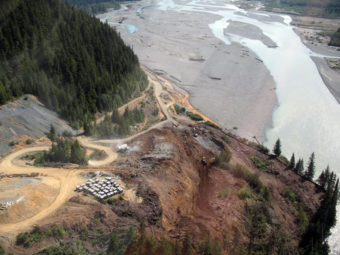
The Tulsequah Mine sits above the Tulsequah River which flows into the Taku River, which flows out south of Juneau. (Photo courtesy Chieftain Metals)

The company that’s trying to reopen the Tulsequah Chief Mine at the Canadian headwaters of Taku River has apparently abandoned plans to build a road to the mine site.

Chieftain Metals announced last month that a forthcoming update to a 2012 feasibility study no longer includes the proposed 128 kilometer road from Atlin, British Columbia. Instead, the company is going back to a plan to barge supplies and concentrated minerals to and from the mine via the salmon-rich Taku, which flows out south of Juneau.

That has environmentalists and state lawmakers concerned. Chris Zimmer of Rivers Without Borders says both Chieftain and Tulsequah’s previous owner, Redfern Resources, have tried barging on the Taku, and it hasn’t worked.

“The Taku River is just not, it’s not the Mississippi, it’s not the Yukon,” Zimmer says. “It’s not a big, deep, easily navigated river. It’s shallow, it’s fast; it has ever-changing gravel bars and lots of log jams.”

The new plan is to use conventional barges, not the hover barge idea once floated by Redfern.

In its Oct. 20 press release, Chieftain notes that Cominco used barges during its operations at the Tulsequah before the mine closed in 1957. The company says barging would only occur five months of the year, and improvements are planned to protect the shore at the barge landing area.

But Zimmer says the risks of conventional barging are well documented.

“The potential for spills, you know, all the diesel fuel, all the cyanide and other mining chemicals are going to be going up river on these barges,” he says. “And also between May and September, that’s when the river is heavily used. You have an entire gillnet fleet out there.”

Zimmer says he’s surprised Chieftain is no longer pursuing a road to the Tulsequah, especially given past statements by company officials that ground access is critical to reopening the mine. Juneau state Sen. Dennis Egan feels the same way.

“I’m really concerned about Chieftain itself,” Egan says. “I just am concerned about assurances that were given to us earlier that never materialized.”

Egan says one of those assurances was that the company would restart a water treatment plant to mitigate small amounts of acid rock drainage that had been leeching into the Tulsequah River for decades.

“We had the head of Chieftain talking to us, and everything was rosy, and they were going to do this and going to do that for environmental controls – they didn’t do any of it,” Egan says.

In 2011, Juneau’s legislative delegation formed the Taku River Task Force in part to address concerns over the Tulsequah Mine. Egan hopes to convene the group to discuss this latest development.

The press release from Chieftain says the full mine feasibility study will be released in early December. Juneau state Rep. Cathy Muñoz shares the same reservations as Egan and Zimmer, but says it’s important to wait for the full report to be released.

“We have a vital commercial fishery that benefits from the five species of salmon that originate in the Taku watershed, and so, yes, it’s a great concern,” Muñoz says. “I do believe that we have a key role in this project, even though we’re a separate jurisdiction, a separate country.”

Chieftain Metals President and CEO Victor Wyprysky did not return messages left at his Toronto office. The company estimates the mine would have an 11 year lifespan, and produce about 47 million pounds of zinc annually. The Tulsequah also has copper and gold reserves.

Earlier this year the Taku River Tlingit First Nation sued to stop the project, arguing British Columbia officials failed to consult them before issuing an environmental permit.

Site notifications
Update notification options
Subscribe to notifications