Housing

Juneau’s homeless shelter resumes day services after months-long pause

Mindy Birk, a longtime Glory Hall homeless shelter volunteer, smiles for a photo on Wednesday, Dec. 17, 2025. (Photo by Clarise Larson/KTOO)

Juneau’s homeless shelter is once again offering daytime meals and other services after stopping them in August due to safety concerns. 

The Glory Hall’s Executive Director Kaia Quinto said there were multiple instances of violence and threats this summer that put the safety of shelter staff and clients at risk. She said it was getting harder to continue serving the community at all. 

“The reason why we closed day services was because the environment outside on Teal Street was just pretty dangerous and chaotic,” Quinto said. “Which then transferred inside of the facility, made the facility dangerous and chaotic.”

The shelter closed its doors to people who didn’t already have an assigned bed there, with a few exceptions. 

In November, the city again cleared the encampment that had built up outside the shelter, and people haven’t set up there again. The shelter renovated its entrance to have a two-door system, instead of one, allowing staff more control of who’s allowed inside.

Quinto said things calmed down enough to open services safely Tuesday morning. 

“With the encampment moved and the temperature and the weather and our improvements made to the front of the building, we’re feeling pretty confident about opening day services now,” she said.

It’s only been a couple of days, but Quinto said people are using the services. 

And the reopening comes at a good time — Juneau is expected to see single digit and below zero temperatures this week and into next.

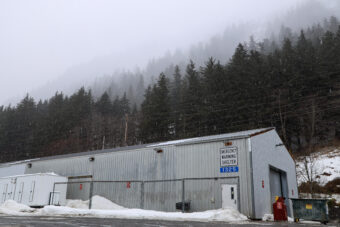
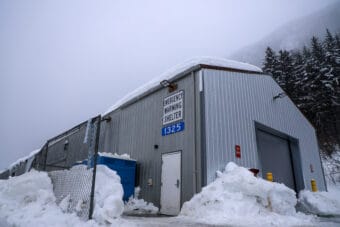
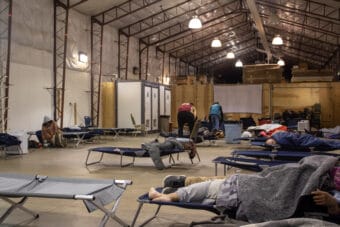
The Glory Hall serves meals at 8:30 a.m., noon, and 6 p.m. each day. The city-funded emergency warming shelter near Thane Road opens at 9 p.m. each night until 7 a.m. in the morning, and offers transportation to the Glory Hall. 

Construction workshop gives Kipnuk storm evacuees new skills, new hope

Reggie Paul of Kipnuk holds frame in Alaska Works Partnership construction workshop in Mountain View.
Reggie Paul of Kipnuk holds a frame that he helped to build during an Alaska Works Partnership construction workshop in Mountain View. (Rhonda McBride/KNBA)

For several southwest Alaska communities, it will take years to replace what was lost in one night of hurricane force winds and floods, unleashed from the remnants of Typhoon Halong. Some may never rebuild completely.

How and where to begin is a question that seven trainees tackled at a construction workshop offered by the Alaska Works Partnership, a non-profit agency funded mostly by the state.

Alaska Works Partnership offered a one-week construction course at their headquarters in Mountain View for storm evacuees.
Alaska Works Partnership offered a one-week construction course at their headquarters in Mountain View for storm evacuees. (Rhonda McBride)

Most of the apprentices were from Kipnuk, one of the hardest hit communities. They evacuated to Anchorage after the storm struck the Western Alaska coast on Oct. 9.

“They just lost their homes,” said Tiffany Caudle, the training coordinator for Alaska Works Partnership. “They lost everything.”

But Caudle says the workshop comes at a good time.

“I do think this is really helping them stay positive and stay hopeful,” she said.

Hands-on recovery

The men were all volunteers, who signed up for 40-hours of training on how to frame a house.

Devon Mann, 19, works on building a house frame. His house was destroyed in a flood that picked it up and carried it more than five miles.
Devon Mann, 19, works on building a house frame. His house was destroyed in a flood that picked it up and carried it more than five miles. (Rhonda McBride)

They started on Oct. 20 at the program’s headquarters in Mountain View. They met in a big garage, empty except for a stack of boards, nails and tools. But soon, the constant clang of hammers and the buzz of electric saws filled the room with energy.

“This is the door, and this one’s going to be the window,” said Devon Mann, as he laid out the boards for his house frame.

Everything we’re learning in here and doing, it’s going to be useful for our village,” he said.

Trauma is still fresh

Devon, who is 19, looked sharp in his brand new hoodie. It was given to him after military planes airlifted him and almost his entire community of Kipnuk to Anchorage. Devon arrived with only the clothing he had on, but after a five-mile ride in a floating house, he still carried the baggage of trauma.

“The way the house was rocking, how fast we were going,” he said, “worst experience I ever had.”

Destruction in Kipnuk after the Oct. 9 storm.
Destruction in Kipnuk after the Oct. 9 storm. (Devon Mann)

Most of Devon’s family made it to the school, but he and his 16-year-old year old brother stayed behind to salvage valuables that were floating away. Suddenly the water came up and trapped them in their house. As the surge carried it off, the power went out and in the darkness, they jammed every bit of bedding, towels and clothing they could find against the wall in a desperate attempt to block the flow. They bailed the water out with buckets, but it rose up to their knees.

“I thought something bad was going to happen to the house, like break apart. I thought that would be it for us,” said Devon, who almost gave up. “But I had hope. I had hope.”

And it’s hope that keeps him going now.

Hope takes shape

“Leveling, framing, stuff we’re doing here in the training – it’s useful in the village,” he said.

Devon and the other trainees still don’t know whether Kipnuk will be rebuilt or eventually moved to higher ground, but they want to be prepared to help whatever the future brings.

Devon Mann, 19, evacuated from Kipnuk with only the clothes he had on. He and his mother are staying at a hotel in Anchorage, while the rest of his family is staying with relatives in Kongiginak.
Devon Mann, 19, evacuated from Kipnuk with only the clothes he had on. He and his mother are staying at a hotel in Anchorage, while the rest of his family is staying with relatives in Kongiginak. (Rhonda McBride)

“I want to step up,” Devon said, “And I want to know what to do in that moment.”

William Andrew, who has been an instructor at Alaska Works Partnership for almost 20 years, is impressed with Devon and the rest of his group. He calls them “naturals,” because they have been quick to catch on.

“From what they went through, I’ll be honest with you, their attitudes are awesome,” Andrew said. “They’re wanting to learn. They’re being great.”

As Andrew walked around the room, he peppered his students with questions about their work – quick to point out small mistakes that might later lead to bigger problems.

“I can’t stress it enough.Use your wrist. Use your wrist,” he reminded them, as he waved a hammer, to warn them about putting stress on their arm muscles.

Alaska Works Partnership hopes these Kipnuk apprentices will ultimately learn more than to build house frames but also build careers.
Alaska Works Partnership hopes these Kipnuk apprentices will ultimately learn more than to build house frames but also build careers. (Rhonda McBride)

Andrew knows it’ll take more than one workshop to teach his Kipnuk apprentices how to rebuild their village, but he hopes it will give them a good foundation to learn more.

“The class has been going so great, that I think they’re going to be telling all of their neighbors and all of their friends,” he said. “I think there’s going to be a lot more demand for training.”

New partners needed

Alaska Works Partnership is now in search of more funding to offer more classes for the disaster evacuees. The agency hopes it can attract some new partners, who will recognize that this group needs the help at a critical time.

Alaska Works Partnership instructor William Andrew hands Terry Anaruk a hammer.
Alaska Works Partnership instructor William Andrew hands Terry Anaruk a hammer. (Rhonda McBride)

Like his students, Andrew is Yup’ik and comes from a small village. He’s originally from New Stuyahok in Bristol Bay and knows, from his own experience, that far too many village construction jobs go to outside contractors, who hire very few locals. But Andrew hopes this time will be different.

“I’m excited about their future. And I’m hoping they get to rebuild it,” he said.

Judge gives city OK to refile eviction cases against Telephone Hill residents

The Telephone Hill neighborhood in downtown Juneau on Wednesday, Oct. 22, 2025. (Photo by Clarise Larson/KTOO)

A Superior Court judge is allowing the City and Borough of Juneau to refile eviction cases against the tenants who are refusing to vacate the historic Telephone Hill neighborhood in downtown Juneau. 

The city wants to demolish the homes on the hill this winter to make way for denser housing, but some tenants are refusing to leave and filed a lawsuit to prevent demolition and preserve the homes. 

Last month, a District Court judge dismissed the city’s eviction cases a few days before the city planned to evict the tenants, pending the outcome of that lawsuit. 

Then last week, before Thanksgiving, a Superior Court judge ruled that the evictions and demolition were two separate issues and should be handled as such. That ruling opened the door for the city to refile eviction cases against the tenants who remain on the hill. 

The lawsuit is scheduled for a pre-trial conference on Dec. 12. 

Fred Triem, the attorney representing the tenants, said the latest ruling doesn’t say anything about where the case might be heading. 

“It’s not an indication of what the final ruling will be. So I’m not either encouraged or discouraged by what took place the other day,” he said. “It’s just kind of a neutral scheduling event.”

Juneau’s City Attorney Emily Wright said she agrees with the judge — the demolition and evictions should be handled separately. 

“These last tenants need to move out, and we’re taking possession of the houses that we own as a city — we’re the landlords,” she said. 

The city refiled the three eviction cases last Wednesday and requested that they be heard within 15 days of filing. But the tenants’ lawsuit could take much longer to resolve. Wright previously said the city plans to take swift action if the evictions are approved, like changing the locks and removing remaining belongings from the homes as soon as possible.

Wright said the city plans to file new cases against two other residents who were given an extension to move out but haven’t done so. 

Judge dismisses Telephone Hill eviction cases pending outcome of lawsuit

Juneau District Court Judge Kirsten Swanson speaks during an eviction hearing on Wednesday, Nov. 19, 2025. (Photo by Clarise Larson/KTOO)

A District Court judge has dismissed the eviction cases against three tenants refusing to vacate their rentals in the historic Telephone Hill neighborhood in downtown Juneau. 

Instead, a Superior Court judge presiding over a lawsuit filed by tenants against the city late last month will decide the outcome. The lawsuit seeks to stop the city’s demolition of the historic neighborhood and stop the evictions. The city plans to demolish the houses on the hill later this winter to make way for newer, denser housing to combat the city’s housing crunch. 

The court hasn’t yet scheduled any hearings for that lawsuit. 

City Attorney Emily Wright said it’s unclear if or how the dismissals may impact the city’s plan to move forward with demolition of the homes this winter. She said the city is disappointed in the District Court judge’s ruling and plans to ask that the lawsuit in Superior Court be expedited. 

“We’ll work with the tenants and their attorney in the other superior court case to look at the best options for them and for the city. But once you’ve moved into court, it can be a very long process to get a resolution,” she said. 

The tenants’ lawsuit, which has three plaintiffs, claims that the city improperly evicted people on the hill, illegally phased the redevelopment and that the project fails to comply with federal and state historic preservation acts. The city denies these claims.

Joe Karson called the eviction dismissals a win. Karson, a plaintiff in the lawsuit and one of the tenants who hasn’t vacated,  said he plans to continue to live in his apartment on the hill as long as possible. 

“I want to stay in my home, of course,” Karson said. “Just because you rent doesn’t mean that it’s not your home, and that’s my home.”

Fred Triem, the tenants’ attorney, said the tenants continuing to live in the old homes as the weather gets colder helps preserve them.

“Our ultimate goal is to preserve the old buildings, especially the telephone switchboard and that building constructed in 1882,” he said. “That’s the short of it — historic preservation.”

Under the Alaska Uniform Residential Landlord & Tenant Act, the city cannot take retaliatory action against the tenants, like turning off the utilities, while they wait for the outcome of the lawsuit. 

‘Let’s get ugly’: Tenants continue to fight Telephone Hill eviction cases as judge delays decision

A sign in the Telephone Hill neighborhood on Wednesday, Nov. 19, 2025. (Photo by Clarise Larson/KTOO)

A district court judge has delayed the pending eviction hearings of three tenants who have refused to vacate their residences in Juneau’s downtown Telephone Hill neighborhood until at least Friday morning.

That’s so the judge can review a motion filed late Tuesday by the tenants’ attorney. 

The motion asks the court to delay the evictions pending the outcome of a lawsuit filed by tenants against the city. The lawsuit seeks to stop the city’s demolition of the historic neighborhood and reverse the evictions. 

The city had given the tenants living in the homes until Nov.1 to move out. The city plans to demolish the houses on the hill later this winter to make way for newer, denser housing to combat the city’s housing crunch. However, some tenants are refusing to leave and the city earlier this month filed legal action to evict them. 

At the courthouse on Wednesday morning, John Ingalls, one of the tenants who hasn’t vacated and is a plaintiff in the lawsuit, said he’s going to fight tooth and nail to stop the evictions.

“They’re just gonna make people pissed off at them. They’re gonna make people angry because I don’t think they have what’s right on their side, and I think people are going to stand up for what’s right,” he said. “I’m not worried about it. If they want to take my stuff. Fine, take it. Go ahead. If you want to be really ugly, let’s get ugly.”

An attorney from the city’s law department argued that the late filing of the motion was an intentional delay tactic and requested that the judge proceed with the hearing. The judge instead pushed Wednesday’s hearings back till Friday morning at 8:15 a.m. 

City Attorney Emily Wright said if the evictions are approved on Friday morning, the city plans to take swift action. She said the city gave the tenants more than enough notice and time to move out of the homes before taking legal action to force them out.

“If the city were given immediate possession of the homes on Friday, we would change the locks,” she said. “We would take possession of the homes, and we would work with the tenants to get their belongings out of the homes as soon as possible.”

In response to the tenants’ lawsuit, the city denies the claims that it improperly evicted people on the hill, illegally phased the redevelopment and that the project fails to comply with federal and state historic preservation acts.

Unhoused campers kicked off Teal Street say they have few options

An excavator scoops tents and platforms into a dump truck as part of the City and Borough of Juneau’s demolition of an encampment on Teal Street on Nov. 14, 2025. (Photo by Yvonne Krumrey/KTOO)

On Friday morning, about a dozen people pulled items out of their makeshift homes along Teal Street, and packed them into black trash bags or tote boxes.

A dusting of snow had already started settling on the tents and shelters. Police stood on the sidewalk, and volunteers and nonprofit workers passed out eggs and potatoes from a tent nearby. 

Willow Williams sat in a wheelchair across the street from his tent. He has severe health problems: he has a colostomy bag and a hernia, alongside a slew of injuries. A lot of people at the encampment were worried about him, and they came by to bring him food and ask what else he needed, as others helped him pack up his shelter.

“My friend built that place, and he let me move in there, because, you know, it was hard for me with everything,” he said, pointing to his colostomy bag. “And I got a bed in there, and it kept me out of the wind. It kept me away from the rain.” 

Williams said he’s been comfortable there. It’s close to the Glory Hall shelter where he receives help with his health conditions. He said he hopes he’ll get a bed in the shelter soon.

Last year, the city closed a summer campground that unhoused people in Juneau frequently used, and instructed people to camp in small groups on other public land.

This past spring, large groups of tents cropped up in the Teal Street area. And they have been the subject of public debate and safety concerns. The city already cleared the encampment at this spot at least once this year. 

Then in August, because of safety threats to Glory Hall staff and residents, the nearby shelter stopped offering day services. 

Friday morning, the city forced people out of the encampment after giving notice earlier in the week

Juneau Police Commander Jeremy Weske was on site, along with several other officers. He said that this encampment isn’t safe in the winter months. 

“We don’t want people being on streets or in ditches and snow plows coming through and having a tragedy,” he said. “So that’s why this is happening now.” 

Smaller groups of people are allowed to camp on what the city calls “unimproved public land,” but officials haven’t offered more concrete guidance. Friday, city officials advised people to go to the city-funded emergency warming shelter in Thane, which only operates overnight.

Williams needs to make it through the next few days, or however long it takes before he can go to the Glory Hall. He said he hasn’t been able to sleep at the emergency warming shelter in the past due to discomfort from his medical issues, but he’s hopeful accommodations have improved.

Director Kaia Quinto said the Glory Hall has been at capacity every night so far this year. 

“Usually when we have somebody move out, there’s like that hour of space where we’re helping them clean and pack up their belongings,” she said. “And then someone else is right in their bed afterwards.”

But she said staff is trying hard to get Williams into the shelter.

“We don’t have any beds,” Quinto said. “But Willow is a high priority for us, to get him in before the weather gets too bad.”

Doug Worthington and Nathaniel Hensley-Williams pack up their belongings as the City and Borough of Juneau demolishes an encampment on Teal Street on Nov. 14, 2025. (Photo by Yvonne Krumrey/KTOO)

Back on Teal Street, Doug Worthington and his partner Nathaniel Hensley-Williams were strategizing where they could store their stuff, and where to go next. Worthington said they can stay at the Thane warming shelter at night. 

“The other half of the problem is, where are we gonna go during the day?” he said.

“Well, that’s when we just set up our tent during the day and collapse it during the evening,”  Hensley-Williams said. “Because I have thought about that.”

Worthington is from Juneau and said he has been living outside without stable housing for about a year now. 

Initially, people camped here on Teal Street to access the Glory Hall’s day services, but since those stopped, Hensley-Williams said people stay because it feels safer here than other parts of town. 

“Staying here is where we’re not getting f—– with,” he said. “That’s the only reason we have stayed here.”

An excavator drops a tent into a dump truck as part of the City and Borough of Juneau’s demolition of an encampment on Teal Street on Nov. 14, 2025. (Photo by Yvonne Krumrey/KTOO)

As an excavator picked up tents and platforms and dropped them in a dump truck, Worthington stood with his and his partner’s stuff, packed into a tower of totes. He said the city isn’t giving his community the help they need. 

“And they say they hate it because they don’t want to be doing this. But yet, here they are,” he said. “They say they want to help us, and yet they’re kicking us out. We’ve all built our homes right here. 

Worthington said he’s been moved around to different parts of the city, but people always complain about people camping, no matter where they go.

Site notifications
Update notification options
Subscribe to notifications