
Marijuana

Pot and pregnancy: No harm seen at birth, but many questions remain

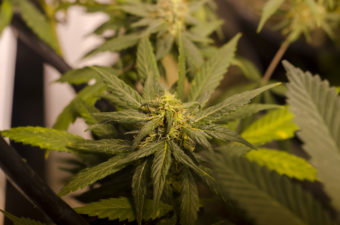
Since marijuana doesn't benefit mother or baby it should be avoided, researchers say. But there is stronger evidence for the harms of alcohol and tobacco. (Photo by Roy Morsch/Getty Images)
Since marijuana doesn’t benefit mother or baby it should be avoided, researchers say. But there is stronger evidence for the harms of alcohol and tobacco. (Photo by Roy Morsch/Getty Images)

Between 2 percent and 5 percent of women say they use marijuana while pregnant, according to the American College of Obstetrics and Gynecology. And while harm to the fetus is certainly plausible since the drug crosses the placenta, the evidence has been spotty. Now a review and analysis of 31 previously published studies has found no independent connection between a mother’s pot use and adverse birth events. But the doctors say that doesn’t mean it’s OK to partake.

Based on unadjusted data, the review found a link between marijuana use and both low birth weight and preterm delivery. But when the researchers adjusted the data to account for confounding factors including tobacco — which is often used alongside marijuana — there was no association, says Shayna Conner, an assistant professor in the division of maternal fetal medicine and ultrasound at Washington University in St. Louis School of Medicine and an author of the study.

In other words, from the available evidence it seems that the risk surrounding birth is from tobacco use and other factors, not from the marijuana itself.

Conner emphasizes that message is still clear: Don’t use pot when you’re pregnant. “Any foreign substance that doesn’t directly benefit maternal or fetal health should be avoided,” she says. But the analysis suggests that public health dollars budgeted for preventing bad birth outcomes should be spent to discourage the things with more evidence of harm, such as tobacco or alcohol, she says.

There are still plenty of reasons for women to be cautious about marijuana use. For one, the body of evidence on this topic is inconsistent. Different studies looked at different neonatal outcomes. And most of the studies relied at least in part on women to report their marijuana use. “That may mean that patients who do smoke but don’t tell their provider may be misclassified,” says Conner.

Moreover, this review, which was published Thursday in Obstetrics & Gynecology, focused only on adverse neonatal outcomes such as low birth weight, preterm delivery and stillbirth. It didn’t cover the long-term risk of neurodevelopmental problems such as cognitive difficulties or ADHD. A separate review of evidence published in December found that while the studies in humans on that topic are flawed, “there is a concerning pattern of altered neurodevelopment with early, heavy maternal use of marijuana.”

“Any time there’s a substance that we’re not sure of the effects on the fetus or the mother during pregnancy, unless we know of a strong benefit to using the substance we’d advise not to use it,” says Torri Metz, an assistant professor of maternal-fetal medicine at the University of Colorado Denver, and an author of that December paper. It also found no solid evidence for the benefits of medical marijuana in pregnancy to prevent nausea. She and her co-author called for high-quality prospective studies to better understand the impact of marijuana use on pregnancy and breastfeeding.

And how should women who are trying to conceive or who aren’t using birth control think about pot? The Centers for Disease Control and Prevention got a lot of flak earlier this year for recommending that women in those circumstances abstain from drinking alcohol altogether.

Very few studies have looked at the time of marijuana exposure and connected that to outcomes. But Conner said many of the studies covered by the new review included women in the earliest part of their pregnancies, which might give some reassurance to women who are worried about pot use before they discovered they were pregnant.

In Colorado, where both medical and recreational use of marijuana are legal, the Department of Public Health & Environment advises women not to use the drug during pregnancy. In fact, if the baby is tested at birth and is positive for THC, the law requires child protective services be notified.

The question of how prenatal exposure to pot affects a baby will almost certainly become more pressing, with five states including California voting in November on whether to legalize recreational use.

Katherine Hobson is a freelance health and science writer based in Brooklyn, N.Y. She’s on Twitter: @katherinehobson

Copyright 2016 NPR. To see more, visit http://www.npr.org/.

Lawsuit targets Mat-Su Borough marijuana initiative

In a last-minute bid to overturn a Matanuska-Suisitna Borough ballot initiative banning commercial marijuana, some cannabis supporters have served the Borough with a lawsuit.

The complaint wants the courts to force the Borough to take the initiative off the October election ticket, and the outcome of the case could have widespread implications.

The lawsuit, filed Tuesday in state Superior Court in Palmer, comes just a month before the Mat-Su Borough election.

The legal action alleges the Borough’s ballot initiative banning commercial marijuana grow and retail operations throughout the Borough, is invalid, because it violates state statues requiring planning commission review of land use ordinances.

Ronda Marcy sits on the Borough’s marijuana advisory committee and filed the suit with Thomas Hannon.

They’re also suing former Borough mayor Larry DeVilbiss and fifteen of the petitioners who sponsored the initiative. Marcy alleges the sponsors began collecting petition signatures prematurely.

“They were started before the law allowed them to do so.”

And she says, the initiative wording is confusing because it asks voters to make the marijuana industry illegal but allow the hemp industry to continue. It presents two questions in one initiative, which violates state law, she said.

“If the cannibis community is being brought in to follow the laws, then the other communities, like local governments, should also follow the laws.”

Borough attorney Nick Spiropolous said the suit caught the Borough by surprise. He was still evaluating it Wednesday.

“From my perspective, most of it focuses on the claim that this is a planning law, and that there are prior cases out there that say you cannot do planning laws by initiative,” he said. “They say, this is a planning law, and you can’t do planning laws by initiative, and then ask for the relief.”

The plaintiffs have asked the courts for expedited consideration and for injunctive relief to take the question off the ballot, or to have the ballots not counted if they are voted on, or to have the law not take effect if it passes, Spiropolous said.

“The Borough’s response will be that we did not act illegally, beyond that, I can’t really say.”

If the plaintiffs win their case, then the outcome could have implications for other local government cannabis ordinances.

Within the Borough limits, the cities of Palmer and Houston both have established commercial marijuana regulations through voter initiative, rather than through planning and zoning power.

The difficulty of enforcing laws against driving while high

Abby McLean of Northglenn, Colo., stands near the stretch of U.S. 85 in Adams County where she was pulled over for a DUI check in September 2014. (Photo by Nathaniel Minor/CPR News)

This story starts with a stay-at-home-mom from the Denver suburbs.

Her name is Abby McLean. She’s 30 and lives in Northglenn, Colo. She was driving home from a late dinner with a friend two years ago when she came upon a DUI roadside checkpoint.

“I hadn’t drank or smoked anything, so I was like, ‘Let’s go through the checkpoint,’ ” she recalls.

McLean is a regular marijuana user but she insists she never drives while high.

Still, the cop at the checkpoint tells her he smells marijuana and that her eyes are bloodshot. Eventually he whips out handcuffs and McClean freaks.

“Like, massive panic attack. And, ‘Oh, my God, I have babies at home. I need to get home. I can’t go to jail!’ ”

She didn’t go to jail that night, but she got home hours late. A blood test later revealed McClean had 5 times the legal limit of THC, the mind-altering compound in marijuana.

Colorado’s marijuana DUI law is modeled on the one for alcohol, which sets a number to determine when someone is too intoxicated to drive. For pot, that number is five nanograms of THC per milliliter of blood. Anything above that and the law says you shouldn’t be driving.

It may sound like an open and shut case that could have resulted in any number of penalties. But McLean’s attorney, Nadav Aschner, had a field day in court with Colorado’s marijuana intoxication limit.

“Even the state’s experts will say that number alone is something, but generally not enough, and we really hammered that home,” he says.

Aschner got a hung jury and McLean pleaded to a lesser offense.

Still, McLean’s trip through the criminal justice system is emblematic of numbers that suggest a sharp increase in marijuana DUI arrests in Colorado. So far this year, State Patrol data show that total DUI citations this year rose to 398 through early July, compared with 316 in for the same period 2015.

More states may come up with their own marijuana DUI guidelines. Voters in five states from California to Maine are deciding this November whether to legalize recreational marijuana. They’re weighing the good, the bad and the still unknown. Issues like driving while stoned are still in the “unknown” category.

It turns out, measuring a person’s THC is actually a poor indicator of intoxication. Unlike alcohol, THC gets stored in your fat cells, and isn’t water-soluble like alcohol, says Thomas Marcotte, co-director of The Center for Medicinal Cannabis Research at the University of California, San Diego.

“Unlike alcohol, which has a generally linear relationship between the amount of alcohol you consume, your breath alcohol content and driving performance, the THC route of metabolism is very different,” he explains.

That’s why adapting drunk driving laws to marijuana makes for bad policy, says Mark Kleiman, a professor of public policy at New York University. “You can be positive for THC a week after the last time you used cannabis,” he says. “Not subjectively impaired at all, not impaired at all by any objective measure, but still positive.”

Still, Colorado and five other states have such laws on the books because pretty much everyone agrees that driving stoned can be dangerous, especially when combined with alcohol.

What cops really need is a simple roadside sobriety test. Scientists at UCSD are among researchers working on several apps that could measure how impaired one is behind the wheel. One has a person follow a square moving around a tablet screen with a finger, which measures something called “critical tracking.” Another app measures time distortion, because things can slow way down when a person is high.

Those tests are still experimental.

Denver District Attorney Mitch Morrissey says the uncertainty doesn’t mean Colorado should throw out its THC limit. He says it may not be perfect, but it gives juries another piece of evidence to consider at trial.

“I think that putting in a nanogram level makes sense,” says Morrissey. “I can’t tell you what level it should be. I don’t think Colorado’s is right. I don’t think it should be as high as it is. I think it should be lower.”

Morrissey remembers trying alcohol DUI cases as a young prosecutor. The science wasn’t settled then either, the blood alcohol standard was about twice as high as it is now, and it took years for it to be lowered.

“I think that has to do with better testing better technology,” which Morrissey says will get improve for marijuana too.

In the meantime, some regular marijuana users, like Abby McLean, are scared to drive for fear of failed blood tests.

“I haven’t gone out really since then, because I’m paranoid to run into the same surprise, ‘Oh oh, there’s a DUI checkpoint.’ ”

A checkpoint that could mean potentially thousands more dollars in attorneys fees to defend herself.

This story is part of a reporting partnership with NPR, local member stations and Kaiser Health News.

Copyright 2016 NPR. To see more, visit http://www.npr.org/.

Ketchikan measure now would limit pot shops in city to one

An ordinance that would limit the number of retail marijuana stores in city limits to one was approved in first reading Thursday by the Ketchikan City Council.

The original measure called for a limit of two stores, but Council Member Julie Isom proposed an amendment reducing that to one.

More retail stores can open outside of city limits, if the Ketchikan Gateway Borough chooses to let that happen, she said.

“If the borough can come up and say we want one or two or three or however many we want, it’s not in our control. But in city limits? The boundaries aren’t very far in city limits,” she said. “I’d like to see just one.”

There was some question about whether the ordinance – which needs to come back for a second reading — would be officially approved before retail marijuana applications are received by the state Marijuana Control Board, and whether that matters.

City Attorney Mitch Seaver told the Council that the state hasn’t been clear on that topic.

“It may or may not be a race to the marijuana board within the time that it takes the ordinance here to become effective,” he said.

Two potential marijuana retail businesses – one on Stedman Street and one on Water Street – have started the permitting process at the borough level, but City Clerk Katy Suiter told the Council that she hasn’t yet received notice that either has turned in a state permit application.

Isom’s amendment reducing the number of pot shops allowed within the city to one passed 5-1, with Judy Zenge voting no.

The main motion then passed unanimously.

The measure will return for a second vote during the Council’s Sept. 15 meeting.

Also Thursday, the Council unanimously approved a motion to move forward with implementing a task force to look into ways to improve the lives of the city’s homeless population and those with alcohol problems.

There was some discussion before the vote with representatives of local nonprofit agencies that provide some services that the task force would address.

Renee Schofield of the Ketchikan Wellness Coalition says the community has many resources to help homeless people and those with substance abuse problems. Those services just need better coordination.

“So, what’s critical here is that we become Lego blocks. And we figure out how to put the people together – the right people in the right places – not reinvent the wheel,” she said. “I personally don’t want to spend a ton of money doing more research. I don’t need more lip service and neither does the community. We need to find who is doing what, get everybody to the table and find out how to dovetail what we’re doing.”

Schofield and other nonprofit representatives stressed the need to talk directly to the people they’re trying to help, to hear from them what they need.

City Manager Karl Amylon agreed, and said he would work with the service providers to come up with a plan.

The City Council also voted unanimously Thursday in favor of a resolution urging Alaska’s congressional delegation to work toward passing a U.S. Senate bill that would provide federal timberland in exchange for Deer Mountain, which is owned by Alaska Mental Health Trust.

The trust recently announced it was moving forward with a plan to log the face of Deer Mountain, and many local residents strongly oppose that idea.

Homer pot club members react to attorney general’s opinion

An image from inside the cannabis club that was open in Homer earlier this year. (Photo by Quinton Chandler/KBBI)

In Homer, cannabis club members are reacting to the opinion issued by Alaska Attorney General Jahna Lindemuth on Wednesday, which said that private clubs that allow people to consume marijuana in exchange for a fee are illegal. They say the are looking forward to a legal battle.
Besides clubs being illegal, the Attorney General says that offering marijuana samples to paying patrons may violate state criminal law that bars distributing marijuana without a valid commercial license.

A cannabis social club existed for two months in Homer earlier this
year, founding member Lindianne Sarno says she would like to see the issue
go to court with arguments on both sides.

She says that Homer club members were just following their First Amendment right to assemble, and they shouldn’t be treated any differently than people going to other private clubs.

“When we passed the ballot initiative the title of the initiative was to tax and regulate marijuana like alcohol and so we saw ourselves, our club, as really no different from the VFW. They freely assembly, they have a club, it’s a private club, you can’t get into it unless you are a member – but they serve alcohol and we serve cannabis. So in very many ways we are being discriminated against,” said Sarno.

Timothy Clark, who also helped start Homer’s cannabis club, agrees and says cannabis clubs are key for integrating responsible use of the pot into communities.

“To me it is a bit of an outrage. I am on the cannabis advisory commission for Homer. I’m doing everything I can to try to help these laws come through in a responsible way. I would like to see it kept out of teenagers and children’s hands. I want to prove that this can be done responsibly. And I think that all of the clubs did prove that we can do this responsibly without harming people,” said Clark.

Another founding member of Homer’s club, Scott Owens, says he believes the Attorney General’s opinion will be challenged in court because voters like him expected marijuana to be treated just like alcohol.

“We’ve all voted it legal, as alcohol. If I drank, I would go to a bar and have a beer and socialize and hang out with my friends. And if I smoked, I would go to a cannabis club and hang out with people who smoke cannabis because I do not want to be around people who drink. You know, why can’t we have both?” said Owens.

Members say they hope to eventually bring the club back to Homer once the issue is worked out in court.

Marijuana social clubs are illegal, attorney general says

Voters approved the legal the production, sale and use of marijuana for Alaskans over 21 years old in the Nov. election. (Creative Commons Photo by Brett Levin)
(Creative Commons photo by Brett Levin)

Private clubs that allow people to consume marijuana in exchange for a fee are illegal, according to Alaska Attorney General Jahna Lindemuth.

She issued an opinion Wednesday that also said offering marijuana samples to paying patrons may violate state criminal law that bars distributing marijuana without a valid commercial license.

The state Marijuana Control Board has authorized retail marijuana stores to allow marijuana consumption on their premises.

Social clubs are like any other place of business where marijuana consumption is not allowed by law, Lindemuth said.

Department of Law spokeswoman Cori Mills reinforced the point.

“If that place is not a licensed retail marijuana store, consuming marijuana there is unlawful,” Mills said.

The ballot question that Alaskans approved in 2014 allowed the state to tax and regulate marijuana retailers. But it banned the public use of marijuana, and Lindemuth said social clubs are public places like other unlicensed businesses.

Mills said a person who operates a social club that provides marijuana samples would be violating the law if they receive a fee.

“Without a license from the Marijuana Control Board, a person may not possess more than 1 ounce of marijuana, or transfer marijuana for any sort of payment,” she said.

Lindemuth issued the opinion in response to a request from Chris Hladick, the commissioner of the Department of Commerce, Community, and Economic Development.

Clubs have either started or are planned in Anchorage, Fairbanks and Homer, but the opinion appeared to put those clubs in doubt.

One business that’s sure to be affected by the ruling is Pot Luck Events, a marijuana/cannabis club in Anchorage that’s been open for about a year and a-half, since March 2015.

In that time, the club has charged dues for access to an events space where members can use and trade cannabis.

The club has had a murky but diplomatic legal relationship with state and local officials.

Though the owners couldn’t be reached for comment, Lance Wells, Pot Luck’s attorney, said he’s still “digesting” the ruling and can’t say yet what it means for his client.

How the opinion will be enforced will be determined by local police, state troopers and the Marijuana Control Board, like other marijuana laws, Mills said.

Alaska Public Media’s Zachariah Hughes contributed to this report.

Site notifications
Update notification options
Subscribe to notifications