Juneau is buying bike racks that double as public art with locally inspired motifs.
The city is paying Minneapolis-based Dero Bike Rack Co. $20,883 for the custom order.
Renderings of custom, two-tone bike racks Juneau is buying that will double as public art. (Courtesy Dero Bike Rack Co.)
“When these racks are installed – this is just going to be glorious,” said Bob Aldrich, who’s in sales at Dero. “These are the coolest racks that we are fabricating this year, without a question.”
Dero makes thousands of racks a year. Juneau is buying 15.
“Every one of which is a one-of-a-kind, unique design that will be present nowhere else in the universe as presently constituted,” Aldrich said.
The designs include a Tlingit-style raven, a boat, waves, mining tools, an umbrella, and of course, rain boots. Each rack will accommodate at least two bicycles.
Juneau Engineering Director Rorie Watt says the racks are in keeping with a 2009 urban plan that encourages accommodations for cyclists and pedestrians.
“We thought it would be nice to have some bike racks that, you know, had a little flair to them,” Watt said.
Aldrich said they hope to ship out the racks in mid-November.
Project manager Skye Stekoll says some of these racks will replace old ones, some will displace racks in good shape to lower profile locations, and some are going to spots with no racks at all. They’ll be installed next spring.
Public comment closes Wednesday on the Alaska Statewide Transportation Improvement Program that sets state priorities through 2015.
The STIP, as it’s called, is the list of state and local transportation projects eligible for partial or full federal funding. The Federal Highway Administration requires all states put one together.
“There’s any number of changes that happen in the evolution of these projects that cause the STIP to be revised. So those are the ones through sevens and you know now we’re at eight, which is probably going to be the last revision in this particular STIP,” says Al Clough, DOT Southeast Region director.
While this STIP will be the working list through 2015, Clough says the department will start another one next year.
“It’s driven by funding changes, it’s driven in response to priorities, in response to need, in response to how projects are advancing or not advancing,” he says.
Brotherhood Bridge across the Mendenhall River will be replaced, growing from two to four lanes.
The biggest project for Juneau is Brotherhood Bridge replacement. The project already has the required federal permits and will soon go out to bid.
The old two-lane structure will be replaced with four lanes, better walkways on both sides and an improved intersection at Industrial Boulevard and Brotherhood Bridge trail parking lot.
The 48-year old bridge was designed by Alaska Native leader Roy Peratrovich, Jr. for the 50th anniversary of the Alaska Native Brotherhood. Special bronze medallions with the Alaska Native Brotherhood crest have been removed and preserved.
“The historic character of the current bridge with those nice big bronze medallions and stuff will be carried on in the new structure,” Clough says.
Brotherhood Bridge replacement costs are estimated at more than $25 million.
One Juneau project not in the STIP is the Auke Lake Wayside. DOT and the city and borough have been working on a design, which is about 65 percent complete. There are no construction funds and never have been, says DOT’s Jeremy Woodrow.
Wayside construction, he says, has always been considered “illustrative” in the STIP.
“Illustrative is defined in STIP terms as the project would be funded if eligible funding ever were to be made available. But at the current status, it’s not available for funding,” thanks to federal rules, which prioritize roads and safety measures.
“Things like the Auke Lake Wayside, while it may be significant, it may be important to the community, it’s not a necessity for moving goods and people safely through transportation corridors,” Woodrow says.
According to CBJ Parks Superintendent George Schaaf, the city has committed about $300,000 toward construction, estimated at $1.4 million.
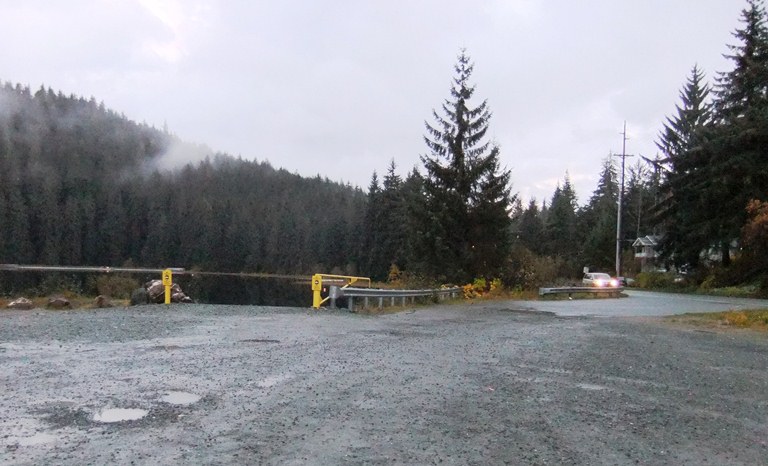
The parking lot at the Auke Lake boat launch would be paved as part of the proposed Auke Lake Wayside, which is not considered for funding in the STIP.
“It was going to be a paved parking lot with some storm water management treatment system, permanent bathrooms, there’d be a picnic shelter and a day use area. There would be a floating dock for the boat ramp along with comes habitat improvements along the bank of the lake,” Schaaf says.
DOT’s Clough calls the STIP a living, breathing document that constantly changes. He says the department considers comments from the general public, various interest groups, municipalities and other government agencies.
“We welcome those, because that’s what leads to the best projects ultimately being moved forward,” he says.
CBJ’s Schaaf says he hopes DOT officials remain open to the public comments he expects they’ll get on the Auke Lake Wayside.
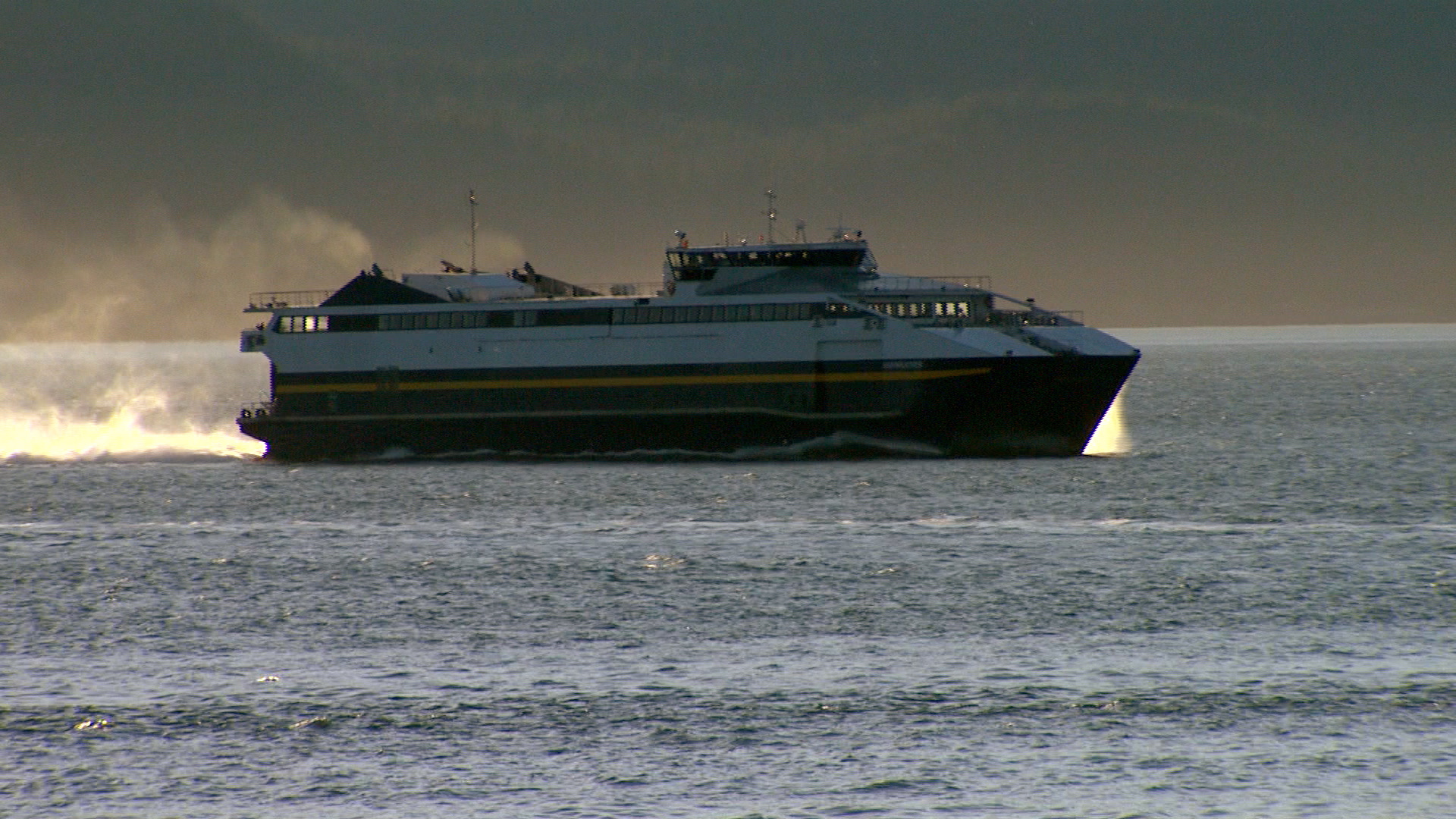
Alaska Marine Highway System’s Fast Vehicle Ferry Fairweather. Photo by Skip Gray/KTOO
The fast ferry Fairweather is leaving Juneau’s Auke Bay as soon as Thursday for its trip down to a Seattle shipyard. When it returns to Alaska next spring, it will feature a completely new power plant.
The deteriorating engines that were the subject of the State of Alaska’s long-running lawsuit with the engine manufacturer will be swapped out. Then, its sister ship Chenega will go through an identical refit next year.
It’s still unclear what caused the rapid deterioration of the current engines that powered the fast ferries’ water jet drives. State attorneys filed suit alleging that German engine manufacturer MTU Friedrichshafen and MTU Detroit Diesel provided defective engines or recommended the wrong type of coolant. Or perhaps, as MTU suggested, it was the Alaska climate or ferry crews driving the vessels too hard.
One of four diesel engines inside the engine room of the fast ferry Fairweather. Photo by Skip Gray/KTOO
“We’ve had experts, metallurgists, and consultants. And, of course, MTU has equal talent,” said Alaska Marine Highway System General Manager John Falvey. “There (were) a lot of different thoughts on what could have happened.”
The ferries were barely five years old and Falvey said the engines were, unfortunately, already reaching their end of their operating life because of progressive erosion and corrosion. Falvey said they repeatedly bored out the cylinders and inserted interstital rings to keep the engines running.
When you consider the cylinder, which is all part of the metal block of the engine, and that cylinder starts to erode and corrode, what you get into is a situation where you got to be very careful that the engine is safe to operate. The last thing you want to do is bore those engines too much where the cylinder becomes fragile and the piston comes out the side of it.”
East coast ship-builder Derecktor Shipyards dropped out of the lawsuit when the company declared bankruptcy.
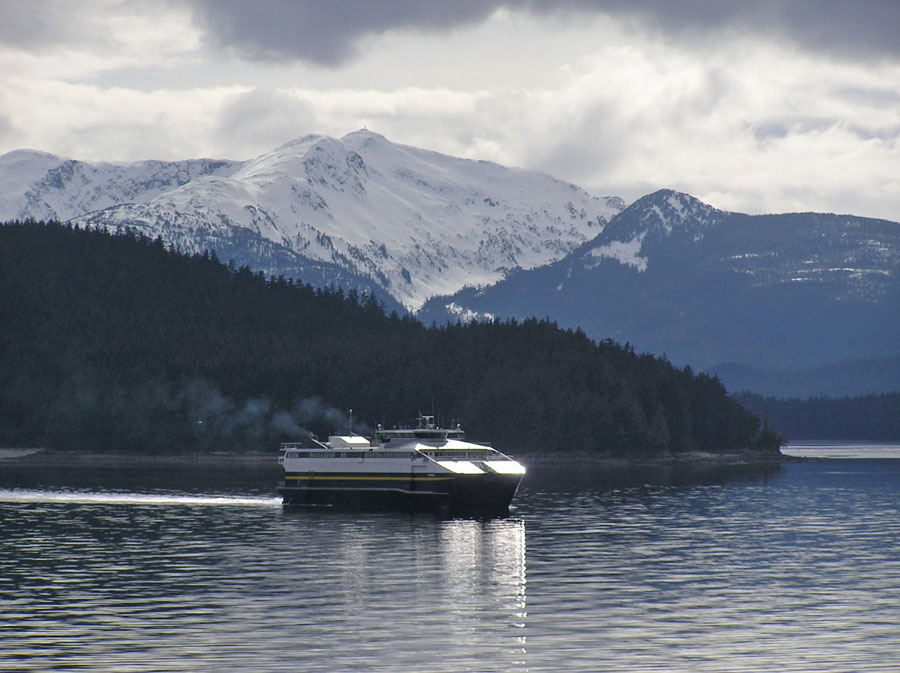
Fast Vehicle Ferry Chenega. Photo by gillfoto, Flickr Creative Commons
On the eve of a trial scheduled for April in Juneau Superior Court, the State of Alaska and MTU and Detroit Diesel, now known as Tognum America, suddenly announced a settlement in the three-year long case.
“Neither party is admitting any fault here,” said Falvey.
The trial was off, and the ferry system would get eight next-generation engines at no cost. That includes four engines each for the Fairweather and Chenega with MTU paying for all the costs of the refit. The State of Alaska also has an option to buy two spare engines valued at $1.5 million each.
“I was directly involved in the final negotiations of that final settlement. I believe that the State got a very good deal,” said Falvey.
The settlement also includes a five-year warranty and maintenance agreement for both the new and current engines, specialized tool sets, and training for Alaska Marine Highway System engineers.
“I think we won,” said Senator Dennis Egan of Juneau, chair of the Senate Transportation Committee. He has high praise for the state lawyers and ferry system managers for sticking with the case.
It was a win-win for everyone, actually, engine manufacturer, (and) the ship builder. It could’ve gone to trial and you know how trials are. Somebody loses. I think they saw the handwriting on the wall and that’s why the settlement came to fruition.”
Robert Venables of Haines, chair of the Marine Transportation Advisory Board, said settlement of the lawsuit and potential installation of the new engines is excellent news. “There’s been a lot of questions on the future of the fast ferries.”
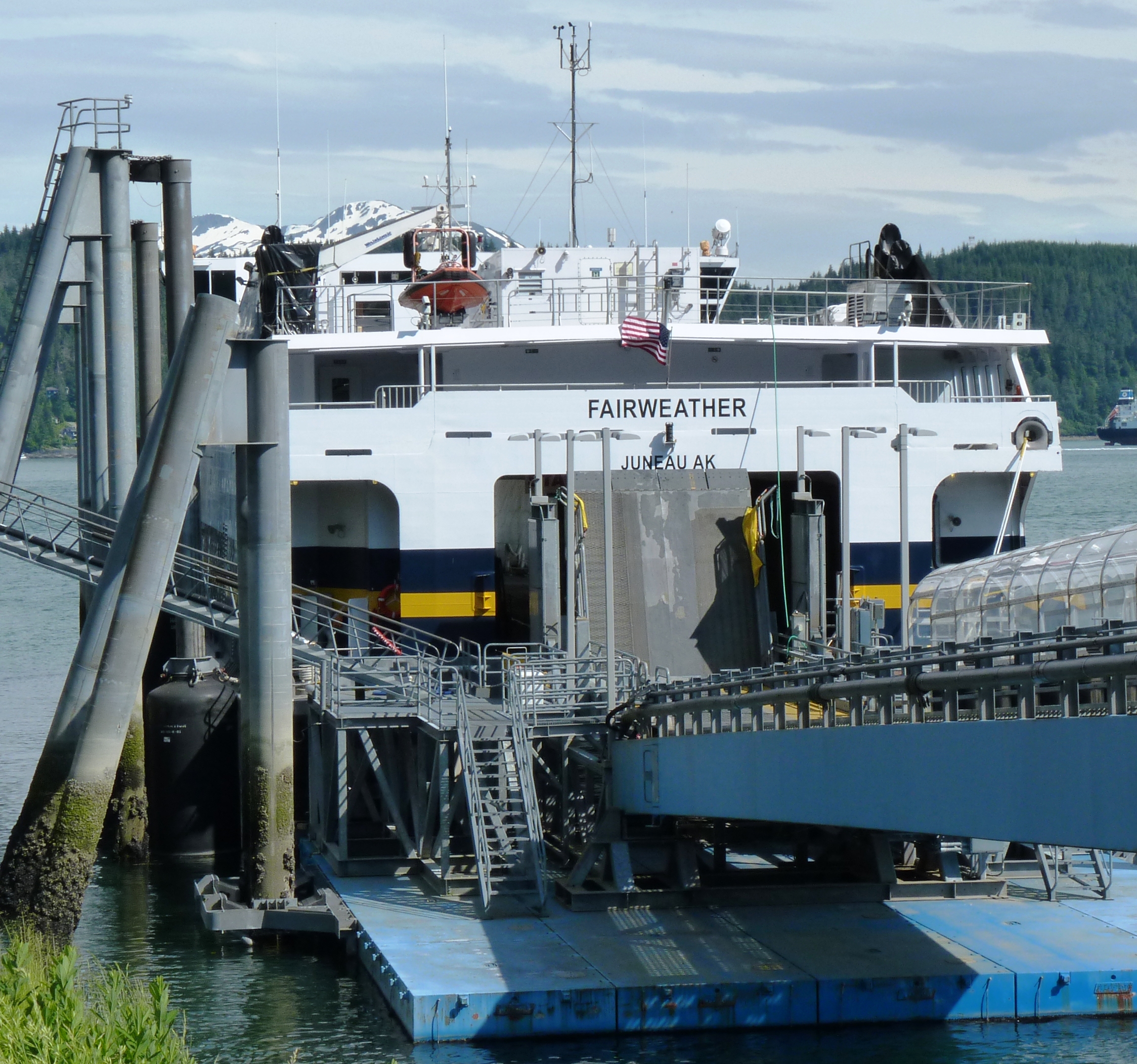
Fast ferry Fairweather docked in Auke Bay this summer. Photo by Ed Schoenfeld/CoastAlaska News
Venables said the high-speed catamarans can serve certain routes more effectively than the slower, traditional mono-hulled vessels.
They’re very ideal for the longer routes where the vessels can get speed going, and get point-to-point and provide the service to these more distant communities in a timely manner so we can keep the operational costs of crewing down and get back in the same day.”
The Juneau-based Fairweather usually runs between larger communities in northern Southeast Alaska.
In Prince William Sound, the Cordova-based Chenega may complement the slower mono-hulled Aurora in providing service to Valdez and Whittier.
Boarding the M/V Aurora in Whittier. Photo by TurasPhoto, Flickr Creative Commons
Colleen Stephens of the Valdez Visitors Bureau says the fast ferry is an essential transportation link, especially for the independent travelers who pass through the area.
So you’ll see many people doing loops who’ll come from either Anchorage or Fairbanks to Valdez. And then, continue on their way out of town to either Whittier or Cordova on board one of the two marine highway links. Or the same thing in reverse: come in on the marine highway, depart on the road.”
Steve Ranney of the Orca Adventure Lodge in Cordova says the Chenega provides a steady flow of inbound tourists and groceries, and outbound seafood product, high school athletic teams, and expectant mothers and other residents visiting out-of-town doctors.
When the ferry managers come to town, I do like to remind them that people do like to move along fast these days. There’s a huge difference between a 3-hour trip and an 8-hour trip.”
Cordova boat harbor. Photo by mcgeez, Flickr Creative Commons
With the new engines, both vessels could continue cruising at 32-knots for the remaining life of the hull, or another 30-years.
MTU and Tognum America officials declined to comment on the settlement or the new engines. But Falvey expects to continue to have a “solid work relationship” with the company which he credits with helping keep the fast ferries running. He believes that they’ve already set the gold standard for producing such specialized engines for high-speed vessels.
When the Fairweather goes into the Foss Shipyard in Seattle this month, the current 16-cylinder Model 595 engines will be replaced by the new, narrower, and longer 20-cylinder 4000 model.
The 20V 4000’s have a bit more of a power capability. What we need to be careful of is we’re trying to utilize the same reduction gearing that we have, thrust bearings, load bearings, things like that. So we’re still limited as to how much horsepower we can put out through the impeller on the end on the jet.”
The Fairweather is expected to return to Alaska service in late May 2014 while the Chenega will head down for its refit in October 2014.
Eighth grader Kathy Tran and seventh grader Leah Kleinman. The Floyd Dryden Middle School students helped collect signatures for a petition opposing the sports travel ban. (Photo by Jeremy Hsieh/ KTOO)
Students and parents protest the middle school sports travel ban during a school summit at Thunder Mountain High School in September 2013. (Photo by Heather Bryant/ KTOO)
Students and parents protest the middle school sports travel ban during a school summit at Thunder Mountain High School last month. About 40 people protested. (Photo by Heather Bryant/ KTOO)
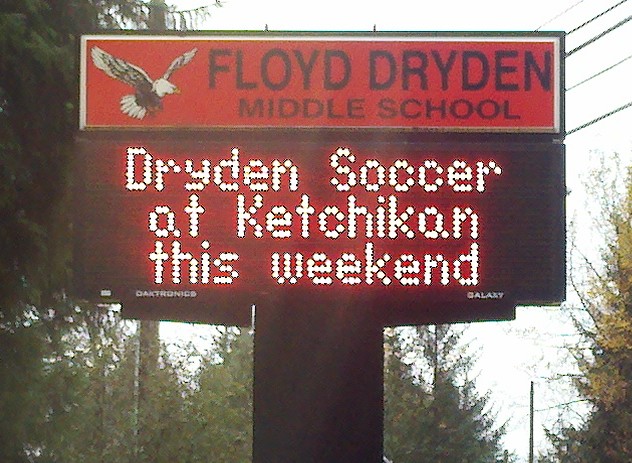
The marquee outside Floyd Dryden Middle School on Saturday. The school board's ban on middle school sports travel takes effect next school year. (Photo by Rosemarie Alexander/ KTOO)
Floyd Dryden Middle School eighth grader Kathy Tran is one of many venting about the policy – and the way it was adopted.
“They said that there was a lot of people that supported this ban. And I was like, ‘Who?’” Tran said.
In more than a dozen interviews with board members, school officials, students and parents, no one has been willing or able to answer that question. Not one person spoke in favor of the ban during public testimony at the school board’s two meetings on the policy.
Board members say there is community support for the ban, but are unwilling to identify from whom.
School Board member Barbara Thurston
“At this point, you know, we’re hearing it off the record,” said school board member Barbara Thurston, one of the three “no” votes.
Meanwhile, parents are organizing opposition. About 40 people picketed a school board meeting last month at Thunder Mountain High School. A Facebook group called Save our Middle School Sports created in February has 209 members. And in a nearly empty room in a nearly empty mall on a Tuesday, a dozen people were putting together a repeal campaign.
Jennifer Lindley, a Floyd Dryden mom and repeal organizer, said the school board acted undemocratically.
“They voted in favor of an unspoken minority that none of us can seem to find,” Lindley said. “I don’t know who my counterpart is.”
School board members on both sides said there is no hidden agenda, and that the board itself raised the travel policy issue.
The four school board members who voted for the ban argued it reduces the burden on already strained budgets and reduces the fundraising borne by local businesses and the community. They said it eliminates unfair differences between how travel requests are handled at Juneau’s two main middle schools.
School Board VP Sean O’Brien
School Board Vice President Sean O’Brien, said casting his “yes” vote was “agonizing.”
“The challenge is, is we have an obligation to kinda create a, a relatively equitable playing field,” O’Brien said.
Floyd Dryden Principal Tom Milliron uses a case-by-case approach, weighing the amount of time lost in the classroom against the potential benefits of travel.
DHMS Principal Molly Yerkes
Dzantik’i Heeni Middle School Principal Molly Yerkes does not allow out-of-town sports travel. She said it’s not right to spend so much time and effort arranging travel when staffing cuts have left her school without a fulltime certified nurse and sometimes a single adult supervising 150 students at lunch.
Neither principal asked the school board to weigh in, though Yerkes said she does support the ban because it clarifies district priorities.
O’Brien said significant differences in kids’ opportunities, like sports travel, could lead to school shopping.
School Board member Lisa Worl
School board member Lisa Worl voted against the travel ban. She said the travel policy is one of many differences between the schools, for example, with classes offered and community involvement.
“So there just is a real difference between the schools. I mean, there’s no right and wrong, it just is.”
Worl said the travel ban sets a board precedent favoring uniformity over local control.
If the budget and staffing situation changes, Yerkes said she expects the school board would lift the ban and said she would reinstitute out-of-town travel.
“And so I think that Molly Yerkes has done the best that she can with what she has, and focus it on more of an intramural, cause that way she can get more kids to play in sports,” Worl said.
How’d they vote?
School board policies are introduced at one meeting, then voted up or down on second reading at a later meeting. The middle school travel ban’s initial reading was Aug. 22. At the school board’s Sept. 10 meeting, it voted 4-3 to adopt the policy.
Sally Saddler, Sean O’Brien, Andi Story and Phyllis Carlson voted yes.
Destiny Sargeant, Barbara Thurston, and Lisa Worl voted no.
The school board’s next meeting is at 6:15 p.m. Tuesday at Juneau-Douglas High School.
Opponents say the budget effects of out-of-town travel are negligible, because it’s paid for almost exclusively with fundraising. The school district pays indirect costs, such as substitutes for teachers traveling as coaches. They say if Juneau cannot or is not willing to support fundraising, it fails.
The Juneau Chamber of Commerce, whose members independently bear much of that cost, has not taken a position. President and CEO Cathie Roemmich says her board of directors intended to discuss the ban last month, but put it off because several members were out of town.
The district did erroneously identify one party in favor of the ban, its Activities Advisory Committee.
A district memo plainly states, “The Activities Advisory Committee is in agreement with the revision.”
“That couldn’t be farther from the truth,” said Activities Advisory Committee member Tom Rutecki. He’s been a member since it was founded in 2008. The committee discussed middle school travel last school year, but never made recommendations to the school board.
“And I pointed that out to them, I sent them individual emails, and I said, ‘Why are, why are you saying this? We never did this,’” Rutecki said.
It was not corrected in the memo, though Superintendent Glenn Gelbrich verbally noted the error during the meeting. He declined interview requests about the ban.
Seventh grader Leah Kleinman plays basketball at Floyd Dryden. The night the school board adopted the travel ban policy, she presented a 350-signature petition opposing it.
“You play, and you have fun, then you want to like, travel somewhere,” Kleinman said. “It’s like, ‘Hey guys, let’s go Ketchikan, yeah.’ But, now it’s like, you’re just gonna stay there and you’re just gonna play DZ. And then they will eventually stop coming to us.”
That’s already begun, even though the ban doesn’t take full effect until next school year. Middle school officials in Ketchikan and Sitka say their athletes aren’t as likely to come to Juneau, if Juneau stops traveling.
Floyd Dryden students Kathy Tran and Leah Kleinman said they have learned something from the ban: There’s a lot of politics in sports.
The old cottonwood trees in the Centennial Hall parking lot were starting to lean heavily and lose branches. Rather than let them become even more of a hazard, the city decided recently to remove them. Photo by Casey Kelly/KTOO.
If you’ve walked through the Centennial Hall parking lot lately, you may have noticed that landscape crews cut down some trees last week.
The convention center’s manager, Steven Pfister, says the old cottonwoods were starting to lean heavily and lose branches. Rather than allow them to become a hazard, Pfister says the city decided to remove them.
He says new trees will be planted, but probably not until next year.
“So we just thought, do we wait for a tree to fall over and hurt somebody? Or damage property? Or do we go ahead and just take care of it now?” Pfister says. “And then we also looked at it as a unique opportunity to beautify it.”
Pfister says he’s not sure what kind of trees will replace the old ones. But he hopes they’ll be more colorful, like the maples planted around the building.
The city’s Willoughby District plan calls for a portion of the Centennial Hall parking lot to eventually be turned into a mall-style street, with green spaces and landscaped sidewalks.
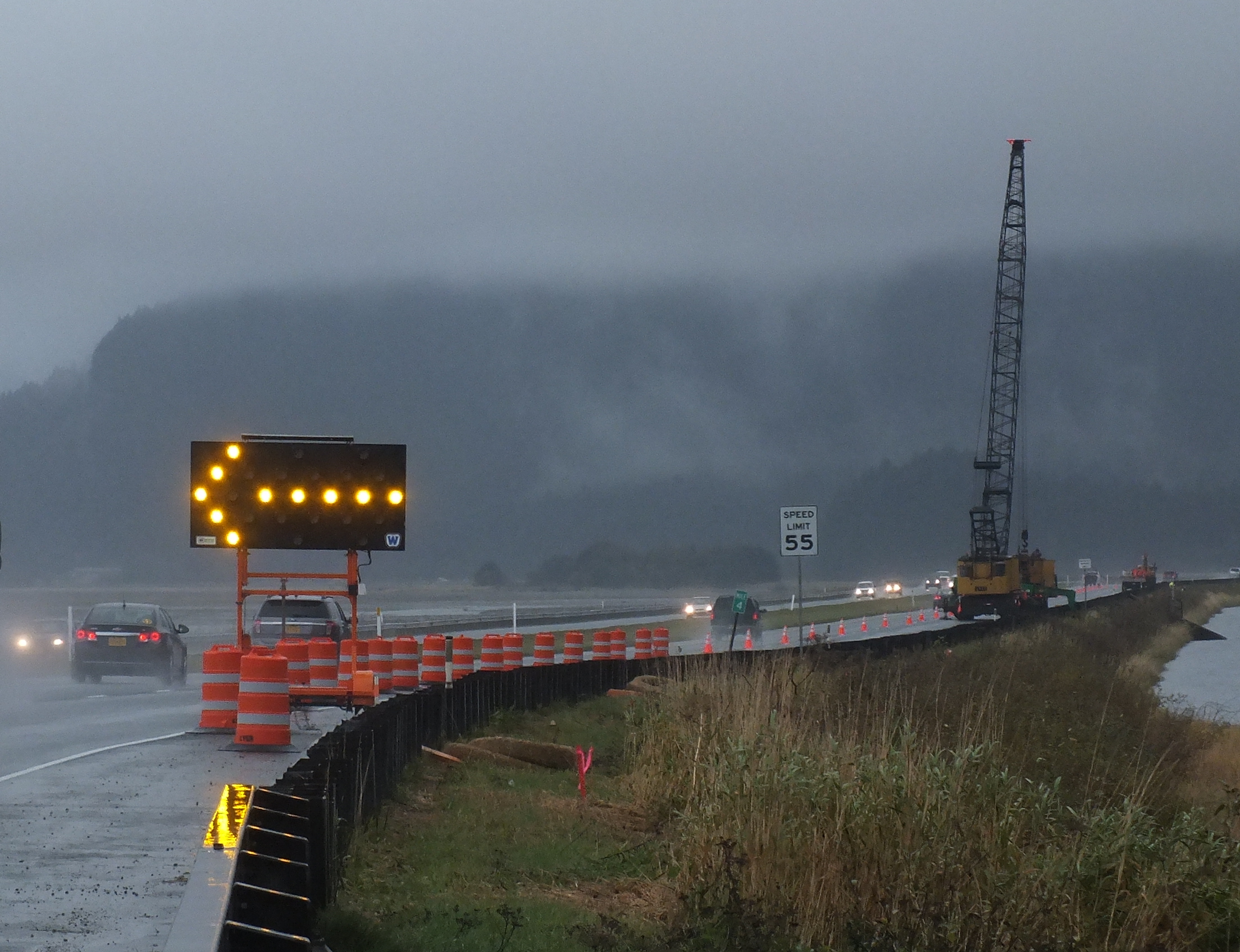
Crews from Ever Electric and North Pacific Erectors are constructing as many as 148 light poles along Egan Drive. Photo by Matt Miller/KTOO News
Meanwhile, work is already underway to make Egan Drive safer with better roadway illumination. Crews are now in the first phase of the project to erect 148 light poles along darkened areas on Egan Drive from Norway Point to Yandukin Drive. Each pole will be 35 feet tall with 250-watt high pressure sodium lights.
Everyone is slowing down to view the crane (operator) who’s driving the support members for the poles.”
John Garvey of Ever Electric said North Pacific Erectors is helping with the job to drive pilings, weld on caps, and bore underground.
Garvey said work on outbound lanes will occur only before 4 pm, and then inbound lanes will only occur between 9 am and 4 pm. Crews will work for the next few weeks until the weather gets sloppy, and then they’ll take a break until March. Garvey hopes to complete the project in June.
He said on KTOO’s A Juneau Afternoon program on Wednesday that drivers should be careful and watch for crews, equipment, and traffic control measures.
“We just ask that (drivers) merge quickly,” said Garvey. He suggests that drivers start merging when they first see the right lane closure and merge signs.
So when you get to the light, you’re not trying to cut in. That’s where accidents happen. That and people viewing what’s going on and then the people behind it not slowing down. We’ve had a couple close calls. No accidents yet, thank goodness.”
The latest state capital projects budget included $4.2 million in federal funds for the Egan Drive Illumination Project. Ever Electric won the contract with a $3.7 million dollar bid in July. Total cost for the project is currently expected to be just over $3.8 million.
Casey Kelly and Matt Miller contributed to this report.
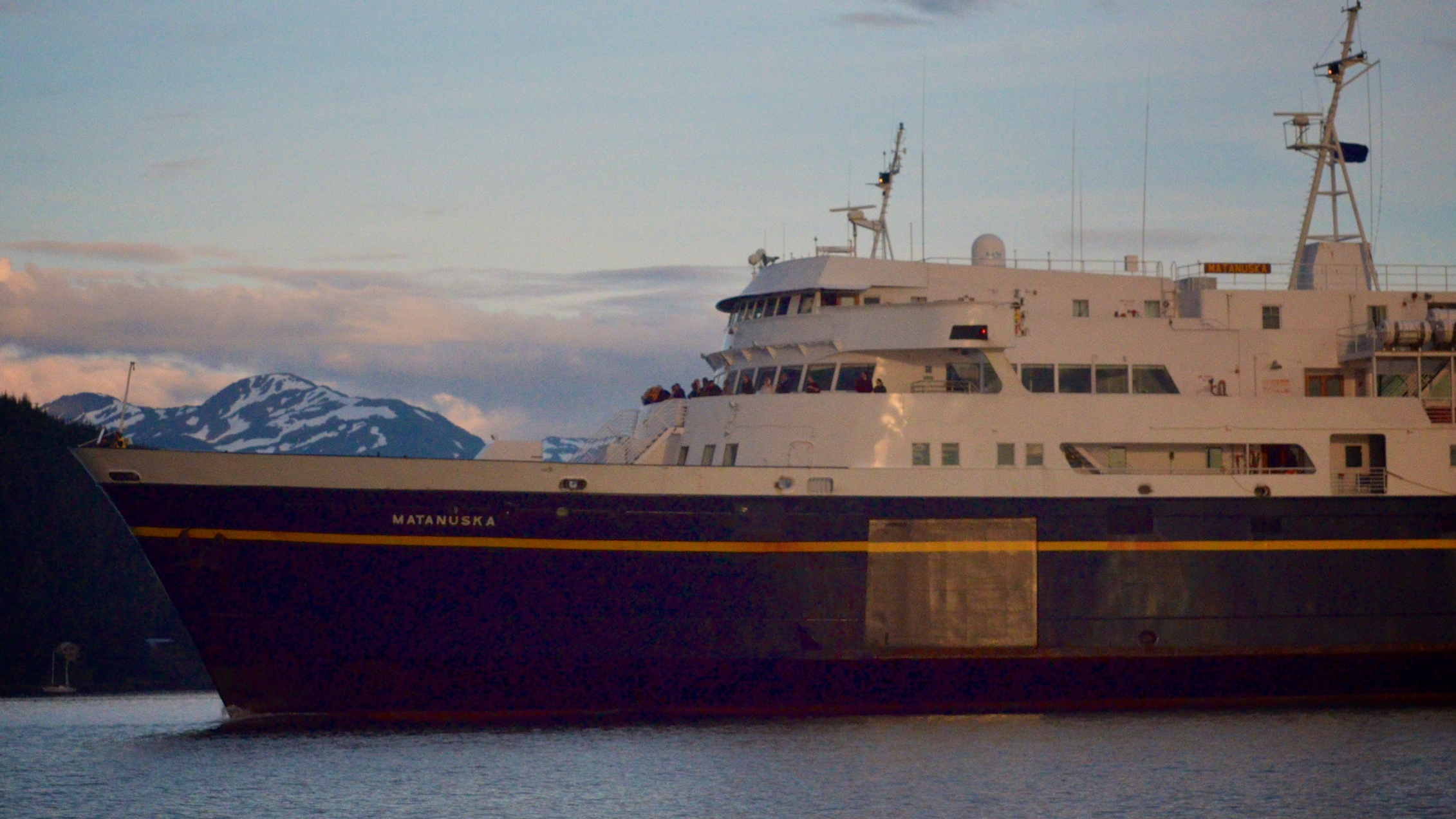
An active-shooter drill is planned for Thursday morning on board the Alaska Marine Highway System ferry Matanuska. During the training exercise, the ferry will be docked in downtown Ketchikan.
The exercise will test the system’s preparedness and safety programs. It also will test law enforcement and emergency medical service personnel.
According to Alaska Marine Highway spokesman Jeremy Woodrow, state and federal agencies will participate in the exercise in addition to ferry system employees. Those agencies are the Alaska State Troopers, U.S. Coast Guard, Alaska State Emergency Management Agency, Ketchikan Police Department and Ketchikan Fire Department.
Volunteers will act as injured passengers.
The exercise is scheduled to run from 9 a.m. to about noon Thursday, with a debriefing to follow on board the Matanuska.
Close
Update notification options
Subscribe to notifications
Subscribe
Get notifications about news related to the topics you care about. You can unsubscribe anytime.