Transportation

Inter-Island Ferry budget woes shrink

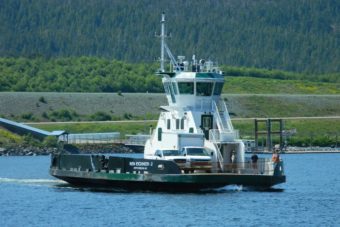
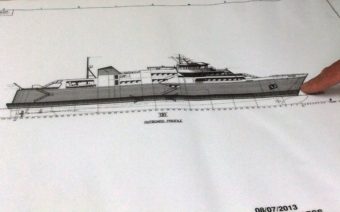
The IFA ferry Stikine sails Ketchikan’s Tongass Narrows.

The financial picture is improving for the Inter-Island Ferry Authority, which connects Prince of Wales Island and Ketchikan. But the southern Southeast system still needs more money to maintain a full schedule all year.

Prince of Wales Island counts on the daily sailings of the Stikine, run by the Inter-Island Ferry Authority.

“It gives us daily, year-round access for business and travel and recreation to the rest of the world,” says Sharon Brosamle, who works with the island’s chamber of commerce.

One example, she says, is some people she knows who run a fish-processing operation.

“It’s just because of daily ferry service that they were able to continue to operate and stay in business because they could get their product over to Ketchikan for shipping,” she says.

The Inter-Island Ferry Authority is separate from the Alaska Marine Highway System. But it’s still gotten funding from the Legislature.

That wasn’t the case this year. So the authority was left scrambling to fill a $750,000 gap in its $4-million annual budget.

General Manager Dennis Watson says that’s changed.

“We have it pared down. If all goes well, it may look more like a half a million dollars or a little bit less,” Watson says.

He says the authority got $100,000 more than expected from a federal grant.

“There’s also another federal transit program. It’s a discretionary ferry boat money program that looks like it might bear some fruit too. We’re just not too sure yet,” he says.

The authority is also able to carry over funds from the previous budget year, which ended June 30th.

That’s because fuel cost less than expected.

“That will bring us in a couple more bucks as well. But we still have a ways to go to get where we need to be right now,” he says.

Watson says the authority is talking to the governor’s office about some help.

Office of Management and Budget Director Karen Rehfeld says the administration is considering options, but has made no decisions. One possibility would be an appropriation in the governor’s next supplemental budget. Rehfeld says her office will review the situation after the summer, when traffic is heaviest.

In the meantime, the authority has to consider what to do about a shortfall.

About three-quarters of the authority’s budget is covered by passenger and vehicle fares. So cutting service also means losing revenue.

Watson says a lot depends on outside factors, such as the fishing industry.

“If we end up with a huge purse seine fleet out here this year or troll fleet, because there’s just lots of cohos, that all transfers to the people getting on the ferry and going back and forth in between here and Ketchikan. Or going over there to catch a plane to go somewhere else when they have a couple of minutes off,” he says.

Watson says one of the authority’s largest customers is the E.C. Phillips fish-processing plant, which trucks salmon from Prince of Wales to Ketchikan.

There’s also tourists, hunters and sport fishermen.

But he says so far, summer passenger loads have been nothing special.

“Although these last few days, it’s been kind of like a rocket went off. I hope that continues. A full boat goes a long ways toward helping us out, in the end play.”

Prince of Wales and nearby communities formed the authority in 1997. It started sailing in 2002, replacing and increasing service previously provided by the state ferry system.

The IFA later added a second route linking Coffman Cove, Wrangell and Petersburg. But it didn’t attract enough customers to continue.

A separate nonprofit group called the North End Ferry Authority plans to take over that route, plus one from Coffman Cove to Ketchikan, starting next year.

Airport seeks public input on concession program

The Juneau International Airport
The airport is hoping to start design work for a substantial remodel soon, but first wants to hear what Juneau residents want for concessions. (Photo by Heather Bryant/KTOO)

The Juneau Airport is conducting an online survey to find out what food, beverage, and retail services Juneau residents want. Airport architect Catherine Fritz says this is a crucial step before the airport moves forward with designing an upcoming remodel.

“We just want to encourage people to go online, take that survey, give us your thoughts, or send a quick email, or give us a phone call and talk to us more about their airport. This airport is owned by the city and borough of Juneau. It belongs to the people of Juneau and those are the customers we’re trying to serve.”

Currently, the airport has one retail shop, Hummingbird Hollow. Food and beverage services include a restaurant, bar, and coffee shop run by ESS out of Anchorage, a contract that expires at the end of this year. Those spaces occupy 8,000 square feet, or 9 percent of the whole building.

“It’s just not how airport food and beverage concessions are run in this day and age. So we’re trying to find a model that will work better for a concessionaire, for someone who wants to run that business, as well as still serve the travelers and the Juneau public,” Fritz says.

Fritz expects a future food and beverage program to be substantially different than what it is now, and hopes it will lead to more activity and an increase in revenue.

Another change the airport is looking into is offering more “real” food in the area after security. Right now the only option in the secure area is food and beverages from vending machines.

The effort to find out what airport users and Juneau residents want started in June. As of last week, 250 online surveys were completed, but Fritz hopes that number will increase.

An estimated 1 million people use the Juneau Airport each year.

State seeks input on road, ferry, trail improvement list

Brotherhood Bridge, photo by Mike Knapp
Juneau’s Brotherhood Bridge is on a statewide transportation improvement project list with a higher price than before. Photo courtesy Mike Knapp.

A bike path in Saxman, a bridge replacement in Juneau and trail improvements in Sitka are on the list of federally-funded transportation projects for Southeast Alaska.

The state just announced it’s seeking public input into the latest version of the list. Dozens of projects from around the state are also included.

Peter Christensen is the Department of Transportation’s capital improvement program manager.

“STIP is an acronym. It’s S-T-I-P, Statewide Transportation Improvement Program. And it is a federal requirement that we have a list of projects that we intend to work on with federal funds and that the public be able to see that list, comment on it and give us feedback, Christensen said.

The four-year list also includes improving Petersburg’s Nordic Drive, upgrading 6 miles of Kake logging road, and repaving much of Juneau’s Egan Drive.

Christensen said the list is a living document that undergoes frequent change.

“Some projects are able to accelerate and go faster. Some projects might have encountered additional issues in the environmental phase, so they need to be investigated further,” Christensen said.

“We can have trouble purchasing right of way, so the project gets hung up there for a little while. A number of things can happen to slow up a project and a number of things can go right or smoothly to accelerate it,” he added.

For example, the list shows Juneau’s Brotherhood Bridge replacement will cost about $8.5 million more than expected. The total estimate is now $30 million.

Comments are being taken through August 5th.

View the list.

Use an interactive map to find projects in your community.

Visit the state STIP page, to read more about the projects list.

Main Street re-opens to traffic

Main Street re-opened to traffic on Thursday. Photo by Justin Heard / KTOO.

Juneau’s Main Street has opened to traffic on a smooth new asphalt surface that one driver described as “beautifully done.”

Two blocks of Main Street have been closed to traffic since mid-April as crews installed underground utilities, and  replaced water, sewer and storm drains.

The street opened to downhill traffic only on Thursday.

The current phase of the project includes traffic islands, landscaping and a sidewalk canopy.

The project is to be complete by mid-August.

Buses will be on the road by Monday.

Ferry service to Gustavus draws mixed reaction

Gustavus has a year-round population of around 450. Many residents like to congregate at the town’s ‘Four Corners,’ where the Fireweed Gallery and Coffee Shop is located. (Photo by Lisa Phu/KTOO)

State ferry service between Juneau and Gustavus is in its third season. While most Gustavus residents are happy with the additional transportation option provided by the Alaska Marine Highway System, others aren’t sure the change is good for the small community.

The first ferry between Juneau and Gustavus sailed on November 23, 2010.

“I waited pretty much most of my life and just thought it was a dream that would never ever happen,” says Sylvia Pederson.

Passengers on the LeConte relax during their four-hour ride from Juneau to Gustavus.

Pederson has spent her whole life in Gustavus, a town with a year-round population of 450. She’s also spent most of her life in fear of flying, which used to be the only way to get to and from Gustavus. So whenever Pederson left home, she had to take anxiety pills.

“There was no other option so I mean I did it, because you have to, but I never liked it. All the pilots would humor me and say, ‘It’s a Sylvia day or not,'” she laughs.

Now Pederson doesn’t let six weeks pass by without traveling to Juneau by ferry. She goes for medical purposes and visits her mother in the Juneau Pioneer Home. On this particular journey, Pederson went with her mother to the Senior Ball, something Pederson would’ve never considered if it meant flying.

Gustavus residents Leslie Sirstad and Betty Markey are also traveling back home from Juneau.

Aboard the LeConte: Gustavus residents Leslie Sirstad and Betty Markey use the ferry to get supplies and to take a break.

“I’m working on family record kinds of thing, so I got some scrapbook things. That was the real reason why I went in,” says Sirstad.

Markey’s trip was for a similar purpose. “I went in to get supplies and just to look around.”

Markey went to Costco and Fred Meyer which are common stops for Gustavus residents who want to fill their vehicles, an option now possible because of the ferry.

Sirstad and Markey also go to Juneau to take a break, “to change the scenery, make home look better,” says Sirstad. Markey adds, “And to get to go to a restaurant, a different restaurant, different foods, ‘cause you’re limited in Gustavus. We’re not complaining. We’re happy the way it is.”

Barb Miranda Bruno is also happy with the way it is. In fact, she may have liked Gustavus better before the ferry. Bruno is co-owner of Sunny Side Market, a health food store and café that opened in 2007 and is geared toward locals. While the ferry does bring more people to her business, Bruno says inaccessibility is a key reason residents live in Gustavus. She calls herself a fence-sitter regarding the ferry.

“It’s just busier,” Bruno says. “It just changes the way Gustavus was. If you talk to the old timers, before the road was paved, that was a big deal, before electricity, that was a big deal, and now we have the ferry so there are these incremental changes that slowly have Gustavus become a little bit more like other places and I think a lot of us chose to live here because it was different.”

Toshco owner Toshua Parker says he opened his business based on the ferry coming to Gustavus.

Toshua Parker comes from a homesteading family in Gustavus. He’s the owner of Toshco, “which is a grocery, lumber, hardware, clothing and marine, and everything else store,” Parker explains.

It’s no coincidence that his store has been around for as many years as the Alaska Marine Highway has been going to Gustavus. Parker says he started his business because of the ferry.

“Without the ferry, there would be really no way for us to get these materials out here economically enough that we could pass the savings on to the customers and hit the price point that we need to hit to make this work. At this point I don’t know how we’d survive without it. It’s really been a godsend for us out here.”

An example of those savings – the price of a gallon of milk is $5.99. Parker says it was double that before his store opened. Toshco and Sunny Side Market are the only grocery stores in town.

Barb Miranda Bruno co-owns Sunny Side Market, a health food store and cafe.

Gustavus is the gateway to Glacier Bay National Park so residents are used to seeing tourists. But Kelly McLaughlin, owner of Fireweed Gallery and coffee shop, says the ferry has changed the type of people who come to Gustavus.

“We see a lot more of independent travelers who aren’t looking to spend a lot of money, who just want to come and see Gustavus. So there’s a higher traffic but maybe not as much money spent,” she says.

The ferry is also bringing in more vehicles.

“The traffic is a little bit difficult sometimes because we’re not used to quite so many cars. People haven’t quite figured out how to deal with all that, but it’s coming,” says Pederson.

Pederson is confident Gustavus residents will bend with the changes. They’ll need to – in October, the Alaska Marine Highway plans twice-weekly trips between Gustavus and Juneau year-round.

Main Street improvements making progress

Paving on Main Street will begin Tuesday.

Improvements on the busy street began mid-April shutting down two blocks of downtown Juneau. Originally, the road was scheduled to be open Saturday, but the cold spring weather caused some delays.

Superintendent with Arete Construction Travis Seibel says Main Street will open for traffic as soon as this week.

“The buses are going to start around the 24th and we’ll have one way traffic downhill as soon as they’re done paving.”

This current phase of Main Street improvements includes replacement of the water, sewer, and storm drainage systems between 2nd and 5th streets, as well as the addition of new traffic islands, landscaping, and a sidewalk canopy.

“All the underground utilities are in. Once pavement’s in, we’ll start working on the sidewalks, canopy, traffic islands.”

Seibel says the project has been going well overall and the finish date is still set for August 15th.

Site notifications
Update notification options
Subscribe to notifications