University of Alaska

University of Alaska regent appointees face legislative criticism over decision to remove DEI language

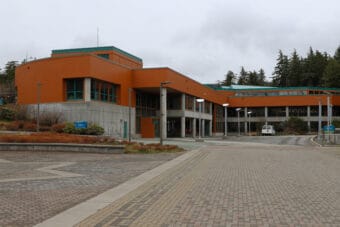
The University of Alaska Southeast campus in Juneau on Monday, March. 4, 2024. (Clarise Larson/KTOO)

State legislators grilled two University of Alaska Board of Regents appointees at a Senate Education Committee meeting last week as part of their confirmation process. That’s after the board approved a motion to scrub mentions of diversity, equity and inclusion from university communications. 

The February vote from the board has brought up criticism about the decision itself and the lack of transparency in the board’s process. 

Sen. Löki Tobin, D-Anchorage, criticized the decision during last week’s Senate Education Committee meeting. Tobin is also a PhD student at the University of Alaska Anchorage and said the board should have heard from the university community before making the decision.

“I have had my faith shaken over the last few weeks,” Tobin said. “It has been deeply shaken, and I know many of my fellow colleagues and fellow students are feeling similar. We are feeling unheard. We are feeling unseen.”

The University of Alaska Board of regents is composed of 11 members. Each regent serves eight-year terms, except for the student regent, who serves for two years. Members are appointed by the governor before going through a confirmation process with the Legislature.

Only one of the two appointees being considered was actually at the meeting. Anchorage-based Regent Christine Resler was appointed for her first term this year. She voted in favor of the motion to scrub DEI mentions from the university.

“I stand behind that we were trying to do the right thing, but I also recognize how hard it was for the community,” she said.

Sen. Jesse Kiehl, D-Juneau, said the decision gives the federal government a lot of power over the university.

“It doesn’t just say we’re going to follow the U.S. Constitution or federal law,” he said. “It said any guidance and executive orders or guidance on executive orders that come out of the federal government, anything from the U.S. Department of Education on Maryland Avenue in Washington, D.C. is the law of the University of Alaska system.”

Resler said she’s committed to supporting the UA community through any other changes from the federal government.

“We are in a very dynamic environment, and I can’t predict what’s going to happen next or what we’re going to be faced with, but what I can tell you is I will make sure the Board of Regents will react to support the students, the faculty and the alumni of the state and the university system,” she said.

Regent Karen Perdue was reappointed this year. She wasn’t at the meeting when the board approved the motion, but said that the university needs to maintain a stable environment to face what comes from the federal government.

“We see directives coming out sometimes on short notice,” she said. “But what we can do is we can stick together, talk to each other, and try to figure out how we might react and best adapt to these activities. I value the principles of academic freedom and the right to speak about issues. These are core values of our university.”

Senate President Gary Stevens, R-Kodiak, was the only other senator to question the appointees during the hearing. He asked about accreditation and research within the UA system.

Resler and Perdue’s confirmations will be heard at a joint legislative session that has yet to be scheduled.

University of Alaska Board vote to remove DEI language draws concerns of Open Meetings Act violations

The University of Alaska Southeast campus in Juneau on Monday, March. 4, 2024. (Clarise Larson/KTOO)

In the month after the University of Alaska Board of Regents decided to scrub mentions of diversity, equity and inclusion, these words have gradually disappeared from university webpages. 

That decision was in response to increasing pressure from the Trump administration to cut DEI. But critics of the decision are concerned about the lack of transparency in the process.

The Board of Regents made a lot of decisions during its regular two-day meeting in Soldotna in February. But the one that got a lot of attention from the public wasn’t actually on the agenda.

On the second day of the meeting, Board Chair Ralph Seekins suddenly brought up a motion to remove mentions of diversity, equity and inclusion from university websites.

“Are we ready for this?” Seekins said.

He asked Regent Seth Church to read it.

“I move the Board of Regents direct the President to take all necessary actions to comply with recent federal executive orders and applicable agency guidance,” Church said.

But this motion wasn’t on the agenda. And members of the UA community are wondering if the board violated the Alaska Open Meetings Act. An investigation by KTOO found that the board followed the letter of the law, but their process did leave the public in the dark until after the decision was made. 

The law ensures governing bodies, like the Board of Regents, conduct their business in the open, said Savannah Fletcher, a Fairbanks-based public interest attorney. She said suddenly bringing up the motion in the meeting means no one in the public saw it coming.

“No one had the chance to weigh in, and people still may not have heard what actually happened on the meeting because they haven’t heard the recording, whereas they might have called in and listened in real time if they knew this was on the line,” she said.

Under the Open Meetings Act, the public needs to be informed of the time and place of any public meeting before it happens. Fletcher said in an email that governing bodies generally include agenda items in public notice. She wrote that not doing so makes it meaningless to tell the public a meeting is coming up.

The agenda was posted ahead of the meeting. While it included federal regulatory compliance as a discussion topic during the board’s executive session, a motion to scrub DEI from the university websites was never included.

The way it ended up on the agenda is allowed under the board’s bylaws, but it’s complicated.

The Board can change the agenda in two ways. It can happen at the beginning of the meeting when the agenda is approved. It can also happen afterward if the change is approved by a vote of the members.

In this case, there seemed to be no vote to change the agenda. But Public Affairs Director Jonathon Taylor said instead of voting, the board approved the agenda change by an act of consent. That means no one objected to bringing the motion forward for discussion.

Regent Church declined to comment on the motion. Chair Seekins also did not respond to a request for comment from KTOO.

Albiona Selimi, the student regent and the only dissenting vote, said she wasn’t expecting to vote on a motion so soon.

“I had a very strong suspicion that it would come up, obviously, because it was a big topic that had come up within that time, I personally did not know or think that it would be coming to a motion so quickly,” she said.

Selimi said the lack of public testimony made the vote difficult for her. But afterward, Selimi said people in the university community told her she did the right thing. University organizations that represent staff and student leaders also passed resolutions condemning the decision and the manner in which it was carried out.

The public interest attorney, Fletcher, said the public still has a right to know about agenda items, even if issues were time sensitive.

“We want government to be transparent, and with transparency, there sometimes are delays, because if you want to vote on something and it’s time sensitive, you still have to comply with some kind of notice,” she said. “Even if there’s a notice for an emergency special meeting, the public needs have a chance to know about it and then accordingly comment on it.”

The Board of Regents didn’t break the law, but Fletcher said if it had, it could easily fix it. All it would have to do is put the motion to a vote again in a meeting where all parts of the Open Meetings Act are followed. 

Fletcher herself is against the decision, but she said she understands why the board made it.

“I don’t think it was the right move, but I’m also not the person in that room that has the fear of all this funding for so many professors and grad students and undergraduate research getting pulled,” Fletcher said. “It seems like they were trying to soften the blow with commentary about still supporting Alaska Native culture and the Alaska Native community within our university system, but those seem to be talking out of two sides of your mouth, if you ask me,”

University leadership said these decisions protect the federal funding Trump is threatening to pull. In the motion and communications following it, the board continues to say it’s committed to nondiscrimination. 

In the meantime, the university has already renamed different offices and committees as a result of the Board of Regents’ decision.

The University of Alaska Southeast removed a webpage on the Chancellor’s Advisory Committee for Diversity, Equity, Inclusion and Cultural Safety as it considers changes. The campus is reviewing more than 165 mentions of DEI as well. 

Other changes occurred before the motion passed, such as removing mentions of “Alaska Native” on the Alaska Native Science and Engineering Program website, or taking out the words “affirmative action” from the university’s nondiscrimination statement.

University of Alaska Southeast begins reviewing uses of DEI online

The University of Alaska Southeast campus in Juneau on Monday, March. 4, 2024. (Clarise Larson/KTOO)

The University of Alaska Southeast is taking next steps to remove mentions of DEI from its website. 

In an email to university staff and faculty Friday, UAS Chancellor Aparna Palmer wrote that the campus is updating webpages that mention “diversity,” “equity,” “inclusion” and other related terms.

This comes after a motion from the university’s Board of Regents directing leadership to comply with recent executive orders from President Trump.

As of Friday, the campus had found 165 instances of those terms that need to be reviewed.

Palmer said the university system is taking these actions to protect federal funding the university receives. That money supports more than half of UAS students.

In an interview with KTOO on Monday, Palmer said the campus will continue to be a welcoming place to all.

“I don’t know exactly where things will go or how they will evolve. What I can control is that I am dedicated to the students at this university, and I’m dedicated to the employees, and so I will work really hard to make sure that people feel accepted, a sense of belonging and safe,” she said. “That’s really important to me.”

Palmer wrote to staff that UAS will create a committee made up of staff and faculty who will recommend if a term needs to be removed or changed. Some terms will be reviewed by specific department leadership instead.

But the campus has already taken several actions without a review committee. It temporarily took down a webpage for the Chancellorʼs Advisory Committee on Diversity, Equity, Inclusion & Cultural Safety out of “high visibility concerns.” Administration also changed the name of the Office of Equity and Compliance to the Office of Rights, Compliance and Accountability.

Palmer said staff and faculty still have free speech and academic freedom protections, and may use DEI and related words as long as they aren’t speaking on behalf of UAS.

University of Alaska removes affirmative action and DEI language to comply with Trump executive orders

The University of Alaska Southeast campus in Juneau on Monday, March. 4, 2024. (Clarise Larson/KTOO)

The University of Alaska is grappling with how to respond to broad executive orders from the Trump administration that include eliminating diversity, equity and inclusion programs.

The administration is forcing educational institutions to remove DEI language and programs that it says violate civil rights as a condition to receive federal funding.

Part of those orders have since been blocked by a federal judge. But the university has already made some changes on its website, and a directive from its Board of Regents last Friday leaves the path forward unclear for faculty and administrators.

One faculty member has already been contacted by university administrators. Kathy DiLorenzo is an associate professor of Public Administration for the University of Alaska Southeast. 

She got an email over the weekend about a class she’s teaching this summer. A university administrator told her to change the course name and description. The class? “The Role of Leadership in DEI in the Public Sector.” 

The class’ course description said students would look at how DEI impact nonprofits, public policies and the government. DiLorenzo pushed back on the directive.

“I wrote back and said, ‘I don’t agree with this. I feel it’s a violation of academic freedom,’” DiLorenzo said. “And then it came back to me that the chancellor said, ‘Okay, you can, you can keep it,’” she said.

She said academic freedom means instructors aren’t limited in what they can teach.

“As long as we are not teaching something that is wrong, not valid, or we’re harming somebody in some way, we have the freedom to teach what is relevant to society. And DEI is relevant to society,” DiLorenzo said.

Her experience highlights a shift at the University of Alaska as it responds to executive orders from the Trump administration that target diversity initiatives. The email to DiLorenzo came just one day after the university’s Board of Regents directed its president to scrub mentions of DEI from its websites and programming.

DiLorenzo’s summer course seems like it can remain as is, but she said things could change if the university’s administration gets other instructions from its leadership as a result of federal policy changes.

“I believe that the administration at UAS wants to have the most open and inclusive environment that we can have, and they’re committed to that, but if they get direction from above them, they won’t have any choice,” she said.

Before the formal change on Friday, the university had already begun making changes to comply with federal orders. The university’s nondiscrimination statement, which used to mention affirmative action and its goals, has its own web page. Almost all of its language around affirmative action was gone as of last Thursday, according to archived versions of the webpage. Archives also show that a shortened version of the statement used in job listings and email signatures got rid of affirmative action language.

The statement used to say, “UA is an affirmative action/equal opportunity employer, educational institution, and provider and prohibits illegal discrimination against any individual.” 

As of last Thursday, the statement changed to say, “The University of Alaska is an Equal Opportunity/Equal Access Employer and Educational Institution. The University is committed to a policy of non-discrimination against individuals on the basis of any legally protected status.”

Most job listings across the three universities used the updated language as of last week, but some UAS jobs still used the older language. All job postings use the new language following Friday’s motion.

UA Director of Public Affairs Jonathon Taylor said this is part of the university updating its nondiscrimination policy in response to the Trump administration’s executive order.

Taylor said it’s an informal administrative process that is based on advice from the university’s legal counsel. But, he said it isn’t related to Friday’s board motion.

“I would caution against creating a link between the updates to the nondiscrimination statement and the board action on Friday,” he said. “The action to update the language on the non discrimination statement was already in motion before the board meeting and isn’t related to the board action.”

The “about” webpage for the university’s Alaska Native Science and Engineering Program also had several changes, including the removal of the words “Alaska Natives,” according to reporting from the Anchorage Daily News.

University of Alaska Southeast Chancellor Aparna Palmer addressed the board’s motion in a letter sent to staff and students Friday. 

“This was a difficult decision for the Board to make but, ultimately, they were driven by their desire to ensure the long-term success of the University of Alaska system in the face of the potential threat of losing all of the federal funding we receive to support our students and employees,” Palmer wrote.

UAS Alaska Native Languages professor X̱’unei Lance Twitchell said eliminating words around DEI violates free speech protections from the state and federal constitutions. And even with the services the universities have provided for students from underrepresented communities, Twitchell said more needs to be done – not less.

“We have some students, especially from rural communities in western Alaska, who come to us as faculty members and say, ‘I feel like I have a choice at a university. I can be myself, or I can succeed, and I have to make that choice,’” Twitchell said. “And so long as we’re hearing Native students who are saying that, we know we haven’t done an adequate job of providing a good place for them to have an education.”

Twitchell said leadership on the university’s Alaska Native Studies Council will meet soon to discuss strategies to face the various ways this directive will play out.

Chancellor Palmer stated in her letter that university leadership will begin meeting with faculty and students this week to figure out next steps.

Regents direct University of Alaska to strike diversity and inclusion language

From left, University of Alaska regents Seth Church, Albiona Selimi and Dennis Michel participate in a board meeting on Friday, Feb. 21, 2025 in Soldotna, Alaska. (Ashlyn O’Hara/KDLL)

The University of Alaska System will no longer use or refer to “diversity,” “equity,” “inclusion,” or other similar words on its websites, print or electronic communications, programs and positions. That’s after a vote by the system’s board of regents, who say they’re still committed to offering an inclusive educational environment.

It was toward the end of two days of meetings at Soldotna’s Kenai Peninsula College that Board of Regents Chair Ralph Seekins appeared to veer off script.

“Are we ready for this?” he asked. “Here is a motion that we will make that, if I’m correct, we need to make the motion to approve this. And it is hopefully very clarifying in the minds of a lot of people that are watching to see as the board goes forward.”

Seekins looked to regent Seth Church across the room, who started to read a motion that wasn’t on the board’s agenda.

“I move the Board of Regents direct the President to take all necessary actions to comply with recent federal executive orders and applicable agency guidance,” Church reads.

Those recent federal orders come from President Donald Trump, who’s put diversity, equity and inclusion policies squarely in his crosshairs. And according to the Board of Regents, those “necessary actions” include scrubbing university websites, employee position titles, programs and communications of the words “diversity,” “equity,” “inclusion” and “other associated terms.”

A preamble to the motion says the board reaffirms its “dedication to being an inclusive, nondiscriminatory institution,” and to continue honoring Alaska Native communities. Seekins underscored that before the vote.

“In a nutshell, we’re asking this university be a welcoming, open access university, discrimination toward none and opportunity for all,” he said.

The only vote against came from student member Albiona Selimi. Selimi declined an interview after Friday’s meeting, but said in an email statement the move isn’t in the best interest of students, staff or faculty. She said she also stands to be directly impacted by the board’s decision.

“I am a part of the wonderful McNair Program at UAA, a federally funded program that supports first-generation and historically underrepresented students pursuing graduate education. I am also proudly pursuing a minor in Women’s Studies, a program that is commonly scrutinized by anti-DEI practices,” the statement reads.

The University of Alaska Board of Regents meets at Kenai Peninsula College on Friday, Feb. 21, 2025 in Soldotna, Alaska. (Ashlyn O’Hara/KDLL)

The Board of Regents is putting enforcement of the new policies in the hands of university chancellors – some of whom sought clarification on how they should be responding to the federal orders. One of those chancellors is Sean Parnell, who oversees the University of Alaska Anchorage.

“I asked for clarifications, because I felt like our employees deserve more certainty about direction, and I could only provide so much as chancellor of one university who answers to the President and the Board of Regents,” Parnell said.

He says part of the confusion stems from the University System’s historic embrace of diversity initiatives. Diversity, equity and inclusion is a cornerstone of UAA’s latest strategic plan, which acknowledges the campus sits on the ancestral homelands of Alaska Natives. It articulates plans to boost diversity among the university community, eliminate systemic racism from university policies and create a sense of belonging for marginalized groups.

“There have been strong policies in the past from Board of Regents, which utilize some of the terms, the DEI terms that are now, you know, not supposed to be used according to the president, President Trump’s orders, executive orders,” he said.

University system President Pat Pitney says the motion was really about ensuring none of their existing policies or programs appear discriminatory. And she says that work started before this week’s board meetings.

“It’s an emotional subject, and, and people want a very clear answer, and right now, there’s not any clear answers, and so the best we can do is focus on our welcoming environment for all,” she said.

Pitney says the board is trying to reaffirm the university system’s openness to all, rather than perceived restrictions to some.

But not everyone thought Friday’s motion was the right move.

Monique Musick, who’s part of the university’s staff alliance, cast doubt on whether the motion actually provides clarity.

“I think I’m probably going to be spending a lot of the next few months trying to define that as we try to meet this and finding every way of removing diversity, equity and inclusion and other associated terms, from our jobs, from our research, from our clubs, from our activities,” she said. “I mean, where does this end?”

Kate Quick was in the audience when the board voted. As the votes came down in favor, she shook her head. Quick is an organizing manager for United Academics. That’s the union representing the university system’s non-adjunct faculty and postdoctoral fellows. She’s worried about how the board’s decision is going to impact existing employees and programs.

“I know they’re in a tight spot because of the federal mandates, but they’re still being reviewed,” she said. “They’re being fought. And I think this was premature. They probably could have come out with a different statement saying we’re going to continue business as usual until the courts resolve this. But that’s not what they did.”

While the board voted, a federal judge blocked significant portions of the Trumps’s DEI orders after determining parts violated the U.S. Constitution.

After the meeting adjourned, the university system’s director of public affairs said he hadn’t yet read about the ruling, but that the language passed Friday is meant to give general clarity to university staff. He said board members will take new developments into account.

University of Alaska and faculty union reach tentative agreement for new contract

The University of Alaska Southeast campus in Juneau on Monday, March. 4, 2024. (Clarise Larson/KTOO)

The University of Alaska administration and the union representing nearly 1,100 faculty and postdoctoral fellows have reached a tentative agreement for a new three-year contract.

The deal announced on Wednesday includes across-the-board salary increases each year and a boost to minimum salaries.

“I think we have a very fair and balanced contract,” University President Pat Pitney said Thursday. “We are so interdependent in moving this institution forward. Faculty obviously are integral to our research and our enrollment priorities. The contract provides increases, provides a path, you know, a three-year horizon for faculty, but also allows us to keep our fiscal stability. That is so critically important for the ongoing connection with our students and our communities.”

Under the tentative agreement, health care benefits would remain the same, with 82% of the costs covered by the employer and 18% by the employee.

“From an administration standpoint, we were trying to get a little bit of relief in our health care benefit side,” Pitney added. “We didn’t get that. But I think overall it’s a great contract and we appreciate the closure.”

The United Academics Local 4996 union membership opted to take the lower salary increases, in order to continue the same costs share benefit, UNAC bargaining team member Jerry Babcock said. Babcock is a professor with the department of justice at the University of Alaska Fairbanks.

“Of course it’s not everything we wanted,” Babcock said. “I don’t believe that it’s reflective of the value of our bargaining unit members, but I do believe that it’s the best agreement we can get at this time, with the university’s priorities, in order to serve our members with their primary concerns, the first of which is no changes to health care.”

Babcock said the union conducted surveys with the membership throughout the negotiations to best represent their interests. They also opted to keep what’s known as a “me-too clause,” where if the university grants higher raises with other union groups, those raises would apply to UNAC members as well.

“For us and our members, we believe that’s a win,” he said.

After a mutually declared impasse announced in December, both parties requested a federal mediator to assist with the negotiations. The bargaining teams reached agreement after two sessions with the mediator this month.

Part of the bargaining deadlock was centered around compensation and benefits.

The union had pointed to members struggling with high cost of living, with rising inflation, housing costs, and stagnant salaries. They had proposed raising wages by 4%, 4.5% and 5% annually over the next three years, while the university administration has proposed 2.75%, 3% and 3% increases.

Under the tentative agreement, salaries would be increased by 2.75%, 3%, and 3.25% over the next three years.

“Even at our higher starting point, we weren’t addressing the issue of the increase in consumer price index in Alaska over the last six years,” Babcock said, referring to rising inflation and cost of living. “That hasn’t been addressed yet in our salary increases, and it’s unfortunate that we’re not in a place where the university administration is willing to address that for our members.”

But he said the union feels the health care split is a fair compromise, as well as boosting salary minimums. “The increases were 15% for our post doctoral fellows and 10% for all the other ranks,” he said, referring to assistant, associate and full professors. “It’s a good starting place.”

Overall, he said the federal mediator was helpful in getting to this tentative agreement.

“We feel like this is the best that we can do with the current university administration’s positions on getting our members something, and getting them something in time for the Legislature to approve it in this session,” he said.

The new contract would extend through Dec. 31, 2027. The total additional cost over the three years is estimated at $21 million.

The tentative agreement will be put to a vote by UNAC membership before being submitted for approval by the university board of regents. Then it will be submitted along with the university’s budget request to the governor’s Office of Management and Budget and to the Legislature for appropriation this session.

Site notifications
Update notification options
Subscribe to notifications