Wildlife

Sullivan moves to halt proposed ban on predator control in Alaska refuges

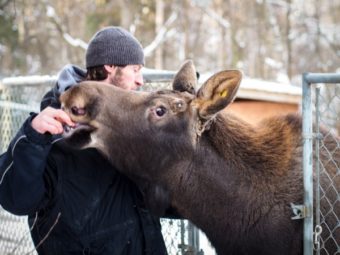
This photo was published in an ADFG pamphlet "Understanding Intensive Predator Management in Alaska," part of the Department's efforts in 2012 to educate the public about practices that have been controversial, especially to observers outside Alaska. (Photo by Steve Dubois/Alaska Department of Fish and Game)
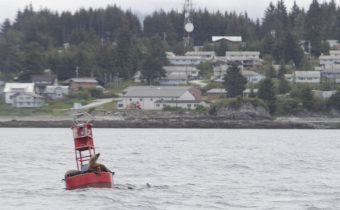
This photo was published in an ADFG pamphlet “Understanding Intensive Predator Management in Alaska,” part of the Department’s efforts in 2012 to educate the public about practices that have been controversial, especially to observers outside Alaska. (Photo by Steve Dubois/Alaska Department of Fish and Game)

A U.S. Senate Committee Wednesday passed language that would pre-emptively block a draft Fish & Wildlife Service rule seeking to ban some predator control in national wildlife refuges.

The proposed rule is the latest in a long-running tug-of-war between the state and the feds over how to manage wildlife in Alaska.

In the Senate Environment and Public Works Committee Wednesday, Senator Dan Sullivan (R-Alaska) introduced an amendment that says Fish and Wildlife can’t implement a recently proposed rule to ban certain management practices in Alaska refuges.

“These proposed regulations, as currently written by the Fish and Wildlife Service, would fundamentally alter not only how we now manage wildlife refuges and the Fish and Wildlife habitats on them,” said Sullivan, “but will also change the relationship between Fish and Wildlife and individual states from one of cooperation – which it should be – to subservience.”

Fish and Wildlife manages nearly 77 million acres of land in Alaska, in 16 national wildlife refuges.

The practices that Fish & Wildlife intends to ban in those areas are what the state calls “intensive management” – like baiting brown bears, same-day airborne hunting of bears, and harvesting wolves and coyotes during denning season.

Susan Alexander is Manager for the Alaska Peninsula and Becharof National Wildlife Refuges. She said the state has used intensive management in game management units that overlap with 13 of the state’s 16 refuges.

“What it means is the state in those areas is focusing on practices to reduce predator populations to increase the availability of certain species – moose and caribou for harvest by people,” said Alexander. “And that involves some specifically targeted control of predators that are practices that are counter to our mandates.”

Fish and Wildlife is federally mandated to manage for “biological diversity,” “biological integrity” and “environmental health” in refuges.

“And then within ANILCA, each of the refuges has a purpose which is to manage for “natural diversity,” explains Alexander.

Also within ANILCA is Title VIII, which gives Alaska Natives and rural residents priority for subsistence hunting.

On the state side, the Alaska Board of Game has its own Constitutional mandate to manage wildlife for the benefit of all citizens.

This clutter of legal frameworks has created confusion – and sometimes contention – going back two decades. Conservationists support the federal restrictions. Hunters, however, and the state of Alaska and its Congressional delegation, view each proposal as another example of federal over reach.

“Both sides are making laws to protect what they got,” said Frank Wood, chairman of the Nushagak Fish and Game Advisory Committee, “and users are stuck in between.”

Wood spent years working on subsistence issues with the Bristol Bay Native Association, and reminds people that what’s really at stake for local users is big game that wolves and bears prey on.

“When I first got into resource management for subsistence use at BBNA, we had seven established wolf packs in Bristol Bay, and they decimated the caribou populations and decimated the calving population of moose spring and winter time, right behind the villages of Port Heiden, Egegik, Ugashik. Those lands on federal side are off-limits for any intensive management.”

That particular stretch of the Peninsula is split longways, between federal land – the Alaska Peninsula and Becharof Refuges – on the Gulf of Alaska side, and state land on the Bristol Bay side. Wood said hunters there were able to control the wolf population on one side of the boundary, but not the other.

And over time, Wood said, the dual management system has become too complicated for local users to keep up with.

“And it becomes really taxing for the user to know what land they’re sitting on, what regulation they fall under,” said Wood. “It really isn’t fair to Alaskans to have to always be aware of all the changing regulations. There ain’t enough time, enough people, enough money to keep a pulse on everything.”

“So whatever we come up with, I hope we’re not 20 years from now, doing the same thing.”

Last year the National Park Service took the lead on predator control hunting restrictions, finalizing similar rules for Park and Preserve lands in October 2015.

The Fish and Wildlife Service, which generally manages for much more liberal hunting practices on refuge lands, let NPS test the waters before moving forward too.

Sullivan’s amendment to stop the Fish and Wildlife rule passed the Committee by a vote of 12 to 8; it will be added to the Bipartisan Sportsmen’s Act of 2015. That bill heads next to the Senate.

Meanwhile, the public has a 60 day comment period to weigh in on the Fish and Wildlife rule; Governor Bill Walker has asked the feds to extend that out another two months.

Researchers investigate seabird die-off

The bodies of common murres litter the beaches of Prince William Sound and many other areas around Alaska. Some of the seabirds have been found some 350 miles inland, around Fairbanks. (Photo by David Irons)

The seabird known as the common murre lives along the North American coastlines, feeding on nutrient-rich small fish such as capelin and herring. But murres are dying by the thousands throughout southern Alaska – apparently because they’re not finding enough food.

“Why are they starving?” says Robb Kaler, a migratory bird expert with the U.S. Fish and Wildlife Service in Anchorage. “We know what’s going on. We just don’t know why – the mechanism to indicate why they are starving.”

Kaler and many others have been looking for the answer to that question for months now, since they first started getting reports of massive die-offs that have left thousands of murres dead or near death along the coast of Alaska over the past several weeks. Kaler has been studying the problem since early last year.

“We started getting reports of dead birds washing up on beaches in late March in Seward, in Resurrection Bay,” he said.

Kaler and other experts say there’ve been many such mortality events involving murres in recent decades.

“It happens from time to time,” says wildlife biologist Heather Renner, who works at the Fish and Wildlife Service’s Alaska Maritime Wildlife Refuge in Homer.

But, she added, “This one seems really, really big and widespread geographically, which is the unusual thing.”

So widespread that some of the seabirds have made their way inland hundreds of miles from the ocean, including a few found around Fairbanks, about 350 miles north of the coast.

“It’s unparalleled,” says Dan Gibson, a Fairbanks-based avian expert. “There’s never been a record of common murre north of the mountains, no record in the Interior before.”

A resident of Two Rivers, a community east of Fairbanks, took this photo of a murre she found on her property last week. (Photo by Becky Hammond)

Gibson is a retired manager of the bird collection at the University of Alaska-Fairbanks’ Museum of the North who’s been studying Interior Alaska’s bird species for more than 50 years. He’s also a member of the Arctic Audubon Society, which he says started getting reports of murres around the holidays.

Gibson says the emaciated condition of the birds and the death-by-starvation of so many others shows the scale of this mortality event statewide.

“… This is still way, way off the charts,” he said. “There’s nothing that I’ve heard about or read about that parallels this.”

Kaler and others believe the murres traveled far and wide because they weren’t getting enough food in their usual places, along the continental shelf off North America’s northwest coast.

Next week: Researchers outline theories about how warmer-than-usual ocean temperatures led to the die-off of common murres in Alaska.

Editor’s note: State and federal wildlife officials ask anyone who finds a murre, dead or alive, to contact the U.S. Fish and Wildlife Service by calling toll-free 1-866-527-3358 or by e-mail at AK_MBM@fws.gov

A century of bird data informs modern surveys on Kenai

(Photo by Jenny Neyman/KDLL)

It was from records of human visitors at the turn of the 20th century that Todd Eskelin, a fish and wildlife biologist at the Kenai National Wildlife Refuge, began to piece together a history of bird populations on the Kenai Peninsula.

Documentation from three exploratory expeditions to Alaska in 1899, 1900 and 1901 give a glimpse of some changes that have taken place, and individual birders over the years have added observations to that long-lived knowledge base.

“None of the information that we have from the Kenai and Kasilof flats is state- or government-sponsored surveys,” Eskelin says. “It really is individual birders, and not scientists, that are paid to go and generate the information that tells us how important these spots are.”

A century ago, common eiders were indeed common around Kachemak Bay. Today only a few are found during winter and early spring.

Then there’re species like the northwest crow. It’s abundant around Kenai today, but a century ago they only ventured as far northwest as Valdez.

The three-toed woodpecker is another ubiquitous bird on the Peninsula that was only documented once by early expeditions. Those early birding trips also didn’t find black-capped chickadees, American robins, northern pintails and American wigeons — all of which can be found these days.

Bald eagles are another relative newcomer. They used to be more transient birds to the Kenai area, visiting when natural food sources were available and leaving when not. But once they became accustomed to human-generated meals, they started staying year-round. Eskelin has seen as many as 800 in one day at the landfill.

“A lot of these fed populations of bald eagles just tend to not go back to their breeding grounds … but the good part of the story is they’re not making babies, so they’re not teaching their babies to come to dump.”

On the flip side, the once-common sighting of snow geese on the Kenai River flats has drastically diminished.

The flats, in general, have been experiencing a 30-year drying trend, but it’s still an incredibly important habitat for birds, along with the Chickaloon, Kasilof and Fox rivers. Among them, the Kenai flats reign supreme.

“Over half of the birds, including all the seabirds that have been identified on the Kenai Peninsula have been found right at the Kenai flats. So it gives you a sense of how valuable it is.”

The area is important to birders as well because it’s easily accessible, with great birding opportunities in the summer and winter, as well as spring and fall migrations.

“The Kenai Flats is one of best places to go and view shorebirds in the spring because they’re right next to you,” Eskelin says. “You go down to Homer and you’re looking through this scope a mile away, or you could just drive down the port road and all the same species and then some are right next to your car. So it’s just an awesome place for birders to come.”

Of course, the one constant about change is that it continues to occur. One thing Eskelin hopes does not change is the health of the Peninsula’s best bird habitats.

“Those four rivers and those four estuaries are probably one thing that will still be here. And being the best birding areas — the most diversity —we’ve just got to keep that in mind as we continue to develop these sites.”

Eskelin made his comments at a Kenai Historical Society meeting Sunday at the Kenai Visitors and Cultural Center.

Massive murre die-off continues

Dead murres on the beach in Haines on Jan. 12, 2016. (Photo courtesy of Tim Ackerman)

More than a dozen dead common murres washed up on the beach in front of Haines on Tuesday, part of an unsettling trend happening across the state. According to biologists, the seabirds are starving to death.

Tim Ackerman was out for one his usual walks on the beach on Tuesday when he noticed something a little unusual: dead seabirds.

“I counted about 14 of them between the cruise ship dock and the harbor,” he says. “There were some in the harbor, too, up on the beach.”

He says when he saw the first dead murre, he didn’t think much of it. It had been partially devoured and, as there are usually are around here, eagles lurked close by.

“I counted probably three to four of them that were still whole then I knew they weren’t prey. They were the starving birds that have been all over the state.”

Rob Kaler is a biologist specializing in seabirds with the U.S. Fish and Wildlife Services Migratory Bird Management division. He says in the past few weeks alone the conservative estimate for dead murres washing up on Alaska shores is up to 10,000. The birds are starving to death; a cascading effect of warmer ocean water, he says. Kaler explains that the mixing of cold and warm water raises nutrients like plankton, closer to the surface. When the water stays warm, that doesn’t happen which impacts the entire food chain.

“NOAA also reported that this to be an unusual mortality event year for whales, so we’re seeing the effects of this throughout the food web,” Kaler says.

Reports of dead murres started coming into wildlife officials in March, he says, with the numbers picking up in November and again over the Christmas break.

“I think what we had there was a pretty severe storm that pushed birds that were towing the edge over that breaking point in terms of succumbing to the elements and not having their metabolic needs met,” says Kaler.

Kaler says he’s gotten reports of emaciated, dead birds as far south as Sitka and as far west as Chignik Bay and Unalaska. He says of all the birds they’ve studied, no poison or toxins have been found. The murres’ stomachs are completely empty, Kaler says. Common murres eat between 10 and 30 percent of their body weight each day, which equates to between 90 and 300 fish.

“It’s really peaked in the northern Gulf of Alaska, Cook Inlet, Whittier, Seward, and then reports from Valdez as well as now Haines and Sitka would be the broad range,” Kaler says.

The overall impact this die-off will have on the total population is unknown. There are 2.8 million common murres in Alaska. If these deaths continue to occur and include lots of adult females in their breeding peaks, then it’s possible, he says. And while the number of deaths this year is usually high, murre die-offs have happened in the past. Kaler says they are mostly related to El Nino.

“In terms of saying that this could have population-level impacts, we hope it won’t, but we intend to monitor and see. Our efforts right now are focused on the magnitude of this event, as well as capture the geographic scope – how wide is this occurring? -and the duration – how long?”

In Haines, local bird expert Pam Randles called the discovery upsetting. She says the murres were feeding in Portage Cove and Lutak Inlet last week.

“And so, they’re trying to find food in here, which is not their normal habitat,” Randles says.

Not only is the bird die-off unsettling, the implications are scary, Randles says.

“Our salmon eat that stuff and who knows what else is dying off, or starving, or having trouble?”

Norm Hughes has been commercial salmon fishing in Alaska for more than 30 years. He says last season saw skinnier fish – up to 20 percent smaller.

“The fish came back, but there’s less fish, the price was down and the fish were smaller so it was like a triple whammy for a local fisherman,” he says.

Hughes says, for now, these events aren’t a major concern. When they say go fish, he’ll fish.

Biologist Kaler encourages anyone who sees dead birds to report them to ak_mbm@fws.gov or call the hotline at 866-527-3358.

FWS proposes tighter rules on predator hunting in refuges

The state of Alaska has, in recent years, loosened the rules for hunting wolves and bears, but federal wildlife managers aren’t going along with it. The U.S. Fish and Wildlife Service on Friday proposed new rules for predator hunting on national refuges in Alaska.

The agency has proposed to ban taking brown bears with bait, hunting wolves during the denning season, and trapping bears, among other harvest methods. The ban would not apply to subsistence hunting, and some methods in the proposed ban aren’t broadly legal in the state anyway.

The Fish and Wildlife Service published the new proposed rule Friday. It is following in the controversial footsteps of the National Park Service. The Park Service last year banned several predator hunting practices that the Alaska Board of Game allows. State and sport hunting advocates call it a federal incursion on Alaska’s right to manage its own game.

The Fish and Wildlife Service plans nine public hearings across Alaska, starting this month in Kotzebue and Kodiak.

Late scientist’s work culminates in new butterfly guide

From the cover of “Butterflies of Alaska: A Field Guide” by Kenelm W. Philip and Clifford D. Ferris. (Image courtesy of UAF)

A new butterfly guide is out. It identifies thousands of species across Alaska, eastern Russia and western Canada. The guide also reflects the collaborative work of hundreds of scientists and amateur collectors.

Ken Philip was a world renowned Fairbanks butterfly expert, or lepidopterist, who died almost two years ago. He left behind a collection totaling more than 100,000 specimens. He also left unrealized his dream of producing a comprehensive guide to Alaska’s butterflies and moths. Derek Sikes, a researcher and curator of University of Alaska’s Museum of the North, says friends and colleagues have stepped in to realize Philip’s dream. He says that collaborative approach is in keeping with the cadre of volunteers Philip developed in some 50 years of research.

“He had a team of between 400 to 600 people called the Alaska Lepidopterist Survey, and over the decades Ken was working, they’d send in specimens from all around the state,” Sikes said.

Sikes says the team is still active, and Philip’s family has established an endowment to support further research. It also helped fund the new guide. He says guides are invaluable tools for amateurs and scientists alike, especially as conditions in the north shift.

“We have this historical data, and now we can continue to monitor these beautiful creatures into the future and see how they change… hopefully not for the worse — but, at least, we’ll be able to pay attention to them,” Sike said.

Sikes says while the bulk of Philip’s collection is headed to the Smithsonian Institution, the guide and UAF funded awards for research ensure Philip’s legacy continues.

Site notifications
Update notification options
Subscribe to notifications