Health

Among butter clams, which pose toxin dangers to Alaska harvesters, size matters, study indicates

A butter clam. Butter clams are found from the Aleutian Islands to the California coast. They are known to retain algal toxins longer than other species of shellfish. (Photo provided by the Washington Department of Fish and Wildlife)

Butter clams, important to many Alaskans’ diets, are notorious for being sources of the toxin that causes sometimes-deadly paralytic shellfish poisoning.

Now a new study is providing information that might help people harvest the clams more safely and monitor the toxin levels more effectively.

The study, led by University of Alaska Southeast researchers, found that the meat in larger butter clams have higher concentrations of the algal toxin that causes PSP, than does the meat in smaller clams.

“If you take 5 grams of tissue from a small clam and then 5 grams of tissue from a larger clam, our study suggested that (in) that larger clam, those 5 grams would actually have more toxins — significantly more toxins — than the 5 grams from that smaller clam,” said lead author John Harley, a research assistant professor at UAS’ Alaska Coastal Rainforest Center.

Partners in the study were the Sitka Tribe of Alaska, which operates one of only two laboratories in the state that test shellfish for algal toxins, and with other organizations.

It is one of the few studies to examine how toxin levels differ between individual clams, Harley said.

The findings came from tests of clams collected from beaches near Juneau on five specific days between mid-June and mid-August of 2022.

The 70 clams collected, which were of varying sizes, yielded a median level of saxitoxins of 83 micrograms per gram, just above the 80-microgram limit. Toxin concentrations differed from clam to clam, ranging from so low that they were at about the threshold for detection to close to 1,100 micrograms per gram.

And there was a decided pattern: Toxin concentrations “were significantly positively correlated with butter clam size,” the study said.

A woman sorts though a pile of butter clams on a dock in Alaska in 1965. Butter clams have long been harvested for personal consumption in Alaska. (Photo provided by the Alaska Department of Fish and Game)

Among the tested clams in the top 25% size, 81% had concentrations above the regulatory threshold, while among the quartile with the smallest size, only 19% came in at above the threshold.

The typical butter clam has a shell that is about 3 inches wide and up to 5 inches in length; clams in the study ranged in shell width from less than 1.5 inches to more than 4 inches. The mass of meat inside the shells of tested clams ranged from 3.87 grams to 110 grams, the study said.

The detections of toxins were in spite of the lack of significant algal blooms in the summer of 2022 – making that year an anomaly in recent years.

In sharp contrast, the summer of 2019 — a record-warm summer for Alaska — was marked by several severe harmful algal blooms. Near Juneau, toxin concentrations in blue mussels, another commonly consumed shellfish, were documented at over 11,000 micrograms per gram, and the toxins killed numerous fish-eating Arctic terns in a nesting colony in the area.

Just why the butter clams tested for the new study showed concentrations of toxins in a low-bloom year is a question for further review.

Butter clams are known to pose special risks because they retain their algal toxins much longer than do other toxin-affected shellfish. Like other species, butter clams do detoxify over time, but they do so much more slowly, Harley said. The clams in the study were all at least a few years old, and there are some possible explanations for why they still retained toxins in the summer of 2022, he said.

“Maybe these larger clams, because they’ve been consistently exposed to harmful algal blooms several years in a row, maybe they just haven’t had a chance to detoxify particularly well,” he said.

The unusual conditions in the summer of 2022 mean that the results of this study may not be the same as those that would happen in a summer with a more normal level of harmful algal blooms, he said. “It still remains to be seen if this relationship between size and toxin is consistent over different time periods and different sample sites and different bloom conditions,” he said.

Research is continuing, currently with clams collected in 2023, he said. That was a more typical year, with several summer algal blooms.

The algal toxin risks in Alaska are so widespread that experts have coined a slogan that reminds harvesters to send samples off for laboratory testing before eating freshly dug clams and similar shellfish: “Harvest and Hold.”

Harley said the fact that there are toxins in clams even when an active bloom is not present “is a very real concern” for those who have depended on harvest. The Southeast Alaska Tribal Ocean Research Network, known as SEATOR, has been monitoring shellfish in winter and other times beyond the usual months of algal blooms, he noted.

That monitoring has turned up cases of toxin-bearing shellfish well outside of the normal summer seasons. Just Tuesday, SEATOR issued an advisory about butter clams at Hydaburg, collected on Saturday, that tested above the regulatory limit for safe consumption.

Juneau Assembly OKs $500K grant to local nonprofit for substance misuse services

Gastineau Human Services’ new Mount Juneau Counseling and Recovery building on Thursday, Oct. 24, 2024. (Yvonne Krumrey/KTOO)

The Juneau Assembly unanimously approved a $500,000 grant to Gastineau Human Services at a meeting Monday night. The money will help the nonprofit as it expands services for people recovering from substance misuse.

The grant’s approval comes two months after the permanent closure of Bartlett Regional Hospital’s Rainforest Recovery Center. At the time, hospital leaders said Rainforest lacked enough staff to operate and was contributing to a financial crisis that could close the hospital.

Last month, Gastineau Human Services opened its new Mount Juneau Counseling and Recovery building on its campus in Lemon Creek. It opened earlier than originally planned to quickly fill the service gaps left by Rainforest’s closure. 

Along with the new building, Gastineau Human Services also added an additional eight beds for people recovering from substance misuse. That means Gastineau Human Services can now house up to 27 people at a time in its residential treatment program. 

The Assembly’s latest grant is one-time funding that’s meant to help with the cost of expanding care and taking on more patients. 

Earlier this year, the Assembly also approved another grant of $2 million to Gastineau Human Services. That money is to help the nonprofit as it moves forward with plans to construct a 51-bed residential building on its campus for people in recovery.

The nonprofit’s goal is to begin construction next year with housing available in 2026.

Anchor Point man arrested after shootings at Homer health nonprofits

The Kachemak Bay Family Planning Clinic’s administrative and education building on Nov. 12, 2024. (Jamie Diep/KBBI)

Homer Police arrested a man Monday in connection to three shootings at two local nonprofits.

Homer Police Chief Mark Robl said officers found and arrested 30-year-old Josiah Kelly of Anchor Point after a second shooting at Kachemak Bay Family Planning Clinic’s administrative and education building Monday evening. The clinic had also been shot at earlier in the day.

Kachemak Bay Recovery Connection, an organization that supports people recovering from substance use disorder, also had its building shot at in late October.

“Kelly has confessed to us to all three of the shootings,” Robl said. “His motive for doing the shootings is, basically, he said he did those for religious reasons.”

Robl said they believe Kelly acted alone in the shootings. A faith-based crisis pregnancy center in Wasilla was also vandalized last week, but Robl said he doesn’t believe the cases are connected.

Claudia Haines, the family planning clinic’s CEO, told KBBI after the first shooting that someone fired eight rounds into the clinic on Monday morning.

“No one was hurt because it was before the work day began, thankfully. But it’s, it’s terrifying for staff and volunteers,” she said.

Charging documents say Haines told Homer Police after the first shooting that Kelly canceled the clinic’s trash service “due to him not agreeing with family planning.” Kelly is listed as the owner of Rubbish Removed and Recycled in Homer, according to state corporate records.

Paper hearts surround the entrance to Kachemak Bay Family Planning Clinic’s administrative and education building on Nov. 12, 2024. (Jamie Diep/KBBI)

The family planning clinic provides reproductive health services across most of the Kenai Peninsula. In addition to wellness checks and pregnancy tests, the clinic also provides gender-affirming care, contraceptives and testing for sexually transmitted infections.

This isn’t the first time the organization has been targeted. The family planning clinic’s Pride flags were also vandalized last year. Haines said they were already preparing for more attention from the public.

“Reproductive healthcare is a very push button topic right now, despite its access being a universal right,” she said. “So, we were bracing ourselves for something, but we’re so deeply saddened that someone would risk hurting people in order to send this kind of message.”

Willy Dunne is the vice president of Kachemak Bay Recovery Connection’s board of directors. He said the shooting caused a lot of fear in the community, but they’re moving forward.

“This was a setback, for sure, but there’s a really healthy, vibrant recovery community here, and people not only willing, but really anxious, to help folks recover from alcohol and substance use disorders,” Dunne said. “And so we’re really excited to continue moving ahead and developing our facility and developing our programs.”

Kelly is currently being held at the Homer Jail. He was arraigned Tuesday morning at the Homer Courthouse. Kelly was charged with multiple counts of misconduct involving weapons and criminal mischief, which are both felonies. His pre-trial is set for Nov. 22 at the Kenai Courthouse.

Juneau group home for women in reentry and recovery reopens after demolition

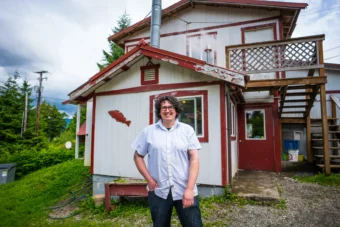
Christina Lee is the operations manager for Tlingit and Haida’s Reentry and Recovery program. She stands at the new T’áa Shuyee Hit Haven House building on Nov. 5, 2024. (Photo by Yvonne Krumrey/KTOO)

A group home in Juneau for women experiencing addiction or leaving incarceration has just reopened after being rebuilt following flood damage. T’áa Shuyee Hit Haven House is now accepting applicants. 

Haven House is run by the Central Council of the Tlingit and Haida Indian Tribes of Alaska. Christina Lee is the operations manager for Tlingit and Haida’s Reentry and Recovery program. She says Haven House is a place for new beginnings. 

“The women in our community, and everywhere, need to know that there’s a safe place to come,” Lee said. “Need to know that there’s an opportunity to start over.”

Up to nine women can live there and it costs $600 a month. Each resident gets their own room and must participate in programs that support mental health and recovery. 

The group home in the Mendenhall Valley originally opened as a nonprofit in 2015. Tlingit and Haida had just taken it over in 2020 when, months later, the entire house flooded and was shut down. 

After rebuilding from the ground up, Tlingit and Haida began accepting applications for residents last month. 

The program doesn’t allow children to live in the house with their parents, but kids can visit. The same goes for romantic partners. 

The program is voluntary and requires participation in programming, so Lee said their applicants tend to be more self-selecting. They’re women committed to their healing and recovery. 

“They have to be able to do chores and be responsible, as long as they can live in a community with other women and be able to hash out any differences that there is,” she said. “That’s kind of what we’re wanting.”

Lee says the program lasts two years, but if life circumstances change, it can be shorter. 

Tlingit and Haida President Chalyee Éesh Richard Peterson says programs like Haven House mean that women can take steps away from old, harmful patterns. 

“We’re excited that it’s a place that’s going to create a supportive environment, hopefully to reduce relapse, reduce recidivism,” Peterson said. “And help our folks break those cycles that have kept them trapped in difficult situations.”

The application process is ongoing. More information can be found on the Tlingit and Haida website, or by calling 907-463-7266. 

ACLU raises concerns as Alaska Department of Corrections works to keep fentanyl out of jails and prisons

Goose Creek Correctional Center
Goose Creek Correctional Center. (Photo by Ellen Lockyer/Alaska Public Media)

The amount of fentanyl it takes to cause an overdose is 2 milligrams, the size of about six grains of salt, and enough fentanyl to kill about 500 people could fit inside a large pill capsule. That makes keeping the powerful drug out of jails and prisons in the state tricky.

Like the rest of Alaska, the Department of Corrections, or DOC, has seen overdoses rise, said Adam Rutherford, the DOC’s health director. He said they know the drug is getting in.

“When you add fentanyl to the mix, and how deadly fentanyl is at very, very, very low doses, I think that created challenges that we weren’t expecting,” Rutherford said.

Rutherford said thankfully, staff have been able to reverse overdoses with Narcan and save lives on a weekly basis. So unlike the rest of the state, he says, the facilities haven’t seen big increases in overdose deaths.

DOC staff have also found small amounts of fentanyl in mailed photographs and counterfeit Amazon packages, according to Arnaldo Hernandez, superintendent for the Anchorage Correctional Center. He said fentanyl was also getting in through legal mail, such as letters from attorneys. That mail is constitutionally protected so in the past, prison staff didn’t open it. But Hernandez said now that’s changed.

“We’ve instituted a process where we copy the legal mail, hand them the copy, because that way they can’t access the contraband that’s laced on them, in the seams or in the pages,” Hernandez said.

But Megan Edge from American Civil Liberties Union Alaska is concerned about those changes. She said people have a right to privileged communication with their attorney.

“Anytime a correctional officer or a staff member is looking at that policy, they’re giving an opportunity to that staff member to read someone’s private legal paperwork,” Edge said.

She said there have been other issues like staff failing to copy the backs of two-sided correspondence. She said the department doesn’t keep track of how many attorney letters had contraband fentanyl in them. And she said if facilities are truly concerned with keeping fentanyl out, they should be looking at other ways it’s brought in, like by staff.

“There have been correctional staff members in the last couple of years that have been criminally charged with bringing contraband into facilities,” Edge said.

In the past few years, several correctional officers have been charged with or found guilty of trafficking drugs in the state’s facilities. A former guard in the Anchorage Correctional Center was allegedly paid between $1000 and $3000 each time he brought drugs in, according to the Anchorage Daily News.

Edge said other states use systems that protect attorney-client confidentiality and keep fentanyl out of prisons, like encrypted email for protected correspondence. And she said she knows the DOC and other groups in the state are working toward introducing technology like that to jails and prisons in Alaska.

Alaska births and deaths both declined in 2023, and population total held steady, state says

Alaska souvenir name signs are seen on Monday at a gift shop in the Ted Stevens Anchorage International Airport. Oliver was the most popular name for baby boys born in Alaska in 2023, according to the state’s annual vital statistics report. Nora was tied as the fourth-most-popular among the names for baby girls, according to the report. (Photo by Yereth Rosen/Alaska Beacon)

Fewer Alaska babies were born in 2023 than in previous years, but there were also fewer deaths in the state than in prior years, when the COVID-19 pandemic was still sweeping through the nation, said a report issued by the state Department of Health.

Alaska’s population total remained almost unchanged in 2023 at 736,812, an increase of 304 from 2022, according to the Alaska Vital Statistics 2023 Annual Report. The state’s population has increased gradually over recent years, the report shows, despite more than a decade of net outmigration.

The report was released on Monday by the department’s health analytics and vital records section.

In both total numbers and in rates, births are steadily declining in Alaska, the report shows. In 2019, there were 9,832 Alaska babies born, and the fertility rate, which measures the number of births per 1,000 women between the ages of 15 and 44, was 67.7. Every year since then, those numbers have trended down. In 2023, there were 9,022 babies born and the fertility rate was 61.9, the report shows.

The most popular name for newborn Alaska boys was Oliver, followed close behind by Liam. For baby girls born in Alaska in 2023, the most popular name was Charlotte, followed by Aurora, Emma and Hazel, which were tied for second place.

Alaska’s population tilts young compared to the national population, but older residents are gradually making up a larger share, the statistics show. Children under 15 make up 20% of Alaska’s population, while people 65 and older now account for 15%, up from the 2019 level of under 12%.

The state’s population also continues to be more male than female, with males comprising 52%, the 2023 report said. That is the highest male percentage of any U.S. state, according to the Kaiser Family Foundation.

The number of deaths and the death rate in 2023, though below levels in the prior two years, was higher than in 2019, the annual report said.

Over the year, 5,533 Alaskans died, and the age-adjusted death rate was 767.4 per 100,000 people, the report said. That is well below the 6,223 deaths and age-adjusted death rate of 904.9 in 2021, the year with the heaviest toll from COVID-19. But death statistics are above those for the pre-pandemic year of 2019, in which there were 4,631 deaths and an age-adjusted death rate of 715.3, according to the report.

Cancer, heart disease and accidents were the top three causes of death in 2023, accounting for nearly half of the deaths among Alaskans last year, the report showed. Those were the top three causes of death in prior years, except for 2021.

COVID-19 dropped out of the top 10 list in 2023 after being the third-leading cause of death in 2021 and fourth-leading cause in 2020 and 2022. The disease had not disappeared from Alaska in 2023, however. COVID-19 was the underlying cause of 56 deaths over the year, the report said.

Total deaths and age-adjusted death rates in the state from 2019 to 2023 are shown in the annual vital statistics report published by the Alaska Department of Health’s Division of Public Health. (Graph provided by Alaska Department of Health/Vital Statistics 2023 Annual Report)
Site notifications
Update notification options
Subscribe to notifications