Sexual Abuse & Domestic Violence

Kotzebue women’s deaths at former mayor’s property did not get thorough investigations, report says

Kotzebue as seen from the road east of town (Photo by Zachariah Hughes/Alaska Public Media)

Two Kotzebue women died two years apart at the home of former Northwest Arctic Borough Mayor Clement Richards Sr. No one has been charged in connection with either death.

That’s according to a report from the Anchorage Daily News and ProPublica that calls into question how effectively local police, prosecutors and judges handled those deaths, as well as a string of domestic violence complaints against the former mayor’s sons leading up to them.

ADN and ProPublica reporter Kyle Hopkins told Alaska Public Media’s Wesley Early that the two women had each dated one of Richards’ sons.

Listen:

This interview has been lightly edited for length and clarity. Note to readers: the interview details violence against women.

Kyle Hopkins: Both Sue Sue Norton and Jennifer Kirk were longtime girlfriends of – each one had had a longtime relationship with one of the former mayor’s three sons. So, you know, they had children in common with the sons. They, at times, lived at that location, at the mayor’s property. And we’re talking relationships over several years. This wasn’t kind of a girlfriend for a season. This was, you know, a long-term relationship over several years.

And one way that we know that is those relationships were, in a way, documented on the public record, because there was a history of, in both Jennifer’s case and in Sue Sue’s case, there was a history of domestic violence that led to police visits to the home, criminal charges, criminal complaints, that kind of detailed not only the domestic violence and the assaults, which involved physical assaults, strangulation, but they also documented, throughout these relationships, that kind of dating connection.

Wesley Early: What happened in those domestic violence cases? You talk a little bit about strangulation, but I’m curious what the outcomes of those cases were?

Kyle Hopkins: Well, I think that was something that became a focus of the reporting. When you have a repeated history of domestic violence accusations- so you have, you know, two people in a relationship, and one is being accused again and again of domestic violence, either Jennifer or Sue Sue, or like a neighbor would call police. Police would come to the house. They would sometimes, often, they would find kind of signs of a visible injury. They would interview Sue Sue Norton or Jennifer Kirk and kind of find out what happened. And then they would, often the police themselves, would file the charge, you know, rather than a prosecutor getting involved. They would arrest the son, and then the police would file the charges.

And so I would say that one potential failure point in how this process works, is that you would have a case of strangulation or you’d have a case, in Jennifer Kirk’s case, you had someone who was six months pregnant, was kicked in the stomach repeatedly, apparently resulting in premature labor. And that was charged, police labeled that as Assault IV, which is like, the lowest level of assault in Alaska state law. Assault IV is like what you would charge somebody if they just threatened another person to a fight. You know, if you see someone on the street and you say, “Hey, I’m gonna beat you up,” that’s Assault IV. But in Kotzebue, Assault IV was also, you know, literally kicking a pregnant woman in the stomach, at six months pregnant. So I’d say that a potential failure point was how those cases were charged by police.

Wesley Early: So how much effort did Kotzebue police put into investigating the deaths of Kirk and Norton?

Kyle Hopkins: In Jennifer Kirk’s case, that’s a closed case, meaning that it’s not an open investigation. It was closed as a suicide. And as a result, and I’m sure you’ve encountered this, it can be really hard to get police records, and often it’s because everything’s considered an open investigation. But in Jennifer Kirk’s case, because they called it a suicide and because they closed the case, we were able to make the case that we should be provided their death investigation records, because it’s no longer an open investigation.

So we did get kind of a heavily redacted copy of the death investigation in that case. And what it showed was, on May 23, 2018, there was a call, it was kind of labeled as suicide at that property, at the mayor’s property. He was still mayor at the time. And police arrive. There’s an initial investigation. Jennifer Kirk died on May 23. And according to the Kotzebue Police Department, that case was closed on May 24. So, that’s one day of investigation. And it was closed before, and we know this for a fact, it was closed before the Kotzebue Police Department received the final autopsy report.

And the thing about that is, I went back and read like, “How do you know, when you’re investigating an unintended death or death like this, you know, who determines if a death is a suicide?” And that’s not necessarily the medical examiner. Because the medical examiner has the body and can draw some conclusions, but my understanding is that it’s up to police to take into account the context and all the factors of the scene of the death and stuff, in order to determine, you know, is this really a suicide? And so I think there’s some real questions about how quickly that case was closed.

Wesley Early: Is it your sense that police and others in Kotzebue swept these deaths under the rug because they occurred on the mayor’s property?

Kyle Hopkins: I think what’s notable about the fact that it happened in the mayor’s property is that this is all around the time that Ashley Johnson-Barr was killed. In between the deaths of Jennifer Kirk and Sue Sue Norton was the death of Ashley Johnson-Barr. The reason that feels meaningful is that it felt like a moment in time when cases of these deaths were really going to be paid attention to and kind of looked at critically and not swept under the rug, or given every resource in order to investigate. And so I guess where I was coming from, as a journalist, was if you have two deaths that happened a block away from the police department, and they happen on the property of one of the top elected officials in the whole region, if those deaths aren’t receiving careful consideration and a thorough investigation, then what hope does anyone else have of their loved ones’ death being thoroughly investigated?

Alaska’s domestic violence council explores restorative justice methods in court sentencing

""
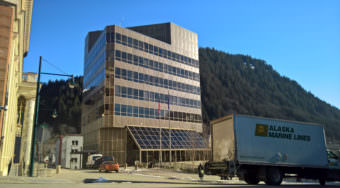
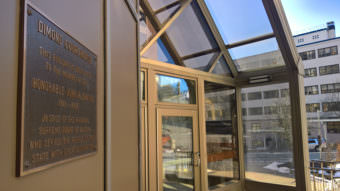
The Dimond Courthouse building, home to the Juneau offices of the Alaska Department of Law, is seen across the street from the Alaska State Capitol on Friday, May 27, 2022. (Photo by Lisa Phu/Alaska Beacon)

In a sunny room that faced towards the Gastineau Channel in Juneau, a group that included a city attorney, a tribal employee, corrections officers and domestic violence advocates and survivors sat around a circle of desks to discuss how a new vision of justice could reduce domestic violence and increase public health in Alaska.

court order issued this fall lays out the process by which the state’s courts may use restorative justice programs, but those programs are not compatible with domestic violence cases yet. The state’s Council on Domestic Violence and Sexual Assault brought the group in Juneau together to grapple with how courts might do that in the future.

Restorative justice is a method of resolution wherein people who are affected by a crime work together to address the harm caused and put things right, explained two researchers from the University of Alaska Anchorage. It is the opposite of how domestic violence cases are handled now, where the defendant and perpetrator are separated.

Dr. Ingrid Johnson from the University’s Justice Center said the model is intended to solve a problem — data shows that many people who experience harms like domestic violence do not feel like they get justice.

“A lot of victims don’t access our criminal justice system,” she said. “The statistics are around 50% of victims of physical intimate partner violence are actually calling the police when they’ve been victimized.”

Johnson said part of why they do not call, especially in cases of domestic violence, may be because they do not think a response from law enforcement or criminal proceedings will repair the harm they experienced. For the half of crime victims who do report domestic violence to law enforcement, the most recent analysis shows that fewer than half of those lead to a conviction.

“When you start asking victims of crime, you can actually get a list of over 20 different definitions of justice — at least in my research and the research that I’ve seen others doing,” she said.

Johnson showed the group a data visualization where “accountability” was the most prominent definition, followed by other responses, like “belief and acknowledgement,” “rehabilitation” and “connectedness” — conceptions of justice that diverge from traditional sentencing that usually includes fines or jail time.

She said the restorative justice method answers those needs by shifting the focus from the perpetrator of the crime to the effects of the crime itself and how the person who caused harm can fix it.

“It all sounds so fuzzy and utopian,” Johnson conceded with a smile. But she and Dr. Rei Shimizu brought evidence that the practice is successful in pilot programs in other states.

The case for restorative justice

Some states already use restorative justice programs to address domestic violence. Shimizu, from the University of Alaska Anchorage’s School of Social Work, studies them and said they both reduce recidivism rates and result in greater victim satisfaction.

“It also shifts DV as an individual, ‘hush-hush,’ privatized issue to more of a community public health issue,” she said. “It allows the community to participate in conversations about domestic violence.”

Shimizu said it can be hard for community members to call out domestic violence without a framework for making those acknowledgements of harm result in positive change.

“In a small community where domestic violence is happening, it’s hard for someone to just show up and say, ‘Hey, what you’re doing is wrong,’ or, ‘What you’re doing actually impacts everyone in the community.’ But the restorative justice processes provide a safe platform for everybody to be included in these conversations,” she said.

One of the studies she worked on as a researcher with New York University showed that batterer intervention programs — the rehabilitation model the state currently uses — can reduce new arrests by more than 50% when paired with restorative justice. In another study, restorative justice led to a reduction in mistreatment of children as well.

Lisa Morley, who organized the event for the state’s Council for Domestic Violence and Sexual Assault, said her goal is to increase statewide understanding of the practice.

“Restorative justice is actually an option now in the court system, especially in the tribal courts, but it’s not been very widely utilized. And it’s definitely not being utilized for domestic violence,” she said.

She said she hoped the discussions would be a “launching point” for potential development of a pilot project to see if restorative justice could have a positive effect in the state. She organized similar events in Anchorage and Fairbanks as well.

The council has been working on a plan to update its rehabilitation programs for offenders, commonly called “batterer intervention programs.” Incorporating restorative justice into rehabilitation is one of the recommendations from its working group.

Morley said the state needs to strengthen monitoring and follow through for rehabilitation programs.

“If somebody is court ordered to take the class, they could take the class for a couple of sessions and then drop out, and there’s really no consequences,” she said.

Mixed reception from domestic violence advocates

There are concerns with restorative justice: Accused perpetrators have to admit guilt as a starting point, which could impede due process in legal proceedings, and victims must remain safe and not be re-traumatized.

Brenda Stanfill, one of the Talking Circle participants and the director of the Alaska Network on Domestic Violence and Sexual Assault, said she was concerned about some of these aspects, but sees the need for change.

“We know that the criminal justice system doesn’t work for anybody right now. If we’re being reality based, if you talk to anyone, they are not satisfied,” she said, pointing to the large number of assault cases that do not get tried in the state.

She said each time a case gets dropped, it sends the message that it wasn’t a big issue. “We hear women say, ‘After the charges were dropped twice, it even made him more bold about what he did, because he would say, ‘You can call the cops, nobody’s going to do anything. They’re going to let me out the next day, and then it’s going to be worse,’ ” she said.

She said anti-violence advocates and politicians used to think the criminal justice system could solve domestic violence, but she said so far it has not.

Stanfill said if restorative justice programs for domestic violence were victim-centered, they might work well.

That feeling was echoed by Saralyn Tabachnick, the Deputy Director for the Juneau domestic violence shelter. She runs its batterer’s intervention programs in the community and in Lemon Creek Correctional Center.

She said she found restorative justice “interesting,” but that victim safety needs to be at the forefront. “Domestic violence involves power imbalance, where someone is abusing power and control to instill fear in someone else. So the idea that those two people could meet and the victim would feel safe… I’m not sure it’s realistic,” she said.

But she and other participants wanted to learn more. The University of Alaska Anchorage will hold a virtual restorative justice panel in March. CDVSA will host another Restorative Justice Talking Circle in Fairbanks next January.

This article was produced as a project for the USC Annenberg Center for Health Journalism’s 2023 Domestic Violence Impact Fund. It originally appeared in the Alaska Beacon and is republished here with permission.

A full list of Alaska shelters and victim’s services providers can be found here.

Tribes, State Troopers increase access to justice for Alaska Native survivors of domestic violence

Late evening on the Kuskokwim River in Nunapitchuk, Alaska. October 12. 2023. (Photo by Claire Stremple/Alaska Beacon)

In remote parts of Alaska, justice and safety are hard for domestic violence survivors to access. Law enforcement is scarce and usually arrives after harm happens. But there is a tool that allows law enforcement officers to stop domestic violence before it starts: a domestic violence protective order.

A domestic violence protective order, or DVPO, is a state- or tribe-issued protection that requires perpetrators of violence to stay away from victims. A DVPO is not a criminal conviction, but violating one is a crime.

Rick Garcia, a former District Court magistrate judge for Aniak and Hooper Bay, discovered that Alaska state troopers were unable to enforce DVPOs issued by tribes a few years ago.

“Currently, what happens with tribal DVPOs is they’re not entered in the same way as state or DVPOs. So officers aren’t able to access that information,” he said. “What that means for tribal survivors is that they have to carry a valid piece of paper on them at all times to get protection.”

All 229 tribes in Alaska have the ability to make their own laws and to have their own justice systems. They can all issue tribal domestic violence protective orders, which state law enforcement should enforce, according to federal law. State-issued orders can be easily added to the State Trooper database, the Alaska Public Safety Information Network.

Tribal DVPOs cannot; a significant barrier to enforcement.

Garcia has been working with the state and federal governments to correct the issue. He and the Department of Public Safety worked to get the entire system changed, so that tribal orders can be entered into the database. The change to the system will “go live” in January of 2024, he said.

“It’s certainly a better way of making sure that women and children are protected, and those that have protective orders are protected, but also really elevates tribal protective orders on the same parity as state protective orders, which is needed in Alaska,” he said.

The change also brings the state into compliance with federal law.

Full faith and credit

The 1994 Violence Against Women Act is a federal legislative package designed to end violence against women. It includes the Full Faith and Credit provision which requires every jurisdiction in the United States to recognize and enforce valid protection orders issued in any jurisdiction in the United States — including tribes.

Full faith and credit means that Alaska State Troopers must enforce tribal DVPOs.

The stakes to enforcement are high: The law also recognizes that Alaska Native people are overrepresented as domestic violence victims by 250%. Even compared with other American Indian tribes, Alaska Native people experience the highest rates of domestic and sexual violence in the nation.

Garcia now works on legal policy with Alaska Native Women’s Resource Center, a tribal nonprofit dedicated to ending violence against women. When an Alaska tribe asked him to help one if its citizens get their domestic violence protective order enforced, he asked a number of state troopers about “full faith and credit.” They all gave him different answers.

Some thought they could enforce a tribal DVPO if the tribe paid a $60 fee for enforcement; others thought they were not authorized to enforce tribal DVPOs at all. None of these is true.

“It was frequent enough that we knew it was a problem”

Capt. Andrew Merrill with the Alaska State Troopers has spent the majority of his career working in Alaska communities off the road system, primarily in Western Alaska. He oversees all the troopers in that region, including the Aleutians, Kodiak, Dillingham, Bethel, Nome and Kotzebue.

“That’s kind of where my passion has been, is working and serving in those areas remote around Alaska,” he said.

He said he knew tribal DVPOs were difficult to enforce: If he polled his troopers, he said his guess is that almost all of them have had experiences where they were asked to enforce a tribal order, but no one had a copy of it. “It was frequent enough that we knew it was a problem,” he said.

But he said he was disturbed when he got the call from Garcia, and learned that so many officers were unaware of how “full faith and credit” works.

He and Garcia formed a working group to fix the issue that included the state’s Departments of Law and Public Safety, Alaska State Troopers, a number of nonprofits and the Alaska Native Justice Center.

Solving the education problem was fairly simple: Merrill said the the Department of Public Safety created mandatory training for state troopers who serve in rural areas. Classes began this October; roughly 100 troopers have taken them.

The question of actual enforcement was trickier. There was no mechanism for tribal DVPOs to get into the state law enforcement system.

“We want to enforce those orders as allowed by law,” Merrill said. “But we can’t if the person hasn’t committed a crime.” That is, a crime other than violating the order.

But he said officers cannot enforce an order if they have no proof that it exists. Merrill said officers need proof the order exists and that the offender knows about the order. That means that if a tribal citizen says they are being targeted by someone who is required to leave them alone because of a tribal DVPO, the State Troopers — often the only law enforcement in large parts of the state — cannot intervene.

Merrill said rural and remote law enforcement were lucky if they got a copy of tribal DVPOs, but even if they do get them, they can’t enter them into their system. That means regional officers might know about the order, but law enforcement in other parts of the state will not — an issue if the tribal citizen travels elsewhere.

“The whole purpose behind a protective order is to provide some protection. And more importantly, for the law enforcement side of it, to give us a tool to actually take immediate action,” he said. “The nice thing is, when a protective order has been issued and served, if a person violates those orders, we can arrest them immediately.”

To enter a DVPO, or any type of warrant, into the state database, the Alaska State Troopers need to have an agreement with the issuing body that it guarantees the information is accurate, that it will alert the Troopers of any changes and that it will notify them if the order is revoked. All municipal police departments sign them, he said. But there was no process in place for tribes.

He said the Troopers also hired contractors to reprogram the Alaska Public Safety Information Network system so that tribes that sign the agreement can have their court orders entered into the system, making it compliant with the federal law.

Merrill presented the change to the Tanana Chiefs Conference this year. He acknowledges that the state has not always been a good partner or steward with tribes, so he wanted to stress that participation in the system was optional. He said the response was really positive.

“A lot of people were excited about it,” she said. “Afterwards they came up to me. They were excited about the fact that their tribal court order can be easily seen and enforced anywhere in the state of Alaska.”

He said the problem-solving process was so successful on this issue that he hopes to use the same approach again to solve other problems.

This article was produced as a project for the USC Annenberg Center for Health Journalism’s 2023 Domestic Violence Impact Fund. The article was originally published by the Alaska Beacon and is republished here with permission.

A full list of Alaska shelters and victim’s services providers can be found here.

Alaska pays millions to respond to domestic violence. Advocates want millions to prevent it

Freshly made beds are seen in an unoccupied room at the Fairbanks emergency shelter, Interior Alaska center for Non-Violent Living on October 14, 2023. (Photo by Claire Stremple/Alaska Beacon)

When Kara Carlson experienced sexual assault as a teenager, she said it was traumatic but not shocking: “I was the last of my friends to experience sexual violence,” she said. “We live in this world where you have to prepare women for surviving trauma.”

She now runs the women’s emergency shelter, Interior Alaska Center for Non-Violent Living, where she has worked for nearly two decades. She has seen domestic and sexual violence affect generations of Alaskans in Fairbanks.

“I’ve been here long enough that I’ve seen moms come in, I’ve seen their kids come in. I’ve seen their kids in CourtView as perpetrators. We’ve served their kids as victims,” she said, adding that she has seen up to three generations pass through IAC’s doors. “The cycle keeps repeating because nothing — nothing’s changed.”

Without prevention services, Carlson said, the shelter cannot reduce violence: “We will operate like this forever and ever, with no change in numbers, because the shelter is a Band-Aid, is the place people come after something has happened.”

Despite the millions the state of Alaska spends on domestic violence programming, its families still experience some of the highest rates of domestic violence in the nation. Experts and advocates agree that significant increases in prevention work and community level support are necessary to slow the rate of domestic violence.

Studies show that children who are exposed to violence are more likely to perpetrate it. They are also more prone to struggle academically or have negative mental and physical health outcomes.

Interior Alaska Center for Non-Violent Living has prevention services, including a rehabilitation program that teaches perpetrators alternatives to violence. But Carlson said if she cannot find more funding to run that program, she may have to end it — even though she knows it can be effective.

“That’s where we have really failed in domestic violence”

Diane Casto, former director of the state’s Council on Domestic Violence and Sexual Abuse, said that, while government funding fuels the nonprofits and agencies that tend to domestic violence, only social change can stamp it out. And, from where she sits, the route to social change is community level prevention work.

Prevention, in the context of domestic violence, is usually education around healthy relationships. It can be aimed at youth, at adults in relationships, or even people who have caused harm.

“My goal since I started here in 2017 was to bring prevention up, bring services to those who harm up,” she said. Funding for prevention has increased slightly since she started, but ultimately, Casto said it is where the state has failed in its fight against domestic violence.

“We have a lot of grant money,” Casto said. Yearly, the council distributes more than $20 million in grants statewide.

But she said there is an imbalance that thwarts their ultimate goal of ending violence: “Ninety percent of our grant dollars go to victim services, 8% go to prevention, and 2% go to batterer intervention programs,” she said.

A sign outside of the emergency shelter in Fairbanks, Alaska on Sept. 14, 2023. Executive director Kara Carlson said she has seen generations of families pass through its doors. (Photo by Claire Stremple/Alaska Beacon)

In other words, most of the state’s investment in domestic violence goes to helping people after the violence happens. Casto said to actually end domestic violence, she needs prevention to be funded at the same rate as victim services. But she said that’s a tough ask because prevention work is time consuming, and it is hard to demonstrate success.

“Prevention takes years — generations — to change attitudes, beliefs and behaviors. And if you don’t give it that time, you’re not going to see change. And I think that’s where we have really failed in domestic violence,” she said. “Funding wants to see results and outcomes now.”

Casto said each year, she asks the state Legislature for more funding because the need for victim services is so great. She wants to invest in prevention so that, one day, the budget needed to protect people in crisis will shrink.

“The reality is: If we keep turning our head, if we don’t take responsibility, then it isn’t going to end,” she said.

Alaska’s prevention movement

There was a time when the state invested more heavily in prevention and domestic violence awareness, said Brenda Stanfill, who runs the state’s coalition of domestic violence shelters, called the Alaska Network on Domestic Violence and Sexual Assault.

Stanfill said former Gov. Sean Parnell’s Choose Respect campaign and his investment in domestic violence prevention programs jump-started the movement to increase awareness and reduce domestic violence.

“In 2010 to 2015, we did a lot of things. We started talking about it very openly,” she said. “Prevention started in those five years. That was the first time we started doing prevention — violence prevention awareness and violence prevention activities out in villages and communities and urban hubs.”

She said kids did projects in school where they learned about healthy conflict resolution — and brought their new knowledge home to their parents. She said children’s observations could be a wake-up call for people who didn’t recognize their own damaging behavior: “If you have kids talking about what is respect, and how do we treat one another, and then maybe pointing out at home, ‘That’s not what I learned at school’ kind of thing — that works. It puts pressure,” she said.

That era was also the birth of what are called “batterer intervention programs,” a name Stanfill said she now regrets because of the way it labels perpetrators. The programs are for people who have perpetrated domestic violence, and they are aimed at teaching them nonviolent methods for resolving conflict.

Stanfill and other experts in the field have said those programs work if the offender is open to change, and she has seen how the classes can be effective. She recalled one session, where men were asked about conflict at home when they were growing up. One man said his family did not have that experience: if his mom got upset, his father would slap her, and the conflict would end. “He wasn’t being sarcastic. Truly, to him, that was no conflict,” she said. “There’s no conflict in his mind, so he’s got no other skills. That’s all he’s got.” The coursework provided him with nonviolent alternatives.

In 2009, Parnell pledged to end domestic violence in the state within a decade. His attorney general, now U.S. Sen. Dan Sullivan, vowed to increase prosecution for offenders. The Alaska Victimization Survey showed that then, between 2010 and 2015, there was a decrease in domestic violence. The latest survey, from 2015 to 2020, shows the rate has crept back up and is higher than it has been in the last decade.

Stanfill said the prevention movement was important because it got people talking about a subject that was once taboo. Now, she said nonviolence advocates need to take the next step.

“I don’t think we’ve given the answer for what we now need to do,” she said. “When it comes to domestic violence, I think that we’re still trying to figure out exactly what call to action are we doing? And I think that that’s something that we really, as a state, have got to spend some time thinking about.”

This article was produced as a project for the USC Annenberg Center for Health Journalism’s 2023 Domestic Violence Impact Fund.

A full list of Alaska shelters and victim’s services providers can be found here.

To prevent domestic violence, Alaska schools teach healthy relationships

The dock that leads to the Nunapitchuk school sits in early evening light on October 12, 2023. Social workers from the Lower Kuskokwim School District visit village schools by small plane and boat to deliver counseling services and state-mandated lessons about healthy relationships. (Photo by Claire Stremple/Alaska Beacon)

By the end of the two-hour “healthy relationships” presentation, the seventh and eighth graders in the Anna Tobeluk Memorial School’s auditorium in Nunapitchuk were getting a little antsy.

One girl popped a big, pink bubble on the top bleacher while short, animated videos demonstrated different teen interactions and asked students to gauge them on a scale of healthy to abusive. But when the school’s social worker, Jim Biela, asked the group if sending repeated, unwanted texts are a “green flag” or a “red flag,” she responded quickly and correctly — “Red flag” — before returning to the gum.

Biela paused the video and offered some questions of his own: “‘You’re going to have sex with me or I’ll kill myself.’ ‘You can’t sit with him.’ ‘If you break up with me I’ll kill myself.’ Any red flags there?” The room was pretty quiet, but he clocked a number of raised eyebrows — a nonverbal “yes” in Yup’ik communities.

He is part of a group of itinerant social workers employed by the Lower Kuskokwim School District that travel to the district’s 22 villages, none of which are on the road system. They fly, boat and snowmachine across a region about the size of West Virginia to bring lessons like this one, as well as counseling and support, to some of the hardest to reach parts of Alaska.

High school students wait for a presentation of the state’s Bree’s Law Curriculum in Nunapitchuk, Alaska on October 12, 2023. (Photo by Claire Stremple/Alaska Beacon)

Biela’s lesson was part of a legally mandated Alaska state curriculum intended to reduce adolescent dating violence, which national studies have linked to an increased risk for experiencing domestic violence as victims or perpetrators later in life.

Every once and awhile Biela would punctuate the state’s curriculum with some lessons of his own: “The girls are going to start dating these boys and boys are going to start dating the girls — don’t look at me like that — It’s going to happen,” he said. “How many of you like ice cream? What happens when you eat ice cream really fast?”

“Brainfreeze,” came a few responses.

“So when you eat ice cream slow, do you enjoy it more?” he asked. “If you rush the relationship, how’s it going to taste to you?”

“Terrible,” came some responses.

“Terrible,” he confirmed. “You’re only in the seventh and eighth grade. And as you get older and you’re going to fall in love with each other — take your time. Remember what a healthy relationship is. Any questions?”

Healthy relationships

Biela had flown into Nunapitchuk the day before. Fewer than 600 people live there; boardwalks connect the homes and buildings across the delta’s swampy terrain. The school, like most other buildings, is constructed on pilings to avoid structural damage as the ground freezes and thaws.

Travel from Bethel to the villages is not simple. Biela takes a small plane to the Nunapitchuk airstrip, then the school sends a boat to pick him up and deliver him to the right part of the river. Biela has been making the trip to Nunapitchuk every few months for 11 years. He spends about a week each month at a different village’s school.

A family walked home from school in Nunapitchuk, Alaska on October 12, 2023. (Photo by Claire Stremple/Alaska Beacon)

He said the examples he gave in the presentation — scenarios where one teen may threaten suicide to forestall a breakup or to increase intimacy — were from concerns he has heard from students over the nearly two decades he has spent traveling to support youth mental health and educational development. “Those are real,” he said. “Even for that age group.”

He said the curriculum “definitely” makes a difference. The students get it: over the course of the presentation, which covered topics from gossip to manipulation and gaslighting, they only got one question wrong. And he knows the material is sinking in because of feedback he gets from the students later: “I had a few students this morning from the seventh and eighth graders come in to say ‘You better talk to my sister. Did you do this when my sister was here?’” he said.

He hadn’t. The state began requiring the lessons in 2017, as part of the Alaska Safe Children’s Act, also known as Bree’s Law. The piece of legislation was named for Breanna Moore, a young woman whose parents advocated for teen violence prevention education after she was killed by her boyfriend.

Advocates for nonviolence have criticized the law because there is no enforcement mechanism or support for schools. Biela said he thinks some schools neglect the lessons, but the Lower Kuskokwim School District is strict about them.

“This district is tough on that, which I am really happy to see,” he said. At the end of the year, schools must report when they taught the lessons. He said he teaches some of the tough material that teachers may not be comfortable with.

Four wheelers and bicycles sit outside the Anna Tobeluk Memorial School on a frosty morning in Nunapitchuk. October 12, 2023. (Photo by Claire Stremple/Alaska Beacon)

However remote schools in the Lower Kuskokwim School District may be, Biela said they are not insulated from teen dating violence. He had another presentation with the older students later that afternoon and he predicted “some emotions,” flashbacks or tears — some of the students he cares for have firsthand experience, he said.

Upstream prevention

Schools are recognized by the state as community hubs where public health efforts can take root. The Lower Kuskokwim School District’s itinerant social workers are an example of how Alaska districts can use their reach to bring violence prevention to children.

Mollie Rosier, a manager for the state Division of Public Health, has worked for about a decade in women’s and children’s health. “We know that teens who experienced teen dating violence or perpetrate teen dating violence are more likely to end up in domestic violence situations,” she said.

She said the Alaska Safe Children’s Act is one example of what advocates for nonviolence call primary prevention: an intervention that happens before health effects occur. Another is a state-supported curriculum called The Fourth R, which is used in the Lower Kuskokwim School District.

Mollie Rosier, a manager with Alaska’s Division of Public Health, sat among the materials for various state curricula and programs to support healthy relationships in her Anchorage office on September 25, 2023. (Photo by Claire Stremple/Alaska Beacon)

“From a health perspective, this is too important to not do,” she said, pointing to a stack of workbooks in her office. “We have to continue to give our youth tools to live healthy lives.”

Rosier said it is important for all youth in Alaska to understand what a healthy relationship looks like, and that schools are a place they can gain that understanding if it is not modeled at home.

“If you haven’t grown up in healthy relationships, it’s a chance to look at what a healthy relationship looks like. There should be shared communication, there should not be hitting and belittling and lying,” she said.

High rates of teacher turnover and flat funding from the state threaten the efficacy of policies like the Safe Children’s Act, she said. “We rely on schools and after school programs to implement this work, and they are maxed out,” she said.

“We hear teachers saying, ‘This is so great. And I’m being measured on my reading scores. I can’t add this to my curriculum,’” she said. She said she hopes future policy will support the Safe Children’s Act with staff time and financial support.

The halls are lined with lockers and portraits of elders at the Anna Tobeluk Memorial School in Nunapitchuk, Alaska. October 12, 2023. (Photo by Claire Stremple/Alaska Beacon)

This year, Gov. Mike Dunleavy cut what would have been a historic one-time increase to school budgets in half.

Rosier said she wants to see more state policy that supports the social determinants of health, like access to affordable housing, food and education, which are “foundational” for preventing violence. She said there is a link between chronic disease and growing up in a violent household.

She said while the consequences of violence can be cascading, so, too, can be the positive results from teaching nonviolence. “It’s going to interplay not just in preventing domestic violence and sexual assault, but in being able to maintain employment, to be able to maintain housing,” she said.

Jim Biela, an internerant social worker for the Lower Kuskokwim School District, held up a computer decorated with suicide prevention and mental health messages in Nunapitchuk on October 12, 2023. (Photo by Claire Stremple/Alaska Beacon)

Rosier said the state’s curriculum is just one way to help students build healthy lives. She said that often the same factors that prevent interpersonal violence also protect against other types of risk.

“If youth have protective adults in their lives, a trusted mentor they can talk to, it helps them for suicide prevention, for bullying, for unhealthy relationships, for substance abuse,” she said.

“Welcome home”

Between his presentations, Biela held counseling sessions in the principal’s office while she was out of town. Usually, he has them in a supply closet; its wall is smattered with pencil markings where his students have asked him to mark their heights.

He didn’t get a break that day.

“It’s always like this,” he said, “Every visit, no matter where you go. Everyone wants to see you and there’s no time.”

He sat on a bench briefly and took a deep breath while a teacher delivered another student. “When social workers get to the village, they don’t even have their jackets off before it’s like this,” he said with a laugh.

About 20 minutes later, he returned the girl to her classroom smiling. He poked his head in to pull the next student aside, and three others got up to tell him they wanted a session, too. “You next?” he asked. “OK, you’re number 22. I’m on number 5.”

For the week of his visit, Biela sleeps in a sleeping bag on a cot in a first grade classroom full of tiny chairs and watercolor paintings of wildflowers. He puts dark butcher paper over the windows so he can sleep and showers in the bathroom in the teachers’ lounge. At the end of the day, Biela prepared a plastic-foam cup full of instant ramen on a propane burner while he queued up a movie. He settled into a tiny chair to watch the film on his laptop.

Itinerant social worker Jim Biela set up his cot in a first grade classroom at Anna Tobeluk Memorial School in Nunapitchuk, Alaska. “At my age, I wouldn’t be sleeping on a cot, eating cafeteria food…but it’s the kids. You get to know the kids,” he said. Biela stays for up to a week in villages across the Lower Kuskokwim School District. October 12, 2023. (Photo by Claire Stremple/Alaska Beacon)

He is 65 years old, and he said the work is hard, but community connections keep him coming back. He said in some communities he has been a counselor to multiple generations of the same family; some kids call him “uppie,” or grandfather.

“It’s the kids,” he said. “You get to know the kids. You get to know their parents. You get to know the grandparents. You go to the village and you hear: ‘Welcome home.’”

This article was produced as a project for the USC Annenberg Center for Health Journalism’s 2023 Domestic Violence Impact Fund. It first appeared in the Alaska Beacon and is republished here with permission.

A full list of Alaska shelters and victim’s services providers can be found here.

Alaska doctor wheels hope to survivors of traumatic brain injury in his ‘Brain Bus’

The Alaska Brain Bus is parked at Dr. Adam Grove’s South Anchorage home on Sept. 26, 2023. (Photo by Claire Stremple/Alaska Beacon)

After a bike crash, Dr. Adam Grove noticed he wasn’t the same. He said he was depressed for the first time in his life, quick to anger and tired all the time.

It was 1998 and he was not yet a doctor, but had just left the military and begun medical school. He was commuting to class when the car hit him.

“At that time, nobody diagnosed the brain,” he said. “I was unconscious. I had broken bones and that kind of stuff, so they focused on that. Nobody said anything about brain injury. And so I muddled through medical school.”

He was not diagnosed with a traumatic brain injury until seven years later.

Alaska has the highest rate of traumatic brain injury in the nation; it is twice the national average. Medical providers say TBI is frequently undiagnosed or misdiagnosed, and that they need more training to do TBI screening, according to a state epidemiology report.

Now Grove is on a mission to increase awareness of traumatic brain injury, so people can treat it. His search for answers led him to years of advocacy, and eventually, to a bus.

With a grant from the Alaska Mental Health Trust, he converted a 1967 Blue Bird bus into a mobile medical office specifically for traumatic brain injury. He calls it the Brain Bus and drives from his home in South Anchorage to more remote locations on the road system to raise awareness about TBI and to counsel and connect people to resources.

“I can be the conduit”

Grove keeps the bus parked among some conifers at the end of a long drive in his wooded, South Anchorage neighborhood. It is his solution to what he described as a lagging response in statewide public health policy.

“We get so immersed in this whole policy thing. The problem is policies that never seem to trickle down to the people that I was working with,” he said. “So I decided to be the conduit.”

Instead, he is directly letting people know that they may have experienced a TBI and that help is available.

“I can sit with somebody and cry with them about the fact that their life is turned upside down and they’ve lost their families. Like, that’s useful,” he said.

“You’re already at a disadvantage, and then add on a cognitive deficit. And it’s disastrous… It really hampers the decision-making process, which would enable them to exit the situation or to ask for help.”

– Dr. Adam Grove, on the effects of traumatic brain injury in domestic violence situations

He described an 80-year-old woman who described years of struggle to get her injury and symptoms taken seriously.

“She said, ‘Every time I tried to get help and people told me, ‘There’s nothing wrong with you’ or, ‘Oh, you just hit your head,’ I’d just lose a little bit of confidence, and then a little bit more,’” he said.

And he said consequences from brain injury can quickly cascade into bigger problems, like homelessness. He said he has had patients who get brain injuries and lose their jobs because they cannot function at work. He said once the paychecks stop it can be a quick slide into homelessness.

“They can’t pay their rent, and within a month they’re living in their car. And then the car gets repossessed if they have payments on it. And now they’re homeless, right?” he said. “It’s easy, within a month or two.”

Nationally, about half of people who are experiencing homelessness also have a traumatic brain injury.

Brain injury and domestic violence

Grove does not keep track of how many people he has met on the bus, but he estimates that a third of the people he consults with have brain injury as a result of domestic violence.

“There is huge overlap,” he said, making the circles of a Venn Diagram of traumatic brain injury and domestic violence with his hands. The circles were nearly on top of one another.

He said most people with brain injuries are unaware they have them, which can be damaging because the symptoms can disrupt their lives, but he said it’s especially disruptive in situations of domestic violence.

“You’re already at a disadvantage, and then add on a cognitive deficit. And it’s disastrous,” he said. “It really hampers the decision-making process, which would enable them to exit the situation or to ask for help.”

He also pointed to growing evidence that brain injury can come from emotional abuse, too. He said there are imaging studies that show that verbal and emotional abuse can alter the way the brain develops. “That sounds like a brain injury —  something that happens after birth, that alters the way the brain works,” he said.

Screening as prevention

Grove said that brain injuries can be treated, so it is important to catch them. He said he really wants to see more screening for brain injury early, before consequences like job loss, homelessness or justice involvement can cause irreversible damage.

“Somebody runs into mental health, behavioral health and juvenile justice — screen them for brain injury! Right? Stop it before it becomes a thing,” he said.

He said one of the biggest challenges to getting treatment is knowing that a brain injury is the cause of symptoms.

That is where the bus comes in — with medically trained staff that are experts in brain injury, armed with resources for individuals and ready to help build solutions with communities that recognize their importance.

There are supports for people with brain injury in Alaska:

Access Alaska: Anchorage 907-248-4777, Mat-Su 907-357-2599, Fairbanks 907-479-7940Independent Living Center: PeninsulaILC.org or 907-235-7911Maniilaq Association: maniilaq.org or 907-442-7887Southeast Alaska Independent Living (SAIL): info@sailinc.org or 800-478-7245BrainMattersAK.comBrain Injury Association of Alaska: biaak.org

This article was produced as a project for the USC Annenberg Center for Health Journalism’s 2023 Domestic Violence Impact Fund.

Site notifications
Update notification options
Subscribe to notifications