


Alaska Public Media

Alaska Public Media is one of our partner stations in Anchorage. KTOO collaborates with partners across the state to cover important news and to share stories with our audiences.

LGBTQ history bus tour highlights changing acceptance in Anchorage

An Anchorage history bus tour is highlighting the changing of LGBTQ acceptance, focusing on the high points of gay life in the 1970s and 80s.

Myrna Lachoy stood at the front of a bus with a bull horn, pointing out the locations of old Anchorage bars. “It was so sleazy. It was so much fun!”

The passengers giggled at bawdy jokes and memories from 30 and 40 years ago, when bar culture was huge in Anchorage. They were on a tour of historical gay hotspots.

Reno pointed out that there was a reason for the culture of escapism in the 1980s – the AIDS epidemic.

“How many people have at least five people on this bus that they consider friends?” he asked the crowd, who cheered in response.

“Now I’d like you to imagine for a second, without being too depressing here, think about what you would feel like after just maybe two years or three years and losing every single one of those friends, and maybe having yourself and one other left. And that’s what the 80s were all about.”

Reno gathered with others in bars because they were safe spaces, and they could party away their sadness, he said.

Before AIDS, it was easier to be gay in Alaska, he said. People didn’t care as much about your sexual identity. They had the Gay Olympics and gay social organizations, like the Mount McKinley Non-Ascent Club. “We never went up, but we’ve been known to… well, you know the rest of that. We were a gentleman’s club.”

The small LGBT community even had political clout, he said, because just a few votes could change everything.

“And we could organize relatively quickly, so we’d get people out there to vote,” Reno said. “We learned we could push the election in the direct we wanted it to go, so we became very political back in the day.”

After the AIDS epidemic started, Reno said the general community and religious leaders became more homophobic.

Madeline Holdorf was at an annual celebration for the LGBT community and drag performers in 1982 when someone threw tear gas into the room.

“When that tear gas bomb went off, everyone thought it was part of an entrance, part of the show,” she said. “And in fact it was tear gas. I was on the dias, which was part of the main stage. And everyone in the room moved at the same time.”

Despite the tear gas incident, Holdorf said for years, hundreds of people would turn out for the event. Part of the reason was that, unlike in other parts of the U.S., gay men and lesbians hung out together. They didn’t have things like separate bars or clubs.

Now that the greater community is more accepting of LGBT people, the crowds at those events are much smaller. Holdorf said you don’t have to be in to bars or drag shows to find other gay people any more.

One of the bus tour organizers, Nicole Cundiff with Alaskans Together for Equality said that doesn’t mean the LGBT community has achieved equal rights.

“We have national marriage equality, and we have some non-discrimination ordinances in the state. But statewide we still don’t have LGBT protections, especially when it comes to our transgender population.”

Cundiff said that’s part of the reason why they organized the tour – so people would remember the city’s history and stay motivated to keep pushing for equal protections.
Justice Sotomayor speaks at University of Alaska Fairbanks

Sonia Sotomayor, the first Latina appointed the nation’s highest court, spoke Sunday at the University of Alaska Fairbanks during a UAF Summer Sessions event.

U.S. Associate Supreme Court Justice Sotomayor addressed a capacity audience in Fairbanks.

”I understood then that I had to live every minute of my life as fully as I could,” Sotomayor said.

Sonia Sotomayor shared a very human perspective on the Supreme Court. The 62-year-old  traced her path to the nation’s highest court, from her New York City upbringing, where she said she took charge of her life at a young after being diagnosed with diabetes and given an uncertain health future.

Sotomayor went on to become an outstanding student, graduating from Princeton and Yale, and working her way through the legal system, ultimately being appointed to the Supreme Court by President Barack Obama in 2009.

She said she initially felt like an outsider, but learned from other justices, including John Paul Stevens who she said emphasized the importance of speaking out.

”Because there is a pull in a group setting, in a collective, for people to try to agree with each other. And that’s not unimportant. But every once in a while, you have to make a statement because it’s important to say.”

The opposite of a stern judge, Sotomayor spent the hour-and-half event walking around the Davis Concert Hall, answering questions, while shaking hands and sometimes hugging and taking pictures with audience members.

Sotomayor fielded a range of questions submitted over the summer.

She singled out curiosity, when asked what the most important attribute is for a high court justice.

”Experts in the sciences and medicine and every human endeavor come to court to ask us to answer their questions. And the only way we can do that is, do we have sufficient curiosity.”

Sotomayor also was asked about her experience as a woman on the male dominated high court. She reiterated a story told to her by fellow justice Ruth Bader Ginsberg.

“There’s a lot of moments I say things at conference, and it’s like I’m not heard. And somebody will come after me, and they say exactly the same thing and all of a sudden it’s brilliant.”

Sotomayor emphasized the importance of women projecting their voice like an actor or singer, and being assertive, noting she’s considered tough.

”I’m a pussycat inside. So it’s really hard when people say they’re scared of me because I can’t understand why. At least myself I can’t understand why. But I do think that I’ve been blessed with an assertive personality.”    

Asked to give advice to Alaska Native students entering university, Justice Sotomayor pointed to the significance of shared values, saying there is nothing innately wrong with the majority.

”It is a majority because that’s the way life is. They’ve been here. They grew this community. They’ve created this world. Learning about it will teach us some things that will be valuable for our Native villages or for our Native homes. And some things we can look at and say ‘You guys got it wrong.’”

Sotomayor also will participate in a public “conversation” sponsored by the Alaska Bar Association on Wednesday, Aug. 17, at the Dena’ina Civic and Convention Center, the Alaska Daily News reported.

Alaska drops appeal of tribal land into trust regulation

Alaska Federation of Natives President Julie Kitka listens during a panel discussion on taking tribal land into trust. (Photo by Jennifer Canfield/KTOO)
Alaska Federation of Natives President Julie Kitka listens in 2014 during a panel discussion on taking tribal land into trust. (Photo by Jennifer Canfield, KTOO file photo)

The state of Alaska is dropping its lawsuit over federal regulations that banned Alaska tribes from putting land into trust, calling it “dead-end litigation.” But that doesn’t mean the state sees smooth roads ahead.

Trust status for tribal lands transfers title to those lands to the federal government, and protects the land from taxation or seizure for debt. And it gives tribes greater jurisdiction. Trust lands include reservations and are a long-standing and common feature of land management for Lower 48 tribes.

Trust lands are scarce in Alaska because of a 1970s Department of Interior opinion saying trust status conflicts with the Alaska Native Claims Settlement Act.

That legal interpretation meant Alaska tribes were banned from putting lands into trust until now.

In 2006 five tribes and one individual sued to force the Interior to accept trust land applications from Alaska tribes. The state of Alaska intervened, saying allowing tribes to put land into trust would diminish state sovereignty.

But a DC District Court sided with tribes, ruling in 2013 the ban was arbitrary and capricious. The state is dropping its appeal of that ruling because new Interior Department regulations have since been issued allowing Alaska tribes to put lands into trust.

“They have this new regulation and we’re going to go forward and work with the federal government, work with all interested stakeholders in Alaska and see how Alaska’s unique circumstances can fit into the lands-into-trust process that has occurred in the lower 48,” said Cori Mills, the Department of Law’s public outreach coordinator. “We kind of have to make it our own just because of the unique situation we have here.”

Alaska’s unique situation includes state ownership of subsurface rights, for example, and ANCSA, and the Alaska National Interest Lands Conservation Act.

It’s not clear how well those laws will mesh with land into trust statutes, Mills said.

“So the question is when you’re taking lands into trust, how do all of those federal laws on trust lands interact with the statutes that determine, y’know, how the state functions, and the state’s relationship with the federal government, and the state’s relationship with the land and fish and game management, all of those kind of issues,” Mills said.

Alaska may need new regulations or rules on how trust status will work here, Mills said.

“Our hope is to kind of come to the table early before these applications… there’s any specific application granted,” Mills said, “so that we can work out the issues in advance instead of after the federal government has already acted on one of the applications.”

The Chilkoot Indian Association in Haines is one of the plaintiffs in the case. Speaking to KHNS in July, tribal administrator Harriet Brouillette  said the changes are not as momentous as some may fear.

“I would hope that people are not fearful of the changes that this is going to bring to the state,” Brouillette said. “I know people think this will change the way people hunt and fish in the state, but it’s not. A lot of time in Indian Country when tribes are sovereign entities and they write their own laws, they’re usually not that much different than what the United States or the State of Alaska laws are.”

“So I don’t think this is going to cause a huge upheaval in the state of the Alaska like some people are thinking it is,” she said.

The way Brouillette sees it, putting land into trust status simply gives tribes greater ability to take care of their land.

“What this will do is give us some sovereign authority over our own land,” she said. “So we can make decisions just like any other tribe in the Lower 48 does about how we can use our land. And like any other sovereign nation, we won’t have to ask permission from anybody but ourselves.”

Attorney General Jahna Lindemuth said in a prepared statement that if the state’s concerns “cannot or are not addressed by the federal government, resolution of disputes in court remains an option.”

The Department of Interior can start considering applications to take Alaska lands into trust on August 22.

Alaska’s top general to retire, hand command to new joint base leader

Alaska’s top military official is stepping down.

Lt. Gen. Russell J. Handy will retire after 34 years in the U.S. Air Force on Tuesday, following a change-of-command ceremony at Joint Base Elmendorf-Richardson.


For the last three years of his tenure, Handy has overseen Alaskan Command, the 11th Air Force and Alaska operations for the North American Aerospace Defense Command, or NORAD.

Taking Handy’s place is Maj. Gen. Kenneth Wilsbach, who most recently directed operations at U.S. Central Command, based in Florida, and tasked with overseeing operations across North Africa and the Middle East, including Iraq and Afghanistan.

Wilsbach will be promoted to a three-star general ahead of taking all three appointments under his new command.

Earlier in his career, Wilsbach was a fighter pilot, and served two assignments at Airbase Elmendorf in Alaska between 1998 and 2002.

Man dies at Wildwood Correctional Complex, Kenai

A man died in state custody on Sunday afternoon at the Wildwood Correctional Complex in Kenai.

Michael Talcott, 57, was found unresponsive in his cell, according to Department of Corrections spokesperson Corey Allen-Young.

“He was found by his cellmate who said that Mr. Talcott collapsed,” Allen-Young said. “After informing corrections staff and medical staff, they attempted to save him through efforts of CPR and defibrillator. And also the emergency responders from the Nikiski Fire Department tried to help.”

He was pronounced dead at 4:48 p.m. Sunday.

Talcott was not being treated for a medical condition at the time of his death nor did his body show any signs of trauma.

His death is being investigated by the State Troopers, the State Medical Examiner’s Office, and the Department of Corrections.

Talcott had been in custody since 2008. He was serving a 20-year sentence for first-degree sexual assault of a minor.

He is the seventh person to die while in custody this year.

What $5 million? Murkowski’s GOP rivals disregard long odds

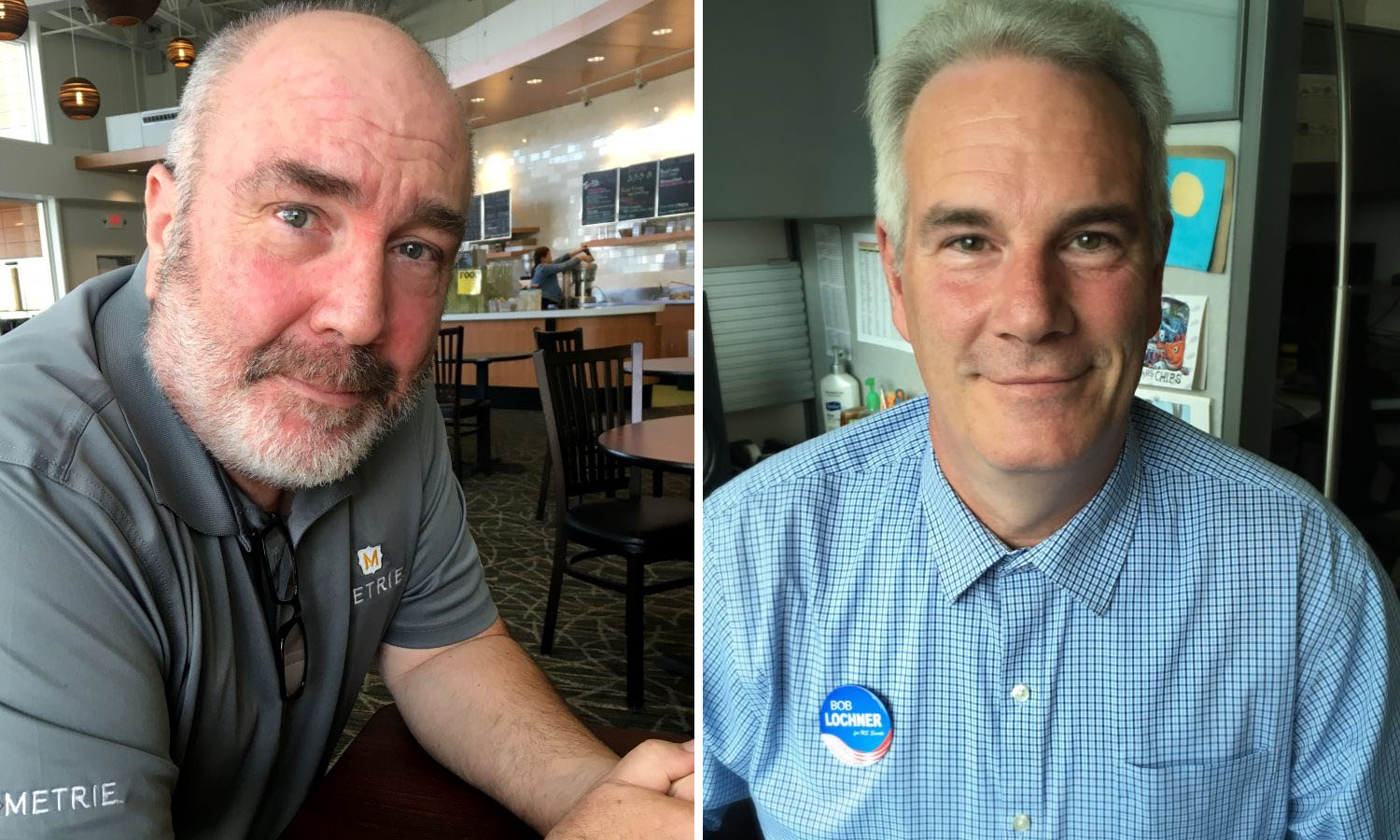
Thomas Lamb, left, is running against Sen. Lisa Murkowski in the Republican Primary. Bob Lochner, of Wasilla, is a Republican candidate for U.S. Senate. (Photos Liz Ruskin, APRN)

U.S. Sen. Lisa Murkowski has raised more than $5 million for her re-election effort.

She’s got big signs and TV ads across the state.

Three men are running against her in next week’s Republican Primary.

We found two undaunted optimists running shoestring campaigns, and a third candidate who rebuffed our interview request on the grounds that he had too much to say.

Thomas Lamb of Anchorage looks whiskery and gruff but he has a gentle manner. He first came to Alaska as an Air Force weather forecaster. Now he works for a company that supplies the wood moldings sold in hardware stores.

Maybe you’ve heard his unconventional ads on commercial radio, like his “General Stenko” series.

“Thomas Lamb wants to build submarine base in Alaska,” he said in one, putting on a thick Russian accent. “Don’t vote for Thomas Lamb. This is like ‘Hunt for Red October’ stuff. Vote for Lisa Murkowski. She wants icebreaker in Alaska.”

Yes, that’s an ad Lamb paid for and produced himself. It refers to one of his big ideas for Alaska’s resources — “Submarine tankers. LNG tankers.”

Lamb says it’s unrealistic for Alaska to want to build an expensive gas pipeline at least with today’s market conditions. He wants to send Cook Inlet gas to Europe, and he said it only makes sense to go under the Arctic ice.

It’s an idea General Dynamics considered in the 1980s, but Lamb said the Russians are beating us to it.

Lamb also aired an ad complaining about the ubiquity of Murkowski’s campaign signs along Alaska roads, but he worried it inspired some ugly behavior.

“I ran it one time and when I saw some graffiti show up on her signs, I pulled it,” he said. “That’s something I don’t want to get involved in.”

Lamb believes in the power of being right. He’s run for office before, and says things he predicted years ago – for instance, that Russia would invade Ukraine – proved to be accurate. He thinks this gives him a shot with the voters.

“It’s nice to be on the right side of the issues. You don’t want to be wrong. Like Trump. I’ve never seen – that’s so …,” he said as he covered his face and laughed, the vicarious embarrassment nearly unbearable. “And even Hillary Clinton. I mean they’re both – I don’t agree with neither one.”

Another Republican in the race is Bob Lochner, from Wasilla, who believes in the power of being conservative.

Lochner is a silver-haired clean-cut young grandfather, a veteran who works as an employee trainer on the North Slope. Lochner has the endorsement of Alaska Right to Life and supports Donald Trump.

“I don’t see a very bright future for our children and grandchildren in the direction we’re going, with a $20 trillion debt,” he said. “Our economy is so fragile. We need a lot of shoring up to do. We need a lot of strength.”

Lochner’s top issues are border security, the economy and taking care of veterans. He not accepting outside money to preserve his independence, he said.

“I don’t care how much money somebody wants to send me, if it’s from outside, or if it’s from a special interest or lobby group, I’ll send it back,” he said.

So far, that hasn’t been a problem.

Nobody is sending him money he has to refuse. Lochner, like Lamb, has raised less than $5,000 total, so he hasn’t had to file campaign finance reports, but he is campaigning. He’s traveling the road system, handing out pocket-sized U.S. Constitutions as a business card.

Lochner ran for state House in the 1990s, when he lived in the Mountain View neighborhood of Anchorage.

Back then, Lochner was a mechanic and single dad who acknowledged he relied on public assistance for a few years. It made him better able to represent the poor people of the district, he said.

Political analysts might look at Murkowski’s $5 million war chest and predict victory for the incumbent. Lochner doesn’t see it that way.

“I don’t want to sound too over-confident, but – and it’s hard to tell – but I think the numbers are with me,” he said.

Murkowski has a third Republican challenger: Paul D. Kendall of Anchorage. Kendall is a frequent caller to talk radio shows.

He declined to sit for a recorded interview, saying he would need three hours on live radio to discuss his views.

Whichever Republican wins the primary, she – or he – will be on the November ballot with Independent Margaret Stock (assuming her signature drive is successful) and Libertarian Cean Stevens.

Two Democratic candidates, Edgar Blatchford and Ray Metcalfe, who are running their own shoestring campaigns

Also are vying for a spot on that ballot.

Site notifications
Update notification options
Subscribe to notifications