Andrew Kitchenman

State Government Reporter, Alaska Public Media & KTOO

State government plays an outsized role in the life of Alaskans. As the state continues to go through the painful process of deciding what its priorities are, I bring Alaskans to the scene of a government in transition.

Judge’s decision could end legislature’s Medicaid expansion appeal

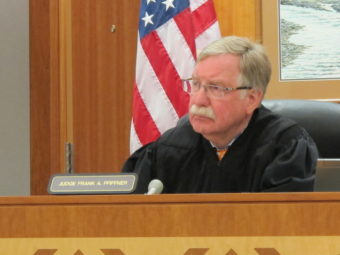
Judge Frank Pfiffner
Judge Frank Pfiffner hears oral arguments in the Medicaid expansion case, Feb. 5, 2016. (Photo by Annie Feidt/APRN)

A judge ruled Friday the House can’t continue an appeal of Gov. Bill Walker’s decision to expand Medicaid. This could be a fatal blow to the attempt to reverse the expansion.

Superior Court Judge Frank Pfiffner concluded that the House can’t step in for the Legislative Council in appealing the lawsuit. House members wanted to pursue the appeal, saying that Walker’s actions violated the separation of powers. But senators have wanted to end the appeal. Without agreement between the two houses, it’s possible the Legislative Council cannot continue with the appeal.

Nearly 18,000 Alaskans have joined Medicaid since Walker expanded the program.

Possible Anchorage special session location would crimp fundraising

The legislature will gather in Juneau on July 11 for its second special session this year, but it might not be there for long.

Lawmakers are talking about adjourning in Juneau and calling the legislature’s own special session in Anchorage. Some say it will be convenient and save money. But it will also pose an obstacle for Anchorage legislators running for re-election. That’s because state law bars them from raising campaign funds in the municipality where there’s a special session.

Gov. Bill Walker wanted lawmakers to return to Juneau, to address legislation restructuring Permanent Fund earnings. The session could also address raising taxes and changing oil and gas taxes.

After having failed to address some of these issues in the last special session, many lawmakers aren’t eager to spend another 30 days in the capital city, but wherever lawmakers convene will impact local campaigns.
The law says legislators and legislative employees can’t solicit or accept election contributions in either Juneau or any other municipality in which a special session is held.

Rep. Matt Claman, D-Anchorage, discusses the state operating budget on the floor the House of Representatives, March 11, 2016. (Photo by Skip Gray/360 North)
Rep. Matt Claman, D-Anchorage, speaks on the floor the House of Representatives in Juneau in March. (Photo by Skip Gray/360 North)

West Anchorage Democrat Rep. Matt Claman questioned whether the law is constitutional. He faces Republican Marilyn Stewart in the general election.

“We should not be making fundraising calls from the Capitol building, but I’m not certain that constitutional freedom of association and freedom of speech protections make the regulation that’s saying if you’re in one city you can raise money but if you’re in another city, you can’t,” Claman said.

Claman, who’s a lawyer, said he may seek legal counsel and ask the Alaska Public Offices Commission and the attorney general’s office about the law. He hasn’t made fundraising plans for the July 11 to Aug. 11 session.

Some legislators who support moving the special session in Anchorage are resigned to the effect it will have on their fundraising.

Rep. Craig Johnson is running against Jeffrey Landfield and Natasha von Imhof in the Aug. 16 primary to replace Lesil McGuire in the Senate district stretching from Midtown to South Anchorage. He supports holding a special session in Anchorage and doesn’t object to the fundraising ban.

“It’s much easier to have people come down and testify,” Johnson said. “So, I think access to the process outweighs anything as it comes to my re-election, or my ability to raise money on a personal level.”

It’s a view shared by Eagle River Republican Rep. Lora Reinbold, who faces Crystal Kennedy in the primary. She notes that holding the session in Anchorage would still allow more time to campaign, even if she can’t fundraise.

“It’s the peak election time, which would also be … in combination with the legislative time, so it would definitely inhibit our ability to fundraise in our key community,” Reinbold said. “However, I still think it’s worth it, to not be able to fundraise, so we can be in our communities with our people, and sleeping in our own beds. That is worth a lot to me. “

Rep. Bob Lynn faces Chris Birch in the Republican primary to represent the area of Huffman and Lower Hillside. He said having the special session in Anchorage would both improve public access and save transportation and per-diem expenses for more lawmakers.

“Of course, it’s a concern on … being able to raise money during these periods of time, but the first concern has to be trying to deal with what the governor’s put before us,” Lynn said.

Senate President Kevin Meyer, who represents part of South Anchorage, doesn’t face an election this year. He said there are enough votes in the Senate to move the location. And he says the fundraising ban could actually help the session, adding that legislators’ first concern must be on representing voters.

The law is “a concern but my hope is that maybe we would be able to get down to business and get done sooner, if that prohibited folks from getting money,” Meyer said.

It’s not clear if there are enough votes in the House to change the special session’s location.

Update: Attorney General Craig Richards resigns abruptly

Gov. Bill Walker and Lt. Gov. Byron Mallott at Perm Fund Q&A
Gov. Bill Walker, right, and Lt. Gov. Byron Mallott listen to Attorney General Craig Richards as he presents information to lawmakers at a Q&A session with the governor and key cabinet members to discuss plans for reorganizing the Permanent Fund, April 20, 2016. (Photo by Skip Gray/360 North)

The head of Alaska’s legal team announced today he is stepping down.

Richards is one of Gov. Bill Walker’s closest advisers. His responsibilities extended well beyond legal issues, including playing a lead role in shaping Walker’s plan to restructure Permanent Fund earnings.

Former Attorney General Bruce Botelho worked with Richards as part of Walker’s transition team. He notes Richards has longtime ties with Walker, beginning with spending 10 years as his law partner. Richards has been the state’s top attorney since Walker appointed him in 2014.

“The governor viewed Craig as the key component to the partnership,” Botelho said. “Then, in the course of the campaign, Craig — aside from the governor’s wife Donna — was his closest adviser.”

Richards’ resignation came suddenly — today is his last day. Botelho said Richards will be difficult to replace.

“I think it’s fair to say there’ll be no one who will have the same broad portfolio that Craig did,” he said.

Richards frequently served as the administration’s face during committee hearings and in private meetings with lawmakers.

Anchorage Democratic Sen. Bill Wielechowski said he was surprised by Richards’ departure.

“There did seem to be an adversarial relationship with the legislature, with many legislators, particularly Republicans,” Wielechowski said. “I don’t know what is the root cause of that – it’s probably a number of different things.”

Walker noted in announcing the resignation that Richards’ work pulled him away from his 3-year-old son.

According to state records, Richards and his wife filed for divorce in late May.

Walker said he’s grateful for the sacrifices Richards and his family made. Walker expressed confidence that the state will continue to benefit from Richards’ knowledge.

Jim Cantor, currently the state’s deputy attorney general, will step in to lead the Department of Law until Walker appoints a new attorney general.

Editor’s note: This story has been updated and expanded. Rashah McChesney contributed to this report.

Benefits bill for law enforcement, firefighters’ survivors falls short

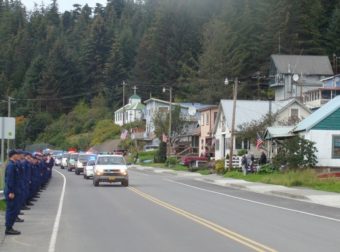
Hoonah slain officer funeral procession
The funeral procession for slain police officers Matt Tokuoka and Tony Wallace moves through downtown Hoonah, Sept. 8, 2010. (Photo by Casey Kelly/KTOO)

The survivors of law enforcement officers and firefighters who die in the line of duty continue to face uncertainty over health insurance. That’s because the two houses of the legislature couldn’t agree on a bill to provide benefits during the recent special session.

State Trooper Sgt. Patrick “Scott” Johnson was just two and a half years from ensuring that his family would have health benefits through age 65 when he and Trooper Gabe Rich were killed in a shooting in 2014.

This left Johnson’s widow Brandy fearful she would lose health coverage. Since then, the administrations of Govs. Sean Parnell and Bill Walker have extended insurance to the survivors of Johnson, Rich and Trooper Tage Toll, who died in a helicopter crash in 2013. And while they’ll have coverage through next June, Johnson said it’s uncertain beyond then.

“It’s frustrating,” Brandy Johnson said. “I am not the type of person to, you know, ask for things. But this is something that my husband would have earned for our family. For me to have to ask for something that I feel he’s already earned – it’s kind of humiliating in a way.”

She and the other families supported legislation that would make this coverage permanent, saying they were doing it for future survivors of those who die in the line of duty.

The legislature failed to pass that bill in the regular session that ended in May, so Gov. Bill Walker included it in his call for the first special session this year.  House Bill 4002 would limit benefits to surviving spouses for 10 years or remarriage, and to children until age 19  — or 23 for college students.

The House passed it 34-0 on Saturday and adjourned.

But senators in the majority caucus said the House gave them no time to review what it had done. And since the House left Juneau, the Senate wouldn’t have been able to make changes. So the Senate adjourned on Sunday without passing the bill.

This procedural disagreement upset survivors. Toll’s widow Nikki Toll said the two houses should have worked together.

“Politics is a fickle thing and, you know, we’re the ones learning, and … yeah, it’s hard to put into words that frustration,” Nikki Toll said.

Walker decided against including the bill in his call for another special session starting on July 11. A spokeswoman said the session is limited to those bill directly related to the governor’s fiscal plan.

Johnson said Walker should have added the bill to the session, considering how close it was to passing.

Sen. Cathy Giessel, R-Anchorage, addresses the Alaska Senate in favor of passing House Bill 11, an act that would make certain criminal records unavailable on the internet, Jan. 27, 2016. (Photo by Skip Gray/360 North)
Sen. Cathy Giessel, R-Anchorage, addresses the Alaska Senate in January. (Photo by Skip Gray/360 North)

Anchorage Republican Sen. Cathy Giessel said the Senate supports the governors’ actions to provide benefits to survivors. And she noted the legislature provided funding for the benefits in the budget starting July 1. But, she said, the Senate wasn’t given time to work on the bill.

“The Senate was prohibited from making any changes in the bill, or having any input into it, because of the fact that the House had adjourned,” Giessel said.

Anchorage Democratic Rep. Les Gara expressed concern about what the inability to pass the bill would mean for the special session, when the legislature will work on more contentious bills.

“If you take any signals from the Senate Republican refusal to pass the easiest bill, to help survivors of killed troopers and firefighters and police, you know, it’s a dysfunctional place where bills are getting blocked — even the easy ones,” Gara said. “So, it’s going to be a tough lift.”

Giessel said it was the Senate that led the work on major bills that passed this year, including reforms to criminal justice and Medicaid that will save the state money.

If Walker doesn’t add the bill to the special session agenda, the legislature won’t be able to consider it again until next session, in January.

Reactions are mixed to another special session call

The Alaska Legislature will have another 30 days beginning July 11 to pass a long-term fiscal plan for funding state government. That’s because Gov. Bill Walker called them back for another special session.

Legislators had a mixed response to the call. Some say they’re open to working on new proposals they expect from Walker. But others are skeptical toward the governor’s approach and say the legislature can return to the issue next year in the regular session.

Walker said Alaska doesn’t have time to wait for a long-term solution to state finances. That’s why he supports drawing about 5 percent in earnings each year from the Permanent Fund to pay for the state budget. The plan also includes cutting Permanent Fund dividends. Without changes, his administration projects the state will run out of savings in four years.

“Do we have to run out of savings before we fix the problem?  And I’m saying we don’t have to, we absolutely don’t have to,” Walker said on Sunday. “So, it’s about getting the job done now. Is it politically uncomfortable? Of course it’s politically uncomfortable.”

But it’s not certain  the Permanent Fund bill will come up for a vote. The Senate passed its version of the legislation, Senate Bill 128. But the House version never advanced from that body’s Finance Committee.

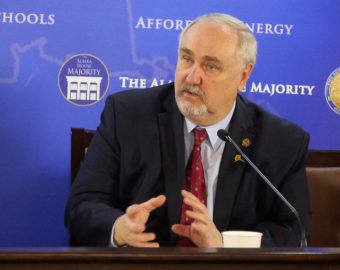
Rep. Craig Johnson, R-Anchorage, at a House Majority press availability, Feb. 4, 2016. (Photo by Skip Gray/360 North)
Rep. Craig Johnson, R-Anchorage, at a House Majority press availability in February. (Photo by Skip Gray/360 North)

House Rules Chairman Craig Johnson, R-Anchorage, said he’s not interested in bringing a Permanent Fund restructuring up for a vote until the level of state spending is lower.

“Is everything we’re paying for – do we really need to be? What is the role of government?” Johnson said. “I think it’s going to take a deeper look than what we can put together in 30 days.”

Johnson said it could take one or two more years to go through that process. He also said he could bring up Permanent Fund legislation if there’s support in the legislature. But he said he wants substantial backing from the Republican-led majority caucus to make any change, not just an alliance of majority-caucus moderates and the minority caucus.

“This is an exceptional bill and, you know, the caucus can make a decision,” Johnson said. “I would want to continue maintaining the rules that we’ve used since I’ve been there.”

Sen. Anna MacKinnon, R-Eagle River, said she’s interested in the specifics of what Walker proposes the legislature look at in the session.

“It seems a bit overwhelming at this time, since we’ve been in session for almost six months,” MacKinnon said. “But I understand the governor’s perseverance at trying to set Alaska on a fiscal path that is sustainable.”

Some minority-caucus Democrats want to ensure that the legislature considers more than just the Permanent Fund bill in the session. They also want the legislature to consider an additional tax, like a statewide income or sales tax, as part of what they and Walker see as a balanced plan.

Rep. Sam Kito III, D-Juneau, said Walker’s special session proclamation has given the Legislature the focus it needs.

“I do think that there all the pieces on the table now with the governor’s call to put a package together that can save the state money and move the state forward into a more sustainable budget,” Kito said.

Kito also would like to see the legislature take action to cut tax incentives to large oil producers. And he’d like to see it consider the other taxes as well.

“The reason that the governor is calling us back – the reason that we’re doing this issue is because we do have to deal with more than just the Permanent Fund restructure,” Kito said. “And ‘more than just the Permanent Fund restructure’ means looking at those components of the oil and gas tax bill that were not addressed this past time.”

One factor that could affect the session is how Walker handles the state budget. He has until July 1 to decide whether to veto budget line items. These changes could affect Permanent Fund dividends or oil and gas tax credits.

Walker calls for another special session after House fails to act on Permanent Fund earnings bill

Gov. Bill Walker talks with reporters in his temporary offices in Juneau, June 19,2016. He had just called the legislature back for a fifth special session. (Photo by Jeremy Hsieh/KTOO)
Gov. Bill Walker talks with reporters in his temporary offices in Juneau. He had just called the legislature back for a fifth special session. (Photo by Jeremy Hsieh/KTOO)

Gov. Bill Walker on Sunday called the legislature back for another special session after lawmakers failed to restructure Permanent Fund earnings to fund state government.
Walker issued the call for a session to begin on July 11.

Walker said Permanent Fund dividends are at risk in 2020 if the state doesn’t make changes this year. The Senate passed a bill that would reduce dividends from slightly more than $2,000 this year to $1,000, but the House didn’t pass the bill.

“That program is at risk,” Walker said. “If we don’t make a change in under four years it will go to zero. So those who are concerned about receiving a lesser dividend this year – and I applaud the Senate for what they did on that – that is a step to make sure we will have a dividend going out generations.”

Walker issued the proclamation for a special session shortly after the Senate adjourned Sunday. The proclamation focuses on three things. One is Permanent Fund earnings. The second is a series of new or increased taxes – including a potential sales tax. And the third is oil and gas taxes and tax credits.

Walker also suggested he will veto parts of the budget. He said the size of government may be a bit different after he finishes wielding the veto pen. He declined to say if he will veto PFD funding.

“Things that I anticipated would be done legislatively have not been, and therefore, I have the opportunity — I have the obligation — to do some things as governor with the budget,” Walker said.

House Speaker Mike Chenault, R-Nikiski, said after the House adjourned Saturday that the legislature may address a long-term fiscal plan this year. He spoke before Walker called for the special session.

“I hope that we can address some of those concerns, maybe if the governor calls us back, maybe by then we’ll have the ability to move forward,” Chenault said. “Maybe some people’s positions will either soften, or we’ll be able to find a mechanism to move forward.”

Walker has until July 1 to decide whether to veto parts of the budget.

Site notifications
Update notification options
Subscribe to notifications