Anna Canny

Local News Reporter

Juneau’s tribal and city governments embrace collaboration on public safety and waste management

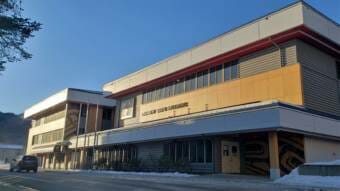
The Andrew Hope Building, pictured here on Feb. 10, 2021, houses the headquarters of the Central Council of Tlingit and Haida Indian Tribes of Alaska.
The Andrew Hope Building, pictured on Feb. 10, 2021, houses the headquarters of the Central Council of Tlingit and Haida Indian Tribes of Alaska. (Photo by Jeremy Hsieh/KTOO)

The City and Borough of Juneau will collaborate with the Central Council of the Tlingit & Haida Indian Tribes of Alaska on issues of public safety and composting moving forward.

The details of the partnership are outlined in two agreements passed unanimously by the Juneau Assembly Monday night.

The city and the regional tribe of Southeast already offer many of the same public services in Juneau. For instance, Tlingit and Haida operates its own public safety department and tribal emergency operations center in Lemon Creek.

After this summer’s record-breaking glacial outburst flood, the tribe worked with the city on clean-up and recovery. According to the tribe’s Environmental Program Manager Raymond Paddock III, the new agreements basically pave the way for more collaboration like that in the future.

“This agreement formalizes and strengthens the government-to-government relationship between Tlingit and Haida and the City and Borough of Juneau, recognizing both as key partners in addressing solid waste challenges and public safety for our shared community,” Paddock said during testimony he gave on Monday.

The public safety agreement commits the city and the tribe to annual meetings about public safety priorities and projects. That will likely include planning together for future glacial outburst floods. They’ll also participate in an annual training exercise to practice emergency response together.

The agreement on solid waste comes as both the city and the tribe have been awarded significant federal funding to support composting projects over the last couple of years. 

Both are in the very early stages of establishing composting operations, but Paddock said working with the city will be the most effective way to tackle shared community waste challenges, especially as the local landfill fills up.

“Through collaboration, we aim to promote sustainable waste management practices that will positively impact Juneau and serve as a model for other communities in Southeast Alaska, enhancing regional resilienceship and environmental stewardship,” Paddock said. “And lastly, I want to say that there is enough waste to go around.”

The owner of local private business Juneau Composts has expressed concern that establishing government-run composting facilities could put her out of business.

Moving forward, both the city and the tribe will maintain independent finances and operations, but they hope these agreements will create more efficient and impactful public safety and solid waste projects for Juneau.

U.S. Army Corps of Engineers visiting Juneau next week with tips for flood victims

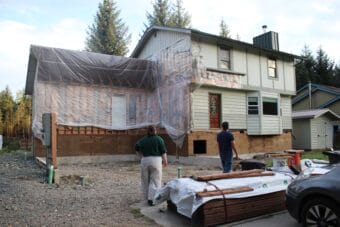
Sam and Amanda Hatch, of Meander Way, raised their house after the 2023 outburst flood. Now, some of their neighbors are considering doing the same (Photo by Anna Canny/KTOO)

The City and Borough of Juneau and officials from the U.S. Army Corps of Engineers will host two public meetings next week to share ideas for flood proofing houses. 

Both events will take place in the Thunder Mountain Middle School auditorium.

During this August’s glacial outburst flood, nearly 300 homes in the Mendenhall Valley were damaged. Most took on water for the first time this year. And because there will likely be more outburst floods to come, many residents are looking for ideas to keep their houses dry next summer. 

Deputy City Manager Robert Barr said next week’s events will cover a variety of topics, based on some of the common concerns he’s heard from community members. 

“People have questions about what’s the best thing to do for their particular property and their particular circumstances when it comes to placing those sandbags, or, you know, reinstalling drywall,” he said, adding that people may have questions about water resistant drywall or raising their homes.

During the first event on Tuesday starting at 6 p.m., flooding experts will do a presentation on mitigation followed by a question and answer session. The event won’t be livestreamed, but a recording will be available online afterwards.

The second event is an open house on Thursday from 4 to 7 p.m. People are welcome to drop in and ask questions about their individual flood concerns. 

Topics covered might include flood proof construction materials to use and advice about the proper placement of sandbags before flood events. 

Greens Creek receives final Forest Service approval to begin expansion next year

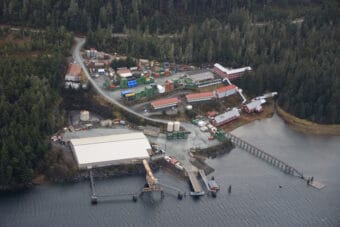
Hecla Greens Creek Mine on Saturday, Oct. 26, 2024. (Clarise Larson/KTOO)

Hecla Greens Creek Mine just got the green light for an expansion that could extend mine operations for up to another 18 years. The U.S. Forest Service officially permitted the project on Admiralty Island on Thursday.

After nearly five years of planning and public review, Greens Creek is now allowed to build more storage for tailings — the ground-up rock that’s leftover after the extraction of valuable metals like gold, zinc and silver. 

Greens Creek is the nation’s largest silver mine and one of Juneau’s most prominent and profitable employers. The expansion approval comes with new requirements for environmental oversight.

According to Forest Service geologist Matthew Reece, a number of individuals and environmentalists have expressed concern about the mine’s potential to contaminate the environment in Admiralty Island National Monument where it operates. 

“One of the things that we heard loud and clear was that folks really wanted to see a concrete plan for mitigation and monitoring of fugitive dust leaving the tailings facility,” he said.

At Greens Creek, waste rock is temporarily stored in large outdoor piles before it is moved underground for long-term storage. That means there’s potential for fine particles containing heavy metals to blow off into the surrounding forest and waterways. That’s known as fugitive dust.

The mine does have measures to mitigate fugitive dust already, but moving forward they have to implement a new plan to do even more about it. 

New ideas proposed in the plan include misting the tailings piles with water to weigh down dust particles and reducing the amount of exposed tailings during the winter months, when blustery conditions might spread dust further. The Forest Service has even committed to measuring the dust to make sure the mine is cutting down on how much spreads.

Another new piece of environmental oversight is the establishment of a collaborative monitoring panel, which will bring together representatives from the Forest Service, Hecla, state and federal environmental agencies and the nearby Tribe and Tribal Corporations of Angoon and Kootznoowoo, Inc.

Reece says the group is meant to introduce more transparency into the mine’s potential environmental impacts, especially near sensitive environments that communities like Angoon rely on for subsistence. 

“The idea is to have a collaborative working group reviewing and making recommendations for potentially additional monitoring. This is going to be a pretty heavy lift,” he said.

Reece said the Forest Service will be working over the next couple of months to bring stakeholders together and come up with a more specific plan about what the panel will work on. In the meantime, Greens Creek is working to acquire the necessary permits to break ground sometime next year.

Flood fighting experts share details about Juneau’s flood barrier plan

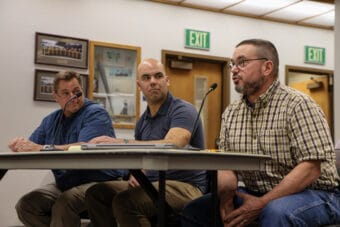
Dan Allard and Philip Martinez (left, center) from the Alaska branch of the U.S. Army Corps of Engineers join CBJ engineer John Bohan to speak to the Juneau Assembly on Monday, Nov. 4, 2024. (Clarise Larson/KTOO)

The City and Borough of Juneau is moving forward with phase one of their short-term plan to fight glacial outburst floods in the Mendenhall Valley. A proposal to construct a temporary levee along the Mendenhall River using flood barriers is already underway. 

At Monday evening’s Assembly committee of the whole meeting, flood fighting experts shared details about barrier installation and durability. The city has debated the best way to address Juneau’s outburst floods, but the U.S. Army Corp of Engineers recommended building the levee using barriers made by a company called HESCO.

“It’s quick, it’s really effective and it’s inexpensive. That’s why we’re suggesting the HESCO barriers,” said Dan Allard, an emergency management specialist for the Corps’ Alaska branch. 

The HESCO barriers were given to the city for free by the Corps. They are four feet tall and three square feet wide, made with heavy-duty fabric sandbags contained in a metal wire basket. For Juneau’s plan, they’d be used to line the riverbanks on the developed side of the Mendenhall River along Marion Drive, Killewich Drive and Meander Way. 

Some Juneau residents have expressed concern about the possibility that the flood barriers could be breached by debris, like the large trees that often come down during outburst floods.

Keith Anderson, a consultant with Flood Defense Group and a former HESCO employee, also addressed the Assembly. Anderson, who has built HESCO levees for military fortification and flood fighting across the nation, said that the barriers are able to withstand trees and all kinds of impacts. 

HESCO barriers with New York City in the background. (Photo courtesy of Flood Defense Group presentation)

“The bulk of these baskets, they can take floodwater, debris impact, car bombs, rockets, I mean, it’s amazing how strong they are,” he said.  

At least one catastrophic breach of HESCO barriers has been documented when the flooded Mississippi River broke through in Davenport, Iowa and surged into the city’s downtown. That incident, Anderson said, was attributed to a construction error.

The bigger concern, experts said on Monday, is not barriers failing, but bank failure due to erosion. During the rollout of the plan, the city has made it clear that significant site preparation on private property may be necessary. 

“You may think we’re eering in caution on recommending bank stabilization or armouring protection or scouring protection in front of these barriers, but we’re trying to provide a product at our best assurances that will last more than one event,” said John Bohan, chief engineer with the city’s capital improvement project. 

The Corps will fund the cost for engineering and design of the levee, as well as its temporary construction, but they can’t chip in for erosion protection in this case. So making the bank strong enough for the levee will likely demand some significant cost-share for property owners, and some invasive work. 

“You also have to provide rights of entry to people’s property so you can put these things up, and that might be an issue because it’s not area beautification, right? It’s flood protection,” Allard said. 

During August’s record-breaking glacial outburst, 289 homes in Mendenhall Valley were damaged by flood water. But some property owners in riverfront neighborhoods have already expressed opposition to the city’s plan

While some residents say they’re worried about the financial aspects, others worry about the possibility that flood barriers could redirect flood water in unexpected ways, potentially sending more powerful flows to downstream neighborhoods, for instance.

Bohan acknowledged that the city is working with incomplete information while designing the levee project, but an updated hydrologic study of the Mendenhall River, with accompanying inundation maps for the Mendenhall Valley, will be done by the engineering firm Michael Baker International. Preliminary results of that study are expected later this month, before flood barriers are installed. 

Some residents have also been pushing for more substantial flood fighting solutions, like dredging the Mendenhall River or building a levee around the lake. The city has already set aside $3 million to study those more permanent solutions, but experts from the Corps at Monday’s meeting said the agency would be unable to pursue those ideas without further investigation, including economic and environmental studies that could take years.

“Even if we do it quickly, it’s still going to be a long time. Much more time than you have to protect the people down on the river,” Allard said.

The HESCO levee, Allard said, is a way to buy time. The city plans to present more detailed plans on site preparation and potential cost sharing for the HESCO levee plan at the next regular Assembly meeting on Nov. 16.

Juneau’s temporary flood fighting plan is underway. Some riverfront homeowners don’t want it.

Ann Wilkinson Lind’s riverfront property is fortified with packed gravel, riprap and a wall of boulders along the perimeter. Now, it is also the starting lot for the city’s proposed flood barrier (Photo by Anna Canny/KTOO)

On a quiet afternoon in October, the Mendenhall River swirled lazily in an eddy at the corner of Ann Wilkinson Lind’s property on Marion Way.

But during this summer’s record-breaking glacial outburst flood, the river sent waves crashing onto Lind’s property.

Their house was spared, but the force of the water knocked down the chain-link fence, swept away garden boxes and tool sheds and tore up their beloved backyard, which the family has dubbed the “Lind oasis.” Lind’s husband Jeff, who had long struggled with a weak heart, was devastated by the damage.

“He was very, very stressed out about his yard,” she said. “That was, I think, sort of the straw that broke the camel’s back.”

Jeff Lind passed away less than a week after the flood. In his memory, friends and former coworkers from Green’s Creek Mine came together to protect the yard from future floods. They raised the edge of the lot with four feet of packed gravel and built a sturdy wall of boulders around the perimeter.

“We bite the bullet. It’s part of living on the river,” Ann Lind said. “But now, these floods are affecting so many other people.”

This year, floodwaters stretched far beyond the riverbanks and damaged nearly 300 houses in the Mendenhall Valley. To keep the people dry next year, the City and Borough of Juneau has made plans to install a wall of flood barriers to make a temporary levee along Mendenhall River, which begins on Lind’s property and stretches down along Killewich Drive and Meander Way.

The plan won’t work without the cooperation of more than 75 riverfront property owners. And some of them are feeling conflicted, balancing a pressure to protect their neighbors with their fears that the city’s plan is too risky, invasive and expensive.

“It’s put us, I would say, all riverfront property owners, in a very difficult position. I don’t want to be the one person that says no. I don’t want to be the hole in the wall,” said Sean Smack, a homeowner on Meander Way. “If we fight this plan, will we now be the bad guys in the community?”

Smack doesn’t doubt the barriers could work well against Juneau’s outburst floods, but he worries that the city’s plan will cost too much. 

A band-aid solution

The barriers, made by a company called HESCO, are basically massive heavy-duty sandbags in metal baskets. They’re used for flood fighting across the nation, and the U.S. Army Corps of Engineers gave them to Juneau for free.  

The proposed levee is only meant to be temporary — a way to buy some time for a more permanent flood prevention plan. But to build it, the city says they would have to connect a wall of HESCO sandbags across yards that are uneven, on soil that is unstable, along a riverbank that zigs and zags. And that will require a lot of prep work on private property, and a lot of money — possibly up to $10 million when all work is done. 

It’s not yet clear how that cost will be shared, but it is almost certain that property owners like Smack will be asked to contribute some funding. While he understands the desire to fight flooding in the short term, he worries all the work for the temporary levee might be a waste.  

“Right now, we’re just looking at spending up to $10 million as a city on a temporary levy that may or may not work, but then, once the long term plans done, all of that work is useless,” Smack said. “Are we throwing a bunch of good money at a short-term plan?”

Many riverfront property owners have already made hefty personal investments to fortify their properties. Lind, for instance, has spend hundreds of thousands of dollars on her lot. She thinks that work will be enough to protect her for now, but with the HESCO barrier proposal, she feels she’s being asked to pay for her neighbor’s protection, too.

“I don’t know how much those barriers are going to cost, or what they’re going to expect us to pay,” Lind said. “But for us to pay for the Valley is not right. It should be shared.”

The city has proposed cost-sharing options, like the creation of a local improvement district. If approved, a designated group of flood-affected homeowners would split up the cost of the project. Though a similar improvement district proposal for erosion prevention work on Meander Way failed back in 2018, when homeowners could not come to an agreement.

Lind is more concerned with finding a permanent solution, like draining would-be flood waters from Suicide Basin, or building a levee around Mendenhall Lake to divert water before it flows downstream into the river.

“Fix the problem. Fix the point of the problem,” Lind said. “We should not put bandaids all the way up and down the river.”

Deb Johnston stands next to the high water mark on her house. She says people in her neighborhood need a flood fighting solution sooner rather than later (Photo by Anna Canny/KTOO)

The cost of doing nothing

City Manager Katie Koester says the city fully intends to pursue a permanent fix, and has discussed many options with experts at the Army Corps. But they’ve pursued the HESCO plan at the Corp’s suggestion, and Koester insists that building something permanent will require more federal funding, and a lot more research to secure that funding.

In an interview, Koester acknowledged that the plan to install flood barriers is incomplete and imperfect. She emphasized that it is only intended to be a stopgap before the next flood comes, but she feels it is the best bet to protect life and property between now and next summer. 

“If the residents don’t want the project, it’s going to be hard for the project to proceed, and you know, I come back to the cost of doing nothing,” Koester said.

Deb Johnston, who also lives on Meander Way, worries that the pushback to this plan might ultimately lead to inaction. She supports the HESCO proposal, and though she’s one of the many Valley homeowners that’s not on the riverfront, she’s willing to share costs. 

No matter what flood fighting plan prevails, Johnston feels time is of the essence. 

“When I walk in this neighborhood, there are still houses that are unoccupied, that have demolition debris on their lawns,” Johnston said. “I don’t see how any of us can possibly wait three to five to six years for a permanent solution without this becoming, you know, a derelict neighborhood.”

Representatives from the U.S. Army Corps of Engineers will share more details about their HESCO project planning at Monday’s Juneau Assembly Committee of the Whole meeting. The city will roll out more details on the project’s budget and cost sharing at the next regular Assembly meeting on Nov. 16.

FEMA disaster recovery center opens in Juneau Wednesday

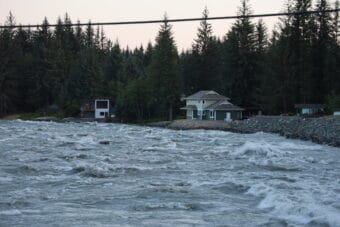
Water drains from the crawl space of a REACH group home on Meander Way following Juneau’s annual glacial outburst flood on Tuesday, August 6, 2024. (Clarise Larson/KTOO)

The Federal Emergency Management Agency is opening a disaster recovery center at Mendenhall Valley Public Library starting Wednesday. 

Specialists will be there to answer questions and help with applications for federal money to cover damage caused by August’s record-breaking glacial outburst flood.

FEMA’s disaster assistance grants can help to pay for things like rebuilding or repairing your house, shipping materials to Alaska and replacing essential personal property — that might mean appliances, items needed for work and school or cars, provided that the damaged vehicle was your primary means of transportation. 

Jeremy Zidek with Alaska’s Division of Homeland Security and Emergency Management said many people affected by the flood have already received money from insurance payouts or the state’s individual disaster assistance program, which has already paid out more than $1 million to 264 applicants affected by the flood.

“So if they’ve received something from our program, they’re not going to receive funding from FEMA for that same damage,” Zidek said. “But if our program didn’t address a particular need, or there’s a greater need that our program couldn’t cover, people could be eligible for that FEMA individual assistance.”

For now, the state disaster assistance program has been paused. Those who already received their payouts can keep them, but those with pending applications will have to switch gears and apply to through FEMA’s program for now. Though the state and federal programs are similar, they do have distinct application processes. 

FEMA’s disaster assistance program can give out even more money than the state — applicants are eligible for up to $43,000 as opposed to the Alaska’s program cap of  $21,000. Zidek said those who received help elsewhere should not write off the possibility of more help from the federal government. 

“Because FEMA level of assistance is twice what the state can provide, it can be some real substantial assistance for people,” he said. “The FEMA process is easier than it’s ever been in the past, and it’s really important that people do register.”

Earlier this year, FEMA streamlined their program to make the application process less cumbersome for disaster survivors nationwide. But the disaster declaration issued by President Joe Biden earlier this month marks Alaska’s first federal disaster since those changes were made. 

To apply, residents will need a photo ID, proof of occupancy and insurance information. Some combination of receipts, credit card statements, lists of lost items and pictures from the aftermath of the flood will help to prove damages, even if your house is mostly put back together.

People can apply in person at the disaster recovery center, or online at FEMA’s website or via the FEMA mobile app.

Once an application is submitted, a FEMA agent will call to schedule an in-person inspection. Natalie Shaver, a public affairs specialist for FEMA Region 10, said inspectors are already on the ground in Juneau this week. 

“Once you get that approval, and it is determined that you qualify for FEMA aid, those payouts can come relatively quickly — in a matter of weeks,” Shaver said.

Applications are open until Dec. 16. The recovery center at the Valley Library will be open Monday through Sunday from 8:30 a.m. to 6:30 p.m., with a brief pause Nov. 4 to 5 for election activities. 

Site notifications
Update notification options
Subscribe to notifications