Associated Press

Starfish babies return in droves following massive die-off

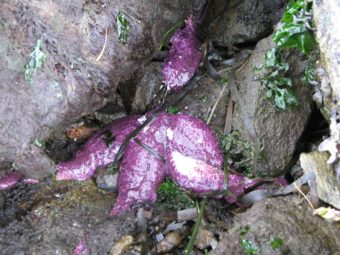
Sea star wasting disease is affecting starfish populations throughout the Pacific, from Baja California to Mexico. (Photo by Kit Harma, pacificrockyintertidal.org)

Droves of baby starfish are returning to Oregon and Northern California’s shores after a wasting disease decimated whole populations of the creatures over the past two years along the West Coast.

Data collected by Oregon State University researchers shows an unprecedented number of baby starfish, or sea stars, survived the summer and winter of 2015, the Eureka Times Standard reported Saturday.

“When we looked at the settlement of the larval sea stars on rocks in 2014 during the epidemic, it was the same or maybe even a bit lower than previous years,” Oregon State University marine biology professor Bruce Menge said in a statement.

“But a few months later, the number of juveniles was off the charts — higher than we’d ever seen — as much as 300 times normal.”

A similar increase was found at sites just north of Trinidad, California, near Patrick’s Point State Park. A baby starfish boom also was noted in the summer of 2014 near Santa Cruz.

A virus killed millions of starfish on the Pacific Coast from Southern California to Alaska by causing them to lose their limbs and eventually disintegrate into slime and piles of tiny bones.

The cause of the massive outbreak remains unclear. Some have hypothesized it to be abnormally warm waters in the Pacific Ocean, which have wreaked havoc on marine ecosystems for the past two years.

Humboldt State University Marine Lab Director Brian Tissot disagrees with that hypothesis since the virus spread during colder months and didn’t expand as much during the abnormally warm 2015.

“There is no clear environmental cue,” Tissot said, adding the deadly wasting disease has declined in intensity but remains present.

Experts say that while it’s encouraging to see the abundance of baby starfish, the disease, competition and environmental factors make their survival difficult.

How Alaska’s population might change by 2045

Alaska’s population will continue to climb over the next 30 years, inching closer to the 1 million mark, a new report says.

The state’s population is projected to increase by 162,200 from 2015 numbers to 899,825 people in 2045, according to a report released last week from the Alaska Department of Labor and Workforce Development.

The population of Alaskans age 65 and older is the group expected to grow the fastest, and annual natural growth — births minus deaths — is expected to slow.

Southeast Alaska is the only region in the state that is expected to lose population, and the Anchorage and Matanuska-Susitna regions are predicted to grow the fastest. The Mat-Su Borough is set to grow more than 80 percent between last year and 2045, the report said.

Dan Robinson, director of research and analysis at the Labor Department and one of the people who worked on the report, said what will determine Alaska’s population more than births and deaths is migration in and out of the state, “and that’s a big question right now.”

The report comes with the caveat that some events — such as the discovery of oil at Prudhoe Bay in 1968 and the construction of the pipeline — can’t be foreseen and make migration unpredictable. That could throw off such projections that use hypothetical future trends.

“You get, more than anything, a range of possibilities” from the report, Robinson said.

Worries are rising about Alaska’s future as economists speculate about whether or not the state is already in a recession and lawmakers try to fix a $4 billion budget deficit. The Labor Department has also predicted that 2016 will bring the first annual jobs loss in the state since 2009.

“We’ve heard some people mention concern about big population losses,” Robinson said. “It helps to put that in context.”

Significant population changes in Alaska in the past came with the construction and completion of the trans-Alaska oil pipeline, the oil boom and bust, wars and other economic swings.

The last such population report came out in 2014, at which time the projection showed that Alaska’s population would hit 925,042 in 2042.

Projections in the report are based on historical population data and fertility, mortality and migration rates. It uses Alaska’s population of 737,625 in July 2015 as the starting point.

Two other scenarios show that, on the lower end, the state’s population could actually dip to 642,697 in 2045 if there is a net migration rate of negative 1 percent per year. On the other hand, it could reach as high as 1,247,887 with an annual net migration rate of 1 percent.

The middle-of-the-road scenario uses a net migration of 0 percent because in recent years, Alaska’s net migration has “trended toward being neutral,” said Eric Sandberg, a demographer at the Labor Department who also worked on the report.

Projections show the population of Alaska Natives in the state, including those who report more than one race, will grow from 143,868 in 2015 to 184,561 in 2045.

“Like the state as a whole,” the report said, “the Alaska Native population’s growth is expected to slow as the population ages.”

The state’s median age is expected to tick up from 34.5 in 2015 to 36.8 in 2045, the report said, and the male-to-female ratio will shift from 107.5 males per 100 females to 104.8 males per 100 females.

Critics question mine exploration near Alaska eagle preserve

A Canadian company exploring an Alaska mineral prospect near a wildlife preserve is drawing criticism from residents who say the risk is not worth the potential economic benefits.

Vancouver, British Columbia-based Constantine Metal Resources Ltd. has applied to expand exploration near the Alaska Chilkat Bald Eagle Preserve in Haines.

The Chilkat River stays open well after other southeast Alaska rivers freeze up. Up to 4,000 bald eagles gather there each year to feed on salmon carcasses.

Constantine officials say they’re not sure a mine will ever be built, but if it is, Alaska’s stringent regulations will ensure it’s done safely.

But critics such as Haines environmental activist Gershon Cohen says a debate on a future mine upstream of important wildlife habitat should start before a company spends millions on exploration.

Mallott calls new take on timber industry, environmentalism

A Tongass National Forest clearcut is shown in this 2014 aerial view. A new court decision limits logging on roadless areas of the forest. (Photo by Ed Schoenfeld/CoastAlaska News)

Lt. Gov. Byron Mallott is calling for less confrontation between environmentalists and Alaska’s timber industry.

The Ketchikan Daily News reports that Gov. Bill Walker’s lead on timber issues in Southeast Alaska discussed timber policy, the state budget and where he disagrees with Walker while in Ketchikan on Wednesday.

Mallot said there is plenty of blame to go around for the state of Alaska timber right now: environmental groups for over-litigating, the state for provoking environmentalists and the U.S. Forest Service for not managing the supply of timber.

The Forest Service manages the vast majority of Southeast Alaska forests. State government is the second-largest owner, with Alaska Native corporations the next largest.

Alaska approves draft rules for pot use at certain shops

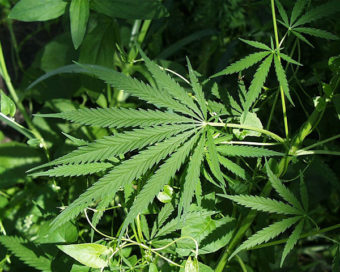
The board tasked with regulating Alaska’s nascent marijuana industry has approved draft regulations for how customers will be allowed to consume pot they buy in certain retail stores on site.

The proposed rules, which will go out for public comment, call for retail stores that will be permitted to have on-site consumption to have the consumption area cordoned off from the rest of the store by a secure door. Items purchased to be consumed at the store could not be removed from the premises. Regulators likened it to bars, where patrons are not allowed to-go cups for beers they don’t finish.

There would be transaction limits, and stores would have to monitor patrons for overconsumption. Gimmicks such as contests involving use of marijuana or pot as prizes would be prohibited.

Retail pot shops have yet to be licensed in Alaska.

Most credits would be phased out under draft bill

Most current oil and gas tax credits in Alaska would be phased out by 2020 under a draft rewrite of legislation pending in the House Rules Committee.

The draft has yet to be formally introduced or heard by the committee, which took possession of the bill after a prior version appeared destined to fail on the House floor.

Resolution on credits is seen as key to making progress on the budget and revenue measures as the Legislature continues working in extended session.

Documents for the draft rewrite were posted on the legislature’s website.

A summary of the rewrite also states that a tax break for North Slope oil produced from newer fields would be limited to 10 years once regular production starts, rather than being a timeless benefit.

Site notifications
Update notification options
Subscribe to notifications