Heather Bryant

State of Alaska sues over maritime fuel regs

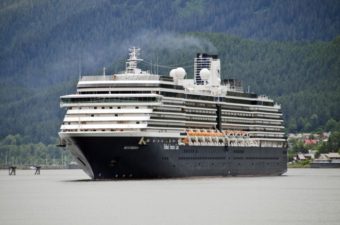
The Holland America Cruise Ship Westerdam prepares to dock in Juneau July 16, 2012.
The Holland America Cruise Ship Westerdam prepares to dock in Juneau July 16, 2012. (Photo by Heather Bryant/KTOO)

The state of Alaska is suing to block the federal government from enforcing regulations for emissions from cruise ships and marine cargo carriers.

New rules taking effect Aug. 1 would require that freight lines and cruise ships off the southeast and southern coasts of Alaska use low-sulfur fuel. The state says the fuel is expensive and difficult to obtain. It also says the new regulations will greatly increase shipping costs to Alaska and hurt the state’s tourism sector.

The state, in its lawsuit, claims the U.S. Environmental Protection Agency lacks the legal authority and scientific basis to extend what’s known as an Emission Control Area to Alaska.

It says enforcement will “irreparably injure the State and Alaska’s citizens and economy.”

An EPA spokeswoman couldn’t immediately comment on the lawsuit.

Shell oil drilling rig has close encounter with shore in Unalaska

Update:

The Coast Guard says an inspection of a Shell drilling ship that lost its mooring and drifted toward shore of an Alaska Island shows no signs of damage or grounding.

Petty Officer Sara Francis says the Coast Guard will review images of the hull of the 571-foot Noble Discoverer captured Sunday when Shell representatives sent down a remote-operated vehicle.

Shell spokesman Curtis Smith says the company also is bringing in divers to check.

Francis says the vessel came within 100 yards of shore in Dutch Harbor Saturday before it was towed farther off shore and reanchored.

That measurement is disputed by Kristjan Laxfoss, a Dutch Harbor captain who took photos that appear to show the ship much closer.

Laxfoss says the vessel was not moving and appeared grounded.

Original Story:

Shell Oil has run into a number of problems with its Arctic drilling plans over the last week. The Coast Guard refused to certify its oil spill containment barge without substantial modifications, the EPA is reviewing the Noble Discoverer drill rig’s air permits — and on Saturday, that rig came dangerously close to shore in Unalaska.

Investigators are still trying to determine whether the Noble Discoverer actually ran aground. Bystanders and photographs place the rig less than a hundred feet from shore, but Shell says a preliminary inspection of the hull found no damage.

Coast Guard Lieutenant Jim Fothergill said damage to the hull or propellers is the only sure sign that the ship hit the beach.

“I know they were very close to the beach, but we haven’t determined yet whether they ran aground,” Fothergill said.

Shell plans to send divers underneath the Discoverer on this morning to get a closer look. The Coast Guard will check the divers’ video footage to determine whether the ship actually made contact with the beach.

Regardless of what that shows, convincing locals might be difficult. Many, like charter captain Kristjan Laxfoss, are sure the ship hit shore.

“If the captain had asked them to put the gangway down, he could have walked to the post office,” Laxfoss said.

Shell vice president Pete Slaiby characterized it as a “near miss,” but says the company is taking it very seriously.

“I don’t doubt for a minute that this came entirely too close for our comfort,” Slaiby said.

When asked specifically how the Discoverer drifted towards the beach while multiple Shell vessels – including the tugboat Lauren Foss – sat nearby, Slaiby said it was too soon to say.

“We will investigate the timeliness of the response for the Lauren Foss and others, but we’re happy that we planned and had that ship [the Lauren Foss] in harbor for such an eventuality,” Slaiby said.

The Discoverer is slated to start drilling in the Chukchi Sea next month.

Slaiby says this doesn’t change that plan.

“We will go up to the Arctic fully prepared,” Slaiby said. ” We’ll learn from this incident. I think it is an industry where incidents happen, and the best you can do is learn from the incident and not repeat.”

More specifically, Slaiby says the Discoverer will use eight anchors in the Arctic, as opposed to the single anchor it had on Saturday.

For the time being, the Discoverer will remain anchored in Unalaska Bay, with the Lauren Foss standing by in case of high winds.

Eaglecrest plans changes to lifts

Changes are coming to the Eaglecrest Ski Area on Douglas Island.

Chairs on the Black Bear lift, which had a pole in the middle of the seat, are being replaced with chairs with outside poles. Eaglecrest’s other three lifts have chairs with outside poles.

General Manager Matt Lillard says there weren’t many direct complaints from skiers about the Black Bear lift but he says the change made sense for loading skiers more efficiently.

He says the chairs were bought used from a ski area in Canada and will be ready for next season.

An electrical upgrade is also planned for the Hooter lift, the last Eaglecrest lift to be converted from diesel. Lillard expects a cost savings with the move.

Eaglecrest is owned by the city and borough of Juneau.

Alaska seeks oil taxes consultant

After being criticized for rushing a bill into the special session this year that some considered ill-conceived, the Parnell administration is now seeking a consultant to advise it on oil taxes.

The Department of Revenue is soliciting proposals for a consultant to provide expert economic analysis. The consultant will be asked, among other things, to identify issues with the current oil and gas tax structure that might limit industry investment in the state and make recommendations for improving the existing system.

The budget for the work is estimated between $400,000 and $700,000.

Gov. Sean Parnell failed to get his tax-cut plans passed the Legislature during regular and special sessions this year and last. The proposal quickly put together before this year’s special session was criticized by lawmakers in both parties.

EPA considering Shell permit change request

Shell Oil is seeking to changes to the air permit for one of its drill ships after a spokesman says generator engines tested slightly above permit levels for ammonia and nitrous oxide.
Curtis Smith says Shell is working with the U.S. Environmental Protection Agency toward a compliance order that would allow the Discoverer to operate this year. He says this would set in motion a review process for the permit changes for 2013 and beyond.

Shell hopes to begin drilling in the Arctic waters off Alaska in weeks.

Suzanne Skadowski, with EPA public affairs, says this is a major permit and the agency hasn’t decided how to proceed.

She says the regulations for such permits don’t talk about modifications so EPA is reviewing whether it’s appropriate to make revisions.

State wants to be informed on water treatment

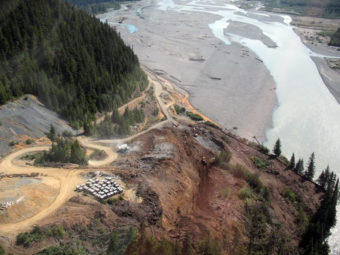
Aerial view of the Tulsequah mining area.
Aerial view of the Tulsequah mining area. (Photo via Chieftan Metals website)

Alaska mine regulators want to be informed on Chieftain Metals’ plans to treat acid rock drainage at the old Tulsequah Chief Mine in British Columbia.

As KTOO has reported, the company shut down its interim water treatment plant last month due to unanticipated costs, telling Canadian regulators it needed to improve plant operations as well as raise money to run it.

In a letter this week to Chieftain, Alaska Large Mine Coordinator Kyle Moselle urged the company to quickly resolve the problems and bring the plant back online.

“And as they’re working through those challenges and working to bring it back on line, I would appreciate it if they kept me in the loop so that I can be responsive to interested public and agencies on this side of the border,” Moselle said.

Acidic water has been draining out of the old mine into the Tulsequah River, a tributary of the Taku River, for more than 60 years. When Chieftain purchased the property two years ago, it inherited the problem and the B.C. government’s requirement to clean it up.

The state has no jurisdiction over the project, but regularly conveys Alaska’s concerns to Canadian environmental officials, including the Taku River’s importance to the commercial, sport and subsistence salmon fishery.

“We’re not regulating this mine; we’re essentially looking over the fence on a project happening in our neighbor’s yard,” Moselle said. “So I want to be kept in the loop on what’s happening, sure, because we want them to be responsive to our concerns about potential downstream effects.”

Chieftain installed the water treatment plant last fall; it’s been operating since December. B.C. environmental officials say water quality from the old mine was significantly improved while it was running. But the company says it has spent more than $9-million on the plant. Chieftain has reduced the number of workers at the mine site while it looks for ways to reduce the costs of operating the facility.

In an email response to Moselle, Chieftain Metals’ Chief Operating Officer Keith Boyle quoted a company news release about the suspension. Boyle also said he would keep Moselle informed as the company works the bugs out of the water treatment system and secures financing for it.

Mine critics call Boyle’s response “totally inadequate,” but Moselle says he’s satisfied. He hopes to get the same information Canadian regulators get from the company.

Last year Juneau’s legislative delegation created the Taku River Task Force to gather information about possible industrial development in the watershed. Rep. Beth Kerttula says the delegation is watching the latest developments as the company continues to study re-opening the old mine, which is likely the solution to ending the acid rock drainage.


Site notifications
Update notification options
Subscribe to notifications