Heather Bryant

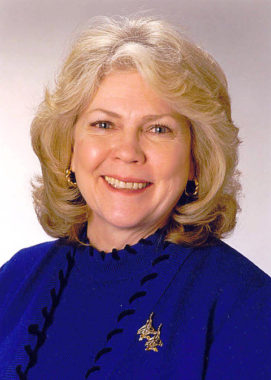
Former Rep. Heinze dies in Homer plane crash

Updated: 11:19 a.m.

The pilot of a plane in which former state Rep. Cheryll Heinze was killed – as well as four others in the Cessna 206 that crashed while landing on Beluga Lake in Homer – were taken to the hospital in Homer to be treated for injuries.

South Peninsula Hospital spokeswoman Derotha Ferraro says the five arrived at the hospital late Tuesday. Four were treated and released, but Heinze died early Wednesday morning while being prepared for transfer to an Anchorage hospital.

The National Transportation Safety Board says the Cessna 206 with five people aboard left Anchorage, stopped in Kenai and then continued to Homer. It crashed between 10:30 and 10:45 p.m.

The 65-year-old Heinze represented Anchorage as a Republican in the state House of Representatives from 2002 to 2003.


Environmental Groups Say Shell’s Spill Response Plan is Inadequate

Environmental groups are suing the federal government, arguing that Shell Oil does not have an adequate plan to deal with a spill. The coalition says the goal is not to delay drilling this summer.

The brief was filed in U.S. District Court in Anchorage this morning, practically as the doors opened for business.

It’s just the latest suit in a string of them filed over Arctic drilling and it takes aim at the Department of Interior, specifically, the Bureau of Safety and Environmental Enforcement, or BSEE.

Earlier this year, BSEE approved Shell’s response plan to a spill. Something Michael LeVine says never should have happened. He’s an attorney with Oceana – one of the groups filing suit.

“Those plans are based on unrealistic assumptions, like the ability to recover 95 percent of a worst case blowout,” LeVine said.

For its part, Shell is exuding some confidence even though the suit it brought earlier this that would have prevented these very groups – including Oceana – from brining suits like this very one, didn’t play out as they had hoped.

But officials with the company like spokesman Curtis Smith, are still sounding upbeat and optimistic things will go as planned this summer.

“We anticipated that lawsuits like this would come at the 11th hour. There may be more, and no matter what the lawsuit pertains to, we feel very confident that the process used to review all of our permits was very robust, and that will be validated by the courts,” Smith said.

The critics though, don’t buy into that review. They say that Shell has not demonstrated an ability to cap a gushing well in Arctic waters. A few weeks back Interior approved Shell’s capping stack – which is designed to slow down runaway wells – in Puget Sound.  The groups happily point out there are no floating ice caps in Washington State.

The lawsuit challenges the government on a whole host of laws – laws that were passed in response to the Exxon-Valdez spill. Violations, the suit contends, to the Clean Water Act, the Endangered Species Act and others.

Shell has about three ice-free months to begin operations this year. And, Smith says, the company will move forward as it has planned all along.

Charles Clusen, with the Natural Resources Defense Council concedes that, yes, this lawsuit may in fact slow Shell down, but that’s not the ultimate goal.

“Our objective is to prevent oil and gas activities in America’s Arctic until such time we can all be sure there will not be an accident that is devastating to that ecosystem,” Clusen said.

Getting everyone on board, though, won’t be easy, let alone, quick.

Convicted militia leader Schaeffer Cox fires attorney

Three weeks after his conviction in federal court, Fairbanks militia leader Schaeffer Cox has fired his attorney, saying he was ineffective.

Defense attorney Nelson Taverso filed a motion Monday seeking to be relieved from the case, which concluded with Cox’s conviction last month on federal weapons charges and conspiracy to murder.

In his motion, Traverso says Cox is “extremely dissatisfied with counsel’s representation and expressly requests that any further attorney-client representation be terminated.”

The motion says Cox contends Traverso provided “ineffective assistance.”

Under court rules, the judge who presided over the trial would have to approve the attorney’s withdrawal.

Cox hasn’t said whether he will appeal his convictions on nine of 11 counts.

Cox and two co-defendants are set to be sentenced in September.

State Gets First Federal Waiver from “No Child left Behind”

The Federal Department of Education has given Alaska a waiver for one of the requirements created by the No Child Left Behind Act.
Under the decision,  the state would be allowed to freeze its student proficiency targets –formally referred to as Annual Measurable Objectives —  for one year if Alaska commits to applying for a larger package of waivers by September sixth.

Eric Fry, with the state’s Department of Education, says by freezing the target levels,  local school districts and individual schools will be more likely to  meet the Annual Yearly Progress requirements.

The reason that’s beneficial is that at the same time we’re doing this freeze, we’re also putting together an application for a comprehensive waiver in which the state would implement its own accountability system.  So it wouldn’t make sense to run the schools and districts through another year of the old NCLB when we’re going to be changing things pretty soon.

The frozen targets will require that eighty-three percent of students be proficient in English and seventy five percent of students be proficient in math. The system the state is planning to submit for federal  approval would still hold the local schools responsible – only using a different method of determining accountability and with different consequences if a student fails. He says the state plan avoids much of the wasted efforts of the current federal standards.

Fairbanks Democrat Bob Miller is a long-time advocate of getting waivers from the federal system. He says twenty six states have now been granted waivers from the federal controls that were proving ineffective. He ‘s encouraged that Alaska may soon follow.

They want us to succeed.  They’ve recognized the gaps.  They’ve recognized the flaws in the No Child Left Behind System.  And they’re happy to work with every state including ours.  So the State of Alaska is gaining more and more control over our own destiny, and that can never be a bad thing.

Fry says the target freeze will go into place immediately – with tests that students took last April and results that will be released next month. He’s  says other changes will take place at the state level over several years.

Teachers are going to start implementing the new standards soon,  the students will not actually be assessed on them until the Spring of 2016.  So they’re have several years of being educated under the new standards before being assessed under them.

The federal waiver must be formally accepted by the state Board of Education at a teleconferenced meeting on  July 24th. It will require the adoption of new regulations that are already out for public comment. The Board last month approved its new standards for accountability that will be submitted to the federal government in September.

Orphaned Beluga calf dies

Update: The rescued calf has died. A necropsy to determine cause of death has been scheduled for this afternoon. The calf was rescued on June 18 and was being cared for at the Seward SeaLife center.

Original Story:
Marine mammal specialists from across the country have descended on an Alaska aquarium to help care for a baby beluga whale that became separated from its mother shortly after its birth.

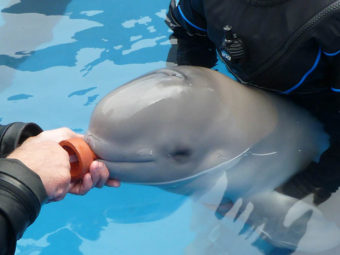
The male calf is under 24-hour care at the Alaska SeaLife Center in Seward, being fed by a stomach tube while learning how to suckle from a bottle.

“He’s currently doing very well, swimming on his own and he has been from the first time he got here, learning to take food from a bottle, which has been challenging,” said Tara Riemer Jones, the center’s president and CEO.

Caretakers at the Seward SeaLife Center feed the orphan calf. (Photo courtesty of the Seward SeaLife Center)

It’s believed to be the first baby beluga rescue in the United States, at least since federal record keeping began in 1972, she said. Other attempts at rescue resulted in calf deaths or in one case, the calf being returned to its pod.

It’s such a rare event that specialists have been helping with the animal’s care, including staff members from the Georgia Aquarium in Atlanta, Shedd Aquarium in Chicago and SeaWorld in San Diego.

“It’s actually a pretty unprecedented event in certain ways,” said Dennis Christen, the Georgia Aquarium’s director of animal training who was in place 29 hours after the calf arrived in Seward.

The whale was estimated to be 2 days old when it was found near South Naknek, in Alaska’s Bristol Bay, on June 18. Officials believe a storm likely separated the calf from its mother.

Tim Lebling, the Alaska SeaLife Center’s stranding coordinator, flew to South Naknek that afternoon to retrieve the calf.

It was flown 90 minutes back to Seward in dry transport. Lebling said the calf was placed on an air mattress in the plane, positioned so its weight wouldn’t put pressure on vital organs, and then constantly covered with wet towels.

Lebling said it was touch-and-go for the first part of the flight, probably because of stress.

“We thought he took his last breath at one point,” Lebling said, but then he breathed again.

Even though the beluga is still in critical care, caregivers are guardedly optimistic about his rehabilitation.

Survival odds for an animal this age coming into a stranding program are low, said Brett Long, the husbandry director at the center.

“We take it a day at a time,” he said. “We’re very happy to see that we appear to be meeting its nutritional goals and that it’s maintaining its weight, and we’re seeing slow, incremental weight gain.”

Caretakers estimate the calf was around two days old when he was rescued. (Photo courtesty of the Seward SeaLife Center)

The calf is now about 5 feet long and weighs 115 pounds, up 5 pounds since his arrival.

The biggest worry now is the calf’s immune system, which is insufficiently developed because it did not receive any of its mother’s milk.

“We are working with other aquariums to provide supplements that will help aid the development of that immune system, but it’s a waiting game,” Long said.

Jones said there is nothing specifically wrong with the calf medically “other than he’s young and at high-risk.”

“We’re not going to say it hasn’t been without some bumps in the road,” Christen said. “We’re very confident we’re on the right path here, but it’s still an animal that’s in critical care, and we have to be guarded in our optimism, and we’re just hopeful we’re on the right path.”

At the center, the calf has its own pool with toys and constant human companionship. At least three caregivers are with him 24-hours a day, two of them in wet suits and in the pool.

He often will rub up against his human handlers, who also help him learn new swimming patterns and play with him.

He’s being kept out of the public’s view for now in a pool being fed warmer water and in a sanitary environment. The hope is to move him soon to a larger pool, which can be seen from behind glass inside the Alaska SeaLife Center.

It’s running about $2,000 a day to care for the calf, and that’s not including the cost of the visiting marine mammal specialists.

Jones said the cost will strain the private, nonprofit research center’s stranding program budget for the year, and officials are talking with potential donors and possibly setting up a donation matching program for individuals. They’re also planning a 5K Wildlife Rescue Run on Aug. 4, encouraging virtual runners to sign up online to raise funds.

If the calf survives, he’ll never see the open ocean again since there is no way now for humans to teach him survival skills.

The National Marine Fisheries Service will eventually decide where he will be placed.

“There are a number of facilities that would make a great home for this young whale, with companion animals that would likely accept him into their kind of family unit,” Christen said.

Since facilities that take in animals like to be part of the naming process, the Alaska SeaLife Center hasn’t given the calf a name, yet.

But that hasn’t stopped most everyone caring for him from calling him “Naknek.”

3 hurt in Alaska ammonia leak on fishing vessel

Three people have been treated for inhalation of ammonia vapors leaking from a Seattle-based fishing vessel as it was docked in Alaska’s Dutch Harbor.

Coast Guard Lt. Jim Fothergill says the slow leak is believed to be coming from a tank holding up to 5,000 pounds of ammonia. The entire cooling system on the 353-foot Excellence contains 20,500 pounds.

The Alaska Department of Environmental Conservation – notified of the spill Saturday afternoon – says the vessel has been towed more than 7 miles to Wide Bay.

Fothergill says it will be a couple days before the cause and source of the leak can be investigated because the ammonia spill continues.

The three people treated were on board the vessel. Two were transported in stable condition for further treatment in Anchorage.

Site notifications
Update notification options
Subscribe to notifications