The president of the University of Alaska is proposing a 2 percent tuition increase for the 2013-14 school year.
That means that undergraduate tuition would cost nearly $5,600 a year.
President Pat Gamble’s proposal will go before the UA Board of Regents in September.
Tuition currently makes up about 12 percent of the total UA budget. Gamble says if the 2 percent increase – the smallest increase in a decade – is approved adjustments will need to be made elsewhere to offset a lower-than-normal tuition hike.
“Our biggest concern was that there would be a large spike like 7 percent or more,” Alejandra Buitrago said.
Buitrago is the president of the Union of Students at the University of Alaska Anchorage.
In regards to tuition increases, Buitrago said the change should be reasonable and steady so students can plan on it, rather than having large spikes.
Last year, the regents approved a 7 percent increase.
“At least the news came sooner rather than later. [Gamble] could have waited until September to announce it,” Buitrago said. “I find it respectable that he put the word out that he was going to do this.”
The Rasmuson Foundation announced more than $1 million in funding for Juneau’s AWARE shelter and The Glory Hole.
The grants are part of $9.6 million to be awarded this year to Alaska nonprofits. The foundation announced the funding yesterday at its biannual meeting.
The Aiding Women In Abuse and Rape Emergencies (AWARE) was awarded $1 million to build an extended stay shelter for women and children.
“It means so much to me that the Rasmuson Foundation recognizes the critical need of safety and stability in the lives of women leaving the emergency shelter,” AWARE Executive Director Saralyn Tabachnick said.
Tabachnick estimates approximately 20 women and children stay at the emergency shelter each day with sometimes up to 37 staying the night.
The transitional housing is going to be made up of six units – 4 two-bedroom units and two efficiencies. She expects stays of 3-18 months.
“Having this housing can make a tremendous impact in the lives of people wanting to live free of violence,” she said.
The Glory Hole, which provides food and shelter for the homeless, was awarded $120,000 for weatherization and energy efficiency improvements to its facilities.
Full list of projects funded Juneau:
AWARE: $1 million to construct an extended stay shelter for women and children.
The Glory Hole: $120,000 to make weatherization and energy efficiency improvements to its facility which provides food and shelter to homeless individuals.
Anchorage:
Access Alaska: $500,000 grant and a $500,000 Program Related Investment loan to purchase and renovate its operations building in Anchorage.
Alaska Community Foundation: $350,000 for a fund established by the Alaska Railroad to restore historic steam engine #557.
Alaska Pacific University: $100,000 for activities to build student enrollment and increase annual giving.
Anchorage Neighborhood Health Center: a grant for up to $650,000 to install updated breast imaging equipment at the new health clinic.
Anchorage Park Foundation: $100,000 for installation of two art panels as a component of the renovation of the Anchorage Veterans’ Memorial.
Rural Alaska Community Action Program: $450,000 to purchase and renovate a child development facility in Anchorage for low income families.
United Way of Anchorage: $1,000,000 to support the “90 percent by 2020” program to increase high school graduation rates in Anchorage.
Lubavitch Jewish Center of Alaska: $200,000 to renovate a facility to house the Gan Yeladim Early Learning Center.
Kodiak:
Brother Francis Shelter Kodiak: $500,000 to expand and renovate its homeless shelter.
City of Kodiak: $500,000 to construct a new public library
Kodiak Area Native Association: $100,000 to modernize the dental clinic in its Alutiiq Health Center with new dental chairs and equipment.
Kenai Peninsula:
City of Soldotna: $495,000 grant to purchase fixtures, furniture and equipment for the expansion of the Joyce K. Carver Memorial Public Library.
Mat-Su:
Southcentral Foundation: $1,258,900 to furnish and equip a 21-chair dental clinic in the new Valley Native Primary Care Center in Wasilla.
Statewide:
Alaska Immigration Justice Project: $500,000 to expand the programs and services offered by its Language Interpreter Center.
RurAL CAP: $250,000 to make improvements to Head Start facilities in several rural communities.
$1 million was allocated for a one-time distribution of funds through the statewide Emergency Food and Shelter Network administered through United Way of Anchorage.
Yesterday morning Juneau police responded to a call on Mountainside Drive where a resident had reported a bear in the neighbor’s trash.
The responding patrol officer used a bean bag round to chase the bear off, however the sow returned shortly after to retrieve her cubs.
Bob Dilley, a Community Services Officer, said the homeowner thought the new trash cart was bear proof and left it outside.
Dilley said the department has received a number of complaints about the new containers being left out and attracting bears. There have been reports of bears getting into the carts around Mountainside Drive, Bartlett Hospital, Mendenhall Loop Road and Douglas.
“People are thinking the containers are bear proof containers and they’re not,” Dilley said.
He said it’s important that people realize the new containers don’t meet the requirements for being bear proof.
Not keeping garbage locked away until pick up can cause result in fines if the trash attracts bears. Fines start at $50.
Juneau law requires that garbage not be put out earlier than 4 a.m. on pick up day. Other than pick-up day, trash must be kept in a bear resistant container. According to the rules “if it can be opened by stomping on it, kicking it, running into it with your body, or other similar action, it is not bear resistant.
Arrow’s website states the containers are not bear proof but have gravity locking lids that reduce the likelihood of bear issues.
U.S. Senator Mark Begich is applauding the Supreme Court’s decision to uphold the key element of President Barack Obama’s signature health care overhaul.
Begich says the bill maintains several elements that, he says, will benefit Alaska – like a permanent authorization for the Indian Health Services.
He says the final ruling should put the political issue to rest
“This battle has gone to the Supreme Court – a conservative Supreme Court. They’ve ruled it’s constitutional. We can argue as time progresses if there are things that need to be modified or changed, and I’m never opposed to reviewing that. If there’s things that aren’t working, we need to resolve that. But it’s time to move forward,” Begich said.
There’s no indication this issue is over. House Republicans say they’ll move forward with another repeal bill – they’ve already passed one. And U.S. Senator Lisa Murkowski says the Senate will proceed with a repeal bill, too. Though she did not indicate when.
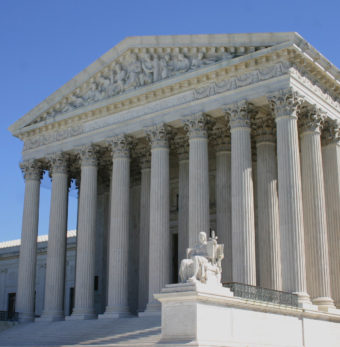
The U.S. Supreme Court this morning upheld the Affordable Health Care Act as constitutional.
The controversial individual mandate that required people without health insurance to purchase it or pay a penalty was criticized as unconstitutional, however, the court ruled that such a payment fell under the right of Congress to levy taxes.
Alaska was one of 26 states that filed suit against the act, protesting the individual mandate and the requirement that states expand their Medicaid programs or risk losing Medicaid funding.
The court ruled that the expansion could proceed as long as the federal government does not threaten to withhold states’ entire Medicaid allotment if they don’t take part in the extension.
Gov. Parnell released a statement this morning stating that he remains concerned about the impacts of the federal law on individual and states’ rights.
“On the federal level, it will take congressional action to roll back what now appears to be the single largest tax increase in American history. This tax will not hurt the rich, because they have insurance. It will not hurt the poorest Americans, because it will not apply to them. It is a tax on the working poor and middle class Americans,” Parnell said.
Parnell said the state has begun reviewing the U.S. Supreme Court’s 193 page decision to determine how other provisions, like mandated state Medicaid expansion, have been affected by the U.S. Supreme Court decision.
U.S. Sen. Lisa Murkowski released a statement labeling the Supreme Court decision “an unprecedented federal overreach, and health care a tax hike in a struggling economy.”
Murkowski’s office posted this video shortly after the ruling was announced.
U.S. Sen. Mark Begich approved of the ruling.
“I’m pleased Alaskans will continue to receive important benefits such as coverage for young adults through their parents’ insurance, access to care for individuals with pre-existing conditions, tax credits for small businesses, increased services for our seniors, improved coverage for Alaska Natives, and even cash rebates if insurers don’t spend your premiums on health care.
“While the law is not perfect, the status quo was not an option,” Begich said in a news release. “Health care costs were skyrocketing and insurance companies were in charge of escalating those costs. There is still plenty of work to do, and I look forward to the State of Alaska moving forward on implementation.”
Representative Don Young is urging a repeal of the law.
“Today’s decision by the Supreme Court does not change the fact that ObamaCare sticks the American people with new taxes, new regulations and devastating cuts to Medicare.
“We must repeal and replace this law with a bill that increases accessibility, portability and affordability for the American people – and that’s what I intend on fighting for.”
Note: This story has been updated to include Representative Don Young’s response.
The Supreme Court has upheld the heart of President Barack Obama’s health care overhaul — ruling in favor of the requirement that most Americans can be required to have health insurance, or else pay a penalty.
The decision means the historic overhaul will continue to take effect over the next several years, affecting the way countless Americans receive and pay for their personal medical care.
The ruling also hands President Barack Obama a campaign-season victory.
The court found problems with the law’s expansion of Medicaid. But even there, it said the expansion could proceed as long as the federal government does not threaten to withhold the entire Medicaid allotment to states if they don’t take part in the extension.
The court’s four liberal justices, Stephen Breyer, Ruth Bader Ginsburg, Elena Kagan and Sonia Sotomayor, joined Chief Justice John Roberts in the outcome.
The Supreme Court began hearing the case on March 26, nearly two years to the day that President Obama signed the act.
The Court had four key issues to consider:
Does the Supreme Court have the right to hear the case?
Does Congress have the authority to compel people to buy health insurance?
If the court strikes down one part of the law (specifically the individual mandate) does the whole law become invalid? If not, would other linked parts of the law have to be struck down as well?
Arguments by the states against being required to expand Medicaid programs.
On the SCOTUS blog the court wrote “Our precedent demonstrates that Congress had the power to impose the exaction in Section 5000A under the taxing power, and that Section 5000A need not be read to do more than impose a tax. This is sufficient to sustain it.”
From the SCOTUS Blog:
“In Plain English: The Affordable Care Act, including its individual mandate that virtually all Americans buy health insurance, is constitutional. There were not five votes to uphold it on the ground that Congress could use its power to regulate commerce between the states to require everyone to buy health insurance. However, five Justices agreed that the penalty that someone must pay if he refuses to buy insurance is a kind of tax that Congress can impose using its taxing power. That is all that matters.
“Because the mandate survives, the Court did not need to decide what other parts of the statute were constitutional, except for a provision that required states to comply with new eligibility requirements for Medicaid or risk losing their funding. On that question, the Court held that the provision is constitutional as long as states would only lose new funds if they didn’t comply with the new requirements, rather than all of their funding.”
Alaska, which is among the states that sued over the constitutionality of the federal health care law, has yet to implement a health care exchange. The health department has hired a consultant to help design one, and that report is expected soon.
In Alaska there are approximately 125,000 residents that do not have insurance, which is about 18 percent of the state’s population.
Republican Gov. Sean Parnell is expected to take the report and the U.S. Supreme Court decision into consideration in deciding how to proceed on the health care exchange issue. Spokeswoman Sharon Leighow declined to comment about contingency plans before the court’s ruling.