Jacob Resneck, CoastAlaska

Jacob Resneck is CoastAlaska's regional news director based in Juneau. CoastAlaska is our partner in Southeast Alaska. KTOO collaborates with partners across the state to cover important news and to share stories with our audiences.

Alaska Marine Highway shuts down regional service till March

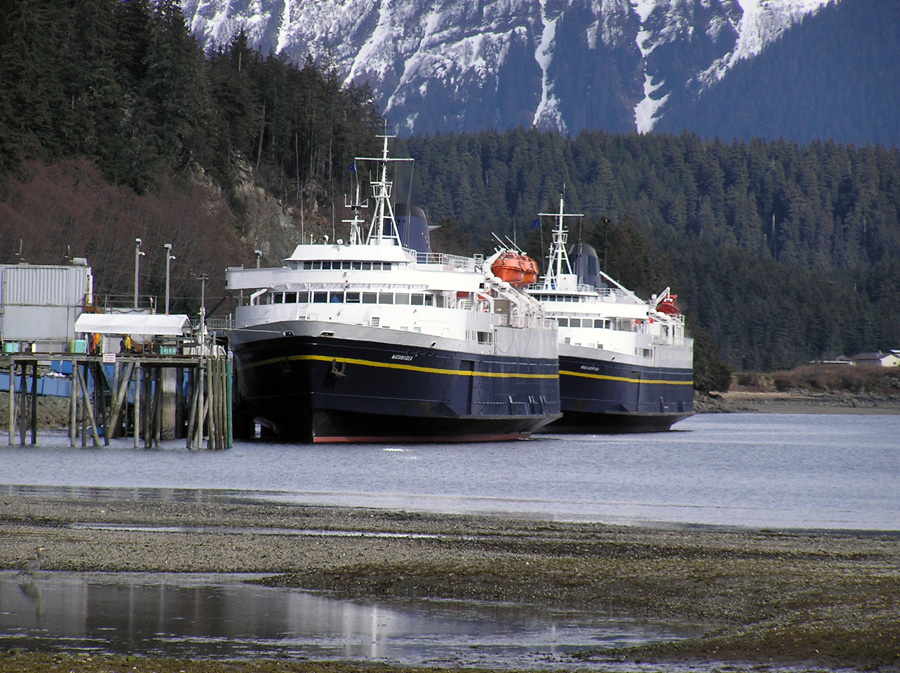
The Alaska Marine Highway System ferries Matanuska and Malaspina in 2006. (Creative Commons photo by Gillfoto)

Ferry service in Southeast Alaska will remain shutdown at least until March.

That’s following news that the regional ferry in service — the Matanuska — is being towed to Ketchikan for repairs. And the only other ship available for relief has been laid up for budgetary reasons.

“New issues with the reduction gear system have been identified and the manufacturer and contractor need the vessel to travel to the Ketchikan shipyard where it can be inspected in dry dock to determine if further repairs are necessary,” the Alaska Department of Transportation and Public Facilities said in a statement Wednesday.

The Port of Bellingham’s marine terminals manager, Dave Warter, got an email from the Alaska Marine Highway System earlier in the day.

“They just said the sailings through February (are canceled), so I’m not sure when the boat would actually — I don’t think they know — but right now my staff in Bellingham is contacting all of the travelers going northbound that the ferry’s been canceled,” he said from the sidelines of a Southeast Conference meeting in Juneau.

Since the Matanuska broke down two weeks ago, some 20 passengers with vehicles have been camped in staterooms and eating out of the galley as engineers tried to repair the ship docked in Juneau’s Auke Bay. It was supposed to sail later this week.

But Wednesday morning, travel agents and passengers heard about the change in plans.

“We’re getting calls from the terminals in Washington (state) and here in Alaska about rescheduling of passengers that have bookings,” said travel agent Dave Berg, who co-owns Viking Travel in Petersburg. “There’s no other vessels that can take its place that they could put online quickly enough to make a difference.”

So aside from the tiny Lituya, which shuttles between Ketchikan and Metlakatla, the fleet is idle. All are either being overhauled or were tied up for budget reasons.

One of those mainliners is the Malaspina. The state pulled it out of service in December. At the time, transportation officials said the 57-year-old vessel would soon need $16 million in steel work. Additionally, its Coast Guard certificate was about to expire.

The decision to leave the marine highway system without a backup alarmed ferry workers.

“We tried for a very long time to try and see what we could do to keep at least one vessel in some sort of ready reserve status,” said Shannon Adamson of the International Organization of
Masters, Mates and Pilots, which represents deck officers. “And due to budgetary issues, we were told that anything that is currently tied up down in Ketchikan is tied up for a specific reason, and they don’t have the budget to be able to keep anything in a ready reserve status.”

Adamson said the decision to further save money by not assigning a maintenance crew worried engineers. She said her union and the Marine Engineers’ Beneficial Association — that’s the engineers union — strongly recommended putting the ship in warm layup.

“It’s keeping the equipment on board, exercised and working and keeping at least a few crew members on board to make sure something like this specifically didn’t happen,” she said.

She’s referring to recent damage from rainwater that burst through scuppers and flooded staterooms on the Malaspina. There’s concern that getting it back in service now could be even more complicated.

“Basically the Malaspina developed an issue on an exterior deck drain that runs through an exterior wall,” regional state transportation spokesperson Sam Dapcevich said Tuesday. “There was some leakage from that drain that allowed rainwater to enter some cabin space. They identified the issue quickly, and they corrected it.”

Still, some lawmakers are concerned over the fate of the fleet.

Alaska Sen. Bert Stedman, R-Sitka, said Tuesday that the Legislature never signed off on letting the Malaspina go.

“And it is a that is a concern, because the Legislature hasn’t stepped in with a policy call on what they feel is appropriate use of state funds and federal funds in refurbishing old ships versus buying new,” he said.
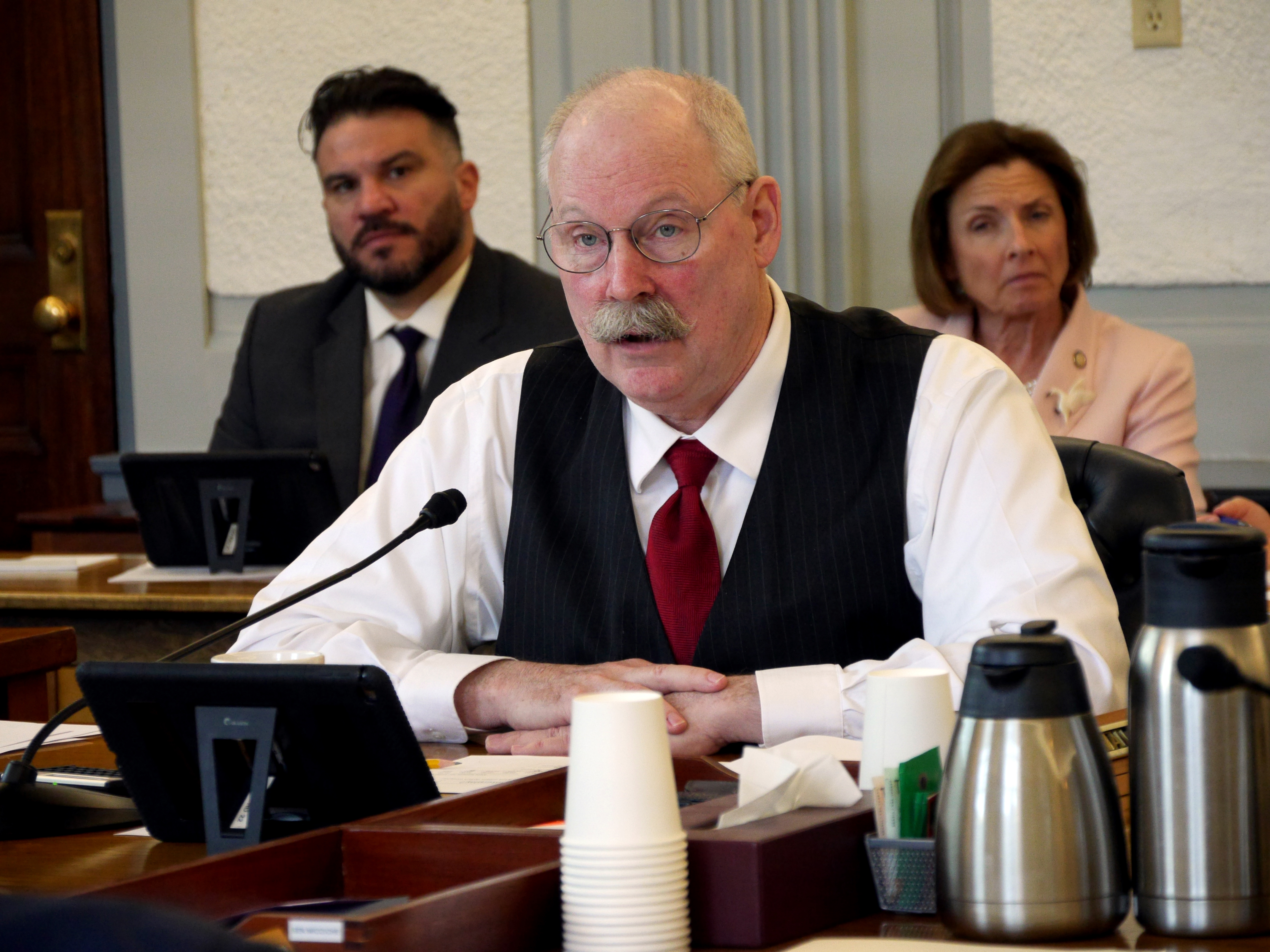
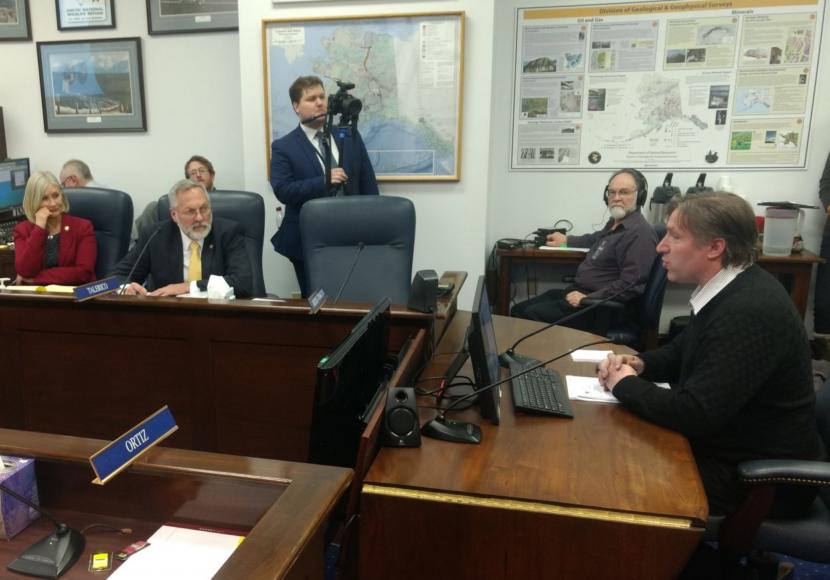
Sen. Bert Stedman, R-Sitka, co-chair of the Senate Finance Committee, takes part in a wide-ranging discussion about how the state calculates the Alaska Permanent Fund in Juneau on March 27, 2019. The conversation, scheduled as a standalone agenda item involving no official action, took place during a Senate Finance Committee meeting at the Capitol in Juneau.
Sen. Bert Stedman, R-Sitka, at a legislative committee meeting at the Capitol in Juneau, March 27, 2019. (Photo by Skip Gray/KTOO)

The ferry budget was cut by $43 million last year. But Stedman said the budget compromise — which was nearly twice as much as initially proposed by the governor — was with the understanding that vessels would be maintained and minimum service would persist through the winter.

“We were expecting 285 weeks of service and service throughout the winter at a reduced rate, not no service,” he said from his office in Juneau.

Yet no service is the reality until at least March, when the Matanuska is projected to have its engines repaired in dry dock.

Transportation officials defended the decision to keep the Malaspina offline. They say there just wasn’t money to keep the her running as a backup. The ship still has its original engines from 1963, and it’s not just the steel work that’s a pressing need: The vessel needs a complete repowering. The final bill could come to $41 million.

“Looking at what we just went through with the Matanuska, it went for an 11-month overhaul — at repower — and it turned into two years and at double the cost,” Transportation Commissioner John MacKinnon told CoastAlaska hours before news of the cancellations were widely known.

“The fear was that we would end up with the same thing with the (Malaspina),” he added. “So based on what we had in the budget looking forward, the decision was to tie it up.”

Stedman said it’s the Legislature that’s tasked with deciding where the state’s money goes and setting policy. He said he wants the agency to be more forthcoming.

“If you’re not told that there are substantial maintenance needs, and that they’ve been built up for years,” Stedman said, “and you’ve been asking them about their maintenance levels, and they’ve been saying that they’re up to snuff and they’re fine, when they’re not — we’ve got a discussion coming up with marine highway and DOT.”

He said he’ll be holding hearings over the state of each vessel in the Alaska Marine Highway System.

Meanwhile, travel agents like Berg are handing out refunds as passengers and freight customers make other arrangements — if they can.

“It’s sorry news for sure,” he said.

It’s not immediately clear how many people are affected by the extended shutdown.

“AMHS is aware of travel needs for upcoming school and community tournaments in March and is exploring options for alternative service in the event Matanuska is unable to return to service as planned,” DOT’s statement added.
 

Dunleavy administration seeks $12M for struggling Alaska Marine Highway

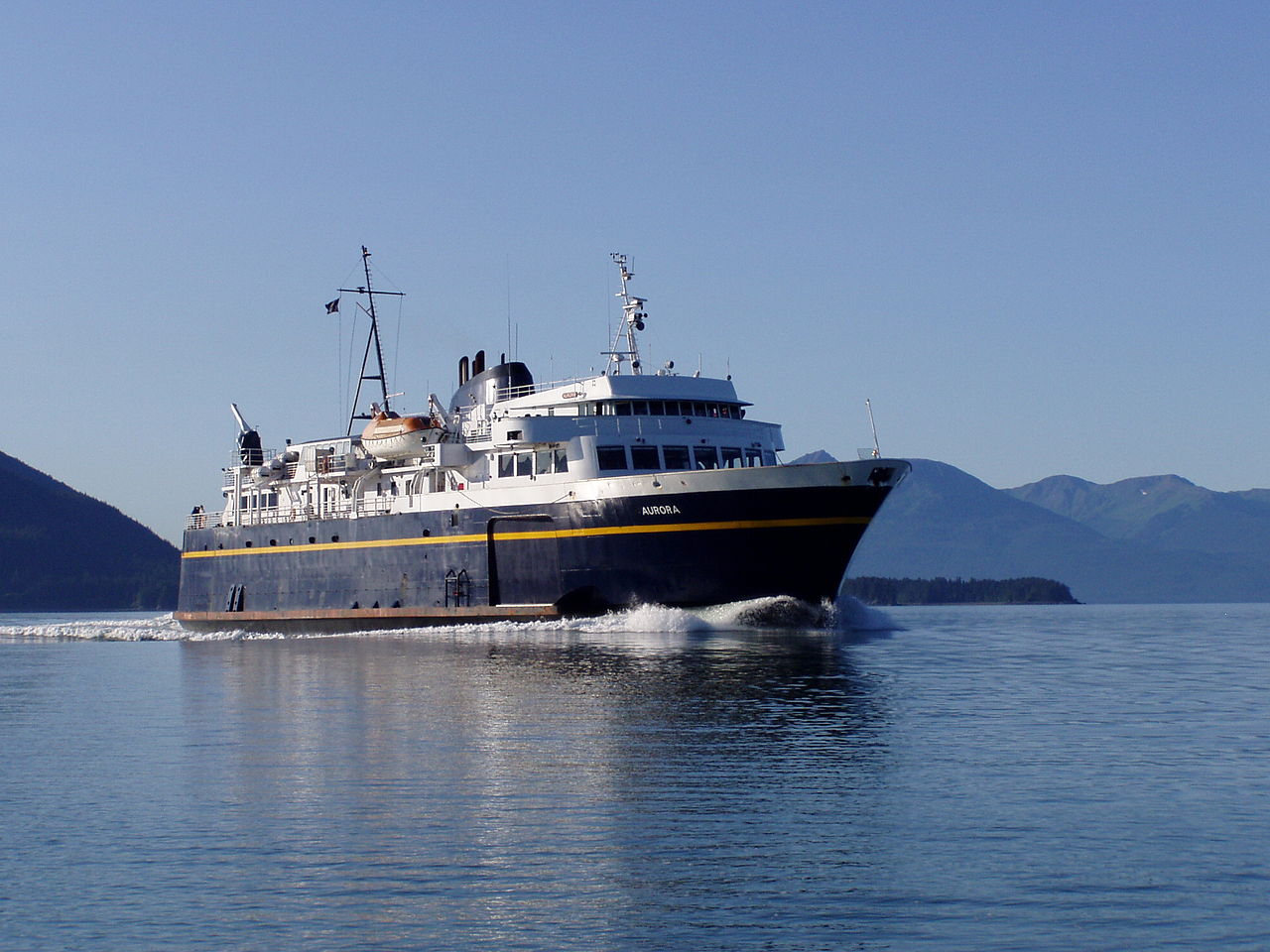
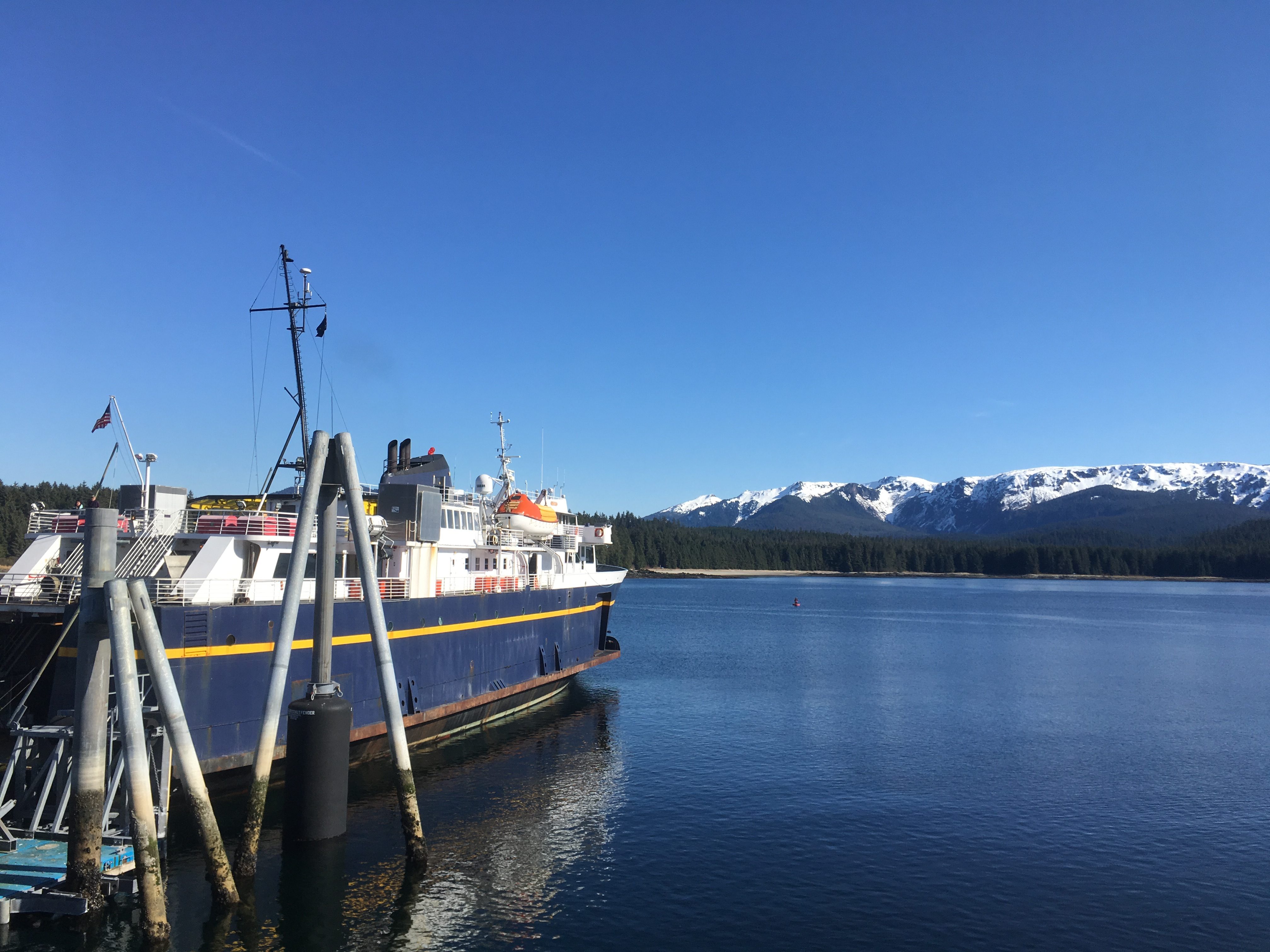
The state ferry Aurora sails near Skagway. As of February 2020, the Aurora is out of service and in need of repairs. (Creative Commons photo by Gillfoto)

The governor’s chief of staff Ben Stevens said the executive is asking the Legislature for extra money to continue work on Alaska Marine Highway System ferries currently out of service for upgrades and repairs.

The number one priority for this administration right now for the (Alaska) Marine Highway System is to get boats operable — because they’re not,” Stevens said at a Tuesday morning gathering of civic and business leaders, at Southeast Conference in Juneau.

All but the fleet’s smallest ship — the shuttle ferry Lituya that runs between Ketchikan and Metlakatla — is either down for repairs, or laid up to save money.

Stevens said the $12 million request would be for steel work on the ferry LeConte, and for upgrades to the Alaska Class Ferries Tazlina and Hubbard. The state wants side doors allowing them to load and unload more efficiently.

That would leave about $4 million for operations.

Stevens didn’t mention the LeConte’s sister ship Aurora, which also needs steel work. But he did say the transportation department is moving forward with its plan to build a seasonal terminal at Cascade Point that would shorten sailing times between Haines and Juneau’s road system. He didn’t say how much that project would cost.

Stevens said the governor is in the midst of putting together a working group to steer the future of the state’s ferries. But he predicted that it’ll be a slow process to get the ferries back up and running.

“This year it’s going to be problematic trying to find a solution to get those boats operable for the upcoming season,” he said. “And we understand the difficulty that it’s created in Southeast, and I don’t want anyone to think that we don’t, because we do.”

Last month, the House and Senate tried — and failed — to muster enough votes to override Gov. Mike Dunleavy’s veto of $5 million in extra ferry funding.


Alaska DOT eyes charter vessels for Angoon, Hoonah and Kake

The MV LeConte sits at the dock in Angoon on March 28, 2019.
The MV LeConte sits at the dock in Angoon on March 28, 2019. (Photo by Nat Herz/Alaska’s Energy Desk)

The state is seeking to fill gaps in Southeast Alaska ferry service using a private charter company. It gave potential operators a day to answer its Monday call for interest.

The public notice seeks ships capable of ferrying 125 passengers between Juneau’s Auke Bay terminal and Hoonah, Angoon and Kake. The communities aren’t scheduled to receive a state ferry until March.

Alaska Department of Transportation and Public Facilities spokesperson Sam Dapcevich said the state agency is exploring alternatives to the Alaska Marine Highway System’s fleet.

“AMHS wants to see if there’s competition in the marketplace for this type of service this time of year and how much it would cost,” Dapcevich told CoastAlaska on Monday.

Hoonah Mayor Gerry Byers said his small city is having a tough time without regular ferries. There’s no barge service, and getting vehicles and goods back and forth is putting the squeeze on the island town 40 miles southwest of Juneau.

“I think it’s a good step by the state to try to help support the community,” Byers said Monday. “Even if it’s just just passengers being able to leave.”

Bad weather constantly cancels floatplanes, making it tough for people to reach Alaska Airlines jets flying out of Juneau, he added.

But none of the officials in the three city offices contacted by CoastAlaska said they had any idea that private ferries might be in the works. Byers said DOT has not coordinated with the villages, and this was the first he’d heard of the scheme.

“It is nice that they’re thinking of us,” he said of the state transportation agency. “It’s just, I wish we’d had a little more planning and a little more — giving the businesses more time to work on this.”

Last month, the state chartered a boat from Allen Marine Tours to ferry passengers stranded after the state ferry Matanuska broke down in Juneau on its way to Haines and Skagway. The ferry remains sidelined until March.

The city of Angoon also chartered Allen Marine boats late last year. That cost the small city around $8,000.

The deadline for potential charter operators to respond to the state’s request for interest was the close of business on Tuesday. Long service gaps driven by budget cuts have cut off a number of communities around Alaska, including in Prince William Sound and the Southeast island hamlets of Pelican and Tenakee Springs.

No other communities were included in DOT’s request for interest. The public notice asks for service to begin as early as this week, but Dapcevich said that was apparently a mistake.

“It was not meant for actual service this week,” the agency spokesperson said. “It was meant for an information-gathering public notice.”

A $250,000 study commissioned by the Dunleavy administration on the future of state ferries had found privatization of ferry routes without subsidies would not be feasible. But it did say smaller ships could service some routes on a contract basis.

“With longterm contracts, private entities would likely be able to develop appropriately sized vessels that are better matched to the demand for services to/from smaller communities,” the consultants wrote.

This story has been updated.


Bivouacked in staterooms, stranded ferry passengers are prisoners of state’s hospitality

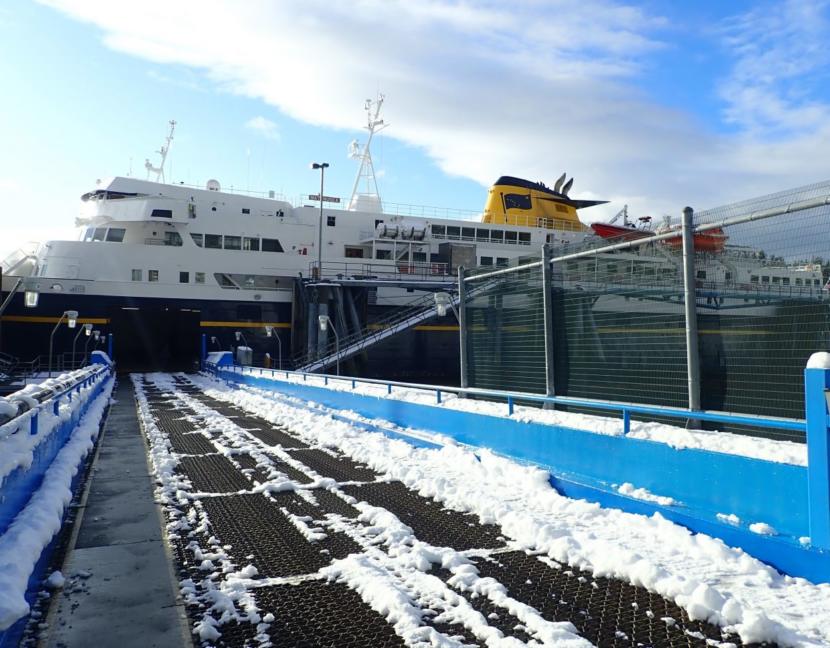
The ferry Matanuska on Jan. 31, 2020 in Auke Bay ferry terminal. It was to be the sole vessel servicing Southeast Alaska until it broke down nearly a week ago. (Photos by Jacob Resneck/CoastAlaska)

When the last of the Alaska Marine Highway System mainliners broke down in Juneau at the end of January, the state chartered a private catamaran to get most of the Matanuska’s passengers to their destinations.

But more than two dozen people with cars and trucks remained stranded.

The Matanuska hasn’t moved since Jan. 26 and is not likely to get underway until March. That’s because serious mechanical problems forced the ferry to cancel the rest of its sailings in January and February.

The Department of Transportation chartered a boat for most of the passengers to finish their journey the next day.

But five days later, there were still more than two dozen on board as the ship sat in Juneau’s Auke Bay.

“All the walk-ons split,” said ferry passenger Rex Lauber on Friday.

Lauber is trying to finish his journey from Ketchikan, where he grew up, to Palmer where he now lives. He’s got a vehicle, so the chartered Allen Marine boat was no use to him. He has nothing but time while the ferry is being repaired in Auke Bay.

“They’re feeding us, we have state rooms. The crew is going out of their way to make life as pleasant as they can. I got no problem with the crew,” Lauber said.

He said he was less impressed with shoreside management for relying on a single ship to hold up the ferry system.

Clark Posey is the ferry’s boatswain. State officials wouldn’t allow CoastAlaska to board the ship, but Lauber and Posey were happy to talk about the state of the ferry system.

“If you only have one vessel running and something happens, there’s no backup,” Posey said. “We don’t even have anything in reserves. Everything is down and out in the shipyard or laid up permanently in Ward Cove and so here we are waiting to fix the only boat that’s doing the mainliner run.”

The Matanuska’s sister ship, the Malaspina, is in cold layup. It’s been stripped, meaning it’s not likely to return to service in Alaska. The others are being overhauled. Except the Aurora — it’s unclear what the state intends to do with that one.

Posey is a 15-year veteran of the Alaska Marine Highway System. He said cuts to service and now these constant breakdowns show how vital ferry service is to coastal communities.

The Dunleavy administration recently released its $250,000 ferry study that concluded privatizing the system would not be feasible.

The governor is now putting together a working group to advise him. He asked the Legislature for one lawmaker from a ferry community and one from a community not directly served by the Alaska Marine Highway System.

Legislative leaders defied this request and nominated Kodiak House Republican Louise Stutes and Sitka Senate Republican Bert Stedman — both staunch ferry supporters from coastal towns.

“While Gov. Dunleavy recommended the appointment of one AMHS legislator and one non-AMHS legislator to the Alaska Marine Highway Working Group, he also recognizes that Sen. Stedman and Rep. Stutes have tremendous knowledge of the marine highway system,” said Jeff Turner, the governor’s spokesman, on Friday. “The governor looks forward to their participation in the working group.”

Posey has been sailing with the Marine Highway for 15 years. He said adding crew quarters to the fleet’s two new ships would allow them to fill-in in times like these.

“Honestly, I’m hoping that the two new Alaska Class Ferries, the Hubbard and the Tazlina, get set up to run as 24-hour boats,” he said. “Right now, they’re day boats only, and they’re limited on what they can cover.”

Lauber — the marooned ferry passenger — said he was disappointed his state representatives in the Mat-Su recently voted against overriding the governor’s vetoes that included an extra $5 million in ferry funding.

“Heads need to roll,” Lauber said. “And I was supporting the governor until this happened. I think he lost my vote over this.”

In the meantime, there is one other option for people in Lauber’s position — a barge to Haines. But it would take his vehicle five days to get there. Meanwhile, he’d have to fly. That option would be both slow and expensive, the retired 71-year-old said.

“They want us to pay for the barge and the airfare,” he said. “And, you know, I got my meals, I got a warm bunk.”

Until the ferry gets underway, he and about two dozen others are prisoners of the state’s hospitality in the Auke Bay ferry terminal.

Correction: This story has been corrected to reflect that the state chartered one — not two — private catamarans to ferry stranded passengers on Upper Lynn Canal.

This story has been updated.


Shee Atiká offloads most of its land in $18.3M deal

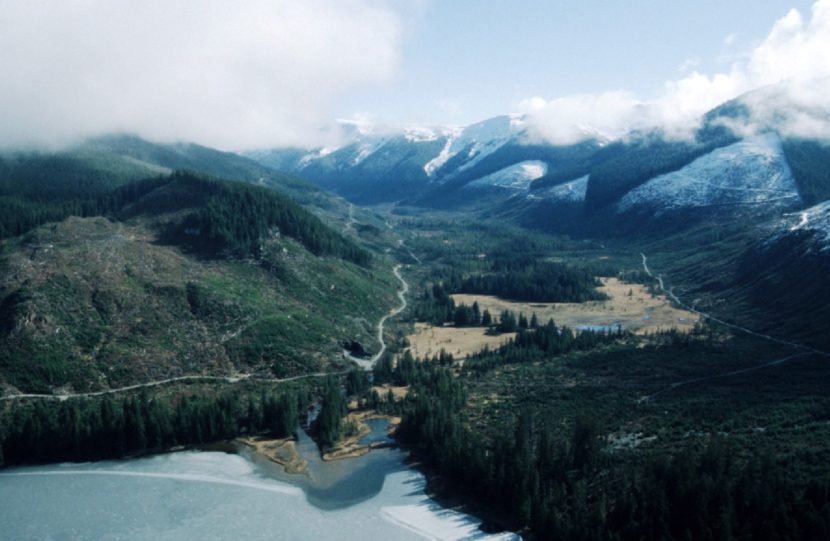
Logged lands near Lake Kathleen, on Admiralty Island, are among those Shee Atiká has agreed to sell to the Forest Service. (Photo courtesy U.S. Forest Service.)
Logged lands near Lake Kathleen, on Admiralty Island, are among those Shee Atiká has agreed to sell to the Forest Service. (Photo courtesy U.S. Forest Service)

The federal government is finalizing the buyback of heavily logged forest lands on Admiralty Island from Shee Atiká, Sitka’s urban Native corporation.

U.S. Forest Service Alaska Region’s Deputy Director for Recreation, Land & Minerals Dawn Collinsworth says the deal was completed over four years.

“They were lands that had been conveyed under the Alaska Native Claims Settlement Act to the Shee Atiká Corporation,” she said. “And they were logged at one time but they are returning to a more natural character and will be allowed to do so.”

The corporation will receive $18,312,200 — slightly less than $800 an acre.

The nearly 23,000 acres around Cube Cove were intensively logged from the 1980s up until the early 2000s. They’ll be added to Kootznoowoo Wilderness, a protected part of the Tongass National Forest about 30 miles south of Juneau. It will be off-limits to future logging.

The land deal involves the lion’s share of Shee Atiká’s real estate holdings.

“The completion of the Cube Cove land transfer was truly a monumental team effort,” Shee Atiká Board Chairwoman Pamela Steffes said in a statement.

In 2016, Shee Atiká sold the first 4,500 acres near Cube Cove to the U.S. Forest Service for nearly $4 million. The announcement of the deal was unpopular among some shareholders, who called for then-CEO Ken Cameron to step down.

Congress has appropriated funds annually over the past four years to complete the transfer.

Coastal communities relate ferry woes to House lawmakers

Cordova Mayor Clay Coplin testifies to the House Transportation Committee on Tuesday, Jan. 21, 2020 on the lack of winter ferry service to Prince William Sound. (Photo by Jacob Resneck/CoastAlaska)

Officials from a dozen coastal communities traveled to Juneau to voice support for Alaska’s beleaguered ferries.

They were invited by House lawmakers who held Tuesday’s hearing — the first day of the legislative session — to galvanize support for the Alaska Marine Highway System.

They each testified at the Capitol in-person. Though few had arrived on a ferry to get there.

“There is zero northbound service out of Sitka this winter — none,” Rep. Jonathan Kreiss-Tompkins (D-Sitka) said. He added the only way to get his vehicle to the capital for the legislative session was to put it on a southbound ferry to Petersburg where it sat for a few days. A friend transferred it at 3 a.m. to a Juneau-bound boat.

That’s because there are currently just two ferries in service this month — the Matanuska and the Lituya.

House Transportation Committee Chair Rep. Louise Stutes (R-Kodiak) called the current state of the fleet “extremely alarming.”

“Four of our mainliners are currently in mothball status and a total of six out of 12 of Alaska Marine Highway System ferries are not in service because of disrepair, lack of maintenance or poor planning,” she said.

That was the backdrop of remarks from local officials. One by one, from Homer to Unalaska and points in between, they testified over the hardships faced from severe cutbacks and long service gaps following last year’s $43 million cut to state ferries.

Cordova Mayor Clay Koplin said Prince William Sound’s winter without service has been a struggle. He warned that not running any ferries until the middle of May could cripple the port’s seafood economy. That includes the region’s $10 million Copper River sockeye salmon fishery.

“We appreciate the Alaska Marine Highway System, trying to work with the resources they have to provide service, but frankly, it’s not working,” he said.

Others testified to the committee that the ferries are the backbone of interlocking small economies that feed the rest of the state.

“It’s not like pumping oil through the pipeline where we keep track of that every day,” Homer Mayor Ken Castner said. “But the movement of goods and services and fish and tourists and things like that is amazing. And it really makes the coastal economy work and also makes the state economy work.”

A resolution from the Alaska Municipal League urged lawmakers not to wait until the end of session to inject more cash. It urges lawmakers to override Gov. Mike Dunleavy’s veto of $5 million in additional ferry funding approved last year by the Legislature.

Gov. Dunleavy’s proposed budget envisions flat funding compared to last year. But it’s still more than $40 million less than previous state ferry appropriations.

Rep. Stutes said lawmakers are working to make the case for full funding.

“My hope is that the administration finally hears its constituents and realizes that the ferry system is vital, not optional for our Alaskan way of life,” she said.

No one from the executive branch spoke during Tuesday’s hearing. Invited testimony was unanimous against the cost-cutting.

“I don’t think it’s wise to starve the chickens to death in an attempt to cut the price of eggs,” Kodiak City Councilman Terry Haines told the committee.

The governor’s office recently announced it was appointing a nine-person task force to digest recommendations from a recent economic reshaping report commissioned by the administration.

But the make-up of the Alaska Marine Highway Reshaping Work Group likely won’t be finalized until mid-February. Any recommendations from that group aren’t expected to be implemented for another two years.

Site notifications
Update notification options
Subscribe to notifications