Jacob Resneck, CoastAlaska

Jacob Resneck is CoastAlaska's regional news director based in Juneau. CoastAlaska is our partner in Southeast Alaska. KTOO collaborates with partners across the state to cover important news and to share stories with our audiences.

Physicians object to Juneau’s coronavirus quarantine exemptions

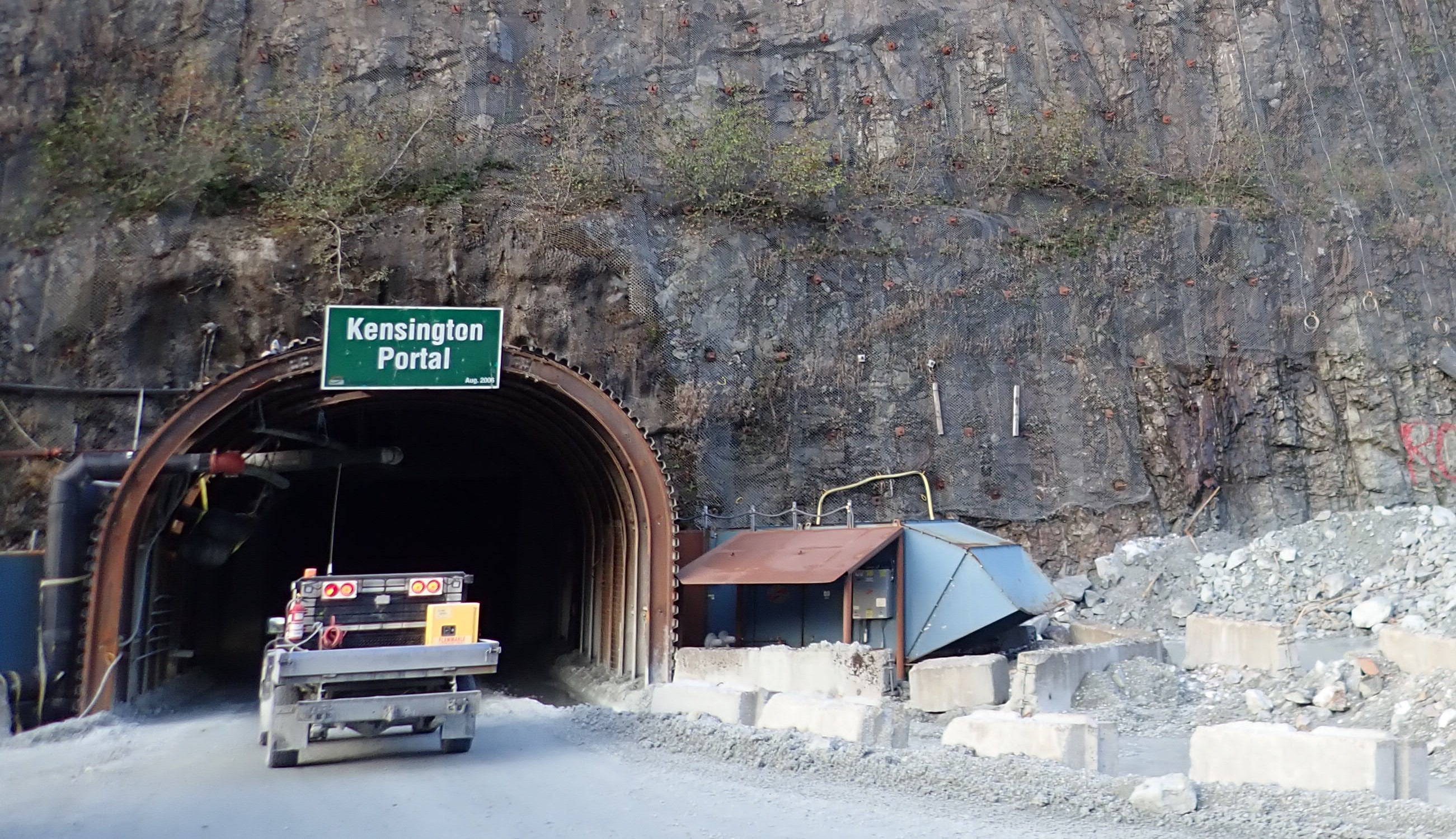
A mine vehicle enters the Kensington Portal on Oct. 15, 2019.
A mine vehicle enters the Kensington Portal on Oct. 15, 2019. It’s one of two accesses for a network of about 28 miles of underground tunnels. (Photo by Jacob Resneck/CoastAlaska)

Update (Wednesday, March 25, 3:56 p.m.) — Jacob Resneck, CoastAlaska

Employees and contract workers at Kensington Mine will now be required to spend 14 days in quarantine in a Juneau hotel if they arrive from outside Alaska or a coronavirus-infected community. The move follows a similar protocol by Hecla Greens Creek Mine. (Read more)

Original story

Doctors are criticizing Juneau’s elected officials for carving out broad exemptions to the city’s new coronavirus quarantine rules.

As originally written, the Juneau Assembly’s emergency resolution would institute a mandatory 14-day quarantine for anyone arriving from out-of-state or from a community with confirmed coronavirus cases.

But Juneau’s two largest private employers objected.

“The mandated quarantine is problematic for business,” Mike Satre of Hecla Greens Creek Mine told the Assembly on Sunday. “We have many of our workers who come from throughout Alaska as well as Outside.”

He penned a letter on behalf of the mine seeking an exemption as a “critical industry.”

Coeur Alaska — which operates Kensington Mine — also warned that the quarantine would impact its 383-person operation as the company brings in out-of-state workers who work in two-week shifts.

“Passage of any resolutions restricting the ability of our workforce to travel to and/or work at the mine would have severe unintended consequences for operations,” Kensington’s General Manager Mark Kiessling wrote in a letter to elected officials.

The Assembly heard these concerns and acted: By a one-vote margin, it added exemptions using the federal government’s guidance on “essential critical infrastructure workers.”

That includes miners. And health care workers.

But Bartlett Regional Hospital’s medical staff are observing the quarantine anyway.

Dr. Steven Greer divides his time between Oregon and Juneau. He flew into town last Wednesday, so it’ll be about a week before he can start seeing patients.

And he said he’s not going back to Oregon any time soon.

“I told my wife goodbye and said, ‘I’ll see you down the road when all this is over,’” he told CoastAlaska by phone on Monday. “I can’t travel anymore, because every time I travel, I’d have to go into quarantine.”

He’s among several doctors that penned a letter to Assembly members urging them to rethink exempting industries.

“My recommendation is if the miners want to work, that they should come up and stay and not go back south until this thing is over,” he added.

Already one of the mines has reversed itself.

On Monday, Greens Creek sent a memo to its workforce saying everyone arriving into Juneau first be quarantined for 14 days at a local hotel. The mine is moving to a 28-day shift to accommodate the change.

A spokesperson for Coeur Alaska said Kensington Mine is considering “other options,” including moving to longer shifts.

In a statement, Bartlett Regional Hospital’s CEO Chuck Bill wrote that, “for the public good the travel quarantine needs to be as restrictive as possible for the time being.”

That’s what hospital doctors have been saying.

“We have a disaster coming, and it’s like we’re watching the tsunami come,” said Dr. Joanne Gartenberg, who runs Bartlett’s behavioral health section. “But this time, we can actually mitigate the tsunami — we can make choices.”

She said the only effective way to slow the spread of coronavirus is to not travel.

One of the physicians in her section had been commuting from Arizona, where he has a wife and young son.

“And he’s really facing being separated (from) his family now for several months, really — it’s a really difficult choice,” she said. “But he made the right choice, because he wants to protect Juneau, wants to protect himself, and he wants to be here to be able to treat our population.”

It isn’t clear what other exempted industries will continue to function. The federal guidelines give broad latitude to the fishing industry, government workers, the energy sector and others.

Marijuana business owners had appealed to the Juneau Assembly for an exemption as well. That’s because federal prohibition on mailing cannabis requires individuals to courier product within the state. But cannabis suppliers aren’t included in the federal exemptions for critical businesses, nor did the Assembly add them.
 

Alaska Marine Highway to turn away passengers with flu-like symptoms

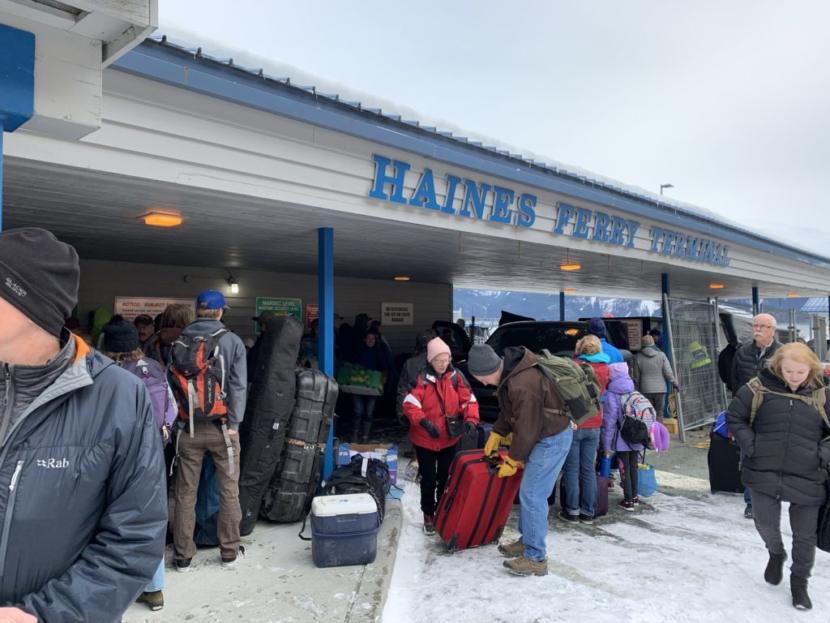
Passengers load and unload luggage at the Haines Ferry Terminal. (Photo by Henry Leasia/KHNS)

The Alaska Marine Highway System says it will begin turning away ferry passengers with coronavirus- or flu-like symptoms.

That’s in an effort to avoid disruptions or a situation involving potentially infected passengers quarantined on board.

A statement Thursday notes that the state ferry system is required to immediately report any illness of passengers or crew to federal authorities. Those turned away will be given a full refund. Bookings can be canceled without any fees or penalties through April 8

US and Canada announce restrictions on nonessential travel

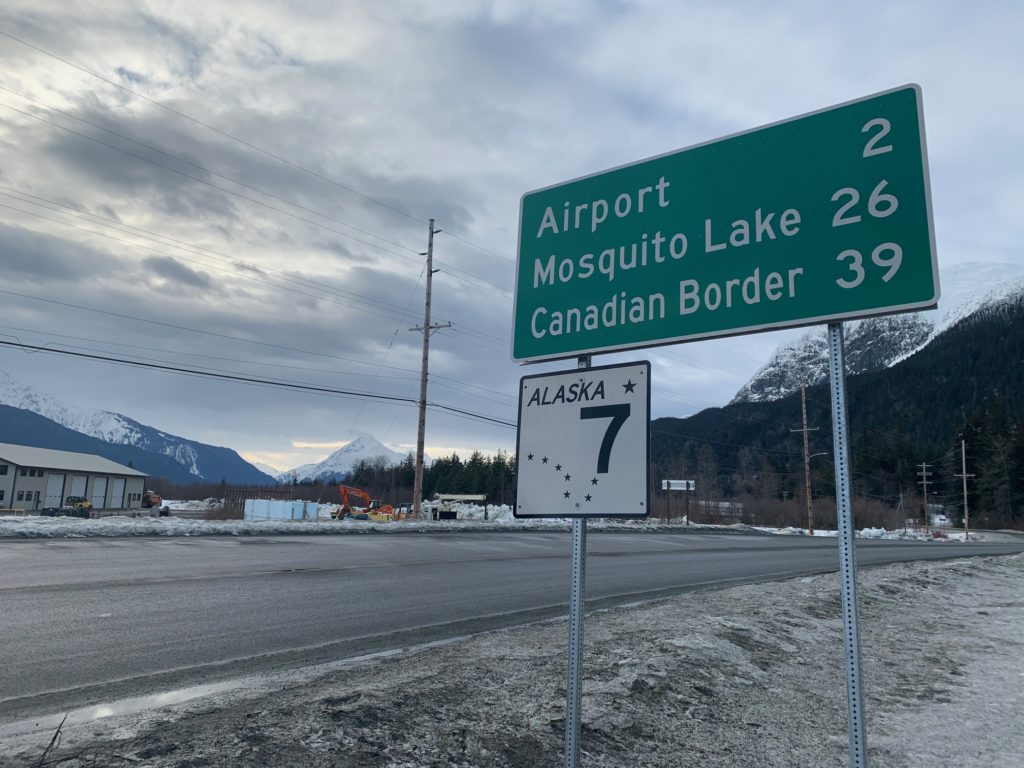
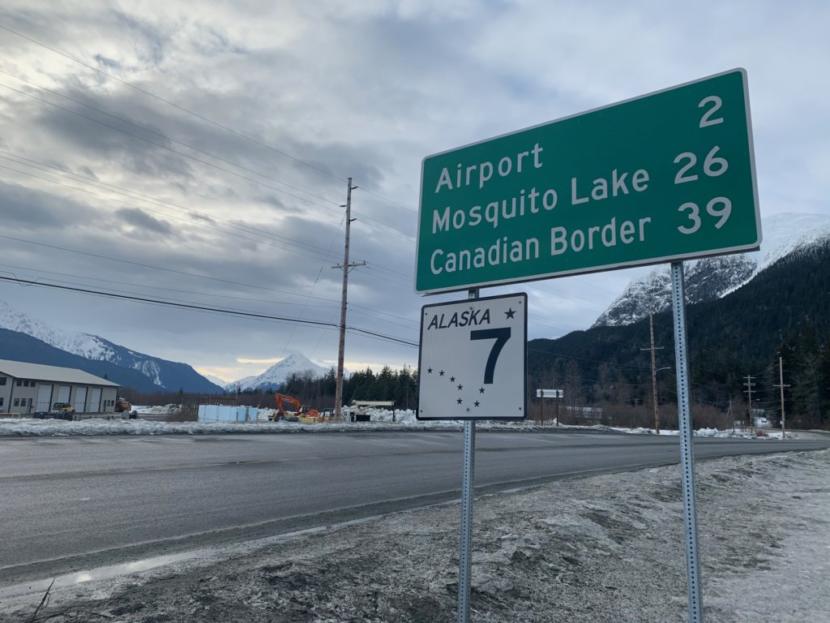
Haines is 39 miles south of the Canadian Border. (Photo by Henry Leasia/KHNS)

Updated 3/20 at 11:24 a.m. — Border restrictions between the U.S. and Canada that bar “non-essential” travel to prevent the spread of coronavirus will go into force at midnight Saturday, March 21. That’s according to a statement from the U.S. Department of Homeland Security and Canada Border Services Agency released Friday.

A document drafted by Homeland Security’s acting general counsel defines “essential travel” as U.S. citizens and lawful permanent residents returning to the U.S as well as travel for medical reasons, education, necessary work, emergency responses and legal cross-border trade. It also includes carve-outs for officials, military personnel and their families.

The restrictions will be reviewed by both countries after 30 days.

Gov. Mike Dunleavy sought to assure Alaskans on Thursday that Canada’s border restrictions are not affecting Alaska’s crossings in Southeast Alaska or the Alaska Highway. That was in response to a reporter’s question during a press conference.

“It was really for nonessential travel for folks coming from other countries,” Dunleavy said. “But here in Alaska, that being our only neighbor via land, those four border crossings are still open.”

Canada had announced Wednesday it would be closing its borders to “non-essential travel” as a public health precaution.  That led to concern from people in the Southeast communities of Haines, Skagway and Hyder, whose only road access runs through British Columbia.

This story has been updated.

As Canada closes the border, unanswered questions from Alaskans pile up

Haines is 39 miles south of the Canadian Border. (Photo by Henry Leasia/KHNS)

Updated (Thursday, March 19, 7:12 p.m.) — Jacob Resneck, CoastAlaska

Gov. Mike Dunleavy said on Thursday that Canada’s border restrictions are not affecting Alaska’s crossings in Southeast Alaska or the Alaska Highway. (Read more)

Original story

Canada is closing its land borders to “non-essential travel” to slow the spread of coronavirus. And that’s leaving many Alaskans scrambling for answers.

Canadian Prime Minister Justin Trudeau said the decision follows a conversation with President Donald Trump.

“And we have agreed that both Canada and the United States will temporarily restrict all non-essential travel across the Canada-U.S. border,” he told reporters in Ottawa.

It’s not immediately clear when the closure will take effect or how “non-essential” will be defined.

And with no state ferries scheduled to sail up from the Lower 48 for a month, Alaskans like Ron Jackson want to know. He’s currently in Washington state, trying to get home to Haines.

“So I’m trying to figure out if I qualify as essential or not trying to get home,” Jackson said.

A Canada Border Services Agency spokesperson said early Wednesday the situation is evolving rapidly, and details are being finalized as quickly as possible.

A spokesperson for the Alaska Marine Highway System said the ferry system is working with U.S. Customs and Border Patrol to figure out what the closure means for future sailings to Bellingham, Washington.

Mike Swasey was on the road in Utah when the news of impending border restrictions broke. He’s trying to get home to Skagway and hopes to cross the northern border as soon as he can.

“Because it could happen at any second,” he said from near Salt Lake City. “I’ve been in touch with border guards from both the U.S. and Canadian side. I’ve been in touch with the mayor of Skagway, who has been in close contact with a state senator from Alaska — nobody knows.”

But it’s not just travelers that would be immediately affected by border restrictions.

For the Southeast Alaska community of Hyder, it’s only road access runs through the neighboring town of Stewart, British Columbia.

The two communities are interlinked. Alaskans there buy most of their groceries in Stewart, which has the area’s only gas station.

“But at the same time, all the Canadians that live in Stewart, a lot of them have to go through Hyder to go to work at the mines,” said Wes Loe, president of the Hyder Community Association, on Wednesday.

So far it’s business as usual. But he said cutting off the town’s only road access would be a major disruption.

“If they do close the gate, it’s going to be hard for us, “Loe said. “All of our food comes from Ketchikan, and our mail, prescriptions and everything has flown in on Mondays and Thursdays,” Loe said. “And this winter has been a real rough winter, because we’ve gone up to three weeks without any supplies at all.”

Other Alaskans are putting off travel through Canada.

Delta Junction farmer Randy Peterson recently purchased some farm equipment in the Lower 48. But he’s having second thoughts about driving down to get it.

“It’s just depending on what the virus does,” he said. “If it doesn’t ease up, I have no intention of going to get (the equipment) anyway, because it’s not worth it to me. I think this place is as good a place to be as any right now.”

There are five main border crossings between Alaska and Canada: on the Alaska Highway south of Tok; the Top of the World Highway, east of Chicken; and three in the Southeast, at Pleasant Camp, British Columbia, east of Haines; at Fraser, British Columbia, between Skagway and Whitehorse; and between Hyder and Stewart, British Columbia.

Correction: A previous version of this story incorrectly stated that Bellingham is in British Columbia. Bellingham is a city in Washington state.

Canada closes all ports to large cruise ships until July

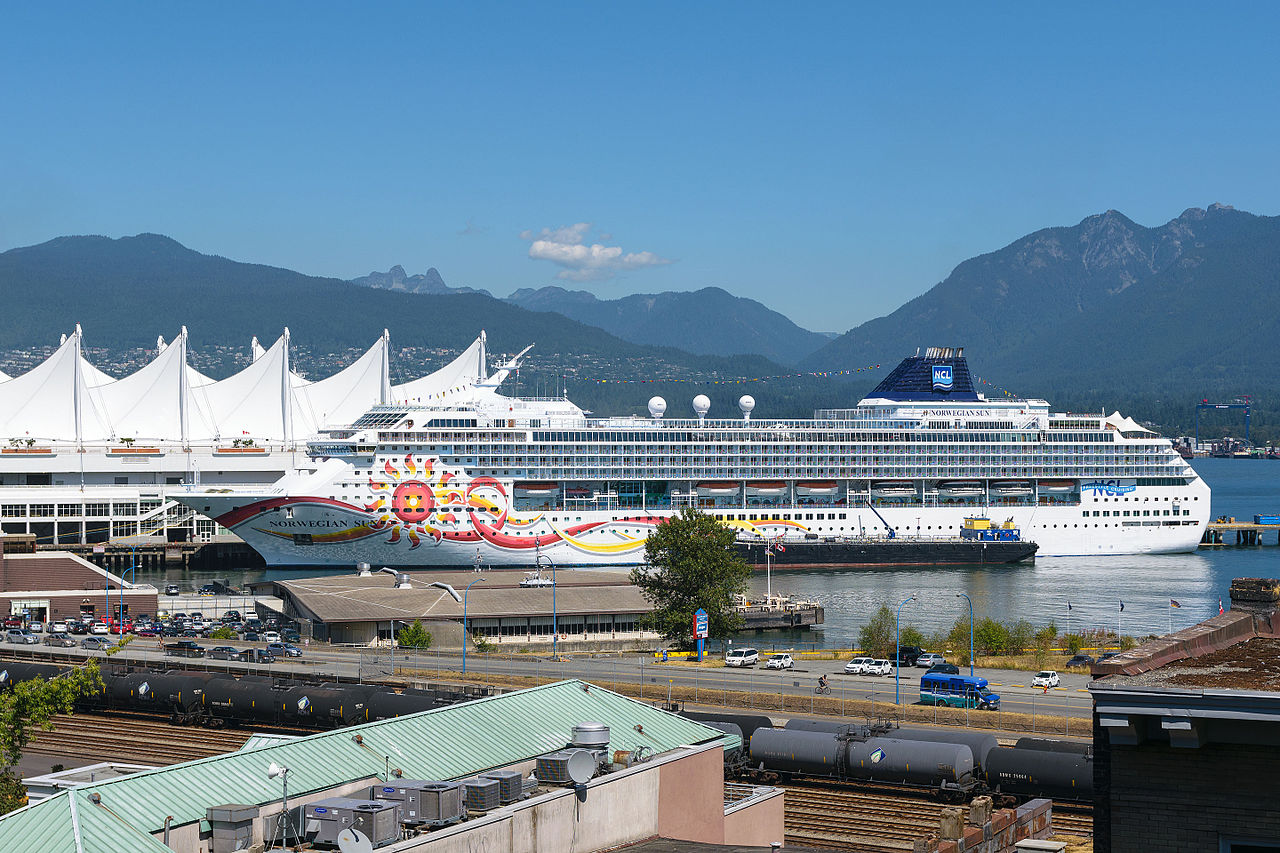
Norwegian Sun cruise ship at Canada Place in Vancouver, Canada, Aug. 2, 2015. (Creative Commons photo by Xicotencatl)

Canada has closed its ports to large cruise ships until July 1 in response to the spread of coronavirus. The restriction applies to vessels carrying 500 people or more.

Legal experts say these restrictions will have a direct effect on Alaska cruise itineraries.

That’s because century-old U.S. maritime laws prohibit international cruise ships from carrying U.S. citizens between American ports like Seattle and Skagway.

“A foreign-flag vessel must stop in a foreign country,” said Joe Geldhof, a Juneau attorney with experience of the cruise industry. “If Vancouver and Victoria are closed, foreign flag cruise ships are going to have an enormous problem with participating in the Alaska trade.”

At least 30 cruise ships and hundreds of port calls across the state will be affected.

“Obviously, anyone would analyze it and look and figure that that will affect some early season cruising in Southeast Alaska,” said Kirby Day, who manages port operations in Juneau for Princess Cruises and Holland America Line.

This comes as the industry’s main trade group CLIA announced that major cruise lines are suspending operations at U.S. ports over the next 30 days.

“Things are moving so fast that they’re looking at a variety of opportunities or options at this point,” Day said. “It’s difficult to speculate now.”

Cruise visitors were projected to pump a lot of money into Alaska’s economy — economists say nearly $800 million.

“This is going to be a tremendous impact to all of us across Southeast Alaska,” said Meilani Schijvens of Rain Coast Data in Juneau. “Because it’s those dollars, but it’s also the multiplier effect of those dollars, and those dollars not going into city coffers and supporting municipalities in terms of providing sales tax revenue to our communities.”

She said cruise ships account for 90% of tourism in Southeast Alaska. June, July and August are peak months.

As schools and public buildings close over efforts to slow the spread of coronavirus, Alaska communities have seen groceries and household items fly off the shelves as public health experts advise people to stock at least two weeks of provisions.

Shipping executives say the supply chain to Alaska isn’t expected to be affected by public health precautions.

“We are telling people it is business as usual — and to wash their hands,” said Cory Baggen, vice president of Samson Tug & Barge in Sitka. The shipper shares space with Alaska Marine Lines barges to supply goods and heavy freight to coastal communities.

Alaska Marine Lines sent an email to its customers Friday morning saying its barges will continue to run normal schedules.

This story has been updated.


Challenge to Tongass timber sale on Prince of Wales Island upheld in court

An aerial shot of Prince of Wales Island. (Photo by KRBD)

A federal judge has ruled in favor of green groups challenging the largest Tongass timber sale in decades.

U.S. District Judge Sharon L. Gleason’s Wednesday decision keeps in place her injunction blocking the first phase of a 15-year plan to open up 23,269 acres on Prince of Wales Island to old-growth logging.

“The Forest Service has not yet taken the requisite hard look at the environmental impact of site-specific timber sales on Prince of Wales over the next 15 years,” Gleason wrote in her 50-page decision.

Oral arguments last month pitted the U.S. Justice Department verses Juneau-based Earthjustice attorneys. Government lawyers argued the project is needed to sustain the local timber industry.

But the environmentalists’ lawsuit alleged the Forest Service didn’t offer site-specific information on where logging would occur. The judge agreed. She ruled that the federal agency’s reliance of a “landscape level analysis” violated multiple federal laws and was inconsistent with the agency’s 2016 Tongass Forest Plan because it didn’t offer specific information on what would be logged.

“It’s the biggest timber sale the Forest Service has approved in any national forest in the last 30 years,” Earthjustice attorney Tom Waldo told CoastAlaska. “They tried to shortcut the whole process by not saying where the trees would actually be cut, and the court held that that violated multiple laws.”

But the judge stopped short of completely throwing out the project, allowing the Forest Service to file an additional brief. That’s because the federal agency argued cutting off the timber supply would harm business in the region.

Messages left Wednesday seeking comment from the U.S. Forest Service and Alaska Forest Association weren’t immediately returned.

Site notifications
Update notification options
Subscribe to notifications