Jacob Resneck is CoastAlaska's regional news director based in Juneau. CoastAlaska is our partner in Southeast Alaska. KTOO collaborates with partners across the state to cover important news and to share stories with our audiences.
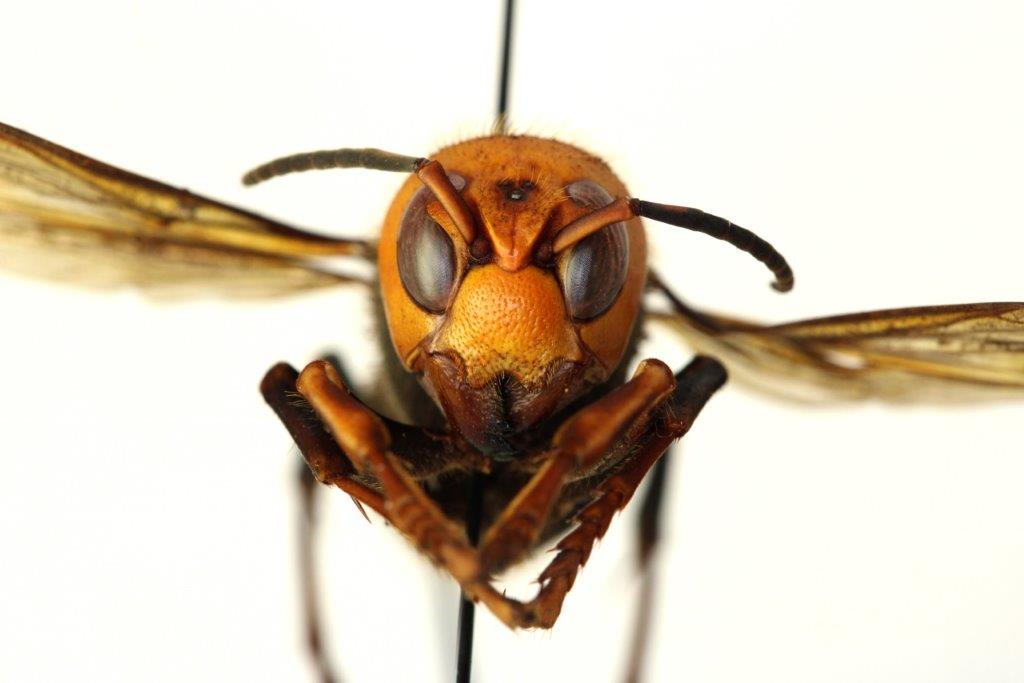
The Asian giant hornet (Vespa mandarinia) is the world’s largest hornet. Four verified reports of Asian giant hornets near Blaine and Bellingham in Washington state have been confirmed. Two locations on Vancouver Island in British Columbia in August/September 2019 have also been reported. (Photos courtesy of Washington State Department of Agriculture)
Authorities are working to track and kill an invasive species of Asian hornet given the sensationalist nickname “murder hornet” detected in British Columbia and Washington state.
Pictures of the Asian giant hornet are nothing short of terrifying. The face of the 2-inch insect looks malevolent. And it is: It preys on honey bees, capable of devouring colonies in a few hours. That said, unprovoked attacks on humans and livestock are rare.
But its sheer size and ability to sting through most beekeepers’ suits make it a formidable pest, and agricultural officials in the U.S. and Canada are working to make sure it doesn’t get established in North America.
Alaska isn’t known to be hospitable to outside species of insects. But University of Alaska Fairbanks entomologist Derek Sikes said he doesn’t see the Asian giant hornet adapting to Alaska’s cold climate, even though in some parts of the panhandle, the climate is fairly mild.
“So the question then becomes, what about Southeast Alaska, which is the warmest,” Sikes told CoastAlaska on Monday. “And there, that’s where it has the highest chance of succeeding, but even there it’s very small.”
Warming temperatures — brought on by global climate change — will only increase the chance of the insects’ ability to thrive in Alaska, he added.
Dubbed in recent days by some media outlets as so-called “murder hornets” — its northern range of habitat is in Russia’s far east and Japan.
“And that’s the same latitude as Washington and Oregon,” Sikes added.
“And those nests were eradicated,” said Gail Wallin, executive director of the Invasive Species Council of British Columbia. The nests were found last fall near the island city of Nanaimo — about 400 miles south of Ketchikan.
She told CoastAlaska on Monday that the origins of the nests remain a mystery. They could’ve arrived on cargo from Asia. Or they could’ve been imported by someone seeking an exotic pet.
Agricultural authorities in Washington state have confirmed sightings of the pest near Blaine close to the Canadian border.
Wallin said officials in British Columbia are working with neighboring states, provinces and territories to track and eliminate these and other invasive pests.
“The species don’t recognize any of the borders, so the more we can work together the better off we are,” she said.
The Centers for Disease Control and Prevention cites 1,109 deaths by hornet, wasp and bee stings between 2000 and 2017. The last two recorded fatal stings in Alaska were both near Fairbanks in 2006.
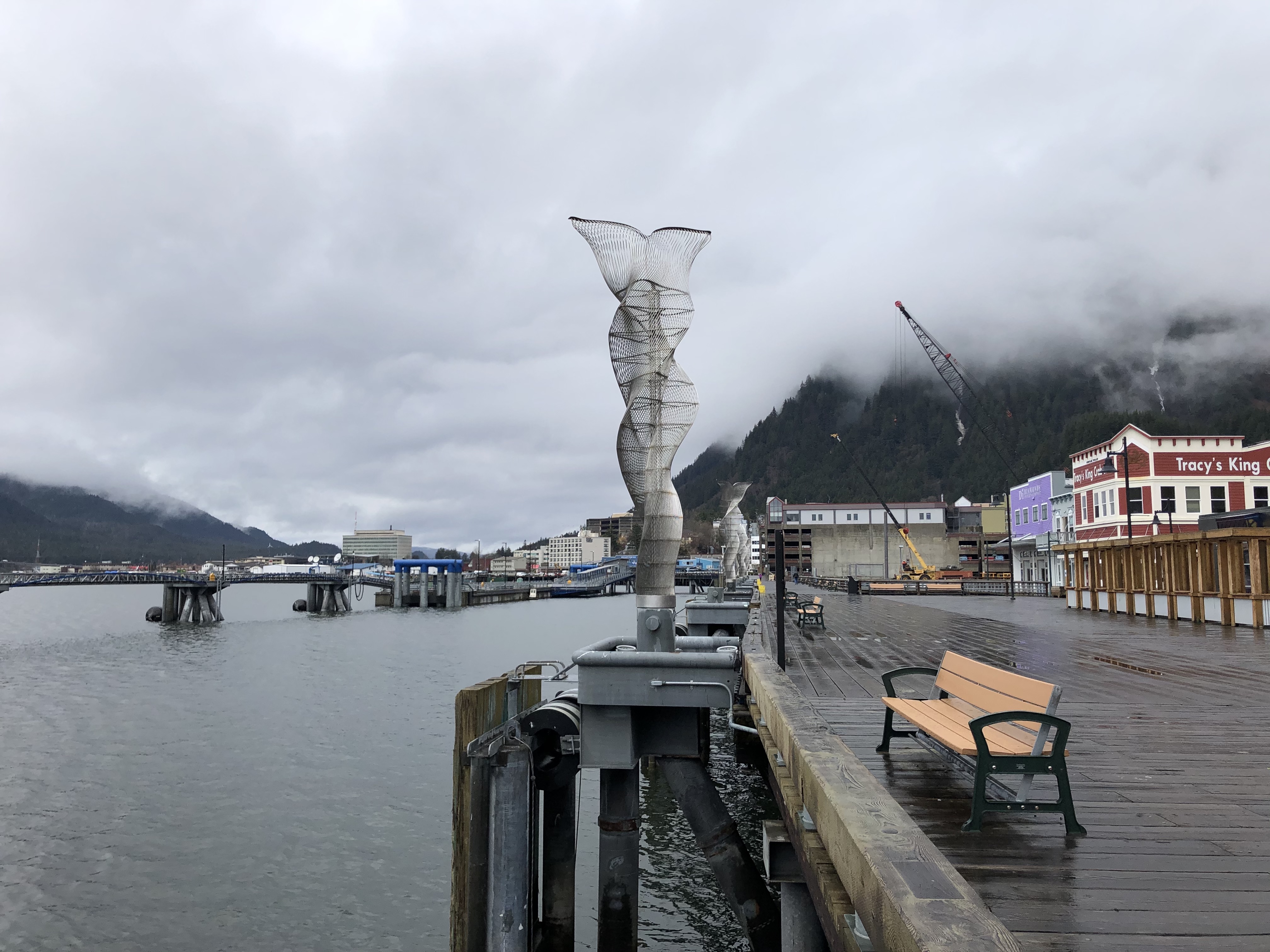
Juneau’s cruise ship docks are empty on April 23. The cruise ship season was supposed to begin this month, but sailings have been suspended due to the coronavirus pandemic. (Photo by Jennifer Pemberton/KTOO)
Nearly 70% of this summer’s cruise ship trips in Alaska have so far been canceled by the COVID-19 pandemic.
That was the gist of an update by Alaska’s cruise industry representative to the state’s Board of Marine Pilots.
Mike Tibbles of Cruise Lines International Association Alaska told the board that 408 voyages have been canceled to date.
“It’s a little over 800,000 passengers that will not be coming up at this point,” Tibbles said Wednesday.
A federal “no sail” order for cruise ships will likely run through at least late July. But Tibbles said the industry is working on filing updated health and safety plans with federal authorities for when sailings do resume.
“I think everybody realizes that we’re going to have to do better,” Tibbles said. “And we’re going to have to do business differently than what was done before.”
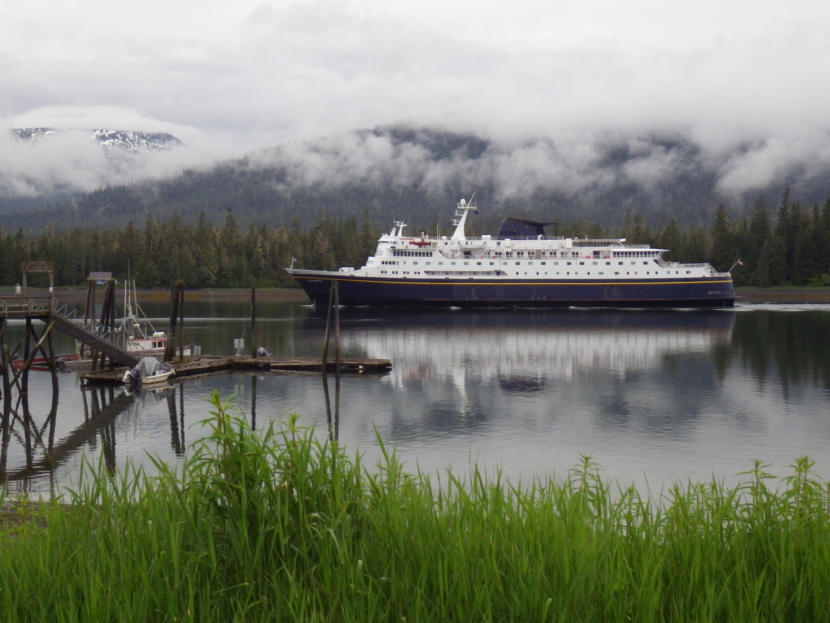
The Alaska Marine Highway System ferry Columbia passes through Wrangell Narrows headed south from Petersburg in Southeast Alaska, June 15. 2012. (Photo by Skip Gray/KTOO)
An initial $5 million in federal stimulus funding will go to the state ferry system, according to a Thursday statement from the state Department of Transportation responding to questions over how much of the $1.25 billion in federal money would be steered towards the Alaska Marine Highway System.
Alaska received a total of $29 million for rural transit as part of a larger $145 million grant from the Federal Transit Administration through the CARES Act.
“DOT&PF is working with the eligible rural transit entities such as the bus systems, Care-a-Vans and the Alaska Marine Highway System to determine how to equitably disperse these funds,” the agency wrote in a statement.
The agency wrote that the federal stimulus funding can be used for extra cleaning and personal protection equipment, wages for employees out of work due to the pandemic and cleaning state buildings and vessels.
“DOT is planning to grant this money out in phases in order to determine the actual need,” the statement reads. “At this point in time, it is estimated that AMHS will get $5 million with the first distribution.”
“AMHS has had a very successful winter overhaul period,” the agency wrote. “Currently the Columbia, Kennicott and Tustumena are all in the completion phase of their overhauls. The extensive steel repair project and overhaul of LeConte has gone smoothly and the vessel is scheduled to re-float this week.”
The legislature also added funding to overhaul the ferry Aurora — the LeConte’s sister ship — which DOT officials say should be back in service later this year.
“We’re going to wait for their feedback to see where we’re going to go and how we’re going to go to assist in transportation in the coastal areas of Alaska,” Dunleavy said. “But there was money in the state budget to extend the schedules and we are working on getting those boats repaired to get them ready to roll.”
There are currently two ferries running — the Tazlina servicing Lynn Canal communities and Southeast villages and the smaller Lituya running shuttle service between Ketchikan and Metlakatla.
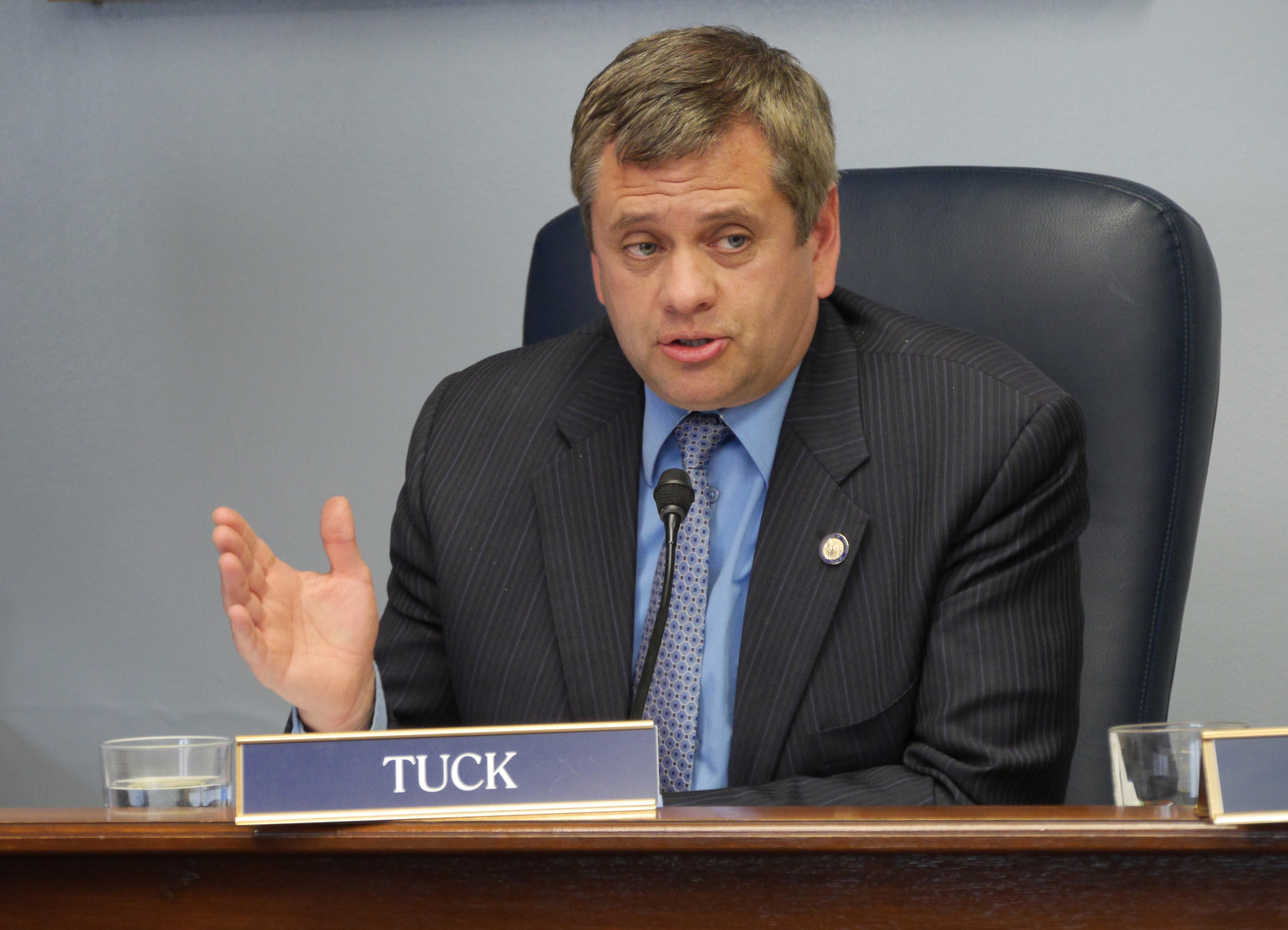
Rep. Chris Tuck, D-Anchorage, during a committee meeting in the Capitol in Juneau last year. Tuck said Wednesday there are outstanding questions about whether the Legislature will need to reconvene to appropriate federal CARES Act funds. (Photo by Skip Gray/KTOO)
“We’re hoping that the (Alaska) Legislature takes a look at this and acts quickly,” he said. “We want to get this money out as soon as we possibly can and get it into the hands of Alaskans as soon as we possibly can.”
More than a quarter of the funding — about $156 million — would go to the Anchorage municipality. Juneau would receive about $53.2 million.
In most cases, the money would come in stages paid in May, July and October.
The Alaska Municipal League applauded the governor’s move.
“AML estimates that local government revenues will be impacted just in the short term — March through June — by as much as $150 million, and longer-term impacts by another $100 million,” the organization representing local governments wrote in a memo.
But AML Executive Director Nils Andreassen said not all communities are celebrating. In some cases, the federal funding won’t make up for revenue erased by the governor’s vetoes — specifically his blocking of school bond debt reimbursement. And some communities are receiving fewer payments than others.
“There’s questions about why some communities received an additional contribution or distribution and some didn’t,” Andreassen told CoastAlaska. “But generally the feedback we’re receiving from communities is that they’re really hopeful that this meets their needs in the short-term and the long-term.”
Ben Stevens, the governor’s chief of staff, told reporters local governments would receive the funds with few strings attached.
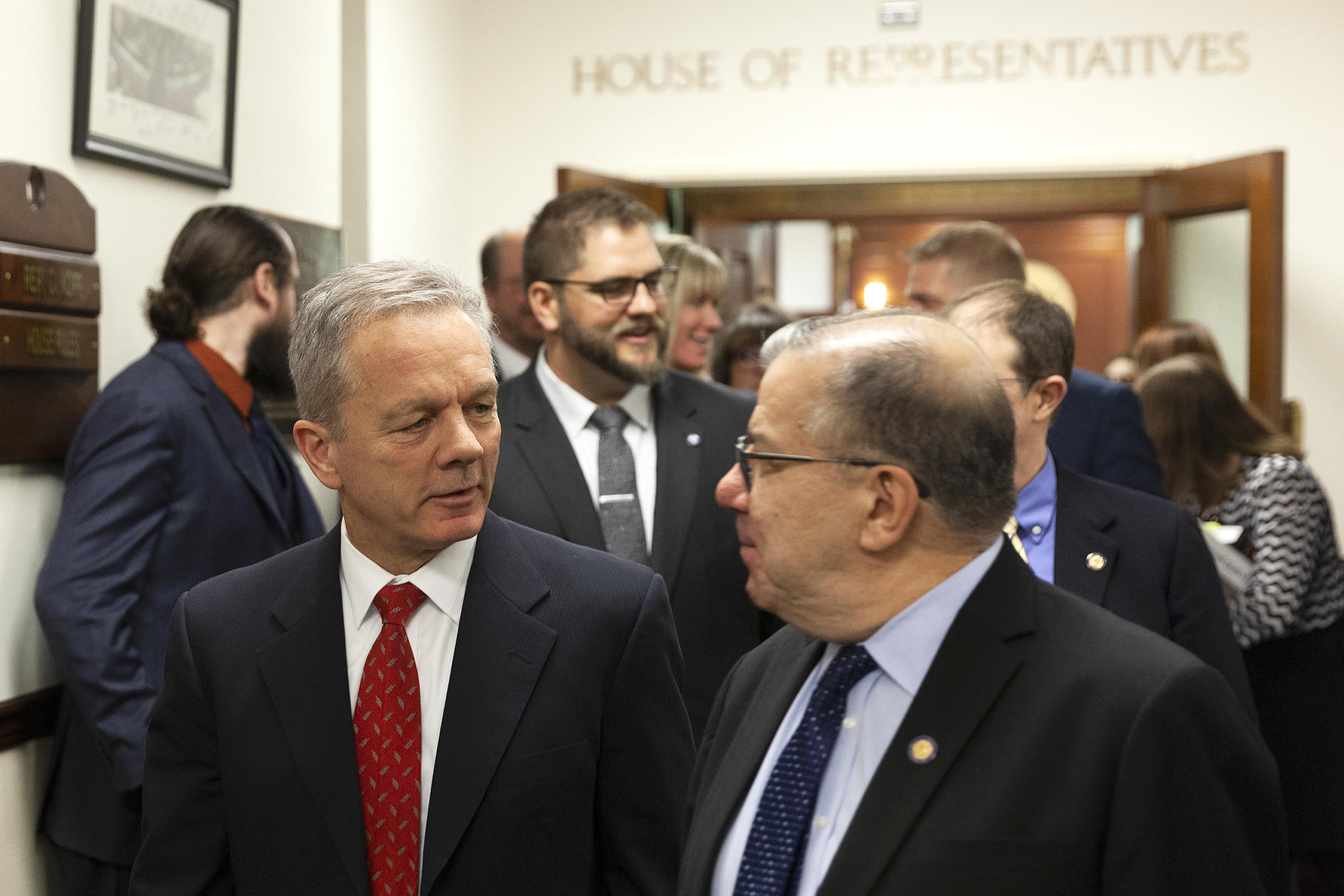
Gov. Mike Dunleavy’s Chief of Staff Ben Stevens, left, talks to Senate Majority Leader Lyman Hoffman, D-Bethel, after Dunleavy’s State of the State address on Jan. 27 in Juneau. (Photo by Rashah McChesney/KTOO)
“We can provide resources through the CARES Act to the municipality,” he said. “How the municipality chooses to use those, is the municipality’s side of it.”
“The last thing we want to happen is to owe the federal government this money back,” Anchorage Democratic Rep. Chris Tuck, who chairs the Legislative Budget and Audit Committee. He told CoastAlaska there are outstanding questions about whether the Legislature will need to reconvene to appropriate these federal funds.
The CARES Act disbursements are being overseen by the U.S. Department of the Treasury’s inspector general, Tuck said. That will require due diligence by the state to ensure the money is spent appropriately, which is why lawmakers want a legal opinion.
“But we’re going to do this very, very quickly,” Tuck said. “Because we know that Alaskans are hurting.”
In a follow-up statement released to reporters, Dunleavy walked back his assertion that some of his vetoes could be replaced with federal stimulus money.
“When I publicly stated CARES funding could be used to replace state funding, I was working with the best available information at the time which led many to believe CARES act funding could in fact be used to offset revenue loss,” the governor wrote. “Today, there continues to be a lack of clarity as to whether the use of CARES act funds can be used to backfill lost revenue as a result of the pandemic.”
He added that his administration will operate under the federal guidelines for stimulus funds to “mitigate the impact of the pandemic on state/municipal expenses and to support businesses and the state’s nonprofits.”
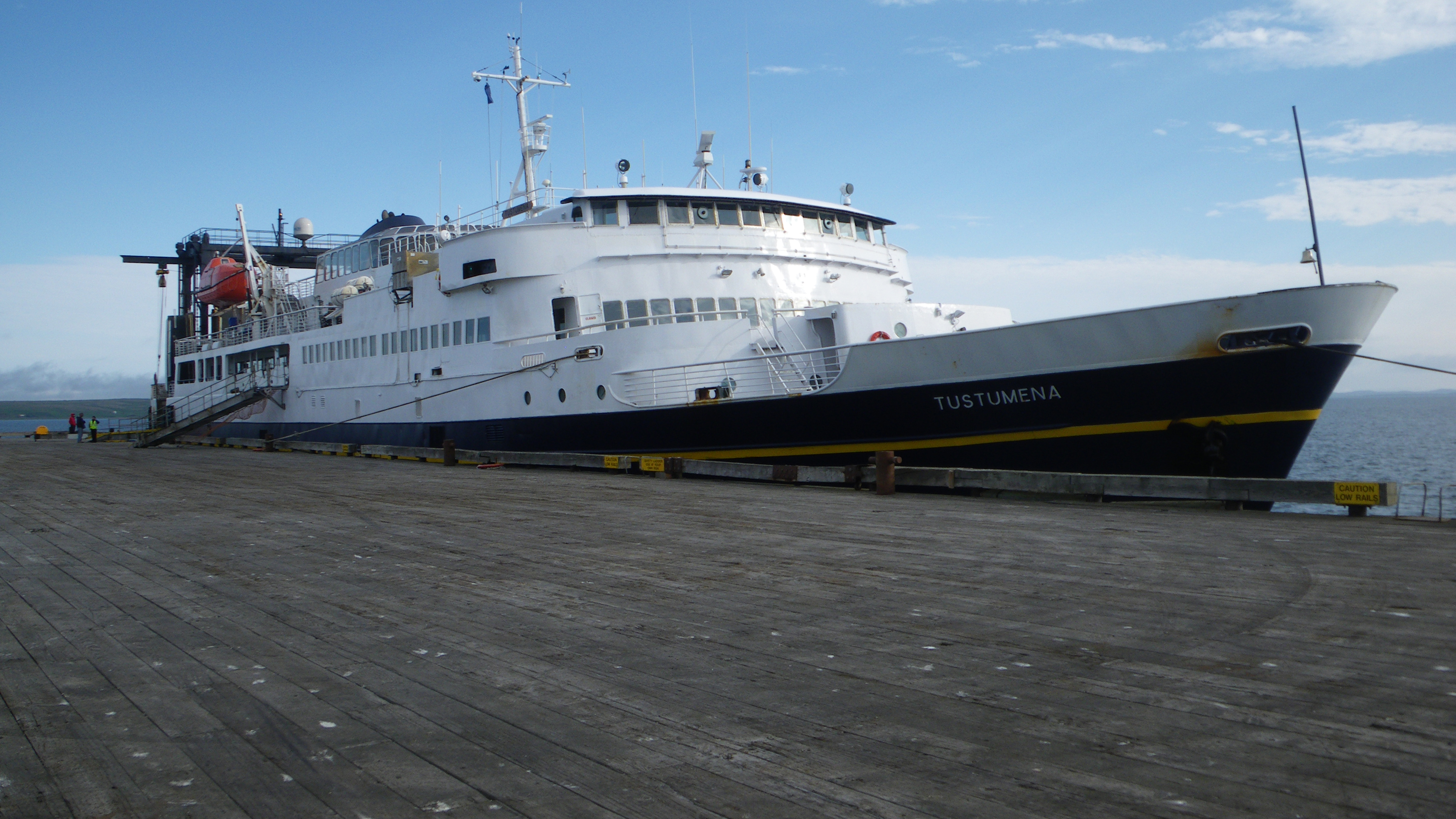
The Alaska Marine Highway System ferry Tustumena sits at the dock in Cold Bay on the Alaska Peninsula, July, 28, 2012. (Photo by David Waters/KTOO)
The state won’t be bringing more vessels into service until COVID-19 travel restrictions are relaxed and demand for passenger service increases.
“The Alaska Marine Highway System is developing a reduced service operating plan for spring and early summer to provide an appropriate level of service based on passenger demand, crew availability, and state and federal guidelines for responding to the COVID-19 pandemic, ” the state-run ferry service said in a Thursday statement.
Currently running are just two day boats: one linking Southeast Alaska communities around Upper Lynn Canal, and a shuttle between Ketchikan and Metlakatla.
The delay in activating longer-range vessels with state rooms means the sea link between Alaska and Bellingham, Washington, will remain severed. There will also be no Prince William Sound service between Valdez and Cordova. Sailings to Pelican and Tenakee Springs in May have also been canceled.
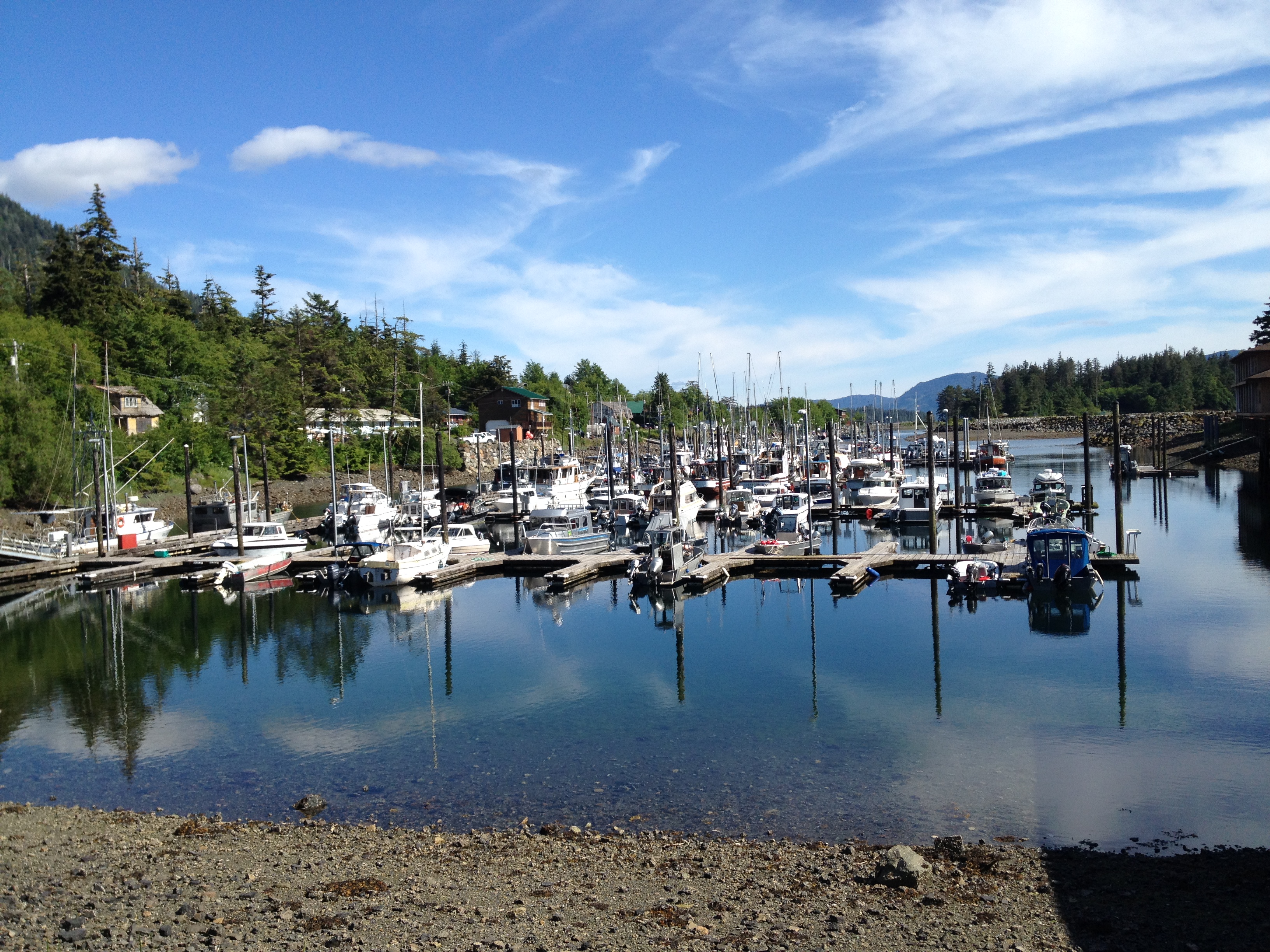
One of Craig’s harbors. The city on Prince of Wales Island is small enough that the state has allowed it to write and enforce its own quarantine restrictions. (Photo by KRBD)
As the fishing season ramps up, mid-sized coastal towns are finding they have little say over who shows up to work in the industry.
A rule updated last week clarifies that only the smallest, most isolated towns and villages can restrict travel or require a mandatory quarantine period for workers in industries the state deems critical.
One town that’s done so is Craig on Prince of Wales Island. The city of 1,100 people has had two confirmed COVID-19 cases recently.
“And we’ve been told that we have two ventilators on the island, on the entire island (of about 6,000 people),” said Hans Hjort, Craig’s harbormaster.
In Craig, an emergency order states anyone arriving from anywhere must quarantine for 14 days. That’s keeping out-of-town fishermen from coming ashore. Stores are delivering groceries right on the dock, and Hjort said it’s working out fine.
“Nobody’s blatantly come in here and said, ‘I’m doing what what I want to do.’ So most people have been respectful of it,” he said.
But up in the larger fishing town of Petersburg, officials say they’re barred from imposing similar restrictions on the fishing fleet.
Emergency coordinator Karl Hagerman said because Petersburg has a small hospital — and a population slightly more than 3,000 people — the state said the city can’t impose its own rules when out-of-town fishermen and processor workers arrive.
“We would really like the opportunity to essentially say, ‘No, you’re quarantine — if you’re going to be in Petersburg, you need to be on your boat or you need to be in a certain area,’” he said. “’You need to stay put so you don’t potentially spread this virus in our community.’”
The city of Wrangell ran into a similar roadblock this month. Wrangell Medical Center, which has just three ventilators, made the island town ineligible to add its own restrictions, state officials ruled.
Meanwhile, authorities in Southeast Alaska’s health care sector are concerned about the influx of plant workers and fishing crew.
“All of the businesses in in Southeast have been complying with the governor’s mandate. … We’ve been taking a big economic hit,” Dr. Elliot Bruhl, chief medical officer for Southeast Alaska Regional Health Consortium, which runs more than two dozen hospitals and clinics in the region. “And so, for another industry to come in and sort of say, ‘We want to conduct business as usual,’ it’s really irresponsible.”
He made his remarks during a Tuesday appearance on Alaska Public Media’s daily call-in show, “Talk of Alaska.” He said the state’s willingness to allow hundreds of seasonal workers into relatively remote communities is risky.
“If you look at what’s going on right now in the meat industry down south, you know, they’re having to close lots of meat-processing plants,” he said. “And those people aren’t even living in bunk houses, they’re living in the community.”
For industries to be allowed to move its workforce through communities, they have to file mitigation plans with state authorities outlining how they’ll prevent the spread of COVID-19. That’s created a backlog of hundreds of individual plans for the state to review.
The Alaska Municipal League says cities and boroughs have only been able to get copies of the plans when industries share them voluntarily.
“I’m not aware of an instance of the state sharing the critical infrastructure mitigation plan with a local government,” the municipal league’s Nils Andreassen said.
A records request filed by CoastAlaska for copies of the mitigation plans was denied while state officials say they review the approximately 700 plans.
Fishing industry representatives are working with Gov. Mike Dunleavy’s administration to craft a single, specific mandate for the fishing fleet that would streamline the process and protect communities, said United Fishermen of Alaska Executive Director Frances Leach. She added the fishing industry supports stronger rules than what’s currently required of skippers and crew.
“Quarantine is absolutely necessary, and it’s going to be required for any fisherman coming into the state or moving through several communities,” she told KSTK recently, in describing an industry proposal to the governor’s office.
In Petersburg, Hagerman said fishing communities should be able to write and enforce their own rules.
“We don’t want to shut down our economy,” he said. “We want our fishing fleet to operate as best they can. But under the state mandates, we feel that there are loopholes that are just putting our community at risk.”
Dunleavy has been getting questions daily during evening COVID-19 briefings about how the state plans to manage the fishing season.
Over the past week, the governor’s rationale for preventing communities from adding restrictions has varied. He’s argued that towns with hospitals and airports need to stay open as hubs. He’s also said mandatory quarantines could prevent skilled technicians from repairing critical infrastructure.
But local restrictions crafted by coastal villages like Kake and Hoonah, as well as Craig, have carved out exemptions for technicians doing urgent work. And mid-sized towns like Cordova, Petersburg and Wrangell never proposed closing their hospitals.
On Tuesday, the governor offered fresh assurances of public safety concerns without offering new details.
“Fisheries is huge in the state of Alaska, as we know,” Dunleavy said. “What we want to try and do is see if there is a way that we can conduct fisheries in a manner that will still protect the communities and the workers and the people who live in those communities. And so there’s conversations occurring constantly and how we could do that in the various communities.”
He added he would elaborate at a future news conference.
KSTK reporter June Leffler in Wrangell contributed reporting to this story.