Kaiser Health News

In Conservative Indiana, Medicaid Expansion Makes Poorest Pay

Reginald Rogers of Gary, Indiana, pays $1 a month for dental coverage through Healthy Indiana. (Phil Galewitz/KHN)

GARY, Ind. — Reginald Rogers owes his dentist a debt of gratitude for his new dentures, but no money.

Indiana’s Medicaid program has them covered, a godsend for the almost toothless former steelworker who hasn’t held a steady job for years and lives in his daughter’s basement. “I just need to get my smile back,” Rogers, 59, told his dentist at a clinic here recently. “I can’t get a job unless I can smile.”

Rogers is among the more than 240,000 low-income people who gained health coverage in the past year when Indiana expanded Medicaid as part of the Affordable Care Act. Rogers pays $1 a month — a fee that is a hallmark of the state’s controversial plan.

Healthy Indiana pushes Medicaid’s traditional boundaries, which is why it has the attention of other conservative states. The plan demands something from all enrollees, even those below the poverty line. The poorest Hoosiers can get coverage with vision and even dental benefits, but only if they make small monthly contributions — ranging from $1 to $28 — to individual accounts similar to health savings accounts. Individuals who fail to keep up lose the enhanced coverage and face copayments. Others who are above poverty can temporarily lose all coverage if they fall behind on contributions.

If that sounds more like commercial insurance, it’s by design. So is the plan’s tough-minded approach to paying for low-income Americans’ health care.

Proponents say the strategy makes Medicaid recipients share financial responsibility for their care, which they say will save Indiana money by reducing unnecessary services and inappropriate emergency room use.

Several states, including neighboring Kentucky and Ohio, are looking at Indiana Medicaid as a possible model.

Detractors worry that its complexity could make health care harder for the poor to access — the opposite of a core goal of expansion. There is no proof that the state is yet saving money or that its approach is making beneficiaries healthier.

“Other states have looked at it, but the Obama administration has made it pretty clear that Indiana is going to be a test case and much evaluation will need to be done before they approve any more like it,” said Matt Salo, executive director of the National Association of Medicaid Directors. No other program has been allowed to require health spending accounts, much less threaten a loss of coverage for not paying in, he noted.

Since Indiana’s expansion began in February 2015, more than 235,000 previously uninsured able-bodied adults have signed up. As of late February, the plan covered more than 370,000 people total, many with extremely low incomes. Another 190,000 adults are eligible but not enrolled, according to state estimates, though some who are above the poverty line may be in subsidized private plans.

Michelle Stoughton, senior director of government relations for Anthem, says the response to date represents success. Anthem is one of three private insurers providing coverage under Healthy Indiana. “What we heard for years … is that these people won’t pay and don’t have the ability to pay,” Stoughton said. “But this has turned those arguments around and been able to show that people do want to be engaged.”

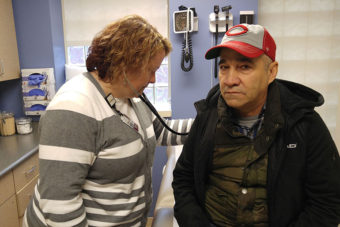
Ramon Ramos, of Indianapolis, is a Healthy Indiana member getting treated at the Jane Pauley Community Health Center. (Phil Galewitz/KHN)

The ACA created both the financial means and the opportunity for Healthy Indiana. The 2010 law paid for states to expand Medicaid by enrolling all adults under 65 who earned up to 138 percent of the federal poverty level — about $16,394 annually for an individual. The federal government will have absorbed the full cost of newly eligible beneficiaries from 2014 through this year. After that, its share falls gradually to 90 percent in 2020 and beyond.

As did most GOP-controlled states, Indiana initially balked at the offer, with officials citing concerns about Medicaid’s costs and effectiveness. Now they believe they’ve found the solution. Republican Gov. Mike Pence sees the plan as a model for others.

Healthy Indiana “has established a new health care paradigm in Indiana; rooted in consumerism and personal responsibility, Pence said in late January as he marked the plan’s first anniversary. It has federal approval until January 2018.

With Healthy Indiana, enrollees can choose basic coverage that requires no monthly fee but excludes dental and vision. Or they can pay the monthly fee for enhanced coverage with those benefits. Their contributions go into what’s called a POWER account — the acronym stands for Personal Wellness and Responsibility — that is used for the first $2,500 of medical expenses each year. Indiana pays the bulk of that, and if expenses exceed $2,500, the state also pays for additional services at no cost to the individual.

The optional dental and vision coverage, which many states don’t offer to adults on Medicaid, is proving a powerful lure. Nearly 75 percent of Anthem’s Healthy Indiana members visited a dentist, and 65 percent sought vision care in the first three months of coverage, Stoughton said.

Members who don’t maintain their monthly contributions are penalized, but the punishment is tied to their income level. A person above the poverty level — $11,880 in annual income — can be unenrolled for six months from all coverage. Someone below that level who stops paying will lose the dental and vision coverage and face copay charges of up to $8 to see a doctor or fill a prescription. Just over half of program enrollees have annual incomes below $600, according to state figures.

Recipients who make their contributions face no other health care costs. They can also lower future contributions by getting recommended preventive care, such as cancer screenings and checkups.

The hook may be working. State figures show a 42 percent drop in emergency room use in 2015 among people who were on traditional Medicaid and shifted to the new program. Cesar Martinez, CEO of health plan MDwise, said about 80 percent of its 105,000 Healthy Indiana members have used primary care at least once. That’s a third higher than the typical figure in other states’ Medicaid programs.

So far, 70 percent of enrollees are making the required contributions to get Healthy Indiana Plus with dental and vision coverage. “That’s 70 percent more than folks in Washington told me would make those contributions,” Pence said in January.

And overall, 94 percent of people with POWER accounts have continued to pay into them, state officials said. Most do so through debit cards, money orders or a free payment service at Wal-Mart stores in the state.

Yet since the state began enforcing the program’s stick provision in May, about 2,200 people with incomes above poverty have lost coverage because they didn’t pay their monthly fees.

Officials say their surveys show nearly nine in 10 Healthy Indiana members are satisfied or very satisfied with their coverage. Most residents interviewed at health clinics in Indianapolis and the state’s northwest corner, its poorest region, shared that opinion.

Byron Yeager Jr.’s decision to enroll last spring proved prescient. Not only did he get his first pair of new eyeglasses in many years, as well as dentures to replace his rotted teeth, but after he suffered a stroke in June, Medicaid also paid for his hospitalization and rehabilitation care. All of that for his $1 a month.

“It was a stroke of luck,” said Yeager, a 60-year-old former construction worker who lives in Indianapolis.

Hospitals and doctors supported the Healthy Indiana plan because both got substantial raises from Medicaid. Indiana agreed to increase hospitals’ rates by an average of 20 percent and doctors’ pay by an average of 25 percent. As a result, Medicaid has gained more than 5,300 providers in the past year, and patients report few problems getting care.

What’s not clear yet is whether Healthy Indiana is paying off for the state and worth modeling in others. Some conservative groups say the program may be more expensive than traditional Medicaid because it provides dental and vision care and better compensates providers.

“I’m not against expanding coverage, but people should know it comes at a cost,” said Josh Archambault, senior fellow for the conservative Foundation for Government Accountability.

Other critics worry that the monthly payments and the more complicated structure of people’s coverage will keep the poor from getting care.

Joan Alker, executive director of the Georgetown University Center for Children and Families, said the red tape in Healthy Indiana exceeds that of any state’s Medicaid expansion. Few third parties, such as employers and nonprofit groups, have offered to help individuals cover their monthly contributions, as the state had hoped, Alker noted.

She questions why so few eligible people above the poverty level have not enrolled. Many may have signed up for subsidized Obamacare marketplace plans in 2014 and could now be paying more than necessary, she said.

“It’s premature for Indiana to take a victory lap,” Alker said.

Read original article – March 24, 2016
In Conservative Indiana, Medicaid Expansion Makes Poorest Pay

Three Changes Consumers Can Expect In Next Year’s Obamacare Coverage

Health insurance isn’t simple. Neither are government regulations. Put the two together and things can get confusing fast.

So it’s not surprising that federal regulators took a stab at making things a bit more straightforward for consumers in new rules unveiled in late February and published Tuesday in the Federal Register. Because those rules are part of a 530-page, dizzying array of changes set for next year and beyond, here are three specific changes finalized by the Department of Health and Human Services that affect consumers who buy their own health insurance in one of the 38 states using the online federal insurance exchange.

1) Consumers could have access to more information about the size of the insurers’ network of doctors and hospitals.

Most consumers care about two things: the cost of the plan and whether their doctor or hospital is in the plan’s network. The new rules would require insurers to give consumers 30-days’ notice when a provider is being removed from the network. They must also continue to provide coverage for that provider for up to 90 days for patients in active treatment, such as those getting chemotherapy or for women in the later stages of pregnancy — unless the provider is being dropped for cause. Consumers will also see another change: The relative breadth of each plan’s network will be noted with three size designations, which are roughly equal to basic, standard and broad.

2) Consumers could be given slightly more warning about “surprise” medical bills from out-of-network providers.

One of the most common complaints from consumers — even before the federal health law passed — concerns bills they get from out-of-network providers. Such bills can hit consumers even when they go to facilities that are in an insurer’s network because not all of the doctors and other medical staff in those facilities are part of the network. The new rules make a small change, requiring that amounts paid by consumers for ancillary care — such as anesthesiology or radiology — count toward their annual out-of-pocket maximum. That’s important because once a patient hits that out-of-pocket maximum, the insurer is responsible for all in-network medical costs for the rest of the year. But the new rule only applies in cases where the insurer hasn’t warned patients — generally at least 48 hours before the hospitalization or procedure — that they might receive care and bills from such out-of-network providers. Consumer advocates say insurers will simply issue form letters to as many patients as they can to avoid the rule, while insurers complain the rule doesn’t get at the heart of the matter: the high charges they say are set by out-of-network providers.

3) Consumers’ out-of-pocket costs could be more standardized.

This provision could be the rule’s most substantive change. Regulators are requesting that next year insurers voluntarily offer plans with a standard set of coverage costs — from deductibles to copayments for drugs or doctor visits.

The new rules aim to make comparison shopping easier. The change also gives a nod to a cost hurdle that may keep some consumers from enrolling: having to pay hundreds if not thousands of dollars in deductibles before some common services are covered. To entice those consumers, federal regulators created six standard plans that include specific flat-dollar copayments for urgent care visits, most prescription drugs, primary care, mental health and substance abuse treatment — without the consumer first having to spend money to meet an annual deductible. “Insurers will have to compete head-to-head providing the same benefit package, one that most consumers will find fairly attractive,” said Tim Jost, a consumer representative to the National Association of Insurance Commissioners and former law professor who writes widely on the health law.

Still, the standard copayments in plans will likely seem high for some consumers. For example, the bronze plan standard design sets a $45 copayment for a primary care visit and $35 for a generic drug prescription. Copayments are smaller in the standardized silver plans, which set a $30 flat rate for a primary care visit, $65 for a specialist, $15 for generic drugs, $50 for brand name products and 40 percent of the total cost for the most expensive type of drugs, deemed “specialty drugs.” Those amounts are slightly higher than the average costs in silver-level plans sold this year, according to an analysis by consulting firm Avalere.

Insurers opposed the idea of standardized plans, saying they could stifle innovation, lead to higher premiums and make it less likely they will be able to create plans that appeal to a broad variety of consumers. Still, a handful of states, including California, Connecticut, Massachusetts, New York, Oregon, Vermont and the District of Columbia, have designed standardized plans that all insurers in the state marketplace are required to sell. But, because this part of the regulation is voluntary — meaning the federal government is requesting rather than compelling insurers to make these changes — it is unclear how much impact it will have on consumers and the marketplace.

So, in the next open enrollment period, consumers could see such standardized plans available in addition to the varied policies currently sold, which can have widely different payment packages. For example, one plan may have a lower deductible but higher out-of-pocket costs for doctor visits, while another might exclude certain office visits from the annual deductible, while a different option does not. Such variations have provided choice for consumers but also made comparing and contrasting plans difficult.

Meanwhile, HHS also finalized its annual increase in the cap on how much consumers can be charged out of pocket annually for such things as deductibles and copayments. The rule applies to those who buy their own coverage and many employers plans. Next year the cap will be $7,150 for an individual or $14,300 for family coverage.

Read original article – March 15, 2016
Three Changes Consumers Can Expect In Next Year’s Obamacare Coverage

Doctors Ponder Delicate Talks As Medicare Pays For End-Of-Life Counsel

Focus On Hospital Room Sign With Doctor Talking To Patient. Photo from Kaiser Health News.

JUPITER, Florida — She didn’t want to spend the rest of her days seeing doctors, the 91-year-old woman confessed to Dr. Kevin Newfield as he treated a deep wound on her arm.

“You don’t have to, but you have to tell me what you do want,” Newfield replied.

“I’m not afraid of dying. I’m afraid of being 106,” she told the surgeon and her daughter, who was in the room with them.

The woman’s spontaneous admission in Newfield’s south Florida office that January day triggered a 20-minute discussion about living wills, hospice and other end-of-life issues, Newfield said.

An orthopedic surgeon who sometimes performs amputations, Newfield is comfortable having those conversations.

Many doctors are not, but a Medicare policy, known as advance care planning, that took effect in January could help change that.

Physicians can now bill Medicare $86 for an office-based, end-of-life counseling session with a patient for as long as 30 minutes. Medicare has set no rules on what doctors must discuss during those sessions. Patients can seek guidance on completing advance directives stating if or when they want life support measures such as ventilators and feeding tubes, and how to appoint a family member or friend to make medical decisions on their behalf if they cannot, for instance.

The new policy reflects Americans’ growing interest in planning the last stage of their lives when they may be unable to make their wishes known.

In 2014, the Institute of Medicine, an influential panel of experts, found that the nation’s health system was not adequately dealing with end-of-life care, and among its recommendations was that insurers pay providers for advance care planning discussions.

Last September, a Kaiser Family Foundation poll found 89 percent of the public said that doctors should discuss end-of-life care issues with their patients, though just 17 percent of Americans — and 34 percent of people 75 and older — said that they have had such conversations. (KHN is an editorially independent program of the foundation.)

Under the new Medicare policy, doctors can give end-of-life advice during a senior’s annual wellness visit or in a routine office visit. Nurse practitioners and physician assistants can also get paid for having the talks. Counseling can also occur in hospitals.

“For doctors already providing this counseling the payment is an added benefit and for doctors on the fence about talking about the issue with patients, this may be enough to inspire them to try it,” said Paul Malley, president of Aging with Dignity, a national advocacy group based in Tallahassee, Florida.

Newfield, the Florida surgeon, is less optimistic. He said he doesn’t think the money will cause him to initiate more end-of-life discussions — and that doctors who weren’t doing them before now are unlikely to start. After all, said Newfield, doctors make money by keeping people alive.

The payment idea was first floated in 2009, as part of the congressional debate over the Affordable Care Act. Back then, a proposal to have Medicare pay for such discussions sparked political controversy and fueled concern that they would lead to so-called death panels that could influence decisions to avoid medical care. The proposal was quickly dropped.

Medicare’s policy now has broad support from health providers and patient groups, but neither physicians nor the American Medical Association foresee a surge in end-of-life planning among Medicare’s more than 50 million enrollees. The AMA, which supports the reimbursement, estimates Medicare will pay for fewer than 50,000 counseling sessions in 2016.

The numbers may well be held back by the small reimbursement rate for half an hour of counseling, but another obstacle rests with doctors themselves. Many are not trained to offer such advice or they are uncomfortable talking about it with patients.

“Just The First Step,” the journal Health Affairs headlined an article about Medicare’s new policy in its March issue.

“The perception that lack of training could be a major stumbling block to the greater implementation of advance care planning is widely shared,” wrote David Tuller, a lecturer at the University of California, Berkeley, School of Public Health.

“A lot depends on how you deliver the message and how you go about it,” said Dr. Jay Poonkasem, who specializes in palliative care in Clearwater, Florida.

“We will see more of this counseling, but only if doctors feel more comfortable and are trained in the right way to handle talks about end-of-life and advance care planning.”

Medical schools such as the Cleveland Clinic Lerner College of Medicine and the University of California, San Francisco, have recently begun expanding training on the subject.

At UCSF, all medical students are taught how to conduct advance care planning discussions and educational programs also exist for residents, nurses and other physicians at the hospital.

“This kind of training is crucial — one of the things that gets in the way of understanding and using patient preferences is that clinicians are often uncomfortable having these challenging conversations,” said Dr. Robert Wachter, professor and interim chair of UCSF’s Department of Medicine. “The issue of end-of-life conversations is so compelling and fraught — teaching it also allows us to teach about more general communication skills.”

Some doctors admit they could do better.

Dr. Scott Dunn, a family physician in Sandpoint, Idaho, said he regrets not having done more recently to help a 76-year-old patient avoid spending his final weeks in intensive care, connected to machines breathing for him and feeding him. That meant the patient may have needlessly suffered and cost the health system tens of thousands of extra dollars, he said.

“I wish I had taken the time months earlier to have that end-of-life discussion, but I did not,” he said.

Dunn said the incentive payment will entice him to have more such discussions with patients, but they won’t become routine in his practice. “Medicare pays us more to do other stuff.”

Michael Guarino came to a different view after watching his elderly father die last year, weeks after he became unable to move or talk. Guarino decided then that the 800-physician organization of which he is executive director — the Independent Physician Association of Nassau/Suffolk Counties in New York — would include end-of-life discussions for all adult patients.

To guide those discussions, the association’s physicians and nurses use a 12-page booklet called Five Wishes, which outlines how patients can designate someone to make decisions on their behalf if they become unable, as well as choose what treatment they want, if any, at the end of their life.

Dr. John Meigs, Jr., a family doctor in Centreville, Alabama, and president-elect of the American Academy of Family Physicians, said he sees value in doctors helping patients prepare for death.

Last July, a stroke left a 95-year-old nursing home patient of his with difficulty speaking and swallowing. The woman’s daughter questioned Meigs’ decision not to give the patient a feeding tube. Meigs reassured the daughter that her mother had made clear she didn’t want that in many talks with him and in her advance directives.

No heroic measures were made and the woman died a few days later.

Read original article – March 16, 2016
Doctors Ponder Delicate Talks As Medicare Pays For End-Of-Life Counsel

Study Links Kindergartners’ Stumbles With Rocky Home Lives

The Super Food Express bus travels to schools in Mobile County, Ala., to ensure children are fed healthy meals when school is out of session. The bus is part of the USDA's summer food program, which President Obama says needs additional funding. USDA/Flickr
The Super Food Express bus travels to schools in Mobile County, Ala., to ensure children are fed healthy meals when school is out of session. The bus is part of the USDA’s summer food program, which President Obama says needs additional funding.
USDA/Flickr

Very young children who endure neglect, abuse and dysfunctional home lives go on to struggle as kindergartners, leaving them at risk for more difficult years as adolescents and adults, a new study finds.
Adverse childhood experiences before age 5 were linked with poor academic and behavioral performance in kindergarten, said researchers who examined a sample of about 1,000 urban children. Their study was reported in the journal Pediatrics this month.

“Relative to children with no ACEs, children who experienced ACEs had increased odds of having below-average academic skills including poor literacy skills, as well as attention problems, social problems, and aggression, placing them at significant risk for poor school achievement, which is associated with poor health,” the authors said.

The adverse experiences included varieties of maltreatment — psychological, physical or sexual abuse or neglect — as well as household dysfunction — such as maternal depression, substance abuse, incarceration or violence toward the mother.

Forty-five percent of the children in the study had no adverse experiences, 27 percent had one, 16 percent had two and 12 percent had three or more.

The researchers from children’s hospitals in New Jersey and Philadelphia analyzed data from a national group of participants in the Fragile Families and Child Wellbeing Study, drawing on the study’s follow-up interviews with mothers five years after their child’s birth and data on teacher-reported school performance near the end of the child’s kindergarten year.

Teachers rated about a quarter of the children below-average for literacy and math skills. Children with more adverse experiences generally showed worse academic, literary and behavior outcomes, the study said.

Dr. Manuel Jimenez, the study’s lead author and assistant professor of pediatrics, family medicine and community health at Rutgers Robert Wood Johnson Medical School, said that when he sees children having academic or behavioral difficulties, there are often deeper problems that originate at home. The analysis adds to a growing body of research that shows behaviors that start in early childhood can lead to dropping out of school, committing crimes and poor health in adulthood.

“This affects children’s ability to do well in school, the work world and the likelihood in ending up with trouble with the law or fitting into society. All those things come together and it’s a vicious cycle that repeats itself. And if we don’t intervene, then they evolve in less healthy ways and that repeats for the next generation,” said Debra Ness, president of the National Partnership for Women & Families.

Read original article – February 29, 2016
Study Links Kindergartners’ Stumbles With Rocky Home Lives

UCLA Freshmen Learn About Growing Old

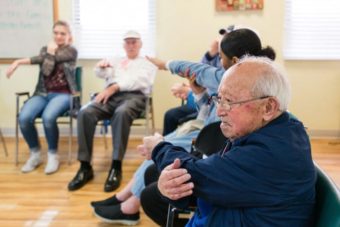
Toru Lura, stretches during the morning exercises at the WISE & Healthy Aging adult day service center for seniors with dementia in Santa Monica, California, in February 2016. (Heidi de Marco/KHN)

April Pearce is in the middle of her freshman year at UCLA, settling into life away from home for the first time. But instead of thinking about dorm food or exams, the 19-year-old is focused on something a little more abstract: old age.
That’s because of a unique course Pearce is taking called Frontiers in Human Aging, designed to teach first-year college students what it means to get old — physically, emotionally and financially.

Pearce said that before, she barely noticed elderly people when she passed them on the street. Since being in the aging class, seeing them fills her mind with questions: Do they live alone? Will they develop dementia? Do they interact with anyone apart from relatives?

“It’s weird, I know,” she said. “But before, I didn’t have any knowledge really about aging. I didn’t even interact with any older people except for my grandmother. Now I’m learning so much.”

In addition to teaching students about aging, the professors have another goal in mind: inspiring them to pursue careers working with the elderly.

With more than 10,000 baby boomers turning 65 every day, there is a growing need, said Rita Effros, a professor at UCLA’s David Geffen School of Medicine who teaches both undergraduates and medical students.

People over 65 represented about 14 percent of the U.S. population in 2013, and that figure is expected to increase to nearly 22 percent by 2040. During that same time period, the number of people over 85 is expected to triple.

And jobs working with the elderly won’t just be in medicine but also in social work, psychiatry, technology and law, Effros said.

“We try to make it clear that aging is going to be big business,” she said. “Whatever their interests are, they should think about serving the elderly.” The strategy seems to be working on many of the students, including Pearce. She started UCLA in the fall wanting to be a veterinarian and now is thinking about becoming a geriatrician.

The class, which has about 120 students, is taught jointly by Effros, an immunologist, Paul Hsu, an epidemiologist, and Lené Levy-Storms, a social welfare professor. UCLA started offering the course in 2001, but the professors said it is becoming increasingly important.

Throughout the year, students hear lectures about anxiety, genetics and dementia. They discuss ageism and read about Social Security. They stage debates on assisted suicide and watch films about growing old.

April Pearce, 19, talks to a representative from Saint Barnabus Senior Services during the Frontiers in Human aging service learning fair in Los Angeles in January 2016. Pearce, a freshman at UCLA, will request an internship with one of the senior centers for her aging class. (Heidi de Marco/KHN)

The course lasts from September to June, and students can go on to take other classes about aging, including ones that focus on diversity or public policy.

Effros said she wants the students to understand people don’t suddenly become old. Rather, the aging process starts when they are conceived. “A lot of life habits and choices they make as college students can affect them decades later,” she said.

During one guest lecture, UCLA medical school professor David Reuben explained how geriatricians evaluate patients and told students about some of the most common problems older people face — dementia, falls, sensory impairment.

He also described how the students’ own lives will change as they age. Instead of traveling the world, older people eventually become unable to travel out of their own bedrooms.

One student raised his hand and said being a geriatrician sounded gratifying, but also seemed heartbreaking. “You watch so many people decline … how do you handle that?”

Reuben responded that he does get sad and he does cry. “Nobody lives forever and nobody should live forever,” he said. “Death is part of the human experience.”

Michael Margolis, 17, said being in the class has made him think for the first time about his own mortality. “It’s not something we typically think about as teenagers,” he said.

One requirement of the class is that students spend a total of 20 hours volunteering with seniors.

Just after the New Year, the students gathered in a large room on campus to meet representatives from several agencies that serve the elderly. Andres Gonzalez, a director at St. Barnabas Senior Center in Hollywood, told the students they could teach technology classes to active seniors or help deliver meals to homebound ones.

“Even that short interaction becomes very meaningful to the seniors,” Gonzalez said. “You might be the only person they see that day. And they get even more excited seeing younger people.”

April Pearce was assigned to WISE & Healthy Agin

April Pearce, 19, participates in the physical exercises during her internship at WISE & Healthy Aging adult day service center for seniors with dementia in Santa Monica, California, in February 2016. (Heidi de Marco/KHN)

g, which runs an adult day service center for seniors with dementia. Catherine Jonas, who previously directed of the center, said the students bring a lot of energy to the center, and they often lead bingo games and exercises. They also have lengthy conversations with the seniors.

“What the older adults need is that dialogue,” Jonas said. And for students interested in learning about dementia, interacting with people affected by it “is so much better than what they get from a book,” she added.

One morning early last month, the center was decorated for Valentine’s Day, with red and white streamers and cut-out hearts hanging from the ceiling.

One of the student volunteers, Julia Gierasimow, led the group as they rolled their shoulders, stretched their legs and tried to touch their toes. Gierasimow, who is also considering a career in geriatrics, said all the seniors she’s met so far have interesting life stories.

“I don’t know if they remember me from week to week … but they are very friendly,” she said. “As bad as their dementia may be, they still give you a hug.”

After the physical exercises, Pearce sat in a chair in the middle of the room, picked up a microphone and commenced with the mind exercises she’s led each visit. Today’s activity: a quiz game about football.

“Which team won the first Super Bowl ever?” she asked, smiling.

Several of the seniors shrugged. One man, 76-year-old Tracy Williams, yelled out the right answer: “Green Bay Packers!”

Williams, retired from the Air Force, said he enjoys when the college students come to visit — even though he never would have done the same at their age. “When I was young, I didn’t want to even be near an old person,” he recalled.

Pearce said that in just a few weeks of volunteering, she is becoming more patient and is learning how to talk to people with dementia. “If they say it’s Tuesday, you’re supposed to go with it,” she explained.

Pearce said the class has given her a new perspective on her own life, too. She is trying to eat less fast food and exercise more. And she tries not to worry so much about things like not doing well on an exam. “I am going to have health problems later if I let the stress get to me,” she said.

Pearce is also seeing her grandmother in a new light, especially after doing an in-depth interview with her for a class assignment.

She said she learned that her grandma had undergone hip replacement surgery, a kidney transplant, and treatment for cancer. She also discovered her grandma had loved to dance when she was younger, and was popular with the boys.

“I had never really thought about my grandmother as a young woman,” Pearce said. “This class is making me appreciate her more.”

Blue Shield of California Foundation helps fund KHN coverage in California.

Read original article – March 2, 2016
UCLA Freshmen Learn About Growing Old

The Agonizing Limbo Of Abandoned Nursing Home Residents

Bruce Anderson about a year before his accident. (Photo courtesy of Sara Anderson)

A bad bout of pneumonia sent Bruce Anderson to Sutter Medical Center in Sacramento last May. As soon as he recovered, hospital staff tried to return him to the nursing home where he had been living for four years.

But the home refused to readmit him, even after being ordered to do so by the state. Nearly nine months later, Anderson, 66, is still in the hospital.

“I’m frustrated,” said his daughter, Sara Anderson. “You cannot just dump someone in the hospital.”

Anderson said her father, who has a brain injury that causes dementia-like symptoms, is confined to the hospital bed and frequently given anti-psychotic medications. She believes the nursing home, Norwood Pines Alzheimer’s Care Center, refused to readmit him because it wanted to make room for more lucrative and less burdensome residents.

“I didn’t have any question this was about money,” she said.

Bruce Anderson is the victim of a flawed readmission system for patients who want to return to their nursing homes after spending time in the hospital.

Nursing home residents are entitled to hearings under federal law to determine whether they should be readmitted after hospitalization. The state Department of Health Care Services holds the administrative hearings, but has said it is not responsible for enforcing the rulings.

But the state Department of Public Health, which oversees nursing homes, neglects to enforce the rulings and sometimes disagrees with them, according to advocates and court documents.

That leaves residents like Anderson, who won his hearing in July, with little recourse — and not many places to go. And since many nursing home residents have publicly-funded insurance, it means taxpayers are on the hook for hospital stays long after the patients are ready for discharge.

“Federal and state law have created a complicated and expensive process to ensure residents are not abandoned by their nursing homes,” said Tony Chicotel, a staff attorney at the nonprofit California Advocates for Nursing Home Reform. “It fundamentally doesn’t work.”

Chicotel said the outcome is “profoundly problematic” — vulnerable residents are abandoned by the nursing homes and then by the state.

Bruce Anderson, two other displaced nursing home residents and California Advocates for Nursing Home Reform are plaintiffs in a pending lawsuit against the California Health and Human Services agency.

Their suit, filed in federal court in San Francisco last November, alleges that the state is violating U.S. laws aimed at protecting nursing home residents from being “dumped” at hospitals. A hearing on the case is scheduled for next month.

Attorney Matthew Borden, who is representing the plaintiffs, said he wants the federal court to require California to establish a hearing process that complies with federal law and to enforce the rulings.

“We are not asking for the moon,” he said. “What is the point of a hearing if no one is going to enforce it? … This illustrates how futile this process is.”

The state’s Health and Human Services agency, which oversees both health departments involved, declined to comment, as did its attorneys at the California Department of Justice.

The defense lawyers filed a motion to dismiss the case, however, arguing that the plaintiffs haven’t presented evidence of a “systemic problem” with regard to residents who are not readmitted to facilities after winning their administrative hearings.

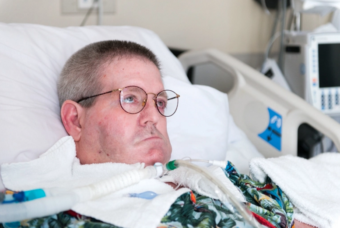
John Wilson, 61, at St. John’s Pleasant Valley Hospital in Camarillo, California, on February 24, 2016. Wilson has ALS, a degenerative neurological disorder commonly known as Lou Gehrig’s disease, and needs a ventilator to breathe. (Heidi de Marco/KHN)

The defense motion also lays out several ways in which state officials could enforce administrative hearing orders, including civil penalties against nursing homes. But Chicotel, of California Advocates for Nursing Home Reform, said the state doesn’t avail itself of  the enforcement mechanisms.

Deborah Pacyna, public affairs director of the California Association of Health Facilities, the trade association for nursing homes, said facilities can’t always take residents back after hospitalization — even if the administrative ruling is in the resident’s favor.

For example, nursing homes are prohibited by law from taking residents if they are dangers to themselves or others — or if the facility can’t provide adequate care for them, Pacyna said.

She said Bruce Anderson did pose a danger — that he had assaulted a staff member and law enforcement officers. The nursing home said in the administrative hearing that it believed Anderson would be better off in a psychiatric facility, according to the ruling.

“This is not about money,” she said. “This is about patient safety … The nursing home has to take into account the safety of the entire population.”

Regardless of motive, the refusal of nursing homes to readmit residents can put hospitals in a difficult situation. Patients can linger in the hospital for a year or more as staff members search for places that can accommodate their serious physical or behavioral needs, said Pat Blaisdell, vice president for the continuum of care at the California Hospital Association.

“It’s a major problem,” she said, noting that on any given day there are a few hundred people in hospital beds around the state who shouldn’t be there. That takes up valuable beds, staffing time and money that would be better spent on patients who genuinely need to be there.

Medi-Cal pays hospitals about $400 a day for these patients — far less than what it takes to provide care for them, Blaisdell said. Nursing homes also receive meager reimbursement from Medi-Cal, which Blaisdell said she believes is likely a factor when they decide not to readmit residents.

Whatever the reason, keeping patients hospitalized when they don’t need to be is medically bad for them, she said.

John Wilson, 61, is another one of the other plaintiffs in the lawsuit. He spent seven months at St. John’s Pleasant Valley Hospital in Camarillo after the hospital’s parent company, which owns the skilled nursing unit where he had resided, refused to readmit him to it. Wilson has ALS, a degenerative neurological disorder commonly known as Lou Gehrig’s disease, and he needs a ventilator to breathe.

Jeremy Wilson communicates with his father using a makeshift board at St. John’s Pleasant Valley Hospital on February 24, 2016. His father, John Wilson, can’t speak but can communicate using his eyes. (Heidi de Marco/KHN)

Wilson’s son, Jeremy Wilson, said that in the past his father had gone to the hospital frequently for pneumonia, skin infections and other ailments, and each time the skilled nursing unit took him back. But last April, after Wilson got a bacterial infection and ended up in the intensive care unit, a social worker said he would not be accepted back into the nursing facility.

The family appealed the decision, and won its case in an administrative readmission hearing. But the facility still refused to readmit Wilson, his son said.

Jeremy Wilson said he was angry that the nursing home didn’t comply with the order — and that the state didn’t do anything about it. But after he pushed for months, the nursing home finally allowed his father to return, he said.

“He was basically in a jail for seven months,” the son said. “He couldn’t get in a wheelchair and go down into the garden. He was literally stuck in the room, and from a psychological standpoint, it took a great toll on him.”

Sara Anderson said she is still trying to get her father out of Sutter Medical Center in Sacramento. She, too, sees the toll it is taking on him. He has grown weaker and he misses his home at Norwood Pines — and playing bingo with the other residents, she said.

Anderson said the hospital staff is nice to him and he is receiving good care, but he really needs to be in a skilled nursing facility — not an acute care hospital.

She worries that it still may be a long time before her father is discharged, and that when he is, he will be sent someplace far from her home in San Joaquin County. Finding a place for him is very difficult, she said. “Places do not want to take someone like him … He is a hard sell.”

Beyond her father’s situation, Anderson said she wants the state to fix the way it handles nursing home readmission disputes. “This suit is really for the next family whose loved one gets dumped in the hospital,” she said.

Disclosure: Blue Shield of California Foundation helps fund KHN coverage in California.

Read original article – February 26, 2016
The Agonizing Limbo Of Abandoned Nursing Home Residents

Site notifications
Update notification options
Subscribe to notifications