
Kaiser Health News

Five Health Issues Presidential Candidates Aren’t Talking About — But Should Be

Five Health Issues Presidential Candidates Aren’t Talking About — But Should BeReferences to the Affordable Care Act — sometimes called Obamacare — have been a regular feature of the current presidential campaign season.

For months, Republican candidates have pledged to repeal it, while Democrat Hillary Clinton wants to build on it and Democrat Bernie Sanders wants to replace it with a government-funded “Medicare for All” program.

But much of the policy discussion stops there. Yet the nation in the next few years faces many important decisions about health care — most of which have little to do with the controversial federal health law. Here are five issues candidates should be discussing, but largely are not:

1. Out-of-pocket spending: Millions more people — roughly 20 million, at last count — now have health insurance, thanks to the new coverage options created by the ACA. But most people are also paying more of their own medical bills than ever before. And they are noticing. A recent Gallup survey found health costs to be the top financial problem faced by adults in the United States, outpacing low wages and housing costs.

Employers, who still provide coverage to the majority of those with insurance, are also battling rising costs. They have been passing at least part of that along by raising workers’ share of costs — including premiums, deductibles and the portions of medical bills they must pay — far faster than wages have been rising.

Meanwhile, even in the most generous plans offered to those who buy their own coverage through the ACA’s marketplaces, the portion of health care costs borne by consumers has left many unable to afford care.

As insurers have shortened their lists of “in network” doctors and hospitals, another out-of-pocket spending problem is becoming more common: The “surprise medical bill.” Those are bills for services provided outside a patient’s insurance network that the patient did not know was out-of-network when he or she sought care.

Some of the candidates — notably Clinton and Sanders — have talked about the issue. But serious discussion about ways to ensure health care services remain broadly affordable have been overshadowed by the fight over the fate of the federal health law.

2. Drugs — more than prices: Rising drug prices at the pharmacy counter have also proved problematic for patients. And both Republican and Democratic candidates have discussed proposals to address the cost of prescription drugs.

But there is more involved in this issue than the prices paid by patients.

Drugmakers point out their industry is a risky one, and the big rewards on breakthrough drugs offset the losses for those that never make it to the pharmacy. But at what point does the cost to society for a drug, like new treatments for hepatitis C that tally more than $80,000 for a course of treatment, become prohibitive?

Meanwhile, scientists are rapidly approaching the point of being able to develop specific drugs for specific individuals, a trend known as “personalized medicine” or “precision medicine.” But even if everyone could be screened so that they would only get the expensive drugs that will help them specifically, how could those costs be spread over society as a whole?

And how fast should promising drugs be brought to market? Some decry the lengthy testing required for Food and Drug Administration approval. They say people are dying who could potentially be helped. But others are equally concerned that putting a drug on the market too soon poses risks to the public.

3. Long-term care: Every day, another 10,000 baby boomers turn 65 and qualify for Medicare. An estimated 70 percent of people who reach that threshold will need some sort of long-term care.

It’s not cheap. The annual cost of these services can range from approximately $46,000 for a home health aide to $80,000 or more for a bed in a nursing home.

Yet Medicare, the health program for the elderly and some disabled, does not pay for most long-term care services. Medicare has both nursing home and home care benefits, but they are temporary and limited to those with specific medical needs. Most people who need long-term care don’t need special medical interventions, just help with “activities of daily living.”

By contrast, Medicaid, the joint state-federal health program for people with low incomes, paid just over half of the nation’s estimated $310 billion tab for long-term care in 2013, the most recent year for which this information is available. But you either have to be very poor, or spend nearly all of your savings, in order to qualify.

Private insurance for long-term care exists, but it is expensive, and remains uncommon — paying for just 8 percent of the 2013 bill. And private insurance for long-term care has been getting more difficult to purchase as insurers pull back from the products because of rising costs as people, especially women, live longer.

4. Medicare: Speaking of seniors, Medicare, which provides health insurance to an estimated 55 million people — 46 million older than age 65 and another 9 million with disabilities, is also in a financial bind.

Medicare accounts for 14 percent of all federal spending, and that is expected to grow rapidly as those boomers reach their highest health-spending years. The program already accounts for one of every five dollars spent on health care in the U.S.

Interestingly, Medicare spending has slowed dramatically in recent years. That has prompted a lively debate among health policy experts: How much is the slowdown due to the deep recession that caused spending to fall in all sectors of the economy, and how much to other factors that could continue even with stronger economic growth?

The Obama administration contends that changing the way Medicare pays health care providers, as begun in the ACA, has helped put the program on more sustainable footing.

Many Republicans, however, led by House Speaker Paul Ryan, R-Wis., want to effectivelyprivatize Medicare — which would transfer the risk for cost increases from the government to private insurers.

But even smaller changes can kick up big political pushback from those who rely on Medicare for their livelihoods. A recent Obama administration proposal to change the way the program pays for expensive drugs administered in doctors’ offices or clinics has brought cries of complaint from both Democrats and Republicans.

5. Dental care: In 2007, a Maryland 12-year-old named Deamonte Driver died from a tooth infection that spread to his brain. That cast a harsh spotlight on the difficulty low-income Americans — even those with insurance through the Medicaid program — have getting dental care.

Yet research has shown repeatedly that care for the mouth and teeth is inextricably linked to the rest of the body. Oral problems have been linked to conditions as diverse as heart disease, diabetes and Alzheimer’s disease.

Lack of dental care is particularly significant for children. Dental problems are common in youngsters, and in addition to discomfort, lead to school absences and poorer academic performance.

Findings like that are one reason the federal health law made pediatric dental care an “essential benefit” for most insurance plans. But for complicated reasons, including the fact that dental insurance has traditionally been sold separately from other health coverage, many children insured under the law are not getting dental coverage.

Coverage for adults remains spotty as well. According to the Centers for Disease Control and Prevention, one in every three adults has untreated tooth decay. More than 100 million Americans do not have dental insurance, the government reports. And more than a third (38 percent) of adults aged 18-64 reported no dental visits in 2014.

Read original article
Five Health Issues Presidential Candidates Aren’t Talking About — But Should Be

Is Virginia Health Insurer’s Decision To Drop Bronze Plans An Omen?

A subsidiary of CareFirst BlueCross BlueShield in Virginia won't offer an insurance plan on the lowest tier of the marketplace next year. Morgan McCloy/NPR
A subsidiary of CareFirst BlueCross BlueShield in Virginia won’t offer an insurance plan on the lowest tier of the marketplace next year.
Morgan McCloy/NPR

News that a subsidiary of CareFirst BlueCross BlueShield will stop selling bronze-level health plans on the Virginia marketplace next year prompted speculation that it could signal a movement by insurers to drop that coverage level altogether.

The reality may be more complicated and interesting, some analysts said, based on a look at plan data.

Bronze plans provide the least generous coverage of the four metal tiers offered on the insurance marketplaces, paying 60 percent of benefits on average, compared with 70 percent for silver plans, which are far more popular.

During the 2016 open enrollment period, 23 percent of marketplace customers signed up for a bronze plan, compared with 68 percent who chose silver, 6 percent who picked gold and 2 percent who chose a platinum plan.

Next year, the CareFirst BCBS subsidiary Group Hospitalization and Medical Services will no longer offer bronze plans on the Virginia marketplace, and bronze plan members will be moved into silver plans, said a spokesperson for the insurer. The company will continue to offer bronze plans on other exchanges, however.

The decision spurred some health policy analysts and health law critics to question whether other insurers would follow suit. Part of that reasoning had to do with the health law’s risk adjustment provisions. In the program, individual and small group insurers that enroll sicker, generally costlier members receive payments from insurers that enroll healthier, less costly members. Since bronze plans may attract healthier people, insurers may stop selling them to avoid risk adjustment program payments, some argue.

Between 2015 and 2016, the number of bronze plans offered on the marketplaces increased less than 1 percent, while the number of silver plans grew by 2.9 percent, according to data from the Robert Wood Johnson Foundation.

It’s too soon to say whether CareFirst’s shift signals a trend in insurers pulling back from the bronze metal tier, said Katherine Hempstead, who leads RWJF’s work on health insurance coverage. But even if that happens, it’s unclear that the effect on consumers would be negative.

Bronze and silver plans may become more similar as time passes, Hempstead said.

Insurers have some wiggle room in designing plans. Although bronze plans must pay 60 percent of costs on average, they can range from 58 to 62 percent. Likewise, every silver plan doesn’t have to pay exactly 70 percent of costs on average; a plan can pay from 68 to 72 percent. Issuers can design plans that pay at the low or high end of these ranges and still meet the criteria for a bronze or silver plan.

An analysis of the premiums for bronze and silver plans in census regions across the country reveals that average prices for the two types of plans moved toward each other slightly between 2015 and 2016, Hempstead said. In addition, looking across all regions the highest-priced bronze plan was significantly more expensive than the cheapest silver plan in each region in 2016.

A recent analysis by the actuarial firm Milliman found that while people who purchased silver plans tended to get those with lower premiums, those turning to bronze plans chose the more expensive options. “Many issuers found it difficult to develop [bronze] plans that were palatable to consumers and in the bottom portion of the metallic level range,” the report concluded.

“It’s interesting if the industry standardizes itself,” Hempstead said, “and what if the most common plan becomes a sort of bronzy silver?”

Please contact Kaiser Health News to send comments or ideas for future topics for the Insuring Your Health column.

Copyright 2016 Kaiser Health News. To see more, visit Kaiser Health News.

Even As Birth Rates Fall, Teens Say They Are Getting Less Sex Education

Teenage girls are catching up to teenage boys in one way that does no one any good: lack of sex education, according to a recent report.

The proportion of teenage girls between the ages of 15 and 19 who were taught about birth control methods declined from 70 to 60 percent over two time periods, from 2006-2010 and 2011-2013, the analysis of federal data found. Meanwhile, the percentage of teenage boys in the same age group who were taught about birth control also declined, from 61 to 55 percent.

“Historically there’s been a disparity between men and women in the receipt of sex education,” said Isaac Maddow-Zimet, a coauthor of the study and a research associate at the Guttmacher Institute, a reproductive health research and advocacy group. “It’s now narrowing, but in the worst way.”

Even As Birth Rates Fall, Teens Say They Are Getting Less Sex EducationThe study, which was published online in the Journal of Adolescent Health in March, analyzed responses during the two time periods from the Centers for Disease Control and Prevention’s National Survey for Family Growth, a continuous national household survey of women and men between the ages of 15 and 44.

In addition to questions about birth control methods, the study asked teens whether they had received formal instruction at their schools, churches, community centers or elsewhere about sexually transmitted diseases (STDs), how to say no to sex or how to prevent HIV/AIDS.

Overall, 43 percent of teenage girls and 57 percent of teenage boys said in the most recent time frame that they hadn’t received any information about birth control before they had sex for the first time.

The proportion of young women who said they had been taught about how to say no to sex declined from 89 to 82 percent over the two study periods. For young men, the proportion remained essentially unchanged, inching up to 84 from 82 percent.

There were slight declines in the proportions of young women and men who said they had been taught about STDs and HIV/AIDS, but the responses were above 85 percent during both study periods for both sexes.

Teens talked with their parents to varying degrees about birth control and STDs. However, 22 percent of young women and 30 percent of young men said they didn’t talk with their parents about any of the topics.

The study also notes that the decline in formal education about birth control occurred even though the federal government spending has increased for teen pregnancy prevention programs.

Despite the lack of formal teaching, teenage pregnancy rates have declined for more than two decades and are now at historic lows. Racial disparities remain, however, and few teens use highly effective long-acting contraceptives such as intrauterine devices or hormonal implants.
“Even though the teen pregnancy rate is declining, it might decline faster if teens were getting sex education,” Maddow-Zimet said.

Read original article
Even As Birth Rates Fall, Teens Say They Are Getting Less Sex Education

HHS Acts To Help More Ex-Inmates Get Medicaid

HHS Acts To Help More Ex-Inmates Get MedicaidAdministration officials moved Thursday to improve low Medicaid enrollment for emerging prisoners, urging states to start signups before release and expanding eligibility to thousands of former inmates in halfway houses near the end of their sentences.
Health coverage for ex-inmates “is critical to our goal of reducing recidivism and promoting the public health,” said Richard Frank, assistant secretary for planning for the Department of Health and Human Services.

Advocates praised the changes but cautioned that HHS and states are still far from ensuring that most people leaving prisons and jails are put on Medicaid and get access to treatment.

“It’s highly variable. Some states and jurisdictions are having a lot of success” enrolling ex-prisoners, said Kamala Mallik-Kane, a researcher at the Urban Institute who has studied the process. “Others of them have initiatives in place that aren’t reaching the kinds of numbers that are making a dent.”

The 2010 health law made nearly all ex-prisoners eligible for Medicaid in states that chose to expand the state and federal insurance program for the poor. Many welcomed the chance to cover a group with high rates of chronic disease, mental illness and substance abuse problems.

But prisons and jails, burdened with ineffective computers, understaffing and complicated Medicaid enrollment procedures, have been slow to sign up released inmates.

Federal and state prisons let out more than 600,000 people a year. Millions more cycle through jails. But a study published in Health Affairs found prisons and jails nationwide enrolled only 112,520 emerging inmates between late 2013 up to January 2015.

In Maryland, often cited for progressive social policy, the prison system is enrolling fewer than one in 10 released inmates, Kaiser Health News reported this week.

Much of HHS’ guidance repeats existing policy, reminding states that those on probation or parole are eligible for Medicaid and urging states to keep prisoners’ names in the Medicaid computers while they’re locked up. (That eases re-enrollment.)

Inmates are generally ineligible for Medicaid while incarcerated. Prison and jail medical systems care for them.

HHS is “providing encouragement and a nudge” to states to improve sign-ups as well as money to upgrade enrollment computers, said Colleen Barry, a professor at the Johns Hopkins Bloomberg School of Public Health who has studied ex-inmate enrollment. “They understand that this is a technology issue.”

Making up to 96,000 halfway-house inmates eligible for Medicaid is new policy, designed to connect people with care before they’re fully released. Prisoners often move to halfway houses or home detention near the end of their terms, closely supervised but frequently allowed to shop, apply for jobs and see a doctor.

Under the new policy, “if you have a fair amount of freedom of movement” in a halfway house, “you’re not considered an inmate” for Medicaid purposes, said Sarah Somers, an attorney for the National Health Law Program, an advocacy group. “That will be very helpful for a lot of people who are trying to transition out of incarceration.”

Nathan Sharpe recently spent two months in a home detention program in West Baltimore between leaving prison and being fully released. He wanted to get a checkup to make sure there was no lasting damage from a stabbing he received last summer in Maryland’s Jessup Correctional Institution.

But he had to wait until home detention ended last week to be covered by Medicaid, he said.

“That helps a lot” if people like him could get on Medicaid after they first leave prison, he said. “People can get the health care they need sooner. I’ve been out a week now and I still haven’t been able to see a doctor because I don’t have my card.”

Ex-inmates have extremely high rates of HIV and hepatitis C infection, diabetes, mental illness and substance abuse problems. They are especially vulnerable after they leave the prison medical system and before they connect with community doctors.

One study in Washington state showed that ex-inmates were a dozen times more likely to die than the general population in the first two weeks after their release.

Immediate Medicaid coverage “can mean the difference between life in the community and recidivism and even life and death,” Michael Botticelli, the White House’s director of national drug control policy, told reporters.

HHS has been urging states to enroll ex-inmates in Medicaid for years. But the Affordable Care Act’s Medicaid expansion made many more of them eligible for coverage, giving policymakers a new reason to promote sign-ups, advocates said.

So far 31 states and the District of Columbia have expanded Medicaid under the law.

Read original article
HHS Acts To Help More Ex-Inmates Get Medicaid

Political Gridlock Blocks Missouri Database For Fighting Drug Abuse

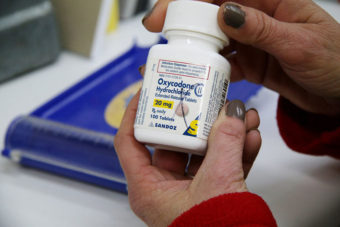
Michelle Pattengill, a technician at L&S Pharmacy in Charleston, Missouri, holds a bottle of oxycodone. (Bram Sable-Smith/Side Effects Public Media/KBIA)

At Richard Logan’s pharmacy in Charleston, Missouri, prescription opioid painkillers are locked away in a cabinet.

Missouri law requires pharmacies to keep schedule II controlled substances — drugs like oxycodone and fentanyl with a high addiction potential — locked up at all times.

Logan goes further than the law requires.

He’s been a pharmacist for 40 years. For the last 20, he has also been a reserve deputy with two local sheriff’s departments, investigating prescription drug abuse. That puts him on edge in his day job.

After his technicians count out a prescription for controlled narcotics by hand, Logan has them place the pills on a machine that resembles an overhead projector lit from the top instead of the bottom.

“There’s a camera up there,” Logan said. “It actually photographs each pill that we dispense.”

When he has probable cause to suspect that a customer is trying to get opioids with a forged or fraudulent prescription, Logan will arrest them on the spot. When he only has a strong hunch and they’re from out-of-state, he’ll escort them out of the pharmacy and direct them to the nearest bridge out of Missouri, about 9 miles away.

These run-ins with drug-seekers make Logan anxious to see the state enact a prescription drug monitoring program. A PDMP would be a statewide database tracking narcotics prescriptions, which doctors and pharmacists can check to catch signs of abuse or addiction and to intervene if necessary.

In the battle against America’s surging opioid drug addiction, 49 states, the District of Columbia and even Guam have all implemented some kind of PMDP. Missouri is the only state that hasn’t. A protracted political battle has kept the state from passing a law to establish one. That leaves pharmacists like Logan with few options.

He can only check the prescription history of patients on Medicaid, which tracks such data. But when a patient pays cash — a red flag for Logan — there is no record to check leaving pharmacists to guess whether the patient is in genuine pain, feeding an addiction or maybe looking for pills to sell.

“We want to take the best care of everybody that we can, and without a PDMP we are absolutely flying blind,” he said.

Restrictions Versus Privacy

State Rep. Holly Rehder, whose district includes Charleston, has championed establishing a database ever since joining the legislature in 2013.

“I’ve been working on this since my feet hit the floor,” she said.

It’s an issue close to her heart. Her cousin died of a drug overdose. Her mother was addicted to prescription medications. Her sister used heroin. And for 13 years, her own daughter has struggled with drug abuse — an addiction that began with a legal prescription for Lorcet.

“I’m very candid about it,” Rehder said. “I don’t believe God gave me a microphone to keep my mouth shut.”

She cites these databases’ success in limiting drug abuse in other states. They make it harder for pill-seekers to “doctor shop,” meaning go from doctor to doctor getting multiple, simultaneous prescriptions for the same drug.

One year after New York required its prescribers to check the state’s PDMP before writing a prescription, for example, doctor shopping dropped by an estimated 75 percent.

Doctors surveyed in many states, including Connecticut and Rhode Island, say prescription drug monitoring programs have helped them identify opioid drug abuse and intervene with patients who need help. Those are reasons the federal government strongly recommends the databases.

For the third straight year, Rehder’s bill has passed the Missouri House and moved on to the Senate. There, each year, it’s been blocked by her main opponent on this issue, Sen. Rob Schaaf, a fellow Republican.

“It’s just the heavy hand of government taking away your liberty,” he said. In 2012, before Rehder joined the legislature, Schaaf led an eight-hour filibuster of PDMP legislation, an act that has loomed over subsequent attempts to pass a similar bill. This year Schaaf has called the bill “dead on arrival.”

The bill is currently in committee where a hearing on it has yet to be scheduled — and it likely won’t be taken up by the full senate before the legislative session ends May 13.

Schaaf is a physician by training. To some, that background makes him a surprising opponent to prescription drug monitoring, which is supported by the Missouri Academy of Family Physicians, the Missouri American College of Physicians and the Missouri State Medical Association, among others.

He argues that drug monitoring may inhibit doctors from prescribing medications that patients really need. His main objection, though, is about privacy.

“The monitoring program would put every citizen’s private drug information on a government database accessible to 30,000 people with usernames and passwords,” he said. “That’s just an outrage.”

Rehder doesn’t buy that argument. The database is electronic medical information, she said, so it would be protected by the same privacy laws protecting all electronic medical records. “It’s not like anyone can go on a phishing expedition in this data.”

“There is no data that is secure,” Schaaf countered, citing hacks against the IRS and the Department of Veteran Affairs, and even Hillary Clinton’s email imbroglio.

Rehder argues that 49 other states have faced these same questions about security and Missouri would be able to follow the best practices they’ve developed.

Schaaf said he isn’t entirely opposed to prescription drug monitoring. He said he would allow Rehder’s bill to pass the Senate if it included a provision that final approval for the database would be put before the voters — a test he doubts the bill could pass.

For the past three years, he has proposed his own monitoring legislation that would limit access to the database to Missouri’s Bureau of Narcotics and Dangerous Drugs, which would then communicate concerns to providers.

Rehder said she can’t support his bill because it would be cumbersome and impractical to implement, and that it’s doctors who should be making decisions with the data.

“Missouri is the only state that doesn’t have this. It’s very shameful,” Rehder said. “It’s hurting our population so much.”

In March, St. Louis County, which has one of the state’s highest drug overdose death rates, passed its own PDMP. Other counties have signaled they would consider doing the same.

Rehder said this is better than nothing, though she prefers a statewide database over a patchwork of county systems.

“We have got to start realizing that this isn’t something we can close our eyes and turn our heads to because it’s not going to affect us. It’s affecting us,” she said. “Our families are being torn apart, lives are being destroyed.”

Twenty miles down the road from Logan’s pharmacy and also in Rehder’s district, 33-year-old Jason Lynch is close to completing a 120-day stay at Mission Missouri, an addiction treatment facility.

Lynch was given his first prescription painkiller by an older student on the school bus when he was just 11 years old.

“I think right from the get-go I was hooked because the next day I was trying to get some extra lunch money to buy some more,” Lynch said.

He’s battled opioid use for 22 years, feeding his addiction with pills prescribed to him by doctors. “I would research [symptoms] on the Internet and say, ‘This is what’s going on with my back.’ ”

Usually, Lynch said, the doctor would write him a prescription.

“It’s nobody’s fault but my own,” Lynch said of his addiction, but, he added, getting the pills “should have been a lot harder.”

“You just think about what if those drugs weren’t so available to him,” Rehder said. “How could his life have been different?”

This story is part of a reporting partnership with Kaiser Health News, Side Effects Public MediaKBIA and NPR.

Study: Primary Care Doctors Often Don’t Help Patients Manage Depression

Although primary care doctors frequently see patients with depression, they typically do less to help those patients manage it than they do for patients with other chronic conditions such as diabetes, asthma or congestive heart failure, a recent study found.

That is important because research has found that it can be good for patients’ health when physician practices have procedures in place to identify and provide targeted services to patients with chronic conditions and to encourage patients to get involved in actively managing their own care.

But physicians were less likely to use those “care-management processes” with patients who have depression than with those who had other chronic conditions, according to the study in the March edition of the journal Health Affairs.

The study analyzed data from the three largest national surveys of physician practices to determine the extent to which they employed five care-management processes between 2006 and 2013. The five processes studied were patient education; patient reminders about preventive care; nurse care managers to coordinate care; feedback on care quality to providers; and disease registries that identify patients with chronic conditions, enabling practices to be proactive about their care.

The results were particularly dismal for depression. In the 2012 to 2013 time frame, physician groups on average used fewer than one (0.8) of the care-management processes for their patients with depression, and that level of use hadn’t changed since the 2006 to 2007 period, according to the study. In contrast, practices used 1.7 diabetes care-management processes on average overall with their patients between 2012 and 2013. Among only large practices, the use of diabetes care-management processes grew significantly over time, to 3.2 in 2012-2013.

The use of care-management processes for patients with congestive heart failure and asthma was 1.1, a statistically significant difference compared with their use in patients with depression. Still, Dr. Tara F. Bishop, the lead author of the study and an associate professor in the department of health care policy and research at Weill Cornell Medical College in New York City, said those measures were also considered low.

The depression results were not surprising, said Bishop. 

“There’s a growing understanding that depression and mental illness generally are being undermanaged [in primary care settings] and we’re not using the tools that are available,” she said.

It may be that physicians are less comfortable managing psychological illnesses than they are physical ones, but size may also matter, she said. Primary care practices that are part of academic medical centers or integrated health care systems may be better equipped to adopt care-management processes, while smaller, independent practices have trouble marshaling the staff and other resources necessary to put comprehensive care-management techniques to use.

Read original article – March 25, 2016
Study: Primary Care Doctors Often Don’t Help Patients Manage Depression

Site notifications
Update notification options
Subscribe to notifications