Katie Anastas

Local News Reporter, KTOO

Juneau teachers union votes to approve contract with school district

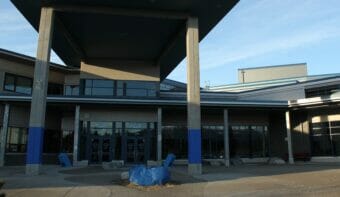
The Juneau School Board meets at the Thunder Mountain High School library. (Katie Anastas/KTOO)

Juneau’s teachers union has voted to approve a tentative agreement with the Juneau School District. The school board will decide whether to approve it on Friday.

The agreement would gradually increase wages, while also increasing district contributions to health premiums and time for elementary teachers to prepare lessons and grade assignments.

“We feel like there are enough wins in this contract that members should get a chance to voice their opinions on it,” Juneau Education Association President Chris Heidemann said when the agreement was announced last month.

The district and union reached the agreement in mid-April, but details weren’t public until it was sent to union members last week.

Though the agreement would increase wages for teachers, it’s not as much as the district or the union initially proposed. 

The smaller wage increase allowed for a compromise on the district’s contributions to employees’ health premiums, a major concern for the union. The district’s initial proposal had cut its monthly contributions by more than $400, while the union had proposed increasing them by about $80 each year. The tentative agreement has a yearly increase of $10.

Other changes aim to improve the way teachers are compensated for working during lunch breaks. It would also increase prep time for elementary school teachers and allow special education teachers to request time to spend on paperwork. 

Last month, the union directed teachers to work only during paid hours and not take on any extra duties before and after school or during lunch breaks.

The tentative agreement also establishes a workload review advisory committee made up of union members and district administrators. That comes as the Alaska Reads Act, which may require districts to increase reading interventions and testing, goes into effect on July 1.

“The committee will review new programs, initiatives, grants, curriculum, or changes to existing programs and their effects on JEA members/member groups,” the tentative agreement reads. “The committee will consider all of these and develop plans for implementation, to include problem solving where necessary.”

If approved by the school board, the contract will last until June 30, 2025.

Juneau’s only public indoor track isn’t wheelchair accessible. Advocates are asking the city to add an elevator

At the Dimond Park Field House, stairs connect the field to a mezzanine and the mezzanine to the track. (Photo courtesy of CBJ)

Accessibility advocates are asking the Juneau Assembly to fully fund a new elevator at the city’s public indoor track.

The Dimond Park Field House has an indoor track above a turf field. School sports teams, Little League, soccer clubs and other groups use it year round. 

Stairs connect the field to a mezzanine and the mezzanine to the track. There’s no ramp and no elevator. Joan O’Keefe, director of Southeast Alaska Independent Living, or SAIL, said that leaves many people unable to use much of the facility.

“A grandmother called SAIL in tears because she could not climb the stairs to watch her granddaughter compete in Girls on the Run,” O’Keefe wrote in a letter to the Assembly. “A young woman who experiences a physical disability called to voice her frustration as she could not join her friends for socialization and exercise.”

The Assembly’s draft Capital Improvement Plan, which outlines funding and construction priorities for the next several years, includes a request of $450,000 for an elevator. But an updated estimate from the city’s engineering department says it’ll likely cost more than $1 million. 

Now, as the Assembly works on next year’s budget, O’Keefe is asking the Assembly to fund the project fully.

George Schaaf directs the city’s parks and recreation department. He said ADA requirements for the field house are complicated because the city acquired it from a private nonprofit. In private buildings, accessible routes to mezzanines aren’t always required

“If the building were built today, it would require an elevator,” Schaaf said. “A lot of the requirements are triggered at new construction, or if you’re substantially altering a facility, which we’re not doing.”

But Schaaf said he supports adding an elevator, whether or not the city is legally required to.

“We want all of our facilities to be accessible to the community, so I fully support the request that SAIL put in,” he said. “I think it’s the right thing to do.”

The Assembly Finance Committee will consider the elevator funding as part of its budget process over the next several weeks. Bridget Thomson, SAIL’s Juneau program coordinator, said city leaders have been open to the idea.

“I think, at the end of the day, everybody wants the same exact thing,” she said. “It’s just how do we get the resources to make this happen?”

Other community requests for next year’s budget include funding to add 28 more units to the Juneau Housing First Collaborative’s Forget-Me-Not Manor and replace the Juneau Nordic Ski Club’s snow grooming equipment. The Assembly Finance Committee will discuss the requests at its meeting on Wednesday.

Teacher retention bonus bill moves forward in Alaska House

A school bus full of preschoolers, their parents, caregivers and advocates pulled up to the Capitol building on Feb. 13, 2023. (Photo by Katie Anastas/KTOO)

Alaska teachers are one step closer to getting annual retention bonuses for the next three years.

The bill, introduced by Gov. Mike Dunleavy, left the House Education Committee this week. It would give bonuses of up to $15,000 to full-time teachers at the end of each school year.

The size of the bonuses would depend on the district. Teachers in urban districts, including Anchorage, Fairbanks, the Matanuska-Susitna Borough and Juneau, would get $5,000. Those in rural districts, like Ketchikan, Kodiak Island and Unalaska, would get $10,000. And teachers in the most remote districts, like Bristol Bay, Klawock and the Northwest Arctic Borough, would get $15,000.

“We’re targeting our most rural school districts because oftentimes they’re the ones that suffer the most from recruitment and retention issues,” Dunleavy said when he announced the bill in March. In the 2020-21 school year, remote rural districts had 10% more teacher turnover than urban ones, according to Education Northwest.

Implementing the bill would cost $58 million each year.

At a House Education Committee meeting Wednesday, Sitka independent Rep. Rebecca Himschoot proposed an amendment to make the bonuses permanent, rather than just for three years.

“We already have a retirement system that doesn’t necessarily ask people to stay longer than five years,” she said. “By having this incentive for only three years, it’s sort of like, ‘Come in and do your three years and then go.’ I’m trying to find ways to support teachers longer.”

Himschoot also introduced an amendment to extend the bonuses to paraprofessionals and support staff, citing shortages of bus drivers and other workers. But Rep. Mike Prax, R-North Pole, worried the cost of the amendments would put the whole bill at risk of failing.

“I think we increase the risk of getting nothing if we try and push too far,” Prax said.

Both amendments failed in 3-4 votes. Committee members voted unanimously to move the bill out of committee, but not before some expressed concerns it could put proposed increases to per-student funding at risk.

Rep. CJ McCormick, D-Bethel, said he spoke to teachers on a recent trip back home.

“I talked to them about this bill, and they straight up told me, ‘This is not what we want. They said, ‘We want good benefits and we want an increase to the BSA,’” he said. “I think this is a good thing, but I think it needs to coincide with other increases.”

Committee Chair Rep. Jamie Allard, R-Eagle River, said the retention bonuses guaranteed direct support to teachers.

“I personally believe that this increase is an incentive and a recruitment tool,” she said.

The Senate version of the bonus bill remains in the Senate Education Committee.

Under new agreement, Juneau would have until 2028 to open Eaglecrest gondola

Looking up Log Jam and the west side of Eaglecrest Ski Area, seen on Wednesday 2/23/2022. (Photo by Mikko Wilson/KTOO)
Skiers and snowboarders ride up the Ptarmigan chairlift at Eaglecrest Ski Area on Douglas Island with views of the Log Jam run on the west side of the mountain on Feb. 23, 2022. (Photo by Mikko Wilson/KTOO)

The Eaglecrest Ski Area gondola will likely open a year later than expected. That’s according to a proposed updated agreement between the city and Goldbelt, Inc., Juneau’s urban Alaska Native corporation.

It’s been more than a year since Goldbelt offered to invest in the gondola project for the city-owned ski area. The Juneau Assembly approved a revenue sharing agreement in January, but the negotiation process continued for several more months.

“We thought we were there, but we weren’t,” City Manager Rorie Watt said at an Assembly committee meeting Monday. “We’re coming at it, from the CBJ side, a government perspective — and the Goldbelt side, a business perspective.”

Watt outlined the updated agreement, which still needs final approval from the Assembly.

Some key terms remain the same: Goldbelt will invest $10 million in the project and in exchange, get 10 to 25% of summer revenue for 25 years. If Goldbelt doesn’t get at least $20 million back in revenue in that time, the agreement would extend.

One change is the deadline for opening the gondola. The new agreement pushes it back a year, setting it at May 31, 2028. If it doesn’t open by then, Goldbelt can back out.
“It’s taken a while, and we’ve lost most of this construction season,” Watt said.

Another is the timing of the fund disbursement. According to the updated agreement, Goldbelt would pay the city in one lump sum by July 3, 2023, rather than in multiple payments.

“That’s really good for us,” Watt told the committee. “We don’t have to worry about things changing. Maybe the way the world looks in a year to the Goldbelt board is different. So this is a really good thing for CBJ.”

The new agreement would require the city to pay Goldbelt additional interest if the city backs out. Watt said that change in Goldbelt’s favor was worth getting the $10 million up front.

“I think the probability that we would terminate is really low,” he said.

Goldbelt owns and operates the Mount Roberts tram in downtown Juneau. President and CEO McHugh Pierre said in an interview that the gondola is an opportunity to expand tourism on Douglas Island.

“When we evaluate the future of tourism in the community, we know that there needs to be options to spread people out so the impacts are manageable,” he said. “We think that Eaglecrest, as an already developed area, is ripe for sustainable additions.”

Pierre said he hopes increased activity at Eaglecrest will lead to more development on nearby Goldbelt-owned land.

Members of the public can comment on the proposed new agreement at the next Assembly meeting on May 8.

Telephone Hill residents plan next move after Juneau acquires property from state

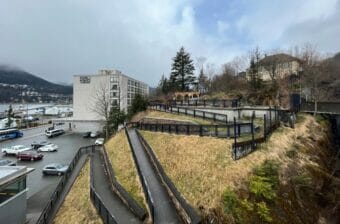
A ramp leads up to Telephone Hill Park from the Capital Transit center. (Photo by Katie Anastas/KTOO)

When Tony Tengs took the stage at the Alaska Folk Festival earlier this month, he sang an ode to his Juneau neighborhood, Telephone Hill.

“It’s where the oldest house you’ll find, it’s like you stepped back in time,” he sang. “It’s a breath of fresh air from the hectic scene.”

Tengs knows that oldest house well — he’s rented half of it for 28 years. It’s also the neighborhood’s namesake: Edward Webster and his family ran Alaska’s first commercial telephone service out of the house.

“I call it the West Wing,” Tengs said in an interview inside the home. “I’ve had some fabulous times here.”

Telephone Hill has the kind of neighbors who help you shovel your driveway when it snows and call you if there’s a bear wandering through. Like Tengs, many of them have lived here for decades. But with public meetings on the future of Telephone Hill set to begin this summer, some of them are thinking about their next move and asking the city to delay evictions as long as possible. 
The state owned Telephone Hill’s seven houses and one five-unit apartment building from 1984 until this March, when it transferred ownership to the City and Borough of Juneau. The city had applied to buy the land in July 2020.

In that application, City Manager Rorie Watt wrote that the homes were aging and “the land is not being used for highest and best use.”

Then, in January 2022, the city listed redevelopment of Telephone Hill as a legislative priority and sought $2 million for work on the site. According to the project description, that would include “demolition of existing structures.”

Now Tengs’s floor is covered in half-full boxes and musical instrument cases as he prepares to move into Fireweed Place, a nearby apartment community for older adults. But he thinks his neighbors shouldn’t have to move until the city is ready to break ground on whatever comes next.

The Edward Webster House is the oldest house still in use in Juneau. The Webster family ran the first commercial telephone service in Alaska out of the house, leading to the neighborhood’s name of Telephone Hill. (Photo by Katie Anastas/KTOO)

“Good of the many”

The city’s first step as owner was to select a new property manager, JPR Management Services. Their contract lasts through the end of September. JPR will collect rent for the city, and if tenants leave their homes, they’ll let the city know.

“Vacated property will not be rented,” the city’s request for proposals read.

Watt said the land transfer and the selection of a property manager are the latest milestones in a long process.

“I think for the tenants, maybe it’s an increasing sense that change is really likely to happen,” he said.

Watt said it’s likely the city will build new housing on the property, calling it a “once in a lifetime opportunity” to add units in a desirable location downtown. The lack of housing and the rise of short-term rentals have made it harder for Juneau businesses to hire employees.

“I think this is a classic ‘good of the many versus good of the few’ type issue,” Watt said. “I’d like to see several hundred units of housing available for the community on that property. Right now, I think we have 17 people living up there.”

The city has also started negotiating with First Forty Feet for planning and design services for Telephone Hill. Watt expects them to spend three to five months on a redevelopment plan. Public meetings on the planning and design process could begin in early summer.

The city has tasked the planner with considering a “no build” option, too. But Watt said that seems unlikely.

“The Assembly’s goals, which it sets every year, are dominated by housing issues,” he said. “There’s nothing wrong about preserving a historic neighborhood. It just doesn’t meet what we’re trying to do.”

Skip Gray stands in front of his former home at Telephone Hill on Feb. 14, 2023. (Photo by Katie Anastas/KTOO)

A jewel of history

Some in Juneau, like Skip Gray, are still holding out hope that the city will preserve the existing houses. Gray moved to the neighborhood as a young adult in 1975. He remembers hosting visiting musicians and throwing New Year’s Eve parties.

“I loved living here,” he said, standing in front of his former home. “I had a great group of friends, great group of neighbors. There’s a lot of history in this house.”

According to 1984 report, the Bosch-Carrigan House was built in 1913. Charles Garside, a mining engineer and early surveyor of the Juneau Townsite, owned the property at the turn of the century. (Photo by Katie Anastas/KTOO)

A 1984 study of the neighborhood documents some of that history: the house sits on a lot once owned by Richard Harris, an early prospector and partner of Joe Juneau. Down the street is the Augustus Brown House, named after a landlord who acquired the property in the 1880s and left money to build an indoor pool when he died.

Gray has since moved out of the neighborhood, but he still cares deeply about what happens to Telephone Hill and listens for updates at city meetings.

He says he understands the need for more housing downtown, but he doesn’t think Telephone Hill should be the place to build it. He hopes to organize tenants and community members to raise awareness of the planning process and share their opinions with city leaders.

“This is a great little jewel of history that I think we should hold onto,” Gray said. “If they come with bulldozers and tear these houses down, and I’m standing there watching, I don’t want to say I didn’t try.”

Some tenants, like Roald Simonson, plan to stay as long as they can. He’s lived on Telephone Hill for 20 years, in a bright studio lined wall-to-wall with bookshelves. His cat, Kao, wanders in and out through a window out to the back patio. 

Roald Simonson is a longtime resident of Juneau’s Telephone Hill. (Photo by Katie Anastas/KTOO)

Simonson has started keeping an eye out for other housing because, he said, “You have to.” But he has a request for city leaders.

“Just don’t move us off here until you have to,” he said. “Don’t jump the gun and say, ‘Well, we have to get the residents off here for whatever happens,’ and then have things sit for six months, or eight months, or a year, or three years.”

He says he hopes the city picks a redevelopment plan that makes future generations proud.

Juneau Assembly gives school district $2.3 million to address deficits

JSD Office
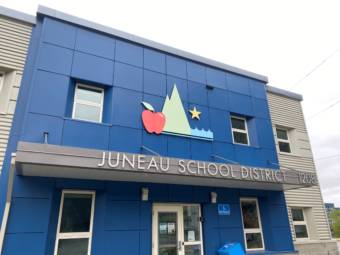
The Juneau School District building on Glacier Ave. (Photo by Bridget Dowd/ KTOO)

The Juneau Assembly voted Monday to give the school district $2.3 million to address deficits ahead of next school year.

Most of it will go toward a growing transportation funding deficit caused by declining enrollment and flat funding from the state. It also includes $60,000 for new wrestling mats. The rest of the money will resolve deficits from community classes and RALLY, the district’s after-school program.

The Assembly approved the funding in a 6 to 3 vote, but not without pushback from some members.

Mayor Beth Weldon suggested the Assembly cut the amount of money down to $1.9 million. She said some of the responsibility for paying back the money should fall on the district.

“You knew you were running yourself into the red, and I think you guys need to take some responsibility for that,” she said.

Assembly member Greg Smith asked Superintendent Bridget Weiss how the district would pay off the deficits if they didn’t receive the $2.3 million from the Assembly. She said the district would have to dip into its savings.

“We really don’t have resources,” Weiss said. “It would come out of fund balance.”

Assembly member Alicia Hughes-Skandijs said she understood where Weldon was coming from. But without adequate state funding, she said, the school district needs help.

“I think we’re financially in a position to do that,” Hughes-Skandijs said.

Assembly member Wade Bryson said although it’s possible now, it might not be in future years. He voted in favor of Weldon’s lower amount.

“There’s not enough money to do everything that everybody wants to do. We know that,” Bryson said. “If we continue to behave as if there’s an unlimited amount of funds, eventually we are going to run into the end of the cliff.”

Assembly member ‘Wáahlaal Gíidaak said the Assembly and school board members have discussed ways they could save money in the future. Those include outsourcing RALLY and having the city’s Parks and Recreation Department take over community classes.

“When we stress the school system out additionally, it just trickles down into our kids,” she said. “I think we have some really good, solid ideas for ways we can move forward with cost savings, and I’d like to see those come to fruition. But I think underfunding right now is not the solution.” 

Weldon maintained her objection to the $2.3 million request. Ultimately, it passed, with Weldon, Bryson and Maria Gladziszewski voting against it.

Separately, the school district has requested the maximum amount of city funding allowed by the state for next year, along with $2.5 million beyond that cap for next year.

Site notifications
Update notification options
Subscribe to notifications