KCAW - Sitka

KCAW is our partner station in Sitka. KTOO collaborates with partners across the state to cover important news and to share stories with our audiences.
Reifenstuhl: Regional hatcheries return investment seven-fold

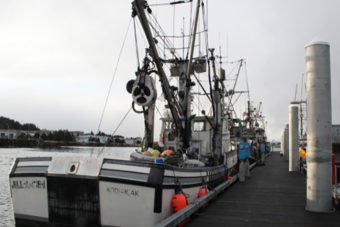
Medvejie Hatchery south of Sitka is one of the salmon enhancement facilities operated by NSRAA. (Photo courtesy of NSRAA)

Commercial fisheries have never been more important to Southeast Alaska, and the region’s hatchery programs are a critical part of that success.

That was the message Steve Reifenstuhl delivered to the Sitka Chamber of Commerce last week.

Reifenstuhl is the general manager of the Northern Southeast Regional Aquaculture Association based in Sitka. NSRAA is one of two regional nonprofit hatchery programs in the panhandle, and one of the most successful in the state.

In this brief excerpt, Reifenstuhl runs the numbers.

Here’s what the fishing community brings to Sitka–to Sitka’s economy. Nearly 2,000 people earn money catching fish or processing fish in Sitka. It’ by far the largest employer. Eleven percent of Sitka’s population fishes commercially. Think about it: that’s over one in ten. We have three major processors in town and a combined payroll of $13.5 million. In 2013 they processed 90 million pounds of fish, valued at $72 million. That’s to the fishermen, referred to as ex-vessel value. The first wholesale value of this fish is somewhere around $150-million, as it goes out the processor’s door. And as it swirls around Sitka’s economy, it has a total economic output of over $200 million. That’s just for one year.

Listen to Reifenstuhl’s entire presentation to the Sitka Chamber of Commerce.

Except for a brief detour to Silver Bay Seafoods, Reifenstuhl has been at NSRAA for his entire 34-year career. He discussed the circumstances in the 1970s that led to the creation of NSRAA and its counterpart, the Southern Southeast Regional Aquaculture Association — also known as SSRA.

There have been lean years in NSRAA’s history, but not recently. Last season alone it contributed over $20-million in value to the commercial fisheries.

Now, no individual fisherman is getting rich off this. I don’t want you to think that. There are roughly one-thousand hand trollers, but the permit holders that focus much of their time during the season are the power trollers (just under a thousand of those), the seiners (380 of those), and gillnet (425). So roughly 2,000 dedicated fishermen fishing each summer on salmon. That money gets spread among them. I thought it was important not to have a misconception — $20-million is a lot of money. But when you think of it spread out, it’s very helpful but it’s not enough to pay all the bills. Wild stocks are what they really depend on to make their season.

In his half-hour presentation, Reifenstuhl stressed the value of the guided sport fisheries in Sitka, and the contribution of both the commercial and guided sport sectors to Sitka’s tax base.

But he did give the commercial sector exclusive credit for one thing: Voluntarily imposing a 3-percent tax on their harvest to support the nonprofit hatchery programs. An investment of about $33 million over the decades, he said, that has produced value of almost $234 million.

He told the chamber, “I want that to be your takeaway.”

KCAW’s Rachel Waldholz contributed to this story.

Industry consultant: Cruise lines again ‘bullish’ on Alaska

Cruise industry consultant Andy Nelson says of Disney Cruise Lines, “If they’re coming to Sitka, you’re doing it right.” (Robert Woolsey/KCAW)

Years of steady declines in cruise ship traffic to Sitka should be coming to an end — eventually.

Independent cruise industry consultant Andy Nelson told the Sitka Chamber of Commerce this week that because cruise itineraries are planned years in advance, there was nothing to be done about the expected drop in visitor numbers this summer. But after that, things were looking more “bullish.”

Nelson has been hired by Chris McGraw, owner of the Old Sitka Dock, to raise awareness among the cruise lines of the new deepwater facility in Sitka. McGraw’s father, Chuck, was also in the audience.

In his remarks, Nelson told the chamber that there was nothing Sitka could have done to reverse the decline in cruise tourism, which was aggravated by several factors — primarily the US economic recession beginning in 2008.

Sitka had impact of ships leaving, even before the US economy changed. And I just wanted to back up a little bit, because talking with Chuck and Chris, it’s been enlightening for me because I think some people feel that Sitka made a mistake. What did we do wrong that the ships left? And I’m not sure that Sitka did (make a mistake). When 9-11 happened it changed the marketplace in Alaska. Because of the impression that people in the Lower 48 were becoming more resistant to flying — at least right after 9-11 — and they would rather leave from a US port, ships moved from Vancouver to Seattle as far as homeporting. And so for the ships that went to Seattle, not only is the voyage a little bit longer — remember they have to do it twice — it adds a bit of time, and that’s all time that they can’t spend in the ports in Alaska. In addition to that, those ships have to make a Canadian port call, to follow the rules of shipping, which is the Jones Act, where they have to call on a foreign port. So for all of those ships, not only is the voyage longer, but they all had to call in Victoria as well, which took additional time. So the reality is that as that market developed in Seattle, with those itineraries they could only get in at the most three port calls in Alaska, Victoria, and get back to Seattle. So the byproduct of that is that Sitka lost port calls, Haines lost port calls, and some others did as well. And I’m not sure Sitka could have headed that off.

Nelson worked for Royal Caribbean for 25 years before becoming an independent consultant. He offered an insider’s perspective into why things were looking up for Sitka in the not too distant future. Disney, Norwegian, and Carnival cruise lines were all making single port calls in Sitka this summer, to assess passenger reaction to the community.

Nelson himself visited for the first time last October for the Alaska Travel Industry Association meeting. He said Sitka has a way of making a good first impression.

I think Sitka’s in a great position for new itineraries that are departing out of Vancouver. The Vancouver itineraries have time to stop in Sitka, and I think that Vancouver is going to host more ships in the future. In contrast to some other ports — and I’m not just talking about Alaska — Sitka offers a real authentic feel to it. It feels like a functioning village, city, whatever you want to call it. It’s very pleasant. If the experience I had in the fall is anything like the experience guests have in the summer, they couldn’t help but like it. It’s a great place. A lot of natural beauty, really strong history — all things that help the itinerary and help the marketing. You’ve got good shore excursion opportunities. One addition, and certainly I’m biased, is you’ve got a deepwater dock now. And that’s a huge benefit to Sitka. Because as Chris said there are cruise lines that won’t come to Sitka unless there’s a dock. Some will, some won’t. They’re going to make their own decision on that. Our message as we go out to the cruise lines — and yes, we’re hoping that they use the dock — but the message is, Come to Sitka. And my belief is that most of the new lines that come to Sitka are going to use the new dock.

Old Sitka Dock owner Chris McGraw prefaced Nelson’s remarks at the Chamber of Commerce. He said that the dock received 23 ship visits last year, and expected 26 ship visits this year, with the Seven Seas Navigator and Regatta comprising the bulk of those visits.

The first cruise ship call of the 2014 season in Sitka is the Westerdam, on May 7.

Sitka teacher wins national teaching award

Rebecca Himschoot. (AFSUSA photo)

A Sitka educator has won a Presidential Award for Excellence in Mathematics and Science.

Rebecca Himschoot teaches Science at Keet Gooshi Heen Elementary. She’s one of two Alaskan teachers honored by the White House this year, and one of only 102 teachers nationwide who receive the recognition, which includes a $10,000 cash prize from the National Science Foundation.

Rebecca Himschoot is the Science teacher for 2nd through 5th grade. She says that she really doesn’t do anything extraordinary for her students, beyond what any good teacher tries to do.

It’s mainly about keeping kids engaged. The skies over Sitka are gray and rainy much of the time. Learning about planets and astronomy can be a tough sell. But Himschoot, through a grant from the local charitable trust, brings in a Starlab every year, and inflates it — sort of like a giant bouncy castle — inside the gym.

“If my teacher in elementary school had brought in a planetarium to the classroom, it probably would have caught my attention, and maybe even changed the direction I went with my education.”

Himschoot also takes advantage of opportunities for professional development that other teachers may not. In 2007 she traveled aboard a research vessel for the National Oceanic and Atmospheric Administration, as one of NOAA’s Teachers at Sea. It was a three-week cruise in the Bering Sea studying the pollock fishery.

But she also finds opportunities closer to home.

“I try to use local resources as much as I can to connect kids to science, so I bring in lots of Forest Service scientists. The Sitka Sound Science Center has brought some scientists to town who came into the classroom and helped kids connect more to science. So I think it’s those little extras that might catch attention.”

Read the full story at KCAW: Sitka’s Himschoot wins national teaching prize


Small bird-banding study could produce big results

Baluss takes a picture of every junco she bands. The birds are calm while she handles them. (KCAW photo/Robert Woolsey)

Alaska has its share of big science projects, to be sure. But to get results, science doesn’t always have to be huge.

In Sitka, a project in its second year is studying the seasonal movement of juncoes and some other sparrows. It started as a way to involve kids in science, and to answer some basic questions about a species so common that we haven’t taken the trouble to study it.

KCAW’s Robert Woolsey spent some time last week with a bird bander, learning something we never knew about juncoes.

Report a sighting of color-banded bird here.

Rob – I don’t think I’ve ever interviewed somebody at a whisper.
Gwen – Sorry, I hope it comes out.

I find Gwen Baluss a couple of blocks up the street from where I live. She’s sitting just inside a downstairs window in the home of Scott Harris, who works for the Sitka Conservation Society.

Baluss collapses the trap after a neighborhood cat scares away all the birds. (KCAW photo/Robert Woolsey)

She’s poised by the window, which is slightly ajar, holding a thread. When she releases it, a device known as a “hall trap” unfurls, ideally right on top of some unsuspecting juncoes. There just don’t happen to be any around.

“Yeah. It’s not looking good out there.”

Juncoes tend to arrive at backyard feeders in waves, and the latest flock took flight after a cat stopped by.

Harris’s 7-year old son, Tomy, has been kneeling by the window all morning. He understands the hall trap, and what it’s like to be a few inches away from a creature that most of us only ever see at a distance.

“And when it’s in the middle, you let go of this. You let go of the string, and then the trap comes down on the bird, and then you just go out and get them. It doesn’t hurt them.”

The cat’s visit has pretty much ended trapping this morning. This is a setback, but only a small one. Baluss’s project has a very limited scope.

“I’m not color-banding any other birds in Southeast Alaska, so Sitka’s actually getting a lot of colors. If you see a color-banded bird in Southeast chances are that it came from Sitka, if it’s a junco, chickadee, or song sparrow. Those are the three species that I have the color bands for.”

Baluss is attaching tiny, colored bands to the legs of juncoes — only in Sitka. Anywhere from 1 to 4 bands per bird — like color-coding. Various combinations of white, green, red, blue, and light blue. It’s an inspired strategy.

“That’s the nice thing about color-banding. A bird-watcher, or anyone, who happens to see a color-tagged bird could report those, and we would know which bird that was with a fair level of confidence.”

Baluss is a wildlife technician for the Forest Service in Juneau. Her agency, the Sitka Conservation Society, and the University of Alaska Southeast co-sponsor her research.

[Sound: Rain drumming on shed roof.]
Don’t try this at home. Baluss has a license from the USGS Bird Banding Lab to trap songbirds. (KCAW photo/Robert Woolsey)

After lunch it’s time to change venues. We’re in the potting shed of the community garden, behind Blatchley Middle School. The noise that sounds like hail is actually from the marble-sized raindrops Southeast is famous for.

As I arrive, Baluss and Harris have just bagged a bird — literally. They’ve released the trap, and Baluss reaches in, grabs the junco, and stuffs it into a little cloth sack.

After she attaches the bands, she measures the length of its primary feathers, and checks its fat content. Earlier, she told me you can see right through the skin of small birds. She holds up the junco and starts to gently blow apart the downy feathers on its breast.

Gwen – So, looking at his fat, I’m kind of doing the see-through skin trick again. (Blows feathers.) The kind of yellowish stuff you see there is fat. (Blows feathers again.) Well, actually some of it is corn that he just ate. Stuff in his crop that you can see.
Rob – I’ve been interested in birds since I moved to Sitka but I never knew that they were see-through. That you could actually see their last meal heading down the pipe.
Gwen – Yeah, if they’ve eaten a lot.

Baluss examines this junco’s primary feathers. “He’s quite macho,” she says, noting the white piping. (KCAW photo/Robert Woolsey)

Baluss has banded 44 juncoes in two days, despite the weather. One ruby-crowned kinglet, one white-crowned sparrow, one fox sparrow, and one song sparrow. Last year she did almost one-hundred birds.

And these few birds have already taught us something important. Except for a few slate-colored juncoes that move in each winter from Canada, our local juncoes were always thought to be year-round residents.

144 banded birds say otherwise.

“In that last year, of all the birds that we color-banded, none were seen in Sitka in the summertime at all. So they moved somewhere. Perhaps just out of town where people weren’t hiking. Perhaps much farther than that.”

So does this mean an entire population of songbirds moves out of Sitka in winter, only to be replaced by an identical population moving in? That’s a pretty big conclusion, even for small science.

Sitka television pioneer on sidelines of broadcast dispute

Dan Etulain recently sold the two NBC stations to GCI, but he’s is still shooting video of Sitka events for the local cable access channel. Photo by Robert Woolsey.

The dispute between GCI Cable and Anchorage NBC affiliate KTUU started more than 14 months ago, when GCI began negotiating for the purchase of  two NBC stations in Southeast, and one CBS station in Anchorage.

Dan Etulain, of Sitka, founded KATH-TV in Juneau, and KSCT-TV in Sitka, and sold both to GCI on Nov. 1.  He’s surprised GCI and KTUU are struggling to reach a deal.

“It was so simple, we thought. Just send a check.”

While Etulain is content to be on the sidelines of this particular contest, he’s still in the middle of making television. He owns one other Anchorage television station, and in Sitka he’s seldom seen without a video camera, providing 24-hour content for the local public access channel.

KCAW’s Robert Woolsey met recently with Etulain and has this profile.

Although his empire is smaller, he may be the closest thing we have in Southeast Alaska to our own Rupert Murdoch.

But Dan Etulain isn’t in the news – he’s too busy making it. Selling the two stations is his version of scaling back.

“My primary interest is community TV. Actually NBC here was primarily a translator of our Juneau station – it just repeated. I didn’t have much to do with it,” Etulain said. “Also, we could pay off a few bills. And my wife has moved to Bellingham, so I go see her about three or four times a year.”

That would be Kathy Etulain, the former director of the Sitka Campus of the University of Alaska Southeast. K-A-T-H-Y: Etulain’s inspiration for KATH-TV in Juneau. But, I digress:

“And so it was a matter of convenience. And I still own the station in Anchorage, and spend a lot of time making trips to Anchorage,” he said. The call letters are KACN. And it’s a very small, independent station.”

When Etulain is not taking care of his remaining television station, he’s filming  meetings, concerts, school programs – just about anything – and putting it on cable channel 11 in Sitka, something he’s done for the last 16 years.

Etulain first bought now-defunct KIFW-TV in 1983.

“So I started TV 30 years ago,” as his second career.  He came to Sitka in 1971 to be the first full-time dean of students at Sheldon Jackson College. (The college closed in 2007.)

Also, 31 years ago, Dan Etulain became a founding member of the board of KCAW-FM, Sitka’s public radio station. A seat which he still holds.

Throughout our conversation, Etulain never mentioned the “R” word.

“I’m not interested in retirement. I like what I do. It’s not only a job, it’s kind of a fun thing to do. It’s my hobby.”

Rupert Murdoch should be so lucky.

Sitka urges Governor to accept Obama’s Medicaid plan

President Barack Obama signed the Patient Protection and Affordable Care Act into law at the White House on March 23, 2010.
President Barack Obama signed the Patient Protection and Affordable Care Act into law at the White House on March 23, 2010. (Photo by Pete Souza)

Several organizations around the state have recently asked Governor Parnell to expand Medicaid under the Affordable Care Act, including the Anchorage NAACP, the Anchorage Chamber of Commerce and the Alaska Chamber.

The Sitka assembly didn’t go so far as endorsing Medicaid expansion. But at its meeting this week, the assembly passed a resolution asking Parnell and the state legislature to “fully consider” the benefits to Alaskan communities of expanding Medicaid to cover a larger share of the state’s poorest residents.

The US Supreme Court’s ruling on the Patient Protection and Affordable Care Act — also known as Obamacare — in the summer of 2012 left open the possibility for states to opt out of the law’s Medicaid provision.

Alaska was one of the states to bring that lawsuit, and Gov. Parnell remains vocal in his opposition to the law, but he hasn’t officially said “no” to the Medicaid option — not yet. He’s mostly worried about having to pick up the bill.

Here’s what he told me when he visited Sitka back in October.

“I can’t trust the federal government to keep its word. I think I can trust the Obama administration that they’re going to fund the next two or three years. I don’t have a problem with that. It’s what happens after that.”

Parnell’s got until December 15 to decide whether to accept the federal government’s offer to increase the number of residents eligible for Medicaid. That’s when he submits his budget to the legislature.

The Sitka assembly did not share the governor’s concern. They mainly wanted to send a message that the bottom line was about getting health coverage for Alaskans too poor to buy it on their own. That — and the actual bottom line.

This is deputy mayor Matt Hunter:

“A lot of the people who would benefit by this would still seek care in Sitka, and receive care in Sitka — for free, because no one pays their bills. Except the rest of us who pay our bills, which are marked up to cover their bills. So, we’re all paying for it, and this would be a huge economic boost. We look at $1-million a year in charity care at Sitka Community Hospital alone — just one of our two hospitals. That’s a lot of money that would be coming into town that isn’t otherwise.”

But the assembly also recognized that the Affordable Care Act was at the heart of an ongoing partisan struggle in Washington DC — a struggle where few have been willing to give up ground, even if it directly benefits low-income citizens or the disabled. According to former Commissioner of Health and Human Services Myra Munson, 41,500 Alaskans will be covered if the state participates in the Medicaid expansion.

Assembly member Pete Esquiro asked city administrator Mark Gorman for his opinion on the issue. Gorman, who’s had a 30-year career in Public Health, said there was no doubt that the expansion would benefit Sitkans and local hospitals, but…

“Where there is reluctance to go in this direction, state houses are run by Republican governors. I think it goes back to the issue that it’s largely a partisan debate.”

United States map indicating which states are expanding Medicaid coverage in 2014. Blue indicates states which are expanding Medicaid, red indicates states which are not, and gray indicates states that are still debating expansion as of July 2013. (Wikipedia Commons)

Assembly member Ben Miyasato said that there has been no time in the last 40 years that health care has not been a partisan debate. He supported the grassroots nature of the resolution.

“What it will do, if enough communities pass this and get it out there, I think this is more ammunition for the governor to rethink his decision.”
Mike Reif was more trusting than the governor of the Obama administration’s funding plan. He called it “a pretty good deal for states.”

Pete Esquiro hesitated, but eventually cast a “yes” vote. The resolution passed 6-0. Mayor Mim McConnell, who sponsored the resolution with Phyllis Hackett, was out on a family emergency.

According to data supplied in the assembly packet, 18 states have adopted the Medicaid expansion, five are leaning “yes,” five are leaning “no,” 10 are firm “no’s,” and 12 — including Alaska — are undecided.

Site notifications
Update notification options
Subscribe to notifications