KCAW - Sitka

KCAW is our partner station in Sitka. KTOO collaborates with partners across the state to cover important news and to share stories with our audiences.

Bumps likely in the long road to a new Tongass plan?

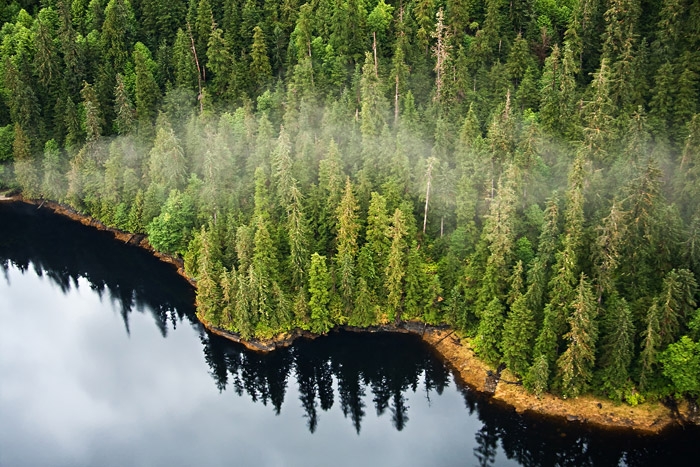
The Forest Service's direction to produce a plan that is “ecologically, environmentally, and economically sustainable” is a significant challenge, as managers reckon with a forest that is huge, but also fragile.
The Forest Service’s direction to produce a plan that is “ecologically, environmentally, and economically sustainable” is a significant challenge, as managers reckon with a forest that is huge, but also fragile. (Photo courtesy USDA)

The Forest Service is planning to shift its focus from old-growth to young-growth timber harvests in the Tongass National Forest.

The transition to young growth got its start early in the Obama administration, and there could be at least three more presidents before it becomes a full reality.

The public comment period on proposed amendments to the Tongass Land Management Plan is open now through Feb. 22. Visit the Tongass Plan Amendment website for complete information on changes to the plan and how to comment. Most of the proposed changes are contained in an all-new Chapter 5.

The current version of the Tongass Land Management Plan has been around since 2008. It’s this telephone-book sized set of guidelines for managing all the resources on the Tongass National Forest: timber, wildlife habitat, fisheries, archaeology — you name it.

Shortly after the inauguration of President Barack Obama in 2009, his new Secretary of Agriculture, Tom Vilsack, gave a major speech about how the Forest Service was going to take a more holistic approach to the nation’s forests. He wanted managers to think about the importance of forests in producing clean water, for instance, and for sequestering carbon.

Then in 2013, Secretary Vilsack issued a memo directing the Forest Service to begin this work on the Tongass — the nation’s largest forest — where the clear-cutting of large stands of centuries-old trees was still common practice. So, it was time to update the Tongass Forest plan.
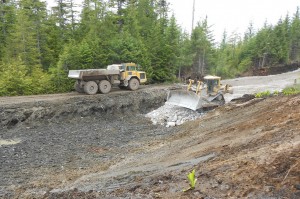
A logging road reconstructed to state highway on Prince of Wales Island, Tongass National Forest. Under the proposed plan, many areas of the Tongass will remain roadless. (USDA photo/Jack Oien)
A logging road reconstructed to a state highway on Prince of Wales Island. Under the proposed plan, many areas of the Tongass will remain roadless. (Photo by Jack Oien/USDA)

“Our scope is pretty narrow. Our scope is a transition away from old growth, to young growth, in a 15-year time frame.”

This is Susan Howle, the Forest Plan Amendment project manager, speaking at an open house in Sitka in January, one of several held around Southeast. Young growth refers to the new trees that have sprung up in old clearcuts. They’re nowhere near as large as their predecessors, but there are a lot of them.

Howle said that there had already been a significant amount of public comment on the plan over the past year-and-a-half, and that the transition to young-growth wasn’t the only issue.

“The transition to young growth, renewable energy, roadless areas, and finally wildlife habitat and a conservation strategy.”

The plan aims to create a Tongass National Forest that, in the words of Secretary Vilsack, is “ecologically, socially, and economically sustainable.”

Andrew Thoms, director of the Sitka Conservation Society, attended the open house. He thought the Forest Service was headed in the right direction.

“The proposed plan that the Forest Service put together has a lot of really good tools in it, especially for renewable energy and doing renewable energy projects like our Blue Lake hydroelectric project in Sitka, and for doing habitat restoration. And outlines, of course, what logging would look like that conserves high-priority ecological areas, salmon-producing areas, and tries to supply timber for a timber industry that can exist using this plan. I think that it will get adopted by this administration, and that it will survive into the next administration and be implemented, because it’s a good plan.”

The timber supply has always been the most politically-charged aspect of Tongass management. The attitude towards Tongass timber in the last century was that it was almost limitless, and endlessly-renewable. Managers now look at a far more complicated picture — one that portrays the Tongass as a vast-but-fragile ecosystem.

The proposed plan amendment would ramp up young-growth harvests and dramatically scale back the cutting of old-growth timber — but not eliminate it entirely. The proposed old-growth harvest level is 5-million board feet a year.

Sitka District Ranger Perry Edwards says these older trees serve an important niche.

“Some things like musical wood. You need to have those really old trees, really tightly-grained trees to make guitars and violins, and some of those things. But the intent here is that some of those things are going to be really the minority of what we’re going to be harvesting in the transition, versus right now where it is nearly all that we harvest.”

Groups like the Sitka Conservation Society consider this an acceptable trade-off — to transition the Tongass to young-growth, plus adopt a more holistic approach to managing the Tongass ecosystem — all for 5-million board feet of old growth a year. Historically, Tongass harvests were measured in the hundreds of millions of board feet.

Again, Andrew Thoms.

“It’s a big forest. There’s a lot of forest out there, but you can run out of wood. We’ve seen that from the legacy of pulp mill days. And it’s incumbent on the Forest Service to figure out how you set aside enough so those small, niche industries who do high-value products like that, have enough and can be sustainable.”

And then there are plan dissenters. Organizations who want to put an end altogether to old-growth harvests.

I spoke with Larry Edwards, a forest campaigner for Greenpeace.

KCAW – I had a feeling the 5-million board feet was going to pose a problem for Greenpeace.
Edwards – It poses a problem for a lot of people, especially if you wind that out for the next 200 years as they’re planning. It just doesn’t cut it.

Edwards thinks this exclusion has undermined the plan.Greenpeace wants the Forest Service to consider other alternatives that don’t include old growth. And they’re not alone. Unlike Andrew Thoms of the Sitka Conservation Society, neither Greenpeace or the Sierra Club held seats on the Tongass Advisory Committee — a stakeholder group of conservation organizations and timber interests which was brought together to help shape the proposed plan.

“They got the committee they wanted, and it’s all aimed pretty much at getting the plan that they want, and basically shutting out public input and what would have been a real collaborative process if you had all the interest groups and a full range of perspectives represented there.”

The price, Edwards believes, will be litigation, if the Forest Service adopts the plan amendment as proposed.

And while that’s a potential legal hurdle for the plan, there’s also a political hurdle: Sen. Lisa Murkowski now chairs the senate committee on Energy and Natural Resources, which has oversight of the Forest Service. The Ketchikan-raised senator has not weighed in yet on the new plan, but she’s on record as pro-timber.

I asked Tongass supervisor Earl Stewart if he felt his forest was developing a plan that was headed for trouble in Congress. Although he’s only been on the job for nine months, Stewart prefers to think practically, and hopes to put the plan to work.

“It’s really about taking this action and then figuring out how you would take it down from a strategic forest plan level to on-the-ground application.”

The Forest Service is taking comment on the proposed forest plan amendment through February 22, but there’s a catch: Comments must be substantive. Input like “We want more logging!” or “Save the Tongass!” will be discarded. The upside, though, is that any individual or organization that offers a well-researched and well-reasoned comment on the plan will have the right to formally object to the final decision in June, and the right — under the National Environmental Policy Act — to take the government to court.
Is ANSEP good for Mt. Edgecumbe? Students aren’t so sure

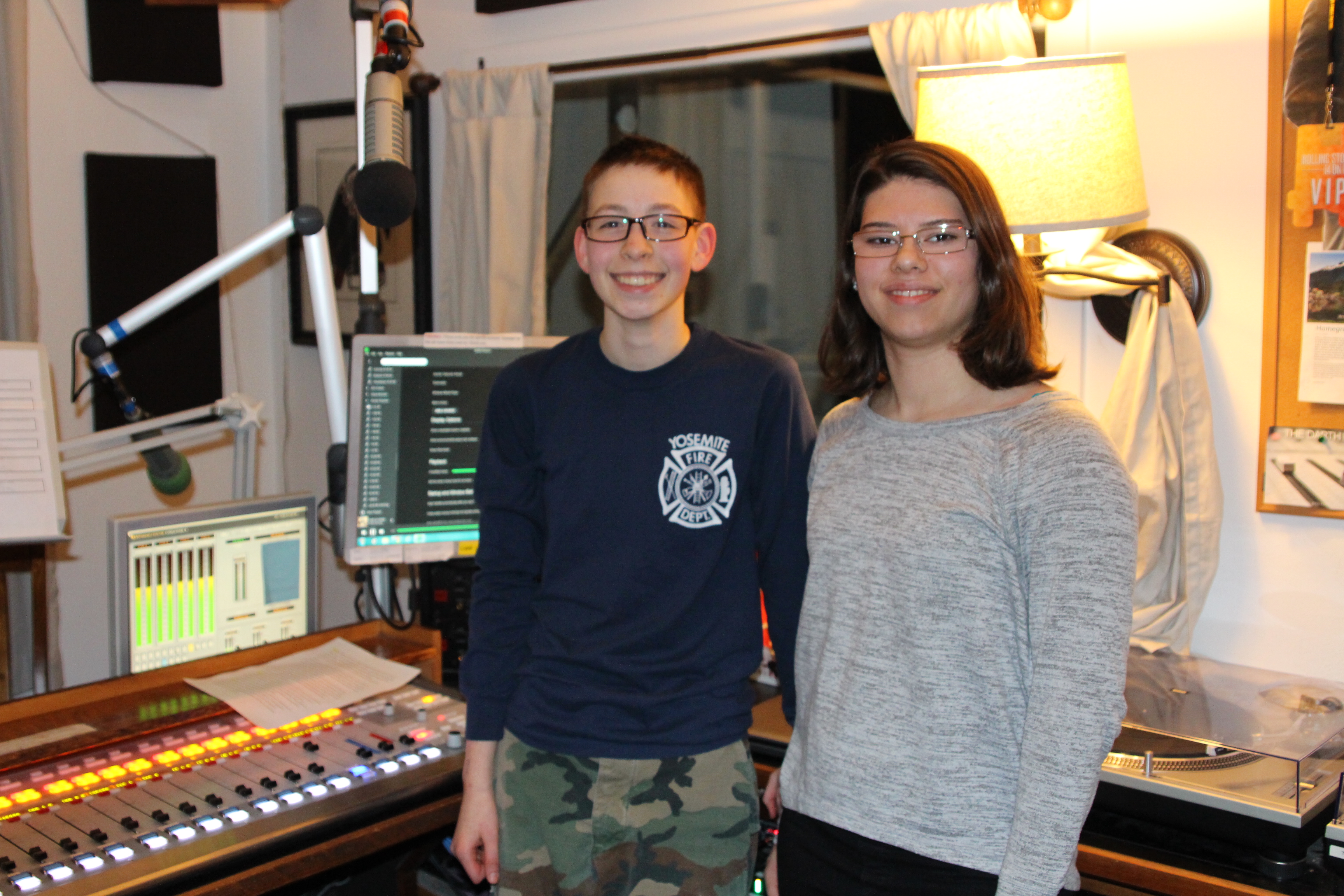
Erica Willis and Xochitl Martinez at Mt. Edgecumbe
Erica Willis and Xochitl Martinez have spoken critically about ANSEP’s proposal to turn Mt. Edgecumbe into an accelerated high school. (Photo by Emily Kwong/KCAW)

The past three weeks have been turbulent at Mt. Edgecumbe High School in Sitka. The Alaska Native Science and Engineering Program, or ANSEP, has proposed turning the 70-year-old boarding school into an accelerated high school, with an emphasis on science and engineering.

It all began when ANSEP founder Herb Schroeder presented his idea to lawmakers in January, as a draft piece of legislation.

Now, Edgecumbe students and teachers are asking questions about ANSEP’s motivations and whether the plan would even work.

Erica Willis and Xochitl Martinez are in Mt. Edgecumbe’s radio club. They broadcast every other week.

“The past week or two have left our school in a bit of a tizzy due to a situation that’s come up,” Martinez said during a broadcast.

For anyone listening to their program, you can tell these two students are not pleased.

“Though our school and ANSEP have had good relations and a strong partnership in the past, this was brought before the legislature without consulting any of the people who actually run Edgecumbe,” Willis said in the broadcast.

Nor did ANSEP secure the approval of the state Department of Education and Early Development, the Board of Regents or the University of Alaska, who would absorb any retained Edgecumbe staff should the plan roll through.

Martinez said she is confused as to why Schroeder, ANSEP’s founder, wanted to take over instead of collaborate.

“Why didn’t he come talk to Edgecumbe about inputting more STEM classes or integrating a program that would fast-track kids through three years, but at the same time they would keep the old program?” she asked. “I don’t see why that couldn’t work and why he would just go straight to legislature. I mean, dude.”

Historically, the institutions have been friendly, if casual, partners. ANSEP has trained Edgecumbe teachers. Edgecumbe kids have flown up to Anchorage taken part in ANSEP’s summer programs.

Martinez said one of her friends still has a desktop computer ANSEP gave her. The Gustavus-born senior was living in Oregon when she decided to apply to Edgecumbe. And she added, that while an ANSEP boarding school sounds appealing, it would not have been a good match for her.

“I don’t have the scores for something that would be fast-tracked. I’m not good at classes that are going to be sped up or anything,” Martinez explained. “So, I’d be concerned about my own education and probably would have stayed in Oregon.”

In a press release issued Jan. 30, ANSEP stated that students at its school would earn dozens of credits towards a bachelor’s of engineering, science, psychology or education and graduate college in three years.

For Willis, also a senior, her big bone to pick is that ANSEP feeds the University of Alaska only.

“I have applied to UAF, just in case, but it’s not my first choice,” she said. “I’d rather go to school out of state.”

Willis is from Central, a tiny community near Fairbanks. She considers ANSEP a fantastic program for rural Alaskans like herself. But she was adamant that if ANSEP wants to fix education in the state, they’re better off leaving Edgecumbe alone and putting their energies towards other problems.

“There’s other proposals going through legislature to raise the number of minimum students to keep a school open. In the next few years, there’s a really good possibility that there’s going to be schools closing. So there’s going to be that many more kids without schools to attend,” Willis said. “And if they don’t have as many options for other places to go … I can’t predict the future, but that doesn’t seem like a great combination of factors.”

Teacher Dionne Brady-Howard worries about this too.

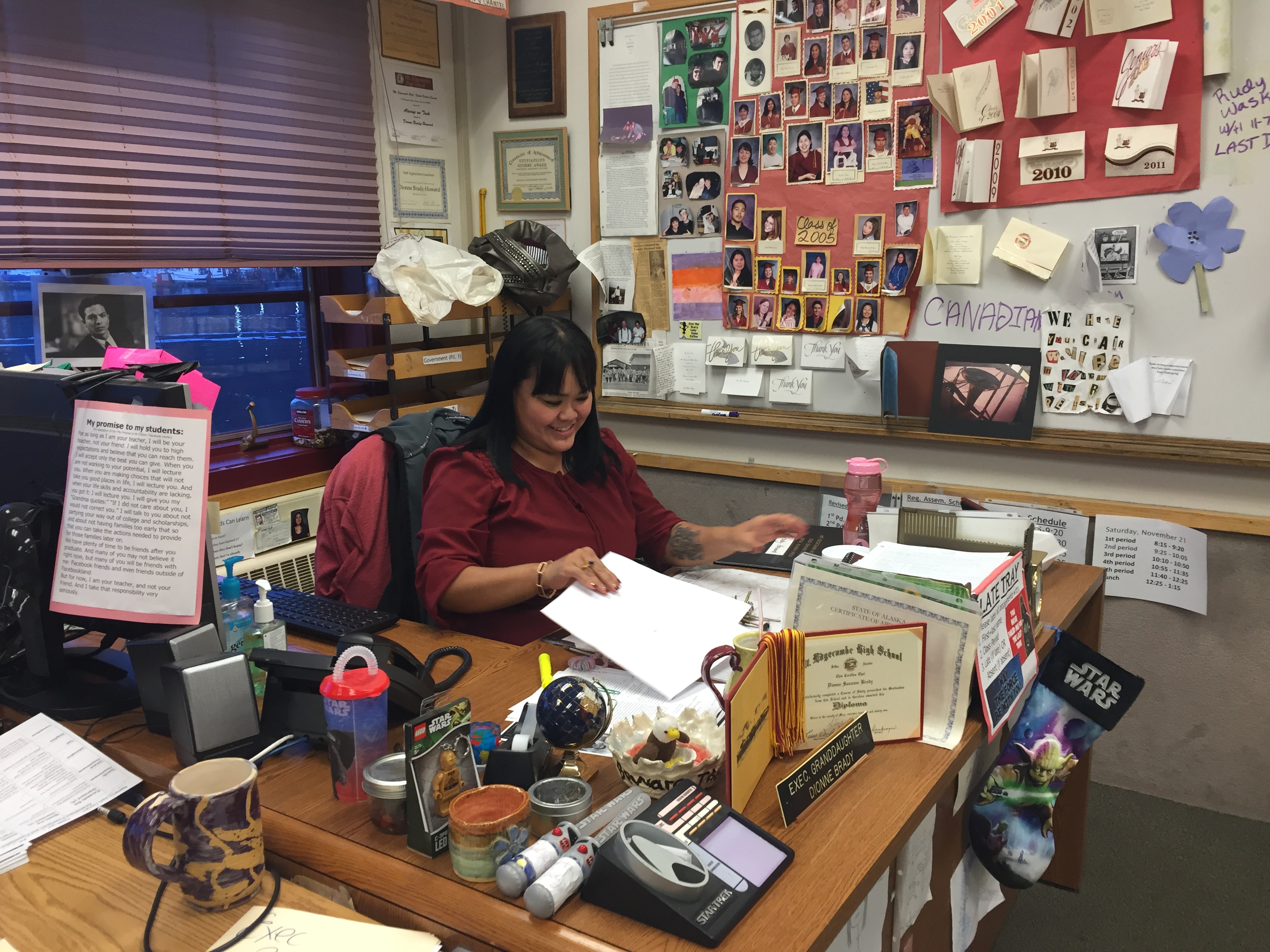
Dionne Brady-Howard at Mt. Edgecumbe
Teacher Dionne Brady-Howard. (Photo by Emily Kwong/KCAW)

“The fact is that, in going from a four year to a three year program with narrower focus, things will be lost,” she said.

If Edgecumbe had a school spirit parade, Brady-Howard would be marching in front with a cardinal and gold baton. She graduated in 1991, has taught social studies since 2000, and sent both her daughters through the school.

And Brady-Howard is worried that young Alaskans wouldn’t be ready to sign on to the kind of school ANSEP has in mind by the eighth grade. In their press release, ANSEP claims it will have its graduates career ready by age 20.

“There are so many of us who go out in the world and can barely declare a major by the time we’re 20, let alone know that we’re already certified as an engineer or a scientist and be work ready,” Brady-Howard said. “To expect 13-year-olds applying to the ANSEP Mt. Edgecumbe accelerated high school that they’re proposing is a bit daunting.”

Months away from graduation, Willis also has the next generation on her mind.

Willis said she’s a little heartbroken over the idea of Mt. Edgecumbe closing.

“It just feels like everybody, as well as Alaska, would kind of be losing something. It’s 70 years of tradition here. And it’s not just the history, it’s the future. OK, I know kids in seventh and eighth grade who want to come here and there are kids in freshman and sophomore year who want to graduate from here. If that were to go away, it  just seems like it would be tragic.

Though very little is on paper, Martinez said that ANSEP has come to represent a bogeyman for Edgecumbe students. And a punchline.

“Something breaks, we’ll say, ‘Oh it’s ANSEP’s fault.’ Something happens, ‘Oh it’s ANSEP. This is totally a conspiracy by ANSEP.’ A bunch of running jokes,” Martinez said. “I think that’s how Edgecumbe deals with things. Bad humor for sure.”

Bad humor maybe, and a lot of Edgecumbe pride for sure.

How a deer can cause a plane crash

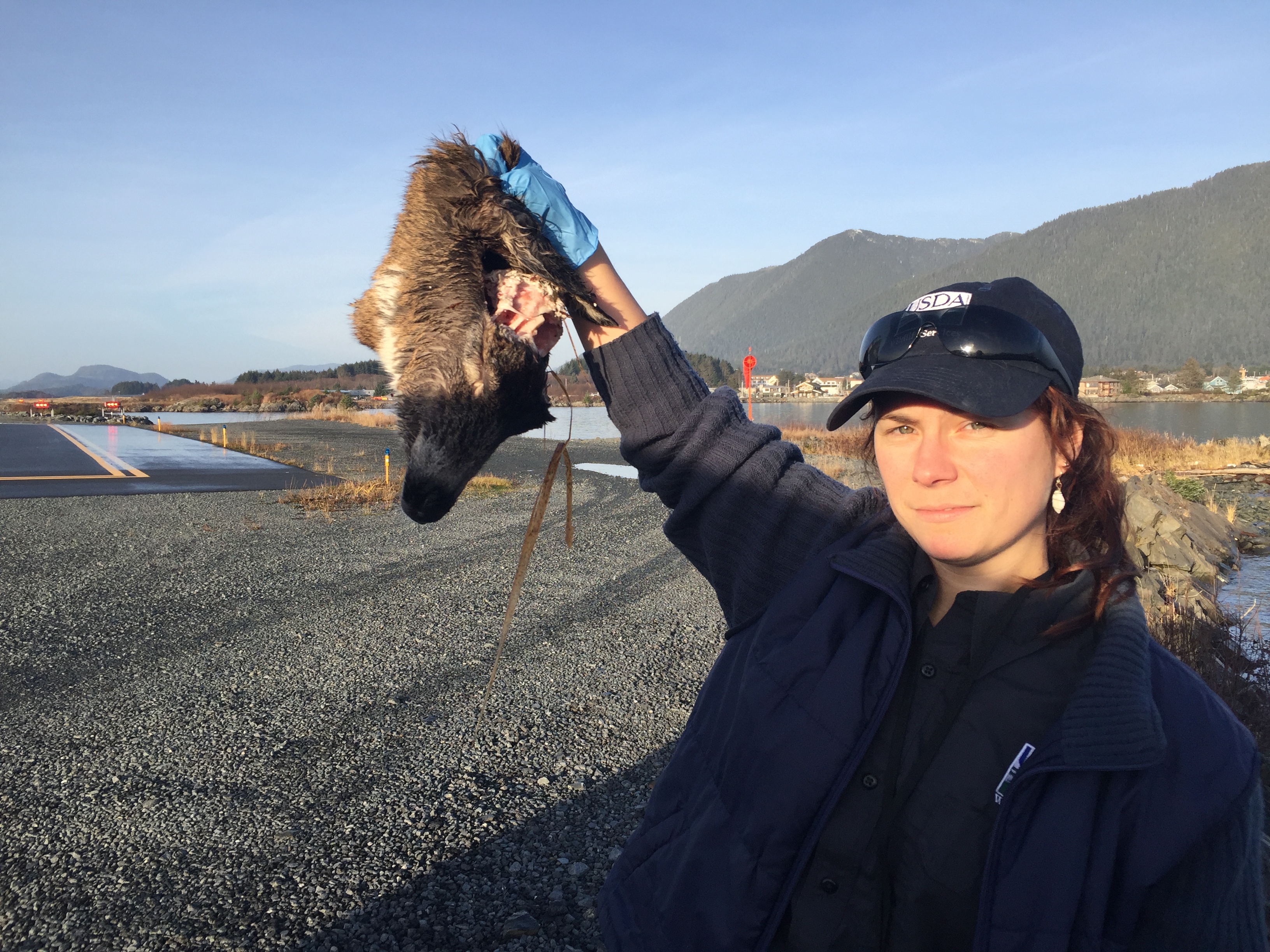
Heather Bauscher is a wildlife specialist for the USDA. Her job is the clear the runway of airborne creatures. But lately, her bigger problem is deer. (Photo by Emily Kwong/KCAW photo)
Heather Bauscher is a wildlife specialist for the USDA. Her job is the clear the runway of airborne creatures. But lately, her bigger problem is deer. (Photo by Emily Kwong/KCAW)

Throughout this year’s hunting season, Sitka’s airport has been contending with an unusual issue: dead deer. Carcasses have been washing up on the runway since November, attracting birds. And this is a big problem.

You know those contraptions where a hammer hits a ball which drops into a bucket which cracks an egg or something? Well, this story is set inside Sitka’s very own Rube Goldberg machine.

Heather Bauscher works for the U.S. Department of Agriculture as a wildlife specialist. Her job is to clear of the runway of wildlife that could interfere with air traffic. Mostly it’s creatures of the sky: eagles, seagulls, and ducks.

But lately, Bauscher’s biggest nemesis is deer.

“There’s a lot of steps between somebody pitching some animal remains overboard or leaving them on the beach and planes crashing,” Bauscher said. “But it can happen.”

Carcasses have been washing up on the runway ever since the subsistence hunting season opened on Nov. 1.

In her truck, Bauscher speeds down the exposed airport runway. It’s like a tarmac popsicle sticking out into the middle of the Pacific Ocean. Because of its design, carcasses tend to wash up on or near the runway every week. It’s like a buffet called for birds.

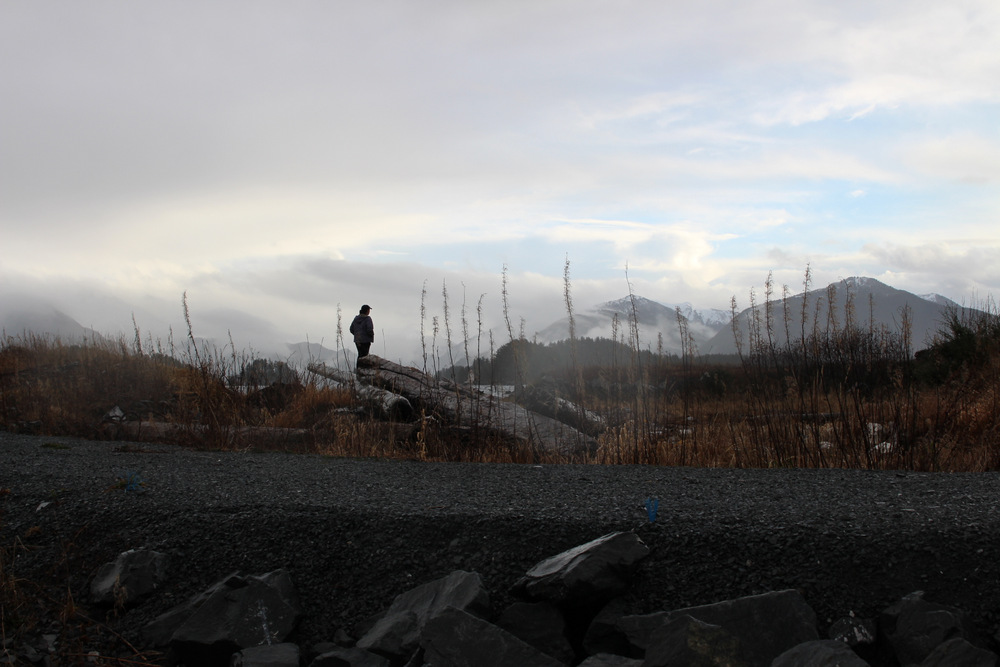
Sitka’s runway is encompassed by the Pacific Ocean. The tides bring in debris and some of that debris attracts birds, creating a natural buffet (Photo by Emily Kwong/KCAW photo)
Sitka’s runway is encompassed by the Pacific Ocean. The tides bring in debris and some of that debris attracts birds, creating a natural buffet. (Photo by Emily Kwong/KCAW)

“Some of these coves really act as a catch all. You’ll see all sorts of debris. I mean, look at the way the waves are crashing and the water is pushing things in,” Bauscher noted as she slowed her truck near a wind sock. She catches a glimpse of something in the rocks and scrambles down. Someone’s sneaker is floating in there.

“Yep, all kinds of debris,” Bauscher says.

It’s debris soup really. But with her keen eyes, Bauscher spies a white tuft of hair.

“See a little bit right there?”

A deer head.

Since November, Bauscher has been seeing one to three deer wash up on the runway every week. (Photo by Emily Kwong/KCAW photo)
Since November, Bauscher has been seeing one to three deer wash up on the runway every week. (Photo by Emily Kwong/KCAW)

She picks up a branch that had washed up nearby and pokes the deer head, eventually spearing it. She scales the rock wall triumphantly, and holds the deer head high in her gloved, blue hand. It smells like death.

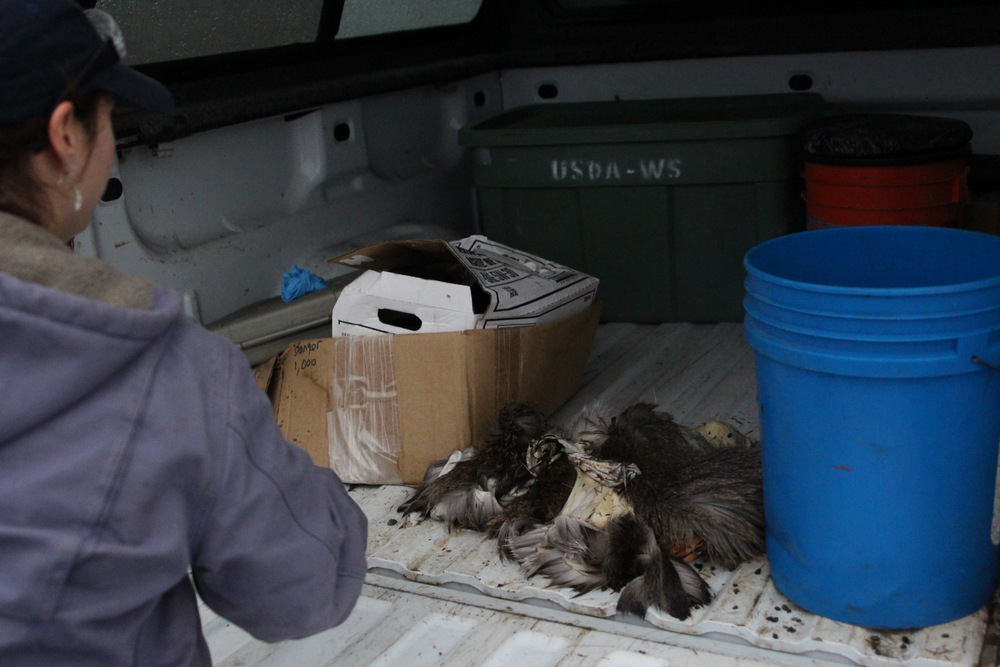
Bauscher chucks it into the back of her truck. One section is smeared with blood and animal parts. She has to wash it pretty often.

Bauscher loads a deer carcass, picked clean by birds, into the back of her truck. (Photo by Emily Kwong/KCAW photo)

Now think about it: all this collection work for one deer head that could theoretically attract a bird that could theoretically collide with a plane. Is it worth all the fuss?

Bauscher said that on a runway as exposed and wild as Sitka’s, it’s essential. This year alone, she’s counted 136 species of birds in the vicinity of Sitka’s runway.

“If a bird strikes a plane, chances are it could severely damage the turbine to the point of completely destroying that engine,” she said.

In 2010, an eagle flew straight into the engine of a Boeing 737 that was roaring down Sitka’s runway. No one was hurt – commercial planes have two engines – but at other airports across the country, wildlife strikes have downed planes and killed passengers before.

In 2009, pilots had to make an emergency landing in the Hudson River after birds knocked out both engines. Public pressure from that event motivated the Federal Aviation Administration to release data that year, which reported 60,000 bird strikes since 2000. Basically, it can happen to any plane with any bird. All it takes is some bad timing. And Bascher said the USDA doesn’t want to take the risk.

“Because we’re not going to have a ‘Miracle on the Hudson’ in Sitka,” she said. “I mean … look at it! There’s too many rocks. And how many times are you on a plane where you know the other people on that plane? Always. There’s always people you know on that plane and the way the flight runs from Seattle to Anchorage, if there was something horrible that happened because of a bird strike, there would be no way this whole community wasn’t impacted much less all of Southeast Alaska. And I think it would be a real shame for that to be because of some deer carcasses or fish carcasses or something that could have been preventable.”

Bauscher enjoys having the runway as her office space. “It’s pretty neat to be able to get to be out here. I feel pretty lucky to have this job,” she said. (Photo by Emily Kwong/KCAW photo)
Bauscher enjoys having the runway as her office space. “It’s pretty neat to be able to get to be out here. I feel pretty lucky to have this job,” she said. (Photo by Emily Kwong/KCAW)

Phil Mooney, the area management biologist with the Alaska Department of Fish & Game, urged those hunting to be more conscious of this very real connection between the sea and sky. And that means not dumping your carcasses on the side of the road.

“Don’t put it on the roadside. Don’t throw it in the water particularly. If you can put it in your garbage can, that’s great,” Mooney said.

And if pick-up isn’t for awhile or the carcass is getting stinky, Mooney recommends taking it to the Jarvis Street Transfer Station or the Alaska Raptor Center. Fortress of the Bear said it’s not accepting carcasses, but will begin again in the spring.

Mooney sympathizes with Sitkans who want to return the wildlife carcasses back to nature, but stresses that that kind of thinking is too risky in a city of 9,000 with over half a dozen daily flights. “People think, ‘OK, this one deer carcass isn’t going to hurt anything, or these two deer carcasses.’ But take that times how many hunters we’ve got out here and a good deer year and it gets to be a problem,” Mooney said.

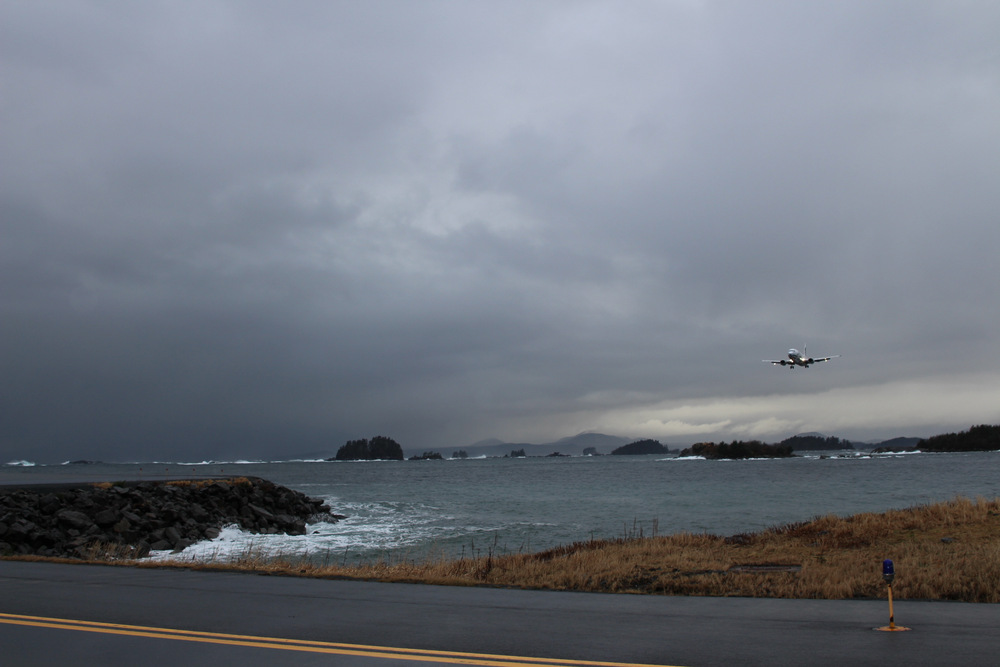
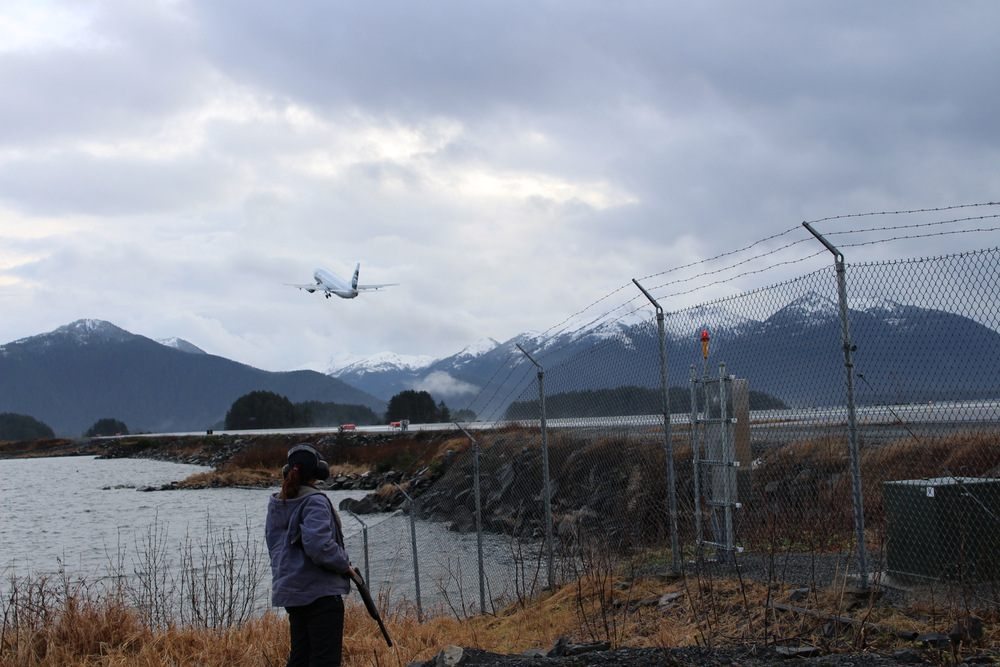
Between Delta and Alaska Airlines, over half a dozen flights come into and out of Sitka daily. After clearing the runway of some ducks, Bauscher looks on as a plane takes off. (Photo by Emily Kwong/KCAW photo)
Between Delta and Alaska Airlines, over half a dozen flights come in and out of Sitka daily. After clearing the runway of some ducks, Bauscher looks on as a plane takes off. (Photo by Emily Kwong/KCAW)

Back on the runway, Bauscher has just enough time to scatter a group of ducks. She shoots pyrotechnics out of a gun. One called a silver comet explodes in the air. It’s blue with sparkles.

She notifies traffic control the runway is clear. Her eyes follow the noon plane’s takeoff. She says her superpower of choice would be to talk to animals and tell them not to hang out on the runway, as beautiful as it may be. Bauscher clearly loves her job.

Drunk driver plows into Sitka post office

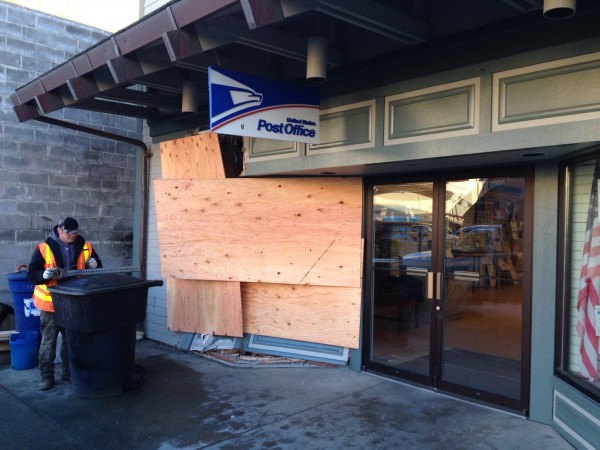
In addition to crushing the storefront, the SUV hit a parked car, a street sign, and ran over the mailbox. (Photo by Robert Woolsey/KCAW)

Police are investigating a woman for drunken driving after she crashed her SUV into the Sitka’s downtown postal substation Tuesday night.

Sitka Police Lt. Lance Ewers says that the woman was leaving the Moose Lodge a little after 9 p.m. in an SUV, when the vehicle crossed the street, jumped the curb, and ran head-on into the post office.

“She ran smack-dab into it, and somehow managed to hit another parked vehicle, and a sign,” Ewers said. “And also, in trying to leave the area, ran over the outside mailbox. Just all kinds of things. So thankfully — thankfully — no one was hurt.”

Substation manager Ed Conway says the damage will not interfere with postal operations. (Photo by Robert Woolsey/KCAW)

The driver, however, reportedly sustained injuries and was transported to Sitka Community Hospital for treatment. Ewers says police executed a search warrant to obtain a sample of her blood. It will be sent to the state crime lab. He calls the case “very solvable.”

“The facts that were developed at the scene of the crime are leading us in the direction that she was under the influence of alcohol,” he said.

There is no cost estimate for the incident. Ewers says the woman’s Isuzu sustained major front-end damage.

Contractors were already busy at the post office Wednesday morning, where the left side of the storefront had been crushed. Substation manager Ed Conway says it likely would be very expensive to replace the custom windows, but he does not yet have a figure. He adds that the damage would not affect post office operations and that it would be business-as-usual until repairs were complete.

Audio postcard: Star Wars fans dress up, sell out premiere in Sitka

Star Wars The Force Awakens poster
(Image courtesy StarWars.com)

A line snaked out the door at Sitka’s Coliseum Theatre on Thursday night, as people anxiously waited to see “Star Wars: The Force Awakens,” the latest in the famous science fiction series.

There were costumes and lots of excitement for the sold out 7:30 p.m. show — a half hour before the film premiered on the east coast. KCAW’s Brielle Schaeffer was there and sent this postcard.

Ballot initiative seeks to streamline PFD, voter registration process

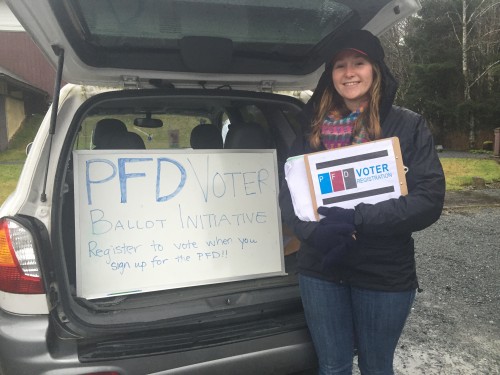
Zoe Kitchel canvassing for the PFD voter ballot initiative. (Photo by Emily Kwong/KCAW)

The push to get Alaska residents registered to vote at the same time they sign up for their Permanent Fund dividends started in Anchorage this fall, but Sitka has become an important part of the equation.

Sophie Nethercut hit the streets one day earlier this month to gather signatures for the PFD voter ballot initiative.

“Are you registered to vote? Have you signed the PFD voter initiative?” she asks passersby. She’s canvassing for the 700 autographs needed from Sitka in order to win the idea a spot on a ballot in 2016. So far, they have 400.

“It would make it possible so that when people register for their PFD online but if they’re not registered to vote it would link the two systems so they could be registered to vote,” Nethercut said.

To get something on the ballot is a lengthy process. Petitioners must submit signatures from a 10 percent of voters from three-quarters of the house districts in the state and within those house districts, 7 percent of the last election’s voters. Sitka is one of the districts the Anchorage-based campaign is relying on. Statewide, the campaign is shooting for some 40,000 signatures, to give a reasonable margin in case some are invalid.

Zoe Kitchel is Sitka’s field organizer for the campaign. She says states across the country have been making it harder for people to vote by eliminating early voting opportunities and requiring government-issued ID. She says this ballot initiative would help guard against that and streamline the process.

“The two goals are first to reduce the amount of paperwork and bureaucracy we deal with on a day to day basis,” she said. “And also to make it a lot easier for a lot of people to make it easier for them to get to the polls and to be able to vote at the polls.”

The PFD voter initiative is modeled after a similar one in Oregon, Kitchel says. In 2014, voters there proposed and passed the “motor-voter” law, which automatically registered people to vote when they renew or apply for a driver license or state ID at the DMV.

“Eighty-five percent of Alaskans actually register for the PFD online and that is a much larger portion of the population than apply for driver’s licenses every year so we would be catching so many more people than we would if we set it up exactly like Oregon,” Kitchel said.

This year, more than half a million Alaskans received PFD checks. The Division of Elections estimates that some 70,000 more people will be registered if this initiative is passed. Here’s Nethercut:

“This ballot initiative would be a no-brainer, I think,” Nethercut said. “So far no one has refused to sign.”

While Kitchel and Nethercut have met little opposition in Sitka, there have been some naysayers. Kitchel says some people think that if others didn’t bother to register they shouldn’t vote.

“Our goal is for more people to vote but all this is doing is registering people and people will still need to make that decision to actually go out to the polls,” she said.

Others are fearful of giving too much information to the government. But, Kitchel says, Alaska’s online PFD registration system has some of the strictest security – and residents are already volunteering their personal information for their PFD checks anyway.

“It is interesting to think that people are so willing and so excited to get free money from the government but I’d like to think if you are benefiting from that then you’d also like to be a part of the process of deciding what that government does and being a part of the decision-making on a larger scale,” Kitchel said.

The campaign is making a final push in Sitka over the next couple weeks with hopes of submitting its signatures to headquarters in Anchorage by the end of the month. In the meantime, Nethercut will connect with voters wherever she can — on downtown streets, or by the front door of SeaMart. . There’s also a petition at Old Harbor Books.

“You’re persistent,” a passerby said to Nethercut.

“Thank you,” she replied. “Have a nice day.”

The initiative also includes an opt-out provision for people to easily deregister themselves within a month of signing up for the PFD. If it makes it on the ballot, voters should see it in an election next year.

Site notifications
Update notification options
Subscribe to notifications