KDLG - Dillingham

KDLG is our partner station in Dillingham. KTOO collaborates with partners across the state to cover important news and to share stories with our audiences.
Alaska cities and school districts scramble to close budget gaps after state cuts bond debt payments

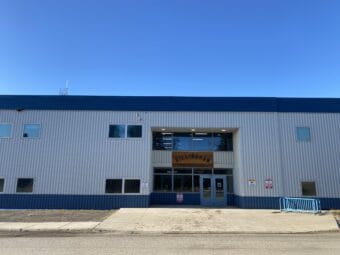
Dillingham City School District Middle/High School building.
Dillingham City School District Middle/High School building. (Margaret Sutherland/KDLG)

The City of Dillingham and the Lake and Peninsula Borough government are two of 17 Alaska municipalities and school districts that are trying to close budget shortfalls after the state cut its payments for school construction and renovation projects by roughly 25-30% this year.

The payments are part of the state’s School Bond Debt Reimbursement Program, which started in the 1970s. Local governments borrowed money to pay for new or improved school facilities, and the state committed to help repay the debt over time.

The proposed reduction to the bond reimbursement program originated in the Senate Finance Committee last session. Bristol Bay Representative and House Speaker Bryce Edgmon says the Legislature had to cut costs for several projects to balance the budget and avoid dipping into the state’s savings account, the Constitutional Budget Reserve.

The cost for the state to fully fund projects under the program would have been roughly $47 million a year. The reduction cut roughly $12 million of that.

“When you start looking at the finances of a small, first-class community like the city of Dillingham, that reduction is quite meaningful to their bottom line,” Edgmon said. “I would also point out it signifies how tight the budget really is getting down in Juneau, with costs increasing at every turn.”

‘A huge chunk of money’ from Dillingham’s budget

In 2015, the Alaska Legislature paused funding of new projects for 10 years, a moratorium that expired on July 1. But the state kept paying for pre-moratorium debt, like for a $15 million bond Dillingham voters approved in 2008 to pay for repairs to Dillingham school facilities.

“The state said, ‘Listen, we’ll help support you, you go out and get the bond. We are going to reimburse you for 70% of that bond,'” said Anita Fuller, finance director for the City of Dillingham.

Fuller said that in normal years, the city paid the remaining 30%, primarily with local tax revenue. But this year, the state cut its help with the debt by $231,000, roughly 30% of its commitment to Dillingham’s schools.

“That’s a huge chunk of money because that’s $231,000 that we just lost,” Fuller said. “Somebody’s paying that school bond. If the state’s not, then that means we are.”

All 17 districts and municipalities in the program face the same roughly 30% cut. In the Lake and Peninsula Borough, district officials say that amounts to a roughly $250,000 cut — about 8.5% of the borough’s total education budget for the year.

Lake and Peninsula Borough officials say they will have to shift money from other commitments or drain their reserves to close the gap.

Meanwhile, Dillingham’s city council introduced a revised budget at a special meeting earlier this month to make up for the lost funding.

Various departments are facing cuts, though Fuller says they can’t all be attributed to the loss in bond reimbursement because there were other budget changes to account for.

But she says the cut pulls from the finite amount of money available for all departments.

“All of that money comes from our general fund,” Fuller said. “So money that was going in there to help us with the library or the senior center or the school, all that comes from our general fund.”

Other changes to the budget include a $200,000 increase to the estimated FY26 income tax revenue and a $111,000 annual lease-to-own payment for a new grader.

Fuller said the librarian and senior center director positions were consolidated into one position, and the two full-time staff members at the senior center have been reduced to part-time.

After the moratorium, questions about the program remain

This isn’t the first time lawmakers have shorted the reimbursement program. In 2019, the governor cut the program and left districts to shoulder the majority of the debt payment from 2020 through 2022. Then, in 2023, they back-paid districts and municipalities for those three years.

Edgmon says that it is possible that will happen with this reduction as well. He says funding next year and possible retroactive payments depend on state revenue, especially the price of oil. Alaska’s oil prices are currently lower than what lawmakers budgeted for.

“That makes me a little nervous in terms of what our budget situation is going to look like next year,” said Edgmon. “My hope is next year we can come back and fully fund the bond debt reimbursement program and really maintain our commitment to municipalities and school districts.”

The reduction in funding coincides with the expiration of the 10-year moratorium on the program. Organizations have been calling for the state to lift the moratorium and reopen the bond debt reimbursement program for years.

“There’s this pent-up need for money to build school infrastructure or repair school infrastructure that hasn’t been addressed since the moratorium,” said Carole Triem, government affairs manager for the Alaska Municipal League.

On the other hand, Triem said the fluctuation in state funding makes the program risky for communities.

“It’s hard for them to say, ‘I feel confident that if we go out and bond for a new school building or fixing a school building, that the state will honor its obligation to repay that debt,'” she said.

But Triem said the need may be great enough for districts to take that risk.

Trump’s EPA reaffirms Biden-era Pebble Mine veto

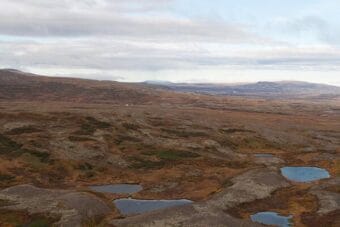
The proposed site of the Pebble Mine.
The proposed site of the Pebble Mine. (Jason Sear/KDLG)

The Environmental Protection Agency is sticking with its veto of the proposed Pebble Mine project in southwest Alaska.
Northern Dynasty, the parent company behind the Pebble project, is still suing to get the veto overturned. A document filed in that lawsuit early this month said the company and the EPA were in settlement talks, and that the Trump administration said it was open to reconsidering the Biden-era veto on the controversial mining project.

But on July 17, attorneys in the case filed another document to update the judge. It says that negotiations between the company and the EPA did not reach a resolution, and that the Trump administration will continue to back the veto.

The proposed site for the copper and gold mine is upriver from Bristol Bay, home to the world’s largest sockeye salmon fishery. The mining project is unpopular in the region, where many people believe the open-pit mine would put the salmon run at risk.

Karla Jensen is an environmental specialist from Pedro Bay. Her village is close to the proposed mining site. She says that after the veto of the project in 2023, many of the mine’s opponents felt relieved but remained wary.

“It reminded me of a cancer,” Jensen said. “Some people were like, ‘We don’t have to worry about that… I don’t have cancer anymore.’ But you always have that nagging in the back of your mind that it can always come back.”

The Pebble Limited Partnership is now asking the court to rule on whether the veto is lawful.

How is climate change impacting life in rural Alaska? Researchers are looking for answers.

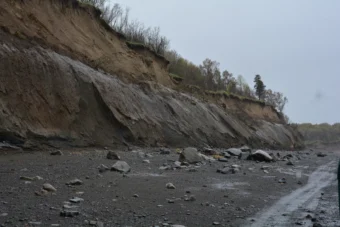
An eroding bluff in Dillingham. (Erika Gavenus)

Researchers have been spreading across rural Alaska to conduct a long-term study on the regional effects of climate change, collecting evidence in parts of Bristol Bay.

The Polaris Project is a research initiative led by scientists from universities across the country, funded by the National Science Foundation. It’s in its fifth and final year of studying how climate change is impacting social well-being, subsistence lifestyles, and community infrastructure in Arctic communities.

“We know that the Arctic is one of the regions that has been studied the least,” said Dr. Guangqing Chi, professor of rural sociology, demography, and health sciences at Penn State, and lead researcher on the Polaris Project.

Chi’s team has been conducting research in Dillingham, Port Heiden, Kotzebue, and Chevak, focusing on three key areas: food, migration and erosion.

According to the National Climate Assessment, Alaska is warming at a rate twice the global average, leading to changes in habitat, receding sea ice, and thawing permafrost.

The assessment indicates that as permafrost thaws and sea ice retreats, coastal bluffs become increasingly vulnerable to erosion.

In Dillingham, Polaris Project researchers established erosion monitoring sites at community-selected locations throughout the city.

They found that in certain areas, the shoreline is eroding at a rate of 5.21 meters per year. In other areas, that number is 10.69 meters per year.

A map of coastal erosion in Dillingham. (Michael Letzring/The Polaris Project)

“We also heard that the cave in the hospital area has been falling off, kind of becoming dangerous,” Chi said.

Erica Gavenus is a postdoctoral scholar at Penn State and a researcher on the project. She says the data can help the community prepare for potential futures.

“There’s been work on the assessment of the rate of erosion and then projecting out how long it will be before it reaches certain points,” Gavenus said. “They’ve learned some of those findings, and have shared those back with the city of Dillingham to help with planning in those ways.”

Coastal erosion is already creating a need for community migration and mobility across Alaska.

For example, in Newtok, a Yup’ik village on the Ninglick River, coastal erosion has forced the entire community to relocate – a project that’s still underway.

But, Gavenus says moving is not always an option. In other cases, it may be a tough decision.

“I think one of the things that was coming out in some of the research is that, especially in rural Alaska, there’s a lot of reasons why people are very committed to staying,” Gavenus said. “Whether that’s staying in their physical location or staying with that family and broader community and the social networks they have.”

The researchers are also examining the impact of climate change on food security.

In partnership with the Alaska Department of Fish and Game, the Polaris Project conducted a subsistence study in 2021, finding that 97% of households in Dillingham utilized subsistence resources, either by harvesting them themselves or through community sharing.

Gavenus says they observed consistency in the resources being harvested, but the composition has changed, and the amount has decreased by roughly 18 percent over the last four decades.

The study found that harvesting certain wild resources, such as Chinook salmon and large land mammals, is becoming more challenging than in the past.

They also found that food security is higher in Dillingham than in both Alaska and the U.S. as a whole.

A 2021 comparison of food-security assessments from Dillingham, Alaska and the U.S. overall. (Graph courtesy of Alaska Department of Fish and Game- Division of Subsistence)

Chi says subsistence practices have an impact on migration.

He says a lack of access to food resources can force people to leave their communities, but food can also drive people back.

“There’s also the food and the culture driving people back,” Chi said. “You know, not necessarily just the food as food, but it’s the culture. You get together with your family, with your friends. So it’s really two directions for that.”

The Polaris Project will conclude on Aug. 31, with final reports available to the public on their website. But the researchers say their work in the study regions will continue, helping communities adapt as the Arctic continues to change.

5.1 magnitude quake shakes Southwest Alaska

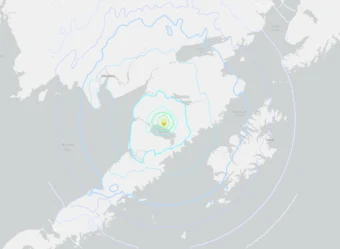
A 5.1 earthquake that struck near Egegik on March 31, 2025 could be felt 190 miles away from its epicenter. (USGS Interactive Map)

A magnitude 5.1 earthquake, Southwest Alaska’s largest temblor in years, shook much of the region on Monday night.

The quake, which struck at about 8 p.m. Monday, was centered about 37 miles east of Egegik. Its shake could be felt up to roughly 190 miles away, according to experts.

Elisabeth Nadin is a geologist and communications manager at the Alaska Earthquake Center.

“The earthquake itself was unusual because of how big it was,” Nadin said. “There hasn’t been an earthquake that big in that area in over a decade.”

The quake occurred at a shallow depth of about seven miles and struck near a fault line. Nadin says it was located between two active volcanic centers but was not directly tied to either. She says the location, depth, and intensity suggest the earthquake was likely caused by normal movement at the fault.

But John Power, a geophysicist with the Alaska Volcano Observatory, says the observatory is still monitoring the region for any volcanic activity.

“It could simply be that this is the normal shifting of the crust of the earth in response to plate tectonics or it could be more associated with volcanic activity,” Power said. “Only time will tell as we get additional data and are able to do additional analysis.”

The region has several volcanic structures and a history of eruptions, including the 1977 eruption of Ukinrek Maars volcano. But Power says most past earthquakes in the area haven’t led to eruptions.

“Naturally we are watching the area now quite closely over the next coming weeks just to see if any additional activity may occur,” Power said. “But right now there is no official warning or cause for additional concern at this time.”

Two aftershocks followed the earthquake with magnitudes of 3.8 and 3.3. Powers says aftershocks are typical for an earthquake of this size.

Powers says individuals reported feeling the shake in Dillingham, Port Heiden, Naknek, and King Salmon.

More information on earthquakes and earthquake preparedness can be found on the Alaska Earthquake Center Website.

Alaska seafood processors to pay $2.1M in wage lawsuit settlement

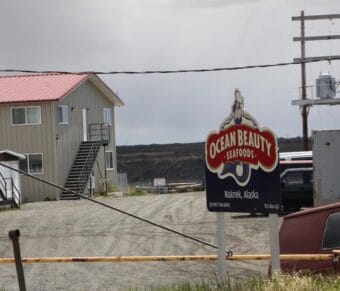
An Ocean Beauty Seafoods sign in Naknek. (File/KDLG)

Two major Alaskan seafood processors have agreed to settle a class-action lawsuit alleging wage violations during the COVID-19 pandemic.

OBI Seafoods and Ocean Beauty Seafoods were ordered to pay a total of $2.1 million as part of a settlement approved last week by Judge Marsha J. Pechman in the U.S. District Court for the Western District of Washington.

The case, brought by former employees Marija and Dusan Paunovic on behalf of processing facility workers, accused the companies of delaying wage payments and underpaying workers during mandatory quarantine periods.

OBI has 10 facilities in the state and was formed in 2020 through a merger between Ocean Beauty and former Alaskan processor Icicle Seafoods. Ocean Beauty currently owns a stake in the company as part of the new ownership group.

In email correspondence with KDLG, OBI’s chief executive officer John Hanrahan said that all workers at the company’s processing facility in Naknek were paid a daily stipend during the quarantine period, and were provided with free housing, meals, and laundry services.

“OBI Seafoods values its employees, pays competitive wages, and complies with all federal, state, and local wage laws and regulations,” Hanrahan said.

The plaintiffs, however, contended that the stipend was insufficient for extended quarantine periods. They argued the companies failed to adequately compensate employees for time spent in isolation as required by Alaska’s Wage and Hour Act and the federal Fair Labor Standards Act.

As part of the settlement, each of the more than 2,300 class members will receive $536, with some payouts exceeding $3,100, after deductions for legal fees and administrative costs.

The agreement also includes $630,000 in attorney fees, $100,000 for litigation costs, and $20,000 in service awards for the two lead plaintiffs. Administrative costs of up to $32,000 will be deducted from the settlement fund. The remainder will be distributed pro rata based on workers’ quarantine periods and delayed wages.

According to court documents, the settlement financially covers roughly three-quarters of the damages cited by the lawsuit’s class members. A court website contains more information about the settlement for class members, as well as options to opt out of it.

Silver Bay Seafoods acquires Peter Pan facilities in Dillingham, Port Moller

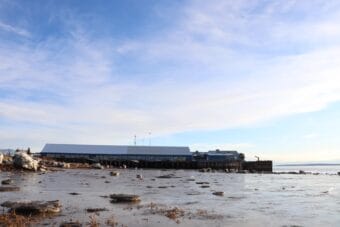
Peter Pan Seafoods’ processing plant in Dillingham in November 2024. (Margaret Sutherland/KDLG)

Silver Bay Seafoods will acquire processing plants in Dillingham and Port Moller, along with fishery support sites in Dillingham and North Naknek.

Silver Bay announced the acquisition from Rodger May, the former co-owner of Peter Pan Seafoods, in a press release Wednesday. The Dillingham and Port Moller plants are Silver Bay’s fourth and fifth plant acquisitions this year. It also took over Peter Pan’s plant in Valdez last spring, and Trident Seafoods plants in Ketchikan and False Pass.

Silver Bay said for the latest deal, both parties agreed to immediately transfer control of the facilities while the actual transfer of ownership is finalized. Silver Bay says this will “ensure a seamless transition for fisherman, communities, and employees.”

In past years, the former Peter Pan Seafoods processing facility in Dillingham employed roughly 320. Its affiliated fishing fleet included 180 drift fishing boats and 110 set netting boats. The Port Moller plant employed 140 people during its peak, and supported a fleet of 105 drift gill netters and 30 set netters.

Peter Pan’s assets went to auction after financial trouble earlier this year. May won these facilities, among others, at auction in September.

May narrowly outbid Silver Bay Seafoods in a bidding war over the facilities. Local fishermen and investors disputed the outcome, but a judge eventually upheld the results in early October.

The particulars of the deal aren’t public and little is known on what caused the reacquisition of Peter Pan’s assets following Rodger May’s successful bid. Reached by email Thursday morning, May said he wasn’t ready to comment yet. Silver Bay also declined to comment for this story.

But Cora Campbell, president and CEO of Silver Bay Seafoods, made a statement thanking May for “prioritizing certainty for fishermen and communities in making this transition.”

Silver Bay operated the facilities in Dillingham and Port Moller during the 2024 fishing season. Campbell said the season was successful, which lends itself to a smooth transition.

“By permanently adding these facilities into the Silver Bay Seafoods network, we not only stabilize processing in these communities, we also create synergies, efficiencies and product form diversity that benefit our fishermen,” said Campbell.

The fate of the former Peter Pan facility in King Cove, which has been closed since before the 2024 fishing season, is still uncertain. However, according to the press release, Silver Bay agreed to participate in a working group May established to address its future.

Site notifications
Update notification options
Subscribe to notifications