KFSK - Petersburg

KFSK is our partner station in Petersburg. KTOO collaborates with partners across the state to cover important news and to share stories with our audiences.
Lifting up Lingít at the Séet Ká Festival in Petersburg

The Clausen Museum in Petersburg is adding Lingít names to labels in its collection. (Photo courtesy of Cindi Lagoudakis)

In Petersburg there are often Norwegian and English words on signage, like at the airport and downtown storefronts. The current town site was established around 1900 by Norwegian immigrants looking for a good spot to process fish. But the Lingít culture goes back thousands of years before that.

Petersburg’s Indigenous name is Séet Ká Kwáan. It means people of the fast moving waters, referring to the Wrangell Narrows in front of town.

At the Séet Ká Festival in mid-February, X̱’unei Lance Twitchell led a group in pronouncing Séet Ká. He is an Associate Professor of Alaska Native Languages at the University of Alaska Southeast. He says using a language helps normalize it in a community.

“Do you see it when you walk around?” he asked the group. “Do you hear it when you walk around?”

He says adding Indigenous language to signs in public spaces can help.

“We can see it, and then once we see it, we’ve learned how to make the sounds, we’re going to be curious how to read those things,” he said.

The Clausen Museum in Petersburg is starting to include Lingít signage in its building and that’s something that Twitchell encourages. He says the Indigenous words can be in addition to other languages already present like English and Norwegian.

“Pushing back on these ideas that there’s only room for so many things. Because it was called Séet Ká long before it was called Petersburg,” Twitchell said. “And it doesn’t mean that it also can’t be Little Norway. It can also be ‘on the channel,’ right? And so these things they don’t have to compete against each other.”

Twitchell has been advocating for restoring place names in Southeast Alaska for years.

Thomas Bay is a popular place for boat outings from Petersburg. It’s Lingít name comes from the shape of the land and water there.

“Taalkuuáxk’u Shaa,” Twitchell said. “So, it’s an open-mouth basket cove.”

A Lingít word for the Wrangell Narrows is Gánti Yaakw Séedi, which means burning boat channel or steam boat channel.

Sometimes names on maps can be racist and offensive, like Seduction Point on the Chilkat Peninsula. The English name, which was officially removed in 2020, referenced a sexual assault of Indigenous women by British sailors. (The name was changed to Ayiklutu.)

“So, there’s a problem there that the Indigenous community has to live with these narratives,” Twitchell said. “And it also becomes an insult on top of a violence against people. So then we sort of want to make lists of those and say ‘get that off all the maps.'”

There are offensive place names closer to Petersburg that are being changed, but it isn’t a quick process. It often requires coordination between state and federal governments.

Twitchell says another step to normalizing a language is teaching people correct pronunciations for existing Lingít names like Yakatat, Kake, Klawock, Angoon, Skagway and Hoonah.

“I think there’s resistance at first,” Twitchell said. “You know, someone [might say] why do they want to change the name of Hoonah? It’s always been called Hoonah, it’s just people mispronounce it. That’s all we’re doing is fixing the mispronunciation.”

Another way of reclaiming the language is by simply using it. The more you use it, the easier it becomes. Twitchell says some people might not understand the motivation and that’s okay. It’s part of the process.

“Sometimes if a community doesn’t have a regular presence of Indigenous activity then people get nervous about it and I think they express [that] saying, ‘I don’t think I’m included in this,'” he said. “But really people are saying, ‘I don’t know what to do here. I’m not used to this being present.'”

Petersburg reports large COVID outbreak at borough’s assisted living facility

(Joe Viechnicki/KFSK)

The Petersburg borough is reporting a large COVID-19 outbreak among residents and staff at its assisted living facility.

As of Feb. 14 ,the outbreak at the borough’s Mountain View Manor assisted living wing involved one death and at least 10 people testing positive. The assisted living facility has 20 apartments.

The first case popped up on Feb. 10, when a tested positive after reporting cold-like symptoms, body aches and an upset stomach. In an email, administrator Shelyn Bell said that the person had not traveled recently but had been circulating in the community.

Medical professionals assume these cases are the omicron variant because it’s been the dominant strain in the state since early last month.

Bell says she and her staff are working with the Petersburg Medical Center and have notified all residents and their guardians.

Borough manager Steve Giesbrecht said most of the people who have tested positive are vaccinated.

“It appears vaccinations really do help limit the severity,” Giesbrecht said Tuesday. “These were many people that are older and sometimes have health issues, and we’re seeing with just the one exception, very light symptoms. Doesn’t make it any less serious, but we definitely are happy that so many of the residents chose to be vaccinated.”

This is the largest outbreak of the pandemic for the borough’s assisted living facility. So far during this outbreak, no cases have been reported in the elderly housing part of the building. But there have been cases reported in that wing over the past two years.

Giesbrecht said the borough is taking steps to limit the spread of the virus.

“We’ve basically quarantined everybody to their rooms and cancelled all the congregate, you know, the meals and things like that, till we get a better handle on it,” he said. “We’ve gone through and tested all the residents, and we’re in the process of testing all the employees. And you know there’s back and forth as far as in some cases people as residents can say that they don’t want to be tested, but I think we’ve had pretty good luck getting the majority of everybody tested.”

The borough assembly voted down a mandatory testing program at the facility in late 2020 after staff spoke out against the requirement. Bell writes that employees are strongly encouraged to get tested. If they refuse they are required to wear an N95 mask at all times.

As of Tuesday, visitors are not allowed at the facility. Bell writes they would make an exception for an end-of-life situation. In keeping with state regulations, residents are allowed to leave the building.

A couple of manor staff members are among those testing positive. Bell said that the manor has been short on staff for over a year but has enough employees to meet state requirements. Healthy workers are stepping up to do double shifts and fill in when needed.

Petersburg Medical Center has been helping with testing and treating some of the people who’ve tested positive at assisted living with monoclonal antibodies.

Petersburg’s COVID dashboard maintained by the medical center showed 13 active cases in the community as of Feb. 14., but CEO Phil Hofstetter said the cases at the manor may signal an increase locally.

“It’s sort of a waiting game,” Hofstetter said. “We don’t really know. We can’t predict obviously. We weren’t sure if we were just seeing just enough positives to kind of skirt the high peaks that most communities have been seeing, but with this outbreak I’m pretty concerned that we’re going to see a surge. So I encourage community members to follow mitigation protocols, masking and distancing, obviously up to date vaccines, including the booster, all those things that we’ve been talking about.”

The Alaska Department of Health and Social Services categorizes Petersburg and every other part of the state on high alert because of the number of cases.

More cruise passengers expected in Petersburg in 2022

The American Constellation tied up to Petersburg’s port dock in July 2021. (Photo by Joe Viechnicki/KFSK)

More tourists are expected to visit Petersburg this year.

Cruise ship stops and interest from independent travelers are up in 2022. That follows a shortened season in 2021 and no visits by cruise lines the year before at the start of the pandemic.

Cruise companies plan around 110 stops in Petersburg in 2022. That would be 31 more than last year. If those ships are filled that would mean around 11,869 passengers disembarking here this summer. It’s not the highest Petersburg has seen, but it is a rebound from zero stops in 2020 and around 80 last year.

Dave Berg is co-owner of travel agency Viking Travel and coordinates port calls for cruise companies.

“At one point we had almost I think it was close to 18,000 passengers that came one year but that was when Cruise West was still operating and there was the steam wheeler was coming into Petersburg too on a real regular basis on that year,” Berg said. “I think it was 2007 or 2008 where we had that big influx that bumped our numbers up quite a bit. What we’re seeing now is a steady growth of more expedition ships that are coming and they like Petersburg because of its location and availability of berthing.”

Not all ships planning stops in Petersburg will be seeking a berth in the harbors though. Some larger vessels plan to anchor in deeper waters nearby and transport passengers to town on smaller boats. That was a regular occurrence prior to the COVID pandemic.

One of those is the 342-foot ship Ocean Victory, launched last year by American Queen Voyages. With capacity for up to 146 passengers, it plans 13 port calls.

Another is the 459-foot Hurtigruten ship the Roald Amundsen. It’s an electric hybrid with capacity for up to 500 passengers. It has three port calls planned in May and June. Both those ships expected to visit last year but canceled because of a cruise ship travel ban in Canada.

Two others are also planning to anchor out and lighter in passengers. The 453-foot Hanseatic Inspiration and 337-foot Swan Hellenic ship Minerva also plan several stops.

During the pandemic, Canada’s cruise ship ban and U.S. law requiring a stop in a foreign port torpedoed voyages by foreign-flagged vessels like these. U.S. lawmakers last year allowed a temporary exemption to that requirement. Canada ended its ban last November however Berg says he’s still not certain those voyages out of Vancouver will be allowed to proceed this year.

Other ships have been frequent visitors in the past.

American Cruise Lines plans 11 port calls with the American Constellation, with capacity for up to 175 guests. That’s the company that cut one voyage short in Petersburg last summer and canceled another following a COVID outbreak.

Companies are requiring COVID vaccination for passengers and crew in 2022.

The National Geographic and Lindblad ships Quest and Venture will be disembarking passengers in town this year. That company kept visitors away from the community while still offering cruises last year.

The cruise line’s older and smaller ships the Sea Bird and Sea Lion used to be regular visitors in Petersburg but have only one stop each planned this year. They’ll be stopping in Thomas Bay and LeConte Bay during Southeast voyages but making port calls in other towns.

The Sitka-based Alaskan Dream Cruises also will be a frequent visitor as well.

Berg notes there are also some smaller overnight companies continuing to operate.

“Alaska Sea Adventures with the Northern Song, you know they’re owned here locally and they operate all year, although some of these vessels, most of these smaller vessels only take 10 or 12 passengers,” Berg said. “Custom Alaska Cruises operating the Sikumi and Golden Eagle will be in and out of here all summer and they’re not on the schedule as such. And Bluewater Adventures, an operator out of Vancouver B.C. operates the Island Roamer and the Snow Goose that will be in here a few times too that are not on the schedule.”

Another company UnCruise will bring ships to Thomas Bay, Ideal Cove and the LeConte Glacier but doesn’t plan stops in Petersburg.

Berg said interest is up for independent visitors to Petersburg and Alaska.

“Which is good for the town and better I think for local communities than even cruise ship passengers because they spend more money in town, they spend time in local hotels and restaurants,” Berg said. “The come and leave some tax dollars, they leave some money in the community and then they go on. So I think it’s a good thing for our community to have independents and those calls seem to be up as far as comparison to our last couple years which were down quite a bit.”

Berg says the cruise companies are looking for shore excursions along with boat and plane trips for their passengers. He says several local companies are planning to offer tours but there’s opportunity for others.

The first ship last year didn’t arrive until early June. This year the schedule shows dockings from early May through the middle of September.

Commission boosts fishing limits for halibut

Long-line caught halibut await unloading in Petersburg. (Photo by Angela Denning/KFSK)

A joint U.S. and Canadian commission that regulates halibut voted last week to boost this year’s fishing limits for the valuable bottomfish.

The International Pacific Halibut Commission held its annual meeting virtually from Jan. 24-28. It sets the overall combined annual limits for commercial, sport and subsistence fisheries stretching from Alaska to California.

The commission approved this year’s total coast-wide limit at 41.22 million pounds, more than a 5% increase from last year.

Commission scientist Ian Stewart reported on some more encouraging signs from halibut surveys and fishing.

“I’d like to start with some good news, which is that we saw indices up in 2021 with younger fish, particularly the 2012 year class moving into the stock,” Stewart told the commission.

Scientists estimate that stocks have been declining for the past five years. But Stewart said fish born in 2012 could stop that trend. He also noted that for the past two years, fisheries on most parts of the coast have fallen short of catch limits.

“The end result is that we’ve experienced less fishing on the stock for the last two years than we would have seen anytime over nearly the last decade,” he said.

Over the past century, annual catches along the coast have ranged from a low of 34 million pounds to a high of around 100 million pounds. The last two years have seen total landings near the bottom of that range. Those numbers include the catches from fisheries targeting halibut along with the bycatch from other fisheries.

The increase approved for this year doesn’t apply to all parts of the coast equally. For Southeast Alaska, area 2C, it will mean a hike of closer to 2%, while it’s nearly 4% for area 3A, or the central Gulf of Alaska. Area 2B, the coast of British Columbia, sees an overall increase of around 8%. Area 3B in the western Gulf of Alaska sees a 25% increase.

The commission also approved management measures for charter fishing in Southeast and the central gulf. In Southeast, those will mean a continued one-fish bag limit, but the size limit is more restrictive. That fish has to be 40 inches or under, or bigger than 80 inches. Both guided and unguided recreational fisheries exceeded harvest limits in Southeast last year.

Like last year, the commercial fishing season for halibut this year along much of the coast will be March 6 through Dec. 7.

The halibut commission will be marking its hundredth year in 2024.

Deep snow hampers Mitkof Island deer study

a doe walking through a clearing
A doe fitted with a tracking collar walks through muskeg on Mitkof Island in 2020. (Photo courtesy of Dan Eacker/ADF&G)

The fourth heaviest December snowfall on record has had widespread impacts on buildings and people around Southeast Alaska. Conditions haven’t been easy for deer, either — or for the scientists who study them.

Alaska Department of Fish and Game deer biologist Dan Eacker was planning on another winter of collecting DNA information from the deer of Mitkof Island. But he said this month that effort was turned back by the snow pack.

“At one point we were going through waist-deep snow, and it was just difficult to even see the pellets because they were just actually falling down in the snow,” Eacker said. “We tried that for a little bit until we were just completely snowed out there in December. Under those conditions that we saw in December, with that extreme snowfall, the method really doesn’t work that well.”

Eacker’s been using the DNA from deer droppings to help estimate numbers of Sitka blacktails on the island. It’s part of pilot study that was expected to wrap up this year but will likely go longer.

“You know I was a little disappointed to not be able to collect another year of data but we should have three solid years of the trend data from the DNA,” Eacker said. “So if we end up sampling one more year next winter, we’ll still be able to look at what the change was from our last estimate.”

Eacker’s pilot study also uses game cameras at remote spots around the island, snapping photos of deer and other animals. And the researchers have put collars on around 30 blacktails. Both the GPS locations from those collars and the game camera images are helping fine tune estimates.

In 2020, Eacker released some preliminary estimates from his work. But he now says he should have waited until getting it peer reviewed. He’s since consulted with others in the field and thinks it’s unlikely his initial conclusion on the buck-to-doe ratio on Mitkof Island is correct.

Eacker said those calculations assumed bucks and does had the same range, a mistake that made it look like there were more male deer. He has since adjusted his work based on another collaring study done on Chichagof Island.

“There was some males collared, and it looked like males on average used about 1.35 times more space, so about 1.35 times larger home range size,” Eacker said. “And so once I made that adjustment to the model, just based on that study it seems like our buck to doe ratios were a lot more reasonable. Instead of like an even ratio, the model is suggesting somewhere around 40 bucks per 100 does.”

Eacker does not expect the overall deer density will change dramatically from the adjustment. He’s hoping to complete a peer reviewed report this year on the results of the first three years of the pilot study.

The snow and cold are already impacting local deer, who are unable to walk the snowy muskegs and forests. Some animals are bedding down on shorelines or by houses. Others are walking the plowed streets looking for anything to eat.

One of the animals collared by scientists was reported dead near Ohmer Creek in December, but so far, others in the study have survived.

Eacker expects a few more will succumb to tough winter conditions. And while that’s not good for deer, it will help inform the research. Eacker’s had several winters of study that have been relatively easy on the population. He says that this year, his data may show the other extreme.

“I think it’s a potential for, you know, a pretty decent die-off this winter as we’ve seen in the past, and people have been worried about that,” he said. “You know because we’ve seen season closures and stuff that have happened in the past, especially on Mitkof and that area.”

The hunting season is one of the most restricted in the region. It was closed in the 1970s and 80s after the population crashed. Hunting on the island reopened in 1991, and the Board of Game agreed to lengthen the season in 2019. Eacker’s research could help inform future decisions by that board on season length.

Meanwhile, the scientists have expanded the number of game cameras installed on remote parts of Mitkof. Eacker said there are now 88 being used for the pilot study. Another 40 cameras have been placed elsewhere on the island. That’s part of an effort to see if cameras alone can be used to estimate deer numbers.

The scientists are also hoping to put tracking collars on more deer. So far, Fish and Game has only collared one buck and would like to add more. The collars drop off the deer after two years. Researchers recover those and the location data they’ve recorded. The first batch will be ready for collection in September.

Southeast Alaska’s upcoming tanner crab fishery could be the best in decades

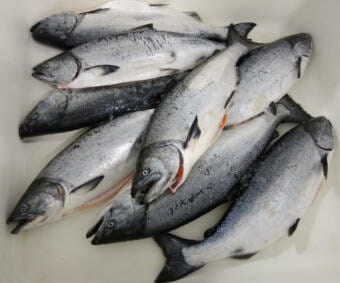
A tote filled with tanner crabs
The commercial tanner crab fishery in Southeast Alaska opens Feb. 11. (Photo by Angela Denning/KFSK)

The upcoming tanner crab fishery in Southeast Alaska is looking very promising. The fishery starts on Feb. 11, and the harvest and price could be historic.

State crab managers haven’t seen this kind of encouraging preview for Southeast’s tanner fishery for a few decades. The Alaska Department of Fish and Game has tracked the tanner population through annual surveys since the late 1990s.

“What we’re seeing is kind of historically high levels,” said Joe Stratman, the lead crab manager for the Alaska Department of Fish and Game in the region. He says the numbers look like they did when the surveys first started.

The abundance estimate for the fishery is 5.81 million pounds, which is a 17% increase over last year.

The news has fishermen eagerly preparing their boats and assembling their crews.

“I know folks are excited to get out there and set some gear,” said Stratman.

It’s not only the harvest that looks good but also the price. What’s paid for the crab could be break records if it follows trends in other fisheries. In Kodiak, tanner brought over $8 per pound in January, which is about double what was paid last year.

And Southeast’s Dungeness crab fishery last summer also saw record prices at over $4 per pound. That’s more than what was paid for tanner last February, which averaged $3.37 per pound.

Still, last year’s tanner fishery was worth a lot, valued at $4.26 million. It brought in 1.27 million pounds of crab, which is a bit above the 10-year average.

The male biomass that the biologists track includes both mature and legal-sized crab. So even though some crab are too young to be sold commercially, Stratman says it shows that the population is steady.

“There’s always kind of a cohort of crab coming along behind the legal crab, and luckily in Southeast we see that consistently in our crab surveys,” he said.

The length of the fishery will depend on the number of permits and pots. Fishermen have until the opening day to register.

Another crab fishery is happening alongside the tanner fishery in Southeast. That’s for golden king crab. The fishery is much smaller, with only 15 permits participating last year, but it’s still valuable. Last year, the fishery was worth $700,000 at $11.55 per pound. The harvest, however, was well below the 10-year average at 61,000 pounds.

The golden king crab fishery includes seven harvest goal areas in Southeast, which can be closed by managers before or during the season. The northern area is already closed this year.

The total harvest goal for goldens is 75,300 pounds for the region. That’s better than last year but still considered low.

Golden kings are a slow growing crab, and they don’t reach maturity until eight years of age. They also don’t follow annual reproduction cycles like many other species, says Stratman.

“Their reproductive cycle doesn’t really conform to a calendar,” Stratman said. “We think it’s about 20 months.”

Fish and Game relies on harvest data to manage the golden fishery because they don’t do surveys on the crab. Harvests have fluctuated widely since the fishery began in the 1970s.

Site notifications
Update notification options
Subscribe to notifications