KFSK - Petersburg

KFSK is our partner station in Petersburg. KTOO collaborates with partners across the state to cover important news and to share stories with our audiences.

Southeast king salmon cuts hit commercial trollers, net fisheries

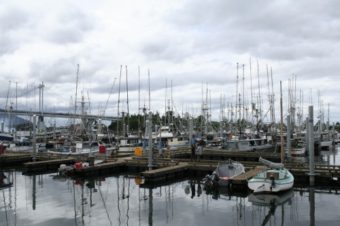
Sitka’s ANB Harbor, home to many local trollers. (Greta Mart/Photo by KCAW)

Commercial salmon trollers in Southeast Alaska are tied up to the dock this month after a shortened winter season, closed early because of conservation concerns for king salmon stocks.

They’ll be getting only a limited shot at fishing around hatchery king runs this spring and are feeling the impact of fishing restrictions.

The winter season shut down March 15, following January’s decision by the state’s board of fisheries to implement action plans to protect king salmon returning to rivers that flow into Southeast Alaska.

“Previous years in which we closed prior to April 30 were due to achieving the GHL (guideline harvest level),” said Rhea Ehresmann, assistant troll management biologist with the Alaska Department of Fish and Game. “The 2018 winter troll fishery closing early on March 15 is the only year in recent decades in which we closed early for conservation concerns.”

The guideline harvest level for the fishery is 45,000 but the catch didn’t end up close to that.

“With that early closure, our total for the winter season came in at 11,945 king salmon,” Ehresmann said.

Last year’s haul was about 44,000 and the 10-year average for the past decade is about 42,000 kings.

Ehresmann said catch rates were about half the recent 10-year average.

It seems like the catch rates on average were down compared to previous years,” she said. “We ended the season with the regional total of about six king salmon per landing. And this equated to about 36 per permit for the region total.”

Three-hundred-twenty-eight permit holders fished in the winter season, down about 100 permits from the 10 year average.

One bright spot was the price, hitting new record highs. The season average was $11.31 a pound, about $2 above average. At the end of the season the price topped $12 a pound.

Normally trollers could be fishing through the end of April and then preparing to go out for a spring season targeting returns to Southeast’s hatcheries.

Instead the fleet is tied to the dock. Some are looking for other work. Others can fall back on halibut or other fisheries.

Alaska Trollers Association board member Mark Roberts has trolled nearly 40 years in Southeast and said he hasn’t seen a year like this.

“I’ve never been tied to the dock so long in my life, since I started fishing,” Roberts said. “My wife is definitely liking someone being home to do the chores.”

Roberts fished in October and November but didn’t get a chance to go out later on in the season and explained the closure has a financial impact.

“This definitely, (is) well over a quarter of my income because of the winter fishery being taken away and also the spring fishery. I’ve never added it up but it’s a good chunk.”

Fish and Game expects to open the spring season on a limited basis in May and June, but only in areas near Southeast hatchery release sites and on the outer coast.

Roberts will fish that season and he’s glad the board did not decide to delay a summer king salmon opening.

Besides kings, he’ll rig up to chase chum salmon for the first time and figures he’s forced to go after dog salmon and coho to make up for the limited time for kings.

Fishery managers in early April also released the harvest limit for king salmon for the rest of the year in the region and announced that harvest limit will be reduced by 10 percent to conserve chinook returning to Southeast Alaska, the trans-boundary rivers and northern British Columbia.

The fish are managed under an international treaty with Canada. The announcement means trollers have an allocation of 95,700 kings for the winter spring and summer seasons combined, a drop of 59,080 from last year’s allocation.

The numbers are set based on forecast king salmon abundance, which are experiencing unprecedented levels of poor production according to the department.

The trollers association issued a news release voicing concern about the additional 10 percent cut on top of the restrictions to winter and spring catches.

Other restrictions also are out for other gear groups. Purse seiners are prohibited from keeping chinook while drift gillnetters have reductions in time and area along with net size restrictions to reduce the king salmon catch.

Southeast dam expansion cuts diesel use in first year

An expanded hydro-electric dam in southern Southeast Alaska has meant more money for the agency that owns the plant and less need for costly diesel power generation.

The Swan Lake dam prior to an expansion of the reservoir’s capacity in 2016 (Photo courtesy Southeast Alaska Power Agency)

That was one of the messages Monday from Trey Acteson, CEO of the Southeast Alaska Power Agency.

SEAPA owns two hydro plants, along with transmission lines, and sells wholesale electricity to utilities in Ketchikan, Wrangell and Petersburg.

SEAPA expanded the capacity of its facility at Swan Lake near Ketchikan in 2016.

Acteson told the Petersburg Borough Assembly about the benefits of the first year of an expanded Swan Lake.

“What that resulted in is another 250,000 of revenue to SEAPA and it offset about $1.1 million in diesel generation to Ketchikan,” Acteson told the Assembly.

Ketchikan is forced to rely on diesel power during periods of dry or cold weather and the Swan Lake expansion was meant to reduce the need for diesel power.

Acteson noted lake levels are low at both of SEAPA’s hydro plants this spring.

The reservoirs at Swan Lake and Tyee Lake near Wrangell are still above levels set by the organization at the beginning of the year.

Acteson said the increased revenue for SEAPA from the Swan Lake expansion can go toward other improvements on the power system for the three communities and he expected the benefit would increase in future years.

He also outlined some of the projects the wholesale power provider has been pursuing.

In other business, the Assembly voted to support an application for a marijuana grow license for local business Sea Weed Farms.

The application will be considered by the state’s Marijuana Control Board at a April 4-6 meeting in Nome.

Assembly members also voted to award a contract to Reid Brothers Logging and Construction of Petersburg  for work on the City Creek reservoir dam at a cost of just under $220,000.

Ferry cancellations cause challenges for Southeast students

Petersburg High School’s jazz band performs a two-hour concert at the Sons of Norway Hall, March 24, 2018. It was a fundraiser to buy plane tickets for 60 music students to attend Music Fest in Juneau, April 12-14. (Photo by Angela Denning/KFSK)

There are no roads linking most of Southeast Alaska, so residents rely on planes and ferries to get from one community to another.

The ferry service has been spotty this year, which has caused challenges for many students traveling to regional events.

It’s a Saturday night in Petersburg and people are gathered inside the Sons of Norway Hall to listen to live music.

It’s not a visiting show. It’s Petersburg High School’s jazz band. Tickets are $25 each.

Band members are among 60 students in the high school music program who want to attend the Southeast Alaska Music Festival in Juneau in April.

There, students play music, get feedback, and learn new skills through clinics. They usually travel to the event by ferry. But this year, there were none to take.

A few mothers such as Diane Christensen, organized this concert to raise money for plane tickets.

“This is a Band-Aid is what it is,” Christensen said.

Christensen has three highschoolers studying music.

The ferry ride cost was $80 each, but now an airline ticket is $250 apiece.

Ferries are not only for the students but for families attending their events, she said.

“The dependency on it is,” she said, “just basically, you don’t get it until you live (here) and realize how important it is.”

Jessica Ieremia agrees. Her daughter plays the bass and is in state choir.

“It allows us more of that normal school experience with our kids,” she said.

Ieremia hopes the concert will help all students make Music Fest.

“We would really hate for kids to miss out on going because they can’t afford it because of the ferry system,” she said.

Budget reductions along with extreme weather and breakdowns have cut back ferry sailings.

Petersburg’s school board is gathered Tuesday night in the high school library.

The problem with the ferries has been coming up regularly at these monthly meetings.

Activities Director Jaime Cabral broke the news in February.

“About a week ago we just did get a phone call about our ferry service not being available for Music Fest this year,” he said, with a heavy sigh.

Cabral coordinates travel for middle and high school students in 26 different activities throughout the year.

He buys thousands of ferry tickets. But it’s been different this year. In January, only one ferry traveled northbound and southbound in the region.

“This year was probably the biggest challenge just due to cancellations,” Cabral said. “It happens to every school. Every school is in that boat. And so, it’s huge.”

This year about 40 Petersburg students were stuck for days in Ketchikan when they traveled for basketball.

The ferry broke and there was no backup.

Back in the Sons of Norway Hall, long-time music teacher, Matt Lenhard, has prepared two hours of music for the band tonight.

He said it’s important for all of his students to attend Music Fest.

“The point of these festivals is not just to take the people who could afford it,” Lenhard said. “Your music program is the strongest when we’re all together.”

Like other regional events, Music Fest is woven into Petersburg’s student curriculum.

It makes Lenhard wonder about the future.

“Are we on the cusp of this era where we don’t have a dependable and affordable transportation method? That these great events just can’t happen — because a ferry — it’s perplexing,” he said.

Cheaper ferry tickets do come at a price: time. It can take four or five days to make a trip that a plane can do in one.

As Christensen points out, there’s also a social benefit.

“That whole ideology that the ferry just kind of created its own culture of sitting and visiting,” she said, “because there’s no cell service at times, there’s no internet so there’s — talking.”

Christensen just hopes this ferry-culture is one that will survive long into the future.

The state is building two new day ferries in Ketchikan.

Each one will be 280-feet long and could carry 300 passengers.

Both will service communities around Juneau and the Lynn Canal area and won’t affect the middle and southern areas of Southeast.

King salmon sport fishing shut down on Southeast’s inside waters

A king salmon is weighed in at Petersburg’s Memorial Day weekend salmon derby in 2015. The 2018 derby has been canceled. (Photo by Joe Viechnicki/KFSK)

The Alaska Department of Fish and Game is shutting down sport fishing for king salmon this weekend on most of the inside waters of Southeast Alaska due to conservation concerns.

Anglers can’t keep king salmon in many parts of the region, except the outer coast, starting April 1.

In Petersburg area, the closure impacts not just district 8, the waters around the mouth of the Stikine River.

Also closed are districts 6 south of Mitkof Island and 10 north of Petersburg along with other areas of the inside waters stretching from Ketchikan to Skagway.

The district 8 closure runs through mid-July. Other areas are closed to king retention for April, May and half of June.

Fish and Game does still expect to open some king fishing June 1 in this area, for hatchery chinook returning to Blind Slough and City Creek.

The measures are meant to conserve non-hatchery, wild kings returning to spawn in rivers in Southeast Alaska and British Columbia.

The waterways have seen historically low runs in recent years and are not expected to meet Fish and Game’s goals for spawning fish.

Three rivers, the Unuk near Ketchikan, King Salmon in Seymour Canal and Chilkat River near Haines are listed as stocks of concern for continuing low returns.

Fish and Game said the wider restrictions are needed to protect fish returning to the other rivers in Southeast, like the Stikine near Wrangell and Taku near Juneau.

The department has even closed a portion of Behm Canal north of Ketchikan to all salmon fishing year-round.

The department says fishery managers in Canada are considering similar restrictions for sport and commercial fishing.

Southeast’s commercial winter troll fishery closed March 15 and a limited spring season is expected only around hatchery sites and on the outer coast.

Alaska Senate passes Stedman’s sea otter resolution

Sea Otters
Sea Otters. (U.S. Fish & Wildlife photo)

The Alaska Senate passed a resolution Wednesday calling on the federal government to take steps to increase the harvest of sea otters in Southeast Alaska.

Senate Joint Resolution 13 is sponsored by Sitka Republican senator Bert Stedman.

It asks the federal government to transfer management responsibility to the state government or National Marine Fisheries Service, instead of the U.S. Fish and Wildlife Service.

It also urges federal agencies to work with the state and other interest groups to produce a management plan for otters, recognizing their impact on crab, clams, urchins and other sea creatures.

Stedman was glad Wednesday to see his resolution pass in the Senate.

“I think it’s reflected across the state that we’re getting impacted on the coast with sea otters, in particular Southeast but even beyond that and other members of the Senate want to help try to get some balance in the system, which we don’t seem to have right now,” he said.

Otters are a protected species under the Marine Mammal Protection Act.

Only coastal Alaska Natives are allowed to hunt the animals and sell products made from their pelts that are “significantly altered.”

The resolution asks for changes to the federal law to expand the definition for Alaska Natives to qualify to hunt otters and relax restrictions on sale and export of their pelts.

The federal law already permits transfer of management to states, but only under certain conditions.

Stedman hopes the federal government takes notice of the state resolution and takes steps to change the law.

“And particularly working on the definition of significantly altered and allow folks to sell and trade full hides that are cured or tanned, and also relax some of the enforcement dealing with other modifications that are required,” Stedman said. “Otherwise we’re gonna continue to see either a stagnant or further decline in harvest rates (of otters).”

Commercial fishing organizations and the communities of Petersburg and Wrangell support changes to the law because of otter predation on commercially caught species.

Others oppose state involvement in the management of otters. The resolution has drawn opposition from the Organized Village of Kake along with the Alaska Sea Otter and Stellar Sea Lion Commission, a statewide group formed to protect traditional uses of those animals by Alaska Natives.

Otters in Southeast were hunted to near extinction by the fur trade but reintroduced by the state in the 1960s.

A population of 400 animals moved to the Southeast Panhandle has grown to number more than 25,000.

Eleven other senators signed on with Stedman to sponsor an amended version of the resolution. It passed the Senate by a 20-0 vote. It goes on to the House next for consideration.

Petersburg to repair older of two reservoir dams

Water spills over the City Creek dam in March 2018. (Photo by Joe Viechnicki/KFSK)

A contractor this summer will be repairing a concrete dam at one of Petersburg’s two water reservoirs. It’s the older of the community’s two dams and dates back before statehood.

Petersburg’s smaller water reservoir is at City Creek, about three miles from downtown.It’s about one fifth the size of a larger and newer reservoir at Cabin Creek.The dam at City Creek can hold 52 million gallons and still is used by the water department as a backup water source.

The borough’s utility director Karl Hagerman said every three years the state requires a thorough safety inspection of the dam and that inspection noted deterioration of the surface of the dam spillway.

“The face of the dam is what we’re working on, what we’re focusing on with this project because of decades of water spilling over the top of the dam, the concrete that was used is slowly eroding away and so, it’s really just part of standard housekeeping to maintain that dam in good condition so that it doesn’t fail,” Hagerman said. “That is our secondary drinking water source, raw water source, so we need to keep it functioning and usable.”

The dam dates back to the early 1950s.

A Jan. 26, 1951, edition of the Petersburg Press reported that construction of a new dam would happen in the summer of that year, using a $152,000 appropriation from the Department of Interior’s Office of Territories.

Prior to that structure an older wooden dam was located downstream on City Creek.

This concrete structure had some upgrades in the 1970s and the reservoir was dredged at least once.

Hagerman said the concrete has eroded and steel rebar is showing but he doesn’t believe the dam is in danger of failing.

“You never wanna get to that point with a dam,” Hagerman said. “This work is going to be preemptive as far as catastrophic failure is concerned. It’s something that we definitely need to do and the state expects us to take care of.”

The borough will hire a private company to do the work, which will involve building a work pad at the bottom of the dam to stage equipment.

“Then they’ll use some mechanical means to grind off the existing surface to get down into some a little more solid concrete,” Hagerman said. “And then from that point they’ll dowel in some rebar and put some steel on the surface. And then there’s gonna be some fairly complicated form work to reset the original surface of the dam.”

The concrete pour has to follow an arc, to minimize erosion as water spills down its face. And the contractor will be pouring about 6-8 inches of concrete on top of what’s there.

The estimated cost of the work was $200,000-300,000.

The work will be paid for with water department cash reserves, built up from payments from customers.

It could start as soon as May 1 with a completion date of Sept. 28.

Hagerman said it’s important to have that backup water source.

“If we ever have any problems with the pipeline or just basic maintenance on the pipeline from Cabin Creek, it’s in our best interest to have that back up source so we switch right to it and continue to make water for the community at all times of year and it’s worked out really well,” he said.

The borough Assembly still needs to vote on awarding the contract for the work, likely at their first meeting in April.

The borough opened bids Friday from companies interested in doing the work.

Three submitted bids, with Reid Brothers of Petersburg the low bidder for just under $220,000.

The other companies were North Star Construction and Ketchikan Ready Mix.

Hagerman will be recommending the Assembly award the work to Reid Brothers at the Assembly’s April 2 meeting.

Site notifications
Update notification options
Subscribe to notifications