KUAC - Fairbanks

KUAC is our partner station in Fairbanks. KTOO collaborates with partners across the state to cover important news and to share stories with our audiences.

Republican candidate LeBon joins court case reviewing unresolved House election

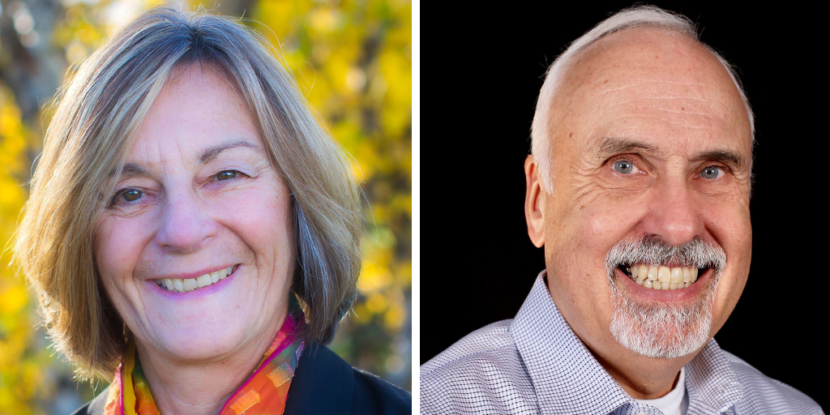
Democrat Kathryn Dodge and Republican Bart LeBon are tied in the election for the Alaska House race to represent downtown Fairbanks. (Dodge photo courtesy of Kathryn Dodge and LeBon photo courtesy of Bart LeBon)
Democrat Kathryn Dodge and Republican Bart LeBon are still in contention for the Alaska House race to represent House District 1 in Fairbanks. (Dodge photo courtesy of Kathryn Dodge and LeBon photo courtesy of Bart LeBon)

The Republican candidate in the disputed House District 1 election is joining the court case reviewing the ballot count. Bart LeBon’s attorneys requested intervention in the case, originally filed by his opponent, Democrat Kathryn Dodge. LeBon is asking for six ballots to be reviewed.

Bart LeBon won the race for a Fairbanks seat in the Alaska House of Representatives by one vote and was certified as the winner. At the end of a recount in Juneau on Nov. 30, both the Dodge campaign and LeBon’s people had challenged the way some ballots were counted or set aside as invalid.

Dodge filed a challenge to the recount results last Wednesday, arguing two ballots that should have counted for her were left out, and two that counted for LeBon should not have been.

LeBon’s argument is similar but involves different ballots.

“Obviously you aren’t going to challenge the ballot that favors you,” LeBon laughed. “The ballots I’m challenging favored me, but were rejected by the Division of Elections for a variety of reasons.”

In the motion filed on LeBon’s behalf by attorney Stacey Stone of the Anchorage law firm Holmes Weddle & Barcott, it mentions two ballots where ovals were marked for both candidates but had additional marks that led Elections officials to count them for Dodge. It also mentions two absentee ballots marked for LeBon that weren’t counted because of irregularities. And finally, two more ballots where the voters marked on the right side of the ballot, and not in the oval on the left.

LeBon said he had to file the legal motion or he might not be included in the court’s review.

“They would not know that I had issues about ballots that I challenged with the Division of Elections on Nov. 30 during that recount,” LeBon said. “They would never know.”

The case is in front of the Alaska Supreme Court, which has appointed Anchorage Superior Court Judge Eric Aarseth as a special master to handle the case. He will review the ballot questions and issue a report by Dec. 21. The Supreme Court’s order says parties have a week after that to file any objections to Aarseth’s report. Then, oral arguments are scheduled for Jan. 8, 2019. LeBon said that’s two very long months after the election.

“I’m on hold. The representative, be it me or Kathryn, are on hold,” LeBon said. “The sooner we can get this settled, we can make our plans to travel to Juneau, arrange housing and transportation, start to begin hiring staff.”

The state asked the Supreme Court to expedite the process, but was rejected.
Fairbanks City Council delays LGBTQ anti-discrimination ordinance after outcry

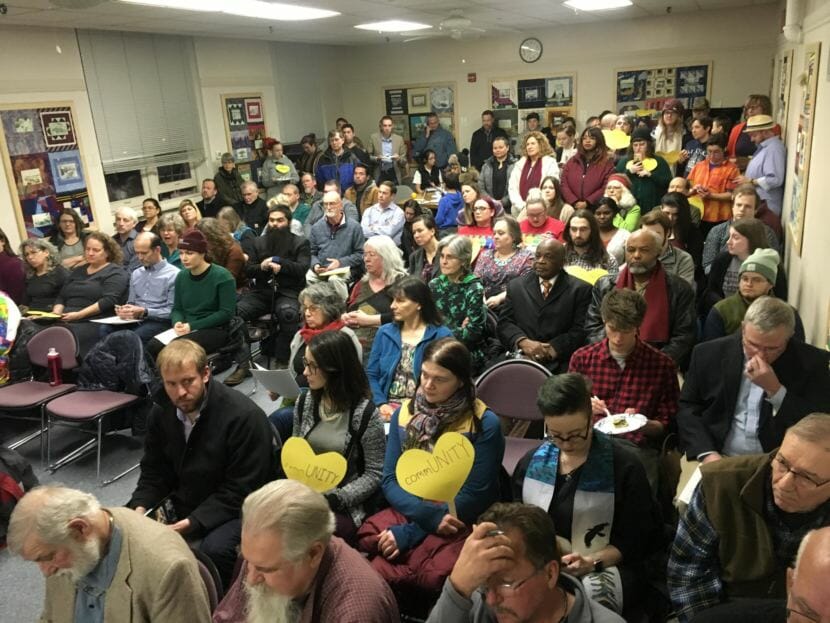
Opponents and advocates of the proposed anti-discrimination ordinance packed the City Council meeting chambers for Monday night’s public hearing.
Opponents and advocates of the proposed anti-discrimination ordinance packed the City Council meeting chambers for Monday night’s public hearing. (Photo courtesy of Robin Wood/Fairbanks Daily News-Miner)

Fairbanks City Council members heard more than three hours of testimony Monday from a roomful of supporters and opponents of a proposed ordinance that would add provisions to the city code prohibiting discrimination based on sexual orientation, gender identity and gender expression.

Among the 71 people who signed up to speak, former Fairbanks North Star Borough Assemblyman Lance Roberts and about 30 others argued against the measure.

“You’re going to try to help some people by hurting others,” Roberts said. “You’re going to start a war. You’re going to create conflict in the community that doesn’t have to be there.”

The opponents said the ordinance would infringe on their religious rights and would unleash a torrent of lawsuits. Some in the standing-room-only audience affirmed agreement by murmuring “amen” and hectoring those who favored the measure. But the Rev. Neill McKay of the University Community Presbyterian Church said advocates of the ordinance just want gay people to have the same protections that all other Americans enjoy.

“My conservative brothers are concerned about frivolous lawsuits. My evangelical brothers and sisters are concerned about religious liberty,” McKay said. “My progressive brothers and sisters are concerned about basic protections.”

Dana Lewis and many other members of the LGBTQ community said the ordinance is needed now, because they’re often subjected to discrimination in the workplace and the community.

“Now that I am out and proud as a bisexual member of the LGBTQ community, I unfortunately have faced even more discrimination,” said Lewis.

Some opponents, like Cheryl Beckley, said the ordinance was poorly written and would generate discrimination against Christians like her.

“I don’t believe we should discriminate,” Beckley said. “But on the other hand, it seems like the balance, the scale balance, if you pass this ordinance it’s going to be way over here now, instead of more balanced.”

But Pastor Leslie Ahuva Fails of the Unitarian Universalist Fellowship of Fairbanks, along with other local faith leaders, said those concerns are unfounded, because the ordinance and state and federal laws all protect religious rights.

“Churches and religious institutions are already free to make sacramental decisions on who they marry, and so on, based on their beliefs,” Fails said. “This ordinance does not change that. What we are talking about is people having protection to maintain their lives and livelihoods in the city.”

Community member Paul Koop said passing laws won’t halt discrimination against members of the LGBTQ community. He said Americans can solve that problem, and others, by restoring religion to its central role in society.

“It’s not about the laws,” Koop said. “We need to bring God into our lives. We need to bring God into our churches. We need to bring God into our schools and teach them to love one another.”

By the time public testimony ended just after 11 p.m., the council approved a couple of amendments introduced by Councilman Jerry Cleworth to clarify the language. Mayor Jim Matherly suggested the council should postpone final consideration of the ordinance.

“Just the fact that Mr. Cleworth has asked for some basic clarifications just tells me, in my gut, that we didn’t do our homework and have work sessions on this, something this important,” Matherly said.

The council settled on waiting until the Feb. 25 meeting to consider a vote on the ordinance.

The postponement disappointed the two newly elected council members who strongly supported the measure. Councilwoman Shoshana Kun worried that those who spoke out in favor of the ordinance would face retribution after coming out publicly. Kathryn Ottersten, who introduced the measure along with fellow council member David Pruhs, said that’s a real concern.

“I have been attacked,” said Ottersten, who is gay. “I have been denied jobs. I’ve lost my housing. And to this day, I have physical injuries that cause me to be able to do other things, because I’ve been attacked for who I am.”

Matherly said the council will hold work sessions next month to revise the ordinance. He and other council members may open one of those meetings up to the public to get more input on the measure.

Editor’s note: This story has been revised to clarify the proportion of the speakers at Monday’s public hearing who opposed the anti-discrimination ordinance.

Alaska Supreme Court to weigh in on final unresolved House race

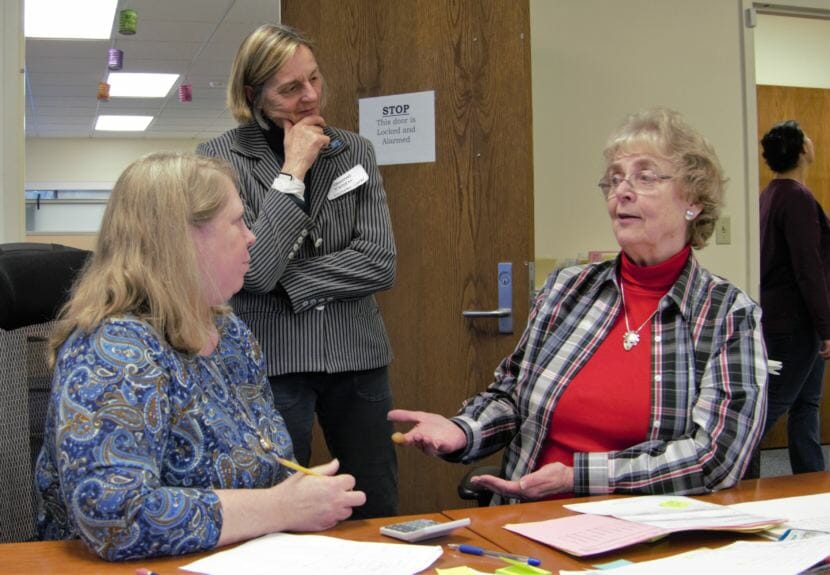
State Review Board member Stuart Sliter discusses part of the election certification process with board member Lynda Thater-Flemmer, seated, and House District 1 candidate Kathryn Dodge, D-Fairbanks, in the Juneau office of the Alaska Division of Elections on Nov. 23, 2018.
State Review Board member Stuart Sliter discusses part of the election certification process with board member Lynda Thater-Flemmer, seated, and House District 1 candidate Kathryn Dodge, D-Fairbanks, in the Juneau office of the Alaska Division of Elections on Nov. 23, 2018. (Photo by Jeremy Hsieh/KTOO)

The Division of Elections ran through every ballot for House District 1 last Friday. Officials counted 2,662 votes for Democrat Kathryn Dodge and 2,663 for her opponent, Republican Bart LeBon.

Following the recount, the candidates had until Wednesday to contest the results of the recount. And the Dodge campaign, just one vote behind, met the deadline to file with the Alaska Supreme Court — thus extending a protracted battle for control of the state House of Representatives.

Dodge said she wants every legal vote to be counted.

“We spent about four days reviewing the decisions, reviewing the ballots, reviewing the facts, and have concluded that there are at least four instances that deserve further review,” she said.

Dodge’s attorney, Patrick Munson, filed an “application for relief” with the Alaska Supreme Court. The court will schedule a hearing and review the process of the recount. But Munson said he’s not sure how they will proceed.

“It’s pretty vague under Alaska law, to be honest with you,” Munson said. “And the court has a lot of leeway to fashion a proceeding that is tailored to the issues that are before them. They’ll come up with a proceeding that works efficiently for everyone to get to the truth.”

The Supreme Court Clerk’s office declined to comment on what comes next as they had not reviewed the complaint yet.

The Division of Elections will be represented by an assistant attorney general, but they don’t know exactly who at this point: The attorney closest to the process has not been retained by the Dunleavy administration.

Dodge’s campaign will be paying for the court proceeding and has started accepting contributions again.

“And we have set up a legal fund, which is the appropriate vehicle, apparently. And we have confidence in this process,” Dodge said.

The outcome of this race could determine control of the Alaska House. If LeBon’s victory stands, there will be 21 Republicans — a slim majority in the 40-member legislative body.

If Dodge’s appeal results in her winning the seat, the House will be split 20-20.

House District 1 race certified tied with uncounted ballot under investigation ahead of Friday recount

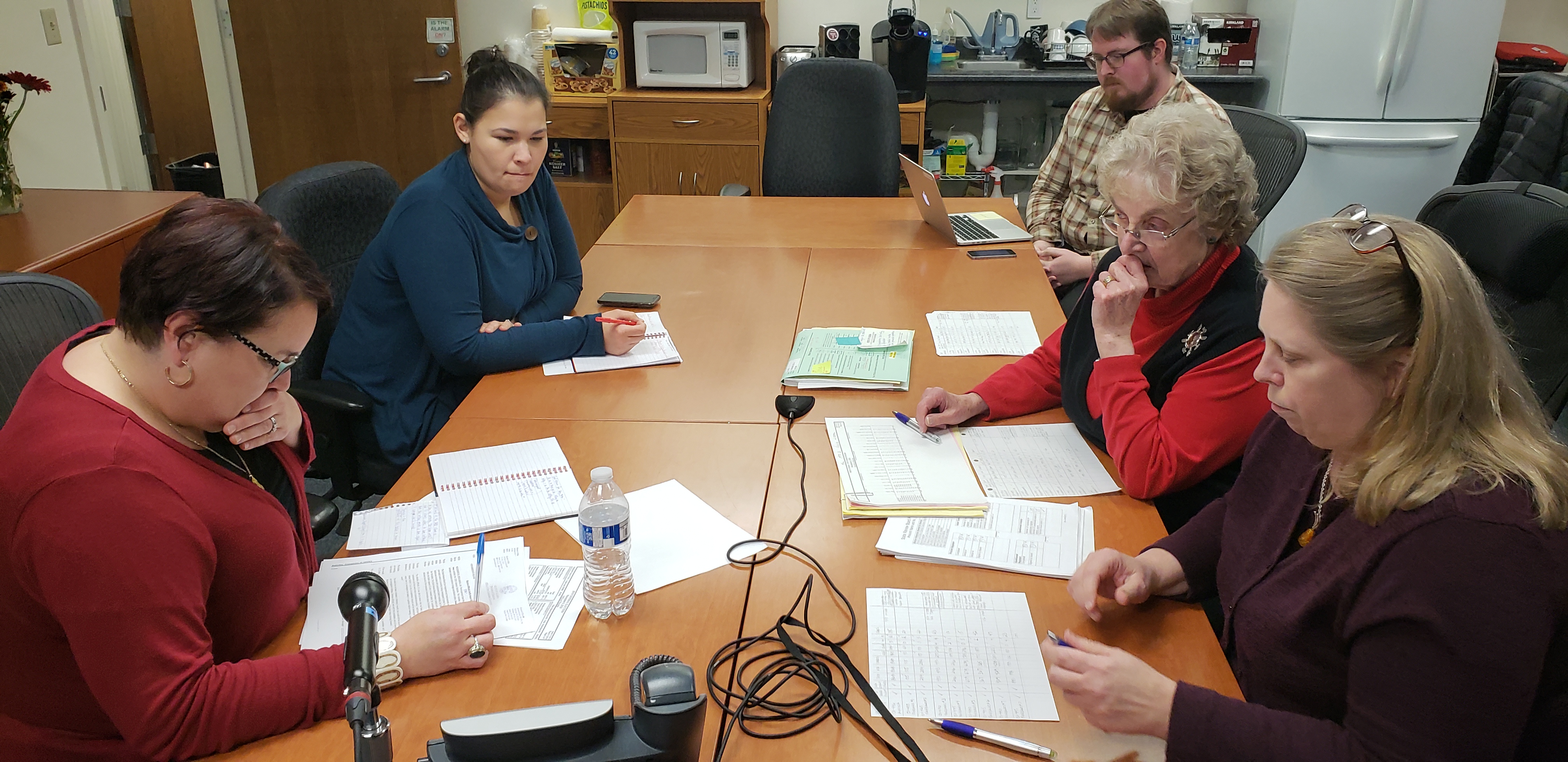
Alaska election officials hold a press conference over teleconference from the division's office in downtown Juneau on Nov. 26, 2018. Clockwise from bottom left: Elections Director Josie Bahnke, Elections Communication Manager Samantha Miller, Anchorage Daily News reporter James Brooks, State Review Board member Stuart Sliter, and State Review Board member Lynda Thater-Flemmer.
Alaska election officials hold a press conference over teleconference from the division’s office in downtown Juneau on Nov. 26, 2018. Clockwise from bottom left: Elections Director Josie Bahnke, Elections Communication Manager Samantha Miller, Anchorage Daily News reporter James Brooks, State Review Board member Stuart Sliter, and State Review Board member Lynda Thater-Flemmer. (Photo by Jeremy Hsieh/KTOO)

The Alaska House District 1 race is officially tied. Monday morning, the Division of Elections certified the statewide November election as required by law, leaving the downtown Fairbanks district tied with 2,661 votes each for Democrat Kathryn Dodge and Republican Bart LeBon. And there are still ballots that might be counted.

The division held a press conference Monday in Juneau to explain the next steps in the House District 1 race. Drawing everyone’s attention is one more ballot, that was cast in the Fairbanks number 6 precinct marked for Kathryn Dodge.

“The state review board has inspected and counted every ballot from the district, with the exception of one ballot that’s currently being investigated further to determine if it will be counted on Friday.”

Josie Bahnke, director of the Division of Elections, explained the ballot was found in a second secrecy sleeve outside of the AccuVote counting machine.

“It wasn’t until we received all the elections materials, in their entirety, to determine this voted ballot in a secrecy sleeve, was not, in fact, a questioned ballot.”

Stuart Sliter of the review board said they are investigating the way voters signed in before voting at the Fairbanks 6 precinct. With 367 voters signed in, and 365 ballots cast, one less signature, and one more ballot will explain the anomaly.

“One of the names that has been highlighted, is between a husband and wife’s name. The husband and wife came in, they highlighted two names that are the same, but the husband’s is on the next page.”

Because of the tie, there will be an automatic recount at 10 a.m. Friday. And it seems likely that last uncounted ballot will go into the mix, along with any other mailed-in ballots that might arrive before the recount.

Ballots coming in this late are very often from voters in the military, serving overseas. They must be postmarked on Election Day. There are as many as 60 unreturned absentee ballots that still could come in for House District 1, though normally the return is a fraction of those sent out.

KTOO’s Jeremy Hsieh contributed to this report. 

City of Fairbanks lawyers up to sue chemical company over contaminated water

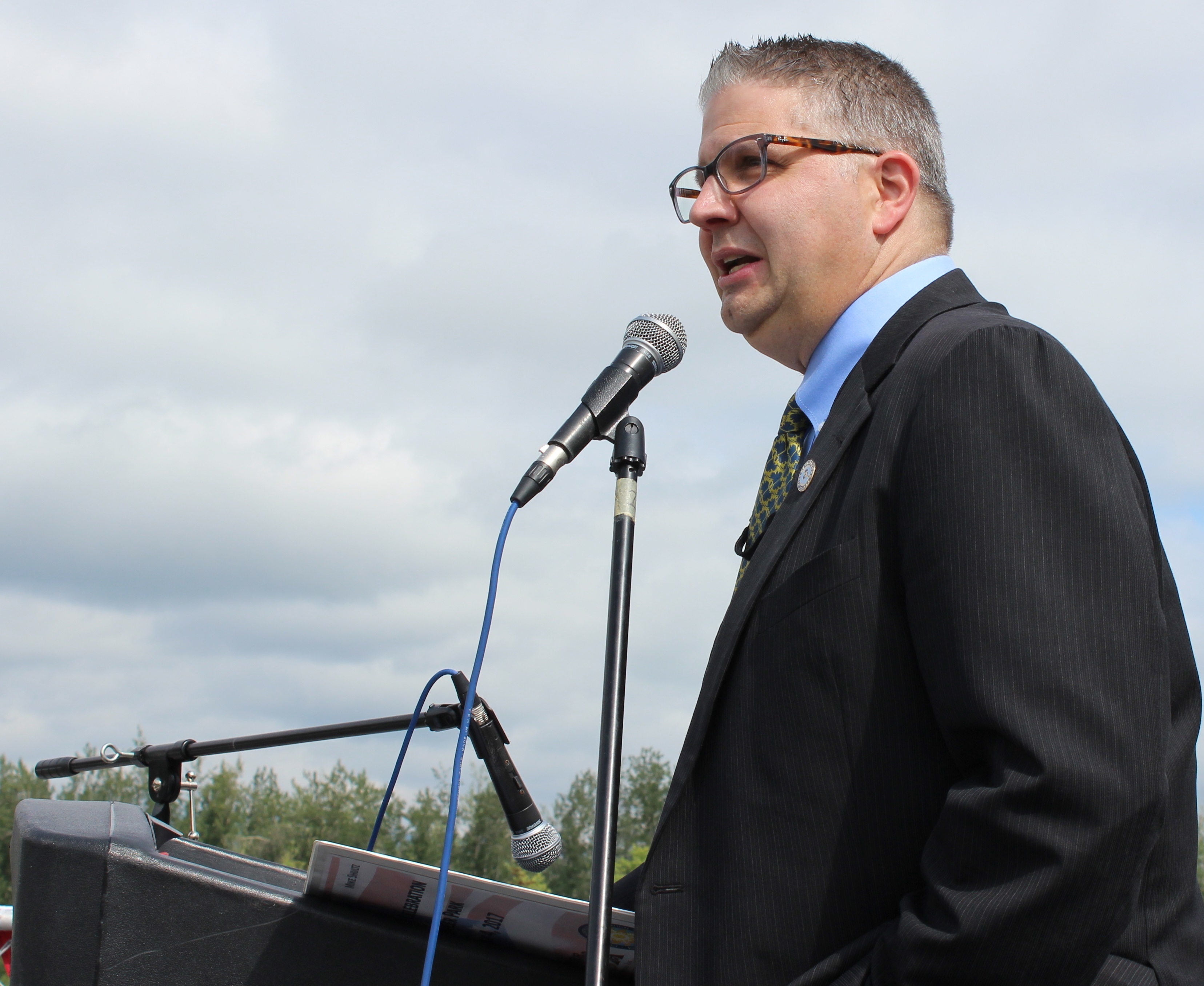
Fairbanks Mayor Jim Matherly recalls the history of Pioneer Park, once known as Alaskaland, as he speaks from the deck of the historical S.S. Nenana sternwheeler steamboat at the annual Independence Day Celebration at Pioneer Park in Fairbanks on July 4, 2017.
Fairbanks Mayor Jim Matherly speaks from the deck of the historical S.S. Nenana at the annual Independence Day celebration in Fairbanks on July 4, 2017. (Photo by Mary M. Rall/U.S. Army Alaska Public Affairs)

The city of Fairbanks has retained two Lower 48 law firms to advise on how to sue the manufacturers of chemical compounds that have contaminated groundwater in several areas around the city. The officials hope to recover nearly $4 million the city has spent over the past three years to deal with the contamination caused by perfluorinated compounds contained in a type of firefighting foam.

Mayor Jim Matherly said city officials hired the two law firms to help them develop a strategy on how the city can build a case that the companies found liable for the contamination should compensate the city for the cost of dealing with it.

“They’re going to take a look at our case, take a look at the foam issue, and the contamination issue,” he said. “They’ll talk to us, talk to our legal department.”

Matherly said City Attorney Paul Ewers recommended hiring San Francisco-based SL Environmental Law Group and New York-based Kennedy & Madonna because they’re experienced in litigating contamination cases. A city spokesperson said the two firms took the case on a contingency-fee basis, so they’d only get paid if they win the case and recover damages.

The mayor said the lawsuit would target the 3M Company, the Minnesota-based firm that manufactures the compounds known by the acronym PFAS. It’s used in the fire-suppressing foam that firefighters have for years used in training, among other things.

“The city was using that foam for about 20 years, between 1985 and around 2005,” he said. “Now what we use is we use a combination of some water, of course, for training and then we have another foam that we use that has been approved by the DEC.”

The move toward suing the manufacturer is good news, said Dave Berrey. He lives in one of the neighborhoods where the city has found PFAS groundwater contamination. But he and others say they wonder, what took the city so long to act?

“This is something we asked that they join in a year and a half ago, I believe,” he said, “and they turned a cold should toward us.”

Berrey said he and other affected residents think the city hasn’t focused enough attention on the problem and hasn’t adequately helped them, especially those suffering from health problems they believe are caused by the contamination. And he said they’d like to be more involved with the city’s efforts to recover damages from the manufacturer.

“They really need to look at who they’ve damaged in this negligence, and work with us to go after the chemical companies,” Berrey said.

The nearly $4 million the city’s paid so far was used to clean up sites and to cover the costs of connecting 44 properties in areas that rely on wells to the local water utility system. It’s also paid $2,500 stipends to those property owners to help offset their water payments.

Matherly said he’s not sure but he thinks Fairbanks is the first city in Alaska to pursue litigation in response to PFAS groundwater contamination. It’s turned up here more than any other city in the state, at least so far. And the mayor said the city’s asking the state for more help.

“I talked to the attorney general about this,” he said. “I told Gov. Walker about this. It’s in our legislative priorities to give to the Interior delegation, that we want the state to take a good hard look at this statewide. Because, we’re not the only city using this – it’s all across the nation.”

A recent study by the Environmental Working Group and the Social Science Environmental Health Research Institute at Northeastern University says PFAS pollution has been reported at 94 sites in 22 states. The study says PFAS has shown up in the tap water of some 16 million people in 33 states and Puerto Rico. Other estimates say up to 110 million Americans may have it in their drinking water.

The chemicals have been linked to kidney and testicular cancers, low birth weight, thyroid disease and pregnancy-induced hypertension.

The Alaska Department of Environmental Conservation has extended the public comment period on a proposed, more stringent cleanup level for groundwater contaminated with PFAS. Comments may now be submitted to DEC through 5 p.m. Tuesday, Nov. 12. More information on the proposed regs is available on this page of the DEC’s website.

NASA renews satellite services contract with UAF

UAF is one of a few Land, Sea and Space Grant universities in the U.S. (Photo by Jimmy Emerson)
UAF is one of a few Land, Sea and Space Grant universities in the U.S. (Creative Commons photo by Jimmy Emerson)

NASA has renewed a nearly $50 million contract with the University of Alaska Fairbanks for satellite services. A release from UAF says the $48.6 million dollar, five-year award is for operation of the Geophysical Institute Alaska Satellite Facility Synthetic Aperture Radar Data Center.

Synthetic aperture radar penetrate through clouds, and applications include seeing the effect of hurricane winds on the ocean to predict storm landfall, helping vessels navigate sea ice and surveying earthquake damage to facilitate emergency response. The Alaska Satellite facility employs 55 people involved in the 24-7 downlink, storage and processing of satellite data.

The renewed NASA service contract runs through September 2023.

Site notifications
Update notification options
Subscribe to notifications