KUAC - Fairbanks

KUAC is our partner station in Fairbanks. KTOO collaborates with partners across the state to cover important news and to share stories with our audiences.

Supreme Court rules in favor of hovercraft-driving moose hunter

John Sturgeon and U.S. Rep. Don Young, R-Alaska, arrive at a 2018 summer fundraiser in Fairbanks by hovercraft.
John Sturgeon and U.S. Rep. Don Young, R-Alaska, arrive at a 2018 summer fundraiser in Fairbanks by hovercraft. (Photo by Dan Bross/KUAC)

The U.S. Supreme Court has unanimously ruled that the state controls rivers running through Alaska’s federal conservation lands.

In its second consideration of a case filed against the National Park Service by Anchorage resident John Sturgeon, the high court found state rivers are basically exempt from NPS regulation.

On the most basic level, the Supreme Court ruling means John Sturgeon can again operate his hovercraft during fall moose hunts on the Nation River in Yukon-Charley Rivers National Preserve.

“This last Saturday, I actually took it out, turned the key and, by golly, it worked,” Sturgeon said. “So I’m all ready to go.”

Sturgeon said he rebuilt the small hovercraft over the winter in hope that the Supreme Court would rule, in his favor, that Alaska rivers are not subject to park service regulation. He said he spent over a decade and more than a million dollars trying to prove through the courts that Alaska rivers are different.

“One of the things we tried to stress all the way through is that these are our highways, like I-5 in Oregon and Washington and California,” Sturgeon said. “If people want to go to their fish camp or want to go moose hunting, they use these rivers just like highways. And the idea is that they shouldn’t be restricted by the federal government. And that’s exactly what the Supreme Court said.”

The ruling relies on interpretations of the Alaska National Interest Lands Conservation Act and federal water rights, and it affirms that other private property inside conservation units — including Alaska Native lands — are free from park regulation.
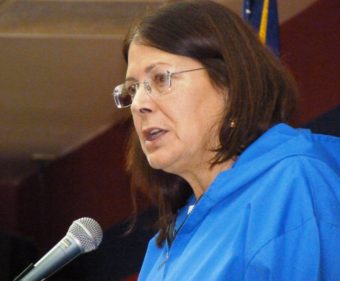
Alaska Federation of Natives President Julie Kitka addresses the Feb. 22, 2012, Native Issues Forum in Juneau.
Alaska Federation of Natives President Julie Kitka addresses the Feb. 22, 2012, Native Issues Forum in Juneau. (Photo by Ed Schoenfeld)

“Both the state’s-end holdings and Native-end holdings was upheld,” said Alaska Federation of Natives President Julie Kitka.

Kitka said AFN is pleased with the ruling, which also specifically says it does not alter Katie John case rulings backing federal subsistence fishing management on Alaska rivers.

“There was a footnote that clearly indicated the Supreme Court’s wish to keep those (rulings) intact,” Kitka said.

The National Park Service issued a two-line response to the ruling.

“We thank the Supreme Court for their ruling this morning, and we are reviewing the decision to determine what changes will be necessary to bring existing policy in line with today’s ruling,” National Park Service Alaska Regional Park Office spokesperson Megan Richotte said.

“It’s important to us that the National Park Service is in a position to protect the resources that the Park Service was given jurisdiction over for all Americans.” said National Parks Conservation Association Alaska Regional Director Jim Adams.

Adams noted that a concurring opinion within the Supreme Court ruling leaves some wiggle room for the NPS to regulate hovercraft use which erodes river banks.

“That’s just one example,” Adams said. “I imagine any use on the river that washes up on the shore would be something that the Park Service would have a say in.”

As for the man behind the long-running dispute, Sturgeon said the unanimous Supreme Court victory ends his legal battle. And at 74 years old, he plans to retire and do more moose hunting.
Jack Coghill, Alaska Constitution signatory, dies at 93

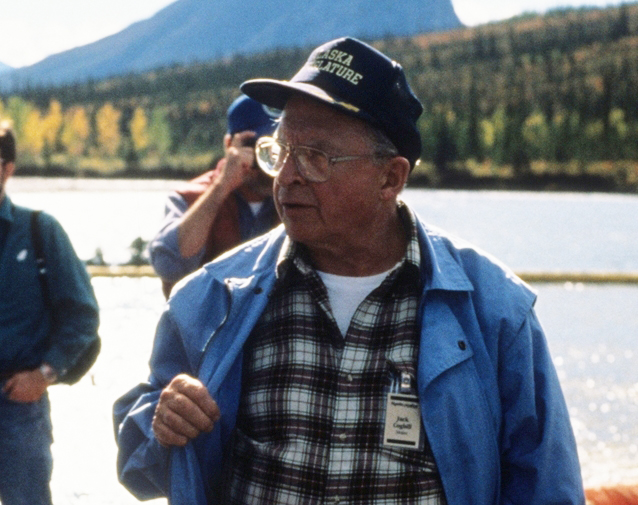
Jack Coghill in 1989, when he was an Alaska state senator.
Jack Coghill in 1989, when he was an Alaska state senator. (Public domain photo by ARLIS Reference)

Jack Coghill, a former state lawmaker and pivotal figure in Alaska history, died Wednesday morning at the age of 93.

Coghill’s son, state Sen. John Coghill, said his dad died peacefully at the younger Coghill’s home in North Pole after months of declining health.

“This is not a big shocker. But, you know, you’re never ready for somebody to leave you,” John Coghill said.

Jack Coghill was born in Fairbanks in 1925, when Alaska was still a territory. He served during World War II, then settled in Nenana to help his father run Coghill’s General Store, which the family still operates.

Coghill was elected to the territorial House of Representatives in 1952 and again in 1956, before being elected as a delegate to the Alaska Constitutional Convention. The 55 delegates wrote the Alaska Constitution during the 1956 convention held at the University of Alaska Fairbanks. Coghill was the third delegate to sign the document.

Coghill’s passing leaves only one surviving delegate, former state Sen. Vic Fischer, who also served in the territorial legislature.

Coghill ran unopposed for a seat in the state House in 1960, after Alaska achieved statehood. He took a few years’ hiatus before resuming his political career in 1984, when he was elected to the state Senate. In 1990, the lifelong Republican quit the party to run for lieutenant governor on the Alaska Independence Party ticket headed by Wally Hickel.

Coghill said in a 2017 interview that his most noteworthy political achievement was upholding the important role of the minority party. That was the Republican Party during those days of Democratic political dominance in Alaska.

“I think the most important thing that I did was that I was always making sure that the minority had a chance to tell you what they had to say,” Jack Coghill said. “I’d say ‘Let them talk! Let them do their thing!’”

John Coghill was on a trip to Cordova when his father passed away. While waiting for a flight back to Fairbanks, he said he’s still trying to figure out how best to tribute his father.

“So I will be pondering how to honor him the best I know how, with some of the good history and some of (his) outstanding contributions — things like that,” John Coghill said.

Arrangements for memorial services and interment were still pending as of Wednesday afternoon.

Dunleavy’s midyear budget bill would cut VPSO funds

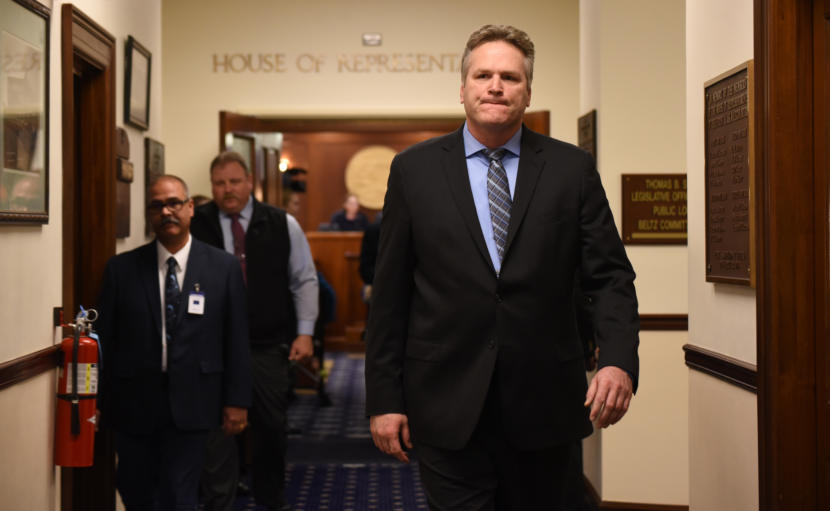
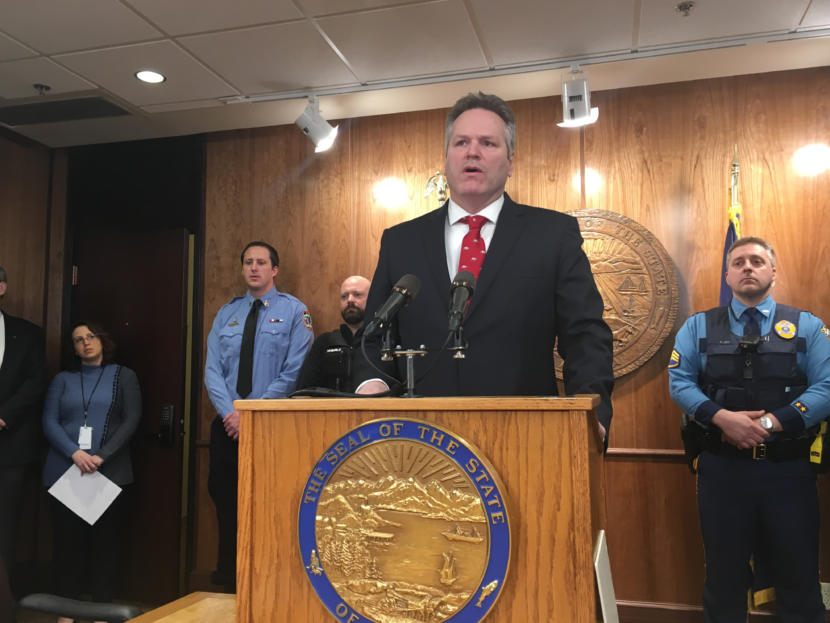
Gov. Mike Dunleavy speaks about his proposals to revise the state's criminal justice laws, Jan. 23, 2019. Photo by Andrew Kitchenman/KTOO and Alaska Public Media
Gov. Mike Dunleavy speaks about his proposals to revise the state’s criminal justice laws, Jan. 23, 2019. (Photo by Andrew Kitchenman/KTOO and Alaska Public Media)

Gov. Michael Dunleavy has proposed pulling back $3 million in unspent money for the Village Public Safety Officer program. The cuts would help pay for larger Alaska Permanent Fund dividends, among other items. The proposal is in Senate Bill 39.

Dunleavy wants to implement the midyear budget change right away. Some Alaska lawmakers, like Democratic Sen. Scott Kawasaki of Fairbanks, expressed their dismay that the money would be cut.

“This governor campaigned on public safety and crime prevention,” Kawasaki said. “Why are they taking money out of rural Alaska? Isn’t the life of a rural Alaskan, and isn’t public safety in rural Alaska, just as important as public safety in downtown Anchorage or downtown Mat-Su?”

The VPSO program has had difficulty recruiting in recent years, leaving some smaller towns with a diminished law enforcement presence. There are numerous vacancies for Village Public Safety Officers in Interior Alaska villages.

Sen. Scott Kawasaki, D-Fairbanks. (Photo by Skip Gray/360 North)

Funding for the VPSO program is determined by the Legislature and managed by the Alaska State Troopers. The funds are awarded to participating regional Native nonprofit corporations through grant requests. Those Native nonprofits are the employers for the VPSOs in their region.

In contrast to the VPSO program cuts, the midyear budget revisions would give Alaska State Troopers about $3.6 million more for salary adjustments intended to help retain and recruit officers.

At a presentation of the supplemental budget requests to the Senate Finance Committee on Tuesday, Sen. Lyman Hoffman, D-Bethel, said he was surprised that the VPSO program didn’t get the same recommendation as the Troopers did.

“The two items, to me, are directly related,” Hoffman said.

Donna Arduin, the governor’s budget director, told the committee that because many VPSO positions have not been filled, there was $2.8 million of unspent money in the VPSO program that could go to other areas.

Democratic Sen. Jesse Kiehl of Juneau believes that money should stay with village contractors trying to recruit officers.

“If in fact these positions are unfillable, there’s no difference to the treasury in leaving the money in or taking it out. But deleting it (from the budget) says, ‘Stop trying.’ Deleting it says, ‘Don’t work on public safety with VPSOs anymore.’”

The governor will submit a formal operating budget proposal for next fiscal year on Feb. 13.

Watch the latest legislative coverage from Gavel Alaska:

Cannabis advocates wary of Dunleavy’s Marijuana Control Board appointments

Gov. Mike Dunleavy leaves the House chambers after delivering the annual State of the State address to the Alaska Legislature, Jan. 22, 2019. (Photo by Skip Gray/360 North)

Alaska’s marijuana industry and its advocates are concerned about Gov. Mike Dunleavy’s appointment of two people to the Marijuana Control Board. Advocates say the appointees could slow or halt the industry’s growth and hamper the state’s ability to regulate it. The appointments follow Dunleavy’s decision last week to replace the board vice chairman with a member who has a long history of opposing marijuana use and sale.

Marijuana Control Board Vice Chairman Brandon Emmett said Thursday that he was just beginning to recover from the shock of being informed over the weekend by a member of Dunleavy’s office that he had decided to not reappoint Emmett for another three-year term.

“They said that the governor thanked me for my service, but that they were going in another direction,” Emmett said.

Emmett said he was shocked all over again Wednesday when he found out that Dunleavy had appointed longtime anti-marijuana crusader Vivian Stiver to fill his seat beginning next month.

“I see now what the governor means when he said that they were going in another direction, appointing an abject prohibitionist,” Emmett said. “That is definitely a complete different direction.”

Stiver failed to return phone calls Thursday and said in a Facebook message this morning that she was traveling to Juneau and unavailable for comment. But she told the Fairbanks Daily News-Miner that if she’s confirmed by the Legislature on Feb. 28, she’ll ensure that the board operates under “a process that is fair and accessible to everyone.”

The ex-Fairbanks City Council member has played a leading role in organizations that opposed legalizing marijuana and that twice tried to ban sale of pot in the city and Fairbanks North Star Borough. Dunleavy spokesman Matt Shuckerow said the governor wanted someone on the board to represent that perspective.

“That’s a viewpoint that is certainly shared by many other Alaskans,” Shuckerow said.

Shuckerow said Dunleavy also chose Stiver to represent the general public, as allowed by state law. Emmett is a Fairbanks cannabis business partner and board president of the Alaska Marijuana Industry Association.

“So far, the only stakeholder group that hasn’t had representation on the Marijuana Control Board has been a member from the general public,” Shuckerow said.

Emmett acknowledges the public should be represented on the board. But he says Stiver’s anti-marijuana agenda should disqualify her for the job, because it conflicts with what the majority of Alaskans believe, as reflected in consecutive votes in favor of legalized commercial marijuana.

“The governor is definitely well within his rights to appoint a member of the public,” Emmett said. “What I think is somewhat disingenuous, though, is who they chose. If you look at Vivian Stiver’s record, she is truly an abject prohibitionist.”

Emmett said he’s heard many others worry out loud about those same issues.

“I am speaking to the concerns of every industry member that I know, and many members of the general public,” he said.

Emmett said the main concern is that Stiver will slow the board’s work, especially in reviewing new business applications and developing new regulations — like those it just approved that set rules for businesses that want to offer consumption of marijuana on-site. Emmett thinks the new board is unlikely to revisit those regulations.

“But what we could see, if we have got a majority of board members who are opposed to on-site consumption, we could see it being very difficult for those businesses to get that endorsement,” Emmett said.

Dunleavy’s other new board appointee, Chris Jaime, told CoastAlaska that he is concerned about on-site consumption. Jaime is an Alaska Wildlife Troopers lieutenant from Soldotna.

“I think we do need to re-evaluate the decision to allow on-site consumption,” Jaime said. “There’s a lot of issues with the way marijuana is metabolized by the body and such, and we don’t impaired drivers on the roadway.”

If the Legislature approves Dunleavy’s appointees, the board will be left with only one industry representative — Nicholas Miller of Anchorage.

Shooting death continues to raise questions

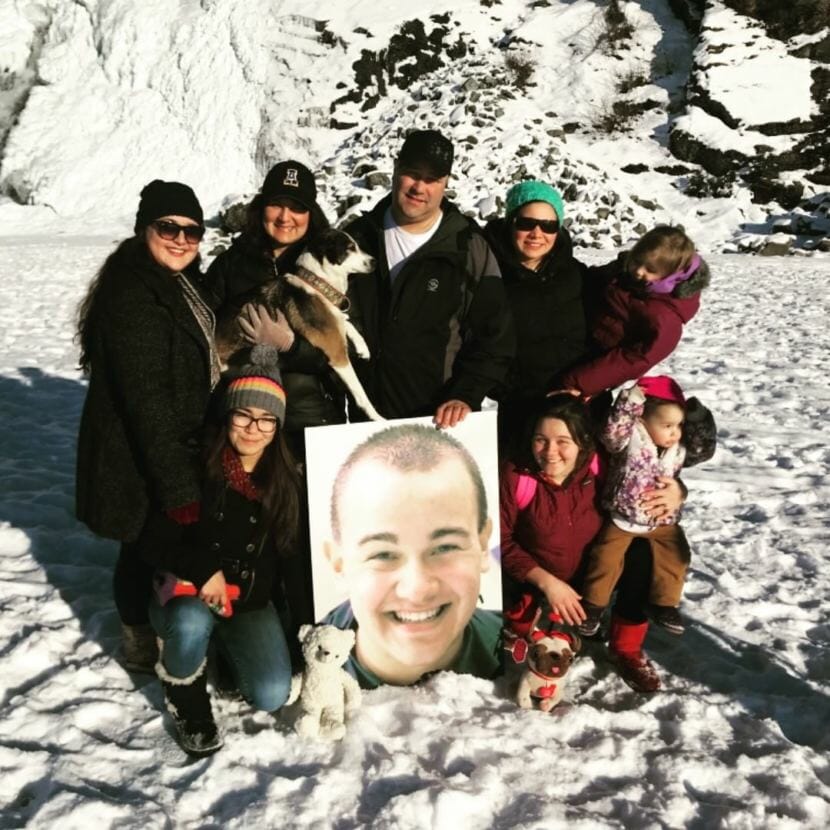
Family members pose with a portrait of Cody Eyre near the Mendenhall Glacier in Juneau in February 2018. Cody Eyre was killed by law enforcement in Fairbanks on Dec. 24, 2017, and his family is seeking more information about the incident.
Family members pose with a portrait of Cody Eyre near the Mendenhall Glacier in Juneau in February 2018. Cody Eyre, originally from Juneau, was killed by law enforcement in Fairbanks on Dec. 24, 2017, and his family is seeking more information about the incident. (Photo courtesy Samantha Eyre Harrison)

Christmas Eve marks one year since the death of 20-year-old Cody Eyre, originally from Juneau. Eyre was fatally shot by Fairbanks Police and Alaska State Troopers. Eyre’s family is holding Christmas Eve events to remember him and to raise awareness about what they see as law enforcement’s poor handling of a mental health crisis.

City police and Alaska State Troopers were called to do a welfare check on Eyre on Christmas Eve, 2017. Eyre, who was walking along Steese Highway in Fairbanks, was distraught, had a handgun, and refused to obey responding officers.

At an October press conference when some police video of the interaction was released, Chief Eric Jewkes described officers’ repeated efforts to resolve the situation peacefully.

“They called out to Cody approximately 78 times,” said Jewkes. “Seventy-eight times they said something like, ‘Drop the gun. Cody, you gotta stop moving, gotta stop walking. Don’t do it. Cody don’t do it. Let’s talk. We can get you help.’ Some other affirmative attempt to let him know there’s another way out of this.”

Chief Jewkes said officers, two of whom had crisis intervention training, fired when Eyre pointed his gun toward them and made a threatening comment. An investigation found the officers’ use of deadly force was lawful, but Eyre’s family disagrees.

Eyre’s sister, Samantha Eyre-Harrison, questions the law enforcement approached the situation from the start.

“It’s really important to be able to differentiate between someone who is having a mental health emergency and someone who is acting with criminal intent. And to make that decision, to make that differentiation right there in the beginning and to employ two different protocols that don’t look the same,” said Eyre-Harrison.

Cody Eyre’s father Kyle points out that some of the responding officers carried assault-style rifles characteristic of what he describes as the militarization of law enforcement.

“For lack of better words, it’s almost like law enforcement has declared war on the American people,” he said.

The Eyres say they are trying to file a lawsuit but continue to struggle to access case evidence, including complete video and audio recordings of the incident.

“The general public has kind of viewed it as like, oh great they released the bodycam footage, you know, it’s a done deal. No, it’s not a deal,” said Eyre-Harrison.

Cody Eyre was Alaska Native, and his family is pushing for more robust culturally sensitive crisis intervention training for law enforcement.

The family is divided between Fairbanks and Juneau, and Cody Eyre’s grandmother, Linda Downs, says she plans to stage a rally on the Capitol steps in Juneau on Christmas Eve to raise awareness about the need for better training.

“Being able to do anything you can to prevent young people from dying is critical I think,” Downs said.

Events are also planned for Fairbanks on Christmas Eve. Eyre-Harrison says the family will retrace the four-mile route Cody walked before his death. Promotion of the walk and other events are part of an ongoing social media campaign.

“We call it #keepwalkingwithcody, and the reason is on the night of his death he was choosing life. he was choosing to go on a walk,” said Eyre-Harrison.

The Eyre family invites the public in Fairbanks to join them for the last mile of the Christmas Eve walk, a candlelight vigil, and a party to follow.

Judge recommends Supreme Court should uphold House District 1 recount results

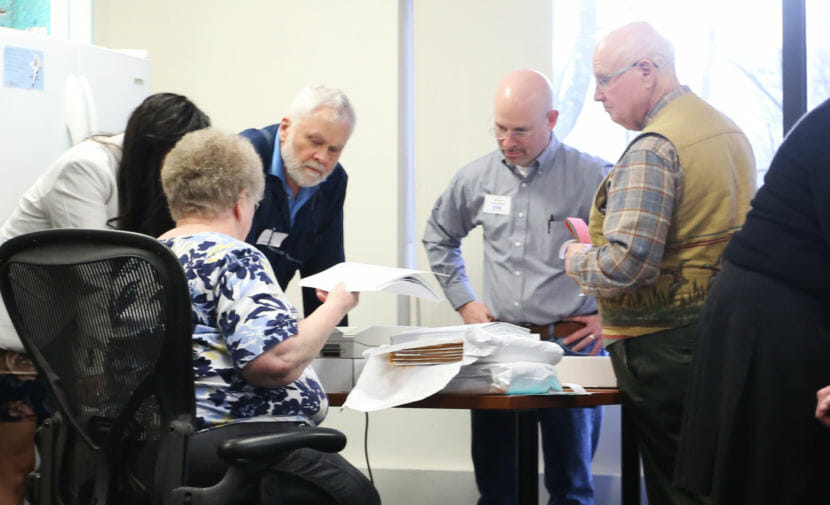
Official observers representing House District 1 candidates Bart LeBon and Kathryn Dodge watch the recount process at the Alaska Division of Elections office in Juneau on Nov. 30, 2018. (Photo by Annie Bartholomew/KTOO)

A Superior Court judge has recommended that the Alaska Supreme Court stick by the findings of the Alaska Division of Elections that made Bart LeBon the winner of the House District 1 race by one vote.

Judge Eric Aarseth was appointed to be a special master to review the case and make recommendations to the Supreme Court, which will hear the case on Jan. 4. He was expected to deliver a report on Friday.

The hearing on Thursday focused on the Nov. 30 recount. Up to that date, Democrat Kathryn Dodge and Republican Bart LeBon were tied.

Aarseth heard arguments picking through nine challenged ballots: three from Dodge, five from LeBon and one they both challenged. The latter ballot had both ovals filled in but also an “X” on the oval for LeBon. The Dodge campaign said it should count as the voter rejecting LeBon, but lawyer Stacey Stone, representing LeBon, said her side thought it should count as a valid voting mark for LeBon.

The recommendation from Aarseth was not to count that ballot. If there was an alternative, he said that vote would count for LeBon because an “X” is a valid vote mark.

The LeBon side argued three ballots with odd markings that were thrown out as invalid should count for him. Stone said they also asked for two absentee ballots from the same address to be counted. Those ballots were excluded from the final tally because they were mixed up in each other’s envelopes.

The Dodge side challenged a questioned ballot from a voter whose address changed when he registered for the Alaska Permanent Fund dividend last year. Under the new law, registering for the permanent fund dividend automatically updates one’s voter registration address. The voter, unaware that his voting address had changed, showed up to vote in District 1 but was not on the roster. He voted for Dodge anyway, but election officials later rejected his ballot.

Aarseth said he would recommend that the Supreme Court not count the ballot.

The judge quoted the statute requiring voters to be signed up in 30 days before the election. He also noted that voters are assumed to understand that their PFD registration will register them to vote at the address they provide.

“If there’s going to be a challenge done on how that statute is applied, that has to be done outside this hearing,” Aarseth said.

Aarseth kept the scope of the hearing quite narrow, using only evidence and testimony about the Nov. 30 recount of the House District 1 ballots, rather than the election itself.

The Dodge side challenged two absentee ballots: One was from a woman who listed her address at an auto glass repair shop, and one came from a doctor with an address at an office. Neither address was an actual residence, but Aarseth kept his view of this evidence quite narrow.

“If people are concerned about whether these folks are not really residents of this district or even of Alaska, that’s for other divisions to investigate,” Aarseth said. “But at the time of the recount, everything the voters filed was consistent with the election laws.”

The doctor provided an affidavit saying he lives part time in California and part-time in another Fairbanks political district. But Aarseth said the doctor’s testimony was gathered after the recount, and his status could not have been known by the Division of Elections.

“We have this affidavit by the voter. My treatment of it is that it is beyond the scope of a recount appeal,” Aarseth said. “Evidence after the recount is not something that can be considered.”

Aarseth said the two absentee ballots, both which were for LeBon, should be counted.

Aarseth will release his written report Friday, recommending that all the rulings by the Division of Elections be upheld by the Supreme Court. If they do so, the vote count will remain the same, with LeBon winning by one vote. The Supreme Court hears arguments in the case on Jan. 4.

Correction: An earlier version of this story misspelled the special master’s last name. It’s Aarseth, not Arseth. 

Site notifications
Update notification options
Subscribe to notifications