KUAC - Fairbanks

KUAC is our partner station in Fairbanks. KTOO collaborates with partners across the state to cover important news and to share stories with our audiences.

Standoff involving suicidal man in front of Fairbanks Memorial Hospital ends peacefully

Fairbanks Memorial Hospital
Fairbanks Memorial Hospital in May 2011. (Creative Commons photo by RadioKAOS)banks

A seven-hour standoff outside Fairbanks Memorial Hospital on Monday was resolved peacefully. Fairbanks Police report receiving a call after 9 a.m. Monday about a suicidal man with a gun in a car near the hospital emergency room entrance. A woman was in the car with the man. It’s unclear if she was there willingly, and if either were hospital patients.

A city Special Weapons and Tactics, or SWAT team, and a State Trooper Special Emergency Response Team, deployed to the hospital.

Fairbanks police spokeswoman Yumi McCulloch says law enforcement successfully talked the man into surrendering without anyone getting hurt.

“We negotiated with him for about six or seven hours, and he did come out of the vehicle. The female came out with him,” McCulloch said. “And he was detained by law enforcement officers, and he was brought into the hospital with the officers and hospital staff.”

The situation forced security measures at the hospital, including alternate access to the emergency room. McCulloch credits the hospital’s handling of the all day standoff.

”The staff at the Fairbanks Memorial Hospital were phenomenal” McCulloch said. “They were very cooperative and helpful, and they provided food and drinks to the officers outside and inside and the negotiators inside.”

McCulloch thanks hospital patients who were cooperative in working around police operations. At a city council meeting Mayor Jim Matherly noted the volatile nature of standoff situations, and recognized how the hospital incident was handled.

”Sometimes the choices that person makes in that predicament decides the outcome,” Matherly said. “And in this case, they were able to communicate and bring it to a peaceful resolution, so I’m very proud of everybody who worked on that.”

The standoff prompted security measures in the neighborhoods surrounding the hospital, including at area schools, where doors were locked, and alternate transportation routes employed after school.

Police say no charges will be filed against the man.

This story contained contributions from Tim Ellis, Dan Bross and Robyne with KUAC. 

Federal judge dismisses Fairbanks Four’s civil case

The Fairbanks Four shortly after their release from prison in December 2015. From left to right: Marvin Roberts, Eugene Vent, Kevin Pease and George Frese.
The Fairbanks Four shortly after their release from prison in December 2015. From left to right: Marvin Roberts, Eugene Vent, Kevin Pease and George Frese. (Photo by Rachel Saylor/Tanana Chiefs Conference)

A federal civil rights suit filed against the city of Fairbanks has been dismissed. U.S. District Court Judge H. Russel Holland’s ruling released Monday, dismisses the suit filed by Native men  known as the Fairbanks Four. George Frese, Marvin Roberts, Kevin Pease and Eugene Vent allege racial bias drove police misconduct, which included coercion of false confessions and fabrication of evidence. They allege that lead to them being wrongfully convicted of murder.

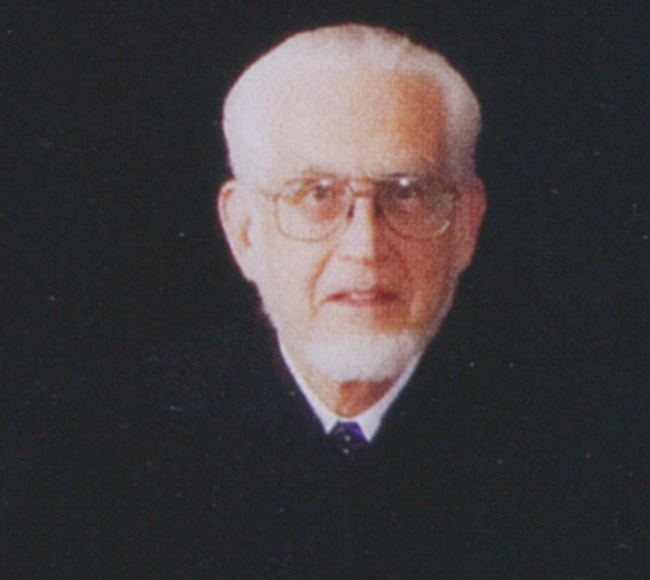
H. Russel Holland is a senior judge in the U.S. District Court of Alaska based in Anchorage.
Judge H. Russel Holland

New evidence pointing to other suspects in the 1997 beating death of John Hartman led to a 2015 hearing and an agreement with the state. The Fairbanks Four’s convictions were vacated. But the agreement stipulated that the convictions were validly obtained at the time.

City attorney Matt Singer said Judge Holland’s ruling hinges on the fact that the agreement does not meet a key legal stipulation for filing this type of federal civil rights case.

“That kind of civil rights claim is not allowed, unless they have first established their innocence before the state criminal court,” Singer said. “And what Judge Holland ruled is that the Fairbanks Four, by settling their case and acknowledging that their original convictions were valid, that they had not obtained a favorable termination.”

Mike Kramer is the Fairbanks Four’s attorney.

“If the question is, was the criminal case favorably resolved? The charges were dismissed and the convictions were vacated. That’s about as favorable as you can get,” Kramer said.

Kramer said the four will appeal to the 9th Circuit Court in hope of getting a more favorable opinion, but notes that’s a two-year process, another legal delay for men who spent 18 years in prison.

“They’re used to justice proceeding very slowly, and — or not proceeding at all,” Kramer said. “And so, you know, they took it well. They understand that this is going to be a long process and certainly not over yet.”

Kramer said the Fairbanks Four case is unique in that most other release dismissal agreements involve charges, not convictions.

The city’s attorney said he expects a similar determination if the case goes before the 9th Circuit.

“Judge Holland followed the precedent set by the United States Supreme Court and by our circuit appellate court,” Singer said. “So I would expect that the 9th Circuit would agree with this decision.”

Judge Holland did not decide on the broader issue of the validity of the 2015 Fairbanks Four agreement with the state, under which the men also agreed not to sue, but now say they signed under duress.

Without much snow, possible ‘green’ Halloween on the horizon for Fairbanks

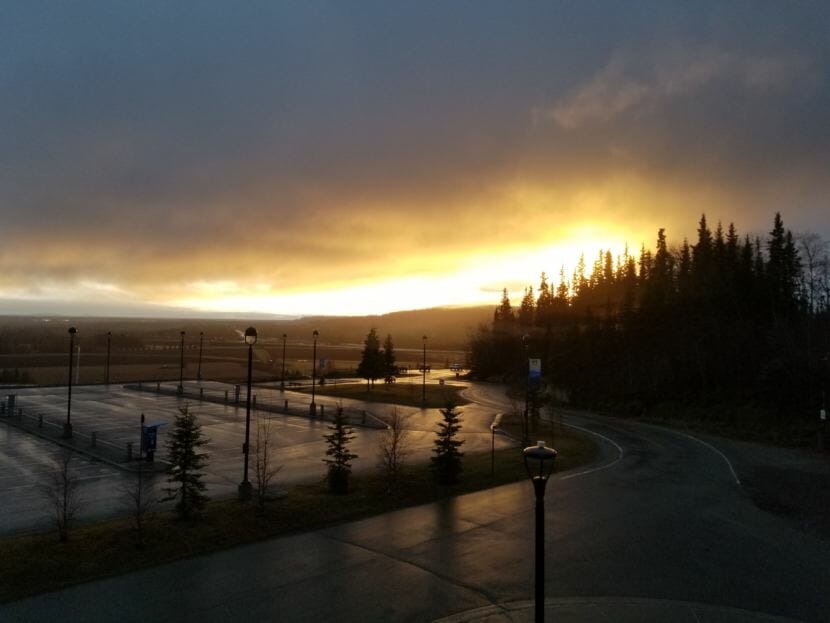
Sunset in Fairbanks on Oct. 22, 2018 (Photo courtesy of the National Weather Service)

With Halloween just over a week out, Fairbanks is looking at the potential of a third straight year with minimal snow cover, and a possible first ever “green” Halloween.

Only trace amounts of snow were on the ground at the airport on Oct. 31 last year, and in 2016. Alaska Center for Climate Assessment and Policy climate specialist Rick Thoman says prior to 2016, you have to go back to 1962 to find another year with such scant snow cover on Halloween. Thoman says since modern record keeping began in 1930 Fairbanks has not had a Halloween without any snow at all on the ground.

”We’ve come close a couple of years with measurable snow not falling until actually on Halloween. Will we this year? Hard to say,” Thoman said. “We’ve got a couple of opportunities coming up when it could snow, but especially in town, it’s gonna be pretty marginal. So it is possible that this we’ll be in the running for a green Halloween.”

Fairbanks first official snowfall of the season at the airport was observed on Saturday Oct. 20, the latest first snow date in the community’s recorded history. The previous record was Oct. 11, 1920. The National Weather Service is forecasting snow across the Eastern Interior including the Fairbanks area on Tuesday, but valley level accumulation is questionable.

”Especially the first inch. That is probably not on the horizon yet for town,” Thoman said. “We are in the time of year though where snowfalls can go up quite dramatically, even with small elevation increases.”

Well above freezing high temperatures forecast this week threaten to melt any flakes that do stick, continuing what Thoman refers to as a remarkable fall.

”All of the state in October so far has been extremely warm. Quite a number of places… every day this month has been warmer than normal,” Thoman said. “And it’s entirely possible that some places could wind up having the warmest September, followed by the warmest October. That would be truly an amazing climate outcome.”

Fairbanks high temperatures are forecast to be 44 Wednesday, 40 on Thursday, and 39 Friday, with another chance of snow.

Walker defends record, challengers offer alternatives in Fairbanks governor candidate forum

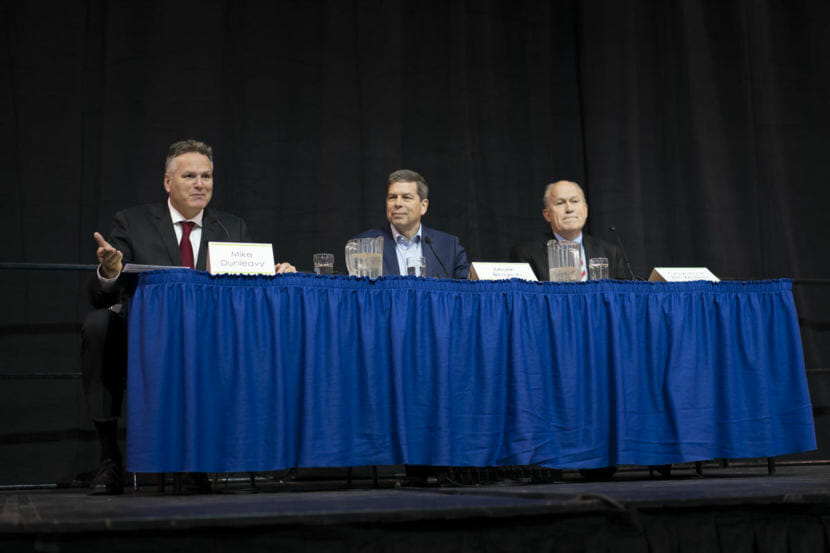
Governor candidates answer questions presented by the Alaska Travel Industry Association Tuesday during the ATIA’s annual convention at the Carlson Center in Fairbanks. From left: former state Sen. Mike Dunleavy, former U.S. Sen. Mark Begich and Gov. Bill Walker. (Photo by Jody Overstreet/Alaska Photo Treks)

Gov. Bill Walker and the two candidates who are running to unseat him pitched their ideas Tuesday on how to promote the state’s tourism industry. Walker and former Republican state Sen. Mike Dunleavy, along with former Democratic U.S. Sen. Mark Begich, talked about tourism and other issues during an Alaska Tourism Industry Association candidate forum at the Carlson Center in Fairbanks.

The incumbent and his two challengers found much to agree on during a candidates’ forum hosted by the organization that advocates for the state’s tourism industry. All three say the state should boost funding for infrastructure like highways, airports and marine ferry and cruise ship facilities to facilitate tourism.

But they also clashed with Walker over his contention that he had to cut funding for the industry and make other tough decisions during the state’s economic downturn.

“Y’know, we have pent-up opportunities in Alaska, but we had to balance our budget,” Walker said. “It was not fun, it was a lot of work; some quit, some didn’t, and we got it done.”

As he has throughout the campaign, Walker defended his decisions to sharply cut the state budget over the past three years after oil prices plunged and Senate Republicans refused his proposals to adopt other sources of revenues.

“You need someone who’s going to bring stability,” Walker said. “So you can look out in the years ahead and not wonder if the price of oil going to cause your revenue to go away. We brought that stability.”

Walker, who politically identifies as an independent, says he wants to help the industry promote year-round tourism, especially for visitors from Asia. Begich says Alaska needs bold leadership to boost tourism. He cited his push to get the Dena’ina Civic and Convention Center built 10 years ago, when he was mayor of Anchorage.

“Y’know when I was mayor of Anchorage, we had the same problems – budget crash, crime up – everything you can imagine,” Begich said. “We not only worked on that, but we also did something else: even through the year before it had failed at the ballot box, we said we’re going to take on building the convention center for our city.”

Dunleavy, a conservative Republican, is the front-runner in the three-way contest. He says he’d take a small-government approach for both the tourism industry and the state’s economy.

“I believe that we can get this budget under control,” Dunleavy said. “And I believe, through the right policies and working directly with you folks, we can actually grow your industry, as well as others, create more jobs.”

The three candidates all pledged to work with federal authorities to increase access to national parks. Dunleavy says he’d also task the state Fish and Game Department to increase stocking fish in lakes and to develop policies that would ensure there’s enough wildlife for tourists to see.

“What I want to make sure you know is that you’re going to have a governor who’s not going to do things to you, but help you actually grow your business as we move forward,” Dunleavy said.

All three candidates also said they’d restore funding for the travel industry association’s marketing efforts that the Legislature had re-appropriated over the past few years. The funding, which comes from a tax on rental vehicles, fell from $16 million in FY2013 to $1.5 million last fiscal year, after Walker vetoed part of the appropriation. He’s recently pledged to boost funding to $12 million.

Both challengers say they’d protect the tourism-marketing funding from future re-appropriations. Begich says the funding is essential, the recession notwithstanding, to enable the industry to grow.

“Even in bad times, you have to invest,” Begich said.

Begich says he also favors a two-year budget cycle, to give businesses in tourism and other industries more time to plan ahead.

Federal judge weighs Fairbanks Four civil case

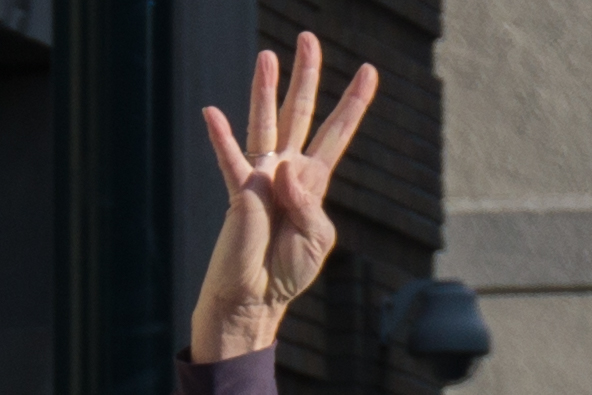
Protesters at the Capitol in Juneau raised four fingers in support of the Fairbanks 4 on Oct. 24, 2015.
Protesters at the Alaska State Capitol in Juneau raised four fingers in support of the Fairbanks Four on Oct. 24, 2015. (Photo by Jeremy Hsieh/KTOO)

It’s up to U.S. District Court Judge H. Russel Holland to decide if a federal civil rights suit filed against the city of Fairbanks will proceed. Holland heard attorneys argue Wednesday in Fairbanks on a city motion to dismiss the suit filed by the Fairbanks Four.

George Frese, Marvin Roberts, Kevin Pease and Eugene Vent allege racial bias drove police misconduct — including coercion of false confessions and fabrication of evidence — that led to them being wrongfully convicted of murder.

New evidence pointing to other suspects in the 1997 beating death of John Hartman resulted in a fall 2015 hearing, and an agreement with the state, under which the Fairbanks Four convictions were vacated. City attorney Matt Singer said the agreement does not meet the standard required to sue for damages.

“There’s a United States Supreme Court case that requires that before somebody comes to federal court in this kind of lawsuit, a malicious prosecution lawsuit, they first have to show what’s called a favorable termination in the criminal case,” Singer said. “And to do that, you have to show that you were — essentially, that you were found innocent.”

That’s an issue in the Fairbanks Four case because although the agreement vacated the men’s convictions, it did not make any determination about actual guilt or innocence. New York based civil rights attorney Anna Benvenutti Hoffman argued on behalf of the Fairbanks Four. She contends the agreement with the state agreement constitutes a positive determination, and leverage for a civil suit.

“Once someone’s been exonerated, once they’ve been — their conviction’s been vacated, you know, they don’t have any further incidences, they can vote, then that’s when they can bring suit in federal court,” she said.

Judge Holland will decide which interpretation is right, according to precedent. Another Fairbanks Four attorney, Mike Kramer, calls the matter tricky.

“There’s, you know, many, many similar but not identical cases out there that both discuss these types of, you know, release dismissal agreements,” Kramer said. “As well as what was discussed as the favorable termination rule. Very few cases have ever involved this type of situation.”

Kramer said he expects Judge Holland to issue a ruling on the city’s motion to dismiss the case within a short time frame. Marvin Roberts, one of three of the Fairbanks Four who was in attendance at the oral arguments, expressed optimism following the proceeding.

“We just hope for a positive outcome and we just like to thank all of our supporters that got us here.”

The Fairbanks Four are seeking damages from the city for 18 years they spent in prison. Under the 2015 agreement they signed with the state, the men agreed not to sue, but they signed the deal under duress.

Officers in fatal Cody Eyre shooting won’t be charged

The state will not charge officers who shot a Fairbanks man last Christmas Eve. An Alaska Office of Special Prosecutions report says three state troopers and two Fairbanks police officers lawfully used deadly force against 20-year-old Cody Eyre, originally from Juneau.

Citing the report, Fairbanks police spokeswoman Yumi McCullough described what police and troopers said led to police firing on Eyre.

Cody Eyre
Cody Eyre at a family cabin in Cantwell in winter 2017. (Photo courtesy Samantha Eyre-Harrison)

“Mr. Eyre did point his gun at the officers and made some pretty strong statements towards them,” she said. “I don’t want to repeat them, because they are pretty graphic. They are in the declination letter, and that made the officers fear for their lives, the lives of their fellow officers and they were close to a residential area, and needed to make sure that threat was stopped.”

The report says officers were initially contacted to check on Eyre by a friend in Wasilla who said he’d seen Eyre on Facebook talking about killing himself. Eyre’s mother called 911 for help, saying her son was depressed, had been drinking and had left the house on foot with a holstered handgun. The report says Eyre pointed his gun at an officer, and repeatedly threatened to kill himself as officers followed him along roads on the east side of Fairbanks.

There is police body cam footage of the encounter, but McCullough said its release has been delayed until an Oct. 10 press conference.

“Both agencies agreed that it was very important to make sure that the letter was available to the public prior to the video,” she said.

McCullough added that the video also has to be edited down before public release. The report details repeated attempts by officers to get Eyre to drop his gun and to get him help before the situation escalates.

“Officers don’t take incidents like this very lightly at all,” McCullough said. “And we are concerned about the Eyre family and know that they have suffered a loss and want to be respectful to them.”

The report said five officers fired more than 40 rounds in two volleys. In between, they said Eyre was still a threat. First aid was administered but Eyre died a short time later at the hospital. The fatal wound was shot to the back of his head.

Eyre’s handgun was not fired and only carried a single round. Speaking remotely from California, family attorney Mark Choate said they are disappointed with the Office of Special Prosecution report.

“The decision to not prosecute does not mean that the shooting was ‘justified,'” Choate said. “The decision to not prosecute simply means that the special prosecutor determined that it could not prove beyond a reasonable doubt that the conduct was criminal. We remain convinced that the evidence will show that Cody’s death was the result of poor training and judgment by a SWAT-ed up group of officers who failed in their primary duty to protect Cody.”

Cody Eyre was Alaska Native, and his family believes race was a factor in how law enforcement responded. They are preparing a civil rights lawsuit, and plan to issue a press release soon.

Site notifications
Update notification options
Subscribe to notifications