KUAC is our partner station in Fairbanks. KTOO collaborates with partners across the state to cover important news and to share stories with our audiences.
Several suspects are in custody in connection with a North Pole murder.
Alaska State Troopers report that a multi-agency investigation resulted in the arrest of six people, including two juveniles, related to the fatal July 22 shooting of Charles Baptiste, 60, at a North Pole residence.
Troopers say the six were involved in a plot to rob Baptiste.
Baptiste was killed and another man at the residence sustained a non-fatal gunshot wound.
The suspects face murder, assault and other charges.
The director of the Tanana Chiefs Conference Village Public Safety officer program has been charged with leaving the scene of an accident and criminal mischief.
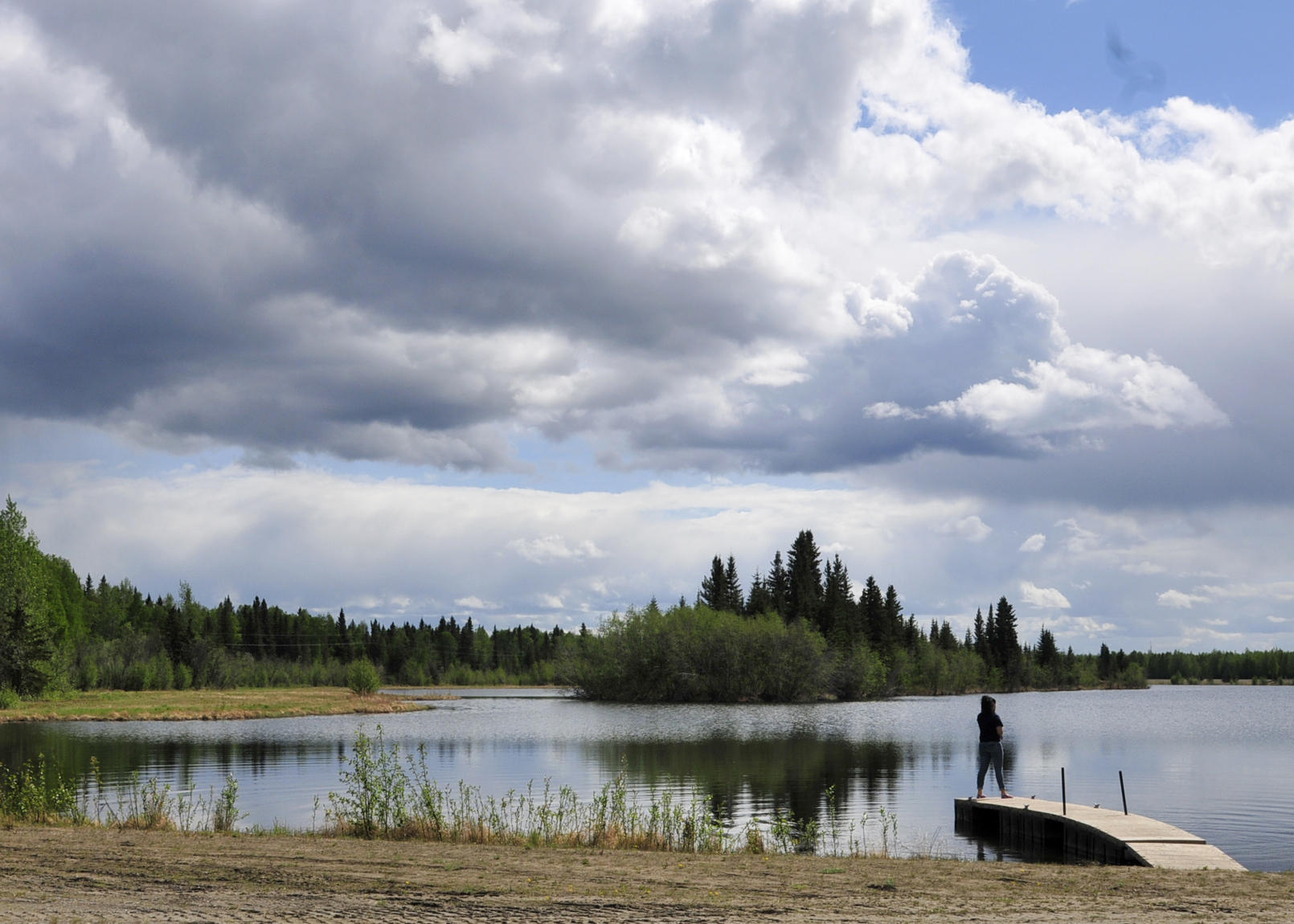
Alaska State Troopers report that 41-year-old Jody Potts of Fairbanks used her truck to push a car blocking her from getting out of a parking spot at the Tanana Lakes Recreation Area on July 4th.
The car was pushed into the middle of a parking lot and sustained front end damage.
Potts drove off, but a witness followed her and contacted Troopers.
Potts is a rural public safety leader and has been a keynote speaker at the Alaska Federation of Natives convention.
Asked if Potts is still on the job, TCC spokeswoman Doreen Deaton says the organization does not comment on personnel matters.
A TCC statement describes Potts as an “effective advocate for public safety in Alaska for over a decade”, adding that her “tireless commitment to Interior Alaska has been instrumental to changes in policies and standards resulting in the improvement of rural public safety”.
A Fairbanks Four banner at the 2015 Alaska Federation of Natives Conference. (Photo by Mikko Wilson/KTOO)
A federal civil lawsuit against the city of Fairbanks is the latest development in an unresolved case that continues to haunt the community.
Four Native men, known as the Fairbanks Four, allege racial bias driven police misconduct, including coercion of false confessions and fabrication of evidence, which lead to their being wrongfully convicted of a 1997 murder.
New evidence heard in 2015 pointed to alternative suspects in the 1997 beating death of Fairbanks teenager John Hartman, but exoneration of the Fairbanks Four, long jailed for the murder, hinged on a slow legal process, and the men opted to settle with the state and city.
The agreement vacated the convictions of George Frese, Kevin Pease, Eugene Vent and Marvin Roberts, but also barred them from suing for damages, a stipulation they’re now challenging in federal court.
Fairbanks Four attorney Mike Kramer said the men had little choice but to go along with the Dec. 17, 2015, settlement.
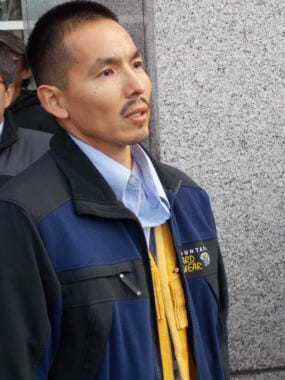
One of the Fairbanks Four, Marvin Roberts outside the Fairbanks court house in 2015. (Photo by Dan Bross/KUAC)
“This is an involuntary agreement, thrust upon three men who’d been incarcerated for an excess of 72 years, wrongfully, that wanted to get out for Christmas,” Kramer said. “Of course, Marvin Roberts was out on parole, but the other three depended on him signing this agreement as well. It was an all or nothing.”
Kramer said the Supreme Court only allows such agreements under strict guidelines.
”That is essentially whether the agreement was voluntary and whether it serves the public interest,” Kramer said.
Kramer maintains the Fairbanks Four release agreement does not serve the public interest, especially from the city’s perspective.
”If the city really believed that these guys were murderers, it’s hard to imagine how public policy can be served to set murderers free, in exchange for them to cover up official misconduct, or not bring claims alleging official misconduct,” Kramer said.
Kramer said the case is unique in that others challenging such agreements have involved lesser crimes.
City attorneys have requested the case be dismissed.
Their motion maintains the Fairbanks Four voluntarily agreed to the settlement, an agreement they’re using to show they were wrongly convicted, and at the same time challenging in court.
City attorneys declined to comment, or did not reply to requests for comment, but their motion said damage suits require an official finding of innocence, something the settlement does not provide.
The Fairbanks Four legal team filed a response to the city’s motion to dismiss the case July 2.
The city has until Aug. 6 to reply, after which the judge can set up a time to hear arguments on the dismissal motion.
The Hartman murder remains unsolved.
No physical evidence has linked anyone to the crime, and none of the alternative suspects pointed to in the 2015 hearing have been charged.
Alaska State Troopers released the identity of the trooper who fatally shot a Copper Center man on early Friday.
Glennallen-based Alaska State Trooper Kamau Leigh shot Eric Hash at a Copper Center residence. Troopers say family members called, saying Hash had assaulted one person, and others were in fear of being hurt.
Troopers say Hash advanced toward Leigh’s patrol vehicle with a container of an “incapacitating, flammable liquid.”
The six-year troopers veteran Leigh fired at Hash, who was medivaced to a hospital, but later died.
Alaska Bureau of Investigation will investigate the shooting, after which the Office of Special Prosecution will make a determination on whether deadly force was justified.
Leigh was one of five officers involved in a September 2015 shooting in Fairbanks. Vincent Perdue, 33, died and Sarah Smoke, 20, was injured after a vehicle chase in which they fired on pursuing officers.
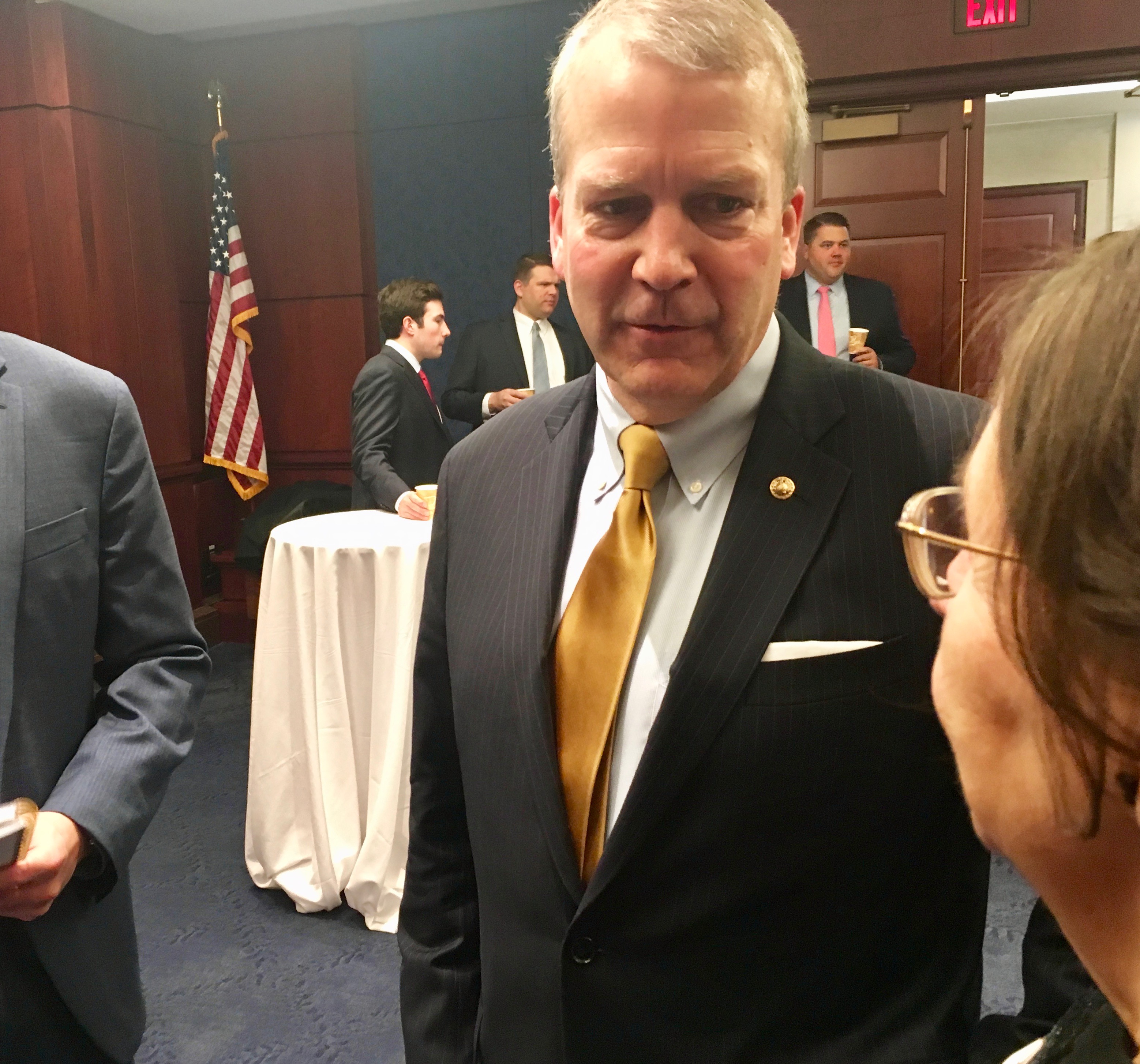
U.S. Sen. Dan Sullivan. (Photo by Liz Ruskin/Alaska Public Media)
Sen. Dan Sullivan emphasized that the federal government is not currently set up to properly manage a flood of immigrants seeking asylum.
Discussing Trump Administration immigration policies in Fairbanks on Sunday, Sullivan said the federal government needs to provide new detention centers and additional judges, to more efficiently process a nationwide backlog of 700,000 immigrants.
”You got to keep families together, but you’ve got to have facilities to help do that,” Sullivan said. “If you keep families together and expedite the processing, you can essentially tell the child and the mom, ‘OK, you qualify for asylum,’ or ‘you don’t.’”
Sullivan stressed that seeking a better economic life does not qualify immigrants for asylum.
Sullivan co-sponsored two bills addressing the immigration situation, which he said has suffered from executive branch policy swings, noting that the previous approach, known as “catch-and-release,” also was problematic.
“You (had) people who were coming to the country illegally, and then they’re essentially saying, ‘OK come back for your hearing in four years.’ And that’s what’s been going on, too. Well, guess what? None of those people show up,” Sullivan said. “And when that word gets out, that that’s happening, it actually creates a flood of more migrants, many of whom don’t qualify for asylum.”
Sullivan said the bipartisan legislation he supports will provide a long-term solution to the problem.
DEC Contaminated Site Specialist Danielle Duncan thinks it’s unlikely the DDT and chlordane present a threat to human health, because it’s been re-buried and because so far only residues of the toxins have been found. (Photo courtesy Eielson Air Force Base)
The Army Corps of Engineers last fall halted cleanup of fuel-tainted soil near Birch Lake, about 60 miles south of Fairbanks, when workers uncovered buried junk that included barrels with residues of a different contaminant – the banned pesticides DDT and chlordane.
Contractor workers discovered the junk while excavating soil contaminated by leaky fuel-storage tanks in an area that’s now part of the Birch Lake State Recreation Site, cleanup project manager Beth Astley said.
“We ran into some trash, some buried metal, some drums that were empty,” Astley said. “When we got to some rusted-out cans of insecticide that were labeled as containing DDT, we stopped.”
Anchorage-based Bristol Environmental Remediation Services had to stop excavating the site because its contract called for removal of soil contaminated by fuel, Astley said.
“That’s a different contaminant than we thought we were removing, which is petroleum,” Astley said. “So we stopped, we sampled, and at that point, we decided to terminate the removal effort until we could determine the full extent of this buried debris that may contain pesticides.”
The Birch Lake cleanup is one of several the Corps has conducted in recent years along the old Haines to Fairbanks Pipeline, a 626-mile, 8-inch line built by the military in the 1950s and shut down in 1973.
Astley and other Corps officials talked about the discovery of the toxins last week at a public meeting in Delta Junction.
“The pesticide contamination is different,” Astley said, “Because it requires us to ship soil out of the state for disposal, because there’s no permitted landfills in the state of Alaska that will accept this soil contaminated with pesticide.”
Astley said workers found the debris about 3 feet below the surface in an area between where two large above-ground tanks were located.
She couldn’t say exactly how much of the debris is buried at the site.
A geophysical survey the Corps conducted at the site last month may help agency officials estimate the amount of excavation that’ll be needed to remove the junk, which includes some crushed 55-gallon drums that may have been used to mix the pesticides.
“We have a better idea of the area that contains this buried waste, which includes mostly crushed drums,” Astley said. “But we don’t know how much of that might contain residue from pesticide drums that were crushed and disposed of.”
Astley said the DDT and perhaps the chlordane were being used to kill mosquitoes, a common use for DDT from when it was developed in 1940s until it was outlawed in 1972.
It’s categorized it as a carcinogen, and tests have shown other health impacts.
Astley said the toxins shouldn’t present a health threat now that the junk has covered with a plastic liner and re-buried with clean fill.
“Now the next step is to go back and to investigate the extent of this buried debris and to remove any hazardous debris or soil remaining at that site,” Astley said.
Astley said once that analysis is done, Corps officials will develop a new contract would to remove the junk and contaminated soil. She says if all goes well the work could be done in the summer of 2020.
Astley’s state counterpart agrees the junk shouldn’t threaten human health, both because it’s been re-buried and because it appears there were only small, residual amounts of the pesticides in the crushed drums and cans.
“This isn’t something that’s on the surface – this isn’t something that if you were to be on-site you’d encounter,” said Danielle Duncan, a contaminated-site program specialist with the state Department of Environmental Conservation. “As far as an immediate threat to human health and the environment, that’s not the case.”
Duncan, who’s been working with Astley on the cleanup projects, said the Corps’ tests showed the presence of the pesticides in soil around the buried junk, but she thinks it’s unlikely to have seeped into the groundwater or the lake’s surface water.
She said DEC however will likely conduct tests to confirm that.
“That is on our radar, as is groundwater (testing),” Duncan said.
Astely said the Corps has finished its cleanup of the Birch Lake site and another near Quartz Lake.
The Corps officials now plan to study another lesser-known site near Tenderfoot Creek, just north of Shaw Creek, where the pipeline burst in 1971 and spewed fuel into the creek.
Close
Update notification options
Subscribe to notifications
Subscribe
Get notifications about news related to the topics you care about. You can unsubscribe anytime.