Lisa Phu

Managing Editor, KTOO

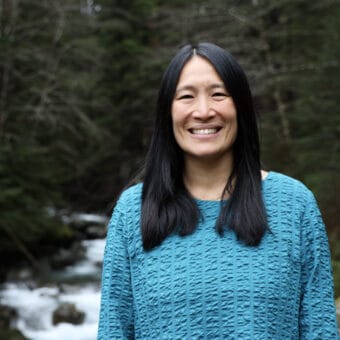
"As Managing Editor, I work with the KTOO news team to develop and shape news and information for the Juneau community that's accurate and digestible."

Former female inmates find support and a home in Juneau’s Haven House

Haven House's first resident, Delia Williams (left), sits with Haven House staff Jennifer Brown and Kara Nelson. (Photo by Lisa Phu/KTOO)
Haven House’s first resident, Delia Williams (left), sits with Haven House staff Jennifer Brown and Kara Nelson. (Photo by Lisa Phu/KTOO)

Juneau’s first transitional home for women recently paroled or released from prison is welcoming its first residents.

“This is the resident manager’s room here and we have a bathroom. Of course we need three bathrooms because we have up to nine women, so women and bathrooms are a must,” says Haven House Director Kara Nelson as she walks through the two-floor, six-bedroom house.

“They’re pretty standard rooms, but not too small and everything is really nice and we really want it to be homelike because it is their home,” Nelson says.

All the women get a twin bed, closet space and half a dresser. On the bottom floor, there’s a washer and dryer, and a den with computers, a TV and a big bookshelf. Upstairs, there’s a living room, dining room, kitchen “and then we have our amazing back porch where I envision amazing barbeques,” Nelson says.

In the den, Kara Nelson holds up a blanket given to Haven House by U.S. Sen. Lisa Murkowski. (Photo by Lisa Phu/KTOO)

Once a week, the women share a group meal – spaghetti and meatballs on this day – and Nelson says that’s when it hit her. After years of working on the project, Haven House has finally become a home.

Tall Timbers Neighborhood Association v. Planning Commission

Haven House is part of a zoning appeal to the Juneau Assembly taking place at 5 p.m. Monday in City Hall. The Tall Timbers Neighborhood Association is challenging the Planning Commission’s October issuance of a conditional use permit for Haven House.

“Just having everyone sit there, especially those women. They’re very unique and I feel like they were meant to be here. I broke in tears right before dinner,” she says.

Haven House provides women who’ve left prison a place to call home for up to 2 years. It’s a structured living situation where they have to come up with an individual action plan and get the support to follow it through.  The women are expected to find a job, pay $550 in rent and help with household chores.

“It’s a place that you get to be vulnerable for the first time and, of course, when you’re vulnerable, it’s part of your freedom. It’s a place where you get to dream again and there are people that are going to do whatever it takes to make sure what you need is going to happen. And so, all they have to do is want it and follow the rules,” Nelson says.

The residents have to meet with Nelson once week to go over their plan and they must attend some sort of women’s support, recovery or Bible group.

Haven House will be able to accept up to nine women. Right now, three women live there – a live-in manager and two residents.

Twenty-six year old Samantha Garton is one of them. She just moved in after spending a month at Lemon Creek Correctional Center for using meth.

“Being here is probably the biggest blessing that’s ever happened to me. I love being here,” Garton says.

She’s working at Silverbow Bakery. She wants to take online business courses and has hopes of being the catering manager. Her primary goal, though, is getting her 8-year-old son back in her life.

“That was my biggest struggle in life was giving my rights up because of my addiction, and I need to get better before I can have him,” Garton says. “It’s not going to happen overnight, so I’m taking it one day at a time.”

From left to right: Haven House residents Samantha Garton and Delia Williams, Director Kara Nelson and Administrative Assistant Jennifer Brown. (Photo by Lisa Phu/KTOO)

Delia Williams, 34, is working toward a similar goal. Her 12-year-old daughter lives in Haines with Williams’ mother. Williams was the first former inmate to move into Haven House on March 17. She works at the Juneau Empire and goes to support groups and recovery meetings.

For Williams, living at Haven House means accepting support from others.

“For me, it was really hard to ask for help or to accept anything from anybody just because, I don’t know, it made me feel bad. But just opening my eyes and feeling that support and lifting me up is really amazing,” Williams says.

Jennifer Brown says that’s the beauty of Haven House. Brown is the administrative assistant and also a former inmate.

“You know that you’re not alone in addiction and you know that there are people going to be supporting you and showing you how to be sober and how to work and how to live and how to get things back, just to give you the foundation that you need,” she says.

Brown says she’s happy to work for people who want help and are ready for it.

Juneau Schools replace controversial texts with book by First Nations writer

"Shin-chi's Canoe" by Nicola Campbell, “Not My Girl” and “When I Was Eight” both by Christy Jordan-Fenton and Margaret Pokiak-Fenton, and “My Name is SEEPEETZA” by Shirley Sterling will be available in fourth grade classrooms and elementary school libraries. (File photo)
“Shin-chi’s Canoe” by Nicola Campbell, “Not My Girl” and “When I Was Eight” both by Christy Jordan-Fenton and Margaret Pokiak-Fenton, and “My Name is SEEPEETZA” by Shirley Sterling will be available in fourth grade classrooms and elementary school libraries. (File photo)

The Juneau School District has chosen a book to replace the controversial texts it decided to remove from the fourth grade language arts curriculum.

Last August, community members raised concerns about school texts depicting Alaska Native and Native American tragedies, including the boarding school experience in Alaska. The texts were called distorted, inaccurate and insensitive.

The district has chosen “Shin-chi’s Canoe” by Nicola Campbell.

Nicola Campbell is a First Nations writer from British Columbia. Her children’s book, “Shin-chi’s Canoe” depicts life in an Indian boarding school from a child’s perspective.

In the free-verse picture book, a character describes being punished for not understanding English – “They cut her long braids and threw/ them away/ and washed her head with kerosene.”

Paul Berg is a former teacher and a cultural specialist at Goldbelt Heritage Foundation. He says even though “Shin-chi’s Canoe” describes a boarding school in Canada, he thinks it’s accurate to what Alaska Natives experienced.

“The stories, the accounts that I’ve heard from elders have been pretty brutal treatment during the boarding school years in Alaska, so that would not be an exaggeration,” Berg says.

Berg evaluated the controversial texts, which are part of the McGraw-Hill Reading Wonders program. His report on the readers was the formal complaint that led to their removal. He said the texts misrepresented the historical reality and marginalized the experiences of the victims.

“Shin-chi’s Canoe” and other books the district is ordering for the classroom are interim solutions. When the superintendent decided to remove the McGraw-Hill readers, he said they’d be replaced by place-based material developed locally in partnership with Goldbelt Heritage.

Berg says this takes time and involves historical research, like interviewing elders. He says the local material will depict real events and share the cultural life of the Native community. He says it would be great to have material describing Tlingit cultural ceremonies that are still part of the Native community in Southeast.

“And just having an account of that even, for example, in the reading program would be a great cross-cultural sharing. But also, for the Native students, an affirmation in the school system of a part of their lifestyle,” Berg says.

Ted Wilson is the district’s director of teaching and learning. He says the district spent about $1,300 for 90 copies of “Shin-chi’s Canoe,” which will be distributed to fourth grade classrooms for use in small reading groups.

He says McGraw-Hill plans on replacing the four readers the Juneau School District removed with new readers at no cost.

Juneau could lose 18 teachers under latest state budget proposal

The Juneau School District offices. (Photo by Heather Bryant/KTOO)

Deeper education cuts in the Senate’s version of the operating budget could mean making an additional $2.2 million in reductions to Juneau’s schools. It would likely hit teachers the most.

“The Senate funding is very alarming to us and if that should come to pass, that will be a very dramatic hit to our budget for next year. It will hurt us very much. It will hurt the high schools quite a bit,” says David Means, the Juneau School District’s finance head.

The school board approved last month an $86 million budget for next school year. It maintains current class sizes, cuts three instructional teaching coaches and decreases funding for activities.

Means says the district was reluctant to make cuts to the classroom.

“But if we have a 4.1 percent decrease to our state funding for next year, on top of the other decreases in state funding, we’ll have to look at our classroom and that means we could potentially be reducing about 18 teacher positions,” Means says.

Class sizes in grades six to 12 could increase by three more students. Kindergarten to fifth grade class sizes would increase by one.

The approved budget already has cuts to high school activities. Means says the Senate’s version of the budget may end funding to elementary and middle school activities.

The district will talk about budget issues tonight with the Juneau Assembly.

Means says the district will present the budget as approved by the school board, which means asking for a local contribution of almost $25 million, and another almost $800,000 for activities and other expenses. Means say he’ll also bring up the potential legislative reductions.

Rie Muñoz leaves a legacy of delight, joy and laughter

Rie Muñoz with her dog Muncie in the Mendenhall Wetlands, Juneau in 2008. (Photo by Mark Kelley)

Beloved artist Rie Muñoz passed away Monday night at Bartlett Regional Hospital in Juneau after a stroke. She was 93. Muñoz was active until the end, a prolific artist and traveler who drew inspiration from everyday Alaskans.

Rie Muñoz was born in southern California in 1921 as Marie Mounier. Her parents were from Holland and she spent a lot of her childhood there, where Rie was a common nickname.

Daughter-in-law Cathy Muñoz says, as a teenager, Rie and her two brothers were separated from their parents for 4 years. They were on a boat to the United States and their parents were supposed to meet up with them one week later, but World War II broke out.

“It was her brothers and her that went on to California and on their own, they took care of themselves, they got odd jobs, they got a place to stay. After she graduated from high school, then she was reunited with her parents,” Cathy Muñoz says.

Rie Muñoz moved to Juneau in 1950, traveling by steamship up the Inside Passage. In 1951, she and newlywed husband Juan Muñoz Sr. went to teach on King Island, located in the Bering Sea, near Nome. “King Island Christmas” is based on her time there. Muñoz illustrated the children’s book and the late Jean Rogers wrote it.

Rie Muñoz teaching in King Island in 1951. (Photo courtesy Juan Muñoz)

After their time on King Island, Muñoz and her husband later divorced and she raised their son, Juan.

“When he was young, they were often on the road in the summertime. They would load up her van with artwork and they would travel to remote communities and they did what was called a series of clothespin art shows, where they would come into a community and string a line and then hang her paintings for sale,” Cathy Muñoz says.

That built up Rie Muñoz’s following and reputation as an artist. After holding a number of jobs like teacher, journalist and curator at the Alaska State Museum, Muñoz started making a living as an artist in 1972.

Kes Woodward is an artist, art historian and teacher. He met Muñoz in 1977 when he moved to Juneau to be the state museum curator.

He said Muñoz considered her work expressionistic. She was known for her watercolors of Alaska scenes, such as fishermen at work, children at play and life in remote villages. Woodward says Muñoz was the mostly widely traveled Alaskan artist and her art focused on Alaskan people.

“She depicted them enjoying themselves. For her, Alaska is a place that is joyous. It’s a place full of delight and joy and laughter, and I think that’s her real legacy is that she captured that better than anybody else, better than anybody ever has,” Woodward says.

Muñoz described her process in 1985.

“The subjects that I like to paint are people, people doing things. Now that doesn’t mean somebody in an office typing. But people doing things that appeal to me such as working outside in any sort of occupation mostly. And I go to many, many places to sketch and then come back with those sketches and do the paintings from those sketches,” Muñoz said.

Muñoz was speaking in a KTOO-TV series “Conversations.” At the time, she said she was painting up to 85 original works a year.

A Rie Muñoz weaving hangs in the office of daughter-in-law Rep. Cathy Muñoz. (Photo by Skip Gray/360 North)

“I think that art should be creative and honest. And by creative, I mean just that – you have to create something out of yourself. As far as the honesty is concerned, I think that an artist should paint exactly what he or she wants to paint and not ask him or herself, ‘What if I paint this, will this sell?’ It just doesn’t work that way,” Muñoz said.

Her work has been exhibited in numerous museums and galleries in Alaska, Seattle and elsewhere in North America. Her work is also in many homes.

“Well, I find my art in a lot of bathrooms and one reason I do is because I’ve done a number of nudes and, of course, they’re perfect in a bathroom,” she said.

Muñoz’s death was unexpected. She was at Easter Brunch on Sunday. On Friday night, she went to her granddaughter’s first solo art show. As her granddaughter was growing up, they used to spend hours together, sitting side by side, painting and sketching.

Juneau prison deals with overcrowding by housing women in a tent

A view inside the tent at Lemon Creek Correctional Center as seen from a security monitoring screen. (Photo by Lisa Phu/KTOO)

Alaska’s prison population is the third fastest growing in the country, and the prisons are over capacity. The crowding problem is especially evident at Juneau’s Lemon Creek Correctional Center where half the female inmates live in a tent outside. Some of them actually like it, but it’s an indication of a problem one state senator is trying to fix.

“It kind of looks like a greenhouse from the outside,” says 29-year-old Lemon Creek inmate Catherine Fredrick. She lives in the tent. “It has bunks all in one row and we actually house more than the dorm does.”

The 20 by 30 foot curved roof canvas tent sits on a raised wooden platform. You can see it as you enter the grounds of the Lemon Creek Correctional Center and it really does look like a greenhouse. When I first visited the prison, I had no idea women, up to 20 of them at a time, were living there.

Catherine Fredrick at a prison event in the Lemon Creek Correctional Center gymnasium. Fredrick lives in the tent. (Photo by Lisa Phu/KTOO)

“It’s not as bad as it looks, you know. Sometimes it gets cold in the winter, but they allow for us to have an extra blanket if it’s really cold out. And in the summer, it’s hot,” Fredrick says.

That’s when they can open a window or decide to walk outside to get fresh air. Inside the prison, it’s different.

“You don’t open your own doors, it’s always keys open the doors, moving gates, you hear the clanking, you hear the keys rattling, you hear the bells going,” Fredrick says.

There is one big con with the tent, though. No running water. Two porta-potties sit outside between the tent and the entrance to the prison.

“The outhouse gets full quick when we have too many people, so you have to use the broom with a plastic bag on the end to push the poop down, and that’s kind of disgusting but we take one for the team,” Fredrick says.

Department of Corrections Commissioner Ronald Taylor admits the living situation isn’t adequate, especially without running water. But given the prison overcrowding situation, he says he doesn’t have much choice.

“As long as the housing issues are what they are, then the tent is going to be used for that as an overflow,” Taylor says.

It’s been used that way for more than 15 years. Men have stayed there before, but lately it’s been for women. Since 2002, Taylor says the number of female inmates in the state has been growing at a faster rate than males.

He says the state’s primary prison for women, Hiland Mountain Correctional Center in Eagle River, recently had a daily count of 441. That’s almost 50 people over capacity.

Taylor says overcrowding issues throughout the state prison system will continue to affect the situation at Lemon Creek.

“When we’re able to really manage our population to where that’s no longer an issue and we can consistently stay down below our numbers in terms of the overflow, then I think that we’re not going to utilize the tent for that,” Taylor says.

A December report from the state’s legislative audit division called the tent a weakness for security reasons. But inmate Veronica Parks comes back to the living standards issue. She lives in the dorm now, but remembers how she used to bang on the prison door for an hour before being let inside to shower.

“We shouldn’t be holding girls in here that we can’t put inside the building,” Parks says.

State Sen. John Coghill has introduced a bill that he hopes will ease the prison overcrowding issue and get more Lemon Creek inmates inside the building.

Sen. John Coghill, R-North Pole (Photo by Skip Gray/360 North)

His proposal would use electronic monitoring to keep nonviolent offenders and people awaiting trial out of prisons, while providing incentives for them to go to treatment programs. The bill would also cap the amount of time someone is in prison for a probation violation.

“We can’t afford another jail. Where would we build it and how would we build it when we don’t have the money?” Coghill says. “So that’s the pressure to keep us being creative, to give people avenues to succeed, hold them accountable and maybe jails isn’t the best way to do it.”

Coghill says he didn’t previously know about the tent at Lemon Creek, but he finds it troubling.

“Just because they’re in prison doesn’t mean they shouldn’t be treated with the best dignity we can treat them,” Coghill says.

But inmate Catherine Fredrick still says the tent is actually better than living inside the prison.

“Living in a tent is kind of like a privilege for the jail because you get the feeling of being outside, feeling of being home when you can open your window,” Fredrick says.

Of course, she says she’d rather be home with her 11-year-old son. But for now, she says home is where you make it.

New version of Erin’s Law targets teen dating violence

Anchorage Republican Sen. Lesil McGuire and aide Lauren Rasmussen presented the Alaska Safe Children's Act in the Senate Education Committee on Thursday. (Photo by Jeremy Hsieh/KTOO)
Anchorage Republican Sen. Lesil McGuire and aide Lauren Rasmussen presented the Alaska Safe Children’s Act in the Senate Education Committee on Thursday. (Photo by Jeremy Hsieh/KTOO)

The latest, beefed up version of a law to mandate sexual abuse prevention education in public schools is unlikely to reach the governor’s desk this year.

That’s according to Senate Rules Committee Chair Charlie Huggins, who said in a committee Thursday that an expanded version of Erin’s Law would likely be a two-year bill. Sen. Lesil McGuire’s rebranded Alaska Safe Children’s Act includes teen dating violence prevention.

Senate Bill 37 still requires public schools to provide age-appropriate K-12 sexual abuse education from Erin’s Law. Now, it also includes teaching seventh through 12th graders about dating violence and prevention.

“Violent behavior normally – this is astonishing, but – begins between the ages of 12 and 18. That’s when we start to see the signs of it. Only 33 percent of the teens who have been in a violent relationship are reported to have ever told anyone about that abuse,” said Anchorage Republican Sen. Lesil McGuire.

This part of the bill was largely created due to what happened to 20-year-old Anchorage woman Breanna Moore, McGuire said. Moore’s mother Cindy Moore gave a tearful testimony describing how her daughter was shot in the head and killed in 2014. Breanna’s boyfriend has been charged with murder and is awaiting trial.

“How could this have happened to such a strong, beautiful and independent young woman. Why didn’t she say something about the continuing abuse we later discovered? Why did she stay? Why did she not seek help? As parents, why did we not see the signs?” Moore said dating violence education in schools will save other young people.

McGuire’s rewritten bill gives parents the option of excusing their children from the prevention education. Another added component of the bill would make it mandatory for some volunteer athletic coaches to report child abuse. They’d receive training.

Democratic Sen. Berta Gardner said that requirement may put off some volunteer coaches.

“Even if we recognize that it’s important for people to understand what they might be looking for and how they can intervene or get help, be responsive to something that isn’t right, we don’t want to go so far that people just plain don’t want to volunteer,” Gardner said.

The bill requires school districts to bear the cost of implementation, but it also repeals other unfunded mandates, like requiring a second round of fingerprints and background checks for certified preschool teachers.

Still, school district representatives like Ketchikan Gateway Borough Superintendent Robert Boyle called McGuire’s bill another unfunded mandate.

“Public schools are the go-to agency when it comes to efficiency, quality and creating massive changes in the society. We’re very good at this. But providing the change needed in our state related to Senate Bill 37 is something I believe we will accept willingly and fully embrace. However, the way the bill is written is extraordinarily unfair to the public school system if it is to be implemented at no cost,” Boyle said.

Four bills addressing Erin’s Law have been introduced this session. Erin’s Law is the one specific piece of legislation Gov. Bill Walker said he wanted on his desk during his State of the State Address.

McGuire’s Alaska Safe Children’s Act was held in the Senate Education Committee and is scheduled to be heard again on Tuesday. Republican Rep. Charisse Millett’s similar bill is in committee Monday at 8 a.m.

Site notifications
Update notification options
Subscribe to notifications