Lisa Phu

Managing Editor, KTOO

"As Managing Editor, I work with the KTOO news team to develop and shape news and information for the Juneau community that's accurate and digestible."

Juneau enjoys the fifth Governor’s Family Picnic

Lines at the Governor’s Family Picnic  Tuesday evening at Savikko Park were short but steady.

“I think people know we’re not going to run out of food and people just kind of came when they got off work and their families are here. Sandy Beach is packed,” said Cathie Roemmich, co-chair of the governor’s picnic committee.

The picnic’s menu included hot dogs, cookies, soda, chips and 250 pounds of salmon. Fillets of sockeye and coho came from local processors Taku Smokeries, Icy Straight Seafoods, Alaska Glacier Seafoods, as well as from local fishing boats.

Glenn Haight and his crew were responsible for grilling the marinated fish. “It’s a little bit of soy sauce, brown sugar, lemon juice, garlic and butter,” Haight described.

Joining commissioners, deputy commissioners, and cabinet members in the serving line was Lieutenant Governor Mead Treadwell.

“I enjoy serving as Lieutenant Governor and I enjoy serving hot dogs and salmon,” Treadwell said.

Governor Sean Parnell and First Lady Sandy Parnell hosted the event for the fifth year in a row. In between serving food, the couple shared how they like their hot dogs cooked.

“Slightly burned on one side and more raw on the other, ” Governor Parnell laughed.

“I like it with a little bit of black on the sides,” said First Lady Sandy Parnell. “Definitely got to be grilled; can’t be boiled.”

Juneau was the fourth stop for the Governor’s Family Picnic. The last picnic of the summer will be in Homer on Thursday.

Administration Commissioner rejects judge’s decision

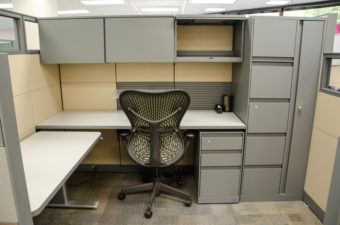
The state purchased this Steelcase cubicle from Capital Office. (Photo by Heather Bryant/KTOO)

Alaska Administration Commissioner Becky Hultberg is sending a decision on a multi-million-dollar furniture contract back to the judge.

Administrative Law Judge Jeffrey Friedman last month told Hultberg her department had violated its own procurement code. He recommended she cancel a Capital Office contract for new cubicles and other fixtures in state office buildings in Juneau, Anchorage, and Nome.
Friedman said the way the Division of General Services issued the contract was substantially different than other state purchasing practices.

In rejecting Friedman’s recommendation, Hultberg says she wants more information on how the contract was different.

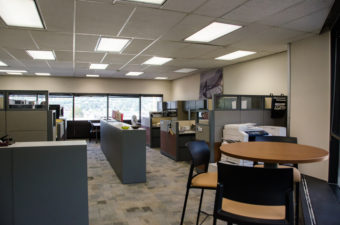
General Services is implementing what’s known as Universal Space Standards. State workers will be moved into 6-by-8-foot cubicles with access to other features like telephone booths and small conference rooms.

Four other companies submitted proposals for the contract. A protest by Bowers Office Products led to the administrative hearing against the division.

Friedman also recommended General Services pay Bowers Office Products the costs of preparing its proposal.

The state has already spent more than $1 million on Steelcase furnishings from Capital Office under the new space standards policy.

City will move to ‘pay and display’ downtown parking

Without consistent enforcement, residents have taken parking rules into their own hands. (Photo by Justin Heard/KTOO)

Downtown motorists will soon have to add an additional step to their parking regime.

Instead of just registering a vehicle at a parking machine, they also will have to put the receipt on the dashboard before continuing on with business. It’s called pay and display.
The shift in parking practice is due to the unreliability of the current system run by Aparc Parking Solutions. Information being plugged into the parking machines isn’t getting accurately communicated to the handheld devices used by Juneau Police Department parking enforcement.

Community Service Officer Bob Dilley says this has made it difficult to issue citations.

“Intermittently we would lose communications so if you do that and then somebody presents you with evidence later that says, yes, they did register, then you really can’t trust the system and we as enforcement officers want to make sure we’re not issuing citations in error.”

This is not the only issue making it hard for parking enforcement to do their job. The city and borough of Juneau is currently transitioning to handling its own parking violations instead of sending them to a district court. When the transition is complete, enforcement will once again leave citations on vehicles.

In this interim period, Dilley says people should continue to use the parking machines and follow parking ordinances. He says downtown parking remains  problematic.

“I think there’s a certain percentage of the population knows that we’re not giving out parking tickets and is probably somewhat taking advantage of that.”

Ben Lyman is senior planner with the CBJ Community Development Department. He says on-street parking is not the only option downtown. Marine Parking Garage and the Downtown Transportation Center Garage are geared for drivers looking to park for more than two hours.

“The two facilities combined are almost always half full and that means we’ve got about 300 empty parking spaces in those two facilities.”

At the moment, CBJ does not know when pay and display will begin, but the Parks and Recreation Department will provide public education on how the new system will work. There will be a grace period before enforcement starts issuing citations.

The new pay-and-display parking method will still allow two hours of free parking.

Judge says state violated its own procurement code

The state’s Universal Space Standards policy is already under a microscope. An administrative law judge has said the state violated its own procurement code and, as we reported last week, the state’s biggest employee union recently filed a class action grievance over the new space standards.
With the push of a button, new desks in Juneau’s State Office Building can be accommodated for sitting or standing. Publications tech Jesse Swanson likes the option.

“When my legs get restless in the afternoon, I’m able to stand up,” he says.

The sit-stand desks have been installed in the 7th floor offices of the Division of General Services. The ergonomic desks, and other new furniture, come from Capital Office, an Alaska company with offices in Juneau, Anchorage, and Fairbanks. The company was selected by General Services to be the sole furniture supplier as state office buildings across all regions adopt space standards.

The Division of General Services is the state’s leader on procurement and helps other agencies with leasing and purchasing.

Four other companies competed for the space standards furniture contract – Bowers Office Products in Fairbanks, Juneau Business Interiors, Competitive Edge in Juneau, and Arctic Office Products in Anchorage.

General Services told the companies they couldn’t protest the selection, but Bowers filed one anyway. It led to an administrative hearing – Bowers Office Products versus the Division of General Services.

The case was heard in front of Administrative Law Judge Jeffrey Friedman who said General Service’s selection of Capital Office did not comply with state procurement code.

Capital Office was selected through a process called a Request for Submissions, never before used by the state. General Services director Tom Mayer says it is similar to a Request for Proposals.

“It follows the same process. You collect costs from a vendor, you collect things you are going to analyze such as their management plan, their asset plan, their storage, their freight capabilities, and things like that. So you’re collecting data that you’re analyzing. We’re telling them how we’re going to analyze it so it essentially is an RFP.”

An RFP is part of State Procurement Code. A Request for Submissions is not.

Alaska is part of the Western States Contracting Alliance, a cooperative purchasing organization of 15 states.

The Alliance currently has contracts with four office furniture manufacturers that establish set discounts. Alaska procurement code allows the state to access these discounts through a cooperative purchasing agreement.

Administrative Law Judge Friedman said General Services didn’t simply participate in the Alliance contracts; the Request for Submissions asked dealers to supply even deeper discounts and called for other services like contract administration and warehousing plans. Friedman said that materially altered the terms of the Alliance contract. He said General Services should have entered into a new contract for furniture being purchased, one that complied with State Code.

Judge Friedman recommends the state cancel the Capital Office contract and pay Bowers Office Products its cost for preparing its proposal.

The contracts already established by the Western States Contracting Alliance allow General Services to simply choose a vendor. General Services Director Mayer explains why General Services didn’t do that.

“We wanted to give the vendors in Alaska an opportunity to compete for our projects, to have the ability to become our dealer, so we did a selection process to determine who was going to provide us the most advantageous proposal and package for everything, rather than just selecting one.”

Bowers made a verbal commitment to the state to not speak to the press during the appeal stage of the case. But at least one other company that submitted a proposal is upset with the selection process.

Arctic Office Products president Bill Borchardt has been with the company for over 40 years.

“Through one way or another we have accounts with maybe a hundred state agencies. There are many, many, many state agencies that buy from us.”

Borchardt says in all his dealings with the state, the Request for Submissions selection process was unlike anything he’s seen before.

Arctic Office Products offered a greater discount on furniture than Capital Office, but Arctic didn’t score well on the other parts of the submission, like project management.

“It was such a set-up. It was so unfair and even the legal system could figure that out,” Borchardt says.

So far, the state has purchased over $1 million worth of office furniture from Capital Office for universal space standards in state office buildings in Juneau and Anchorage.

The Bowers versus General Services case is now in the hands of Administration Commissioner Becky Hultberg. She has the final say on Judge Friedman’s proposed decision.

She can adopt, reject, adopt in part, rewrite, or send the decision back to the Office of Administrative Hearings for continued proceedings. Hultberg has until Monday to take action.

CBJ adopts new FEMA floodmaps

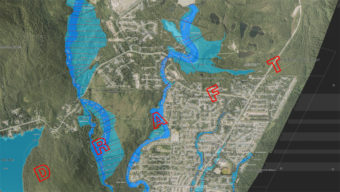
The Juneau Assembly has adopted new flood maps for the city and borough.

After about two years of study and some consternation from home owners, the maps indicate flood-prone areas, so residents can remain in the National Flood Insurance Program. The Federal Emergency Management Agency requires flood insurance be carried for buildings in those areas if they are financed by a loan or mortgage.

When the agency first presented its version of Juneau flood zones, a number of citizens were surprised to find they lived in a zone.

CBJ Community Development staff has been working with the agency and the public to amend the maps.  And City Manager Kim Kiefer says the quest continues to map the entire property and not just the building.

“And if any of it touches the flood zone, then they consider that being part of the flood zone. But most properties around here aren’t level so we want to make sure that we look at the topography so that people can do map adjustments and say they is really where the house is and here is really where the flood line is, so it’s outside of it.”

Kiefer says the biggest change required by the new flood regulations is the requirement that new or renovated waterfront structures – called Velocity zones—be elevated on pilings instead of fill material.

During public hearing, two Juneau residents expressed concerns. Mayor Merrill Sanford instructed them to work directly with Community Development.

“There’s a list of properties who are in – some new properties; in fact most of the 220 properties – in the new flood zone areas and those we are dedicated to working with the property owners to try to figure out a way to make sure we delineate their properties properly for the flood insurance. That’s our goal.”

The city plans to utilize a hydrologist to further understand flood zone areas.

The 2013 Draft Flood Maps

Assembly updates agreement with AJT Mining Properties

Jesse Kiehl
Assembly member Jesse Kiehl. Photo by Casey Kelly/KTOO.

The Juneau Assembly has dusted off the 34-year-old agreement between the city and borough and AJT Mining Properties.

The panel last night approved a resolution updating the compact signed in 1979 that allows CBJ and AJT to act as a single entity for future exploration and development.

Juneau owns two-thirds of the AJ Mine property and one-third of the Treadwell Mine in Douglas. AJT, a sister company to Alaska Electric Light and Power, owns the rest. Engineering director Rorie Watt says the purpose of the agreement is to join the property together to find an interested party.

The AJ Mine near downtown closed in 1944 and an effort to re-open it in the 1990s failed. The Assembly in 2011 created a task force to study the circumstances under which it should promote mine development. While the work of the task force is done, a review of the CBJ and AJT agreement has been a goal of the current Assembly.

City Manager Kim Kiefer calls the changes “housekeeping.”

“It’s got a three-year agreement that it’s good for then it will have to be reviewed again at that point. The other piece is both AJT and CBJ have to agree on anybody looking at the records that they have.”

The Alaska State Library owns all the maps, reports and other exploration and mining records for the AJ and Treadwell properties. Those records are sealed from public review until 2025, so any mining company that wants to look at the records would have to have the approval of both entities.

According to Kiefer, the resolution only demonstrates the commitment of CBJ and AJT to make the property available for responsible development.

During assembly discussion, a motion was made to pass the resolution, but assembly member Karen Crane said there was a shortage of information.

“It lists particular areas and sections of Juneau and Douglas. I have no maps to refer back to those. There’s been no discussion at the assembly level that I know of and I’d like to see this referred back to the committee of the whole.”

Members Loren Jones and Jesse Kiehl agreed with Crane.

Kiehl also had several questions for city staff, including one on Section 5 of the resolution. It says the assembly may appoint a committee of its members that would have the same authority and duties of the assembly. Kiehl worries the subcommittee could appropriate money as stated in the unitizing agreement, which conflicts with city charter.

City attorney Amy Mead said the language in the agreement and resolution has been in place for a long time and conforms with city charter and code, which Kiehl questioned.

“That is in a resolution that has already been adopted. The resolution that adopted the two prior agreements – that’s where that language came from,” Mead said.

“Do we have a copy of that in our packet tonight?” asked Kiehl.

“No,” she replied.

“Do we have a copy of the prior agreements repealed by these agreements in our packets tonight?” Kiehl continued, to which Mayor Merrill Sanford said, “No.”

“Have we provided any of this to the public at all?” Kiehl asked.

Again, Mayor Sanford said, “No”

Kiehl made a motion to table the resolution until the next assembly meeting, which failed.

The original motion to pass the resolution carried, with Crane, Kiehl and Jones voting no.

Juneau’s major water source is Last Chance Basin, which sits atop, adjacent to and beneath the ore body. Protecting the water supply was the AJ Mine Advisory Committee’s top priority.

Site notifications
Update notification options
Subscribe to notifications