Lyndsey Brollini

Local News Reporter

I bring voices to my stories that have been historically underserved and underrepresented in news. I look at stories through a solutions-focused lens with a goal to benefit the community of Juneau and the state of Alaska.
Juneau woman uses TikTok to raise awareness of her mom’s missing persons case

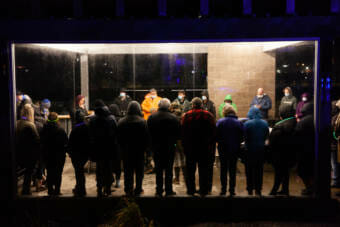
Kaelyn Schneider streams live to her TikTok a vigil for her mom Tracy Day and other missing and murdered Indigenous persons at Overstreet Park in Juneau, Alaska on Feb. 14, 2022. (Photo by Lyndsey Brollini/KTOO)

On Valentine’s Day in 2019, Kaelyn Schneider’s mom Tracy Day went missing in Juneau. And for a long time, Schneider felt like her mom’s story disappeared, too. 

But Schneider and her family haven’t given up on finding out what happened to Day. 

“You know, my grandma wanted to find my mom so bad. And she never was able to find out what happened before she passed away,” Schneider said.

Photo of Tracy Day. She has been missing since Feb. 14, 2019. (Photo courtesy of Juneau Police Department)

Day is Lingít from the Deisheetaan clan. Schneider said that Day’s case, like other cases of missing and murdered Indigenous women, didn’t get the attention it needed from the community or law enforcement.

But one day, Schneider was scrolling through TikTok and saw Danielle Dell’Olio’s account. Dell’Olio has focused on true crime, and she featured Schneider’s mom. Schneider remembered feeling so happy that someone knew about her mom and was talking about her. 

Eventually, Dell’Olio messaged Schneider and they became friends. And she encouraged Schneider to make videos. Schneider had made makeup videos in the past — but after Day went missing, she stopped.

She decided to start making videos again to talk about her mom using TikTok. At first they didn’t get a lot of traction. She was mostly making images with text over them, not talking about it in front of a camera. And then someone commented on her video that they thought her case wasn’t real. 

“So I was like, ‘Alright, I need to sit down and make, like, a full video.’ And I sat down, and I filmed 50 videos in one go, talking about her story from beginning to end,” Schneider said. 

She got about 2,000 followers, but after that the momentum slowed down. She started doing skincare and makeup videos too. 

But it wasn’t until she started doing ASMR videos that she got a following. When Schneider started doing ASMR livestreams, she got about 40,000 followers in the course of a month. 

And she started to mention her mom during her ASMR videos. 

“What I started doing was, every time I would be doing my ASMR, right, and then as my view count would go up, I would just say, ‘Hey, guys, like, just so you know, if you’re new here, Hi, my name is Kaelyn. I’m Alaska Native, I’m Lingít. And my mom is a missing person,’” Schneider said.

Then she would go back to ASMR.

“This is ASMR. People came here to relax,” Schneider said. “A lot of the time when I talk about it, my view count goes down. But I don’t, I’ve managed to use it in a way where I just sprinkle it in.”

And people started to ask her about what happened to Tracy Day. She still does full videos about her mom. But a lot of her viewers watch ASMR videos to relax and go to bed. So she doesn’t talk too deeply about her mom in those videos. 

Schneider wishes that it didn’t take a big social media following to raise awareness about her mom. She wishes that Day’s missing persons case got the attention it needed right away.

She said she doesn’t know what else she can do besides talk about her on social media — that it’s one of the only tools she has. 

She said that even if nothing comes from it, at least she tried to do something to find her mom. And maybe it’ll help another family of a missing and murdered Indigenous person. 

On Monday, Feb. 14, the three-year anniversary of Tracy Day’s disappearance, Schneider is organizing a vigil for her and other families of Missing and Murdered Indigenous Persons. It’s at 5 p.m. at Overstreet Park. 

With little guidance, families of missing people in Juneau search on their own

Dozens of people showed up to a vigil for Juneau man Doug Farnsworth on Oct. 27, 2021, in Juneau. Farnsworth disappeared in late September and had been missing for a month. (Photo by Rashah McChesney/KTOO)

Last year, five people went missing in Juneau — more than in any year since 2016, according to data from Juneau police.

And some families said they had a hard time figuring out when to rely on law enforcement agencies for help or when it was time to step in and search for themselves. 

When Kiersten Farnsworth’s little brother Doug Farnsworth went dark on social media last fall, she said she knew immediately that something was wrong. 

But she lives in Arizona, so she had to call attention to the case from several states away.  

She emailed Juneau police multiple times to post on their Facebook page that he was missing. In her third email, on Oct. 1, she wrote, “I beg JPD to post a missing person on Facebook.” 

After the third email, the police department posted that he was missing on its Facebook page and assigned a detective to the case. 

“If you don’t know how to verbalize and call and be aggressive like that, then it’s really easy to be overlooked or not informed,” Farnsworth said.

After that, Doug’s aunt, Anna LaRue, found the truck he was driving in a wooded area near town. Then there was a coordinated search with the Coast Guard, Alaska State Troopers, Juneau Police and the local search dog group SEADOGS.

But they didn’t find him. 

Those searches didn’t happen until a few days after Farnsworth reported her brother missing. And Marcy Larson with SEADOGS said that they should be contacted within 48 hours for the dogs to be able to pick up a scent. After that, it’s harder to track. 

Farnsworth says time is of the essence, and she wishes her brother’s missing person case had been acted on right away.

“You have to immediately get smells, immediately get videotapes, immediately get everything, because tapes get lost, things get recorded over and smells go away.”

‘Without Facebook, we wouldn’t have anything going for us’

After the active search was called off, Farnsworth said it fell to her to keep the search going. 

She went knocking on doors, asked people for security camera footage, reached out to her tribe Tlingit and Haida and organized a vigil for him

And she created a Facebook group specifically to help find her brother. It was a place for people to share where they have searched and to organize search parties for him. 

She came up to Juneau to search for him at first, but eventually had to go back to Arizona, so Facebook was crucial for her to keep people searching for him. 

“Without the community and without Facebook, we wouldn’t have anything going for us,” Farnsworth said.

After her brother was found, Farnsworth converted the Facebook group she created to help find other missing people in Juneau.

Last year, Facebook played a big role in community efforts to find missing people, especially for families that don’t live in Juneau.

Preston Nelson’s grandmother Geraldine Nelson was the first person to go missing last year. He said his family used Juneau Community Collective — a large community Facebook group — to ask for help finding her. 

After the search for his grandmother was over, Preston Nelson started asking questions about how people find out about missing people in Juneau.  

‘Why did they give up?’

When he thought about the other missing persons cases last year, Preston Nelson thought the amount of effort to find each person was different. 

“One thing [that] has been bothering me about all these people that go missing is, they gave up after a couple of days,” Nelson said. “And the question I’ve been asking myself for a few weeks now is, ‘Why did they spend five days looking for my grandmother?’ They searched multiple different spots the first few days but they kept searching.” 

He said he didn’t see that same kind of effort from law enforcement on other missing person’s cases in Juneau. 

“Why did they give up on these other cases?” he said.

The answers to those questions — about who gets searched for and when — are complicated. 

Alaska State Troopers are mandated by state law to lead search and rescue efforts in the state. 

But each search is different, and there isn’t a standard length of time that they’ll spend looking for someone. 

In a written statement, Trooper Search and Rescue Coordinator Lt. Paul Fussey said they factor in things like weather, geography, what kind of gear they have and the experience of the searchers themselves to decide when and how to search for someone who is missing. 

He wrote that they also rely on the guidance of local search-and-rescue partners when making decisions about searches. 

In Juneau, those organizations are SEADOGS and Juneau Mountain Rescue. Both organizations said they rely on the Troopers to make a decision on when to actively search for someone. 

And when that active search is over and a person isn’t found, Troopers turn the case over to Juneau police. 

Juneau police Lt. Krag Campbell said local police don’t help with ground searches in the woods because they aren’t trained for that kind of search and rescue.

But he said they will search for missing people in neighborhoods and do other investigative things, like looking at phone records and interviewing people. 

Juneau police will also post a missing person on its Facebook page, but usually not right away. 

“So there’s kind of a balance that we put in there to try to make some reasonable attempts to locate the person first,” Campbell said.

Campbell said if police aren’t able to find the person, then they will post to social media and ask people with any information about the missing person to call the police. If they don’t get any hits from that, then they will put out a press release. 

Searching falls to friends and family

While police will investigate a missing persons case, Campbell said they don’t organize search parties.

That means some of the searching falls on family and friends. Campbell said he doesn’t know of any resources to help with that. 

“If there was a group, like maybe a nonprofit group that was through donations and community volunteers, that would step in and help with searches and organizing… That might be something that’s very beneficial,” Campbell said. 

After her experience trying to get help finding her brother, Farnsworth said there needs to be more resources for family and friends of a missing person. 

She said she wants police to include resources in the packet people fill out when they report that a person is missing.  

But she also thinks there could be a separate guide for friends and family when someone goes missing in Juneau. 

“And then maybe possibly start offering a support group at this point,” Farnsworth said. “Because there’s a lot of people missing there for how small we are.”

Editor’s note: This story has been updated to include information about the person who found Doug Farnsworth’s truck when he disappeared. 

Juneau’s Systemic Racism Review Committee flags legislation for the first time

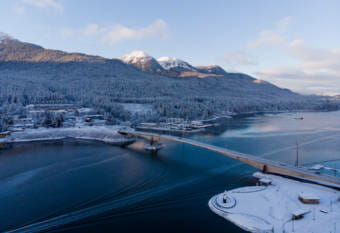
Douglas Bridge in Juneau in December 2018. (Photo by David Purdy/KTOO)

Juneau’s Systemic Racism Review Committee has flagged legislation for the first time since its creation in 2020.

In early January, the committee looked over a plan from a local developer, Travis Arndt, who wants a piece of property on North Douglas to be rezoned. Right now it’s residential, and he wants it zoned commercial so he can build boat storage and other buildings on the property. 

To review legislation, committee members ask a list of questions about whether the law would perpetuate systemic racism. Questions like: What could be the impact of this legislation and who will be affected by it? And does this benefit one group of people at the expense of another?

Committee vice-chair Grace Lee had some concerns with the legislation because of Arndt’s plans to build boat storage. 

“I realize this is Alaska, and a lot more people have boats, but boat storage affects a group of people who can afford boats and then also afford to store them,” Lee said. “And so I think that just asking that question, does this perpetuate systemic racism? Yes, it takes away the possibility of housing, and gives it to people who have boats.”

From Lee’s perspective, the proposal benefits people with more income to the detriment of community members struggling to find affordable housing. And that has the potential to perpetuate systemic racism because people of color are more likely to struggle to find affordable housing in Juneau. 

This wasn’t the first time someone said they had issues with how this specific rezone would affect housing in Juneau. During an August Assembly meeting, Mayor Beth Weldon said that one of the Assembly’s goals is to increase housing in the community, and she was concerned about taking 15 acres of land from residential to commercial. 

Assembly member Wade Bryson thought changing the zone to commercial would give more opportunity for housing because it would allow 50 units per acre — the maximum density for housing.

“I’m just, I’m super confused on how we got it wrong,” Bryson said, “Because it sounded like I think the same thing that you guys are thinking. More housing is good, or higher density is better right?”

In his public testimony on this project, Arndt said he didn’t plan to increase residential density, but wanted to build buildings with and without housing.

Arndt didn’t respond to phone calls or emails seeking his perspective on the committee flagging his plans.

Lisa Worl chairs the Systemic Racism Review Committee. She said its members are not comfortable with the rezone because it opens up the possibility for many kinds of development. 

A rezone cannot be conditional to a certain project, so while more high-density housing is theoretically possible, it’s not a guarantee. 

“When you accept it, you accept all the possibilities,” Worl said. “When you are selling it to any particular person and it’s already been rezoned, they may say one thing, but then it’s still a possibility, they may change their mind.”

Worl said the committee also had concerns about the lack of input people who live near the property. Only the developer and one other person testified. Both are on the city’s planning commission. 

The committee recommended that the Assembly get more public comment from residents in the area. City leaders listened, and now there will be another public hearing at the next Assembly meeting on Feb. 7. 

The process of pointing out how a project can contribute to inequity in Juneau is new for everyone involved. But advocates of the systemic racism review process say these are important steps toward creating a more equitable community. 

When the committee was created in the summer of 2020, it was amid a nationwide reckoning on racism after police killed George Floyd.

The Juneau Assembly listened to residents about their experiences of racism in the community. Afterward, former Assembly member Rob Edwardson suggested creating a committee to look for systemic racism. 

“When I was on the Assembly, there were a lot of ordinances that were needlessly rushed,” Edwardson said. “There was absolutely no urgency to push them how fast that they were being pushed.”

He said when legislation moves too fast, there’s greater likelihood the legislation will further systemic racism. 

This is the first time the committee has flagged a piece of legislation since it started reviewing legislation last April.

Afterwards, the Juneau Assembly held a meeting with members of the committee to hear about why they flagged the rezoning.

Edwardson said this is exactly what he envisioned the committee doing with ordinances. He hopes current and future Assembly members will get in the habit of thinking about systemic racism when they’re looking at legislation.

“What I think what might happen is, there might be a lot of reports that come out that report the same thing as this most recent report,” Edwardson said. “But then that’ll die out over time as people become more accustomed to looking at equity and inclusion in ordinances.”

Worl said the scope of the committee is limited — it only looks at potential laws that come before the full Assembly.

“Which I think is adequate, but it’s hard sometimes to look at ordinances, policy only by itself,” Worl said. “It’s pretty hard to tease out or not look at the impacts without looking at the implementation as well.”

Worl thinks the Systemic Racism Review Committee is a good start but that the Assembly may want to look at other ways to weed out systemic racism too. 

Tlingit and Haida will have tribal assembly online again

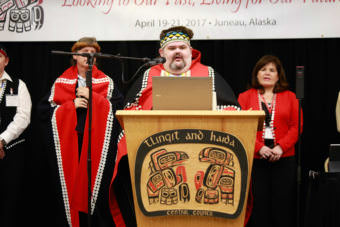
Chalyee Éesh Richard Peterson, president of Central Council of the Tlingit and Haida Indian Tribes of Alaska, speaks at the 82nd Annual Tribal Assembly in Juneau, Alaska. (Photo courtesy of the Central Council of the Tlingit and Haida Indian Tribes of Alaska)

Southeast Alaska’s largest tribal organization is holding its tribal assembly virtually once more. 

It’s the third time the Central Council of the Tlingit and Haida Indian Tribes of Alaska will hold the event online. It’s scheduled for April 20-22.

Last year, the assembly was delayed until October in the hopes of COVID-19 case rates slowing down enough to meet in person. But it ended up going virtual.

With the current wave of COVID-19 cases in Alaska due to the omicron variant, the tribe’s executive council opted to go virtual again. 

During the tribal assembly, delegates will vote for the tribe’s president, officers in the tribe’s executive council, tribal court judges and an emerging leader. 

Delegates will also submit resolutions to the tribe that establish what the tribe’s priorities are and the tribe’s position on issues affecting tribal citizens.

The tribe’s efforts to build a tribal campus came from one of those resolutions last year. This year’s resolutions are not in yet. Delegates and Tlingit and Haida community councils have until April 1 to send them to the tribe

Recognized for public service, Juneau police chief reflects on career and changes in policing

Juneau Police Chief Ed Mercer during a press conference on Sunday, December 29, 2019, at the Juneau Police Department headquarters in Juneau, Alaska. (Photo by Rashah McChesney/KTOO)

Juneau’s police chief was honored with an award for public service at the 2021 Alaska Federation of Natives convention.

Ed Mercer is Lingít of the Raven Coho clan, and he’s the city’s first Alaska Native police chief. He’s been with the Juneau Police Department for more than 20 years and has been the chief since 2017

KTOO’s Lyndsey Brollini talked with Mercer about his career and some of the changes that have happened in policing during his tenure. 

Listen:

This conversation has been edited for length and clarity.

Lyndsey Brollini: So why, why did you get into public service and law enforcement?

Ed Mercer: I’m not, I’m not able to say that, you know, as a young child I dreamed of being a police officer. This is something I think I grew into. And it was a calling and certainly, it worked out great in my career and it’s been enjoyable and rewarding.

Lyndsey Brollini: Why is it important to have Native police officers? 

Ed Mercer: There’s not a lot of minorities in law enforcement. That’s just a fact. Why I think it’s so important, especially in our community is that people who see people in police officers, minority groups, they can relate. And you know, one thing I have never lost is my understanding of my culture and where I came from, and who I am, and how I relate with many of the Alaskan Natives across our region and across our state.

Lyndsey Brollini: Another thing I wanted to get into was how policing changed in your tenure in law enforcement. I think there’s been a lot of change, especially in the past couple of years. 

Ed Mercer: I would say one of the biggest things that I seen the change of, it started when I was actually a field officer, is recording our contacts out in the public. But since then, now we have police officers out there that are wearing body-worn cameras. I don’t, I can’t think of too many other professions or fields where somebody has to wear a camera all the time. But we recognize the importance of that for transparency and trust in what we’re doing out there in serving the public and our contacts, how we’re treating people.

One change, I think, is this more awareness with dealing with people who have addiction and mental health issues. Is there a better way? Back when I worked on the street, we didn’t have as many options and referrals. I think if you committed a crime, an individual who was addicted to drugs, or was suffering from mental illness, and they committed a crime, they’d go to jail. Now, I think we’re trying to find avenues that are better, that will better serve that individual so they don’t continue to go down the road, they’re going down and give them the help they needed. 

Lyndsey Brollini: I just remember going to the vigil for George Floyd here. I saw police officers there attending it. And so I guess did that movement impact JPD at all, that nationwide movement after George Floyd’s murder?

Ed Mercer: I thought it was very important for the Juneau Police Department to attend these events. To go for what you talk about for support and saying that we as a police department, and how we police and how we treat our citizens, we don’t condone excessive use of force. And it speaks volumes when you’re standing up there with the people that are trying to say they don’t condone this type of behavior from their police across the country. You know, being able to stand there with other members of the community and show support is important, so that they feel confident and comfortable within their police department that this can’t and will not happen in our community. So that was a pretty significant event. 

Lyndsey Brollini: You know, what’s something that you’re proud of that you’ve done in your career?

Ed Mercer: One of the things I’m most proud of is that we became accredited again. At one point we were accredited by the Alaska Association chief of police. And that went away back in like 2012 right around that time, and we were the only police agency accredited in the state of Alaska. And because of the lack of interest for accreditation in our state, the decision was made that they’re no longer going to do it. So what we were able to do through Alaska Association Chief of Police was to be endorsed by a partner state, and that was in Oregon, and it’s called the Oregon accreditation alliance that agreed to allow Alaska police agencies to join their accreditation program. And we did, we signed up for it. And it took a lot of work from my staff. And we were ultimately received our accreditation in September of last year. And, you know, I think that’s good for the police department, it’s good for the community, knowing that we have an accredited police agency that serves them. So that has been really rewarding.

And just to be, as chief, you know, you’re only as good as the staff that you have and the people that go out there every day. People see our police officers out there every single day, doing their job, and you have to have great personnel to go out there and serve the community day in and day out, and do a good job. The expectation is to do a good job and serve the community. And I’m proud of this agency and the personnel that work here at the police department that show up. And we have a mission to go out there and make our community, help make our community safer. 

Lyndsey Brollini: Thanks so much for meeting with me and for talking about, you know, career, changes that have happened.

Ed Mercer: Thank you for reaching out.

Riverbend Elementary staff settle into their new teaching spaces

The Riverbend Elementary School is temporarily relocated to Chapel by the Lake, a church near Auke Bay in Juneau, Alaska on Jan. 21, 2022. (Photo by Lyndsey Brollini/KTOO)

When the Riverbend Elementary School flooded, large fans throughout the school were on to try and dry out the wet carpet and furniture. At the time, school staff thought maybe once everything was dry, they could go back to the building. But it’s going to take a lot longer to repair the school. Three to four weeks is the current estimate. 

During the repairs, Riverbend Elementary is temporarily relocated to the Chapel by the Lake church in Auke Bay. It’s not the same, but Riverbend Elementary school principal Elizabeth Pisel-Davis said the church is able to accommodate most of what they need to keep the school running. 

The area at the church Chapel by the Lake where Riverbend Elementary School students will eat lunch while they are going to school. The school building is being repaired after a flood, and the school is temporarily relocated to the church during the construction. (Photo by Lyndsey Brollini/KTOO)

“Smith Hall will be where we do lunch,” Pisel-Davis said. “And kind of an indoor play time because we don’t have a playground anymore. And so we’ll have board games and reading and drawing set up for them to do after they eat their lunch.”

Pisel-Davis said the school will still be able to provide free breakfast and lunch to everyone. 

Taped on the walls of the church are some handwritten signs directing people to where the classrooms are.

Handwritten signs made by Riverbend Elementary School students direct people to where the classrooms are at Chapel by the Lake in Juneau, Alaska on Jan. 21, 2022. The elementary school is temporarily relocated to the church as the school building is being repaired after flood damage. (Photo by Lyndsey Brollini/KTOO)

“Children of our staff made all these very helpful signs for us so that we could know our way around,” Pisel-Davis said.

When Pisel-Davis first took a tour of the church, she knew this would be the best option. They were able to put the classrooms of each grade level near each other. And the students and staff of the school would all be together in one place. 

“We were looking at, you know, putting a couple of classrooms, at different schools in the in the district, but it’s just such a gift to be able to stay together,” Pisel-Davis said.

The church was even OK with her turtles in the building.

“But I haven’t picked the perfect spot for them yet because my office is more of a mobile office at this point,” Pisel-Davis said.

Staff are still trying to figure out solutions for other things they don’t have in their new space, like their playground, library, phone system and internet. But for the most part, Pisel-Davis says things are working out, and the new location will even bring some new learning experiences.

“It just gives us such an opportunity to study an environment that’s different than where our school is. And to do some compare and contrast like, our school is by a river. Now our school is by a lake. What’s the same? What’s different? How come?” Pisel-Davis said.

Kindergarten teacher Lindsay Baranovic said the kids will be excited to be back together again, after over a month of being out of the classroom. 

Riverbend Elementary School kindergarten teacher Lindsay Baranovic talks with another teacher in her temporary classroom at Chapel by the Lake in Juneau, Alaska on Jan. 21, 2022. (Photo by Lyndsey Brollini/KTOO)

“The beauty of coming back together, no matter the space is that everyone wants to make it work,” Baranovic said. “The kids will have a learning curve for sure, but they have such desire to be together that I think it’ll be just fine.”

She said that teachers are trying to make the classrooms feel familiar to the students, but teachers also weren’t able to bring everything from their old classrooms to the new building. 

Moving boxes outside of a classroom at Chapel by the Lake, the temporary location of Riverbend Elementary School in Juneau, Alaska on Jan. 21, 2022. (Photo by Lyndsey Brollini/KTOO)

“Many, many thousands of pounds of boxes were left behind,” Baranovic said.

She said that teachers had to prioritize what to bring, and each teacher’s approach to it was different. 

Some teachers were going to mostly work with what they had at the church, but not Baranovic.

“And then there were people like me who, you know, was I spent my two hours at Riverbend, furiously packing everything I could,” Baranovic said.

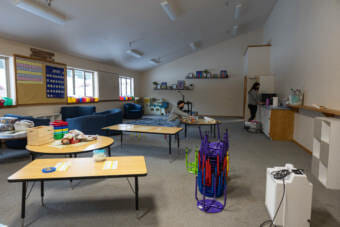
The Riverbend Elementary School temporary kindergarten classroom is being set up at Chapel by the Lake in Juneau, Alaska on Jan. 21, 2022. The school had to relocate to the church after two pipes burst in the school’s building, causing damage that would take weeks to repair. (Photo by Lyndsey Brollini/KTOO)

For her classroom, things for kids to play with was important because play is a big part of their day. For other grades, students’ belongings and textbooks took priority.

Baranovic thinks the first day back is going to feel a lot like the first day of school, especially for the younger kids. They’ll be learning new routines and navigating around a  new space.

“Our focus is really going to be on kind of honoring the children’s emotions, as we go through this big change together,” Baranovic said. “And just letting them know that we’re all experiencing the same thing. This is new for the teachers too.”

She said the younger kids, especially in the grade she teaches, kindergarten, haven’t been able to settle in much at all. That change is all they know. Some kids maybe went to some preschool in person, did preschool virtually, or didn’t have any schooling before kindergarten.

Children’s shoes are lined up in the hallway at Chapel by the Lake as Riverbend Elementary School staff unpack their classrooms at the church in Juneau, Alaska on Jan. 21, 2022. The school temporarily relocated to the church when two pipes burst in the school’s building, causing flooding. (Photo by Lyndsey Brollini/KTOO)

So before the school year started, she and the other kindergarten teacher decided to focus on social and emotional learning. 

“Because that facilitates problem solving communication, provocations, self-directed learning, all of those pieces that are such key elements for students as they become learners in the real world as well,” Baranovic said.

The teachers also decided to have a theme of collaboration for the 2021-2022 school year, before any of this happened. And Baranovic said this experience has been an opportunity for them as teachers to test themselves on how to be good communicators and to think positively during a stressful time.

Site notifications
Update notification options
Subscribe to notifications